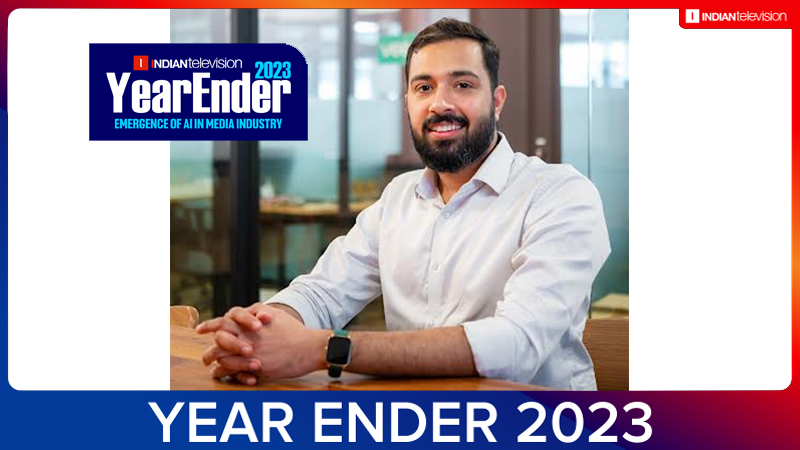
Tag: Saurabh Khattar

  • Top marketing trends that’ll create a dent in 2024: AI, increased focus on data privacy, and CTV advertising

    Top marketing trends that’ll create a dent in 2024: AI, increased focus on data privacy, and CTV advertising

    Mumbai: 2023 was an eventful year for digital advertising, where AI emerged as a driving force. Marketers also witnessed the rise in the popularity of Connected TV (CTV), improvements in the programmatic advertising ecosystem and a shifting focus from third-party to first-party data, amongst others. With 2024 on the horizon, the digital marketing industry is gearing up for the year ahead. Marketers and brands are planning their digital strategies for the upcoming year, keeping in mind trends that will shape the industry. Let’s look at the most notable trends that will shape the landscape of the ad tech industry in 2024:

    ●   Artificial Intelligence (AI) will revolutionise the digital advertising industry by helping marketers to deliver better results: AI is revolutionising the digital advertising industry from personalising ads to targeting audiences, measuring effectiveness to preventing ad fraud and creating engaging content. AI enables advertisers to improve their campaigns and deliver better results; one of the most significant impacts of AI on digital advertising is the ability to personalise ads to individual users and tailor their ads to be more relevant and engaging, leading to higher click-through and conversion rates. This helps to reduce wasted ad spend and improve the performance of campaigns. AI is also transforming how advertisers measure the effectiveness of their campaigns by analysing user interactions with ads, such as clicks, views, and conversions, advertisers can get a more accurate picture of how their campaigns are performing. This information can then be used to optimise campaigns for better results. As AI becomes more affordable and accessible, more and more digital marketers are expected to adopt it in the coming years.

    ●   The increasing importance of data privacy to build trust and ensure compliance: With privacy concerns on the rise, 83% of consumers want more control over their personal information, according to PwC. Marketers will prioritise privacy-centric practices, including transparent data collection, explicit consent, and secure data handling, to build trust and ensure compliance with privacy regulations. As users become more aware of their rights and we head towards the deprecation of the cookie, advertisers must find ways to target and measure ads without relying on outdated methods of collecting data that consumers feel invade their privacy. Contextual targeting is a type of advertising that delivers ads based on the context of the content that a user is viewing, and it helps marketers target ads effectively through a combination of sources like content placement, sentiment, consumer mindsets and more using elements of AI and machine-learning like natural-language processing. This is becoming increasingly popular as it offers a more privacy-friendly way to target ads.

    ●   CTV advertising becoming mainstream: The shift towards streaming and CTV marketing will continue gaining momentum in 2024. This is a growing market, as more and more people are cutting the cord and watching TV online. To understand how big CTV is in India, we need not look further than the viewing numbers and advertising prices for the recently concluded ICC Men’s Cricket World Cup.

      CTV advertising offers several advantages over traditional TV advertising, such as targeting ads more precisely and measuring their effectiveness more accurately. As consumers increasingly embrace streaming platforms and CTV devices, advertisers will allocate more resources to reach audiences in these digital environments. This will result in increased investments in CTV advertising, with brands leveraging programmatic targeting, data-driven insights, and dynamic ad insertion to deliver personalised and impactful ads to viewers.

    The ad tech industry continues to evolve rapidly. As marketers continue to pursue their goal of delivering impact digital campaigns, they will seek innovative, effective and privacy-compliant approaches. By harnessing these trends, they can stay ahead of the curve to drive superior results. Developing solutions centred around the consumer will help enable advertisers to maximise their return on ad spends and enable publishers to better monetise their properties.

    Here are some additional comments:

    How has the year 2023 been for your clients and the company/agency they work for? What are some of the trends that developed in the year?

    With the launch of the Digital Personal Data Protection Bill, the spotlight on data privacy has become more intense, resulting in marketers becoming more aware of data privacy regulations and consumer privacy,  thus taking steps to adapt to a cookie-less world.

    The popularity of short-form video content platforms and emerging mediums such as audio (podcasts), gaming, and Connected TV (CTV) has encouraged marketers to experiment with emerging media channels and invest in A/B testing. These mediums continue to attract marketers as they help target ads more precisely and measure their effectiveness more accurately.

    We continue to see increased adaptability and educational awareness towards ad verification solutions for our Indian brands and advertisers.

    Some of the trends that developed in the year are mentioned below:

    ●   CTV advertising grew in popularity.

    ●   Retail media networks (like Flipkart, Amazon) continue to evolve and expand their capabilities. They will undoubtedly become an indispensable tool for advertisers seeking to maximise their impact in the digital realm.

    ●   Increasing focus on data privacy as marketers began pivoting to first-party data.

    ●   Dominance of social commerce as brands focused on creating a seamless shopping experience for their customers to make buying things, online, more accessible than ever.

    Media budgets in India continue to grow year-on-year (YOY). This has resulted in an overall increase in advertising expenditure, making India one of the fastest-growing advertising markets in the world.  A maximum number of agencies and clients continue to grow in terms of advertising expenditure and experimentation strategies.

    What is your forecast for the adtech industry in 2024? Which trends will shape the adtech industry?

    India will continue to be the fastest-growing market and leads the ad spend growth globally, as per MAGNA’s Global Ad Forecast. Marquee events such as the ICC Men’s T20 World Cup and the upcoming general elections in India are expected to contribute 10-12 percent incremental growth to advertising expenditure.

    Consumers continue to increase their spending, especially the younger generation, which is investing in experiential-led categories like travel, auto, and entertainment. The 5G network expansion will boost digital business services, resulting in additional revenue for the advertising industry.

  • Ad fraud a huge challenge for Indian marketers in 2022, reveals Integral Ad Science study

    Ad fraud a huge challenge for Indian marketers in 2022, reveals Integral Ad Science study

    Mumbai: Majority of Indian marketers surveyed consider ad fraud to be a great concern across mobile environments in 2022, according to the latest Industry Pulse Report released by Integral Ad Science.

    According to the report, as many as 78 per cent of respondents said that ad fraud will remain a great concern across mobile environments this year and at least 26 per cent said mobile web video environments will be among the most vulnerable in terms of brand risk. The respondents believed that contextual targeting solutions (74 per cent) and third-party verification (72 per cent) will be important to ensure brand safety in mobile environments.

    “As the ongoing pandemic has driven consumers to embrace hybrid lifestyles and digital experiences, digital advertisers pivoted their strategies globally to emphasise mobile, social media, CTV, and digital audio. This scenario is similar in India. However, in India, brands are becoming more conscious of the importance of quality impressions and safe brand environments. As a result, the role of verification partners is gaining prominence in creating a safe and transparent setting for brands,” said IAS commercial lead Saurabh Khattar.

    The Indian edition of the report released recently found that improving mobile experiences, measuring quality for social media campaigns, and the emergence of digital video and audio are top considerations in the year ahead. The report also provides insights into the emerging trends and priorities that will drive change in digital advertising across India in 2022. The results are based on the responses of 151 Indian digital advertising professionals representing brands, agencies, publishers, and ad tech vendors in November 2021.

    According to the report, these key priorities will guide the year ahead:

    Marketers bet on mobile and social media

    India continues to be a mobile-first market, with 77 per cent of respondents making it a top priority in 2022. Mobile internet users in the country are expected to surpass 600 million this year. Mobile ad spend in India is set to grow 27 per cent to surpass $2 billion in 2022, representing nearly two-third of overall digital ad-spend in the country.

    71 per cent of media experts in India said they will prioritise social platforms. With over 450 million social media users in India, the medium is rife with opportunities for marketers. YouTube ranks as the top choice for 82 per cent of respondents, closely followed by Facebook (80 per cent), and Instagram (77 per cent).

    Increased focus on mobile video and ad fraud

    As consumers gain faster 5G mobile connections, nearly eight-in-ten (78 per cent) media experts bet on mobile video streaming being one of the biggest opportunities. However, with this growth, the threat of ad fraud looms large; 78 per cent of respondents agree that ad fraud will be a greater concern across mobile environments this year. 26% of respondents also agreed that mobile web video environments will be among the most vulnerable in terms of brand risk. As a result, respondents believe contextual targeting solutions (74 per cent) and third-party verification (72 per cent) will be important to ensure brand safety in mobile environments.

    Quality matters for social media campaigns

    Over 86 per cent of marketers are concerned about the vulnerability of social channels to ad fraud. Experts also pointed to insufficient transparency and eroding consumer trust, with 65 per cent and 62 per cent of respondents, respectively, citing these key factors as cause for adjusting their spending in 2022.

    Digital video and audio ready to take off

    The Indian audience continues to transition from linear TV and terrestrial radio to digital streaming channels such as CTV, OTT, and podcasts. As new consumer habits developed during the pandemic, 80 per cent of respondents anticipate an accelerating transition from linear TV consumption to digital video streaming this year, while over seven in 10 agreed that audio listeners will shift towards digital alternatives. However, 68 per cent of media experts anticipate higher brand risk with audio streaming content as more inventory becomes available. Ultimately, 68 per cent of respondents agreed that third-party verification will be important to ensure the quality of audio streaming inventory.

    Media quality takes a team effort: With ad budgets at stake, brands and verification tech providers play a pivotal role in mitigating ad fraud and brand risk. 45 per cent of respondents noted that verification tech providers are responsible for ad fraud mitigation, while 38 per cent say brands should lead these efforts.

  • GUEST COLUMN: One-third of digital ads going unseen; what can brands do?

    GUEST COLUMN: One-third of digital ads going unseen; what can brands do?

    Mumbai: When you look at the evolution of digital advertising, it makes sense that viewability has continued to be a top concern for marketers. The entire digital advertising ecosystem exists to support brands and their efforts to reach and influence consumers. Whether caused by a growing number of channels and platforms or out of necessity to stay connected, consumers are increasing their time spent with digital media.

    It was not long ago that viewability rates of 50 per cent were the industry norm, but rates are now on the rise. According to our H1 2021 media quality report, viewability averages stand above 65 per cent across nearly all formats and environments. While this marks an impressive accomplishment, this range indicates that as much as one-third of digital ads are going unseen by consumers in certain environments. This viewability gap creates challenges for both the buy and sell side of the digital media business. Marketers often talk about reaching the right consumers, in the right places, in the appropriate context. But first, marketers should ensure that their ads have the opportunity to be viewable in order to make a lasting impact.

    Consider time-in-view to measure ad effectiveness

    In simple terms, viewability is a digital ad seen by an actual consumer, while time-in-view is the average duration that a viewable impression remains in view. This excludes impressions that are not viewable. Viewability is good for eliminating waste, but time-in-view may be an even better metric for measuring media quality, especially for brand campaigns where exposure time drives better brand recall.

    A joint study by GroupM and Integral Ad Science (IAS) for Toyota proved that media quality, frequency, and time-in-view metrics as well as exposure to ad placements were key to driving positive business outcomes for the auto manufacturer. Toyota saw an 83 per cent conversion rate uplift, resulting in 3,679 incremental brochure downloads attributed to viewable impressions. The case study showed that exposure time is a primary driver for outcomes, directly impacting campaign effectiveness.

    As advertising budgets continue to shift towards digital, advertisers are being asked to prove RoI and the added value of digital marketing. This need to demonstrate impact is driving a shift in how they seek to measure the quality of their digital investments. Time in view allows advertisers to optimise towards a metric that better drives marketing ROI.

    Mobile campaigns in India deliver stronger media quality results

    With over 500 million Indians using smartphones, an overwhelming majority of consumers today are making purchasing decisions through mobile devices. A recent study found that over 60 per cent of Indian consumers are using their mobile devices to guide them through their shopper journey, from research to discovery to making the ultimate purchase.  People are typically on the go and traveling during the festive season, which means that they will be spending additional time on their mobile devices. It’s critical for marketers to have a mobile-first strategy for India.

    According to the recent IAS media quality report H1 2021, mobile campaigns in India delivered stronger results. Mobile web display viewability increased by one percentage point to 58.9 per cent in H1 2021 and mobile in-app display increased from 51.3 per cent to 54.1 per cent. The time-in-view for mobile web display campaigns in India increased from 15.24 seconds to 19.33 seconds, while the worldwide average stood at 14.91 seconds, clearly indicating that Indian consumers were engaged longer with the ads on mobile web display.

    From a brand risk perspective too, mobile campaigns in India posted lower brand risks than display, with mobile web display registering brand risk reduction from 2.6 per cent to 1.8 per cent. The ad fraud on mobile web display marginally decreased to 0.2 per cent, while the global average was 0.4 per cent. As spending increases on mobile, media quality challenges may arise such as ad fraud, unsafe brand environments, and unviewable inventory.

    Forrester expects e-retail sales to reach about $9.2 billion in India during the 2021 festive month, up 42 per cent year-on-year. While this indicates a huge opportunity for marketers, it also calls for them to evaluate the metrics of their campaign’s performance – bringing to the forefront viewability and time-in-view.

    Brands need to know that their ads are being viewed by real people – or risk losing the chance to improve RoI this Diwali.

    (The author is commercial lead for India at Integral Ad Science. The views expressed in the column are personal and Indiantelevision.com may not subscribe to them.)