Tag: Saurabh Doshi

  • Ex-Meta and Viacom officials launch web3 start-up; acquire $8 mn seed funding

    Ex-Meta and Viacom officials launch web3 start-up; acquire $8 mn seed funding

    Mumbai: Kirthiga Reddy and Saurabh Doshi have co-founded Virtualness, a mobile-first platform designed to help creators and brands navigate the complex world of web3, and have secured over $8 million in seed funding.

    Facebook India & South Asia employee #1 and former managing director, Softbank Investment Advisors’ former investment partner Reddy, Meta Asia-Pacific’s former head for entertainment, emerging markets, & greater China region for creators, Viacom Group’s former vice president, and Star India’s Doshi, will leverage their decades of global entrepreneurial experience partnering with creators, media, brands, and tech platforms.

    The fundraise was led by Blockchange Ventures and joined by Polygon Ventures, Micron Ventures, Better Ventures, FalconX, Neythri Futures Fund, Carolyn Everson, Randi Zuckerberg, Nusier Yassin (Nas Daily), Anjali Bansal, Ashwini Asokan, Harsh Jain, Sandeep Singhal, Stacy Brown-Philpot, Vani Kola, and other thought leaders.

    Zuckerberg and Yassin serve as advisors for the company, along with Curious Addys chief technology officer (CTO) Ben Yu; VidCon former general manager Jim Louderback; Curious Addys CEO Mai Akiyoshi; and OpenSea vice president of products Shiva Rajaraman. They have been at the forefront of creator economy trends and bring extensive expertise across diverse fields, including media, art, entertainment, blockchain, and web3. Their guidance has been instrumental in taking Virtualness from concept to reality and will continue to help shape the global vision.

    Virtualness will roll out core capabilities for creators and brands when the platform launches in 2023.

    There are more than 300 million creators worldwide, with half of them joining the creator economy in the last two years. Despite this extraordinary migration, these creators lack even the most basic tools to scale their businesses and easily capture the value-creation opportunities that blockchain and web3 represent. Centred on the ethos of “empathy at the core,” Virtualness puts creators first and is building the playbook for easy design, efficient sharing, and seamless digital commerce.

    Upon launch in early 2023, authenticated creators and brands will use the platform to design, mint, and showcase branded digital collectibles; easily share across their social media channels; directly interact with their fans and community; enable unique experiences; and unlock new channels for monetisation. Education, personalisation, discovery, integration with web2 and web3 platforms, and a mobile-first experience are core to the platform.

    “Creators are the ultimate entrepreneurs. We’ve been at the heart of the web2 ecosystem building and onboarding creators and brands, and we’re on our journey to do it again for web3. People are spending more and more time in various digital worlds and have the desire for customised experiences, individual identities, expressions and personalised commerce,” said Reddy and Doshi, in media reports.

    They added, “We’re excited to see how creators and brands mimic various physical experiences in digital forms and in newer ways. This is about building a new economy, unlocked by branded digital collectibles that deliver unique experiences, capabilities, and value. Our belief is that everything that can move from a physical form to digital will move.”

    Reddy and Doshi are working closely with creators to inform how they build their products. Nusier Yassin (Nas Daily), a famed creator with more than 50 million followers across social media platforms and an investor in Virtualness, is one of the tech-forward creators helping shape the product from the concept stage.

    “Reddy and Doshi lead with hustle, heart, and vision. I have had a ringside view of how they shepherded the transition to a digital and mobile world and onboarded a range of global creators and brands to web2. The depth of their relationships with creators, brands, and the entire ecosystem is unparalleled. Their shared experiences and impact over the last decade give me absolute conviction that they will do the same as they unlock the power of web3 for creators and brands,” said Yassin in the media report.

    “Typically, countries outside of the US and Europe get access to features much later. I am confident that this team will unlock opportunities for creators and their fans, no matter where they live. Reddy and Doshi have the rare experience of scaling innovative, user-friendly technology globally with a focus on creator monetization,” added Yassin.

    With a core engineering team with a successful track record of collaboration on prior start-ups, Virtualness has bootstrapped a proof of concept on the Polygon chain. The company will use this first round of funding to support a number of key areas, including new hires in engineering, product, and design in the United States, India, Singapore, Dubai, and other parts of the world, helping the company to innovate, expand platform support to additional blockchains, integrate with offline and online experiences — including metaverse platforms — and launch its offerings.

    “This is a time of great transformation in the future of work, economic opportunity, and drivers of social change,” said Blockchange Ventures GP Cailleach De Weingart-Ryan.

    “Blockchain will have a tremendous impact on businesses and society and we believe Virtualness will be a leader in the next chapter of the generational technology shift the blockchain represents. Reddy and Doshi’s experiences are custom-built to help those who want to tap into web3 but don’t know how. Their ability to navigate cross-cultural differences, expertise on the utility of the blockchain and creator-obsessed approach to building products, is the triple-threat needed to accelerate adoption in web3 at a global scale. As early investors in all aspects of the blockchain revolution, we look forward to partnering with Reddy and Doshi and amplifying their efforts to democratise and unlock value-creation for creators and brands of any size and stage.”

  • As digital gets mainstream, it will become more important for a movie’s success: Facebook

    As digital gets mainstream, it will become more important for a movie’s success: Facebook

    MUMBAI: An outstanding script, a big production house backing you or roping in lead actors don’t ensure a Bollywood movie’s success today. The aim is to crack the box office code. From the Rs 100 crore mark, the movies of today have set themselves targets of Rs 300 crore.

    One of the most important driving factors for any movie to be a hit or miss is its PR. It’s crucial for any filmmaker to promote the movie extremely well on all major platforms and all consumer touch-points. Running the trailers and songs on television, having them as guests on reality or comedy shows, a chat show on radio, topped up with a dash of digital is the success mantra for any movie promotion.

    Lately, every filmmaker and actor wants to promote the movie on Facebook, Twitter, Instagram and Youtube. The “digital” consumer no longer has the time and bandwidth for the TV or newspaper. They need the information to be accessed if, when and how they want to. They want to know all about the movie, its box office report and reviews before spending Rs 300-400 on a movie ticket.

    Social media lends itself beautifully to promote the movie, song or an album way before it is set to release. Actors nowadays share the making of their movies to engage the audience right from the start to ensure they are hooked on to the content and in turn will watch the movie. They go on to disclose the movie name, their first day of shooting, the shooting locations, the actor’s looks and outfits in the movie, and even behind the camera videos and images.

    To understand the media effectiveness in film marketing and how it helps filmmakers and actors to drive awareness, engagement and conversions, Ormax Media and Facebook recently launched a report – Media Effectiveness in Hindi Film Marketing – that studies and correlates the actual box office collections to a movie’s marketing mix.

    Indian movie marketers are already taking advantage of engaging desired audiences through Facebook, to drive uptake at the box office. For them, Facebook can help in building a community and interest, generate real-time conversation and feedback, and create a fan base even before the movie is released, which in-turn drives word of mouth and buzz.

    At the report launch, Facebook India’s spokesperson engaged with us to talk at length about the report, the changing dynamics of film marketing, small budget films leveraging social media and much more. Excerpts:

    The recent report by Ormax and Facebook shows how YouTube has more appeal power over Facebook and Instagram put together. How are you going to top up that to ensure Facebook has more engagement than Youtube?
    A lot of users have their view on movies based on the trailers that they see. YouTube has had a legacy of video content whereas Facebook has just embarked on its journey to introduce video content to the users at a massive scale. We are aware of that as an organisation and are moving to ensure that quality music owners and labels are able to protect their content. Music is increasingly becoming important to Facebook users with trailers and music content. As we scale up, we expect the difference between Facebook and Youtube to change soon. Currently, music is the most talked about content on our platform.

    How will the audience know about your offerings if they are not a part of the group or have liked the page?
    Our partners know that there are users who are excited about our products. Given the base that we have and the growth that we have seen in India, user adoption is pretty quick for all the products that we launch because our partners know that they can create incremental reach and engagement. The whole narrative of entertainment marketing has shifted to storytelling and community. Today, movie marketing has social built at the core.

    While we talk about the use and benefits of new media v/s traditional media, isn’t film marketing hugely impacted by the use of digital?
    The traditional media does have a role and will continue to have a role. But we feel the overall importance and the function of each is changing. The biggest trend in India is that smartphone adoption has gone through the roof and we are seeing a lot of regional content and tier II, tier III users on the smartphone. As digital gets mainstream, it will become more important for a movie’s success, especially for movies that have large box office inhibitions. Digital is a mass phenomena. India is one of those few markets where television and print have a 10 year window, but digital allows movie studios to engage which is not possible on traditional mediums like television and print. While they may be used to build awareness, when brands want to engage they use digital. Smart movie marketers and actors have understood that and use digital to connect with their audiences.

    There was a time when movie marketing began 20 days before the movie hit the theatres but now it starts months before the movie is set to release. In such cases, what is the ROI that the filmmakers look at?
    The ultimate objective of a filmmaker is to ensure they have box office impact. From a consumer standpoint, when I make a choice to watch a movie in a theatre on Friday, I am also making a choice of not watching a show on Netflix, Amazon or a cricket game. It becomes important to engage with your consumers very early. Our job is to ensure the right product is used in the right context. Our platform IGTV is the future of video content which is a great mix of live content and video stories. Today, brand’s objectives have changed and the use of various mediums has changed.

    What about sports? You don’t talk much about that…
    Sports as a category is a huge priority for us and we will continue to invest in it. Although we can’t talk about it at the moment, we have huge plans for sports as a category to increase viewership.

    While we talk about big studios and actors leveraging social media for marketing, are regional players also leveraging social media the way Bollywood is?
    Oh yes, in a big way! Regional players are reflecting this trend as well and we see a lot of activity in Tamil, Telugu and Bengali movies.

    What about small budget films? Are they leveraging social media?
    We work closely with a variety of partners. We have an entire team working on the scale side that works with emerging creators and studios.  and they are smarter about it. The contribution of Facebook and Instagram for B category movies in driving conversion is 99 per cent.

    Demographically, is your user the millennial audience since they are avid users of digital?
    A large part of the audience on digital is millennial. Around 60-65 per cent of the digital user is male audience but we see a mix of age. Jio has created a wave in the market where access and affordability both have happened together. We are excited because we want to create a perfect storm in the entertainment industry. Today, there is a huge amount of content, great smartphone experiences created by apps, ease of data access and price. It is a great time for consumers.

    While we talk about digital being the cherished medium for every marketer today, ad spends on television still contributes to 50-70 per cent while digital is only at 10-15. Do you see that changing?
    Digital is growing today at a CAGR of 30 per cent. While TV does have a long window in India, so does print. However, video content will create a huge upside for digital in India. We know there are efforts being made across the board on digital ecosystem. If you look at the media ecosystem, especially in the buying agencies, programatic is seeing tremendous growth. Earlier, digital ad spends would be reserved inventory based, and now you have premium programmatic coming in. As display ads starts to become more programmatic driven, you will see digital coming into play. Quality inventory in India will drive digital ad spends.

  • Facebook’s Saurabh Doshi takes over as head of entertainment partnership – APAC

    Facebook’s Saurabh Doshi takes over as head of entertainment partnership – APAC

    MUMBAI: The Mark Zuckerberg-headed company has recently reportedly elevated its India media partnerships head, Saurabh Doshi, to a wider APAC role. Based out of Singapore, he will have oversee entertainment partnerships for all of Asia Pacific, including South East Asia, Japan, Korea, China and ANZ.

    Even as no external announcement has been made, Doshi has been seen more out of India than in India recently. We reached out to the company but received no comments; however, some of his clients indeed confirmed the promotion to Indiantelevision.com. From India to Asian responsibilities is a jump that Martin Sorrell’s WPP and Unilever have often given to their executives in the past and this could be an interesting trend in the digital world going forward.

    Sources reveal that Doshi’s core focus will be to manage strategic relationships with some of the biggest media organisations and public celebrities in the region along with working closely with studios, TV networks and creators in the entertainment space, leveraging the Facebook platform to maximise specific objectives and increasing engagement on the platform. Given all the success YouTube has had with creators, this will be an important space

    The appointment comes as an important step for the social media platform since APAC today is the fastest growing and the most happening market for most digital companies and is super critical for growth and the future.

    Doshi joined Facebook in 2014 as the head of media partnership driving growth in videos and time spent on content on the platform and has been credited with various achievements since then. Some of them have been in unique product offerings in India, especially focused on video and instant articles, which a client mentioned have been two products on the forefront for India given the growth in the ecosystem here.

    A source mentioned focus is on the media side, especially solving language content problems given its importance and the mega $600 million bid for IPL by Facebook. Recently, there has been news of a deep partnership with the launch of Vice in India.

    Facebook globally has been partnering deeply with news publishers and the same has been the case in India looking at media case studies published on its website which Doshi has been leading along with his team.

    Apparently, the company hasn’t decided who will step into Doshi’s shoes but the careers site shows hiring of a VP for India to head its India operations.

    Facebook has a worldwide presence, except in China. A source close to the development mentioned that FB has been focusing a lot on videos specially with its video platform WATCH, for premium shows and content in the US and it is expected this team will roll it out in APAC as well.

  • Differentiated brand critical as online video, mobile ads may expand at 40-51 pc CAGR by ’21: KPMG-FICCI

    Differentiated brand critical as online video, mobile ads may expand at 40-51 pc CAGR by ’21: KPMG-FICCI

    MUMBAI: The ‘Over the top’ (OTT) video consumption in India has rapidly evolved over the last year, given the advancements in digital infrastructure and efforts by platforms to create compelling content for consumers at price points which provide value.

    Growing internet penetration and data consumption is likely to help increase digital advertisement spends in India at 30.8 per cent CAGR between 2016 and 2021 with mobile advertisement spends and social media-aided digital video advertisement spends expected to expand at 50.9 per cent and 40 per cent CAGR between 2016 and 2021, respectively, according to the KMPG’s “The ‘Digital First’ Journey” report launched in FICCI Knowledge series 2017 conference – Fast Track India.

    The Fast Track India conference, in association with LA India film Council (LAIFC), was focused on building out a digital company, the impact of evolving digital infrastructure on content consumption and rise in online piracy.

    Fox Star Studios India CEO Vijay Singh highlighted the need for M&E businesses to be future-ready in his keynote speech. He said, “Digital transformation of the M&E industry is unstoppable, and companies will need to focus on innovation and disruption. It will be important to get the digital building blocks to fall in place – be it in content creation or getting the right business model.”

    At the inaugural, KPMG India partner and co-head of media and entertainment Girish Menon said, “OTT consumption in India has reached a tipping point, with the 4G rollout and related data wars which have resulted in a dramatic and rapid growth in internet penetration and video consumption. Building a digital business is an evolving process and organizations would need to adopt a systematic approach balancing scalability and flexibility with speed to market and customer centricity.”

    The conference focused on three key features, i.e., evolution of content strategies from creation to monetisation, the impact of evolving digital infrastructure on content consumption patterns and the rise of online piracy – threats and remedies.

    OTT consumers continue to demand seamless access to services, compelling stories and value for money. The era of on-demand content has reached a tipping point with consumption becoming on-demand across mobile screens and going ‘mass’ – particularly on the back of pan India 4G roll outs by telecom operators.

    During the discussion, panellist agreed upon the fact that the mass launch of 4G services by Reliance Jio in 2016 and subsequent launches by incumbents was an inflection point in India’s data story. This disruption led to a rapid surge in data usage on the back of promotional offers by all leading telecom operators.

    The conference was divided into three panel discussions. The first panel, who have discussed broadly on building a digital platform, was held with Arre co-founder Ajay Chacko, Culture machine president Tuhin Menon, Qyuki Digital Media COO Sagar Gokhale and ALTBalaji CEO Nachiket Pantvaidya and moderated by KPMG management consulting Neha Punater.

    Next panel on digital infrastructure transforming consumption of the content was addressed by the BARC business head Jamie Kenny, the Facebook India content head and media partnerships India-South Asia Saurabh Doshi, the Voot marketing head Akash Banerji and the Shemaroo director Hiren Gada.

    Lastly, on the protection of the online content in a digital economy, Disney India assistant regional counsel Anju Jain, the Viacom 18 SVP Thomas George, the Eros International general counsel Aamod Gupte, the TFCC governing council executive member Rajkumar Akella, the MPA Asia Pacific VP communications Stephen Jenner and The Indian Music Industry president and CEO Blaise Fernandes. Punnaryug Artvisions’ founder Ashish Kulkarni deliverd the welcome note.

    About the roadmap to become a digital company, Pantvaidya said, “The focus has to shift from just getting big numbers to actually engaging audiences. Watching videos on internet especially shows is slowly becoming an integral part of every Indian’s life – Thanks to quality internet being offered by Telco’s at affordable prices. We, at AltBalaji, believe that this trend can be effectively monetized by offering multi targeted, exclusive, original Indian content at a never before seen scale.”

    Qyuki Digital Media COO Sagar Gokhale said, “It’s a changing market, when we started, we saw 50 per cent split between mobile and computers but today it exceeds to 80 per cent towards mobile. Understanding of content is very important according to the consumer’s need. In India, large platform like Youtube is male dominated precisely under the age group of 18-35. So easy understanding is to create male centric content like comedy and music which works out the most. According to our data analysis, post-Jio, a lot of viewership was noted from tier 2-tier 3 cities like Jharkhand.”

    The four pillars of digital transformation outlined in the report comprise a holistic approach including; clearly defining the organisation’s digital vision and strategy, thorough understanding of the customer proposition, accurately assessing the business design and, lastly, carefully designing the execution plan.

    On building a robust enforcement model to protect content in a digital economy, MPA Asia Pacific VP communications Stephen Jenner said, “Around the globe, close collaborations between multiple stakeholders have lead to a number of successful content protection initiatives. This bodes well for growing digital economies, and the many creative people contributing to media and entertainment in those markets.”

    Doshi said, “Being passionate or even finicky about user experience is the key to building a successful digital platform. In this age of hyper-competition, it is imperative to focus on building a strong brand that is differentiated. With over 200 million people in India every month and millions globally on the platform, we think deeply on the best user experience we can provide and instant articles, live etc. are such examples.”

    Fernandes said, “Digital India is attracting lots of investments in content creation and distribution over the various digital platforms. This sets off a multiplier effect, employment generation, tax revenues and soft power. While all this happens it is necessary for protection measures to be in place, glad that FICCI and the LA India Film Council are giving copyright protection in the Internet age adequate weightage in their various forums”

    The path to digital transformation encompasses a holistic approach including; clearly defining the organisation’s digital vision and strategy, thorough understanding of the customer proposition, accurately assessing the business design and, finally, carefully designing the execution.

  • We are seeing consumption in languages & low-connectivity areas, says Facebook India’s Saurabh Doshi

    With millennials increasingly consuming video online and on their handsets on Youtube and on VOD services, Facebook, the world’s largest social media network, has also rushed in to provide users with their unique experience. And while it has been a little late getting to the party with video, the Mark Zuckerburg led firm has been pretty clear about its intentions to own this space as well.

    With more than two billion monthly active users, and 100 million daily  actives, Facebook could cause unimaginable disruption with its video strategy.  While that might happen online on some connected devices, in India it is going to be on mobile, thanks to its vast mobile population of close to a billion.

    Facebook India head-media partnerships Saurabh Doshi echoed that sentiment as well at indiantelevsion.com’s OTT summit VIDNET 2017 in Mumbai two weeks ago. He stated that almost 95 per cent of the Indian population logs on to the social media network on their mobiles. He was on stage having a fireside chat with well-known Youtube creator and comedian Saurabh Pant.  Excerpts from the conversation.

    Can you quickly start with what is currently happening in India and what is the trend going on on Facebook?

    We get over 184 million active users monthly out of which 178 million come from mobile phones, so almost 95 per cent of the population in India is using Facebook on their mobile. Close to 100 million visit the platform everyday. On Whatsapp, we have around 200 million monthly active users.

    The interesting thing is that Facebook also deals with multiple formats, considering use of videos. As a creator myself, I have noticed that it has exploded over the last year and seeing far more traction. So can you tell us something about the multiple formats and how best to use them.

    We started with being a text platform. Over a period of time, the journey moved to photos after which we saw a big consumer shift happening towards videos like the Ice bucket challenge kicked off its whole journey on Facebook. So it is generally from videos to live, 360 degree, and VR which is an extension of different platforms. Recently, we launched camera effects through which the creators can create filters, masks, emoji’s.

    With Instagram, what’s happening is like put up the story and you get an immediate click on it.

    Yes, Instagram is also doing great in India, its growing relatively very fast, we see a lot of youth coming on the platform. Around 200 million people across the globe are using Instagram stories.

    At a session here, Republic TV’s Arnab Goswami gave Facebook a very happy endorsement where he said he prefers Facebook over Twitter because of a lack of anonymity. What is your take on that?

    Real people on the platform have always been our USP. When you have real people and real conversations happening on real time basis, it has been carried to other platforms as well. We have a community business team across the world working 24X7 to pull out fake pages and accounts.

    As I said Facebook videos have exploded from last year, my Facebook and Youtube views are almost even and sometimes views on Facebook were far more. So is there any trend you are noticing with regards to content creation and what works and what does not, from a video point of view?

    First of all I want to elaborate a bit. Facebook started up being a friend and family network and is still that. In fact, that is the core DNA. Secondly, there is need to either have a conversation as to what is happening in your personal life and also what is happening in your surroundings like breaking news or a movie trailer etc. – the ability to give an environment where anyone can comment, chat, share.

    I have been using Facebook Live very  consistently over a period of six to eight months and I have noticed that some of the live videos hit higher numbers than the stand-up. The new Facebook layout has a separate tab for videos, where you can see videos all across the platform.

    At various points of time we keep on experimenting with lots of products, the behaviour of a user to pull out a phone, watch some videos, and look at some text. People come to the platform not only because of the news feed but also a place where the creators’ content can be curated so that people can follow those creatives.

    What kind of content do you like to watch on Facebook: is there any particular channel or creative that you find exciting? Going forward, what do you think are some of the trends you see with regards to Facebook videos?

    Personally, I am a strong consumer of news, I discover all my news through Facebook, as Satya (Raghavan fro YouTube) mentioned, we see a growth around the languages, regional content and local content. So we focus on supporting creators and organisations in some of those areas. People with low-end devices in poor connectivity areas also browse Facebook. We are seeing the consumption all across and thanks to Reliance Jio for all the efforts on the infrastructure side.

    The most crucial question, what are the plans for monetisation rollout?

    We clearly understand the need for providing the tool through which creators can make money. Premium content obviously kicks in a lot of resources, efforts. We need to have the model where the creators should be able to make money out of Facebook. Having said that, we have experimented in the past, and there are more experiments going on. Last year, we rolled out suggested  video, this year some time early in US we rolled out ad rates inside the videos where the creator could actually put an ad and make money out of it including live.

  • Facebook exec: Created ‘Bandstand’ — fun place to go live to celebs

    Facebook exec: Created ‘Bandstand’ — fun place to go live to celebs

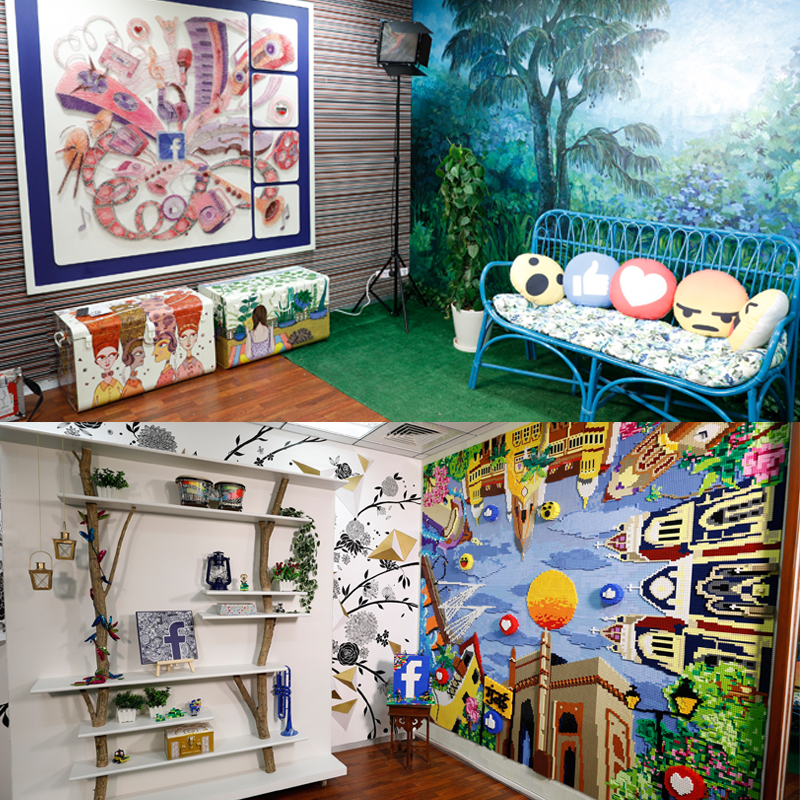
    MUMBAI: Facebook India has launched FB Bandstand, an integrated space that combines art with technical support to facilitate Facebook live interaction more authentic.

    FB Bandstand is a brand new space for celebs to engage live with their fans.

    Speaking to Indiantelevision.com, Facebook media partnership head Saurabh Doshi shared, “When people come to the office, we don’t have much of fun elements here, hence we wanted to give more fun and cool place to go live to celebs. That’s how the idea of creating FB Bandstand came about.”

    “Artists and celebrities from across the world and India are using Facebook live to connect with their fans, interact and engage in real time in an authentic and refreshing way. FB Bandstand is a unique space for talent to be able to go live easily in a creative and fun way when they visit FB office in Mumbai. We hope to get to view many fun and memorable moments created at FB Bandstand, he added.

    The platform is open for celebs from all walks of life. They can have interaction with their fans, movie promotion, movie review or a short comedy film.

    The room, FB Bandstand, has been designed keeping in mind the creativity, imagination and craftsmanship of local artistes, which is reflected in each wall which have its own independent theme, thus also attempting to provide a variety of shoot backgrounds.

    The first wall that greets the eye is the ‘Garden Wall’ and captures the scenery of a garden with a rolling view of the outdoors created through a layered style of depth painting. Combined with other 3D elements, it provides the subject a calm, easy going and candid ambiance, that one normally experiences while being in the lap of nature.

    The second wall is ‘Origami Art Wall’, which has interconnected floral patterns interspersed with small origami pyramids that give the impression of golden sun light reflecting on them.

    The third wall opposite to this is the ‘String Art Wall’ that shows a colourful burst of musical and other audio-visual instruments flowing across frames, depicting how the experiences created by them are seamlessly available across mediums, for people to enjoy.

    Whether one is a movie-star, a sportsperson, an artiste, a musician or a journalist – celebrities and public figures have come to truly enjoy using Facebook live as a way to interact authentically with their fans. Facebook live has been the focal point of many conversations lately and we wanted to go a step further by providing a space where public figures could go live easily and experience the goodness of Facebook live as an interactive video format in a fun and refreshing way. The streaming feature of Facebook live encourages #nofilter spontaneity with which viewers can enjoy real-time not just as spectators, but as a truly engaged audience adding their comments to the conversation or asking questions and even emoting along the stream’s timeline using the reaction buttons.

    Apart from providing ample choice of backgrounds, the focus is also to make available a simple array of equipment that allows one to explore various audio-visual formats of live – from a simple camera phone to a multi-camera set-up that can be accessed easily. There is also a choice of various musical instruments and other props for artistes to use.

  • CNN-IBN and IBN7 launch exclusive content on Facebook

    CNN-IBN and IBN7 launch exclusive content on Facebook

    MUMBAI: CNN-IBN and IBN7 have announced exclusive news formats to engage with audiences on Facebook. These fresh formats will enable the IBN news network to connect with the growing digital audience, who have a strong affinity for Facebook as a reliable source of news and entertainment. 

    CNN-IBN will also leverage the platform for its highly acclaimed ‘CNN-IBN Indian of the Year’ awards (IOTY).

    The arrangement will allow CNN-IBN to have dedicated segments through the voting period and showcase insights based on Facebook APIs. The channel will post native videos around the initiative, have nominee Q&A’s to build engagement and of course, conduct voting for the Popular Choice category of the CNN-IBN Indian of the Year 2014.

    In addition to this, CNN-IBN is also covering an array of news items from breaking news, special reports, top stories and exclusive interviews from the world of entertainment and sports in the form of native videocasts. These exclusive videos are produced for Facebook in the form of digestible 1 – 2 minute news segments titled CNN-IBN FB Special and posted multiple times a day. 

    Commenting on the partnership, IBN Network CEO Avinash Kaul said, “We are really excited to be working with Facebook to engage with our audiences in a relevant and meaningful way.

    In an effort to bring differentiated content for our Facebook audiences, IBN News Network is creating interactive engagement around India’s most credible awards in the domain of News television, the CNN-IBN Indian of the Year and posting exclusive content in the form of news videocasts exclusively for Facebook.”

    Facebook India media partnerships head Saurabh Doshi said, “Whether it is discovering information about a breaking news story or celebrities engaging with fans in authentic and meaningful ways, people use Facebook to connect with the things that matter to them most. More people than ever before are sharing, discovering and engaging with videos on Facebook.” He further added, “It’s exciting to see how the IBN Network has created content like news videocasts for Facebook and other exciting opportunities where people are not only able to watch news but also join in the conversation.”