Tag: Saurabh Dhoot

  • DTH players roll out festival offers

    DTH players roll out festival offers

    MUMBAI: Brands are bursting Diwali offers. As the festive season draws closer, all the D2H players, one after the other, are extending lucrative offers to consumers to buy their products and subscribe to their service. Tata Sky had run a promotional offer between 8 and 21 August on its tenth anniversary, under which it allowed subscribers to watch all its 500 plus channels at no extra cost.

    DishTV has now come up with a special Diwali HD offer. Customers can opt for a high-definition set-top box at minimal additional cost just by paying Rs. 120 extra. The subscribers can also view HD channels via DishTV’s small HD entertainment add-on packs.

    DTH operator Videocon d2h has hopped on to the bandwagon of the promotional offers. Videocon boasts of a 11-12 million active subscriber base and has branded the promotion as “Khushiyon kee Diwali.”

    New Videocon subscribers will have to pay only Rs 1820 for HD or Rs 1620 for a standard definition connection. On choosing a monthly subscription plan, the newbie can instantaneously upgrade themselves to the next higher upgrade plan for two months at no cost. Additionally, existing subscribers can also avail of the free two month upgrade by coughing up just Rs 10 extra on their monthly plan. The DTH operator had upped its prices by a minimum of about Rs 20 a month across subscription packges on account of the rise in service tax, various levies and other input costs.

    Says Videocon d2h executive chairman Saurabh Dhoot: “The festive season is all about mega enjoyment. This year our Diwali offer covers everyone from our existing subscriber to the potential subscriber opting for a new connection from Videocon d2h. This offer blends perfectly with our brand promise of providing wholesome entertainment for the family.”

    Adds Videocon d2h CEO Anil Khera: “Our Khushiyon kee Diwali promotion from 1 October to 30 November h Nov gives our existing consumer to enjoy the festive season with an upgrade to the next higher monthly plan for 60 days. We strongly believe that this attractive offer will create waves in the market in this festive season.”

    Videocon d2h offer subscribers 570 channels and services, including a host of regional channels. It offers a wide range of active services like smart services including smart English, smart games.

    DishTV’s HD sachets capture the interest of consumers towards HD viewing by offering them the channels at a nominal price of Rs.75 for one. This offering enables DishTV subscribers to select these small packs as per their preferences and needs. “With users aspiring for HD channels, this move is to encourage them to embrace HD channels at a minimal cost,” said DishTV CEO Arun Kapoor.

    For new HD connections, customers will now have to pay an introductory price of Rs. 1990 which will include subscription of one-month super family pack or jumbo pack and one HD add-on for one month at no extra cost. The new connection will also include a universal remote. DishTV has a complete offering and mix of 51 high-definition entertainment, music, news and regional language channels. The offer is available across all parts of the country.

  • Videocon-CSC to bring digital DTH services to every household

    Videocon-CSC to bring digital DTH services to every household

    MUMBAI: Digital is a great leveller of the rural/urban divide. Videocon d2h has announced its association with the CSC eGovernance Services India Limited for the launch of their CSC services. The Common Service Centre (CSC) scheme is a part of the Digital India (DI) initiative. The service was inaugurated by the Minister of Electronics & IT and Law and Justice Ravi Shankar Prasad in Varanasi today.

    The Scheme envisages the setting up of 100,000+ IT-enabled access points to be implemented through a public-private partnership (PPP). CSCs have been positioned as front-end delivery outlets for delivery of government as well as private sector services. The services will enable the citizens of India to access their digital entertainment through Videocon d2h.

    Videocon d2h executive chairman Saurabh Dhoot said, “I feel honoured by our strategic tie-up with the Government of India to enable information access to the audience across India. This is a milestone and is a matter of great pride for us that, in the DTH industry, we led the way with “Make in India”, and now we are leading the way with Digital India”.

    Videocon d2h CEO Anil Khera said: “This tie-up affirms our commitment to innovate in every aspect of our customer experience. With this pact, we will be able to reach the remotest village in the country and thus help the transition of India from the analogue cable regime to a better quality, more transparent digital platform.”

    CSC eGovernance India CEO Dr Dinesh K Tyagi said, “CSC SPV has entered into an agreement with Videocon d2h for bringing Digital DTH services through CSC centres. This service will enable rural India to avail smart services including Smart English and Smart Games, etc. and will help overcome the digital divide between rural and urban India.

  • Videocon-CSC to bring digital DTH services to every household

    Videocon-CSC to bring digital DTH services to every household

    MUMBAI: Digital is a great leveller of the rural/urban divide. Videocon d2h has announced its association with the CSC eGovernance Services India Limited for the launch of their CSC services. The Common Service Centre (CSC) scheme is a part of the Digital India (DI) initiative. The service was inaugurated by the Minister of Electronics & IT and Law and Justice Ravi Shankar Prasad in Varanasi today.

    The Scheme envisages the setting up of 100,000+ IT-enabled access points to be implemented through a public-private partnership (PPP). CSCs have been positioned as front-end delivery outlets for delivery of government as well as private sector services. The services will enable the citizens of India to access their digital entertainment through Videocon d2h.

    Videocon d2h executive chairman Saurabh Dhoot said, “I feel honoured by our strategic tie-up with the Government of India to enable information access to the audience across India. This is a milestone and is a matter of great pride for us that, in the DTH industry, we led the way with “Make in India”, and now we are leading the way with Digital India”.

    Videocon d2h CEO Anil Khera said: “This tie-up affirms our commitment to innovate in every aspect of our customer experience. With this pact, we will be able to reach the remotest village in the country and thus help the transition of India from the analogue cable regime to a better quality, more transparent digital platform.”

    CSC eGovernance India CEO Dr Dinesh K Tyagi said, “CSC SPV has entered into an agreement with Videocon d2h for bringing Digital DTH services through CSC centres. This service will enable rural India to avail smart services including Smart English and Smart Games, etc. and will help overcome the digital divide between rural and urban India.

  • Pay TV-DTH gains: Airtel leads subs race as Jio could pose challenges

    Pay TV-DTH gains: Airtel leads subs race as Jio could pose challenges

    BENGALURU: Last quarter (Q3-16, quarter ended 31 December 2015), we at www.indiantelevision.com had said: Contrary to expectations that the sunset date of 31 December 31, 2015 (Q3-16 in financial terms in India) would rake in good numbers for the DTH industry for Q3-15, results declared by three of the seven players in the country did notshow much of a change. At that time, though Airtel Digital TV and Videocon d2h had both shown a small spike in subscriber additions between Q2-2016 and Q3-2016, overall taking the combined addition in subscription numbers by all the three, the change was just 3.59per cent. In the case of the third player-Dish TV, it witnessed the lowest growth over a five quarter period starting Q3-2015 until Q3-16 at 2.19 per cent.

    We’d said further that Chrome figures for January 2016 revealed that the DTH industry is a major beneficiary of DAS phase III. If that is the case, then DTH players should report even better numbers for Q4-16 and FY-16. Did they?And what will be the fate of the carriage industry once Jio has been rolled out completely across the country, along with low cost devices? Jio presents a huge disruption…. But more on that later. Lets look at the numbers for the DTH industry…

    Combined subscriber additions for the annual period ended 31 March 2016 (FY-16) vis-à-vis the previous year (FY-15)grew by 12.3 percent of the three pay-direct to home (pay-DTH) operators in India whose financial and operational data is available in the public domain.  This subscriber growth rate was however a little less than half that these entities had in FY-15 at 24.7 percent as compared to FY-14. As indicated above, the three operators in this paper in alphabetical order are Airtel’s Digital TV segment (Airtel DTH), the Essel group’s Dish TV Limited (Dish TV) and the Videocon group’s Saurav Dhoot led Videocon d2h.

    Among the three, Airtel DTH added more net subscribers in absolute numbers in FY-16 than in FY-15, Dish TV added approximately the same number of net subscribers in both FY-15 and FY-16, while Videocon d2h saw slightly lower absolute net subscribers increment in FY-16 as compared to FY-15. Airtel DTH added 55.6 percent more subscribers in FY-16 – 16.52 lakh to reach net subscriber base of 117.52 lakh as compared to 10.62 lakh in FY-15; Dish TV added 15 lakh subscribers in the current year as well as in the previous year; Dish TV’s subscriber base was 145 lakh in FY-16; Videocon d2h added 16.8 lakh subscribers in FY-16 to reach a subscriber base of 118.6 lakh as compared to 17.4 lakh subscriber additions in FY-15. The above numbers are based on the financial results/investor presentations reported by the three DTH entities. Figures C1, C2 and C3 below indicate the quarterly subscriber base of these three players from Q2-15 until Q1-17.

    Let us see where the three pay DTH players considered in this paper stand in the Indian DTH eco-system

    As per data obtained from a government website, the total number of active DTH subscribers in India was 5,59,81,376 as on 31 December 2015. The number of active DTH subscribers of Airtel was 1,13,43,424 with a market share of 20.26 percent of the total number of active DTH subscribers in the entire country;  the number of active DTH subscribers of Dish TV was 1,39,52,866 with a market share of 24.92 percent of the total number of active DTH subscribers in the entire country. Among all the pay DTH Operators in India, Dish TV had the largest number of DTH subscribers as on 31 December 2015 and was the market leader.

    The number of active DTH subscribers of Reliance was 17,86,705 as on 31 December 2015 and its market share was 3.19 percent of the total number of active DTH subscribers in the country. Among all the DTH Operators in India, Reliance had the smallest number of DTH subscribers.

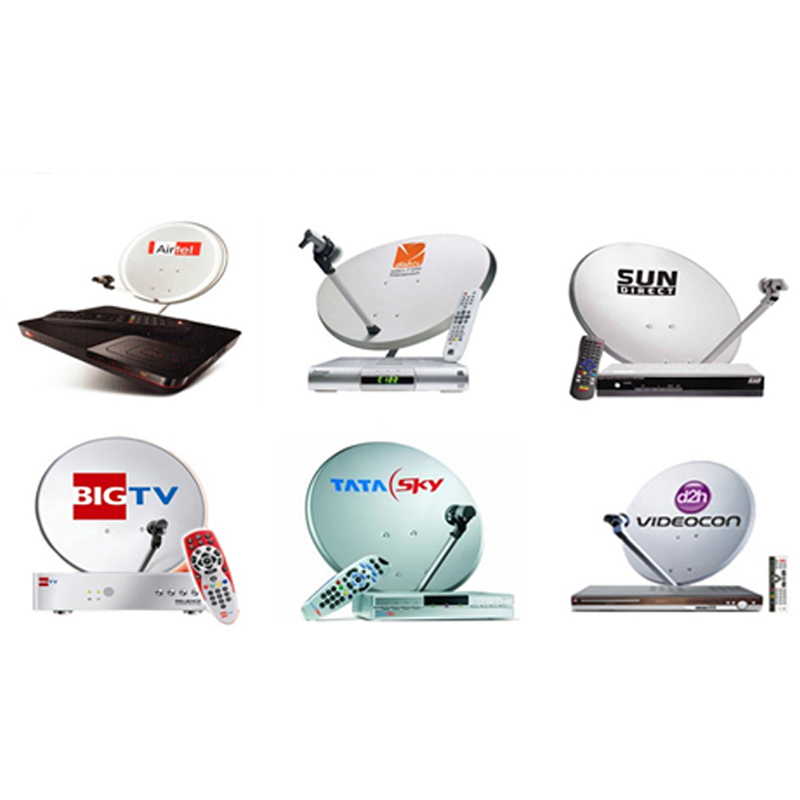
    The number of active DTH subscribers of Sun Direct was 56,98,544 as on 31 December 2015 and Sun direct had a market share of 10.18 percent; the number of active DTH subscribers of Tata Sky was 1,20,45,410 which had a market share of Tat Sky was 21.52 percent; the number of active DTH subscribers of Videocon D2H was 1,11,54,427 and its market share was 19.93 percent of the total number of active DTH subscribers in India. Please refer to Fig A below

    Assuming that the proportions remained approximately the same at the end of fiscal 2016, this means that the three operators in this paper represented 65.11 percent or almost two thirds of the Indian pay-DTH universe. This can further be substantiated by TRAI data below.

    As per TRAI data, the number of active DTH subscribers in the country increased by 25.5 lakh between Q3-16 and Q4-16. The combined subscription numbers reported in their financial reports by the three players in this paper have grown by 17.1 lakh or 67.02 percent of the total increase across the country. Hence it is safe to assume that the three players in this paper represent about two-thirds of the total pay-DTH subscribers in the country and it can be further assumed that their combined performances represent approximately the performance of the pay-DTH industry in India.

    Besides the six pay DTH players mentioned above is Doordarshan’s (DD) FreeDish DTH service – the largest DTH player by far in terms of subscribers with an estimated 15 million or 1.5 crore subscribers in 2015 as per the KPMG-FICCI Indian Media and Entertainment Industry Report 2016 (KPMG-FICCI M&E Report 2016) titled The Future: Now streaming. It must however be noted that an exact number for registered or active subscribers is not available since this is a free DTH service. Prasar Bharati’s chief executive officer Jawahar Sircar had said during an exclusive interview in June this year, “As the (FreeDish) antennas are available in the market (at a nominal one-time price ranging between Rs 3,000-4,000) and no monthly subscription is paid, it is difficult to know how many television households have FreeDish. This audit will become easier when we complete the process of encryption of FreeDish while keeping it free to air.

    Exact figures may be difficult in our case as even the Telecom Regulatory Authority of India admits there is a gap between the number of active and registered subscribers of private DTH operators. But it is understood (from feedback from market and sale of antennas) that there are around 15 million households hooked to FreeDish.

    In recent times, FreeDish has got some very good response from private TV channels…many of them, including the big names, want to hop onto FreeDish’s platform for wider reach of their products. We have plans to increase the number of FTA television channels on the platform so a consumer gets more choice.”

    Has the pay DTH industry truly gained from DAS, and more specifically DAS phase-3?

    DAS in the first three phases was to cover about 79 million (7.9 crore or 790 lakh) television households in India by 31 December 2015 as per the KPMG-FICCI M&E Report 2016. As per TRAI data, the number of registered DTH subscribers has grown 91.65 percent from 462.5 lakh as on 31 March 2012 to 886.4 lakh as on 31 March 2016. Active DTH subscribers have grown 57.4 percent from 371.9 lakh on 31 March 2014 to 585.3 lakh as on 31 March 2016. Complete rollout of DAS phase 3 had been delayed by litigation. The same can be expected for DAS phase 4.

    The KPMG-FICCI M&E Report 2016 projects that the number of television homes in the country will increase by 10 million or 1 crore in 2016 to 170 million or 17 crore homes. The break-up of this 17 crore television households is 41 million or 4.1 crore analogue cable; 55 million or 5.5 crore each for Digital cable and pay DTH and; 19 million or 1.9 crore Free DTH. Please refer to figure B for the projected break-up. The report projects total DTH subscriber base of 7.4 crore including Fre

    public://7878.jpg

    DAS phase 4 offers an even bigger opportunity – 81 million or 81.1 crore cable and satellite homes of which 52 million or 5.2 crore were digitised, leaving 39 million (3.9 crore) analogue cable homes as on 31 December 2015, the sunset date for DAS phase 3, as per the KPMG-FICCI M&E Report 2016. This is low hanging fruit for the DTH industry.

    The KPMG-FICCI M&E Report 2016 says that the number of pay DTH subscribers has increased from 34 million or 3.4 crore in 2012 to 44 million or 4.4 crore in 2015, and projects 55 million or 5.5 crore pay DTH subscribers in 2016. December 31, 2016 is the sunset date for DAS phase 4, but the KPMG-FICCI M&E Report 2016 expects the roll-out to be complete only in December 2017. Taking this date into account, the KPMG-FICCI M&E Report 2016 projects 179 million or 17.9 crore television subscribers, with the pay DTH subscription base expected to reach 74 million or 7.4 crore.The report says that FreeDish subscribers will increase from 19 million (1.9 crore) in 2016 to 20 million (2 crore) in 2017. Please refer to the radar type chart in Figure B above.

    A  Videocon d2h corporate presentation in March 2015 claimed that the active DTH subscriber market share was projected to grow from 32 percent in 2015 to 37 percent in 2019, with the active DTH revenue market share to grow from 41 percent to 47 percent during the same timeline.

    So how have the three players gained?

    Let us look at their financial performance and some of their operational matrices.

    Airtel Digital TV (Airtel DTH)

    Fig C1 below indicates the quarterly performance by Airtel DTH.

    public://554545454.jpg

    Let us look at Airtel DTH’s annual number comparison between FY-15 and FY-16. Revenue in year ended 31 March 2016 (FY-16) increased 17.8 per cent to Rs 2,917.8 crore as compared to Rs 2,475.9 crore in the previous year. Airtel’s DTH segment reported EBIT (Earnings before interest and tax) of Rs 184.3 crore (6.3 per cent operating margin) in FY-16 as compared to a negative EBIT of Rs 158.1 crore in FY-15.

    Annual subscription numbers have been mentioned above. Average revenue per user (ARPU) increased to Rs 229 ascompared to Rs 214 in the corresponding quarter of last year. Airtel DTH reported a monthly subscriber churn of 0.8 per cent in Q4-16  (quarter ended 31 March 2016) as compared to a churn of 1 per cent for the corresponding quarter of last year and a slightly lower 0.7 per cent for the immediate trailing quarter.

    DAS III has resulted in Airtel’s increasing the capex for its DTH segment for FY-16 by 40 per cent (Rs 313.8 crore) as compared to the previous year. The company’s capex spend in FY-16 was Rs 1,098 crore as compared to Rs 784.2 crore in FY-15. The company’s cumulative investments into Airtel DTH increased 20 per cent to Rs 6,490.6 crore in the current year as compared to Rs 5,410.9 crore in the previous year.

    Performance in Q1-17

    Airtel DTH added 4.24 lakh net subscribers for the first quarter ended 30 June 2016 (Q1-17) to bring its subscriber base to 121.9 lakh from 117.25 lakh in the previous quarter. Average revenue per user (ARPU) increased to Rs 233 from Rs 229 in the immediate trailing quarter. Airtel DTH reported a monthly subscriber churn of 0.8 percent in Q1-17, same as the churn in Q1-16 and Q4-16.

    Revenue from Airtel’s DTH segment in Q1-17 increased 22.2 per cent to Rs 836.9 crore as compared to Rs 684.8 crore in the corresponding quarter of the previous year.

    Dish TV

    Please refer to Figure C2 below for Dish TV’s quarterly performance

    FY-16 was the second consecutive year that Dish TV reported growth across important financial and operational parameters including operating revenues (TIO), profit after tax (PAT) and subscription numbers. Last fiscal and quarter (year and quarter ended 31 March, 2015, FY-15 and Q4-15), this Essel Group DTH operator turned the corner with a consolidated profit after tax (PAT) of Rs 3.14 crore and Rs 34.94 crore (margin 4.8 per cent) respectively. The company followed this up with improved numbers for the subsequent two quarters of FY-16, and rendered a fait accompli of sorts in the final quarter with the largest ever subscription numbers add in a quarter in Q4-16, as if to reiterate – Profits are here to stay!. Dish TV plays the value game, rather than the ‘exclusivity’ that most other pay DTH players worth reckoning play.

    Dish TV reported subscription revenue of Rs 2,827.5 crore in fiscal 2016. Operating revenue during the period increased to Rs 3,059.9 crore from Rs 2,687.9 crore in the previous year.

    Dish TV reported PAT of Rs. 692.4 crore in FY-16, including deferred tax expense of Rs. 436 crore. EBIDTA in FY-16 increased 39.8 percent to Rs 1,024.9 crore from Rs 733.1 crore in FY-15.

    ARPU in Q4-16 declined to Rs 174 from the Rs 179 reported in Q4-15, but increased from Rs 172 reported in Q3-16.

    Performance in Q1-17

    Dish TV reported addition of 4.02 lakh net subscribers for Q1-17. It closed the quarter with 149 lakh subscribers. Average revenue per user (ARPU) for Q1-17 remained the same year-over-year (y-o-y) and quarter-over-quarter (q-o-q) at Rs 174.

    Dish TV reported 6.7 percent higher y-o-y subscription revenue of Rs 728.2 crore for Q1-17, as compared to Rs 682.8 crore. Operating revenue in Q1-17 increased 5.7 percent y-o-y to Rs 778.6 crore from Rs 736.7 crore in the corresponding quarter of the previous year.

    Dish TV reported PAT of Rs. 50.9 crore in Q1-17, down 24.6 percent as compared to Rs 54.2 crore in Q1-16. EBIDTA in Q1-17 increased 12.2 percent to Rs 264.6 crore from Rs 235.7 crore in Q1-16.

    Videocon d2h

    Please refer to Fig C3 below for Videocon d2h’s quarterly performance.

    Revenue in FY-16 increased 22.2 percent to Rs 2,855.86 crore from Rs 2,337.71 crore in the previous year. Subscription and Activation revenue in FY-16 grew 26.4 percent to Rs 2,607 crore compared to Rs 2,063 crore in FY-15.

    Videocon d2h reported simple EBIDTA of Rs 789.52 crore (EBIDTA margin of 27.6 percent) for FY-16 which was 32.5 percent more than the Rs 595.64 crore (25.5 percent EBIDTA margin) in FY-15.

    The DTH major reported a lower loss in FY-16 at Rs 92.21 crore as compared to a loss of Rs 272.66 crore in FY-15.

    ARPU increased by Rs 11 from Rs 196 in the previous year to Rs 207 in FY-16. ARPU in Q4-16 increased by Rs 12 y-o-y from Rs 202 in the corresponding year ago quarter to Rs 214 in Q4-16. ARPU in Q4-16 increased quarter-over-quarter (q-o-q) by Rs 3 from Rs 211 in Q3-16.

    Incremental subscriber-churn in the current year reduced by 7 basis points to 0.73 percent as compared to 0.80 percent in FY-16. Incremental subscriber churn in Q4-16 increased 16 basis points to 0.58 percent year-over-year (y-o-y) from 0.42 percent but declined 15 basis points q-o-q from 0.73 percent.

    Performance in Q1-17

    Videocon d2h is the second listed Indian DTH player to report a profit after tax (PAT) in Q1-17, after the Essel group’s Dish TV that turned the numbers black last year. Videocon d2h reported PAT of Rs 2.7 crore for Q1-17. For the corresponding year ago quarter (Q1-16), the company had reported a loss of Rs 24.4 crore and for Q4-16, the reported loss was Rs 21.2 crore.

    The DTH major also reported 15.5 percent year-over-year (y-o-y) growth in net subscriber number growth at 122.9 lakh for Q1-17 as compared to 106.4 lakh and a 3.6 percent quarter-over-quarter (q-o-q) growth from118.6 lakh. Average revenue per user (ARPU) in Q1-17 increased to Rs 219 from Rs 205 in Q1-16 and from Rs 214 in Q4-16

    Adjusted EBIDTA grew 32.4 percent y-o-y in Q1-17 to Rs 251.9 crore (30.8 percent margin) from Rs 190.3 crore (28.7 percent margin) and grew 15 percent q-o-q from Rs 219.1 crore (28.4 percent margin). Videocon d2h reported that EBIDTA per subscriber had increased to Rs 70 in Q1-17 from Rs 61 in Q1-16 and from Rs 63 in Q4-16.

    Industry speak on Q1-17

    Dish TV managing director Jawahar Goel said, “Buoyed by digitization, notwithstanding the relative seasonal weakness in Q1-17, the industry collectively added around 15 percent higher subscribers compared to the same quarter last fiscal. DishTV maintained its lead in incremental subscriber additions during the quarter. Our strengtheneddistribution in DAS Phase III and IV areas along with the popularity of the Dish TV Insta Care – 4-Hour Service Assurance Campaign were instrumental in helping us maintain an edge overcompetition. Our regional and mass-market offerings continued to remain crowd-pullers in respective geographies.”

    Please refer to figures D1 and D2 below for quarterly ARPU and monthly subscriber churn

    Comments

    As seen from above, the combined total number of net subscriber adds in Q1-17 was 12.97 lakh. Though Dish TV is the largest player in terms of subscription base, both Airtel DTH and Videocon d2h have overtaken it in terms of revenue.Overall, the pay DTH industry is turning profitable as is obvious from the results.

    DAS III and IV are sunshine periods for the television carriage industry. Activation revenues have been adding to the top lines and bottom lines of most of the players. Have the players been able to optimise the opportunity that DAS has offered? Not fully!

    At present the focus of a majority of the players across the carriage industry is more investor oriented, not viewer oriented. This has to change. DTH has the potential to grow even more than the predictions of the industry pundits, provided they get their act together in coming out with packaging – as has Dish TV to a limited extent. India is a price sensitive market, offer the viewers what they want at a reasonable price and the sheer volumes will bring in more and more moolah.

    More important – can the operators truly compete with Jio with their current menu offerings? It is not only the telecom sector that has been disrupted. Television, as we know it from the carriage perspective has also been disrupted and may soon be a part of history. The way content is produced could change.

    Mukesh Ambani in his address to the shareowners early this month has promised a huge cache of media and entertainment with the Jio app that comes free, and content that will be free until 31 December 2016. Here is what he has said, “Jio offers a suite of applications that brings you the very best across the categories of media, entertainment, moneyand essential utilities.With the JioTV entertainment app, ‘Anytime is Prime-time’.You can watch more than 300 live TV channels including 40 HD channels with access to all of last week’s programmingat any point in time.The JioCinema app brings the cinema-theatre at your fingertips.Watch ad-free, HD movies from the largest library of 6,000 movies, more than 60,000 music videos and 1 lakh episodes of TV shows in 10 languages.The JioMusic app makes Ultra-HD music a reality, with a library of 10 million (1 crore)  songs in over 10 languages.”

    And what happens to profits once the activation fee component goes down, optimistically, though falsely,assuming that Jio will not affect the statusco?

    Notes:

    (1)The unit of currency in this report is the Indian rupee – Rs (also conventionally represented by INR). The Indian numbering system or the Vedic numbering system has been used to denote money values. The basic conversion to the international norm would be:
    (a) 100,00,000 = 100 lakh = 10,000,000 = 10 million = 1 crore.
    (b) 10,000 lakh = 100 crore = 1 arab = 1 billion.

    (2) As per data from a Dish TV investor presentation, Dish TV says that it is the largest player in the country with a market share of 26 percent. It says that Airtel has a market share of 20 percent and Videocon d2h of 16 percent as per estimates based on 30 June 2016. It maybe noted that in its investor presentation, Videocon d2h claims a subscriber market share of 21 percent as on 31 March 2016.

    (3) TRAI Reports:DTH has attained a registeredsubscriber base of around 88.64 million (including 58.53 million activesubscribers). As on March 2016, there are 6 pay DTH serviceproviders catering to this subscriber base. This is besides theviewership of the free DTH services of Doordarshan.

    (4) This paper covers only the three of the seven DTH service providers in India (as had the previous two papers) since the other four– Reliance Digital TV, Sun Direct (about 97 lakh subscribers as on March 31, 2015), TataSky and DD Free Dish are not listed directly on the bourses and their financial numbers are not available, unless the principals of these companies/segments chose to reveal them. The three players – Airtel DTH, Dish TV and Videocon d2h have already been covered in our earlier reports.

    (5) Some of the players mention their financial as well as subscription numbers in millions in their financial reports/investor presentations and other documents that they make available publically. The financial numbers have been converted to Rs crore  and subscription number to lakh to an approximation, andpercentages have been mentioned to the second decimal place approximation wherever required.

  • Pay TV-DTH gains: Airtel leads subs race as Jio could pose challenges

    Pay TV-DTH gains: Airtel leads subs race as Jio could pose challenges

    BENGALURU: Last quarter (Q3-16, quarter ended 31 December 2015), we at www.indiantelevision.com had said: Contrary to expectations that the sunset date of 31 December 31, 2015 (Q3-16 in financial terms in India) would rake in good numbers for the DTH industry for Q3-15, results declared by three of the seven players in the country did notshow much of a change. At that time, though Airtel Digital TV and Videocon d2h had both shown a small spike in subscriber additions between Q2-2016 and Q3-2016, overall taking the combined addition in subscription numbers by all the three, the change was just 3.59per cent. In the case of the third player-Dish TV, it witnessed the lowest growth over a five quarter period starting Q3-2015 until Q3-16 at 2.19 per cent.

    We’d said further that Chrome figures for January 2016 revealed that the DTH industry is a major beneficiary of DAS phase III. If that is the case, then DTH players should report even better numbers for Q4-16 and FY-16. Did they?And what will be the fate of the carriage industry once Jio has been rolled out completely across the country, along with low cost devices? Jio presents a huge disruption…. But more on that later. Lets look at the numbers for the DTH industry…

    Combined subscriber additions for the annual period ended 31 March 2016 (FY-16) vis-à-vis the previous year (FY-15)grew by 12.3 percent of the three pay-direct to home (pay-DTH) operators in India whose financial and operational data is available in the public domain.  This subscriber growth rate was however a little less than half that these entities had in FY-15 at 24.7 percent as compared to FY-14. As indicated above, the three operators in this paper in alphabetical order are Airtel’s Digital TV segment (Airtel DTH), the Essel group’s Dish TV Limited (Dish TV) and the Videocon group’s Saurav Dhoot led Videocon d2h.

    Among the three, Airtel DTH added more net subscribers in absolute numbers in FY-16 than in FY-15, Dish TV added approximately the same number of net subscribers in both FY-15 and FY-16, while Videocon d2h saw slightly lower absolute net subscribers increment in FY-16 as compared to FY-15. Airtel DTH added 55.6 percent more subscribers in FY-16 – 16.52 lakh to reach net subscriber base of 117.52 lakh as compared to 10.62 lakh in FY-15; Dish TV added 15 lakh subscribers in the current year as well as in the previous year; Dish TV’s subscriber base was 145 lakh in FY-16; Videocon d2h added 16.8 lakh subscribers in FY-16 to reach a subscriber base of 118.6 lakh as compared to 17.4 lakh subscriber additions in FY-15. The above numbers are based on the financial results/investor presentations reported by the three DTH entities. Figures C1, C2 and C3 below indicate the quarterly subscriber base of these three players from Q2-15 until Q1-17.

    Let us see where the three pay DTH players considered in this paper stand in the Indian DTH eco-system

    As per data obtained from a government website, the total number of active DTH subscribers in India was 5,59,81,376 as on 31 December 2015. The number of active DTH subscribers of Airtel was 1,13,43,424 with a market share of 20.26 percent of the total number of active DTH subscribers in the entire country;  the number of active DTH subscribers of Dish TV was 1,39,52,866 with a market share of 24.92 percent of the total number of active DTH subscribers in the entire country. Among all the pay DTH Operators in India, Dish TV had the largest number of DTH subscribers as on 31 December 2015 and was the market leader.

    The number of active DTH subscribers of Reliance was 17,86,705 as on 31 December 2015 and its market share was 3.19 percent of the total number of active DTH subscribers in the country. Among all the DTH Operators in India, Reliance had the smallest number of DTH subscribers.

    The number of active DTH subscribers of Sun Direct was 56,98,544 as on 31 December 2015 and Sun direct had a market share of 10.18 percent; the number of active DTH subscribers of Tata Sky was 1,20,45,410 which had a market share of Tat Sky was 21.52 percent; the number of active DTH subscribers of Videocon D2H was 1,11,54,427 and its market share was 19.93 percent of the total number of active DTH subscribers in India. Please refer to Fig A below

    Assuming that the proportions remained approximately the same at the end of fiscal 2016, this means that the three operators in this paper represented 65.11 percent or almost two thirds of the Indian pay-DTH universe. This can further be substantiated by TRAI data below.

    As per TRAI data, the number of active DTH subscribers in the country increased by 25.5 lakh between Q3-16 and Q4-16. The combined subscription numbers reported in their financial reports by the three players in this paper have grown by 17.1 lakh or 67.02 percent of the total increase across the country. Hence it is safe to assume that the three players in this paper represent about two-thirds of the total pay-DTH subscribers in the country and it can be further assumed that their combined performances represent approximately the performance of the pay-DTH industry in India.

    Besides the six pay DTH players mentioned above is Doordarshan’s (DD) FreeDish DTH service – the largest DTH player by far in terms of subscribers with an estimated 15 million or 1.5 crore subscribers in 2015 as per the KPMG-FICCI Indian Media and Entertainment Industry Report 2016 (KPMG-FICCI M&E Report 2016) titled The Future: Now streaming. It must however be noted that an exact number for registered or active subscribers is not available since this is a free DTH service. Prasar Bharati’s chief executive officer Jawahar Sircar had said during an exclusive interview in June this year, “As the (FreeDish) antennas are available in the market (at a nominal one-time price ranging between Rs 3,000-4,000) and no monthly subscription is paid, it is difficult to know how many television households have FreeDish. This audit will become easier when we complete the process of encryption of FreeDish while keeping it free to air.

    Exact figures may be difficult in our case as even the Telecom Regulatory Authority of India admits there is a gap between the number of active and registered subscribers of private DTH operators. But it is understood (from feedback from market and sale of antennas) that there are around 15 million households hooked to FreeDish.

    In recent times, FreeDish has got some very good response from private TV channels…many of them, including the big names, want to hop onto FreeDish’s platform for wider reach of their products. We have plans to increase the number of FTA television channels on the platform so a consumer gets more choice.”

    Has the pay DTH industry truly gained from DAS, and more specifically DAS phase-3?

    DAS in the first three phases was to cover about 79 million (7.9 crore or 790 lakh) television households in India by 31 December 2015 as per the KPMG-FICCI M&E Report 2016. As per TRAI data, the number of registered DTH subscribers has grown 91.65 percent from 462.5 lakh as on 31 March 2012 to 886.4 lakh as on 31 March 2016. Active DTH subscribers have grown 57.4 percent from 371.9 lakh on 31 March 2014 to 585.3 lakh as on 31 March 2016. Complete rollout of DAS phase 3 had been delayed by litigation. The same can be expected for DAS phase 4.

    The KPMG-FICCI M&E Report 2016 projects that the number of television homes in the country will increase by 10 million or 1 crore in 2016 to 170 million or 17 crore homes. The break-up of this 17 crore television households is 41 million or 4.1 crore analogue cable; 55 million or 5.5 crore each for Digital cable and pay DTH and; 19 million or 1.9 crore Free DTH. Please refer to figure B for the projected break-up. The report projects total DTH subscriber base of 7.4 crore including Fre

    public://7878.jpg

    DAS phase 4 offers an even bigger opportunity – 81 million or 81.1 crore cable and satellite homes of which 52 million or 5.2 crore were digitised, leaving 39 million (3.9 crore) analogue cable homes as on 31 December 2015, the sunset date for DAS phase 3, as per the KPMG-FICCI M&E Report 2016. This is low hanging fruit for the DTH industry.

    The KPMG-FICCI M&E Report 2016 says that the number of pay DTH subscribers has increased from 34 million or 3.4 crore in 2012 to 44 million or 4.4 crore in 2015, and projects 55 million or 5.5 crore pay DTH subscribers in 2016. December 31, 2016 is the sunset date for DAS phase 4, but the KPMG-FICCI M&E Report 2016 expects the roll-out to be complete only in December 2017. Taking this date into account, the KPMG-FICCI M&E Report 2016 projects 179 million or 17.9 crore television subscribers, with the pay DTH subscription base expected to reach 74 million or 7.4 crore.The report says that FreeDish subscribers will increase from 19 million (1.9 crore) in 2016 to 20 million (2 crore) in 2017. Please refer to the radar type chart in Figure B above.

    A  Videocon d2h corporate presentation in March 2015 claimed that the active DTH subscriber market share was projected to grow from 32 percent in 2015 to 37 percent in 2019, with the active DTH revenue market share to grow from 41 percent to 47 percent during the same timeline.

    So how have the three players gained?

    Let us look at their financial performance and some of their operational matrices.

    Airtel Digital TV (Airtel DTH)

    Fig C1 below indicates the quarterly performance by Airtel DTH.

    public://554545454.jpg

    Let us look at Airtel DTH’s annual number comparison between FY-15 and FY-16. Revenue in year ended 31 March 2016 (FY-16) increased 17.8 per cent to Rs 2,917.8 crore as compared to Rs 2,475.9 crore in the previous year. Airtel’s DTH segment reported EBIT (Earnings before interest and tax) of Rs 184.3 crore (6.3 per cent operating margin) in FY-16 as compared to a negative EBIT of Rs 158.1 crore in FY-15.

    Annual subscription numbers have been mentioned above. Average revenue per user (ARPU) increased to Rs 229 ascompared to Rs 214 in the corresponding quarter of last year. Airtel DTH reported a monthly subscriber churn of 0.8 per cent in Q4-16  (quarter ended 31 March 2016) as compared to a churn of 1 per cent for the corresponding quarter of last year and a slightly lower 0.7 per cent for the immediate trailing quarter.

    DAS III has resulted in Airtel’s increasing the capex for its DTH segment for FY-16 by 40 per cent (Rs 313.8 crore) as compared to the previous year. The company’s capex spend in FY-16 was Rs 1,098 crore as compared to Rs 784.2 crore in FY-15. The company’s cumulative investments into Airtel DTH increased 20 per cent to Rs 6,490.6 crore in the current year as compared to Rs 5,410.9 crore in the previous year.

    Performance in Q1-17

    Airtel DTH added 4.24 lakh net subscribers for the first quarter ended 30 June 2016 (Q1-17) to bring its subscriber base to 121.9 lakh from 117.25 lakh in the previous quarter. Average revenue per user (ARPU) increased to Rs 233 from Rs 229 in the immediate trailing quarter. Airtel DTH reported a monthly subscriber churn of 0.8 percent in Q1-17, same as the churn in Q1-16 and Q4-16.

    Revenue from Airtel’s DTH segment in Q1-17 increased 22.2 per cent to Rs 836.9 crore as compared to Rs 684.8 crore in the corresponding quarter of the previous year.

    Dish TV

    Please refer to Figure C2 below for Dish TV’s quarterly performance

    FY-16 was the second consecutive year that Dish TV reported growth across important financial and operational parameters including operating revenues (TIO), profit after tax (PAT) and subscription numbers. Last fiscal and quarter (year and quarter ended 31 March, 2015, FY-15 and Q4-15), this Essel Group DTH operator turned the corner with a consolidated profit after tax (PAT) of Rs 3.14 crore and Rs 34.94 crore (margin 4.8 per cent) respectively. The company followed this up with improved numbers for the subsequent two quarters of FY-16, and rendered a fait accompli of sorts in the final quarter with the largest ever subscription numbers add in a quarter in Q4-16, as if to reiterate – Profits are here to stay!. Dish TV plays the value game, rather than the ‘exclusivity’ that most other pay DTH players worth reckoning play.

    Dish TV reported subscription revenue of Rs 2,827.5 crore in fiscal 2016. Operating revenue during the period increased to Rs 3,059.9 crore from Rs 2,687.9 crore in the previous year.

    Dish TV reported PAT of Rs. 692.4 crore in FY-16, including deferred tax expense of Rs. 436 crore. EBIDTA in FY-16 increased 39.8 percent to Rs 1,024.9 crore from Rs 733.1 crore in FY-15.

    ARPU in Q4-16 declined to Rs 174 from the Rs 179 reported in Q4-15, but increased from Rs 172 reported in Q3-16.

    Performance in Q1-17

    Dish TV reported addition of 4.02 lakh net subscribers for Q1-17. It closed the quarter with 149 lakh subscribers. Average revenue per user (ARPU) for Q1-17 remained the same year-over-year (y-o-y) and quarter-over-quarter (q-o-q) at Rs 174.

    Dish TV reported 6.7 percent higher y-o-y subscription revenue of Rs 728.2 crore for Q1-17, as compared to Rs 682.8 crore. Operating revenue in Q1-17 increased 5.7 percent y-o-y to Rs 778.6 crore from Rs 736.7 crore in the corresponding quarter of the previous year.

    Dish TV reported PAT of Rs. 50.9 crore in Q1-17, down 24.6 percent as compared to Rs 54.2 crore in Q1-16. EBIDTA in Q1-17 increased 12.2 percent to Rs 264.6 crore from Rs 235.7 crore in Q1-16.

    Videocon d2h

    Please refer to Fig C3 below for Videocon d2h’s quarterly performance.

    Revenue in FY-16 increased 22.2 percent to Rs 2,855.86 crore from Rs 2,337.71 crore in the previous year. Subscription and Activation revenue in FY-16 grew 26.4 percent to Rs 2,607 crore compared to Rs 2,063 crore in FY-15.

    Videocon d2h reported simple EBIDTA of Rs 789.52 crore (EBIDTA margin of 27.6 percent) for FY-16 which was 32.5 percent more than the Rs 595.64 crore (25.5 percent EBIDTA margin) in FY-15.

    The DTH major reported a lower loss in FY-16 at Rs 92.21 crore as compared to a loss of Rs 272.66 crore in FY-15.

    ARPU increased by Rs 11 from Rs 196 in the previous year to Rs 207 in FY-16. ARPU in Q4-16 increased by Rs 12 y-o-y from Rs 202 in the corresponding year ago quarter to Rs 214 in Q4-16. ARPU in Q4-16 increased quarter-over-quarter (q-o-q) by Rs 3 from Rs 211 in Q3-16.

    Incremental subscriber-churn in the current year reduced by 7 basis points to 0.73 percent as compared to 0.80 percent in FY-16. Incremental subscriber churn in Q4-16 increased 16 basis points to 0.58 percent year-over-year (y-o-y) from 0.42 percent but declined 15 basis points q-o-q from 0.73 percent.

    Performance in Q1-17

    Videocon d2h is the second listed Indian DTH player to report a profit after tax (PAT) in Q1-17, after the Essel group’s Dish TV that turned the numbers black last year. Videocon d2h reported PAT of Rs 2.7 crore for Q1-17. For the corresponding year ago quarter (Q1-16), the company had reported a loss of Rs 24.4 crore and for Q4-16, the reported loss was Rs 21.2 crore.

    The DTH major also reported 15.5 percent year-over-year (y-o-y) growth in net subscriber number growth at 122.9 lakh for Q1-17 as compared to 106.4 lakh and a 3.6 percent quarter-over-quarter (q-o-q) growth from118.6 lakh. Average revenue per user (ARPU) in Q1-17 increased to Rs 219 from Rs 205 in Q1-16 and from Rs 214 in Q4-16

    Adjusted EBIDTA grew 32.4 percent y-o-y in Q1-17 to Rs 251.9 crore (30.8 percent margin) from Rs 190.3 crore (28.7 percent margin) and grew 15 percent q-o-q from Rs 219.1 crore (28.4 percent margin). Videocon d2h reported that EBIDTA per subscriber had increased to Rs 70 in Q1-17 from Rs 61 in Q1-16 and from Rs 63 in Q4-16.

    Industry speak on Q1-17

    Dish TV managing director Jawahar Goel said, “Buoyed by digitization, notwithstanding the relative seasonal weakness in Q1-17, the industry collectively added around 15 percent higher subscribers compared to the same quarter last fiscal. DishTV maintained its lead in incremental subscriber additions during the quarter. Our strengtheneddistribution in DAS Phase III and IV areas along with the popularity of the Dish TV Insta Care – 4-Hour Service Assurance Campaign were instrumental in helping us maintain an edge overcompetition. Our regional and mass-market offerings continued to remain crowd-pullers in respective geographies.”

    Please refer to figures D1 and D2 below for quarterly ARPU and monthly subscriber churn

    Comments

    As seen from above, the combined total number of net subscriber adds in Q1-17 was 12.97 lakh. Though Dish TV is the largest player in terms of subscription base, both Airtel DTH and Videocon d2h have overtaken it in terms of revenue.Overall, the pay DTH industry is turning profitable as is obvious from the results.

    DAS III and IV are sunshine periods for the television carriage industry. Activation revenues have been adding to the top lines and bottom lines of most of the players. Have the players been able to optimise the opportunity that DAS has offered? Not fully!

    At present the focus of a majority of the players across the carriage industry is more investor oriented, not viewer oriented. This has to change. DTH has the potential to grow even more than the predictions of the industry pundits, provided they get their act together in coming out with packaging – as has Dish TV to a limited extent. India is a price sensitive market, offer the viewers what they want at a reasonable price and the sheer volumes will bring in more and more moolah.

    More important – can the operators truly compete with Jio with their current menu offerings? It is not only the telecom sector that has been disrupted. Television, as we know it from the carriage perspective has also been disrupted and may soon be a part of history. The way content is produced could change.

    Mukesh Ambani in his address to the shareowners early this month has promised a huge cache of media and entertainment with the Jio app that comes free, and content that will be free until 31 December 2016. Here is what he has said, “Jio offers a suite of applications that brings you the very best across the categories of media, entertainment, moneyand essential utilities.With the JioTV entertainment app, ‘Anytime is Prime-time’.You can watch more than 300 live TV channels including 40 HD channels with access to all of last week’s programmingat any point in time.The JioCinema app brings the cinema-theatre at your fingertips.Watch ad-free, HD movies from the largest library of 6,000 movies, more than 60,000 music videos and 1 lakh episodes of TV shows in 10 languages.The JioMusic app makes Ultra-HD music a reality, with a library of 10 million (1 crore)  songs in over 10 languages.”

    And what happens to profits once the activation fee component goes down, optimistically, though falsely,assuming that Jio will not affect the statusco?

    Notes:

    (1)The unit of currency in this report is the Indian rupee – Rs (also conventionally represented by INR). The Indian numbering system or the Vedic numbering system has been used to denote money values. The basic conversion to the international norm would be:
    (a) 100,00,000 = 100 lakh = 10,000,000 = 10 million = 1 crore.
    (b) 10,000 lakh = 100 crore = 1 arab = 1 billion.

    (2) As per data from a Dish TV investor presentation, Dish TV says that it is the largest player in the country with a market share of 26 percent. It says that Airtel has a market share of 20 percent and Videocon d2h of 16 percent as per estimates based on 30 June 2016. It maybe noted that in its investor presentation, Videocon d2h claims a subscriber market share of 21 percent as on 31 March 2016.

    (3) TRAI Reports:DTH has attained a registeredsubscriber base of around 88.64 million (including 58.53 million activesubscribers). As on March 2016, there are 6 pay DTH serviceproviders catering to this subscriber base. This is besides theviewership of the free DTH services of Doordarshan.

    (4) This paper covers only the three of the seven DTH service providers in India (as had the previous two papers) since the other four– Reliance Digital TV, Sun Direct (about 97 lakh subscribers as on March 31, 2015), TataSky and DD Free Dish are not listed directly on the bourses and their financial numbers are not available, unless the principals of these companies/segments chose to reveal them. The three players – Airtel DTH, Dish TV and Videocon d2h have already been covered in our earlier reports.

    (5) Some of the players mention their financial as well as subscription numbers in millions in their financial reports/investor presentations and other documents that they make available publically. The financial numbers have been converted to Rs crore  and subscription number to lakh to an approximation, andpercentages have been mentioned to the second decimal place approximation wherever required.
  • Videocon d2h enhances video expereince with Cisco Virtual DCM

    Videocon d2h enhances video expereince with Cisco Virtual DCM

    MUMBAI: Cisco today announced that Videocon d2h India’s leading DTH platform has selected the Cisco Virtual DCM® to provide its subscribers with superior video experiences. The deployment provides Videocon d2h with a flexible infrastructure and simplified operations for advanced video processing functionality taking advantage of virtualization and orchestration from Cisco’s Virtualized Video Processing (V2P) platform. The Virtual DCM provides Videocon d2h the bandwidth efficiencies to deploy new services and meet ever-increasing consumer demands for 4K, multiscreen, OTT and Cloud DVR. The Cisco Visual Networking Index Forecast 2015-2020 predicts that by 2020, 82% of IP traffic by will be video, and 50% of IP video traffic will be HD/UHD, and mobile devices will drive most of the growth, making 43% of IP traffic. With availability of more content for an ever ­­­­­increasing number of video-enabled devices, it is critical to maximize video delivery over available bandwidth and multiple networks.

    Videocon d2h executive director Saurabh Dhoot said, “Our association with V2P platform of Cisco provides us the ability to enhance, extend and enrich video offerings so that today’s consumers receive more immersive and personalized viewing experience. Our focus is on innovating and extending the service offerings like 4K UHD, OTT as per the changing preference thus enriching viewing pleasure.”

    “The time is right to capitalize on the unprecedented opportunities presented by the wave of digitization in the country. When it comes to customer service, digitization empowers us to better understand our customers.” said Videocon d2h CEO Anil Khera. “We are committed to creating the highest-quality consumer experience. 4K content is the future and with this development we are completely geared up and future-ready to embark on the cloud journey. We look forward to working closely with Cisco on the implementation of the solution to provide better consumer experience.” he added

    “Today digital platforms are changing the way people experience television. Cisco’s V2P solutions help our customers meet the ever-changing demands of the video industry. Cisco is providing Videocon d2h with a platform to transform its business in India to develop and deliver dynamic, secure new services with the agility and speed necessary to stay ahead of competition. Our association with Videocon reflects our continued commitment to deliver the right IT platform to enhance their customer service and loyalty” said Cisco India & SAARC service provider business MD Sanjay Kaul.

  • Videocon d2h enhances video expereince with Cisco Virtual DCM

    Videocon d2h enhances video expereince with Cisco Virtual DCM

    MUMBAI: Cisco today announced that Videocon d2h India’s leading DTH platform has selected the Cisco Virtual DCM® to provide its subscribers with superior video experiences. The deployment provides Videocon d2h with a flexible infrastructure and simplified operations for advanced video processing functionality taking advantage of virtualization and orchestration from Cisco’s Virtualized Video Processing (V2P) platform. The Virtual DCM provides Videocon d2h the bandwidth efficiencies to deploy new services and meet ever-increasing consumer demands for 4K, multiscreen, OTT and Cloud DVR. The Cisco Visual Networking Index Forecast 2015-2020 predicts that by 2020, 82% of IP traffic by will be video, and 50% of IP video traffic will be HD/UHD, and mobile devices will drive most of the growth, making 43% of IP traffic. With availability of more content for an ever ­­­­­increasing number of video-enabled devices, it is critical to maximize video delivery over available bandwidth and multiple networks.

    Videocon d2h executive director Saurabh Dhoot said, “Our association with V2P platform of Cisco provides us the ability to enhance, extend and enrich video offerings so that today’s consumers receive more immersive and personalized viewing experience. Our focus is on innovating and extending the service offerings like 4K UHD, OTT as per the changing preference thus enriching viewing pleasure.”

    “The time is right to capitalize on the unprecedented opportunities presented by the wave of digitization in the country. When it comes to customer service, digitization empowers us to better understand our customers.” said Videocon d2h CEO Anil Khera. “We are committed to creating the highest-quality consumer experience. 4K content is the future and with this development we are completely geared up and future-ready to embark on the cloud journey. We look forward to working closely with Cisco on the implementation of the solution to provide better consumer experience.” he added

    “Today digital platforms are changing the way people experience television. Cisco’s V2P solutions help our customers meet the ever-changing demands of the video industry. Cisco is providing Videocon d2h with a platform to transform its business in India to develop and deliver dynamic, secure new services with the agility and speed necessary to stay ahead of competition. Our association with Videocon reflects our continued commitment to deliver the right IT platform to enhance their customer service and loyalty” said Cisco India & SAARC service provider business MD Sanjay Kaul.

  • Videocon d2h  brings on Zee’s global news channel WION

    Videocon d2h brings on Zee’s global news channel WION

    MUMBAI: Zee Media has launched its new English news channel Wion on 15 August with the aim of going beyond the banal news. Headed by Rohit Gandhi, the channel is accessible via satellite in 37 countries.

    In India, it is available on Dish TV (channel no 605), Reliance Digital TV (channel no 459), Tata Sky (channel no 628) and Airtel Digital TV (channel no 999). The channel position on Airtel Digital TV is temporary.

    Videocon d2h – which has a library of 570 plus channels and services – has now added WION to that list on channel no 367.

    “We have been relentless in our pursuit to gratify our customers with an exceptional viewing experience,” said Videocon d2h executive chairman Saurabh Dhoot. “With this addition, subscribers of Videocon d2h will have one more opportunity to stay informed with the latest headlines and breaking news from the network”

    Videocon d2h CEO Anil Khera added: “Videocon d2h has been extremely aggressive and innovative when it comes to technology upgrades, new content offerings and launching new services all in an effort to keep ahead of current industry trends. Addition of Z Wion is fulfillment of our promise to provide the best channels and content across all genres.”

    It offers a wide range of active services like smart services including Smart English, Smart Games. The other active services include d2h Hollywood HD, d2h music, d2h spice, d2h cinema in both Standard Definition and HD, etc.

    The channel is also available on Siti Cable connections in Mumbai, Delhi, Bangalore, Indore and Kolkata whereas DEN Networks is carrying the channel in Mumbai and Kolkata.

  • Videocon d2h  brings on Zee’s global news channel WION

    Videocon d2h brings on Zee’s global news channel WION

    MUMBAI: Zee Media has launched its new English news channel Wion on 15 August with the aim of going beyond the banal news. Headed by Rohit Gandhi, the channel is accessible via satellite in 37 countries.

    In India, it is available on Dish TV (channel no 605), Reliance Digital TV (channel no 459), Tata Sky (channel no 628) and Airtel Digital TV (channel no 999). The channel position on Airtel Digital TV is temporary.

    Videocon d2h – which has a library of 570 plus channels and services – has now added WION to that list on channel no 367.

    “We have been relentless in our pursuit to gratify our customers with an exceptional viewing experience,” said Videocon d2h executive chairman Saurabh Dhoot. “With this addition, subscribers of Videocon d2h will have one more opportunity to stay informed with the latest headlines and breaking news from the network”

    Videocon d2h CEO Anil Khera added: “Videocon d2h has been extremely aggressive and innovative when it comes to technology upgrades, new content offerings and launching new services all in an effort to keep ahead of current industry trends. Addition of Z Wion is fulfillment of our promise to provide the best channels and content across all genres.”

    It offers a wide range of active services like smart services including Smart English, Smart Games. The other active services include d2h Hollywood HD, d2h music, d2h spice, d2h cinema in both Standard Definition and HD, etc.

    The channel is also available on Siti Cable connections in Mumbai, Delhi, Bangalore, Indore and Kolkata whereas DEN Networks is carrying the channel in Mumbai and Kolkata.

  • Q1-17: Videocon d2h reports PAT, 15.5percent subscriber growth

    Q1-17: Videocon d2h reports PAT, 15.5percent subscriber growth

    BENGALURU: Videocon d2h is the second listed Indian DTH player to report a profit after tax (PAT), after the Essel group’s Dish TV that turned the numbers black last year. Videocon d2h reported PAT of Rs 2.7 crore for the quarter ended 30 June 2016 (Q1-17, current quarter). For the corresponding year ago quarter (Q1-16), the company had reported a loss of Rs 24.4 crore and for the immediate trailing quarter (Q4-16) reported loss was Rs 21.2 crore.

    The DTH major also reported 15.5 percent year-over-year (y-o-y) growth in net subscriber number growth at 122.9 lakh for Q1-17 as compared to 106.4 lakh and a 3.6 percent quarter-over-quarter (q-o-q) growth from118.6 lakh. Average revenue per user (ARPU) in the current quarter increased to Rs 219 from Rs 205 in Q1-16 and from Rs 214 in the immediate trailing quarter.

    Subscriber acquisition cost (SAC) in Q1-17 was higher at Rs 1,872 as compared to Rs 1,793 in Q1-16 and Rs 1,776 in Q4-16.

    Subscriber monthly churn in the current quarter was 0.49 percent; in Q1-16 it was slightly lower at 0.46 percent, while in the immediate trailing quarter it was much higher at 0.58 percent.

    Videocon d2h reported 23.5 percent y-o-y growth in total revenue from operations for Q1-17 at Rs 818.5 crore as compared to Rs 662.8 crore and a 6.1 percent q-o-q growth from Rs 771.5 crore.

    DAS III and IV are sunshine periods for the television carriage industry. Activation revenues have been adding to the top lines and bottom lines of most of the players. Videocon d2h subscription and activation revenue in the current quarter increased 23.9 percent y-o-y to Rs 752.3 crore from Rs 607.3 crore and increased 6.6 percent q-o-q from Rs 705.6 crore.

    Commenting on the results and company outlook, Videocon d2h executive chairman Saurabh Dhoot, said, “I’m delighted to share that the first quarter of fiscal 2017 has been a landmark quarter for our Company in its enduring journey. In this quarter, we have had a positive profit after tax and achieved free cash flow breakeven. This is a great achievement.

    “In line with our focus on paying down term loans, the Company recently pre-paid further term loans, strengthening our balance sheet further. We have significantly de-levered our balance sheet and become a stronger company going from strength to strength, reducing term loans by around $200 million since our IPO, with over $ 55 million repaid in the current fiscal year.”

    Speaking on the results, Videocon d2h CEO Anil Khera said, “We are happy to report that Adjusted EBITDA for the first quarter of fiscal year 2017 grew 32.4 percent year on year, which is primarily a result of strong subscriber growth, higher revenue realizations and better operating margins. During the quarter, we expanded our retail network in areas that come under India’s Phase III and Phase IV Digitalization program. We are happy to announce our strategic tie-up with Vodafone to enable recharge using their well-established m-pesa digital wallet and at Vodafone outlets, as it will give our customers an easy and efficient way to recharge their d2h account at their convenience.”

    Let us look at some of the other metrics reported by Videocon d2h

    Adjusted EBIDTA grew 32.4 percent y-o-y to Rs 251.9 crore (30.8 percent margin) from Rs 190.3 crore (28.7 percent margin) and grew 15 percent q-o-q from Rs 219.1 crore (28.4 percent margin). Videocon d2h reports that EBIDTA per subscriber has increased to Rs 70 in Q1-17 from Rs 61 in Q1-16 and from Rs 63 in Q4-16.

    Content costs margin in Q1-17 has reduced to 36.1 percent as compared to 37 percent in the corresponding year ago quarter and 37.5 percent in the immediate trailing quarter.

    Total expense in Q1-17 increased 19.7 percent y-o-y to Rs 739.8 crore from Rs 618.1 crore and increased 3.8 percent from Rs 721.8 crore.

    Selling and distribution expense in the current quarter increased 25.7 percent y-o-y to Rs 64 crore from Rs 50.9 crore, but declined 3.6 percent q-o-q from Rs 66.4 crore.

    Employee benefit expense in Q1-17 was 4 percent higher at Rs 32.2 crore as compared to Rs 30.9 crore in Q1-16 and 10.7 percent more than the Rs 29.1 crore in Q4-16.

    Net finance cost in Q1-17 was Rs 75.9 crore (9.3 percent of revenue from operations); in Q1-16 net finance cost was Rs 76.5 crore (11.5 percent of revenue from operations) and in Q4-16 it was Rs 77.8 crore (10.1 percent of revenue from operations).

    The company had term loans of Rs 2,187 crore and total cash and short term investments of Rs 612 crore as of June 30, 2016. Videocon d2h says that it has repaid term loans amounting to Rs 387 crore in the current fiscal year. With this, it has reduced total term loans by over Rs 1,300 crore since its IPO.