Tag: Saugata Bagchi

  • IBS 2024: Addressable advertising – Fast forward for platforms, brands & advertisers

    IBS 2024: Addressable advertising – Fast forward for platforms, brands & advertisers

    Mumbai: Reaching the right audience has always been a key challenge in marketing. Addressable advertising is changing that, offering a way to connect businesses with consumers more directly and effectively. Traditional advertising often spreads resources too thinly, failing to engage the intended audience. Through data and technology, addressable advertising targets specific audience segments, making marketing campaigns more effective and enhancing customer experience. The panel discussed addressable advertising, how it works, its benefits for marketers and consumers, and its role in transforming marketing and building experiences that matter.

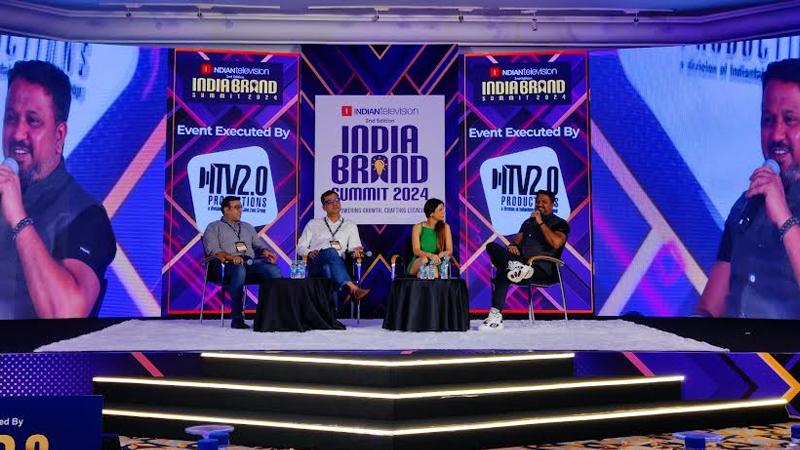
    At India Brand Summit 2024, held in Mumbai, the session was moderated by Good Ants Media founder & CEO Parul Menghani and the speakers were Kotak Life EVP & head of digital business unit, Prasad Pimple, Tata Communications global head – Digital, Experiential & Content Marketing, Saugata Bagchi, and Donear Group, AVP Group Brand Marketing, Aakash Mishra.

    Parul kicked off the session by asking Saugata the challenges that needs to be addressed in addressable advertising to which he said, “Addressable advertising and programmatic advertising share some similarities but also have distinct differences. Addressable advertising focuses on delivering targeted communication across various multimedia channels, while programmatic advertising showcasing the automated buying and selling of ad space. Though they often work together, addressable advertising encompasses a broader range of media, including connected TV and out-of-home (OOH), which programmatic may not always target depending on the campaign.”

    He further delved into the global and local marketing efforts, as it is essential to consider cultural nuances; strategies that succeed in India may fail in Spain, and vice versa. Language barriers also play a crucial role; contextualization goes beyond simple translation to include understanding and respecting cultural sensitivities. Additionally, regulatory differences can impact marketing strategies; for instance, certain advertising approaches might be more permissible in one country than another.

    Moving on, Prasad said, “f your goal is to connect with your audience rather than just focusing on metrics like website visits, you may miss out on immediate customer engagement. Therefore, if your objective isn’t just about these numbers, you should consider top-of-funnel metrics like awareness and consideration, which are also measurable. Ultimately, the focus should always be on the overarching goal of the brand. At the end of the day, everyone is concerned with return on investment. With the rise of digital strategies, tracking this becomes more accessible.

    Aakash emphasised on how effective targeted or addressable advertising isn’t only about placement; it’s also about the content of the message. “I’ve been part of this organization for nearly a year, and it’s easy for competitors to hire a brand ambassador. For example, why focus on celebrities like Shah Rukh Khan or Ranbir Kapoor endorsing products? They command millions, but we need to rethink our approach,” says Mishra.

    The panelists and Parul brought a delightful energy to the discussion on addressable advertising. Each panelist contributed unique perspectives, sparking thought-provoking dialogues that illuminated the evolving landscape of advertising. Parul skillfully guided the conversation, ensuring that all voices were heard and that the discussion remained informative. 

  • IBS: From India to the world: Communication that takes you global

    IBS: From India to the world: Communication that takes you global

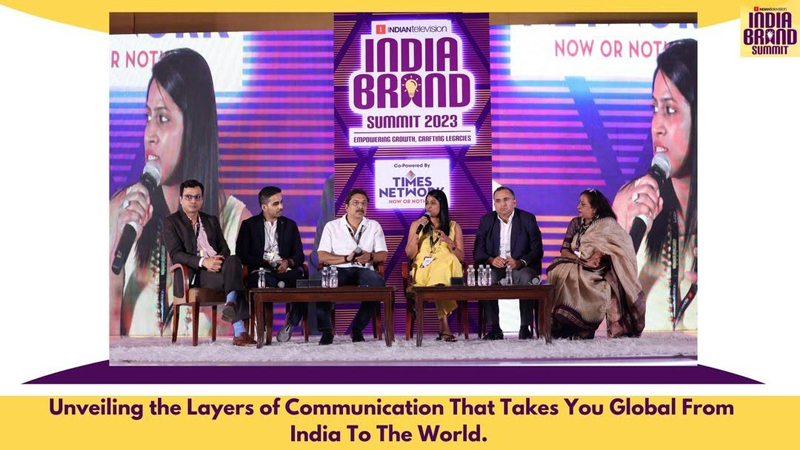
    Mumbai: The India Brand Summit held on 28 November 2023 at The Lalit Mumbai, convenes leaders, marketers, entrepreneurs, and experts to explore current trends, challenges, and opportunities in the dynamic brands and marketing arena.

    The session will offer an insightful exploration into the strategies and tactics essential for effectively navigating the globala communication landscape. With a focus on Indian businesses and entities to expand their reach beyond borders. The session will delve into the nuances of transcending cultural, linguistic, and geographical barriers to map the roadway for the effective communication towards a successful brand building.

    The key highlights of this session are: Understanding global cultural norms, leveraging social media, establishing a consistent global brand identity, crafting boundary-transcending narratives, and adapting to evolving global consumer behaviors, technology, and media landscapes.

    The panel moderated by Indian Television.com Group associate editor Kalpana Ravi had panelists including Tata Communications global head – digital, experiential & content marketing Saugata Bagchi, Pernod Ricard India lead digital communications Shetanshu Dikshit, Hill & Knowlton India CEO Abhishek Gulyani, Value 360 group advisor Paresh Chaudhry, Weber Shandwick India CEO Valerie Pinto.

    The session began by Ravi first asking Pinto about she is taking the India brand story globally.

    To which Pinto answered, “What is the world looking at really from India? They’re looking at unlocking this whole big potential that we have from a middle class standpoint, from the markets that are opening up. We’re seeing a lot of villages transform into towns. So there’s a lot going on in this country and from a brand standpoint, when you’re looking at India as an investor, as a global company looking to launch their brands in India, you’re looking at how do you integrate with culture, How do you look at values, ethics, supporting growth and development. I think if they are able to bring that purpose into brands to communicate, you will have a beautiful brand from India to the world story that we can look at whether it’s people, product, process, we have it all here that’s transforming, whether it’s with digitization or AI or anything else. I think there’s a lot for us to learn from global brands, but also look at how we can inculcate our culture and values to build brands to the world.”

    After which Chaudhry said, “The next 30-40 years belongs to this nation. The last 10 years of reform that has happened has been phenomenal. There are three ways I look at how India’s story can be told globally. So one is from the government side and I think in the last 10 years or 50 years of dispensation with the current government, a lot of reforms and it’s been walking the talk. So that’s that’s really happening foreign relations, trade etcetera. The second one is got is a very political narrative and these political narratives are getting stronger as what China had many years ago when they were rising. India’s into that type what on a situation where a lot of people target the Prime Minister, they target the government and therefore the target companies and having worked with both Mukesh Ambani and Gautam Adhani can tell you that two years exactly before the elections these bombs keep coming on to our to our stables. The third one is of course how companies and all of us here and you guys there. Manage your brands, which is communicating to not just to India. I have spent many years with leavers. There’s one thing that Vindhya Bangla and Harish Manmani used to always say that India is 31 countries rolled into one. 

    So every 100 kilometers, your behavior changes, close changes, your food habit changes and therefore, you know, the way you would market your brands and communicate to them also changes. So once you’ve got a hang of what your country needs and how they think of you as a citizen, as an organization, that builds trust and credibility and therefore it’s easier for you to then go global. So that communication to the outside world and I’ll give you a couple of examples. Which recently happened with the Adani group on the famous Hindenburg report. Which is nothing but a collection of this bad reports, media reports against the group from the last 15-17 years and how we kind of managed to come out of it pretty well, although we’re still down by $20-30 billion. But this whole communication that that the company which is which is very media shy but went not just after every single media house which is relevant. Not just in India, but also the US, in Europe and Australia, in Japan and China, in trying to communicate a story that’s not defending yourself, but just talking about how solid we are on the assets on the ground. So I think earlier people never used to, confront issues, but now I think the changing digital world, it’s very important that how you communicate your story well. My last point here is the consumer versus citizen relationship and communications.Everyone talks about consumer, consumer, customer and consumer all the time. But if your entire DNA is working towards citizens, communication and therefore citizens become such a very important part of how they perceive you as an organization. A good hearted guy, someone who’s got a good social outreach, you care for the environment and you care for your people and therefore you care for your country is something that is very important to communicate to the outside world.There is an if you look at any market research reports across developed and developing countries, you will see that an effective citizen communication. The more chances of 28 per cent higher chances of a citizen buying your brand or being associated with you. For example, Tata is a great example of that. Than just a consumer connect. Consumer loyalty is feeding and failing in how. You open Amazon, you find something at ₹100 discount, you go somewhere else, 120, and you buy that, you don’t get a damn over brands, and that’s where the world is going to. So citizen communication and therefore just not communicating but backing that with a lot of effort in what you’re doing on CSR, what you’re doing on foundations, how you’re helping people, how you’re helping the nation. In a very like, Valerie said ethical transparent manner is something that is so critical to take all the communications to India and beyond borders.”

    Thereafter Gulyani said, “We’ll try and put it into two perspectives, one is the trend disrupting and what most companies today are facing. We’ve to accept the fact that there is a world that is transforming around us. It is vene more challenging for CEOs, marketing heads and everybody else to see how the stakeholder environment in India and globally is evolving. So the challenges are a lot more transformation is a lot more, it’s more rapid and therefore both Indian and global organizations which are trying to look at creating a more sustainable value creation for themselves in the market, need to look at reputation, risk and growth in a virtual cycle. So it’s kind of evolving. So you have to build your reputation in India and globally.You have to map the risks that are coming because of this transformation and because of the geopolitical environment that you’re going to be bringing your business up within India or globally and also the growth because as CEOs or leading brand managers have to manage growth for the organization too. With this aspect in mind, if you look at the India story of to again bridge it into two parts. One is, the story that India is trying to create to the world, which is the new India, which is young, which is aspirational, which has demographic power, it has democracy working in its favour. So there’s a lot of diversity in the country and that story and how we are kind of positioning ourselves as a great investment, a destination for companies to look at. The other part is the India story, which is going out, which is pretty strong in itself. If you look at that, there are two parts parallels you look at the story that we’ve created around. The narrative that we are trying to build around the global South and patterns that we are going to build around financial digitization, the 10 billion UPI story, which is a story that can be built for the entire ecosystem of people sitting here to partner on and say how we can take that business globally and then build brand narratives accordingly. Similarly on the healthcare site, our win through Cowin with 2 billion inoculation drives that we ran which which again is a story that’s going to the world. The third part is the climate change story. You look at the brands that are getting aspirational today. So I think there are two parallels that are running, which is investments coming into India through the new India narrative and again the new India narrative, which is going to the world for companies. A lot of young companies not only expanding in India, but they’re also looking at their second markets as as the Middle East or the Asia Pacific or even looking at US and UK as markets. So I think in that if you map your risk reputation and growth, I think those are going to be key trends which are going to be very important for people who are looking at communication from a brand perspective.Or various facets of advertising, VR or how you want to look at it.”

    Moving forward, Dikshit said, “Loyalty is tough. Humans do not have loyalty. It’s a tough ask, but on a serious note, I think it’s communication with purpose. Gone are the days when from advertising perspective it will be used to think that we can actually hit the cards, and look at the way India is striking gold at Cannes. A last couple of years are great examples and today brands are driving communication with purpose, trust, credibility, authenticity. These are these are just not words talked in the boardrooms. I think brands today are taking a stand. They are building purpose. They are working on continuity and as we go later in the conversation at Pernord Ricard India which is Alco Bev company with brands like Royal Stag. So it has brands across the portfolio right from the massy to the classy. So right from loyal Royal Stag to a brand like shoes, each of the brand tries to communicate to the consumer in a very experience driven conversations because at the core of it is celebration. We operate in a category in which there is celebration. But we talked about we always talk about contained celebration. You cannot go over the top with your celebration. One of the industry initiatives which we took as a stand and Kalpana wanted to highlight how we taken a stand globally. Pernod Ricard India became the first brand in this industry to remove permanent mono cartons across its portfolio. Now what is a permanent mono carton? When you go and buy a brand at a outlet, they give you in a permanent dabba, mono carton. We’ve actually removed this because we realized that this permanent mono cartoons is driving six driving environmental hazards and we realize that if we can remove it permanently from our portfolio, it’s a big challenge. You have to do it in a phased out manner. So it’s a two year project which started a year back and we are proud to say it’s a it’s a team effort at the end of the day. But in June 2023, we actually removed 600 million permanent mono cartons across our portfolio leading to 2.5 lakh trees which were cut. You were trying to kind of get the impact to ensure that environment is kind of being safe. What did it result into? We became the first country at India to do it. Panord Ricard globally took a stand. Our competition also took a stand. So the industry kind of joined us in this initiative. So key take away, if you take a stand, you better take a stand with purpose, don’t just do it from a gimmicky marketing perspective because that because we consumers as Parish talked about is really smart. He knows, he or she knows that you’re doing it with a purpose or you’re kind of just doing it for a namesake. B to highlight there are a lot of challenges, there are a lot of regulations and we as a company. Again as a industry we ensure that whatever we communicate, we do it with trust, credibility, authenticity. But again purpose is really critical for our sustainability is really critical for us. Environmental is really critical for us, when we kind of operate in this in this category.

    Lastly, Bagchi said, “So I think, Tata Communication as an organization is probably one of the best examples for this particular discussion. From a stake in a government entity to forming an international organization which today caters to more than 120 markets globally. I think we are a great example of how to take a concept, a thought, a capability which arises in India and take it globally. See if you take a step back as a country, as India, we have a unique advantage. If you look at it historically and over the ages, what we have propagated to the world, the larger world, in one way or the other is what the West is today following. Be it what are Rishi munies and sages used to write in their doctrines and their books. Be it the concept of yoga, for example, which today is becoming a global phenomenon. The reason I’m saying this is that historically India with a rich culture and heritage is uniquely poised with these traits of trust, credibility and authenticity, which has been taken into the market, which has been taken globally and it has actually given us a lot of credibility and traction. What we need to now consistently do and smartly do with all of our all of our global exposures now is to position or continue to position ourselves even more strongly. Building upon these things, another huge advantage that we have today, is the level and the quality of talent that we have till about 10-15 years back. At least when I was in college, I was told that if you are not going abroad, if you’re not in the US in your early 20s, if you’re not in the UK in your early 20s, you won’t be able to do much with life. That has changed. So I mean jokes just in the lighter way. So the point I’m making is that the way India has repositioned itself due to various factors puts us in a very interesting and in a position of power to actually take what we have, not only build our own brands globally but also to build global brands which are emanating from outside of this country and bring them to India. So I think it’s a very beautiful cross pollination that that we are currently doing and can continue to do. Like I said, Tata Communication is a great example, more than 35% of our workforce resides outside of this country. And the reason why a majority of the workforce resides here is because the kind of ideas, the kind of technical capabilities, the kind of, heavy lifts that we can do sitting out of our India offices actually benefits our global markets far more. So I’ll not meander from here but going back, we have the credibility, we have the capability, we have the talent, we have the authenticity and we have the trust. We now need to position ourselves more more actively, more aggressively and in a much more smarter manner to be able to drive this momentum of taking Bharat into the global markets.”

  • NatureFresh salutes the spirit of the homemaker in latest campaign

    NatureFresh salutes the spirit of the homemaker in latest campaign

    MUMBAI: NatureFresh, the home-grown brand of Cargill’s food business in India, has launched its new digital campaign ‘#AsliKhiladi’ with Delhi Daredevils, highlighting the importance of the homemaker in the life of a family. 

    The campaign emphasises the homemaker’s active life and her ability to meet every need of the family, in a quirky manner. With about 2.5 million views and counting, this campaign is currently the second most buzzing campaign in the SportsWatch IPL 2018 Brand Effectiveness Study. 

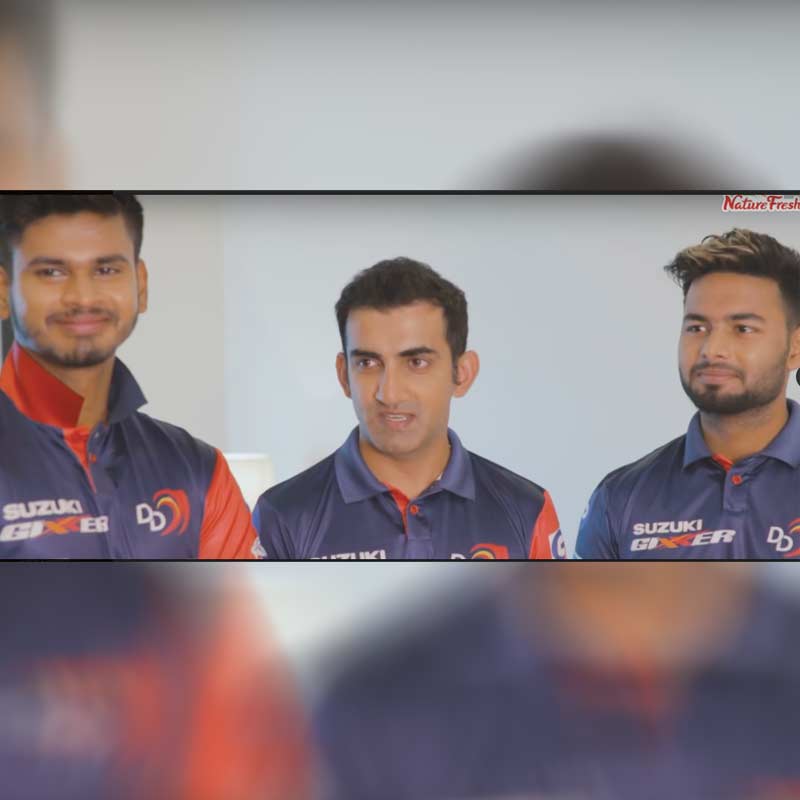
    Based on the premise that ‘Asli Khiladi Wahi Jisme Shakti Bhi, Sfurti Bhi’, the story opens with running commentary by three Delhi Daredevil players who observe a homemaker, doing her everyday chores, actively and with a great deal of energy. In the end, the three players conclude by saying that while they do play on the cricket field, the real player in everyone’s lives is the woman or the homemaker. With clever dialogues, the narrative draws parallels between the life of a homemaker and that of a cricketer during a match. It highlights that both require one to be active and energetic, whether at home or on the field.

    Cargill Foods managing director Deoki Muchhal says, “As a consumer brand, engagement with consumers is always our key focus. NatureFresh represents active living and by highlighting our association with Delhi Daredevils, through the #AsliKhiladi campaign, we are looking at organically extending the brand’s ethos. I believe that this campaign will help us accentuate brand equity for NatureFresh as we continue to build a stronger consumer footprint, across the country.”

    Quasar Media national head Saugata Bagchi, who supervised the creatives of the campaign adds, “This NatureFresh campaign for IPL came as a welcome challenge to us as not many clients take a digital-first approach for an IPL association. The ask was to showcase the brand fit in the consumer’s daily life and build brand awareness for NatureFresh. With #AsliKhiladi we captured the imagination of our audience while engaging DD fans and letting them know, where all Nature Fresh adds value to their lives. The success of the campaign is evident in the surge of relevant conversations which made it a trending IPL campaign in no time.”

  • Tribal DDB’s Bagchi and Rapp India’s George get additional charge

    MUMBAI: DDB Mudra Group‘s digital agency Tribal DDB and multi-channel agency RAPP India have given additional responsibilities to Saugata Bagchi and Bijoe George.

    George, who is vice-president of RAPP India, will now handle the agency‘s operations in the West and South. He will also continue to lead RAPP‘s key client in India, HP.

    While, Tribal DDB VP Bagchi will now be in charge of the West and South operations for Tribal DDB through Mumbai and Bangalore offices.

    Both, George and Bagchi will continue to report to Tribal DDB and Rapp India president Venkat Mallik.

    Mallik said, “We have had a very good 2012 for both Tribal DDB and RAPP. The new structure with expanded roles for Bijoe and Saugata will help us leverage their skills better &build on the progress we have made in 2012. The year 2013 should see us deepening our capabilities anddelivering higher quality business and creative solutions for our clients while we build RAPP and Tribal DDB into stronger bigger communications agencies.”

    Bagchi said, “We‘ve had a strong hold in the western market and were able to further consolidate it in 2012. I am very excited about this new opportunity and believe that with our new improved digital skill sets, our clients in Southern India will increasingly contribute to the fast pace of growth that we‘ve set for Tribal DDB India.”

    “Over the last few years RAPP India has won many blue chip clients and 2013 would further propel our growth story. It would be exciting to lead this growth and transformation. Given RAPP‘s legacy in the data analytics space combined with its media neutral offering, clients across verticals will find the RAPP proposition a compelling one,” George said.

  • Digitas India appoints Saugata Bagchi as Mumbai head

    Digitas India appoints Saugata Bagchi as Mumbai head

    MUMBAI: Digital marketing agency, Digitas India, has appointed Saugata Bagchi as the agency‘s new vice-president.

    Bagchi will also head the Mumbai office and will report to Digitas India president Kanika Mathur.

    Bagchi moves in from Tribal DDB India. His mandate as VP and head of Mumbai will be to consolidate and grow the Digitas India‘s portfolio in the CRM business while making fresh inroads in the digital marketing and branding arena. 
     
    Mathur said, “We are excited about the decade of brand management experience that Saugata brings to the team. With his cross-functional exposure across a great mix of brands and categories – from FMCG and healthcare to telecom and auto – we will be able to further strengthen our client portfolio.”

    With nearly a decade of experience, Bagchi has worked on both sides. He has worked with companies such as Sanofi-Aventis, Pfizer, AstraZeneca and agencies including Sudler & Hennessey and JWT.

    Bagchi has worked across 20 different key brands and categories involving sales and marketing campaigns in the traditional and new media arms of the business.