Tag: Satyajit Ray

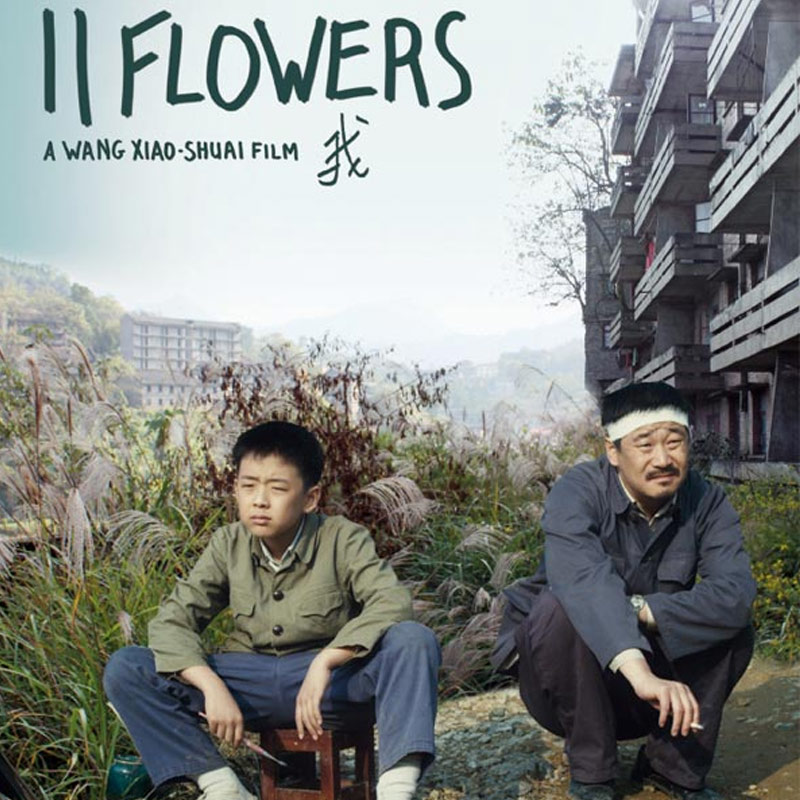
  • Chinese film 11 Flowers to open Third Eye fest

    Chinese film 11 Flowers to open Third Eye fest

    MUMBAI: The 10th edition of the Third Eye Film Festival will open with the screening of the Chinese film 11 Flowers directed by Xioshuai Wang at the Ravindra Natya Mandir, Mumbai on 22 December.


    While Iranian director Asghar Farahadi‘s A Sepration will be the centre piece of the festival, Ketan Mehta‘s yet unreleased film, Rang Rasiya will be the closing film.


    This year‘s festival is to be dedicated to the fond memories of star-filmmaker Dev Anand. As a tribute to him, his memorable film Guide will be screened during the festival.


    The festival will commemorate the Golden Jubilee of the Film and Television Institute of India (FTII), Pune. As a part of the commemoration, a film each of the FTII‘s six alumni, who have made India proud by their respective work, will be screened. The six celebrated alumni are Adoor Gopalakrishnan, Girish Kasaravalli, Vikas Desai, Jahnu Barua, Ketan Mehta and Shaji Karun.


    The festival will also commemorate the 150th Birth Anniversary of Rabindranath Tagore by screening seven Bengali films made on his published stories by Satyajit Ray (Charulata and Teen Kanya), Tapan Sinha (Kabuliwala, Kshudito Pashan and Atithi) and Rituparno Ghosh (Choker Bali and Nauka Dubi).


    On the occasion of his 100th birth anniversary this year, the Festival will pay homage to Ashok Kumar. On the occasion, BR Chopra‘s Gumrah, rated as one of his best starrers will be screened.


    Organised by Asian Film Foundation in collaboration with PL Deshpande Maharashtra Kala Academy and supported by the state government of Maharashtra, the Festival will showcase 84 select feature films and 45 short fiction films from filmmaking countries across the Asian continent.


    All the films will be screened at the two theatres in the Ravindra Natya Mandir complex from 10 am to 8.30 pm.

  • FTII governing body wants changes for upgradation

    FTII governing body wants changes for upgradation

    NEW DELHI: The Governing Council of the Film and Television Institute of India, Pune, has examined the Detailed Project Report for the upgradation of the Institute and suggested some changes.

    The DPR was prepared by a Committee of Experts following the decision of the Government to upgrade both the FTII and the Satyajit Ray FTII in Kolkata. A plan has already been undertaken to upgrade the FTII in a phased manner during the 11th and 12th Plan.

    A bill is to be introduced in Parliament shortly to enable the FTII – which is marking its 40th year – become a Centre of Excellence, Information and Broadcasting Ministry sources told indiantelevision.com.

    This recognition would enable the Institute to foster creative ideas and also enjoy the academic status and privileges of a University. It would also help students pursue higher studies and research in India and overseas. This measure would enable the FTII to draw a road map, to address the growing needs of the media and entertainment industry.

    The DPR broadly contains recommendations for revitalisation of the courses being offered by the Institute. It also envisages enhancing the infrastructure of the Institute.

    In a recent visit to Pune by members of Parliament, they endorsed the vision statement made by FTII Chairman Saeed Mirza. The MPs were of the view that FTII should reach out to remote areas to tap talents available there. For this purpose, it was proposed to hold mobile short term courses in critical aspects of filmmaking.

  • Prasar Bharati’s film ‘Video Game’ wins Tiger Award at Rotterdam Intl. Film Festival

    Prasar Bharati’s film ‘Video Game’ wins Tiger Award at Rotterdam Intl. Film Festival

    MUMBAI: The Public Service Broadcasting Trust (PSBT) / Prasar Bharati produced film Videogame, has bagged the Tiger Award at the Rotterdam International Film Festival.

    An official announcement quotes the jury’s citation for Vipin Vijay’s movie Videogame saying:

    “Video Game is yet another illustration that there’s more to the Cinema of India than can be contained with the received wisdom which seeks to encompass it by reference to a dualism opposing Satyajit Ray to Bollywood. Video Game shows a relentless, complex post-modern intelligence as it processes everything within its view, within its memory, within its wide range of cultural references.”

    “Its title is an index to this complexity, as it evokes not only digital game space as an aspect of real, but the pursuit of video within the understanding of a game, replete with strategies, movements, and counter-movements. A new kind of road movie, indeed.”