Tag: Satyajit Ray

  • Ray’s restored and preserved prints of Apu trilogy to be exhibited in California

    Ray’s restored and preserved prints of Apu trilogy to be exhibited in California

    New prints of the three films of cine craftsman Satyajit Ray’s Apu Trilogy preserved by the Archives of the Academy of Motion Picture Arts and Sciences are to be screened by the Academy which gave him a lifetime achievement award.

    Actress Sharmila Tagore (Apur Sansar) and Dilip Basu, Founding Director of the Satyajit Ray Film and Study Center collection at the University of California, will be present as special guests for the screenings.

    Pather Panchali and Aparajito will be screened on 6 September while Apur Sansar will be screened on 9 September at the Samuel Goldwyn Theater.

    Satyajit Ray received an Honorary Award from the Academy in 1992 in recognition of his rare mastery of the art of motion pictures, and of his profound humanitarian outlook, which has had an indelible influence on filmmakers and audiences throughout the world.

    The Academy Film Archive’s Satyajit Ray Preservation Project is an ongoing effort to preserve and restore Ray’s entire filmography. It began in 1992, after the producers of the Oscar telecast, who were gathering clips for the presentation of Ray’s Honorary Award, discovered that there were very few prints or video masters of Ray’s films in the US and that they were incomplete and in poor condition.

    Earlier, Ray has been honoured this year by screening of his films at the Toronto Film Festival and the British Film Institute which is currently also hosting an exhibition of posters by him.

  • Satyajit Ray’s work to be exhibited in UK

    Satyajit Ray’s work to be exhibited in UK

    NEW DELHI: The British Film Institute (BFI) is hosting a special two-month festival of selected films of Satyajit Ray in London and will also put up an exhibition of Ray’s design works.

    The exhibition, the first to be held in the United Kingdom, will take place at the BFI Southbank from 14 August until mid-October.

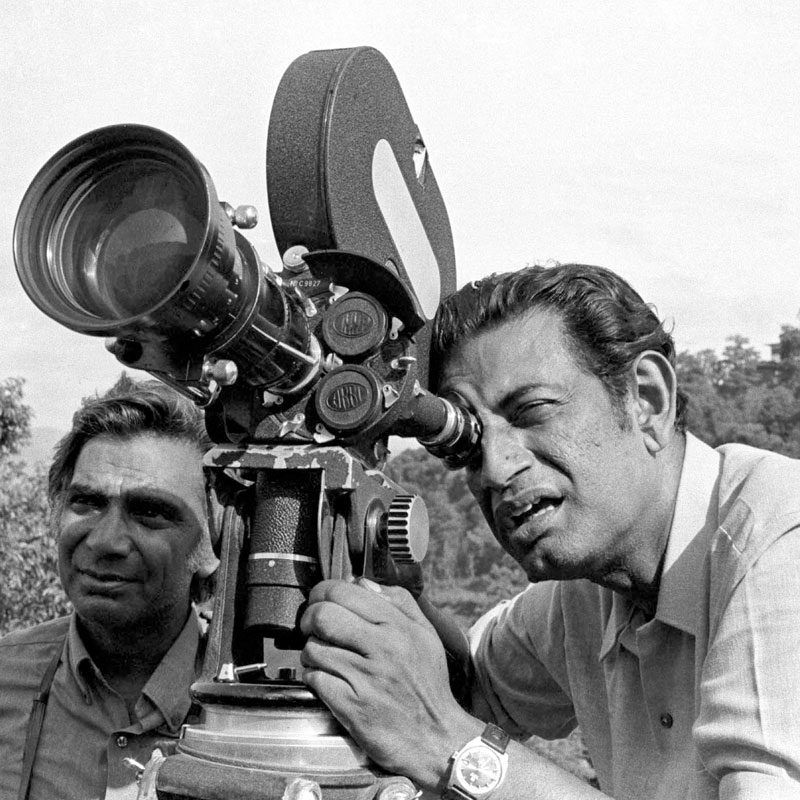
    Before Ray directed Pather Panchali in 1955, he worked as a graphic designer for an advertising agency in Kolkata. In addition to creating over 30 films throughout his career he also designed many of their sets, costumes, credit sequences and posters.

    A selection of the director’s poster designs will be on show in the Atrium at the BFI Southbank. It will include both original and facsimile posters, showcasing the best of Ray’s creations.

    The BFI website said: “Ray’s unique graphic style owed as much to Indian art and indigenous folklore as it did to Western traditions. His wide-ranging poster designs encompass surreal photographic collages, ornate portraits as well as bold, typographic experiments, their imagery and lettering borrowing from scenes and motifs in his cinema. Far more than just a beautiful, eye-catching advertisement, each poster offers Ray’s own interpretation of his film as he distilled it into one image.”

    The exhibition has been organised by Isabel Stevens, Maggi Hurt and Claire Smith. The posters have been sourced from the BFI National Archive and the Society for the Preservation of Satyajit Ray Archives and Ray Estate, Kolkata.

    The films to be screened as part of Ray season in association with the Academy of Motion Picture Arts and Sciences in August are Pather Panchali, Aparajito,Jalsaghar, Apur Sansar, Devi, TeenKanya, Charulata, Kanchenjungha, Nayak,Kapurush, Chiriakhana, Abhijan and Parash Pathar. Mahanagar is also being screened to mark the 50th anniversary of the film.

    Two documentaries directed by Ray- commemorating writer, artist and composer Rabindranath Tagore and Satyajit Ray’s father Sukumar Ray will also be screened.

    A Masterclass on Pather Panchali by filmmaker and teacher Mamoun Hassan who headed the BFI in 1970s is also a part of the programme.

  • Satyajit Ray’s Goopy and Bagha in animation at Toronto Filmfest

    Satyajit Ray’s Goopy and Bagha in animation at Toronto Filmfest

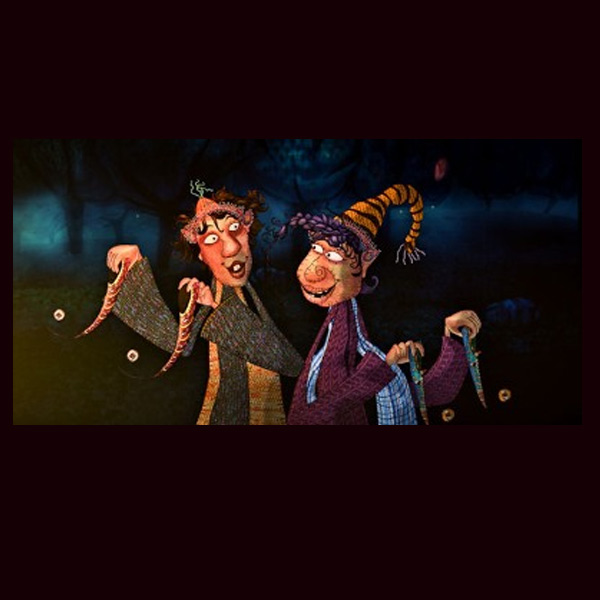
    NEW DELHI: The animation film The World of Ghoopi and Bagha by Shilpa Ranade is being screened in the 39th Toronto International Film Festival’s Kids section.


    The film is based on Satyajit Ray’s live action 1969 Bengali language children’s musical ‘Goopy Gyne Bagha Byne’. The original was based on a story told by Ray’s grandfather. The animation film has been made for the Children’s Film Society, India.


    Indian romantic comedy Shuddh Desi Romance directed by Maneesh Sharma and produced by Aditya Chopra will also see its premiere at the Festival being held 5 to 15 September which will also have Ritesh Batra’s The Lunchbox.


    Ranade’s film has been announced in the update list of more than a dozen films from Asia in various sections announced now, doubling the size of this year’s Asian selection.

  • Acclaimed Bengali filmmaker Rituparno Ghosh passes away at 49

    Acclaimed Bengali filmmaker Rituparno Ghosh passes away at 49

    NEW DELHI: Noted filmmaker Rituparno Ghosh, who was expected to take on the mantle oficons like Satyajit Ray and Ritwik Ghatak in West Bengal, died early this morning of cardiac arrest at his south Kolkata residence.

    Winner of 12 national and some international awards, the 49-year-old Ghosh was suffering from pancreatitis and died of heart attack at 7.30 am, his family said.

    Ghosh had gained international fame for films like Dahan (1997),‘Asukh(1999), Chokher Bali (2003), Raincoat (2004), Bariwali (1999),Antarmahal (2005), Noukadubi (2010), and The Last Lear ((2007), all of which won him several awards.

    Born on 31 August 1963 in Kolkata, Ghosh was fortunate that both his parents were related to films, his father being a documentary film maker. He completed his schooling from South Point High School, and pursued economics from Jadavpur University, Kolkata.

    Rituparno started his career in advertising. He had first gained fame for his direction of a children‘s film ‘Hirer Angti‘ in 1994 and his film ‘Unishe April‘ won him a national award in 1995.

    He won the National film award for Best Director for his Bengali film Abohoman starring Jishu Sengupta, Ananya Chatterjee, Dipankar Dey and Mamata Shankar. He made his first screen presence in an Oriya film Katha Deithilli Ma Ku which is directed by Himanshu Parija and released in 2003.

    He hosted two celebrity chat shows, namely Ebong Rituporno on ETV Bangla and Ghosh and co. on Star Jalsha. He also was the scriptwriter of Gaaner Opare.

    His film Just another Love Story in 2009 received rave reviews all over the world. He later made Kashmakash in 2011. His last films were Chitrangada in Bengali in which he also acted, and Sunglass in Hindi, both in 2012. In both Just another Love Story and Memories in March, he reprised the role of a homosexual.

    In fact, he never hid the complexities about his sexuality and said he wanted to live his life on his terms.

    Talking to indiantelevision.com over telephone, thespian Soumitra Chatterjee said he was too shocked to say anything. He said the nation had lost a very promising film director at a very early age.

    Eminent filmmaker Buddhadeb Das Gupta, speaking over the phone in Mumbai, said he had known Ghosh as a young man coming to his house with his father, and had also helped him when he turned filmmaker. He was therefore very saddened by the death. As a tribute, Das Gupta said Ghosh always lived life the way he wanted, without caring about what society would say.

    West Bengal State Commerce and Industry minister Partha Chatterjee visited his home in the morning.

    I&B minister Manish Tewari has condoled the untimely death of Ghosh.

    In his condolence message, Tewari said, "I am deeply shocked by the tragic and premature death of Ghosh. He was a creative genius who gave a new dimension to film making with every film that he was associated with. His films always left a deep imprint on minds of the audiences who were captivated by the honest portrayal of human emotions. Cinema has lost a visionary, as Ghosh was always innovative and bold in undertaking new themes for his films. His death has left a void which will be very difficult to fill.”

  • Ananth Mahadevan to adapt short story of Satyajit Ray

    Ananth Mahadevan to adapt short story of Satyajit Ray

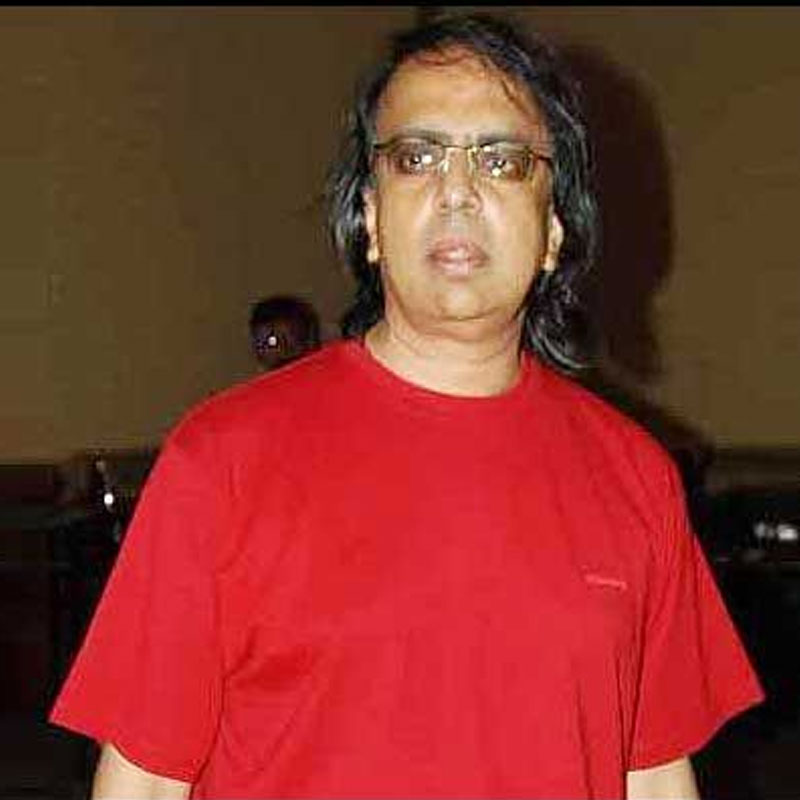
    MUMBAI: In his zest to pay a tribute to Satyajit Ray, actor-director Ananth Mahadevan has decided to adapt a short story Golpo Boliye Tarini Khuro of the master filmmaker.

    Golpo Boliye Tarini Khuro follows the sojourn of a man, who after retirement, looking to keep himself engaged, is invited to be a storyteller of a rich businessman. It is a piquant situation he finds himself in. Thereafter, Ray springs two magnificent surprises in the narrative, quips Mahadevan. The director has thought of Amitabh Bachchan to reprise the role of the retired person.

    Talking about the story, Mahadevan observes, “A writer friend of mine Tapobrati Das Sammaddar approached with me with the story. It set my adrenaline pumping. A tribute to Ray was a rare opportunity and after hearing the charming story he had penned, I wrote to Sandip Ray for permissions hoping that he wouldn‘t have any reservations.”

    After all, it‘s better to keep the master‘s story confined within the pages of a book rather than let it turn into a wrongly made film, he felt. “But I guess my track record of 4 National awards and my penchant for challenging subjects turned the tide in my favour. Sandip was prompt and gracious in giving me the requisite permission,” Mahadevan avered.

    Mahadevan has already written to Amitabh Bachchan. “I am waiting for Mr Bachchan to revert,” the filmmaker maintained. Right now, he is working on the rest of the cast and crew.

    The film will be christened The Storyteller.

  • Satyajit Ray Foundation picks six films for short film competition

    Satyajit Ray Foundation picks six films for short film competition

    MUMBAI: The Satyajit Ray Foundation has shortlisted six films that would be screened at the Foundation‘s short film competition.

    Satyajit Ray Foundation‘s short film competition is held in association with London Indian Film Festival.

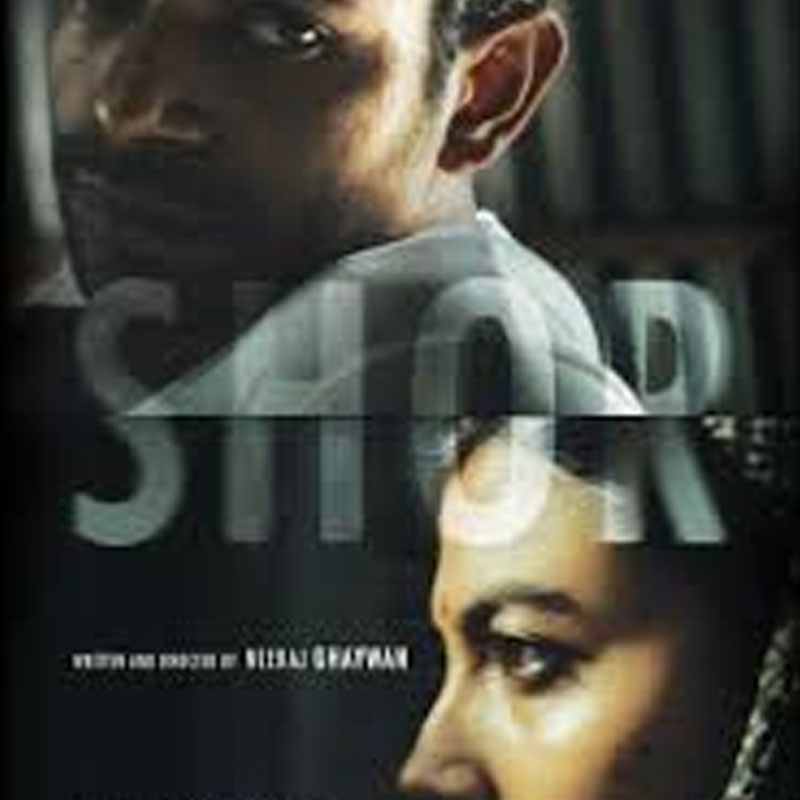
    Prominent among the films are Neeraj Ghaywan‘s Shor that earlier won the ‘Best Short Film‘ award at the Indian Film Festival of Los Angeles (IFFLA) and South Asian International Film Festival (SAIF), and Raju, which was nominated for this year‘s Academy Awards.

    The other shortlisted films are Ayesha (UK), Khaleel Khan Ke Faakhtey (India), Maya, and Unravel (both UK).

    The shortlisted films will screen on 27 June at the London Indian Film Festival while the winning film would be announced on the closing night ceremony of the festival on 3 July.

  • Filmmakers observe 91st birth anniversary of Satyajit Ray

    Filmmakers observe 91st birth anniversary of Satyajit Ray

    MUMBAI: Filmmakers the world over are observing the 91st birthday of noted filmmaker and India’s first Oscar winner Satyajit Ray today.

    Having started his career as a graphic artist before heading to London to realise his passion for filmmaking, Ray went on to make timeless classics like Apu Triology, Jalsaghar, Sonar Kella, Charulata, and Shatranj Ke Khiladi.

    His path-breaking films with strong subject, poetic storytelling and innovative filmmaking style has been a benchmark for filmmakers and it is called as Ray‘s school of films.

    Son of poet and author Sukumar Ray and grandson of legendary writer Upendrakishore Roychowdhury, Ray graduated from the Presidency College of Kolkata and enrolled himself into the Vishva-Bharati University
    founded by Rabindranath Tagore and trained under such masters as Nandalal Bose and Benod Behari Mukherjee.

    Ray is the only Indian filmmaker to have received the Academy Award for Lifetime Achievement in 1992, but being gravely ill then, could not collect the Oscar in person and sent in a recorded message instead.

    He passed away on 23 April 1992.

  • Kahaani maker Sujoy Ghosh rubbishes talks of plagirism

    Kahaani maker Sujoy Ghosh rubbishes talks of plagirism

    MUMBAI: Sujoy Ghosh has trashed stories about his film Kahaani’s climax bearing a striking resemblance with that of the Angelina Jolie-starrer Taking Lives.

    The ending of Taking Lives shows a heavily pregnant Jolie sitting alone in her house when she discovers a serial killer. She tries to escape but is overpowered by him and is punched and thrown to the ground. During the altercation, the serial killer begins to choke her and eventually stabs her in her pregnant belly with a pair of scissors.

    Jolie, seemingly unharmed by the stabbing, shocks him by quickly stabbing him with the same pair of scissors. As the killer lies dying, Jolie removes a prosthetic pregnant belly, and says the past seven months have been a planned trap.

    In Kahaani, the protagonist Vidya Bagchi too is heavily pregnant and in search of a man who looks like her husband Arnab Bagchi. The lady also gets into a similar act by killing the person, not with a pair of scissors, but with her hairpin.

    Said Ghosh, “Since I started making Kahaani, people spoke about so many sources that it has been copied from. In this country, where people don‘t know about Satyajit Ray, Yash Chopra and Manmohan Desai, it‘s amazing to note people are aware of films made in distant land seven years ago in 2004,” adding, “ does this mean two lookalike people from different parts of the world have the same root.”

    According to Ghosh, his portrayal of Vidya Bagchi was to get to the fore the prowess of Maa Durga killing the evil. “Did Jolie also play Maa Durga or was she possessed by the goddess?” Ghosh questions.

    While the Jolie film received mostly poor reviews, Ghosh’s Kahaani has turned out to be a runaway hit.

  • Dadasaheb Phalke award for Soumitra Chatterjee

    Dadasaheb Phalke award for Soumitra Chatterjee

    MUMBAI: Bengali film actor Soumitra Chatterjee will be honoured with the Dadasaheb Phalke award on 3 May.

    Confirming the news to Indiantelevison.com, Chatterjee said he is happy since the Dada Saheb Phalke Award has not been tainted by petty politics or biases. He said he had been reminded of his senior Satyajit Ray and Tapan Sinha, who have also been honoured in the past.

    Ray had got the award for 1984 and Sinha for 2006.

    Born on 19 January 1935, Chatterjee is known for his frequent collaborations with Satyajit Ray and his constant comparison with screen idol Uttam Kumar.

    His centrality to Ray‘s work is akin to other key collaborations in the history of cinema – Mifune and Kurosawa, Mastroianni and Fellini, De Niro and Scorsese, DiCaprio and Scorsese, Max von Sydow and Ingmar Bergman and Jerzy Stuhr and Kielowski. He also worked with Sharmila Tagore in a number of Ray films.

    Chatterjee also featured as Feluda/Pradosh Chandra Mitter, the famous private investigator from Calcutta in Ray‘s Feluda series of books, in two films in the 1970s Sonar Kella and Joy Baba Felunath.

    Ghare Baire, an adaptation of Rabindranath Tagore‘s novel of the same name and one of Ray‘s major ventures of the 1980s, featured Chatterjee in a leading role in the character of a radical revolutionary in a love triangle with his friend‘s wife. These roles showcased Chatterjee‘s versatility in playing diverse characters, especially in an urban setting.

  • Compilation of long-lost articles of Satyajit Ray out

    Compilation of long-lost articles of Satyajit Ray out

    MUMBAI: Sandip Ray has managed to bring out the second book of original writings by his father Satyajit Ray.

    An outcome of an intensive research over many months, the collection of essays by Ray has been published by HarperCollins in association with the Society for the Preservation of Satyajit Ray Films.

    The book contains Ray’s articles that lay scattered in dailies, magazines, film bulletins and publications which are now extinct. It is rich with images like film and production stills, rare portraits of Ray and a substantial number of sketches and photographs by the great director.

    The book has Ray’s views on filmmakers like Charlie Chaplin, Michelangelo Antonioni, Jean Luc Goddard and Bengal‘s matinee idol Uttam Kumar. This book brings together some of his most cerebral writings on film and even gives the readers a peek into his experiences at film festivals.

    This is Ray‘s second book on cinema in English, appearing 35 years after the publication of his first one ‘Our Films Their Films, in 1976.