Tag: Satyajit Ray

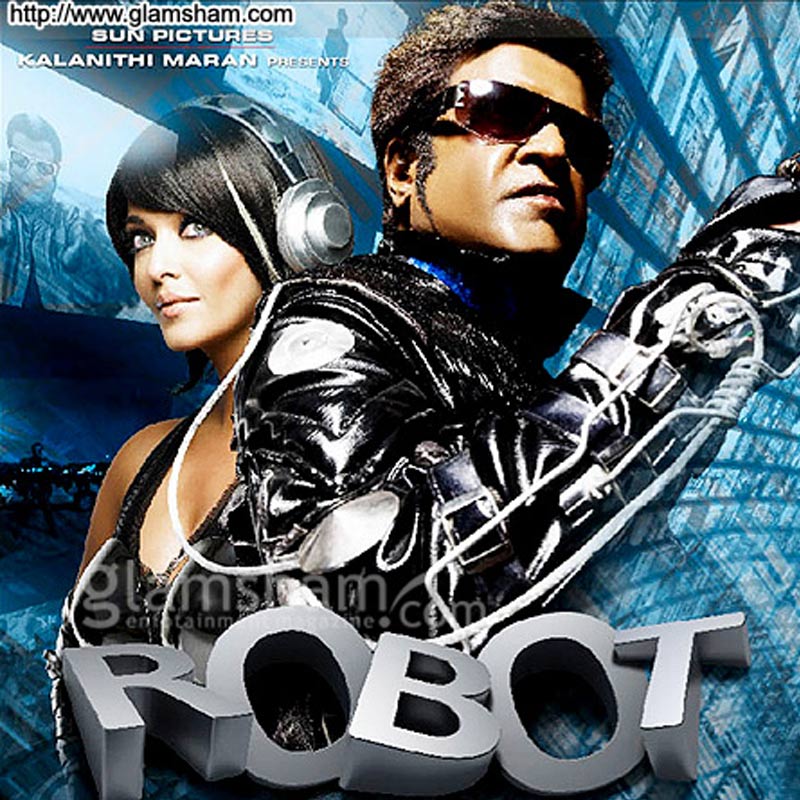
  • Leading Korean filmmaker impressed by Rajini ‘Robot’; keen to co-produce with India

    Leading Korean filmmaker impressed by Rajini ‘Robot’; keen to co-produce with India

    NEW DELHI: Critically-acclaimed Korean filmmaker Kim Jee-Woon, whose action thriller ‘The Age of Shadows’ is the Closing Film for the International Film Festival of India, said it would “surely be great” to incorporate elements of cinema from both countries into each other’s films.

    Addressing the media in Panaji, he said he would like to mix the elements of Indian cinema like humour and other real life emotions into Korean films, he added.

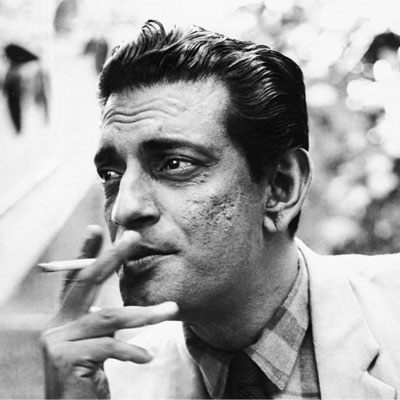
    Kim said he has been greatly inspired by the stalwarts of Indian cinema like Satyajit Ray and his films like Pather Panchali and Aparajita among others. They have had a major impression on his style of film making. He would like to collaborate with the Indian film industry to make films on history and the Independence struggle in both the countries, he added.

    Jee-woon, who led successful films like “I Saw the Devil”, “The Last Stand” and “The Good, the Bad, the Weird”, was highly impressed with the Tamil superstar Rajinikanth’s “Robot” and would love to make a film like that some mix of historical drama.

    Lead actor Song Kang-Ho said he is honoured that their film – which is also the South Korean entry in the Oscars – has been selected as the Closing Film at the IFFI 2016 and he is hopeful that the times to come would see more critically acclaimed films from both India and Korea being screened for the people in both the countries.

    Set in Seoul and Shanghai, during the Japanese occupation in the late 1920s, the film depicts an intense drama that unfolds between a group of resistance fighters trying to bring in explosives from Shanghai to destroy key Japanese facilities in Seoul, on one side, and Japanese agents trying to stop them, on the other. A talented Korean-born Japanese police officer, who was previously in the independence movement himself, is thrown into a dilemma between the demands of his reality and the instinct to support a greater cause.

    Kim said his film is not an attempt to show action and violence on the screen but to depict intense emotions associated with the Korean Independence struggle against the Japanese occupation. He informed that he has tried his best to show these emotions through special sound effects and the ability of his actors to emote them on the screen.

  • Leading Korean filmmaker impressed by Rajini ‘Robot’; keen to co-produce with India

    Leading Korean filmmaker impressed by Rajini ‘Robot’; keen to co-produce with India

    NEW DELHI: Critically-acclaimed Korean filmmaker Kim Jee-Woon, whose action thriller ‘The Age of Shadows’ is the Closing Film for the International Film Festival of India, said it would “surely be great” to incorporate elements of cinema from both countries into each other’s films.

    Addressing the media in Panaji, he said he would like to mix the elements of Indian cinema like humour and other real life emotions into Korean films, he added.

    Kim said he has been greatly inspired by the stalwarts of Indian cinema like Satyajit Ray and his films like Pather Panchali and Aparajita among others. They have had a major impression on his style of film making. He would like to collaborate with the Indian film industry to make films on history and the Independence struggle in both the countries, he added.

    Jee-woon, who led successful films like “I Saw the Devil”, “The Last Stand” and “The Good, the Bad, the Weird”, was highly impressed with the Tamil superstar Rajinikanth’s “Robot” and would love to make a film like that some mix of historical drama.

    Lead actor Song Kang-Ho said he is honoured that their film – which is also the South Korean entry in the Oscars – has been selected as the Closing Film at the IFFI 2016 and he is hopeful that the times to come would see more critically acclaimed films from both India and Korea being screened for the people in both the countries.

    Set in Seoul and Shanghai, during the Japanese occupation in the late 1920s, the film depicts an intense drama that unfolds between a group of resistance fighters trying to bring in explosives from Shanghai to destroy key Japanese facilities in Seoul, on one side, and Japanese agents trying to stop them, on the other. A talented Korean-born Japanese police officer, who was previously in the independence movement himself, is thrown into a dilemma between the demands of his reality and the instinct to support a greater cause.

    Kim said his film is not an attempt to show action and violence on the screen but to depict intense emotions associated with the Korean Independence struggle against the Japanese occupation. He informed that he has tried his best to show these emotions through special sound effects and the ability of his actors to emote them on the screen.

  • Zee Classic lines up Bimal Roy Film Festival in February

    Zee Classic lines up Bimal Roy Film Festival in February

    MUMBAI: Zee Classic is gearing up to present an ode to the pioneer of Indian cinema – Bimal Roy by celebrating noteworthy work from the golden era.


    Commemorating Roy’s 50th death anniversary, Zee Classic will celebrate the life and work of the legendary filmmaker with the Bimal Roy Film Festival, which will be presented by Boman Irani.


    Irani will present some of extraordinary and undiscovered facts and trivia about the filmmaker whose films, even after five decades, are still innovative and relevant today. In a five-part weekly series, the channel will showcase Roy’s awe-inspiring films every Saturday at 8 pm starting with Do Bigha Zamin on 6 February followed by Devdas on 13 February, Madhumati on 20 February, Sujata on 27 February andBandini on 5 March.


    The channel has roped in State Bank of India as the co-powered by sponsor for the festival.


    Satyajit Ray referred to Roy as the ‘Pioneer of Indian Cinema.’ He was known to be everyone’s first choice as a director and he received a lot of international accolades. Roy began his career as a cinematographer under director, P.C. Barua. His first project as a cameraman was Devdas, based on the novel of Sarat Chandra. He turned director with a Bengali film, Udayer Pathe. After shifting his base to Mumbai, he made few films but the world took notice of this gentle legend with the classic film, Do Bigha Zamin.


    One of his popular films that represented India in 1960 Cannes Film Festival was Sujata. It is based on a Bengali short story written by Subodh Ghosh and dealt with the subject of untouchability starring Nutan. The actress repeated her outstanding performance in Roy’s melodious Bandini, an intense romantic drama that shed light on mental and physical rehabilitation of a female murderer. To top it all, his Madhumati was the first Indian film to be launched abroad and its opening shot was taken in front of the Karlovy Vary International Film Festival Theatre in Czechoslovakia.


    Speaking about presenting the film festival on Zee Classic, Irani says, “I am honoured to be presenting the Bimal Roy Film Festival on Zee Classic. Bimal Da was an institution in himself. Decades have passed and there is still a lot more to learn from his school of filmmaking. Through this festival, we are aiming not only to appreciate but relive his passion, his outlook towards society and its reform which are still relevant today.”


    Zee Entertainment Enterprises Ltd business head – Hindi movie channels Ruchir Tiwari added, “We pride in showcasing the best of the golden era to our audiences with our positioning being ‘Woh Zamaana Kare Deewana’! And, any mention of the golden era is incomplete without its plinth, i.e., Bimal Roy. We wanted to commemorate the work of this legend and it all fell in place when Boman Irani agreed to be a part of this series. He is the perfect presenter for this series as he not only believes in the ideology of Zee Classic but is also a huge admirer of Bimal Roy’s work. It will be interesting to see how his passion for the filmmaker translates on-screen with anecdotes and unheard facts.”

  • Zee Classic lines up Bimal Roy Film Festival in February

    Zee Classic lines up Bimal Roy Film Festival in February

    MUMBAI: Zee Classic is gearing up to present an ode to the pioneer of Indian cinema – Bimal Roy by celebrating noteworthy work from the golden era.


    Commemorating Roy’s 50th death anniversary, Zee Classic will celebrate the life and work of the legendary filmmaker with the Bimal Roy Film Festival, which will be presented by Boman Irani.


    Irani will present some of extraordinary and undiscovered facts and trivia about the filmmaker whose films, even after five decades, are still innovative and relevant today. In a five-part weekly series, the channel will showcase Roy’s awe-inspiring films every Saturday at 8 pm starting with Do Bigha Zamin on 6 February followed by Devdas on 13 February, Madhumati on 20 February, Sujata on 27 February andBandini on 5 March.


    The channel has roped in State Bank of India as the co-powered by sponsor for the festival.


    Satyajit Ray referred to Roy as the ‘Pioneer of Indian Cinema.’ He was known to be everyone’s first choice as a director and he received a lot of international accolades. Roy began his career as a cinematographer under director, P.C. Barua. His first project as a cameraman was Devdas, based on the novel of Sarat Chandra. He turned director with a Bengali film, Udayer Pathe. After shifting his base to Mumbai, he made few films but the world took notice of this gentle legend with the classic film, Do Bigha Zamin.


    One of his popular films that represented India in 1960 Cannes Film Festival was Sujata. It is based on a Bengali short story written by Subodh Ghosh and dealt with the subject of untouchability starring Nutan. The actress repeated her outstanding performance in Roy’s melodious Bandini, an intense romantic drama that shed light on mental and physical rehabilitation of a female murderer. To top it all, his Madhumati was the first Indian film to be launched abroad and its opening shot was taken in front of the Karlovy Vary International Film Festival Theatre in Czechoslovakia.


    Speaking about presenting the film festival on Zee Classic, Irani says, “I am honoured to be presenting the Bimal Roy Film Festival on Zee Classic. Bimal Da was an institution in himself. Decades have passed and there is still a lot more to learn from his school of filmmaking. Through this festival, we are aiming not only to appreciate but relive his passion, his outlook towards society and its reform which are still relevant today.”


    Zee Entertainment Enterprises Ltd business head – Hindi movie channels Ruchir Tiwari added, “We pride in showcasing the best of the golden era to our audiences with our positioning being ‘Woh Zamaana Kare Deewana’! And, any mention of the golden era is incomplete without its plinth, i.e., Bimal Roy. We wanted to commemorate the work of this legend and it all fell in place when Boman Irani agreed to be a part of this series. He is the perfect presenter for this series as he not only believes in the ideology of Zee Classic but is also a huge admirer of Bimal Roy’s work. It will be interesting to see how his passion for the filmmaker translates on-screen with anecdotes and unheard facts.”

  • Satyajit Ray’s ‘Apu’ trilogy among top films in Asia: Busan Filmfest

    Satyajit Ray’s ‘Apu’ trilogy among top films in Asia: Busan Filmfest

    NEW DELHI: Indian cine craftsman Satyajit Ray’s Apu trilogy stands at the fifth place in the top ten films in Asia drawn up during the 20th Busan International Film Festival.

    In a separate list of the top ten directors, Ray again figures at the fifth place.

    Ray is the only Indian filmmaker to have won an Oscar for Lifetime Achievement, and the Oscar Committee had come to Kolkata to give him his honour as he was ill at the time. He passed away in April 1992 at the age of 71.

    The top film is Tokyo Story from Japan whose director Ozu Yasujiro features at the top in the director’s list.

    The ‘Asian Cinema 100’ for the Special Programme in Focus this year at the Festival aims to celebrate its history and is a collaboration project with the Festival and the Busan Cinema Centre to shed light on the values of Asian film. 

    The list will be updated every five years to act as a guide for the aesthetic value and history of Asian cinema and to discover hidden masterpieces and talented directors of Asia.

    For the project, 73 prominent film professionals included film critics such as Jonathan Rosenbaum, Tony Rayns, Hasumi Shigehiko, and festival executives, programmers, and directors Mohsen Makhmalbaf, Bong Joon-ho, and Apichatpong Weerasethakul. 

    They recommended their top 10 films, resulting in 113 selections and 106 directors (including joint rankings) for the final 100 list.

    Akira Kurosawa had two films in the top 10 list that included Rashomon (1950) in second place and Seven Samurai (1954) at sixth place. 

    The top 10 (a total of 11 films) will screen under Asian Cinema 100. A special book containing the details and reviews of the films on the list by 29 film professionals will be published during the Festival.

    Interestingly, Close Up from Iran is listed at the eleventh number, while its popular director Abbas Kiarostami figures at number three in the Directors List. 

    There are three Japanese films and two films each from China and Taiwan in the list of eleven films.

    The Apu Trilogy (Satyajit Ray, 1955) depicts the life of Apu in Pather Panchali (1955), Aparajito; (1956), and Apur Sansar (1959). A masterpiece that realistically and placidly portrays Indian society. Ray is called a master of Asian film as well as the father of Indian cinema.

    [Special Program in Focus: Asian Cinema 100 – Top 10 Screening List (11 total, including joint ranking]

     [Special Program in Focus: Asian Cinema 100 – Top 10 Directors (including joint ranking]

  • Eminent film historian Feroze Rangoonwala passes away

    Eminent film historian Feroze Rangoonwala passes away

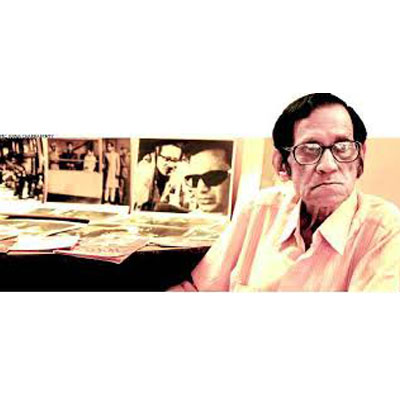
    NEW DELHI: Eminent film historian Feroze Rangoonwala, credited with having written the highest number of books on Indian cinema, is no more.


    Rangoonwala passed away at his residence in Mumbai earlier this week, aged 77, of prolonged sickness. 


    He has left behind a wealth of information on Indian cinema, particularly at a time when efforts are on to save cinematic material for archival purposes.


    Rangoonwala was best known for creating the first book of Indian filmography in 1969, Indian Film Index, and his magnum opus, Pictorial History of Indian Cinema, which for its period of issue had a record run in printing. Its Russian translation led to Indian cinema being introduced to the big Soviet readership, which loved Indian films. The book also saw multiple printings.


    It came about five years after Indian Film written by an American film historian Erik Barnouw and Indian filmmaker S Krishnaswamy, which was the other major book on Indian cinema at that time.


    Rangoonwala wrote 15 major books spanning a career of five decades. These included Indian cinema, Past and Present in 1983, and several monographs on different film personalities including those on filmmakers Guru Dutt and Bimal Roy – some written for the National Film Archives of India. Other books include Satyajit Ray’s ArtSeventy-five years of Indian cinema, and Bharatiya Chalchitra Itihas.


    He started as a film publicist in Mumbai in the early 1950s, and soon created a major hobby into a scholastic career. He also collected a large number of film posters and rare photographs. His knowledge of the film industry made him a much sought after person to sit in both international and Indian film juries.


    Unfortunately Rangoonwala remained least acknowledged by the Indian government circles and did not receive any accolades.


    Rangoonwala finally called it a day in 2006, as illness dogged him.


    He sold off his entire collection of Indian cinema memorabilia to a collector of film history and retreated into private life. He also donated some rare photographs from cinema to the National Film Archives of India.

  • Francis Ford Coppola cites late Bengali cinematic great Satyajit Ray as an influence

    Francis Ford Coppola cites late Bengali cinematic great Satyajit Ray as an influence

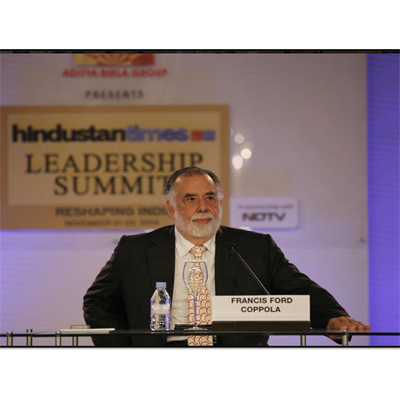
     NEW DELHI: Eminent filmmaker Francis Ford Coppola who made the iconic The Godfather has said cine craftsman Satyajit Ray was a major influence in life.

     
    “I love Bollywood films because I come from a family involved in musicals.” he told Riz Khan during the twelfth edition of Hindustan Times Leadership Summit.

     
    Addressing the enthusiastic audience, Coppola said that all businesses he has been involved in are about story-telling.

     
    He talked about his path breaking films and creative journey. The acclaimed director emphasised on the value of changing techniques and what could be the future of cinema. He said, “Cinema is a marriage of writing and acting. Ultimately it is in the choice of the story and how that reaches people.”

     
    “Cinema is about to change dramatically. The audience will be the master of the situation and there won’t be Paramount, MGM any more. It will be Netflix and Facebook in the future,” he said.

     
    Talking about The Godfather he said, “Godfather was the metaphor for America. It was an accident. I never intended to be an important Hollywood director. I wanted to make small, personal cinema. I also never wanted to make the sequel of The Godfather, but I did so because of financial distress.”

     
    He also spoke about the challenges of adapting a book to film. He said, “A novel is tricky because it wasn’t intended to be seen in two hours. The challenge is trying to find ways to collapse it and shorten it without destroying the original book. There has to be a balance in cinema. It’s like literature.”


    Talking on whether he felt that The Godfather was dealt with the mafia, glorified violence, he said, “That’s always a problem with a war film. It’s very difficult to make a good anti-war film because it has so much violence in it. Italians are associated with great people – great artists, writers, designers – and to have it reduced to these bloodthirsty gangsters is problematic. Avoid films that are unduly violent, the responsibility lies with you.”

     
    “I want to see films that make me more human,” he further added.


  • “Cinema has evolved with technology as a more democratic medium”: Govind Nihalani

    “Cinema has evolved with technology as a more democratic medium”: Govind Nihalani

    KOLKATA: Indian film director, cinematographer, screenwriter and producer Govind Nihalani, who has proved the power of his cinema through his television series ‘Tamas’, vehemently believes that cinema has evolved with technology as a more democratic medium.


    “Cinema is a very powerful medium. It acts as a dialogue between the filmmaker and his viewers. It can convince you to pick up a gun and kill someone,” Nihalani said, on the sidelines of the ongoing 20th Kolkata International Film Festival.


    ‘Tamas’ is not a daily soap. It deals with the issue of national importance. The emphasis is on the characters and evoking of the period when the partition took place, makes it different from other soaps. “I think it will have a small relevance even today. These programmes are not even being made today,” he said.


    “In these times of hope and convictions, cinema will never die because it has tremendous possibility of creating magic, poetry and change,” he further added.


    On the context of shifting from his usual “serious” content to an animated movie, he mentioned that one should always keep expanding one’s horizon. With reference to digital technology taking over celluloid and the advantages it provides he said, “Technology is all that you want and it will get better with time.” He appreciated Japanese animation as an ingenious art form, but added that it will be sometime before India embraces such content in animation.


    Nihalani has been the recipient of six national film awards (India). His first directorial venture was Aakrosh starring Om Puri, Naseeruddin Shah, the late Smita Patil and the late Amrish Puri. The film is scripted by Marathi playwright Vijay Tendulkar. The film shared the Golden Peacock for best film at the International Film Festival of India held in New Delhi in 1981. He then directed Ardh Satya, based on a story by S. D. Panwalkar. The film has received critical reception for depicting the police-politician-criminal nexus. In 1997, he adapted Bengali novelist, Mahasweta Devi’s acclaimed novel by the same name to Hazaar Chaurasi Ki Maa.


    While interacting with movie lovers, Nihalani flashed upon his memories of a chat session with Sandeeep Ray (son of famous film-maker Satyajit Ray) on Mahasweta Devi’s novel.


    “On a moment like this, I delve into my past when I first met Mr. Ray, two decades later I dared to call him Manik da,” he said.


    Nihalani put forth his initial days with the master and expressed his gratitude when Ray narrated Pikoo’s Diary to him from the very first shot to the last. “It’s very important for a filmmaker to remain relevant to his times and be connected to his reality, his harsh reality,” he concluded by echoing Ray’s words.

  • 20th Kolkata International Film Festival begins

    20th Kolkata International Film Festival begins

    KOLKATA: The 20th Kolkata International Film Festival (KIFF), which opened on 10 November, saw the heavyweights of Bollywood and Hollywood attending it.


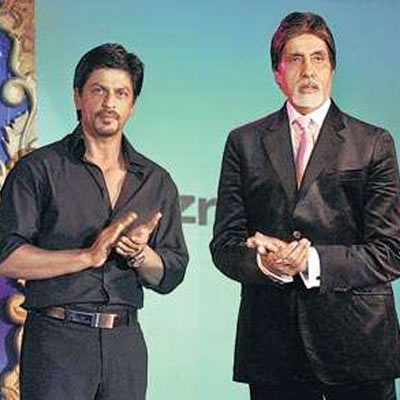
    The eight-day extravaganza saw Amitabh Bachchan and his celebrated family, superstar Shah Rukh Khan, the state’s brand ambassador and a host of film personalities at the Netaji Indoor Stadium at Central Kolkata.


    The inaugural ceremony will be presided by West Bengal Chief Minister Mamata Banerjee along with the Bachchan clan, SRK, Deepika Padukone, Tanuja and Irrfan Khan.


    Boasting of a rich oeuvre of around 137 films from 60 countries, the fest will see 40 international delegates and 15 segments. There will be 31 Indian films, including 13 Bengali films.


    For the first time, the fest will see 15 films by women directors from across the globe, competing for the top jury award, the Golden Royal Bengal Tiger trophy in the Women Directors segment.


    Headed by award-winning Australian filmmaker Paul Cox, the jury will comprise Iranian director Nikki Karimi and Indian filmmaker Amol Palekar and others.


    It should be noted that this year there is no private sponsorship.


    The focus will be on cinema from Arab nations too and a special section has been earmarked as a tribute to legendary Bengali actress Suchitra Sen, who died on January 17 this year in Kolkata. Seven of her films will be screened as part of this.

    Hollywood classics such as Guns of NavaroneThe Sound of Music and Jighangsa by Ajoy Kar will be screened in the ‘Centenary Tribute’ section.


    The Satyajit Ray Memorial lecture will be delivered by director Govind Nihalani and the screening locations will be spread across 12 venues.


    Other highlights include ‘Children Screening’ section and ‘French Classics’ segments, apart from contemporary world films of 2013 and 2014.


    The inaugural film selected is the Italian movie Italo Barocco by Alessia Scarso.


  • 44th IFFI sees foreign films make the mark

    44th IFFI sees foreign films make the mark

    MUMBAI: NEW DELHI: Tiny island nation East Timor’s first ever feature film Beatriz’s War directed by Bety Reis and Luigi Acquisto won the prestigious Golden Peacock Award for the Best Film at the forty fourth International Film Festival of India (IFFI) which concluded in Panaji in Goa over the weekend.


    The award for the best film carried a Golden Peacock, a certificate and a cash prize of Rs 40 lakh. In her passionate acceptance speech at the closing ceremony held on the banks of River Mandovi, Reis said, “One of the world’s oldest and biggest film industries has reposed faith in the world’s newest and smallest film industry in East Timor. Since its independence in 1999, we have not just been fighting for the rights of women, the rights of children and the right to rule ourselves, but also our right to tell our stories.”  Beatriz’s War is a passionate story of one woman’s conviction to remain true to the man she loves.


    The film’s jury was unanimous in their decision selecting the film from East Timor, which succeeds in intricating intimate relationships between women and men during the hard years of continuous violence against East Timorians.


    The best director award was given to Kaushik Ganguly for his film Apur Panchali, his tribute to stalwart master craftsman Satyajit Ray. He received Rs 15 lakh, a certificate and a Silver Peacock.


    Thou Guils’t The Even, a Turkish film by Onur Unlu won the special jury award of a cash prize of Rs 15 lakh and silver peacock


    The best actor (male) award went to Alon Moni Aboutboul for his performance in the Israeli movie A Place in Heaven where his performance as a cruel and sensitive character was applauded. The best actor (female) award was presented to Boczarska Magdalena for her performance in the Polish film In Hiding. Both these awards carried a Silver Peacock, a certificate and a cash prize of Rs 10 lakh.


    The special centenary award of IFFI instituted in the 101st year of Indian cinema was handed to director Kamaleshwar Mukherjee of Bengali film Meghe Dhaka Tara by legendary actress Asha Parekh. The film is a tribute to Bengali off-beat cinema master Ritwik Kumar Ghatak. The centenary award carries a cash prize of Rs 10 lakh and a silver peacock.


    The chief guest Michelle Yeoh expressed delight at being part of the ceremony and among incredible moviemakers. “I congratulate you for the movies you’ve made, and the incredible stories you’ve told. It is truly my honour to be in this room”, she said, adding: “The world is a smaller place than ever. A movie made in India reaches London or a film made in Singapore or Goa travels worldwide.”


    On the occasion Union Information and Broadcasting Minister Manish Tewari said the 44th IFFI was a celebration of freedom of the human spirit, liberated from the mores of conventionalism. Talking about the initiatives taken over the past one year, he said, the single window mechanism that the Ministry has put in place will help streamline the whole business of producing films in India. He said the same mechanism has been extended to domestic film producers as well. Tewari said the government had also taken the initiative to replace the archaic Cinematograph Act 1952 with a completely new legislation, the draft of which is on the Ministry’s website for public consultation.


    Goa Chief Minister Manohar Parrikar said the host state has promised a bigger and better IFFI going forward. “IFFI saw a huge number of delegates this time. We will plan a grander IFFI going forward. IFFI is one of the most celebrated festivals,” Parrikar said at the concluding ceremony.


    Speaking on the occasion Ministry Joint Secretary (Films) Raghavendra Singh said, “This time we have had a concentrated dose of Indian and World Films. I hope the hangover of watching great films would last at least for a few days”.


    Singh said that media reports about the event had been flattering, which he said must have in turn made the jury’s job of picking a winner tougher.


    “This time we witnessed a 30 percent rise in the number of delegates that was 12000,” he said suggesting that the number of auditoriums at the venue had to increase.


    “The response from North East cinema was terrific and Japan sent a great contingent,” he said.


    Rohit Shetty, who was felicitated at the closing ceremony professed his love for Goa, which, he jokingly said, even rivaled his wife.


    “Eighteen or 19 years ago I had told my wife I love you. Now this goes out to Goa.  I love you Goa. When we were shooting for an action sequence for Singham in Goa, a man looked at me and suddenly stopped in the middle of the road and said, ‘where did you disappear for so many days?’ This shows how hospitable and friendly people of Goa are,” a visibly touched Shetty said.


    Justin Chadwick’s film Mandela: Long Walk to Freedom was the closing film of the festival. The film chronicles Nelson Mandela’s his life from his childhood in a rural village to his emergence as the first democratically elected President of South Africa.


    Earlier, Goa’s noted singer Remo Fernandes enthused the 2,000 strong audience with his performance ranging from his popular Hindi film numbers of Hamma Hamma to a rendition of one of his classical Indian compositions.


    With this, the 11-day extravaganza of films, master classes, discussions and press conferences on films came to an end.


    A total of 325 films from 76 countries, which included 15 Oscar nominees, were screened during the festival.