Tag: Satyajit Deb Roy

  • IDBF 2023: Unlocking Growth through Conversation Media Marketing

    IDBF 2023: Unlocking Growth through Conversation Media Marketing

    Mumbai: The third edition of Indian Digital BrandFest 2023 kicked off and had brands, advertisers, and tech platforms discuss all these trends and more. The summit looked at the latest trends driving the change in consumer behaviour and how it has impacted the industry’s growth.

    Whether it was a boom in influencer marketing or the popularity of short video platforms, brands did not hesitate to jump onto the digital bandwagon to up their marketing game. So Indiantelevision.com took this opportunity to bring a host of industry experts together under one roof to discuss all these new trends shaping the future.

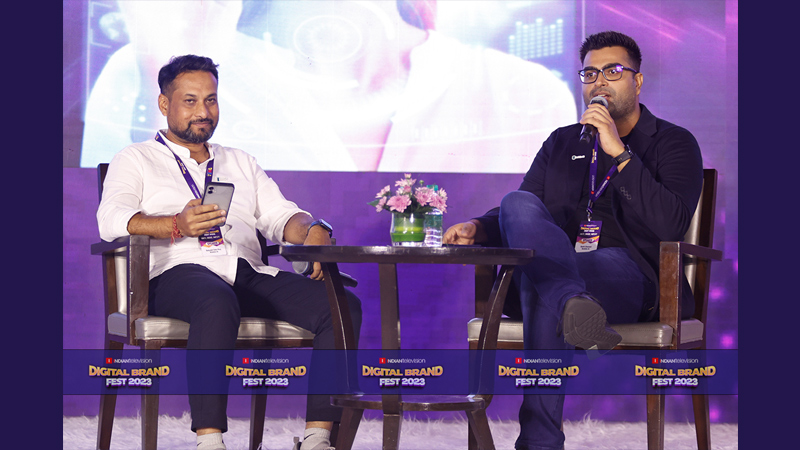
    The speakers of this industry session were Bobble AI revenue head (India) Satyajit Deb Roy in conversation with Bobble AI chief growth & marketing officer Sahil Deswal.

    Roy asked, “If you were a marketer for a major event or an OTT platform launching a new product, short film, or movie, how would you plan your marketing strategy?

    Deswal said, “As the CMO of an FMCG or OTT platform, my primary focus when launching a new product, show, or movie would be on impactful metrics such as top-of-mind awareness, reaching the right audience, and driving engagement on our platform. To achieve this, my marketing team would employ a diverse range of strategies, including influencer marketing, television ads, out-of-home advertising, social media, and targeted digital channels.

    However, I recognize that today’s consumers are savvy and often skeptical of sponsored content. They understand that brands pay influencers to promote their products, leading to a trust deficit. To address this, I would recommend complementing our traditional marketing efforts with a conversational media campaign (CMM). Conversational media allows our brand to become a part of daily conversations, leveraging the authenticity and persuasiveness of recommendations from friends and family.

    In essence, my marketing approach would involve creating awareness and engagement through traditional channels while enhancing trust and authenticity through conversational media. This combination ensures a well-rounded and effective marketing strategy, given the evolving landscape of consumer awareness and preferences.”

    Adding on to that, Roy said, “It’s fascinating to realize that users generate around 12 billion intents daily. This staggering number underscores the importance of marketers taking a serious look at the conversations happening among users. Leveraging the power of conversational media in their marketing strategies has become essential.

    I’d like to share an example from a recent campaign we conducted for Motorola. The objective was to enhance awareness and recall for a new product aimed at the 18-44 age group. Strategically, we integrated the catchphrase into users’ conversations through stickers and GIFs. This approach resulted in over three million brand imprints within six months, demonstrating the effectiveness of conversation media marketing.”

    Deswal then said, “Absolutely, the numbers are staggering, and I couldn’t agree more with your perspective. Branded stickers and GIFs essentially represent user-generated intents, and users willingly choose to express themselves using these branded elements in their conversations. It’s a conscious choice and a form of endorsement when they select a specific brand sticker, like Starbucks, for instance. This is where the power of the platform lies; it allows brands to seamlessly integrate into users’ daily conversations.

    Contrast this with traditional advertising, like an intrusive OTT ad or an interruption during browsing on platforms like Instagram. Such interruptions often break the flow and have limited recall and attention span from users. In contrast, when users choose to incorporate branded elements, it’s a voluntary engagement that reflects their preferences and choices.

    I’d like to highlight the significance of organic engagement through CMM (conversational media marketing). For instance, our content carries a global watermark, sparking curiosity and driving organic engagement as users seek the source of the content. CMM enables brands to have a direct presence in users’ daily conversations, democratizing the process and creating a more potent form of long-term awareness and consideration.

    So, my recommendation to fellow marketers is not to rely solely on traditional channels but to complement them with conversational media. In a world where brands must become a part of daily conversations, this approach is essential for sustained success.”

    Adding on, Satyajit said, “Indeed, the real-time aspect of these contents is what makes them incredibly powerful. I completely agree with you on this point.

    Now, let’s shift our focus to the next step. Once you’ve successfully secured reach, built awareness, and initiated a domino effect with consumers receiving branded content from multiple sources, resulting in a significant expansion of your audience, the question remains: What else can you do to further engage these users and drive them toward deeper consideration?”

    To which Deswal answered, “Now, let’s assume we’ve successfully entered organic conversations, and we have this highly engaged user base who are well aware of our brand. As the CMO of an OTT platform, the next step is moving them into the consideration or sustenance phase.

    Consider this scenario: I want to recommend a new show or content to my existing users on WhatsApp, tapping into my fan base. Can we create an innovative and creative solution that encourages them to engage with our brand and even generate user-generated content? For instance, one of our offerings is the bobble selfie to bobble head technology, which allows users to personalize content. When this happens, everyone starts sharing it within their networks, creating a ripple effect that generates consideration for our campaign.

    Imagine I’m binge-watching a show on Netflix, and there’s another brand I want to talk about during that time. If I can personalize a sticker with my face alongside my favorite character’s and share it within my network, it piques curiosity in others. This is the feeling we want to evoke during the consideration phase.

    In essence, what I’m getting at is that you can generate a high level of intent and consideration in a short time, provided you have creative solutions that truly engage users. Instead of resorting to traditional messaging channels that bombard users with texts, think about the superpower of models where you can capture everyone’s attention but need to engage them effectively. That’s the key to success.”

    Giving an example of a friendship campaign, Roy said, “It’s evident that conversational media is emerging as a potent force in marketing.”

    Deswal then said, “So it’s really that the sea doesn’t have the problem, the ship on top of that sea really needs to be sorted.”

    Moving on to his last question, Roy asked, “Now that you’ve effectively built brand awareness and consideration using conversational media marketing (CMM), the next crucial step is leveraging CMM to guide these users down the funnel towards the ultimate goal: the intent to purchase. This phase of the journey is of utmost importance for marketers, as it signifies the conversion of engagement into tangible action.”

    Deswal replied, “I think this is by far the most important step in the funnel. So if I am running this campaign, I’m definitely looking at the return process as you go down the funnel, and assuming that you’ve created the right kind of engagement and awareness and consideration. At this point, it’s all about delving deeper into conversations with consumers, but the depth here doesn’t mean relentless promotion; it’s about creating an unforgettable experience.

    At this stage, it’s all about delivering the right intent at the right moment and offering the right nudge to put the user in a purchasing mindset. Contextual nudges play a significant role in our platform. Let me explain with a simple example: Suppose a user is chatting about traveling from one city to another. If we detect the intent, such as “Looking to book a cab,” we can seamlessly open up the Uber chatbot experience, providing a trustworthy and familiar platform to quickly book a cab. This eliminates the need to switch between multiple apps and offers a frictionless, personalized experience.

    Another example is a group of friends discussing travel plans on WhatsApp. When our AI detects the intent to travel, we can instantly provide real-time search results, allowing one friend to book flights seamlessly. This is the essence of purchase intent.

    In essence, the goal is straightforward: from creating awareness to moving users into the purchase intent phase, the way we deploy conversational media platforms and solutions can deliver returns across all three stages. It’s incredible how real-time and seamless this process has become.”

  • How ShareChat enables 150+ brands to engage with India’s heartland

    How ShareChat enables 150+ brands to engage with India’s heartland

    NEW DELHI: With over 530 million people connected to the world wide web and counting, India has the second-largest internet user base in the world today. Out of these, around 71 per cent come from lower-tier cities, according to a Statista report. Another study by Zinnov indicates that 81 per cent of tier-2 and 80 per cent of the tier-3 population choose mobiles as the preferred platform for consuming content. Naturally, these numbers are quite attractive to the marketing community. With growing awareness, a rise in disposable income, and access to information, these netizens are also their next set of consumers. But the question is, what’s the most effective way to reach them?

    ShareChat claims to have the answer. Founded in 2015 by three IIT-Kanpur graduates, Ankush Sachdeva, Bhanu Pratap Singh and Farid Ahsan, ShareChat is a unique social media platform – it’s available in 15 Indian languages and dialects, but not in English. It hosts content ranging from love, devotional, entertainment, to great user-generated material. With more than 160 million active users, it’s fair to say the app has a direct line to India’s heartland.

    ShareChat director sales Satyajit Deb Roy shared, “Today, ShareChat is the only social media platform connecting language-first, new internet users at scale. We are at the forefront of the India's internet revolution. Users are coming to ShareChat to discover content, and also consume content in the comfort of their own language, societal norms and interests. Our user community is dominated by language-first internet users across the country, the majority of them hailing from tier-2 and tier-3 cities. Exploring this space has been of utmost priority for brands, and ShareChat stays relevant with its capability to connect brands to language first internet users at scale, and in a targeted way.”

    He added that the app’s focus remains on driving good performance advertisements and solutions for brands. “We have built our adtech solutions after evaluating brands’ needs and understanding consumer behaviour insights that we gathered over the years. We work with brands and marketers to design customised campaigns, relevant to their target audience. Taking their product deeper into the country and engaging with audiences they haven’t been able to do it at scale.”

    Roy highlighted that within a year of starting monetisation, more than 150 brands have signed up and worked with them on multiple occasions. 

    “We have seen increasing interest from the companies belonging to e-commerce, consumer durables, FMCG, telecom, gaming, automotive and many more verticals. We are expanding our focus beyond these verticals and would like to cater to more than 25 consumer-focused verticals in the foreseeable future,” he elaborated. 

    Brands are open to partner with ShareChat not just because it has traditional advertising solutions in store for them. Rather, the platform brings in unique capabilities to drive maximum reach and retention for the advertisers. 

    Roy explained, “The intent is to connect brands with the targeted audience on our platform through every possible touchpoint. Apart from traditional digital marketing solutions like video/banner ads, we offer native ad formats, influencer-led conversational ads, user-generated content, creator-led ads, hashtags and impact options, et al.” 

    As brands demanded high impact for their campaigns on the platform, ShareChat introduced the idea of exit interstitial, which appears to the targeted users while exiting the platform. This generally includes a banner or a 6-second video. In addition to this, it has recently introduced a 360-degree solution called Divas. This drives engagement for the brands through branded user-generated content, hashtag challenges along with top creators and influencers on ShareChat to drive KPI's like sales, downloads etc.  “That said, we have also rolled out programmatic solutions recently and are experimenting with a selective set of brands,” he quipped. 

    The app’s success and popularity are attracting good investments too. Just last year, the platform won a 100 million dollar financing round led by Twitter. Other investors include TrustBridge Partners, Shunwei Capital, Lightspeed Venture Partners, SAIF Capital, India Quotient, and Morningside Venture Capital. Reportedly, the company’s valuation today stands at 650 million dollar. Also, speculation is rife that Google is now eyeing to buy the platform.