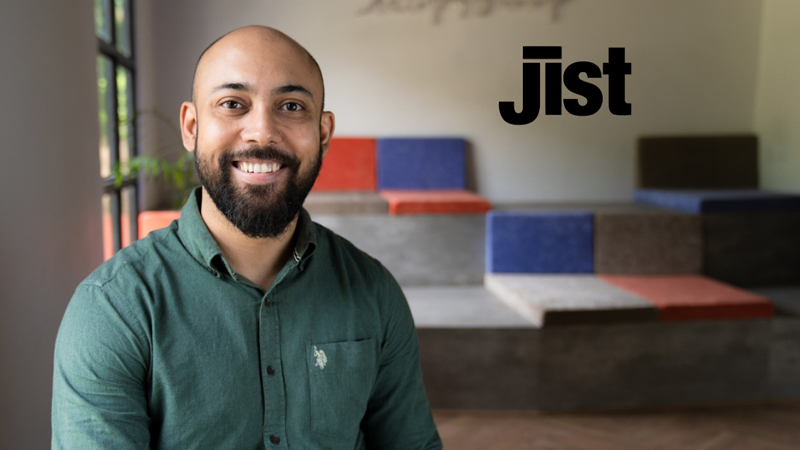
Tag: Sattvik Mishra

  • “We invest in creating unique, authentic, engaging and high-quality content:” Jist’s Rishi Pratim Mukherjee

    “We invest in creating unique, authentic, engaging and high-quality content:” Jist’s Rishi Pratim Mukherjee

    Mumbai: In today’s digital age, the way we consume news and entertainment has evolved dramatically. With the rise of digital platforms and social media, millennials and Gen Z  prefer accessible, engaging, and informative content that simplifies complex news and entertainment topics. This shift has not only transformed how content is delivered but also how it’s consumed.

    Amidst this trend stands Jist Media, a dynamic digital news and entertainment company that has redefined content creation. Jist is founded by Rishi Pratim Mukherjee (co-founder & CEO), Sattvik Mishra (co-founder), and Nitin Narang (co-founder). Since its inception in January 2023, Jist has captivated over five million followers with its innovative approach to simplifying news and making it accessible through a mix of short and long-format videos. With a staggering 1.2 billion views and a reach of 3.5 billion, Jist has quickly emerged as a leading player in the digital media landscape, resonating deeply with a young, curious audience eager for meaningful and engaging content.

    Indiantelevision.com caught up with Jist Media co-founder & CEO Rishi Pratim Mukherjee to gain more insights on the latest developments at Jist, their business model, and much more…

    Edited Excerpts:

    On the inspiration behind the creation of Jist and the journey since its launch; and some of the latest developments at Jist

    Jist (India), is a digital news and entertainment company that creates videos to explain the world to young, curious audiences –  particularly millennials and Gen Z. Our platform aims to empower users through accessible, authentic, engaging, and informative video content. With a dedicated team of 40 plus talented individuals, we consistently produce 250 plus original videos per month, catering to the preferences of audiences who have a penchant for video content consumption.

    Our primary focus is to cater the audiences who have a preference for video content consumption. Over the past year, our social media channels including Facebook, Instagram and X have reached 1.2 billion views per year and amassed five million followers. This tremendous growth is a testament that there is a growing audience for meaningful content that is merely not serving news in a static manner but providing genuine value by making sense of the news cacophony surrounding today’s digital natives. This overwhelming response gives us the confidence to keep making content for our audience and continue to reimagine storytelling via multiple digital formats.

    Latest developments – Jist is currently leveraging branded content partnerships. It has begun taking nascent steps in monetising its content by partnering with marquee brands like Invideo AI, Iqoo, Baazi Games, JB Power Consultants, and Rockford (Modi Illva India Pvt Ltd).

    On Jist setting itself apart from other digital news and entertainment platforms

    We invest in creating unique, authentic, engaging and high-quality content that caters to the diverse needs and interests of our audience eg – entertainment, health, lifestyle, politics, economy and sports among others. As mentioned above, our social media channels including Facebook, Instagram and X have reached 1.2 billion views per year and amassed five million followers. We are committed to meeting the evolving preferences of our viewers by providing them a seamless and enriching experience on the devices of their choice.

    We prioritise quality engagement metrics over mere quantitative indicators.

    On Jist’s business model and the strategies to monetise your content effectively

    Jist operates on a digital content business model, focusing on curating and creating original video content in both short and long formats. Targeting a community of over five million millennials and Gen Z followers, Jist produces infotainment content that makes news simple, fun, and accessible. Since its launch in January 2023, Jist has garnered 1.2 billion views and a reach of 3.5 billion (in 2023 alone). Jist is currently leveraging branded content partnerships. Jist has begun taking nascent steps in monetising its content by partnering with marquee brands like Sprite (Coca Cola) Titan Eyewear, Invideo AI, Iqoo, Baazi Games, JB Power Consultants, and Rockford (Modi Illva India Pvt Ltd).

    On strategies that Jist has implemented to rapidly grow its user base

    We invest in creating unique, authentic, engaging and high-quality content that caters to the diverse needs and interests of our audience eg – entertainment, health, lifestyle, politics, economy and sports among others. The platform reached a significant milestone in 2023, surpassing 700 million viewers across its social media platforms, and are thrilled to see the continued growth in viewership throughout the year. We are committed to meeting the evolving preferences of our viewers by providing them a seamless and enriching experience on the devices of their choice.

    What content consumption trends are you noticing among millennials and Gen Z and how does Jist tailor its content to meet the preferences of younger audiences

    In recent years, there has been a notable transformation in the content consumption pattern of the youth in India, particularly for news and entertainment. According to a report by Global data company YouGov, young consumers between 25-34 years will be driving streaming growth in India. As consumer content consumption patterns continue to evolve, we at Jist News are committed to adapting our content creation approach including leveraging innovative digital storytelling formats, enhancing our presence on social media platforms, and exploring opportunities in the growing streaming market to deliver engaging and relevant content that resonates with our audience.

    ●    Our focus is on providing editorially curated news content that offers perspective and important contextual cues, making sense of the noise for our audience in a language and format native to their digital experience, ensuring both relevance and engagement.

    ●    Ensuring the authenticity of information is paramount to us. Our editorial team led by Rahul Shrivastava, who comes with decades of experience in esteemed news organisations like NDTV and India Today, upholds classical fact-checking and journalistic rigour to meet the highest standards of credibility and reliability. Our editorial team is mentored and moulded constantly to present content that meets the highest journalistic standards.

    ●    While entertainment content, especially scripted fiction, remains popular among Indian youth, there is a noticeable shift towards consuming more informative and issue-driven content. This indicates a growing interest among the youth in understanding and engaging with important social, political, and cultural issues.

    ●    The rise of over-the-top (OTT) streaming platforms has transformed the way Indian youth consume entertainment, with on-demand viewing becoming the norm over traditional appointment-based TV watching.

    ●    We prioritise quality engagement metrics over mere quantitative indicators. Metrics such as organic views, video completion rates, average watch time, and the quality of user comments are considered more meaningful in assessing the effectiveness and impact of its content on the audience.

    We recognise this shift in preferences and strive to provide content that not only entertains but also informs and educates its audience. By delivering well-researched, authentic, and digestible news content, Jist News aims to simplify complex topics and make them more accessible to the digitally savvy youth.

    On some of the most successful IPs Jist has created so far and future IPs that we can look forward to, from Jist Media

    Our most produced content IP is Answered, helmed by in-house anchors Nimisha Wahi and Nishtha Pandey, vertical format video explainer that is Reels first. Each video has an average duration of 120-240 seconds, focusing on crunching information on key topics trending in the news and connecting information dots for our audience, providing them with context of the topic. We handle the entire production process in-house, garnering 15 million monthly views from this content alone.

    In addition to this, all our original interviews – HotSpot (politicians), Townhall (actors, celebs), Spotlight (social media influencers) which are approximately an hour (for YouTube), are sliced into pithy highlight chunks for our reels and shorts section.

    Our IP – Townhall, interview series, features celebrities from the entertainment industry(featured so far – Richa Chaddha, Bhumi Pednekar, Manoj Bajpayee, etc.).

    It is one of our most popular formats and has rapidly gained traction and garnered 100 plus million views over the past year.

  • When brands think like publishers: CMS Asia 2016

    When brands think like publishers: CMS Asia 2016

    MUMBAI: As more brands are waking up to the perks of content marketing, they increasingly realise the need to think like a content platform or publisher. But, are they doing it right? — was the question raised in the panel discussion at CMS Asia 2016. The panellists were — Autocar’s Hormazd Sorabjee, Mxm’s Pradyuman Maheshwari, Scoopwhoop’s Sattvik Mishra and Reliance Broadcast Network’s Ashwin Padmanabhan. Qyunki’s Sameer Bangara was the dynamic moderator.

    The panellists had a mix response to Bangara’s question – What are brands missing when they try to act as publishers? Maheshwari pointed out that brands often didn’t see the various possibilities that content can provide, being closeted in their traditional mindset. “Rarely do I see branded content that has actually explored the concept more radically. I don’t see why a Lux, backed by HUL’s money and business acumen, can’t have a content wing that does interviews with celebrities?,” he asked.

    Mishra pointed out how brands need to take Ad Blockers and Youtube’s ‘skip ad’ statistics seriously and think deep into why its failing. “That’s why branded content becomes important to engage the consumer. A user doesn’t care if it’s branded or not, as long as the story is entertaining, albeit it needs to be mentioned that it is a branded content. The problem is brands want to do marketing first, and content later,” Mishra frankly stated.

    Sorabjee criticised how brands often are in it for the one-time association, and are quick to seek results. “Content marketing doesn’t work that way, one needs a continuous engagement with the consumer. Long-term association is the key to content marketing, provided the communication is consistent. Brands that are in it for the short spurt may not see much of a difference in their brand uplift.”

    Padmanabhan urged brands to look at different metrics when it comes to content marketing and not go for a single standard measurement. “With the amount of data available today, it is easy to get confused but the CMO needs to identify which of those figures really align with the brand objective. Do views matter, or likes? Or shares? Or, the time spent on engagement…each brand will have different metrics to look at depending on the target they have.

    Seconding Padmanabhan, Mishra added, “We give brands something we call a ‘brand lift’ where, if the brand was spoken about X number of times before engaging in a campaign with us, we show them that, after the campaign, the brand was spoken of 3X times, hypothetically. We have 3rd-party agencies who work on these numbers and internal machinery as well to provide these numbers to the brands.”

    When it came to the measurement of a campaign’s success, Sorabjee differed from the rest of the panellists. “Numbers don’t really matter, I don’t believe in them. In content marketing, brands should, and they do look at the quality of your reader or viewer of a certain publisher. Therefore, the key is to keep your reader as the first priority . A publisher shouldn’t decide on the content based on what the brand wants but what its readers want to consume, and trust me, brands too want to reach that reader,” he said, adding that both, brands and publishers, shouldn’t compromise on content for the sake of metrics and numbers.

  • When brands think like publishers: CMS Asia 2016

    When brands think like publishers: CMS Asia 2016

    MUMBAI: As more brands are waking up to the perks of content marketing, they increasingly realise the need to think like a content platform or publisher. But, are they doing it right? — was the question raised in the panel discussion at CMS Asia 2016. The panellists were — Autocar’s Hormazd Sorabjee, Mxm’s Pradyuman Maheshwari, Scoopwhoop’s Sattvik Mishra and Reliance Broadcast Network’s Ashwin Padmanabhan. Qyunki’s Sameer Bangara was the dynamic moderator.

    The panellists had a mix response to Bangara’s question – What are brands missing when they try to act as publishers? Maheshwari pointed out that brands often didn’t see the various possibilities that content can provide, being closeted in their traditional mindset. “Rarely do I see branded content that has actually explored the concept more radically. I don’t see why a Lux, backed by HUL’s money and business acumen, can’t have a content wing that does interviews with celebrities?,” he asked.

    Mishra pointed out how brands need to take Ad Blockers and Youtube’s ‘skip ad’ statistics seriously and think deep into why its failing. “That’s why branded content becomes important to engage the consumer. A user doesn’t care if it’s branded or not, as long as the story is entertaining, albeit it needs to be mentioned that it is a branded content. The problem is brands want to do marketing first, and content later,” Mishra frankly stated.

    Sorabjee criticised how brands often are in it for the one-time association, and are quick to seek results. “Content marketing doesn’t work that way, one needs a continuous engagement with the consumer. Long-term association is the key to content marketing, provided the communication is consistent. Brands that are in it for the short spurt may not see much of a difference in their brand uplift.”

    Padmanabhan urged brands to look at different metrics when it comes to content marketing and not go for a single standard measurement. “With the amount of data available today, it is easy to get confused but the CMO needs to identify which of those figures really align with the brand objective. Do views matter, or likes? Or shares? Or, the time spent on engagement…each brand will have different metrics to look at depending on the target they have.

    Seconding Padmanabhan, Mishra added, “We give brands something we call a ‘brand lift’ where, if the brand was spoken about X number of times before engaging in a campaign with us, we show them that, after the campaign, the brand was spoken of 3X times, hypothetically. We have 3rd-party agencies who work on these numbers and internal machinery as well to provide these numbers to the brands.”

    When it came to the measurement of a campaign’s success, Sorabjee differed from the rest of the panellists. “Numbers don’t really matter, I don’t believe in them. In content marketing, brands should, and they do look at the quality of your reader or viewer of a certain publisher. Therefore, the key is to keep your reader as the first priority . A publisher shouldn’t decide on the content based on what the brand wants but what its readers want to consume, and trust me, brands too want to reach that reader,” he said, adding that both, brands and publishers, shouldn’t compromise on content for the sake of metrics and numbers.