Tag: Satish Dhawan

  • PSLV-C34 successfully launches 20 satellites in a single flight

    PSLV-C34 successfully launches 20 satellites in a single flight

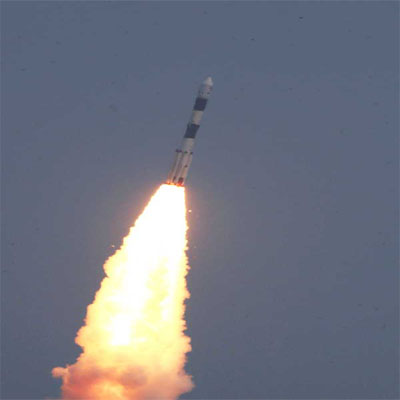
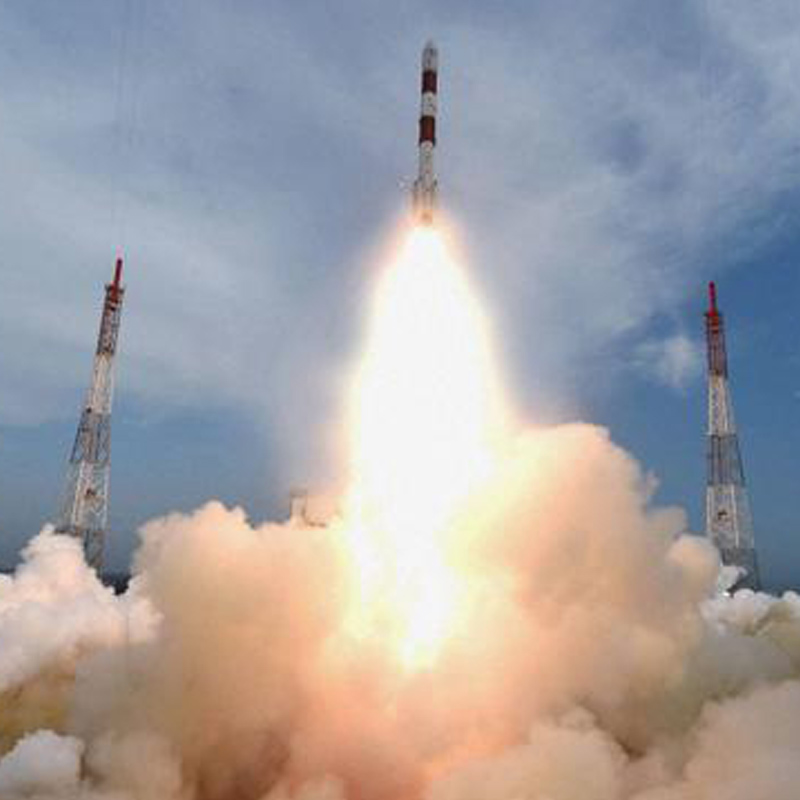
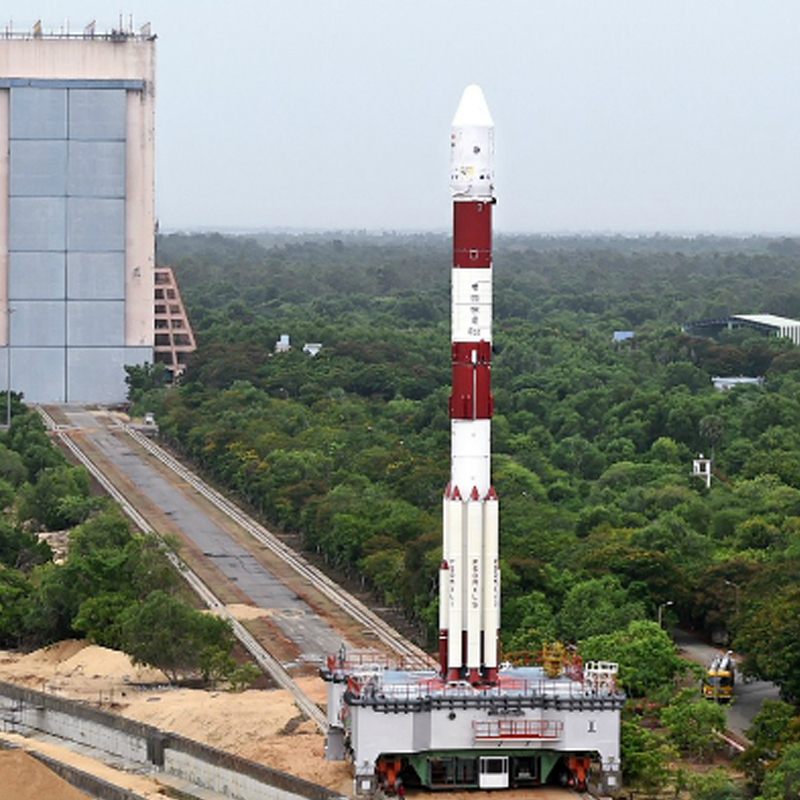
    MUMBAI: In its thirty sixth flights (PSLV-C34), ISRO’s Polar Satellite launch Vehicle successfully launched the 727.5 kg Cartosat-2 Series Satellite along with 19 co-passenger satellites today morning (June 22, 2016) from Satish Dhawan Space Centre SHAR, Sriharikota. This is the thirty fifth consecutively successful mission of PSLV and the fourteenth in its ‘XL’ configuration.  The total weight of all the 20 satellites carried on-board PSLV-C34 was 1288 kg.

    After PSLV-C34 lift-off at 0926 hrs (9:26 am) IST from the Second Launch Pad with the ignition of the first stage, the subsequent important flight events, namely, strap-on ignitions and separations, first stage separation, second stage ignition, heat-shield separation, second stage separation, third stage ignition and separation, fourth stage ignition and cut-off, took place as planned. After a flight of 16 minutes 30 seconds, the satellites achieved a polar Sun Synchronous Orbit of 508 km inclined at an angle of 97.5 degree to the equator (very close to the intended orbit) and in the succeeding 10 minutes, all the 20 satellites successfully separated from the PSLV fourth stage in a predetermined sequence.

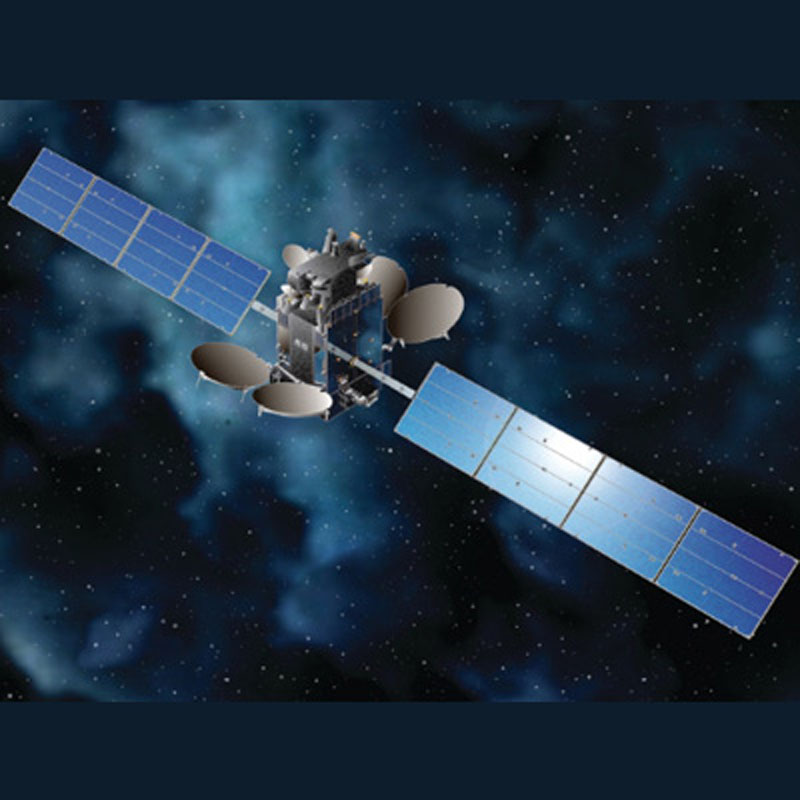
    After separation, the two solar arrays of Cartosat-2 series satellite were deployed automatically and ISRO’s Telemetry, Tracking and Command Network (ISTRAC) at Bangalore took over the control of the satellite. In the coming days, the satellite will be brought to its final operational configuration following which it will begin to provide remote sensing services using its panchromatic (black and white) and multispectral (colour) cameras.

    The imagery sent by the Cartosat-2 series satellite will be useful for cartographic applications, urban and rural applications, coastal land use and regulation, utility management like road network monitoring, water distribution, creation of land use maps, precision study, change detection to bring out geographical and manmade features and various other Land Information System (LIS) and Geographical Information System (GIS) applications.

    Of the 19 co-passenger satellites carried by PSLV-C34, two – SATHYABAMASAT weighing 1.5 kg and SWAYAM weighing 1 kg – are University/Academic institute satellites and were built with the involvement of students from Sathyabama University, Chennai and College Of Engineering, Pune, respectively.

    The remaining 17 co-passenger satellites were international customer satellites from Canada (2), Germany (1), Indonesia (1) and the United States (13). 

    With today’s successful launch, the total number of satellites launched by India’s workhorse launch vehicle PSLV has reached 113, of which 39 are Indian and the remaining 74 from abroad.

  • PSLV-C34 successfully launches 20 satellites in a single flight

    PSLV-C34 successfully launches 20 satellites in a single flight

    MUMBAI: In its thirty sixth flights (PSLV-C34), ISRO’s Polar Satellite launch Vehicle successfully launched the 727.5 kg Cartosat-2 Series Satellite along with 19 co-passenger satellites today morning (June 22, 2016) from Satish Dhawan Space Centre SHAR, Sriharikota. This is the thirty fifth consecutively successful mission of PSLV and the fourteenth in its ‘XL’ configuration.  The total weight of all the 20 satellites carried on-board PSLV-C34 was 1288 kg.

    After PSLV-C34 lift-off at 0926 hrs (9:26 am) IST from the Second Launch Pad with the ignition of the first stage, the subsequent important flight events, namely, strap-on ignitions and separations, first stage separation, second stage ignition, heat-shield separation, second stage separation, third stage ignition and separation, fourth stage ignition and cut-off, took place as planned. After a flight of 16 minutes 30 seconds, the satellites achieved a polar Sun Synchronous Orbit of 508 km inclined at an angle of 97.5 degree to the equator (very close to the intended orbit) and in the succeeding 10 minutes, all the 20 satellites successfully separated from the PSLV fourth stage in a predetermined sequence.

    After separation, the two solar arrays of Cartosat-2 series satellite were deployed automatically and ISRO’s Telemetry, Tracking and Command Network (ISTRAC) at Bangalore took over the control of the satellite. In the coming days, the satellite will be brought to its final operational configuration following which it will begin to provide remote sensing services using its panchromatic (black and white) and multispectral (colour) cameras.

    The imagery sent by the Cartosat-2 series satellite will be useful for cartographic applications, urban and rural applications, coastal land use and regulation, utility management like road network monitoring, water distribution, creation of land use maps, precision study, change detection to bring out geographical and manmade features and various other Land Information System (LIS) and Geographical Information System (GIS) applications.

    Of the 19 co-passenger satellites carried by PSLV-C34, two – SATHYABAMASAT weighing 1.5 kg and SWAYAM weighing 1 kg – are University/Academic institute satellites and were built with the involvement of students from Sathyabama University, Chennai and College Of Engineering, Pune, respectively.

    The remaining 17 co-passenger satellites were international customer satellites from Canada (2), Germany (1), Indonesia (1) and the United States (13). 

    With today’s successful launch, the total number of satellites launched by India’s workhorse launch vehicle PSLV has reached 113, of which 39 are Indian and the remaining 74 from abroad.

  • ISRO successfully launches Astrosat along with six foreign satellites

    ISRO successfully launches Astrosat along with six foreign satellites

    MUMBAI: The Indian Space Research Organisation (ISRO) has been having a swell 2015. Just a few days after its Mars Orbiter completed a successful one year around the Red planet, ISRO has now launched its first dedicated multi wavelength space observatory along with six foreign customer satellites.


    In its 31st flight (PSLV-C30) conducted today (28 September, 2015), India’s Polar Satellite Launch Vehicle (PSLV) successfully launched Astrosat – multi wavelength space observatory and six foreign customer satellites into a 644.6 X 651.5 km orbit inclined at an angle of 6 deg to the equator. The achieved orbit is very close to the intended one. This was the thirtieth consecutive success for PSLV.


    PSLV was launched in its heaviest ‘XL’ version with six strap-on motors of the first stage. The launch took place from the First Launch Pad at the Satish Dhawan Space Centre SHAR (SDSC SHAR), Sriharikota, the spaceport of India.


    The 320 tonne, 45 m tall PSLV-C30 carrying seven satellites including the 1513 kg Astrosat, lifted off at 10:00 Hrs IST. About 22 minutes after lift-off, Astrosat was successfully placed in orbit and separated from the fourth stage of PSLV-C30. The separation of all the six co-passenger satellites was completed in the subsequent three minutes. The seven satellites carried by PSLV-C30 together weighed about 1631 kg at lift-off. 


    After a 50 hour smooth count down, the 320 ton PSLV-C28 was launched with the ignition of its first stage. The important flight events included the ignition and separation of the strap-ons, separation of the first stage, ignition of the second stage, separation of the payload fairing after the vehicle had cleared the dense atmosphere, second stage separation, third stage ignition and third stage separation, fourth stage ignition and fourth stage cut-off.  


    Through 30 successful flights during 1994-2015 period, PSLV has launched a total of 84 satellites including the seven satellites successfully launched today. The vehicle has repeatedly proved its reliability and versatility by successfully launching satellites into a variety of orbits including polar Sun Synchronous, Geosynchronous Transfer and Low Earth orbits of small inclination thereby emerging as the workhorse launch vehicle of India. 


    So far, 51 satellites have been launched by PSLV for customers from abroad. Today’s launch of six co-passenger satellites by PSLV-C30 was facilitated by Antrix Corporation Limited, the commercial arm of ISRO, a government of India Company under the Department of Space (DOS). 


    Soon after its separation from PSLV-C30, the two solar arrays of Astrosat were automatically deployed and the Spacecraft Control Centre at the Mission Operations Complex of ISRO Telemetry, Tracking and Command Network (ISTRAC) at Bangalore took control of Astrosat.


    Astrosat is India’s first dedicated multi wavelength space observatory. This scientific satellite mission endeavours for a more detailed understanding of our universe. Astrosat is designed to observe the universe in the Visible, Ultraviolet, low and high energy X-ray regions of the electromagnetic spectrum simultaneously with the help of its five payloads. 


    Astrosat was realised by ISRO with the participation of all major astronomy institutions including Inter University Centre for Astronomy and Astrophysics (IUCAA) of Pune, Tata Institute of Fundamental Research (TIFR) at Mumbai, Indian Institute of Astrophysics (IIAP) and Raman Research Institute (RRI) of Bangalore as well as some of the Universities in India and two institutions from Canada and the UK.


    In the coming days, Astrosat will be brought to the final operational configuration and all its five scientific payloads will be thoroughly tested before the commencement of regular operations.

  • ISRO successfully launches communication satellite GSLV-D6

    ISRO successfully launches communication satellite GSLV-D6

    MUMBAI: The Indian Space Research Organisation (ISRO) has successfully launched the communication satellite GSLV-D6. 


    GSLV-D6 will launch 2117 kg GSAT-6, an advanced communication satellite, into a GTO. GSAT-6 will provide S-band communication services in the country. After reaching GTO, GSAT-6 will use its own propulsion system to reach its final geostationary orbital home and will be stationed 0 at 83 East longitude.


    This is the ninth flight of India’s Geosynchronous Satellite Launch Vehicle (GSLV). It is also the fifth developmental flight of GSLV. This is the third time the indigenously developed Cryogenic Upper Stage (CUS) is being carried on-board during a GSLV flight.


    GSLV-D6 flight is significant since it intends to continue the testing of CUS. GSLV is designed to inject two ton class of communication satellites into Geosynchronous Transfer Orbit (GTO).


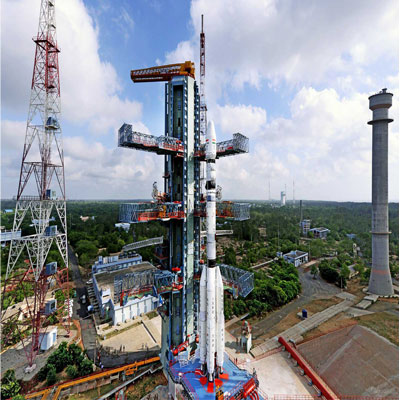
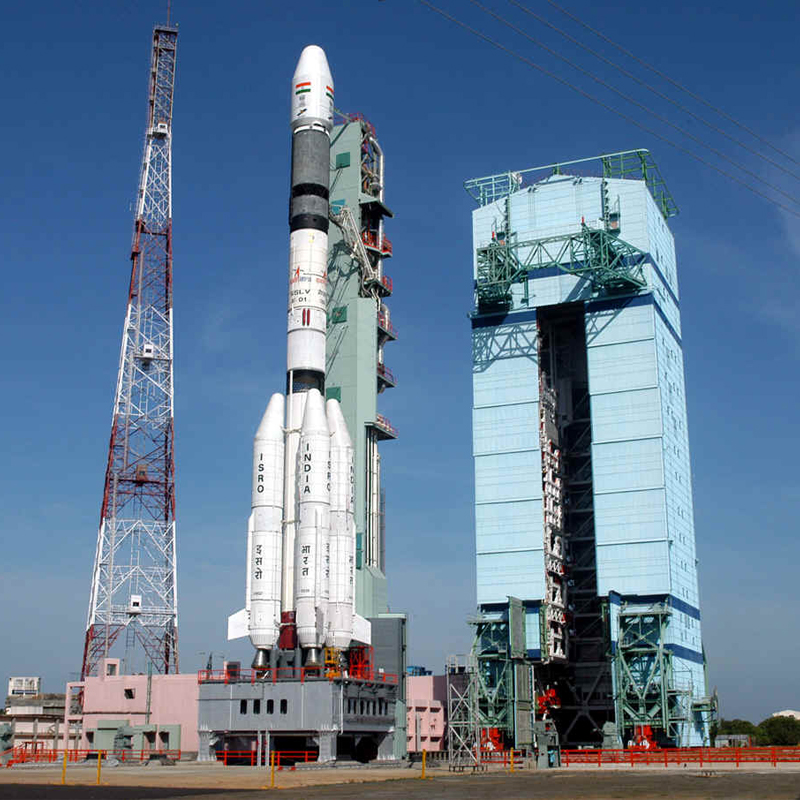
    GSLV-D6 was launched from the second launch pad at Satish Dhawan Space Centre SHAR (SDSC SHAR), Sriharikota.


    GSLV-D6 vehicle is configured with all its three stages including the CUS similar to the ones successfully flown during the previous GSLV-D5 mission in January 2014. GSLV-D5 successfully placed GSAT-14 satellite carried on-board in the intended GTO very accurately.


    The metallic payload fairing of GSLV-D6 has a diameter of 3.4 m. The overall length of GSLV-D6 is 49.1 m with a lift-off mass of 416 t.


    The CUS being flown in GSLV-D6 is designated as CUS-06. The main engine and two smaller steering engines of CUS together develop a nominal thrust of 73.55 kN in vacuum. During the flight, CUS fires for a nominal duration of 720 seconds.


    S-band telemetry and C-band transponders enable GSLV-D6 performance monitoring, tracking, range safety/flight safety and Preliminary Orbit Determination (POD).

  • Isro’s PSLV-C20 launches joint Indo-French satellite Saral

    Isro’s PSLV-C20 launches joint Indo-French satellite Saral

    BENGALURU: The Indian Space Research Organisation‘s (Isro) Polar Satellite Launch Vehicle PSLV-C20 Monday successfully launched the joint Indo-French satellite Saral, along with six other satellites in its 23rd flight from Satish Dhawan Space Centre (SDSC), Sriharikota.

    Other satellites that launched with Saral include Unibrite (NLS 8.1) and Brite (NLS 8.2) from Austria, Sapphire and Neossat from Canada, Aaausat-3 (NLS 8.3) from Denmark and STRaND-1 from the United Kingdom.

    The satellite was launched in the presence of President of India Pranab Mukherjee along with the Governor of Andhra Pradesh, E. S. L. Narasimhan, Andhra Pradesh (AP) CM N Kiran Kumar Reddy, Minister of State (Prime Minister‘s Office) V Narayanasamy, and other dignitaries from the Government of AP.

    At the completion of the countdown, PSLV-C20 lifted off from the First Launch Pad at SDSC SHAR, at 1801 hrs (IST) with the ignition of the first stage of the launch vehicle. The important flight events, namely, stage ignitions, heat-shield separation, stage separations and satellite injections took place exactly as planned.

    After a flight of 17 minutes 55 seconds, the main payload, Saral, weighing 407 kg was injected to an orbit very close to the intended orbit. Following this, the six auxiliary satellites were also successfully injected.

  • Liquid propellant strap-on failure primary cause for Insat 4C crash

    Liquid propellant strap-on failure primary cause for Insat 4C crash

    BANGALORE:The Failure Analysis Committee (FAC), constituted for investigating the failure of ISRO’s Geosynchronous Satellite Launch Vehicle, GSLV-F02 mission from Satish Dhawan Space Centre (SDSC SHAR) Sriharikota, on 10 July, 2006 has submitted its report.

    The 49 metre tall and 414 tonne GSLV comprises three stages. The first stage consists of a solid propellant motor and four liquid propellant strap-ons. The second stage is also a liquid propellant stage and the third is a cryogenic stage.

    GSLV-F02 launch was the fourth in the series. All the three earlier missions (GSLV-D1, D2 and F01) were completely successful. The mission objective of GSLV-F02 was to place Insat-4C, an operational satellite into Geo-synchronous Transfer Orbit (GTO). About 55 sec into the flight, GSLV-F02 started deviating significantly from its nominal flight path resulting in the vehicle breaking up at 62 sec after lift-off. The debris fell into Bay of Bengal.

    The 15 member FAC chaired by K Narayana, former Director of SDSC SHAR, with the participation of experts from academic and research institutions besides ISRO, has reviewed the performance of GSLV-F02 from lift-off to the end of flight. FAC had detailed deliberations for over 100 hours in several sittings and was assisted by eight specialist sub-committees examining the flight data of vehicle subsystems, manufacturing documents, inspection, calibration and test results, etc. Especially, the details related to the realisation of liquid propulsion stage of GSLV were closely scrutinized. Several tests simulating possible failure modes were also conducted to identify the exact cause.

    FAC has concluded that the performance of all vehicle subsystems, except one strap-on stage was normal until 56.4 sec. The primary cause for the failure was the sudden loss of thrust in one out of the four liquid propellant strap-on stages (S4) immediately after lift-off at 0.2 sec. With only three strap-on stages working, there was significant reduction in the control capability. However the vehicle attitude could be controlled till about 50 sec. At the same time the vehicle reached the transonic regime of flight and the vehicle attitude errors built up to large values, resulting in aerodynamic loads exceeding the design limits thus leading to break up of the vehicle.

    The thrust of the liquid engines used in the strap-on stages is precisely controlled by a set of regulators. Detailed analyses have indicated that in S4 engine the thrust control was not effective. Instead of stabilizing at 5.85 MPa (Mega Pascal) chamber pressure, it reached 7.11 MPa at 2.8 sec. This was much beyond the design limits and the engine failed at 0.2 sec after lift-off, that is 5 sec after its ignition.

    Simulations and analyses of flight data and verification through calibration tests have led to the conclusion that the propellant regulator in the failed engine had much higher discharge coefficient in its closed condition. The reason for this could be an inadvertent error in manufacturing, which escaped the subsequent inspection, and acceptance test procedures. This regulator has functioned satisfactorily in all the previous 50 engines manufactured and tested so far, states an official release.

    The larger flow of propellant led to higher operating pressure in the gas generator (4.7 MPa against design specification of 3.6 MPa). Due to this higher operating pressure of the gas generator, the water flow rate into it got reduced. The combined effect of larger flow of propellants and reduced flow of water led to a very high gas temperature of 1823 K against design specification of 900 K and pressure of 4.7 MPa against the design specification of 3.6 MPa. The very high operating pressure and temperature resulted in the structural failure of the gas generator. The consequent abrupt stopping of the turbo pumps that feed propellants at very high pressures to the engines led to loss of thrust of S4 engine. The water calibration tests conducted simulating the malfunction of the propellant regulator hardware could closely reproduce the flight phenomenon thereby confirming the larger flow area.

    FAC has concluded that the design of GSLV is robust and recommended implementation of strict control on fabrication, inspection and acceptance procedures. Among others, FAC has recommended fabrication processes to be critically reviewed and updated. It has recommended for independent inspection of all critical dimensions of components and subassemblies by in-house agencies. Further, long duration hot test on one out of every 20 engines fabricated has been recommended to ensure that production process is under control. In addition, FAC has recommended strengthening the process of clearance of launch during Automatic Launch Sequence (ALS) phase.

    FAC conclusions and recommendations have been accepted and necessary action has been initiated to implement all of them, the release adds.

  • Liquid propellant strap-on failure primary cause for Insat 4C crash

    BANGALORE:The Failure Analysis Committee (FAC), constituted for investigating the failure of ISRO’s Geosynchronous Satellite Launch Vehicle, GSLV-F02 mission from Satish Dhawan Space Centre (SDSC SHAR) Sriharikota, on 10 July, 2006 has submitted its report.

    The 49 metre tall and 414 tonne GSLV comprises three stages. The first stage consists of a solid propellant motor and four liquid propellant strap-ons. The second stage is also a liquid propellant stage and the third is a cryogenic stage.

    GSLV-F02 launch was the fourth in the series. All the three earlier missions (GSLV-D1, D2 and F01) were completely successful. The mission objective of GSLV-F02 was to place Insat-4C, an operational satellite into Geo-synchronous Transfer Orbit (GTO). About 55 sec into the flight, GSLV-F02 started deviating significantly from its nominal flight path resulting in the vehicle breaking up at 62 sec after lift-off. The debris fell into Bay of Bengal.

    The 15 member FAC chaired by K Narayana, former Director of SDSC SHAR, with the participation of experts from academic and research institutions besides ISRO, has reviewed the performance of GSLV-F02 from lift-off to the end of flight. FAC had detailed deliberations for over 100 hours in several sittings and was assisted by eight specialist sub-committees examining the flight data of vehicle subsystems, manufacturing documents, inspection, calibration and test results, etc. Especially, the details related to the realisation of liquid propulsion stage of GSLV were closely scrutinized. Several tests simulating possible failure modes were also conducted to identify the exact cause.

    FAC has concluded that the performance of all vehicle subsystems, except one strap-on stage was normal until 56.4 sec. The primary cause for the failure was the sudden loss of thrust in one out of the four liquid propellant strap-on stages (S4) immediately after lift-off at 0.2 sec. With only three strap-on stages working, there was significant reduction in the control capability. However the vehicle attitude could be controlled till about 50 sec. At the same time the vehicle reached the transonic regime of flight and the vehicle attitude errors built up to large values, resulting in aerodynamic loads exceeding the design limits thus leading to break up of the vehicle.

    The thrust of the liquid engines used in the strap-on stages is precisely controlled by a set of regulators. Detailed analyses have indicated that in S4 engine the thrust control was not effective. Instead of stabilizing at 5.85 MPa (Mega Pascal) chamber pressure, it reached 7.11 MPa at 2.8 sec. This was much beyond the design limits and the engine failed at 0.2 sec after lift-off, that is 5 sec after its ignition.

    Simulations and analyses of flight data and verification through calibration tests have led to the conclusion that the propellant regulator in the failed engine had much higher discharge coefficient in its closed condition. The reason for this could be an inadvertent error in manufacturing, which escaped the subsequent inspection, and acceptance test procedures. This regulator has functioned satisfactorily in all the previous 50 engines manufactured and tested so far, states an official release.

    The larger flow of propellant led to higher operating pressure in the gas generator (4.7 MPa against design specification of 3.6 MPa). Due to this higher operating pressure of the gas generator, the water flow rate into it got reduced. The combined effect of larger flow of propellants and reduced flow of water led to a very high gas temperature of 1823 K against design specification of 900 K and pressure of 4.7 MPa against the design specification of 3.6 MPa. The very high operating pressure and temperature resulted in the structural failure of the gas generator. The consequent abrupt stopping of the turbo pumps that feed propellants at very high pressures to the engines led to loss of thrust of S4 engine. The water calibration tests conducted simulating the malfunction of the propellant regulator hardware could closely reproduce the flight phenomenon thereby confirming the larger flow area.

    FAC has concluded that the design of GSLV is robust and recommended implementation of strict control on fabrication, inspection and acceptance procedures. Among others, FAC has recommended fabrication processes to be critically reviewed and updated. It has recommended for independent inspection of all critical dimensions of components and subassemblies by in-house agencies. Further, long duration hot test on one out of every 20 engines fabricated has been recommended to ensure that production process is under control. In addition, FAC has recommended strengthening the process of clearance of launch during Automatic Launch Sequence (ALS) phase.

    FAC conclusions and recommendations have been accepted and necessary action has been initiated to implement all of them, the release adds.

  • Isro to launch Insat-4C replacement by July 2007

    Isro to launch Insat-4C replacement by July 2007

    MUMBAI: Soon after the failure of the GSLV-F02 launch rocket carrying the Insat-4C communication satellite, the Indian Space Research Organisation (Isro) has decided to act fast to meet the growing need for Ku-band transponders from the direct-to-home (DTH) sector.

    Isro will be replacing Insat-4C, where Kalanithi Maran’s Sun Direct had booked seven high-power Ku-band transponders, with the launch of an identical satellite by July 2007. The satellite, Insat-4C(R), will be launched at the Satish Dhawan Space Centre (SDSC) SHAR, Sriharikota.

    Maran will have the option to take transponder space on that satellite for his DTH venture. But if he decides to launch the service earlier, Isro will make provisions on an alternate satellite which could be foreign or Indian. Insat-4B, which is meant for Doordarshan’s DTH service DD Direct Plus, is being launched early next year.

    “We have the flexibility to accommodate Sun. If there is an early requirement, we can give them space on an Indian or foreign satellite,” says Isro contract management and legal services director SB Iyer. For DTH providers who want to operate from foreign satellites, Isro will have to provide the approval and lease it out for them.

    Will Insat-4C(R) disturb the scheduling of Isro’s other satellite launches? “We plan to launch Insat-4C(R) by July 2007 from Sriharikota. It will have the same number of transponders as Insat-4C. The other satellite launches will be on schedule,” says Iyer.

    Of the 12 Ku-band transponders Insat-4C would have carried, Sun TV had booked six for DTH and one for DSNG (digital satellite news gathering). While Isro plans to launch Insat-4D in 2006-07, Insat-4E is expected to go up by 2007-08.

    Isro had earlier said that the failure of Insat-4C was “a brief setback” which it would correct by recasting its programmes to accelerate the Ku-band capacity growth.

  • Failure analysis committee on GSLV-F02 constituted

    Failure analysis committee on GSLV-F02 constituted

    BANGALORE: Following the unsuccessful launch of Geosynchronous Satellite Launch Vehicle (GSLV-F02) with INSAT-4C on board from Satish Dhawan Space Centre SHAR (SDSC-SHAR), Sriharikota on 10 July, a Failure Analysis Committee has been constituted by Isro.

    Former director of SDSC-SHAR and presently senior advisor at the Centre chairs the Committee, K Narayana will head the team. According to an Isro release, the 15 member Committee includes experts from academic and research institutions besides those from various Centres of ISRO.

    The Committee will review the performance of all subsystems of GSLV-F02 from lift-off to the termination of flight, identify specific reasons for anomalies observed and recommend corrective measures for future course of action.

    The Committee is expected to submit its report in a month’s time.

  • GSLV to launch Insat-4C on 10 July

    GSLV to launch Insat-4C on 10 July

    MUMBAI: The countdown is on for the launch of GSLV-F02, which will be carrying the state-of-the-art communication satellite Insat-4C into space. The launch is expected to take place around 4:30 pm on Monday, 10 July, the Indian Space Research Organisation announced today.

    Preparations for the launch are proceeding satisfactorily at Satish Dhawan Space Centre (SDSC) SHAR, Sriharikota from the second launch pad. The launch vehicle systems have been integrated and checked out, Isro said in a statement issued today.

    Insat-4C was transported from Isro Satellite Centre, Bangalore to SDSC SHAR in the first week of June 2006 and since then, it has undergone detailed checks. After propellant filling, the spacecraft has been integrated with GSLV.

    The Mission Readiness Review is planned on 6 July, 2006 followed by the meeting of Launch Authorisation Board which will clear the launch. In the next few days, a complete checkout of the fully integrated launch vehicle along with satellite will be carried out. The final countdown and fuel filling for the liquid propellant stages are expected to commence on the morning of 9 July.

    Insat-4C is the second satellite in the Insat-4 series. The first, Insat-4A, was launched in December last year, from the spaceport of Kourou in French Guiana by an Ariane5 vehicle, which also carried the Meteosat weather Satellite for Eumetsat.

    Isro spokespersons have been pointing out that using indigeneous launch vehicles will result in a saving of about 30-40 per cent or Rs 1.5 billion in expenses per launch. With four satellites to be launched by GSLV Mark II and Mark III, the savings thus will be substantial. Isro will, however, be using the services of Arianespace to launch the Insat 4B satellite from Kouru next year.

    “With the commissioning of the Rs 3.5 billion ($75million) second launch pad at Sriharikota, India is the only country to have such a state-of-the-art facility to launch different types of vehicles Ranging from PSLV (polar satellite launch vehicle), GSLV Mark-1, GSLV Mark-II to the upcoming GSLV Mark-III in the four-tonne class,” a top Isro official is reported to have said sometime back.

    It’s for the first time that India’s space agency is putting into orbit a two-tonne class satellite. Equipped with 12 high-powered Ku band transponders (Like the earlier Insat-4A), the 2,180 kg spacecraft is designed for a mission life of 10 years.

    Insat-4C is designed to provide direct-to-home (DTH) television services, facilitate video picture transmission (VPT) and digital satellite news gathering (DSNG) as well as to serve the National Informatics Centre (NIC) for its VSAT connectivity. The 2,168 kg Insat-4C has a mission life of ten years.

    Insat-4C will be used for broadcasting 150 TV channels through the DTH platform. Kalanithi Maran’s Sun Group has booked space on Insat 4C for its DTH venture Sun Direct. All the Ku-band transponders on the Insat 4A satellite, meanwhile, have been leased to the Tata-Star consortium, which will soon be launching the Tata Sky DTH service.

    Other than Tata Sky and Sun Direct, there is also Anil Ambani’s DTH venture Reliance Bluemagic, which will be rolling out in due course.

    At present, DD Direct Plus managed by the pubcaster Prasar Bharati and the Subhash Chandra owned Dish TV are the two operators offering DTH services in the country.

    Salient features of Insat-4C:

    Orbit: Geostationary (74 degree East Longitude)
    Co-located with Insat-3C, KALPANA-1 and EDUSAT
    Lift-off Mass: 2,168 kg
    Mission: 10 years
    Communication Payloads: 12 Ku-band 36 MHz bandwidth Transponders employing 140 W Travelling Wave Tube Amplifiers (TWTAs) to provide an Effective Isotropic Radiated Power (EIRP) of 51.5 dBW at Edge of Coverage (EOC) with footprint covering Indian mainland; Ku-band Beacon as an aid to users to lock on to the satellite signal