Tag: Satinder Bindra

  • Uber appoints Satinder Bindra as first director of comm for India, SA

    Uber appoints Satinder Bindra as first director of comm for India, SA

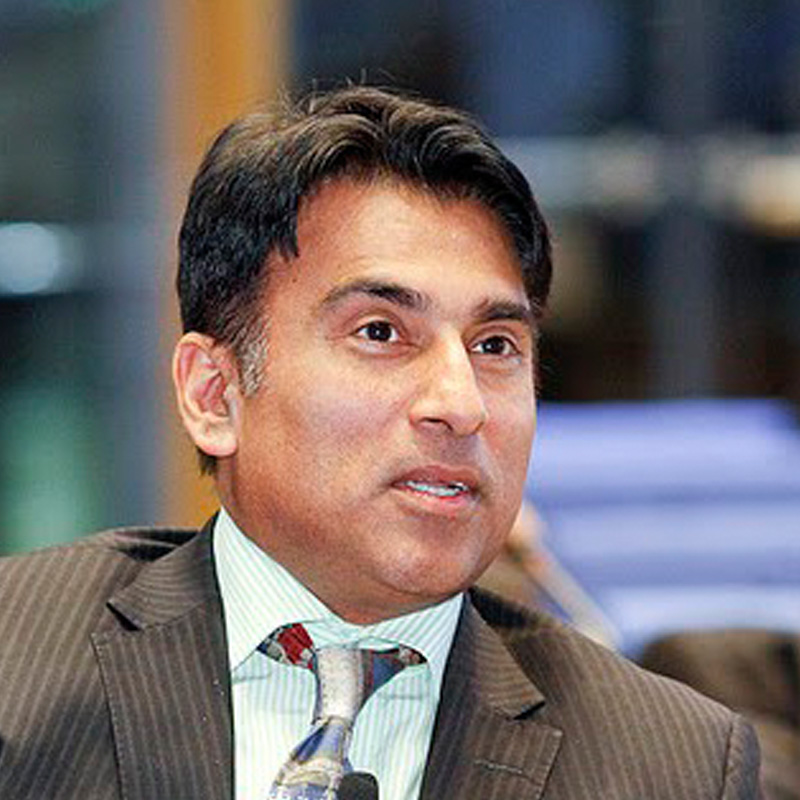
    MUMBAI: Uber India has appointed Satinder Bindra as its first director of communications for India and South Asia.
    As a key member of Uber’s regional leadership team, Bindra will be responsible for driving Uber’s reputation forward and delivering against the mission of providing reliable transportation everywhere, for everyone; encompassing internal and external communications, stakeholder relations and community outreach efforts.
    Announcing his appointment, Uber SVP for policy and communications Jill Hazelbaker said, “I am thrilled for Sat to join Uber and lead our communications efforts across India and South Asia. Sat brings a truly exceptional collection of experiences encompassing more than two decades and spanning over 70 countries. He is a thought leader, a respected development advocate, humanitarian and campaigner; he is also an author, an award winning journalist, documentarian, and a talented brand ambassador. His appointment reinforces our commitment and continued investment to India, as an absolutely critical global market for Uber.”
    Bindra joins from Seabed 2030 where, as its founding project director, he led a first-of-its-kind global movement in collaboration with Japan’s Nippon Foundation, international sea floor mapping experts, governments and the maritime community to map the entire ocean floor in support of the UN’s Sustainable Development Goal #14
    Previously, Bindra was the principal director of external relations at the Manila-based Asian Development Bank, the communications director for the United Nation’s Development Program in New York City and the United Nations Environment Programme in Nairobi, Kenya. In addition, he has worked in a variety of senior on air and editorial roles for some of the world’s leading news organisations such as CBS, CNN, CTV, the Canadian Broadcasting Corporation (CBC) and The Canadian Press.
    Commenting on his appointment, Bindra said, “I’m honoured to work for Uber, a company that is reshaping technology, changing consumer behaviour and promoting sustainability at an unprecedented scale. In India and South Asia, Uber has a formidable track record of creating economic opportunities, improving social mobility, reducing traffic congestion and improving air quality. I look forward to sharing its exciting story with 1.9 billion South Asians.”

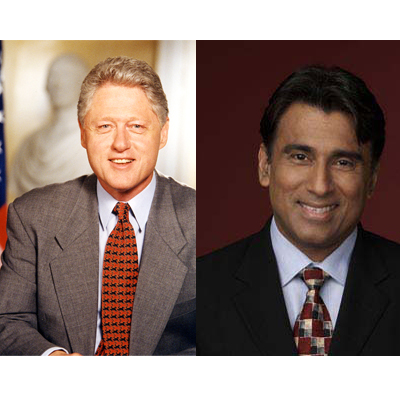
  • Former US president Bill Clinton in an exclusive interview with CNN’s senior International correspondent Satinder Bindra

    Former US president Bill Clinton in an exclusive interview with CNN’s senior International correspondent Satinder Bindra

    Discusses his plans to fight against AIDS in India
    through the William J. Clinton Foundation

    Interview aired on: Sunday, February 19, 2006 at 17:30hrs (IST)
    Former US President, Bill Clinton announced another initiative in New Delhi in his ongoing fight against AIDS. The latest plan is to train more Indian nurses to deal with 5 million HIV positive patients in India. President Clinton has over the years managed to convince pharmaceutical companies to bring down the prices of AIDS fighting drugs. To find out more about his plans, CNN’s senior International correspondent Satinder Bindra met up with him and started by asking him what the world should be most concerned about in the battle against AIDS.

    Given below is the full transcript of the interview:


    Bill Clinton: Clinton
    Satinder Bindra: Bindra
    Clinton: The thing that I am most worried about is that there were approximately 5 million new infections last year, and that primarily is because 90 per cent of the people who are infected, don’t know it. That is, when you and others including me, say that there are 43 million people in the world who are HIV positive – truth is we are guessing. So I think that’s the next big frontier here besides finding a vaccine and ultimately a cure.


    Bindra: With your foundation, these tests to find out if someone is HIV positive are cheaper, you have also brought down the price of AIDS fighting drugs but does more still need to be done?

    Clinton: We know for about fifty cents can give people the test which will tell you in 20 mins if you are HIV positive. We have brought down the medicine very low and we can test and see whether it’s working and we are now working on the second line of drugs. But, its all irrelevant unless we have people in the rural areas, for example, who are trained to do this, so we are doing more and more work to train personnel that’s what we are doing here in India working with nurses in rural areas. Even in India, which has the largest number of doctors anywhere including in rural areas, there are still numerous areas without doctors, without enough nurses, and paramedical people to do this work.


    Bindra: When you first approached these companies Mr. President asking them to reduce the prices of these drugs, how did they look at you, what was their reaction…
    Clinton: We knew that the reason these drugs were priced as they were, as I was told, relatively speaking, a low volume, high profit margin business where the buyers were often poor countries where payment was often delayed and sometimes uncertain. So we said that we want you to go to a high volume low profit margin business with prompt and certain payment. We will work out the prompt and certain payment and we’ll get the volumes up. That’s what got the prices down. None of these people are losing money. None of our partners lose money, but, they have a whole different business philosophy now.


    Bindra: If you and me were to meet Mr. President a year from now, would 8,000 people still be dying of this disease every day?
    Clinton: Probably! but I think that a year from now instead of a million people getting the medication we should have 3 million or more. A year from now, we should have far more people, like the nurses we are talking about here. And that means that the more you have education prevention and testing. I hope a year from now it would have drastically increased by millions, tens of millions the number of people getting tested. It will take a little while once you do all three things. Then that 8,000 a day will go down. Don’t, let anybody tell you that you can’t do it, I saw the death rate in Brazil drop 80 per cent in two years. In my first term, we dropped the death rate in America by 80 per cent.