Tag: satellites

  • Transponder leasing yields Rs 7.5 bn for communication satellites

    NEW DELHI: Communication satellites earned revenue of Rs 7.4668 billion through leasing of INSAT/ GSAT transponders in 2016-17.

    Minister in the department of space Jitendra Singh told the Parliament that 15 of the 42 Indian satellites in space are used for communication.

    Out of the others, four for meteorological observations, 14 for earth observations, seven for navigation, and two for space science purposes.

    The annual income from sale of remote sensing satellite data is Rs 251.7 million.

    The data and value added services derived from earth observation, meteorological, communication & navigation satellites are used to support various applications viz. resource monitoring, weather forecasting, disaster management, location based services, including societal applications.

    The expenses to realise and launching of these satellites are less than those of other countries, the Minister said.

    Also Read :

    MIB: No DPO request for infra sharing, DTH ops’ transponder demand up

    Transponder charges: Plan afoot to retain DTH services on Indian sats

    ISRO’s ‘South Asia Satellite’ to carry 12 ku-band transponders


  • ISRO to launch eight satellites using PSLV on 26 September

    ISRO to launch eight satellites using PSLV on 26 September

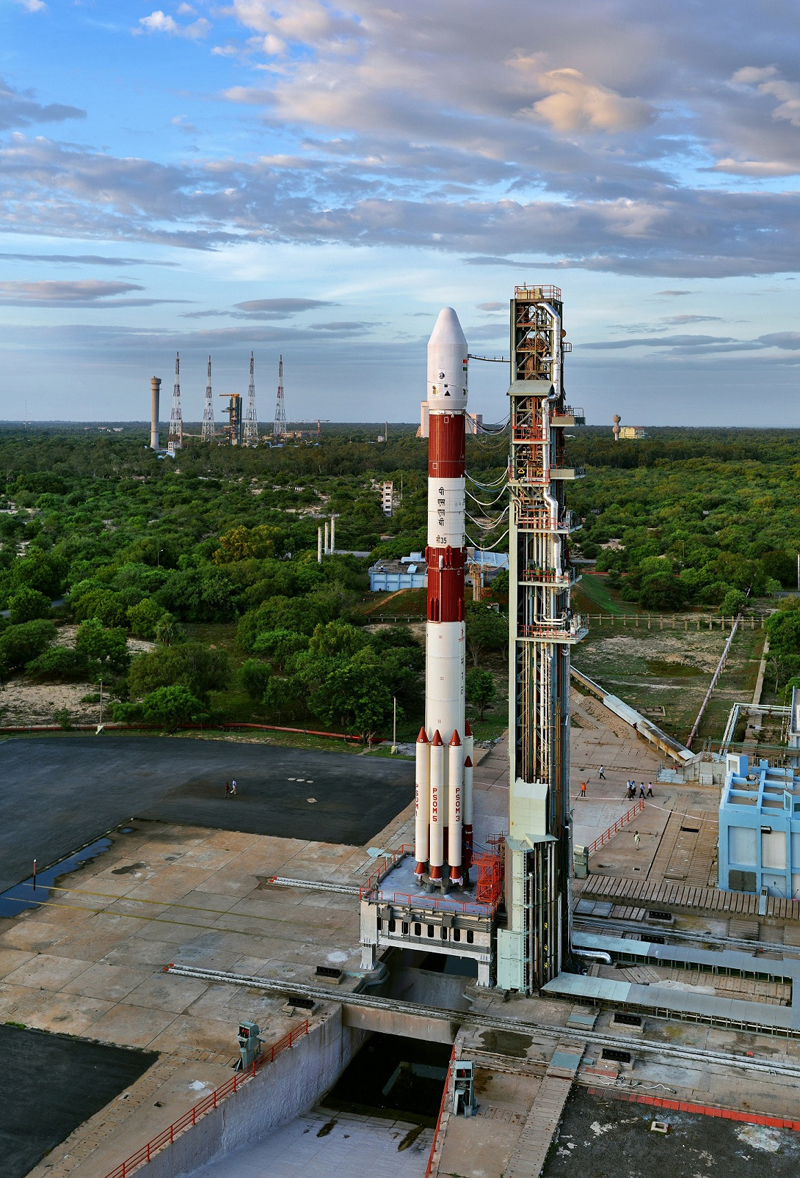
    MUMBAI: It will be the second satellite launch this month for the Indian Space Research Organisation (ISRO). On 26 September 2016 at exactly 9:12 am the PSLV C35 will blast off from the first launch pad of the Satish Dhawan Space Centre in Sriharikota, Andhra Pradesh. It will mark the 37th mission and 15 th flight of the PSLV in ‘XL’ configuration (with the use of solid strap-on motors) which will put eight satellites into orbit.

    ISRO will, with the PSLV C35, be undertaking its longest launch and probably most complicated mission ever attempted as it is using the same rocket to launch satellites into two different orbits. The Scatsat-1 satellite, weighing 371 kg for ocean and weather related studies, will be hurled into polar sun synchronous orbit at an altitude of 730 km 17 minutes after liftoff.

    Two Indian universities/ academic institute satellites (Pratham-10kg, IIT – Bombay and Pisat-5.25 kg, PES University, Bengaluru and its consortium) and five foreign satellites will be placed into a 670 km polar orbit. The five co-passenger satellites are from Algeria (three of them – Alsat-1B 103kg, Alsat-2B 117kg, Alsat-1N 7kg), Canada (NLS-19, 8kg) and the US (Pathfinder-44kg).

    What makes the mission complicated is that once Scatscat-1 is launched, the fourth stage engine of the PSLV-C35 will come to a halt. India’s space agency will then keep a tab on the engine health from the ground and will restart it after about 60 minutes for another 20 seconds which will give it the required thrust to take the rocket into the next orbit and release the payload of seven satellites. ISRO has planned to attempt ‘multiple burn technology’ as it is an effective method in cutting costs during satellite launches.

    Earlier this month on 8 September, IISRO had successfully launched its weather satellite INSAT-3DR, a two tonner, using the GSLV-F05, the tenth flight of India’s Geosynchronous Satellite Launch Vehicle (GSLV), The launch took place from the second launch pad at Satish Dhawan Space Centre. It was significant because it was the first operational flight of GSLV carrying Cryogenic Upper Stage (CUS). The indigenously developed CUS was carried on-board for the fourth time during a GSLV flight in the GSLV-F05 flight.

  • ISRO to launch eight satellites using PSLV on 26 September

    ISRO to launch eight satellites using PSLV on 26 September

    MUMBAI: It will be the second satellite launch this month for the Indian Space Research Organisation (ISRO). On 26 September 2016 at exactly 9:12 am the PSLV C35 will blast off from the first launch pad of the Satish Dhawan Space Centre in Sriharikota, Andhra Pradesh. It will mark the 37th mission and 15 th flight of the PSLV in ‘XL’ configuration (with the use of solid strap-on motors) which will put eight satellites into orbit.

    ISRO will, with the PSLV C35, be undertaking its longest launch and probably most complicated mission ever attempted as it is using the same rocket to launch satellites into two different orbits. The Scatsat-1 satellite, weighing 371 kg for ocean and weather related studies, will be hurled into polar sun synchronous orbit at an altitude of 730 km 17 minutes after liftoff.

    Two Indian universities/ academic institute satellites (Pratham-10kg, IIT – Bombay and Pisat-5.25 kg, PES University, Bengaluru and its consortium) and five foreign satellites will be placed into a 670 km polar orbit. The five co-passenger satellites are from Algeria (three of them – Alsat-1B 103kg, Alsat-2B 117kg, Alsat-1N 7kg), Canada (NLS-19, 8kg) and the US (Pathfinder-44kg).

    What makes the mission complicated is that once Scatscat-1 is launched, the fourth stage engine of the PSLV-C35 will come to a halt. India’s space agency will then keep a tab on the engine health from the ground and will restart it after about 60 minutes for another 20 seconds which will give it the required thrust to take the rocket into the next orbit and release the payload of seven satellites. ISRO has planned to attempt ‘multiple burn technology’ as it is an effective method in cutting costs during satellite launches.

    Earlier this month on 8 September, IISRO had successfully launched its weather satellite INSAT-3DR, a two tonner, using the GSLV-F05, the tenth flight of India’s Geosynchronous Satellite Launch Vehicle (GSLV), The launch took place from the second launch pad at Satish Dhawan Space Centre. It was significant because it was the first operational flight of GSLV carrying Cryogenic Upper Stage (CUS). The indigenously developed CUS was carried on-board for the fourth time during a GSLV flight in the GSLV-F05 flight.

  • Antrix earned Rs 230 crore during 2015-16 through commercial launch services

    Antrix earned Rs 230 crore during 2015-16 through commercial launch services

    NEW DELHI: Antrix, the commercial arm of the Indian Space Research Organisation (ISRO), earned revenue of approximately Rs 230 crore during 2015-16 through commercial launch services, which is about 0.6% of the global launch services market.

    The average annual revenue over the last three years according to the published reports available in the public domain on the international satellite market is approximately $200 billion (Rs 13 lakh crore), which includes the launch services market (Rs 0.37 lakh crore), satellite manufacturing (Rs 1.07 lakh crore), ground equipment (Rs.3.85 lakh crore) and satellite services (Rs. 8.17 lakh crore).

    Department of Space Minister Jitendra Singh told Parliament recently that ISRO is providing the launch capacity, when available, for launching satellites on a commercial basis through Antrix Corporation Limited.

    In order to meet the enhanced national requirements for launching satellites for earth observation, communication & navigation, ISRO is taking steps to increase the launch capacity. ISRO will continue to provide the launch capacity, when available, for commercial launch services. Towards stepping up the launch capacity, ISRO is in the process of exploring the possibility of enhanced involvement of Indian industry. Besides meeting the national demand, the industry can explore the opportunities for commercial launch services.

    India joining Missile Technology Control Regime (MTCR) would benefit India’s space development programme in strengthening international cooperation activities in high technology areas with other space faring nations, he said in reply to another question in Parliament.

    This will ease the procurements and supplies of export controlled high/ advanced technology items, components, materials, and equipment from other countries, especially MTCR partner states; and enhance commercial ventures in terms of export of sub-systems, satellites and commercial launch services etc.

    India as a major space faring nation and as a partner state in MTCR could play critical roles in various international fora such as UNCOPUOS, UN Conference on Disarmament (CD) and other space related international fora in major policy decisions relating to space applications, space security topics. India, as a Partner State of MTCR, can take part in the decision making process in ensuring non-proliferation of sensitive space technology related items, which are controlled through a list (called Technical Annex) and reviewed & revised annually through Technical Experts Meetings.

  • Antrix earned Rs 230 crore during 2015-16 through commercial launch services

    Antrix earned Rs 230 crore during 2015-16 through commercial launch services

    NEW DELHI: Antrix, the commercial arm of the Indian Space Research Organisation (ISRO), earned revenue of approximately Rs 230 crore during 2015-16 through commercial launch services, which is about 0.6% of the global launch services market.

    The average annual revenue over the last three years according to the published reports available in the public domain on the international satellite market is approximately $200 billion (Rs 13 lakh crore), which includes the launch services market (Rs 0.37 lakh crore), satellite manufacturing (Rs 1.07 lakh crore), ground equipment (Rs.3.85 lakh crore) and satellite services (Rs. 8.17 lakh crore).

    Department of Space Minister Jitendra Singh told Parliament recently that ISRO is providing the launch capacity, when available, for launching satellites on a commercial basis through Antrix Corporation Limited.

    In order to meet the enhanced national requirements for launching satellites for earth observation, communication & navigation, ISRO is taking steps to increase the launch capacity. ISRO will continue to provide the launch capacity, when available, for commercial launch services. Towards stepping up the launch capacity, ISRO is in the process of exploring the possibility of enhanced involvement of Indian industry. Besides meeting the national demand, the industry can explore the opportunities for commercial launch services.

    India joining Missile Technology Control Regime (MTCR) would benefit India’s space development programme in strengthening international cooperation activities in high technology areas with other space faring nations, he said in reply to another question in Parliament.

    This will ease the procurements and supplies of export controlled high/ advanced technology items, components, materials, and equipment from other countries, especially MTCR partner states; and enhance commercial ventures in terms of export of sub-systems, satellites and commercial launch services etc.

    India as a major space faring nation and as a partner state in MTCR could play critical roles in various international fora such as UNCOPUOS, UN Conference on Disarmament (CD) and other space related international fora in major policy decisions relating to space applications, space security topics. India, as a Partner State of MTCR, can take part in the decision making process in ensuring non-proliferation of sensitive space technology related items, which are controlled through a list (called Technical Annex) and reviewed & revised annually through Technical Experts Meetings.

  • ISRO seeks industry co-operation for space-based services

    ISRO seeks industry co-operation for space-based services

    NEW DELHI: India’s space agency, ISRO, has sought industry’s help and co-operation to realize India’s growing need for space-based services.

    ISRO Chairman and Department of Space (DoS) Secretary AS Kiran Kumar yesterday said in Bengalaru that to meet the increased demand for space-based services, it was imperative that ISRO joined hands with industries in an effort towards enhancing capacity.

    Kumar was speaking at a “Make in India” Conference on Enabling Spacecraft Systems Realisation through Industries (ESSRI- 2016) organised on June 23, 2016 at ISRO Satellite Centre, Bengaluru.

    An official government statement quoted Kumar as telling delegates that almost all the government departments and ministries had evinced keen interest in applying space technology for carrying out their mandates.

    He also emphasized on India’s great potential to capture a sizeable portion of the business in the international space market.

    ISRO earlier in the week put in space 20 satellites that included many belonging to foreign countries, including the US.

    The conference was organised to elicit industry support for spacecraft realisation on an end-to-end basis to meet the rapidly increasing national demand for space based services and the realisation of Prime Minister’s objective of “Make in India”.

    The government statement further added that over the years, a number of Indian industries have been actively participating in realising various sub-systems of spacecraft. A variety of models have been adopted by ISRO in outsourcing jobs to these vendors, but end-to-end realisation of spacecraft has not yet been realised. The Conference aimed to fill this gap.

    ISRO has announced that the Expression of Interest (EoI) for realising spacecraft on an end-to-end basis has been hosted on ISRO/ISAC websites and invited the industry to respond to it.

    During the conference, senior executives of ISRO gave an insight into the requirements of ISRO with respect to hardware, technologies, quality and delivery schedule and what was essential for them to be qualified vendors of ISRO.

    About 110 industries in aerospace business participated in the conference.

    However, as far as leasing out satellite capacity to Indian customers go, ISRO has been lagging behind in meeting the demands for KU-band transponders, while restricting foreign satellite companies’ access to the Indian market.

    In a report on satellite capacity over Indian skies versus demand, released in March 2016, Hong Kong-based Asian industry organization CASBAA had noted that over the last three years, for example, the number of transponders contracted by DTH operators have gone up from 73 to 78 with the share of transponders supplied by foreign operators going up to 75% as ISRO/Antrix has not been able to meet the need through domestic launches.

  • ISRO seeks industry co-operation for space-based services

    ISRO seeks industry co-operation for space-based services

    NEW DELHI: India’s space agency, ISRO, has sought industry’s help and co-operation to realize India’s growing need for space-based services.

    ISRO Chairman and Department of Space (DoS) Secretary AS Kiran Kumar yesterday said in Bengalaru that to meet the increased demand for space-based services, it was imperative that ISRO joined hands with industries in an effort towards enhancing capacity.

    Kumar was speaking at a “Make in India” Conference on Enabling Spacecraft Systems Realisation through Industries (ESSRI- 2016) organised on June 23, 2016 at ISRO Satellite Centre, Bengaluru.

    An official government statement quoted Kumar as telling delegates that almost all the government departments and ministries had evinced keen interest in applying space technology for carrying out their mandates.

    He also emphasized on India’s great potential to capture a sizeable portion of the business in the international space market.

    ISRO earlier in the week put in space 20 satellites that included many belonging to foreign countries, including the US.

    The conference was organised to elicit industry support for spacecraft realisation on an end-to-end basis to meet the rapidly increasing national demand for space based services and the realisation of Prime Minister’s objective of “Make in India”.

    The government statement further added that over the years, a number of Indian industries have been actively participating in realising various sub-systems of spacecraft. A variety of models have been adopted by ISRO in outsourcing jobs to these vendors, but end-to-end realisation of spacecraft has not yet been realised. The Conference aimed to fill this gap.

    ISRO has announced that the Expression of Interest (EoI) for realising spacecraft on an end-to-end basis has been hosted on ISRO/ISAC websites and invited the industry to respond to it.

    During the conference, senior executives of ISRO gave an insight into the requirements of ISRO with respect to hardware, technologies, quality and delivery schedule and what was essential for them to be qualified vendors of ISRO.

    About 110 industries in aerospace business participated in the conference.

    However, as far as leasing out satellite capacity to Indian customers go, ISRO has been lagging behind in meeting the demands for KU-band transponders, while restricting foreign satellite companies’ access to the Indian market.

    In a report on satellite capacity over Indian skies versus demand, released in March 2016, Hong Kong-based Asian industry organization CASBAA had noted that over the last three years, for example, the number of transponders contracted by DTH operators have gone up from 73 to 78 with the share of transponders supplied by foreign operators going up to 75% as ISRO/Antrix has not been able to meet the need through domestic launches.

  • ISRO stresses on indigenization; TRAI for Open Sky policy

    ISRO stresses on indigenization; TRAI for Open Sky policy

    NEW DELHI: Even as he advocated an Open Sky Policy for satellites usage, Telecom Regulatory Authority of India (TRAI) chairman R S Sharma said an early formulation of a satellite communication (satcom) policy was desirable if the goals of Digital India have to be achieved.

    On the other hand, Indian Space & Research Organisation (ISRO) agreed satellite services were crucial to the success of Prime Minister Narendra Modi’s dream of Digital India, but laid stress on indigenisation to become “self-reliant” over the next few years.

    Speaking at the ‘2nd International Summit ‘India Satcom – 2016’ on the theme of Broadband for all using NextGen Satellite Technologies, TRAI’s Sharma said connectivity was vital for a digital India and satellite can help in increase this connectivity.

    That was why, he said, TRAI is in favour of an Open Sky policy and had earlier too recommended on these lines in a report to the government.

    Sharma admitted that the internet connectivity in India was barely 15 per cent, though wireless connectivity was growing at a fast pace through smart-phones. There were only 20 million phones in the country but almost the entire country was connected through mobile phones, he said.

    Suggesting use of cable and digital television systems to enable delivery of broadband, the TRAI chairman admitted that certain “policy constraints have to be crossed.”

    He said if this is not done soon, then Digital India will not move forward much.

    Referring to Ka Band on satellites, Sharma said TRAI had issued a paper in this connection in April last year.  

    While Sharma pushed for a more liberalised satcom policy to realise the dream of Digital India faster, ISRO stressed on indigenisation for self-reliance without directly dwelling on an Open Sky policy.

    In a message read out in absentia, ISRO chairman and secretary in the Department of Space A S Kiran Kumar said there was need to hold full-fledged discussions on satellite services’ contribution to Digital India and also on formulation of a satcom policy.

    He stressed that ISRO was committed to an indigenous satellite system and added more (Indian) satellites were expected to be launched over the next few years to make the country self-dependent.

    ISRO has been criticised in the past on stifling the growth of Indian users of satellite services (like DTH and VSAT operators to name a few) owing to its inability to meet the demand with supply on INSAT, while mandating time-consuming processes for Indian customers to lease capacity on foreign satellites.

    Hong Kong-based Asian industry organisation CASBAA in a recent report had highlighted how stifling satellite policies were hampering a faster rollout of a digital India.

    Titled Capacity crunch continues: Assessment of satellite transponders’ capacity for the Indian broadcast and broadband market and released in March 2016, the CASBAA-PwC report had questioned the role of ISRO and Antrix (ISRO’s commercial arm) as a satellite operator, a research institute and an independent commercial entity.

    “The roles of a policymaker and enforcer should be assigned to independent entities,” The CASBAA-PwC report stated, indicating ISRO/Antrix present roles lead to conflict of interests.
  • ISRO stresses on indigenization; TRAI for Open Sky policy

    ISRO stresses on indigenization; TRAI for Open Sky policy

    NEW DELHI: Even as he advocated an Open Sky Policy for satellites usage, Telecom Regulatory Authority of India (TRAI) chairman R S Sharma said an early formulation of a satellite communication (satcom) policy was desirable if the goals of Digital India have to be achieved.

    On the other hand, Indian Space & Research Organisation (ISRO) agreed satellite services were crucial to the success of Prime Minister Narendra Modi’s dream of Digital India, but laid stress on indigenisation to become “self-reliant” over the next few years.

    Speaking at the ‘2nd International Summit ‘India Satcom – 2016’ on the theme of Broadband for all using NextGen Satellite Technologies, TRAI’s Sharma said connectivity was vital for a digital India and satellite can help in increase this connectivity.

    That was why, he said, TRAI is in favour of an Open Sky policy and had earlier too recommended on these lines in a report to the government.

    Sharma admitted that the internet connectivity in India was barely 15 per cent, though wireless connectivity was growing at a fast pace through smart-phones. There were only 20 million phones in the country but almost the entire country was connected through mobile phones, he said.

    Suggesting use of cable and digital television systems to enable delivery of broadband, the TRAI chairman admitted that certain “policy constraints have to be crossed.”

    He said if this is not done soon, then Digital India will not move forward much.

    Referring to Ka Band on satellites, Sharma said TRAI had issued a paper in this connection in April last year.  

    While Sharma pushed for a more liberalised satcom policy to realise the dream of Digital India faster, ISRO stressed on indigenisation for self-reliance without directly dwelling on an Open Sky policy.

    In a message read out in absentia, ISRO chairman and secretary in the Department of Space A S Kiran Kumar said there was need to hold full-fledged discussions on satellite services’ contribution to Digital India and also on formulation of a satcom policy.

    He stressed that ISRO was committed to an indigenous satellite system and added more (Indian) satellites were expected to be launched over the next few years to make the country self-dependent.

    ISRO has been criticised in the past on stifling the growth of Indian users of satellite services (like DTH and VSAT operators to name a few) owing to its inability to meet the demand with supply on INSAT, while mandating time-consuming processes for Indian customers to lease capacity on foreign satellites.

    Hong Kong-based Asian industry organisation CASBAA in a recent report had highlighted how stifling satellite policies were hampering a faster rollout of a digital India.

    Titled Capacity crunch continues: Assessment of satellite transponders’ capacity for the Indian broadcast and broadband market and released in March 2016, the CASBAA-PwC report had questioned the role of ISRO and Antrix (ISRO’s commercial arm) as a satellite operator, a research institute and an independent commercial entity.

    “The roles of a policymaker and enforcer should be assigned to independent entities,” The CASBAA-PwC report stated, indicating ISRO/Antrix present roles lead to conflict of interests.
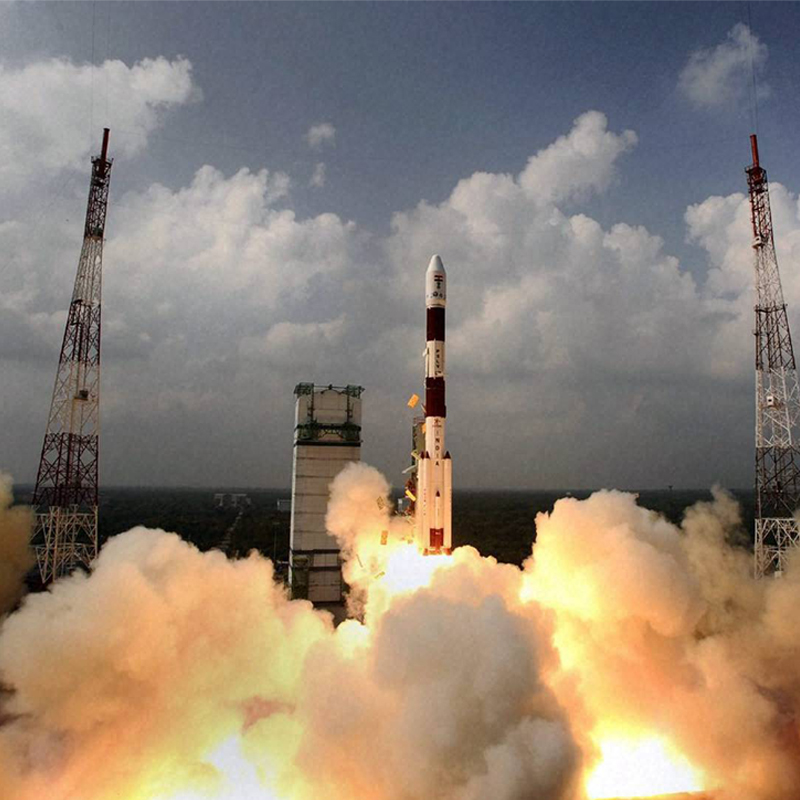
  • ISRO to launch two private satellites for American company

    ISRO to launch two private satellites for American company

    NEW DELHI: Antrix Corporation Limited (Antrix), the commercial arm of Indian Space Research Organisation (ISRO), has signed Launch Services Agreement with American company PlanetIQ for launching their satellites.

    Two of their satellites will be launched on-board ISRO’s Polar Satellite Launch Vehicle (PSLV). 

    According to agreements signed in October last, these satellites are meant for studying certain weather parameters. 

    This was stated in Rajya Sabha today by Dr Jitendra Singh, who is Minister of State for Atomic Energy and Space.