Tag: satellites

  • Amazon’s Kuiper Project to launch first full satellite batch for global broadband

    Amazon’s Kuiper Project to launch first full satellite batch for global broadband

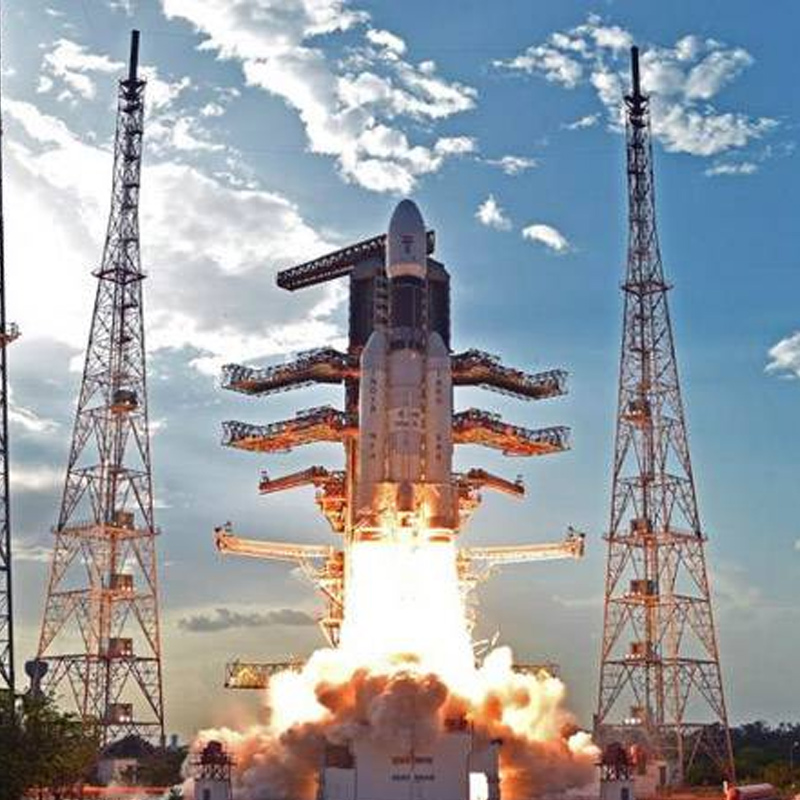
    MUMBAI: Amazon’s Project Kuiper is launching its first full batch of satellites into orbit. The “KA-01” mission, scheduled for no earlier than 12 pm EDT on Wednesday, 9 April  will deploy 27 satellites via a United Launch Alliance (ULA) Atlas V rocket from Cape Canaveral Space Force Station, Florida.

    The mission aims to establish a low-latency, high-speed internet service accessible globally. The first-generation satellite system will consist of over 3,200 low Earth orbit satellites. The KA-01 launch is a critical step in deploying this constellation.

    The satellites deployed in the KA-01 mission feature improvements over previous prototypes, including enhanced phased array antennas, processors, solar arrays, propulsion systems, and optical inter-satellite links. A dielectric mirror film has been applied to the satellites to minimize reflected sunlight, addressing concerns from ground-based astronomers.

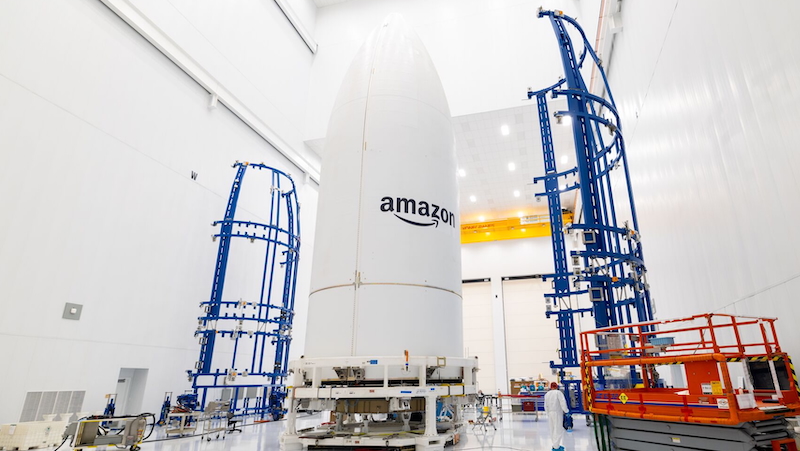
    The satellite payload is the heaviest ever carried by a ULA Atlas V rocket, requiring the rocket to fly in its most powerful configuration with five solid rocket boosters. The payload fairing measures 77 feet (23.5 meters) in height and 16.4 feet (5 meters) in width.

    Following launch and initial deployment by ULA, Kuiper’s mission operations center in Redmond, Washington, will manage the constellation. The satellites will use electric propulsion to ascend to their operational orbit of 392 miles (630 km), traveling at speeds exceeding 17,000 miles per hour.

    The mission’s primary objective is to achieve safe satellite deployment and establish end-to-end network connectivity. Future launches, including seven more on the Atlas V and 38 on ULA’s Vulcan Centaur, are planned to expand the constellation. Additional launches will occur with Arianespace, Blue Origin, and SpaceX.
    Amazon plans to begin delivering Kuiper internet services to customers later this year. The company is currently hiring to support the project’s development and deployment.

  • TRAI makes recommendations on satellite-based connectivity for low bit-rate applications

    TRAI makes recommendations on satellite-based connectivity for low bit-rate applications

    New Delhi: The Telecom Regulatory Authority of India (Trai) has released the recommendations on “Licensing Framework for Satellite-based connectivity for low bit rate applications” for both commercial and captive usage.

    The recommendations come after the Department of Telecom (DoT) highlighted a need for a suitable licensing framework considering the constraints of the existing provisions in respect of proposed Satellite-based low bit-rate services. In its letter dated 23 November 2020, DoT had requested Trai to examine all the factors holistically and make recommendations.

    Low bit-rate applications and IoT devices require low cost, low power, and small size terminals that can effectively perform the task of signal transfer with minimum loss. Many sparsely populated areas with important economic activities suited for IoT-related services may not have terrestrial coverage or other forms of connectivity. Therefore, Satellites can help bridge this gap by providing coverage to even the most remote areas and will help in fulfilling connect India mission.

    Trai had initially issued a consultation paper on 12 March inviting comments and counter-comments from stakeholders by 7 May. “The authority received 29 comments and four counter comments from various stakeholders. An Open House Discussion (OHD) was also convened on the issues raised in the Consultation Paper on dated 2 June 2021 through video conferencing,” said Trai in a media statement.

    The regulator has recommended that for provision of satellite-based connectivity for IoT and low-bit-rate applications, the relevant service licensees may provide connectivity as per the scope of their authorisation for any kind of network topology model including hybrid model, aggregator model and direct-to-satellite model.

    All types of satellite – Geo Stationary Orbit (GSO) and Non-GSO (NGSO) satellites and any of the permitted satellite frequency bands may be used for providing satellite-based low-bit-rate connectivity. The Service Licensees should be permitted to obtain satellite bandwidth from foreign satellites in all the permitted satellite bands in order to provide satellite-based services.

    It also recommended that the relevant existing authorisations under the Unified Licensing framework may be suitably amended for enabling satellite-based low-bit-rate connectivity. “The government may come out with a road map detailing the schedule of the launch of communication satellites and availability of the domestic satellite capacities in India to facilitate the service licensees to plan and optimise their capacity procurement,” it added.

    Other recommendations include measures to make the services cheaper and affordable like permitting the hiring of foreign capacities for a longer period as per need instead of three to five years, removal of facilitation charges by the government when hiring foreign capacities from the approved list of foreign satellites/satellite systems, etc.

    According to Trai, DoT should also put in place a comprehensive, simplified, end-to-end coordinated, single window online common portal for all the agencies involved in the grant of various approvals/permissions etc, wherein the service licensees can place their request and the agencies respond online in a transparent and time-bound manner.

    Last September, the then chairman of Trai, R S Sharma, had also called for an urgent need to bring down the price of broadband services provided through satellites, asserting that its current high price could pose a challenge in its adoption in the country.

  • TRAI extends deadline for submissions in satellite-based connectivity paper

    TRAI extends deadline for submissions in satellite-based connectivity paper

    New Delhi: The Telecom Regulatory Authority of India (TRAI) has extended the deadline for stakeholders to submit their suggestions on satellite-based connectivity for low-bit rate applications to 23 April.

    The telecom regulator had floated a discussion paper on 12 March seeking views to make satellite communications more affordable in the country. It had also sought feedback on whether licensed national long distance (NLD) operators can be allowed to offer satellite services to connect the new wave of Internet of things (IoT) devices, and if only some frequency bands should be available for such satellite-based IoT connectivity.

    TRAI seeks suggestions to make satellite broadband services affordable

    The low bit-rate applications (below 64 kbits per second) are sensor-based applications used in ATMs, traffic management, vehicle tracking, IoT devices. The written comments were invited from the stakeholders by 9 April and counter comments by 23 April.

    On Friday, TRAI announced that it has extended the deadline for submission of written comments and counter comments up to 23 April and 7 May respectively upon industry request. “No further requests for extension would be considered,” it stated in a press release.

    “With the evolution of satellite communication technologies, new types of applications based on low-bit-rate applications are emerging. Such applications require low cost, low power, and small size terminals that can effectively perform the task of signal transfer with a minimum loss,” TRAI highlighted in its paper, adding that there was also a need for a single-window clearance for all kinds of satellite-based processes.

    Among other issues, it also sought views on whether satellite service licensees should be allowed to obtain bandwidth from foreign satellites for providing IoT connectivity. It also invited suggestions on whether a new licensing framework should be proposed for the provision of satellite-based connectivity for low-bit-rate applications or the existing licensing framework may be suitably amended to include the provisioning of such connectivity.

    “Even though the cost of launching a satellite in India is the lowest globally, yet the licensing formalities, technical criteria, lack of ‘Open Skies Policy’ are significant barriers for the growth of satellite services in the country. The satellite services need to be made affordable for wider acceptability by price-sensitive Indian industry and end-users,” the telecom regulator had noted.

  • #Throwback2020: Success in space and satellites

    #Throwback2020: Success in space and satellites

    NEW DELHI: The pandemic may have slowed down life on earth, but it could not deter the world from looking beyond. As most activities came to a sudden halt, the space agencies across the globe persevered through the crisis. Some had to push back their crucial space missions, others struggled to keep them on track, while a few managed to script history.

    Indian Space Research Organization (ISRO) began the year with the launch of a high-powered communication satellite GSAT-30 on-board a European rocket from French Guiana. It replaced the aging INSAT 4A to continue providing high quality television, telecommunication, broadcasting services to the Indian subcontinent with extended coverage over Asia and Australia.

    The lockdown ensured no further launch took place for the next ten months, until November, when India’s premier space agency returned to the launch pad to inject EOS-01–an earth observation satellite—into space along with nine other customer satellites. This was soon followed by the launch of the country's forty second communications satellite CMS-01 in December which replaced the aging GSAT-12.

    While ISRO managed to keep its regular satellite launches on track, the pandemic cast a shadow on its bigger space missions. This included a fresh bid to achieve a successful soft landing on the moon which Chandrayaan-2 had failed to achieve last year, and first of the two unmanned missions of Gaganyaan, India’s first human-spaceflight programme which was expected to take off this December. 

    Nonetheless, the groundwork for the 2022 Gaganyaan mission continued. The agency completed the selection of the astronauts and began their training. The process of human rating for GSLV MkIII selected for the historic mission also remained in progress. 

    Globally, as many as 101 orbital launches took place in this turbulent year. The US was top of the leader board with 40 successes out of 44. China came next with 33 successful launches out of 37 attempted. Russia had a perfect score with 16 satellites reaching their orbital locations. Ditto with Japan which had four immaculate launches, and Europe had four clear takeoffs and one failure with Iran and India acing it with two successes each.

    A large share of the launches were accounted for by low earth orbiting birds which were meant for earth observation, technology demonstration and to provide internet in select areas.

    Amongst the big communications birds which were sent into space included: Tiantong 1-02 (mobile communications, China), Galaxy 30 (Intelsat, communications, North America), BSat4b (Broadcasting Satellite System Corp, communications, Japan), Ekspress 80 and Ekspress 103 (Russian Satellite Communications Co, communications, Russia), Apstar 6D (APT Holdings; communications, China), JCSat 17 (Sky Perfect JSat Corp; communications, Japan), GSat30 (ISRO, communications, India, Kourou), and Eutlesat Konnect (Eutelsat, communications, Africa & Europe). Palapa N1 – a satellite owned by Palapa Satelit Nusantara Sejahtera, a joint venture between Indosat Ooredoo and Pasifik Satelit Nusantara, or PSN – met with a fiery end after its launch vehicle the Long March 3B had engine failure.

    The year will be noted for the achievement by the Mission Extension Vehicle MEV-1 which became the first telerobotically-operated spacecraft to service another satellite on-orbit when in February 2020 it completed the first phase of a five-year mission to extend the life of the Intelsat 901 (I-901) satellite. It was brought back from the graveyard orbit to a geosynschronous one by April 2020, opening up a future where human intervention is not needed for on-orbit satellite servicing, like it was for dealing with the Hubble telescope in the early 2000s.   

    2020 also marked the first time a private company successfully undertook a crewed mission into the low earth orbit. Elon Musk's SpaceX achieved the feat after it was able to put two astronauts into space aboard its spacecraft Crew Dragon, heradling a new chapter in commercial space operations. It was a busy year for the American aerospace manufacturer which injected as many as 26 satellites into space. The company is racing to get its Starlink constellation in operation to provide high speed internet connection from the skies.

    The year also witnessed the return of UK based broadband satellite communications company, OneWeb which put a total of 36 communication satellites into space on board a Russian Soyuz rocket. The satellite operator which recently emerged from bankruptcy is eyeing to build a massive constellation of over 650 satellites to beam internet service to people. Early this year, India’s Bharti Global had picked up a 45 per cent stake in the company.

    In the global space arena, Mars continued to allure the space agencies and three countries managed to keep their date—a brief time window which comes around every two years.

    The first was the United Arab Emirates (UAE) which scripted history with the successful launch of its spacecraft named Hope— the first-ever interplanetary mission by any Arab country. It was followed by the launch of Tianwen-1 by China in July and Perseverance rover by the United States a week later. All three spacecraft are expected to enter the Martian orbit early next year.

    However, the pandemic marred Europe and Russia's joint Mars mission and the launch of its first Mars rover, Rosalind Franklin probe, was postponed to 2022.

    Among other ground-breaking missions of 2020 was China’s Chang'e-5 lunar capsule which returned to Earth carrying fresh samples of moon rocks. China has now become just the third country to explore the moon's surface, after the US and the former Soviet Union, and the first to successfully return from the moon since Soviet Union’s Luna 24 spacecraft in 1976.

  • ISRO/DoS relent on use of foreign satellites; MIB starts processing applications

    ISRO/DoS relent on use of foreign satellites; MIB starts processing applications

    MUMBAI: India’s Department of Space, overseeing the Indian Space Research Organisation (ISRO), has eased up on its hitherto hard stance on Indian TV channels and teleports using foreign satellites’ capacity — if the Indian customer has a long-term contract.

    In a communication to Ministry of Information and Broadcasting (MIB), DoS/ISRO combine has advised that applications may be processed — for the time being — without insistence on migration to an Indian satellite or asking the time frame for doing it. 

    According to government sources, it has been suggested to MIB that it could start granting permissions to TV channels proposing to use foreign satellites for uplinking purpose if they are going in for a contract of three years or more. If an applicant company, having existing government permissions, has long-term capacity contract on foreign satellites, it too should be allowed to continue with its services.

    However, there’s a caveat to ISRO/DoS’ latest softening of stance. Any company that has existing permission from MIB to start a TV channel or communications service (like teleports) and is using foreign satellites should give the Indian space agency at least three-month notice for space on an Indian satellite when its contract with a foreign satco is ending. Same holds true for all fresh permissions for TV channels given by the government.

    The DoS/ISRO communication referred to over 35 applications that were kept pending by MIB as Department of Space had been insisting on migration to Indians satellites. MIB had also issued letters earlier this year asking companies seeking name change, for example, as to when they proposed to shift to an Indian satellite. Out of these cases highlighted by ISRO/DoS, at least 10 have long-term contracts for capacity on foreign satellites.

    Last month MIB cleared applications of three new TV channels in Indian languages under Aastha brand name. The Aastha channels are owned by a company controlled by Balkrishna, a close associate of yoga-guru-turned-entrepreneur Ramdev who’s Patanjali FMCG venture is giving even multinational companies sleepless nights, if revenues and sales growth are to be believed.

    Government nods recently were also given for name and logo change to some big broadcasting companies. Incidentally, some of the Aastha TV channels use foreign satellites for uplinking activity.

    In recent times, ISRO has been facing minor setbacks regarding launch of communications satellites, including Gsat-11, which returned to India just few days before launch from a European launchpad. 

    Still, it needs to be seen how long the government continues allowing Indian customers facilities of foreign satellites.

    MIB Expands Areas for Online Applications

    In a new advisory put out yesterday, MIB has expanded the services for which applications could be made online, something that the government has been insisting on in an effort to reduce processing time.

    The online module for submitting applications on www.broadcastseva.gov.in extends to cases relating to change in details of a company, annual permission fee for teleport companies and company-specific changes being sought to be made by teleports.

    The government has also reiterated an earlier stand of accepting online payments for various processing and annual permission fee, adding such payments should be made on time failing which action could be taken against companies concerned under existing regulations.

    Also Read :

    MIB clears TV channel applications; Rathore calls for stakeholder meets

    MIB, DoS nudge TV channel to use Indian satellites

    MIB says ISRO upping capacity to facilitate migration from foreign satellites

    Comment: 3 areas that new MIB minister Rathore needs to target

  • MIB clears TV channel applications; Rathore calls for stakeholder meets

    MIB clears TV channel applications; Rathore calls for stakeholder meets

    NEW DELHI: Within days of Rajyavardhan Rathore given independent charge of the Ministry of Information and Broadcasting (MIB) by the PM Modi-led government after removal of his senior Smriti Irani, the organisation has been galvanised into action. What’s more, important issues are being discussed, including clearances of three new TV channel applications and meetings being called with broadcast industry stakeholders to debate matters like use of foreign satellites versus Indian ones.

    The three TV channels that have been reportedly given initial government go-ahead — further processes like bank guarantees, etc need to be completed — include Aastha Kannad, Aastha Tamil and Aastha Telugu. All these channels are Indian language off-shoots of the religious product Aastha network that at present broadcasts in Hindi.

    Though critics may say the government has given the nod to three TV channels in South Indian languages belonging to Vedic Broadcasting Ltd (VBL), which is controlled by Yoga guru`Patanjali’ Ramdev’s close associate Acharya Balkrishna and considered close to the present BJP-led government in New Delhi, independent observers feel at least MIB has started taking a stand on applications, a process that was halted for the last nine months or so for various reasons.

    Media industry sources indicated that over 100 applications for TV channels are pending at MIB. And, such applications include ones from big and small broadcast companies.

    VBL is controlled by majority shareholder Balkrishna, who, along with Ramdev, bought it in 2011 from the people who had started a religious TV channel few years back airing yoga shows, religious sermons and some cultural programmes.

    When VBL is searched on Google, one is taken to www.acharyabalkrishna.com where it is indirectly stated that Balkrishna is the managing director. It is further stated: “Vedic Broadcasting Limited is also part of his vision. It [’s a] pioneer & leading socio-cultural network in India. Astha & Astha Bhajan Channel is propagating Indian culture and heritage, Health, Ayurveda, Education, Yoga, Values and Morals, Devotional songs, Spiritual meetings, talks, etc. The channels are available globally covering the continents of Asia, Africa, Australia, Europe and North America (USA & Canada), thus, enabling global organisations an opportunity to reach followers and other viewers worldwide.”

    Meanwhile, both government and industry sources indicated that MIB, under Rathore, is attempting to be a breath of fresh air, if not completely turn over decisions taken earlier under Irani. One such step in that direction was to start convening meetings with TV channels and their holding companies in an attempt to try to address some of the concerns.

    In one such meeting held this week, the representatives from the broadcasting company owning and operating over 30 TV channels in India were asked about their concerns. Also present were government officials from Department of Space and Indian space agency ISRO.

    When the issue of migration to an Indian satellite from foreign ones was brought up by the TV channel reps in the meeting, it was conveyed to them politely that it would be in the national interest to do so, though those having existing contracts could be allowed, in all probability, to go through with contractual obligations.

    One of the concerns relating to leasing space on foreign satellites is that ISRO, according to industry sources, was unwilling to come forth with data on disaster and backup management in case an Indian satellite, through which a TV channel is beaming, for example, sputtered or developed some snag.

    The sources said that more such meetings are in the pipeline with other broadcasting companies.

  • Comment: India’s NTP 2018 gets digital makeover but needs complimentary policies

    Comment: India’s NTP 2018 gets digital makeover but needs complimentary policies

    Criticism notwithstanding, Indian bureaucratic mandarins—babus as they are referred to in local lingo—do come up with draft policies that are contemporaneous, and at times when it’s least expected. The new digital avatar of the National Telecoms Policy 2018, slated to be operational later this year, could turn out to be just one such initiative—only if the political masters muster enough courage to push through with the proposed legislation and the will to follow up with complementary policies.

    Though surprises are the new norms with this government led by the maverick PM Modi—remember the late evening ‘Mitron’ address to the nation by the premier few years back announcing high denomination currency notes were being made illegal—it caught many napping when the Department of Telecommunications (DoT) posted on its website the draft of the much-awaited National Telecommunications Policy 2018 very late in the evening on Labour Day. So, what?

    The first surprise element was that the NTP 2018 had been rechristened National Digital Communications Policy 2018 (NDCP). The aim: put the draft in public domain to seek comments from key stakeholders and citizens, at large. But true to the government style—keeping things fluid—the deadline for comments is yet to be announced.

    The renaming of the policy was welcomed by the industry as it converges with the overarching Digital India vision of the present government; hiccups along the way to implementation, notwithstanding. However, such tweaks in the suggestions made by the telecoms and broadcast carriage regulator TRAI goes not only beyond just the nomenclature but also attempts to actualise provisions of the policy.

    What’s also important that while the government wants synergies between various organisations and ministries, it gives a thumb down to a TRAI proposal to make it—or any such other body—a converged regulator.

    A Truly Digital Communications Policy

    For quite some time, it was being felt by the government and industry alike that a specific road map is required to guide India’s successful movement into the emerging digital realm—to truly address the issue of convergence in the telecoms and broadcast services. To spark rapid all-round deployment of digital capable technologies, it is necessary all available mechanisms be looked at in a comprehensive manner; basically, shifting the focus from just wired and wireless telephony and broadband and expanding the horizons to areas such as satellite communications and broadcast carriage services.

    The industry had been demanding that already existing infrastructure assets in sectors such as broadcast and power be utilised to efficiently achieve a demanding goal of laying down high speed fibre infrastructure across India. Thus, a digital-centric telecommunications policy was required to address the crucial aspect of infrastructure sharing and integration.

    Furthermore, to firmly strengthen India’s position in the digital sphere, it is necessary that the web-hosting ecosystem, including data storage, be strengthened by implementing norms and standards that are in conformity with international best practices. This gains importance with increasing reports and instances of data breaches and leaks. Also, core principles such as separation of content/applications and infrastructure/carriage layer underlying network neutrality need to be crystallised and affirmed through statutory and policy provisions.

    The present draft NTP 2018—or isn’t it better to call it from now on NDCP 2018? —has taken into account many concerns and challenges and seems like an earnest effort on the part of the government to ensure that India’s broadband and digital sectors are backed by sound policy norms and principles.

    Has DoT Planned Well for India’s Digital Future?

    The DoT has gone ahead and staked its claim to the entire swathe of telecommunications technologies and the methodologies through which government’s digital goals can be rapidly deployed, e-governance included. Now, this could turn out to be an asset as also a weakness, given inter-departmental politics and power play.

    DoT has called for an overhaul of India’s archaic satcom policy in line with international standards and also advocated for greater participation by private players in commercial satellite operations — a vision that needs to be matched with some liberalisation at Department of Space (DoS) and India’s space agency ISRO, both of which report directly to the Prime Minister’s Office. To spearhead the contribution of private satcom industry in providing broadband to far flung districts, there’s specific mention of opening Ka-band for private use and also for utilisation of high through-put (HTS) satellites.

    With a view to reducing burden of laying down fresh wireline fibre infrastructure, there’s clear mention of recommendation for “leveraging existing assets of the broadcasting and power sector to improve connectivity, affordability and sustainability”. This could reduce the tendency of telecom industry to overbuild fibre and brings the vast amounts of broadband-capable digital cable infra created under Ministry of Information and Broadcasting (MIB)’s mandate of digitising cable networks across the country and within the purview of Digital India programme.

    DoT has also realised the need to formulate a coherent approach to reap the benefit of technological convergence. It has specifically called for statutory amendments to the vintage Telegraph Act, 1885 for “enabling infrastructure convergence of IT, telecom and broadcasting sectors”. This highlights the department wants to create a defined policy structure for seamless use of all broadband capable infrastructure, irrespective of differences amongst sectors. It also reflects clear intent of DoT to focus only on convergence of infrastructure, rather than convergence of applications/media running on this layer.

    Therefore, DoT has focused sharply (and some may say appropriately) only on enabling carriage services and the surrounding digital ecosystem rather than delve into other unrelated areas such as media.  No wonder it has called for separation of infrastructure/carriage layer from applications/content layer. Moreover, it has called for recognising the need to uphold the core principles of network neutrality by “amending the licence agreements to incorporate the principles of non-discriminatory treatment of content, along with appropriate exclusions and exceptions as necessary”.

    Furthermore, the DoT has gone a step ahead and acknowledged the primacy of principles and objectives contained in the National IPR Policy related to telecommunications and sought implementation to kick start development of indigenous IPRs.

    The Road to the Final Draft

    Though the industry, by and large, has welcomed the draft policy as it gears itself to fulfil the call for the now highly debatable “USD 100 billion” in investments, there are a few asks that still need to be fulfilled. The investment aspect itself is ambitious given the present health of the telecoms sector where a big downside of the business is the pink slips presently being handed out by telcos, big and small.

    Another important aspect would be to simplify and streamline all departmental procedures such as windowing of satellite frequencies by the WPC, a part of the DoT, which has been a bottleneck in improving ease of doing business in satcom and broadcasting sectors.

    Given that the DoT has already referred to National IPR Policy for the purpose of all IPRs, including patents, trademarks and copyrights, related to telecommunications, it is vital that it settles the debate between carriage and content industries once and for all and pursues the goal of harmonisation of telecom policy construct with the applicable domestic and international IPR regimes.

    The key would be to now take all the constructive inputs from the industry and iron out the remaining creases to create an effective implementation framework to turn India into a truly digitally empowered society.

    While we debate the National Digital Communications Policy 2018, it would be worthwhile to go back into history and attempt reading the Communications Convergence Bill that was introduced in Parliament in 2001. A real visionary piece of draft legislation, the policy was considered so futuristic at that point of time that a joint parliamentary committee red flagged it at 70-odd places, which effectively sounded the death knell for the proposed legislation that was aimed at promoting and developing the entire communications sector—encompassing the broadcasting, telecom and multimedia sectors—keeping in view emerging convergence of techs and services. Drafted by eminent jurist Fali S Nariman-headed panel, the draft still remains as one of the finest pieces of convergence regulations that never saw the light of the day.

    In the end, one cannot but agree with lawyer-researcher at India’s Centre for Internet and Society Anubha Sinha’s observations. Writing for The Wire, an online news venture, Sinha highlighted: “While the policy [NTP 2018/NDCP 2018] is broad and forward-looking, the true intent and meaning of the listed steps will only be understood when complementary legislative and granular policy actions to support these strategies are crystallised. That will make all the difference.”

    Also Read :

    DoT addresses broadband issues in policy out for public consultation

    Zee, Star, NBA oppose converged regulator for broadcast and telecoms

    TRAI releases paper on National Telecom Policy 2018

  • MIB says ISRO upping capacity to facilitate migration from foreign satellites

    MIB says ISRO upping capacity to facilitate migration from foreign satellites

    NEW DELHI: The Indian government has admitted that inadequate capacity on Indian satellites has compelled domestic direct to home (DTH) operators to use a large number of transponders on foreign satellites and that India’s space agency Indian Space Research Organisation (ISRO) is gearing up to meet growing demands owing to proliferation of HD TV channels.

    “Presently DTH services are being supported by 42 transponders on indigenous satellites (INSAT/GSAT) and about 69 transponders on foreign satellites. There is a registered demand of additional about 64 transponders for immediate future,” junior minister at Ministry of Information and Broadcasting (MIB) Rajyavardhan Rathore informed fellow parliamentarians in Lok Sabha or the Lower House of Parliament recently.

    Without stating it in so many words though, Rathore said that as ISRO increases its satellite capacity to be able to meet the demands of Indian DTH operators, a migration from foreign satellites would become a reality — a move that MIB and Department of Space are slowly implementing to nudge users of satellite services, especially TV channels, to move away from non-Indian birds.

    “It is expected that over a period of next three years adequate capacity would be added through Indian satellites to facilitate migration of foreign capacity to Indian [satellite] capacity,” the minister said, adding, according to Telecom Regulatory Authority of India (TRAI) data, there has been a significant growth in the number of high definition (HD) satellite TV channels. The number has grown from three in 2010 to 83 in 2017.

    Dwelling on TRAI’s recommendations on sharing of infrastructure on a voluntary basis, Rathore clarified that till date MIB has not received any proposal from DTH operators for sharing of satellite transponders and earth station facilities with another such player or distribution platforms. “Enabling sharing of infrastructure may address the issue of demand-supply mismatch and reduce capital and operating expenditure of the service provider to an appreciable extent,” he added.

    Meanwhile, addressing another set of queries raised by parliamentarians relating to DTH, the minister said a total number of 1922 complaints/grievances against private DTH service providers were received through monitoring systems of the government and TRAI over the last three years on various issues ranging from technical/financial/policy matters to delay or improper installation, malfunctioning of STBs, issues of interoperability, disruption of signals during bad weather, improper billing, channel packaging, FTA channels, etc. As many as 1811 complaints were addressed by MIB till date.

    As soon as complaints are received, they are brought to the attention of the DTH operator concerned and later a follow-up action too is undertaken to evaluate compliance and whether the problems were resolved or not, the minister explained.

    According to the minister, sector regulator TRAI had issued last year a set of tariff guidelines to boost healthy competition among DTH service providers and bring down the subscription prices for consumers. The guidelines were legally contested by some stakeholders and are awaiting judicial advice, he added.

    ALSO READ:

    MIB admits no DTH infra sharing permission sought

    MIB, DoS nudge TV channel to use Indian satellites

    MIB to collect data on satellite capacity needs, digital chatter

    MIB, TRAI allay industry fears on sat capacity leasing & content regulations


  • ISRO launched 8 communication satellites over 4 years

    ISRO launched 8 communication satellites over 4 years

    NEW DELHI: Eight communication satellites were launched by India’s space agency ISRO over the last four years that carried transponders in various frequency bands of C, extended C, Ku, Ka and S for telecommunications, broadcast and mobile communication services.

    Navigation satellites were part of the indigenous constellation NavIC, India’s own regional navigation system. Navigation satellites carried navigation payloads in L and S-bands for providing position, navigation and timing services.

    Earth Observation satellites are used for deriving inputs for natural resource management, disaster management, cartographic applications, weather, climate and ocean studies.

    Communication Satellite

    8

    Navigational Satellite

    7

    Remote Sensing Satellite

    5

    Meteorological satellite

    2

    Science Satellite

    1

    Technology Demonstration/ Student Satellite

    9

    Astrosat (science payload) is a unique multi wavelength observatory in space, providing an opportunity for observation of celestial sources in ultra-violet, optical and X-ray wavelength bands.

    ISRO has also launched satellites for technology demonstration and student satellites to encourage the young generation to work in the field of space.

    This information was provided by the Minister of State in the Prime Minister’s Office for Personnel, Public Grievances and Pensions, Atomic Energy and Space, Dr Jitendra Singh, in Lok Sabha (Lower House of Parliament) on Wednesday.

    Also Read :

    ISRO readies GSAT-6A satellite for launch

    ISRO, DoT turf wars delaying connectivity reach: govt official

    ISRO to double annual satellite launch

  • CASBAA lauds India; calls for more broadcast, satellite reforms

    CASBAA lauds India; calls for more broadcast, satellite reforms

    NEW DELHI: Asian pay TV industry organisation CASBAA, while applauding the Indian government for ease of doing business, exhorted policy makers to further streamline norms relating to the broadcast and satellite industries as it led to procedural delays impacting business.

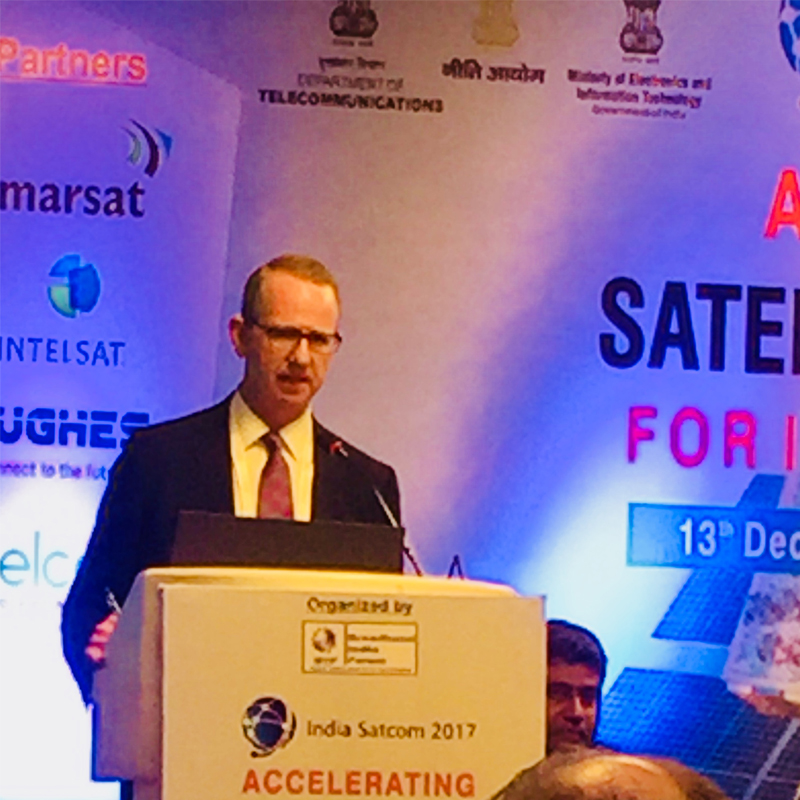
    Speaking at the India Satcom 2017 forum here on Wednesday, Hong Kong-based CASBAA chairman Joe Welch said a great deal of attention has been paid to the power and infrastructure sectors, but “the key to … realisation of the prime minister’s vision of taking India up to a top-50 ranking (in ease of doing business) lies in improving business conditions in other sectors of the economy”, specifically satellite communications and broadcasting.

    Welch, who was chairing a session relating to ease of doing business in the broadcast and satellite sectors, observed that broadcasting business is heavily dependent on satellite links, and that “the single most crucial measure the government could take … would be to create conducive conditions for both the satellite operators and the broadcasters to be able to enter into long-term service agreements”.

    Currently, contracts for satellite capacity for DTH broadcasters are limited to a three-year term by Indian government regulation.

    “Striking long-term commercial deals in a marketplace that is less government-constrained would help increase business certainty for all the stakeholders”, he said.

    Satellite services are also important to achieving the Digital India dream – championed by prime minister Modi – as satellite services can help bring broadband and other related services to the hinterland of India, digitally connecting thousands of villages where cable or other modes of broadband delivery may pose logistic and financial challenges.

    Also Read:

    Govt assures ease in licensing norms to TV channels, satellite operators

    CASBAA forms ‘Coalition Against Piracy,’ hires content protection veteran Neil Gane

    Louis Boswell appointed CASBAA CEO 

    Fox’s Asia SVP Joe Welch named CASBAA board chairman