Tag: satellite

  • Communication satellite with Ku bands slated for launch

    Communication satellite with Ku bands slated for launch

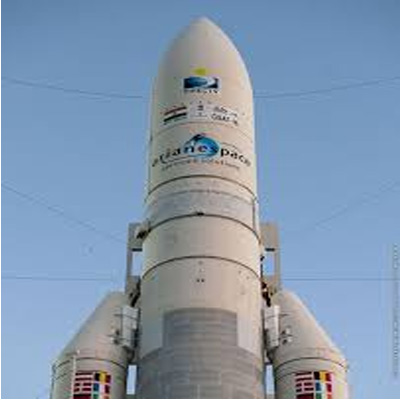
    NEW DELHI: The GSAT-11 spacecraft, a first generation high throughput communication satellite, is to be launched towards the end of 2016 or the first quarter of 2017, Space minister Jitendra Singh told parliament today.

    GSAT-11 has a lift-off mass of about 5600 kg, operating in Ka/Ku bands. It is a multi-beam satellite with 32 user beams and 8 hub beams over India. The spacecraft capability includes providing broadband connectivity to rural areas with higher bandwidth as compared to traditional communication satellites. 

    It is planned to launch GSAT-11 spacecraft using procured launch services. At present, the indigenous capability to launch this weight class of satellite is not available. The in-orbit testing of GSAT-11 satellite is planned to be conducted from the Master Control Facility (MCF) in Hassan, Karnataka and other suitable locations of ISRO Centres. 

  • Antrix earned over 80 million Euros through foreign satellite launch between January 2013 and December 2015

    Antrix earned over 80 million Euros through foreign satellite launch between January 2013 and December 2015

    New Delhi: Antrix, the commercial wing of Indian Space Research Organization, earned revenue of 80.6 Million Euros through launching of 28 international customer satellites. 

    The Cryogenic Rocket Development Programme is funded by the Government, Minister of State for Space Dr Jitendra Singh told Parliament today. 

    During the last three years starting from January 2013 until December 2015, a total of 28 International customer satellites belonging to nine countries were launched – Austria (two), Canada (five), Denmark (one), France (one), Germany (one), Indonesia (one), Singapore (one), United Kingdom (six), and United States (four).

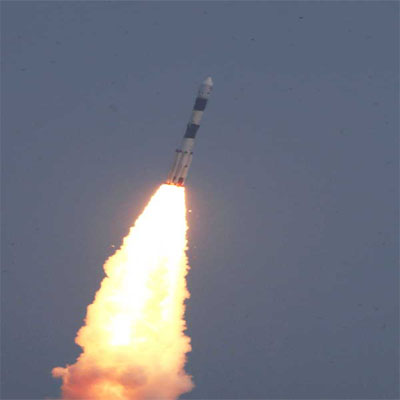
    These satellites were launched onboard India’s Polar Satellite Launch Vehicle (PSLV) under the commercial arrangement entered into between Antrix Corporation Limited (Antrix), the commercial arm of ISRO and the international customer.

    A leading space company from the United States is under initial phase of discussion with Antrix to utilise India’s Geosynchronous Satellite Launch Vehicle (GSLV) launch services for one of its communication satellite.

    Entities from other countries that have shown interest in utilising GSLV launch services include space agencies/ companies from Canada, France, Republic of Korea and Turkey.

  • Antrix earned over 80 million Euros through foreign satellite launch between January 2013 and December 2015

    Antrix earned over 80 million Euros through foreign satellite launch between January 2013 and December 2015

    New Delhi: Antrix, the commercial wing of Indian Space Research Organization, earned revenue of 80.6 Million Euros through launching of 28 international customer satellites. 

    The Cryogenic Rocket Development Programme is funded by the Government, Minister of State for Space Dr Jitendra Singh told Parliament today. 

    During the last three years starting from January 2013 until December 2015, a total of 28 International customer satellites belonging to nine countries were launched – Austria (two), Canada (five), Denmark (one), France (one), Germany (one), Indonesia (one), Singapore (one), United Kingdom (six), and United States (four).

    These satellites were launched onboard India’s Polar Satellite Launch Vehicle (PSLV) under the commercial arrangement entered into between Antrix Corporation Limited (Antrix), the commercial arm of ISRO and the international customer.

    A leading space company from the United States is under initial phase of discussion with Antrix to utilise India’s Geosynchronous Satellite Launch Vehicle (GSLV) launch services for one of its communication satellite.

    Entities from other countries that have shown interest in utilising GSLV launch services include space agencies/ companies from Canada, France, Republic of Korea and Turkey.

  • Global Eagle Ent to provide satellite-based in-flight entertainment to Jet Airways

    Global Eagle Ent to provide satellite-based in-flight entertainment to Jet Airways

    NEW DELHI: Global Eagle Entertainment Inc. – worldwide provider of aircraft connectivity systems, operations solutions and media content to the travel industry – has entered into a partnership with Jet Airways to provide inflight entertainment (IFE) streaming service and KU based internet connectivity aboard the global airline’s fleet of B737 NG aircraft.

    Jet Airways, which operates more than 300 flights to 73 destinations worldwide, selected Global Eagle Entertainment in a fiercely competitive IFE market based, in part, on its 10-year content delivery alliance and experience with GEE. 

    During Q2 2016, the Los Angeles-based GEE will provide Jet Airways with its Airtime IFE streaming solution, with a clear roadmap for migration to full broadband satellite connectivity. GEE will equip Jet Airways aircraft with digital rights management (DRM) technology, in-cabin servers and WiFi routers, enabling the proven Airtime streaming platform to deliver movies, TV shows, music and other content directly to passengers’ laptops, tablets and smart phones.

    GEE chief commercial officer Walé Adepoju said, “GEE is honoured to expand our long-term partnership with Jet Airways, an innovative airline keenly focused on elevating the passenger experience and a true leader across the exciting Asian region.By deploying GEE’s Airtime IFE streaming solution across its growing fleet, Jet Airways can deliver a broad range of entertainment content to passenger’s personal devices with an eye on full blown satellite connectivity aboard future flights.”

    “GEE has clearly demonstrated a deep understanding of our business over the past decade, providing the content at the core of our passenger entertainment experience. Jet Airways is now moving to GEE’s integrated IFE solution capable of streaming a broad range of content to our passengers’ own devices and providing a clear path to our future connectivity needs,” said Jet SVP – commercial Gaurang Shetty. “We look forward to growing our partnership with GEE and, in turn, enhancing our passenger experience across our global fleet.”

  • Global Eagle Ent to provide satellite-based in-flight entertainment to Jet Airways

    Global Eagle Ent to provide satellite-based in-flight entertainment to Jet Airways

    NEW DELHI: Global Eagle Entertainment Inc. – worldwide provider of aircraft connectivity systems, operations solutions and media content to the travel industry – has entered into a partnership with Jet Airways to provide inflight entertainment (IFE) streaming service and KU based internet connectivity aboard the global airline’s fleet of B737 NG aircraft.

    Jet Airways, which operates more than 300 flights to 73 destinations worldwide, selected Global Eagle Entertainment in a fiercely competitive IFE market based, in part, on its 10-year content delivery alliance and experience with GEE. 

    During Q2 2016, the Los Angeles-based GEE will provide Jet Airways with its Airtime IFE streaming solution, with a clear roadmap for migration to full broadband satellite connectivity. GEE will equip Jet Airways aircraft with digital rights management (DRM) technology, in-cabin servers and WiFi routers, enabling the proven Airtime streaming platform to deliver movies, TV shows, music and other content directly to passengers’ laptops, tablets and smart phones.

    GEE chief commercial officer Walé Adepoju said, “GEE is honoured to expand our long-term partnership with Jet Airways, an innovative airline keenly focused on elevating the passenger experience and a true leader across the exciting Asian region.By deploying GEE’s Airtime IFE streaming solution across its growing fleet, Jet Airways can deliver a broad range of entertainment content to passenger’s personal devices with an eye on full blown satellite connectivity aboard future flights.”

    “GEE has clearly demonstrated a deep understanding of our business over the past decade, providing the content at the core of our passenger entertainment experience. Jet Airways is now moving to GEE’s integrated IFE solution capable of streaming a broad range of content to our passengers’ own devices and providing a clear path to our future connectivity needs,” said Jet SVP – commercial Gaurang Shetty. “We look forward to growing our partnership with GEE and, in turn, enhancing our passenger experience across our global fleet.”

  • SES appoints Vishal Mathur as senior sales director – Asia

    SES appoints Vishal Mathur as senior sales director – Asia

    MUMBAI: Satellite operator SES Asia has roped in Vishal Mathur as senior sales director. Mathur brings with him almost 20 years of experience in the satellite and broadcasting industry in the region.

    He will be tasked with implementing the company’s regional sales strategy to support the growth of the company’s fixed data, mobility and video customers, and developing strong customer relationships in the South Asian markets.

    Mathur has led the sales and marketing, business development, strategic planning and regulatory approval efforts of broadcasters such as ESPN Star Sports channel and Zee TV, as well as of satellite services provider MEASAT during his career.


  • Will foreigners buy into easing of FDI in cable TV, DTH?

    Will foreigners buy into easing of FDI in cable TV, DTH?

    MUMBAI: The government has earlier this week announced the lifting of Foreign Direct Investment (FDI) barriers for 15 sectors as a Diwali bonus to industry.


    Hereon, the limit for uplinking of news and current affairs for television channels has been increased from 26 per cent to 49 per cent. Foreign majors wanting to look at a long term play in the broadcast distribution space can now pump in 100 per cent in cable TV networks (multi-system operators and local cable operators), DTH, teleport, headend-in-the-sky (HITS) and mobile TV ventures as against the 74 per cent earlier Distribution platforms can raise as much as 49 per cent FDI through the automatic route. If companies want to go beyond that, they will need government approval. The radio sector has got some welcome breathing space in that investment limits have been hoicked to 49 per cent from 26 per cent earlier.


    What does this all mean for the television ecosystem? Will there be a flood of money flowing into cable TV, DTH, teleport, HITS and mobile TV ventures from overseas? Will news channels attract foreign investment by the sackful?


    We, at indiantelevision.com, believe that none of this likely to happen in a hurry in all the segments that have been prised open.


    Distribution is a tough play in India as history has shown. It is relatively unorganized, with low ARPUs, it lacks transparency, is small in scale, and is short on capital, which makes it an unappealing asset to invest in. Digitisation of cable TV has led to some improvement, but it is still a halfway house. The lack of last mile customer ownership, paucity of subscriber information, lack of two way addressability, and business norms and ethics make it a relatively high risk investment.


    Things may change if Reliance Jio makes inroads into cable TV and brings some order into it. However, its management may well discover that distribution is like a slippery soap in a shower, that  it is more complicated than distributing electricity or exploring and drilling for oil.


    It is the MSOs’ broadband businesses that are a lot more transparent,  that have in any case been spun off into separate companies keeping in mind government regulations and restrictions.  And this is what may catch the interest of investors.

     
    In the nineties, Rupert Murdoch partnered with Subhash Chandra in Siticable – only to exit a little later with his knuckles bruised. A few years later he once again took a shot at it when Star India invested in the Rajan Raheja promoted Hathway Cable & Datacom. Once again, he had to exit yelping in pain. Since then, Star has been extremely averse to investing in cable TV.

     Most of the major distribution ventures are listed: Siticable, Hathway Cable & Datacom, Ortel, Hinduja, Den Cable, SunTV, DishTV, Airtel, Reliance Big (the management is currently getting it delisted),  and some even have attracted private equity investments. But the stock market has not really bought into pure play distribution initiatives and the shares have been depressed as compared to the prices they could command. The PEs which have parked funds in them are still waiting for a nice fat return on their investments.

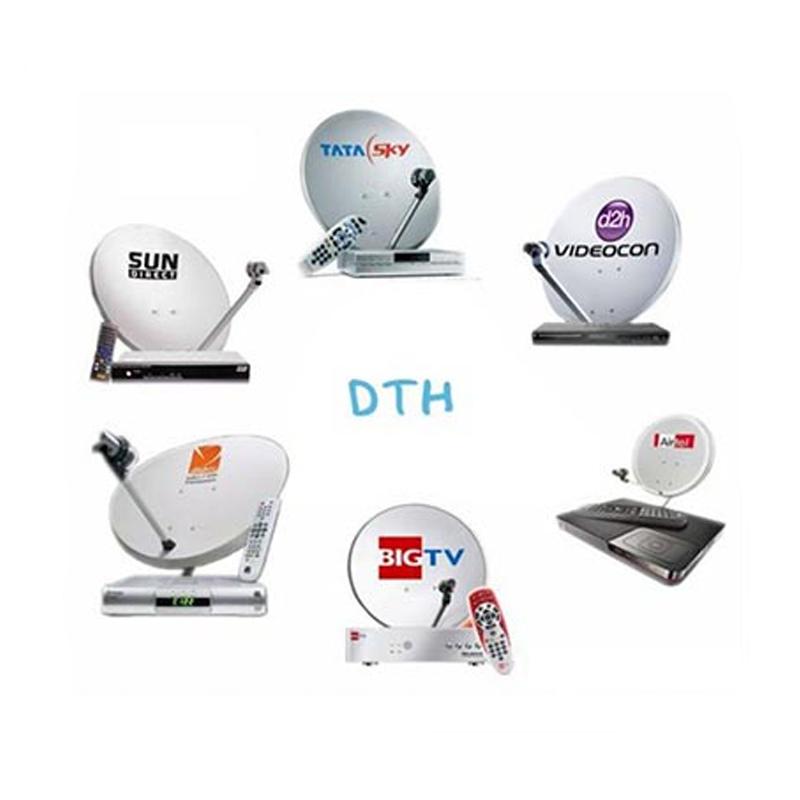
     Where FDI has worked is in the DTH space and the sole exception is DTH operator Tata Sky in which Twenty First Century Corp holds a 30 per cent stake.  Then there is Videocon d2h, which is listed on Nasdaq, following to the support of its lead investment partner Harry Sloan of Silver Eagle. The Essel group owned Dish TV has got the thumbs up from the market and has got a buy recommendation from many research firms.


    DTH operators, unlike their cousins on the ground, are more organized, professional, have transparency of operations and have recently started getting some payback from their upfront and cumulative investments over the past decade or so building scale in their customer base.

     
    Hence, it is quite possible that Dish TV, Airtel, Videocon, and Tata Sky might see some activity following the loosening of FDI.  But even prior to the announcement, not many investor suitors had lined up looking to partner with them.

    At the time of writing this report, the stock markets had reacted positively to the news about the easing of FDI in media, and had pushed up the share prices of Dish, Siticable, DEN Networks by 10 per cent plus before Diwali.

     Sun TV, has so far been happy being a lone player with a stranglehold on its markets, and has desisted from partnerships with local players. One does not know if promoters Kalanithi and Kaveri Maran will change their thinking now.

     As far as news is concerned, major news organisations worldwide have enough on their hands. They are grappling with the changing paradigm of news gathering and dissemination, courtesy the explosion in social media and their live streaming apps which threaten to make individuals  – whether journalists or online stars – with huge followings, a rival to large news networks. For the new millennials, online is the preferred source of news, which they consume on their twitter or facebook timelines.

     India has a surfeit of news channels or ‘views channels’; many of them are run for purposes of influence, and not as commercial initiatives. For the relatively more professional ones, the key question is whether foreign investors – especially those in the news business would be happy with a less- than majority equity position in a news television channel. For that to appear attractive they will look for dividends or a northward movement in the stock price.


    News organizations normally are obsessive about keeping control over the content on a news channel. But you there have had been licensing deals – like in the case of CNN-IBN.  Others have come in on their own, after getting downlinking and uplinking clearances.


    It’s not as if news television in India is a very scalable business opportunity.  At least, so far. The largest news network does revenues of around Rs 500 crore.  This could go up to Rs 1000 crore with the expansion in regional news and distribution internationally. The limited scalability despite, amongst the news players some of whom look alluring figure: NDTV, Times Now, Zee Media, TV9, TV Today, ITV group, and  India TV. Of course some smaller players like BAG Films E24 group might attract FDI.


     What should come as a relief is the allowing of 100 per cent FDI through the automatic route in non-news and current affairs channels. Many new channels and broadcast networks which are looking  to expand their global footprint to include the Indian audience may now do so, either through mass and/or niche channels. Full ownership means they can control their destinies in India.
     
    Now that the government has opened its house on FDI in media, it would do well by making the procedures simpler and faster. TV broadcast players managements have to perforce get ministry of home affairs, ministry of information and broadcasting’s  and RBI’s clearances. The  bureaucrats,  directors and officers in these bodies need to be trained to reflect the Modi government’s approach in being industry enabling, rather than being obstructionist. Maybe a single window clearance approach could help. Otherwise, even this FDI liberalization may end up being another well-intended-but-misplaced initiative.


  • Intelsat, JSAT form JV to launch new satellite for APAC

    Intelsat, JSAT form JV to launch new satellite for APAC

    MUMBAI: Intelsat S.A. and Sky Perfect JSAT Corporation have signed an agreement to form a joint venture that will launch a new satellite with optimised C-band and high throughput Ku-band capacity to satisfy the growing mobility and broadband connectivity demands in the Asia-Pacific region.


    To be known as Horizons 3e, the satellite is based on the Intelsat EpicNG high throughput design which, upon launch, will complete the global footprint of the Intelsat EpicNG next generation platform. The satellite will be stationed at the 169 degrees East orbital location with a launch expected in the second half of 2018.


    Building upon a successful alliance between the two operators, the Horizons 3e satellite marks the fourth satellite to be owned jointly by JSAT and Intelsat, following Horizons-1 (launched in 2003); Horizons-2 (launched in 2007) and Intelsat 15/JCSAT-85 (launched in 2009).


    With the most advanced digital payload on a commercial satellite, bandwidth flexibility and power portability, Horizons 3e will bring high performance, improved economics and simple access to the aeronautical and maritime mobility, cellular backhaul, corporate enterprise and government customers operating in the region.


    “Today marks another milestone in our long history of collaboration with JSAT. With Horizons 3e, we will introduce the Intelsat EpicNG platform to the Asia-Pacific region, completing our global high throughput footprint and enhancing our IntelsatOne Flex service platform. The scalability, power and flexibility of Intelsat EpicNG will provide commercial and governmental aeronautical and maritime services with unprecedented seamless, contiguous broadband coverage over the most widely trafficked routes from the Atlantic to the Pacific.  In addition, the higher performance and improved economics of Intelsat EpicNG will enable fixed and mobile network operators to expand their networks and provide much needed broadband connectivity to the more remote communities of the region,” said Intelsat CEO Stephen Spengler.


    JSAT president and CEO Shinji Takada added, “Horizons 3e is a significant project for both Intelsat and JSAT. This new state-of-art satellite will lead to the expansion of our next generation business in the Asia and Pacific region utilising the HTS technology. Satellite communications demands for the region will definitely continue to grow and the project is essential for us to uptake of the growth demand for the region.”


    The formation of the JSAT/Intelsat venture features equal ownership of the satellite, which will be constructed over a 2.5 year period.  Given the business construct, the program will not be considered part of Intelsat’s capital expenditure program

  • SSL to provide satellite for Azercosmos, Intelsat partnership

    SSL to provide satellite for Azercosmos, Intelsat partnership

    MUMBAI: Space Systems/Loral (SSL), which is a provider of commercial satellites, is selected to provide a communications satellite to Azercosmos, the national satellite operator of Azerbaijan.


    Under the strategic agreement with Intelsat, the satellite will be located at the 45 degrees east orbital location where it will provide service in Africa, Asia, Europe and the Middle East.


    “SSL has a long history of partnering with satellite operators. We look forward to supporting Azercosmos in its collaborative project with Intelsat by building the spacecraft that will help both Azercosmos and Intelsat meet their growth objectives,” said SSL president John Celli.


    Azerspace-2 will be Azercosmos’ second telecommunications satellite, and will expand on the current capacity of Azerspace-1. It will support growing demand for DTH, government, and network services in Europe, Central and South Asia, the Middle East and Sub-Saharan Africa. 


    For Intelsat, the satellite will provide continuity of service for the Intelsat 12 satellite currently stationed at 45 degrees East, an orbital location which hosts DTH platforms for Central and Eastern Europe as well as the Asia-Pacific region. Intelsat 38 will also provide connectivity for corporate networks and government applications in Africa. Intelsat 12 was also built by SSL and launched in 2000.


    “This new satellite will provide Azercosmos with additional capacity for the increasing demand in the region, and will allow us to continue to bring the best service to our customers. We are pleased to collaborate with two world leaders in the satellite industry,” added Azercosmos chairman and CEO Rashad Nabiyev.


    “Intelsat 38 is an example of the collaboration taking place across the satellite industry today. Our partnership with Azercosmos and SSL will enable us to meet the content distribution demands of viewers in Central Europe and Asia and provide corporate networks in Africa with the broadband connectivity they need to build and expand their businesses,” said Intelsat EVP and chief technical officer Thierry Guillemin.


    The satellite Azerspace-2/Intelsat 38, will be designed and built by SSL, a US company based in Palo Alto, California, and owned by MDA. As part of the agreement, MDA will provide knowledge transfer cooperation related to radar Earth observation directly to Azercosmos. The satellite design is based on the highly reliable SSL 1300 satellite platform that provides the flexibility for a broad range of applications and technology advances. It is scheduled for launch in 2017.

  • ISRO to increase transponder capacity for Indian DTH players to use INSAT

    ISRO to increase transponder capacity for Indian DTH players to use INSAT

    NEW DELHI: With five Direct-to-Home (DTH) service providers using transponder capacity leased from foreign satellites, the Indian Space Research Organization (ISRO) is taking measures to augment satellite capacity in India so that these users have the option to migrate to the INSAT system. 


    Giving this information, Space Department Minister Jitenda Singh told the Lok Sabha today that ISRO has given a proposal for pricing of satellite transponders for public and non-government users.


    A proposal for continuing the existing method of transponder pricing, which is based on type of services, band of operations, coverage area, power level is under consideration. 


    There are 13 INSAT/GSAT satellites in orbit, out of which 11 are communication satellites and two are meteorological satellites. In INSAT/GSAT communication satellite systems, there are about 37 Government users and about 49 non-Government users. 


    The transponder characteristics in terms of power, coverage, frequency band, etc., vary according to the type of service, which requires differential pricing.