Tag: satellite

  • Dish TV to introduce card-less set top boxes

    Dish TV to introduce card-less set top boxes

    MUMBAI: Dish TV India is looking at moving away from set top boxes requiring smart cards for subscribers to its satellite pay TV service. This is likely to take place over the next three or four months.

    Last weekend, India’s largest DTH provider announced that it had selected Rambus’ Cryptomedia security platform for use in its pay TV satellite system. The platform, which includes a hardware root-of-trust embedded in the set-top box chipset, ensures secure distribution of premium content for cable and satellite operators while eliminating the need for a smart card and enhancing usability of the set-top box.

    “As we look to grow our customer base from the current 13 million subscribers, the demand for cost-effective and robust content protection solutions becomes increasingly important for consumers seeking premium content,” said Dish TV India managing director Jawahar Goel. “By leveraging the embedded CryptoMedia core, we no longer need a smart card to provide secure access to premium content, significantly reducing the cost and improving the security of the set-top box.”

    The CryptoMedia Content Protection Core, developed by Rambus Cryptography Research, is one of several new security elements to be integrated in Dish TV India’s latest set-top boxes. Together with the CryptoMedia operator services, the solution provides a flexible security foundation that allows Dish TV India to easily update and reconfigure software and hardware security throughout the lifecycle of the set-top box. Dish TV India will launch the new platform in broad commercial operation later this year.

    “By using the CryptoMedia Content Protection Core, Dish TV India recognizes the value of enabling another level of protection in the set-top box chipset alongside security elements provided by CAS vendors,” said Martin Scott, senior vice president and general manager of the Security Division at Rambus. “Our CryptoMedia Security Platform provides Dish TV India with extra protection for the delivery of content, utilizing our expertise in both embedded security and ecosystem enablement.”

    Formerly part of the CryptoFirewall family, the CryptoMedia Content Protection Core is designed to provide strong security and superior system design flexibility for premium content distribution. The solution minimizes the risk of security failure and helps simplify product development. The core is available in a broad range of set-top box and smart TV chipsets and is compatible with the leading CAS and DRM systems to prevent unauthorized access to content and services, including features like pay-per-view and service-tier upgrades.

  • TDSAT directs Auragabad MSO to pay part of sums due and enter into agreement with MSM Media

    TDSAT directs Auragabad MSO to pay part of sums due and enter into agreement with MSM Media

    NEW DELHI: Aurangabad Satellite Cable Service Centre has been directed by the Telecom Disputes Settlement and Appellate Tribunal to pay a part of its dues to MSM Media Pvt Ltd and to negotiate the terms of a new interconnect agreement.

    In his order, member B B Srivastava also asked the MSO to submit within two days the SLRs in respect of the six areas that continue to be under analogue transmission.

    Adjourning the matter to 1 August 2016, the Tribunal said he MSO “would be well advised to pay at least a part of the respondent’s dues for productive negotiations and interconnect agreement.”

    When the matter was taken up on 18 May 2016, it had been adjourned for a week to allow the parties to renegotiate the terms of interconnect agreement and were asked to work out an interconnect agreement on mutual terms.

  • TDSAT directs Auragabad MSO to pay part of sums due and enter into agreement with MSM Media

    TDSAT directs Auragabad MSO to pay part of sums due and enter into agreement with MSM Media

    NEW DELHI: Aurangabad Satellite Cable Service Centre has been directed by the Telecom Disputes Settlement and Appellate Tribunal to pay a part of its dues to MSM Media Pvt Ltd and to negotiate the terms of a new interconnect agreement.

    In his order, member B B Srivastava also asked the MSO to submit within two days the SLRs in respect of the six areas that continue to be under analogue transmission.

    Adjourning the matter to 1 August 2016, the Tribunal said he MSO “would be well advised to pay at least a part of the respondent’s dues for productive negotiations and interconnect agreement.”

    When the matter was taken up on 18 May 2016, it had been adjourned for a week to allow the parties to renegotiate the terms of interconnect agreement and were asked to work out an interconnect agreement on mutual terms.

  • TRAI advocates help of cable operators to spread broadband

    TRAI advocates help of cable operators to spread broadband

    NEW DELHI: Telecom Regulatory Authority of India chairman R S Sharma said connectivity was vital for digital India and Aadhaar had built the foundation for online linkages, adding that cable digital television systems could be used to enable delivery of broadband.

    Speaking as the chief guest at the 2nd International Summit ‘India Satcom – 2016’ on the theme of Broadband for all using NextGen Satellite Technologies. Sharma admitted that certain ‘policy constraints have to be crossed.’

    He said internet connectivity in India was barely fifteen per cent, though wireless connectivity was growing at a fast pace through smartphones. There were only twenty million phones in the country but almost the entire country was connected through mobile phones. He also suggested the introduction of wi-fi at all public places.

    Referring to the Ka Band on satellite as earlier speakers had said the C-Band and Ku-band were already exhausted, Sharma said that the Telecom Regulatory Authority of India had issued a paper in this connection in April last year.

    The summit organized by the Broadband India Forum was aimed at showcasing the scope of catalysing achievement of socio-economic objectives with the use of innovations in Satellite Communications technology. It was supported by the Department of Electronic and Information Technology.

    Department of Telecom Secretary and Telecom Commission chairman J S Deepak stressed the need of satellites for reaching difficult terrains and said that a new network in ten states using 2,200 towers had been put into operation for this purpose. Twelve per cent of the communication in these states was through satellite.

    He said the Bharat Net Optic Fibre aimed to reach 2,50,000 gram panchayats in the next few years and 1,00,000 will be reached in the first phase by next year.

    Phase II aimed to reach the rest through underground optic fibre, towers, radio and satellite which had already connected ten to 12 per cent of the country.

    He also said that the country had adopted an liberal foreign direct investment regime with 74 per cent FDI being allowed in this sector. He claimed that India had received $ 200 billion in the last two years.

    He said 90 per cent of the 6,00,000 villages in the country were covered by mobile phones and he wanted internet proliferation to growth on the same path. He said that Internet had grown from 300 to 400 million (from 30 to 40 crore) in fourteen months. The only way to reach all villages was a combination of broadband and smartphones.

    All services that benefit people were expected to be online in the next two years, he said.

    He said all this presented great opportunities for satellite communications and said the policy environment was conducive for this and was being further changed for migration to new technologies.

    He said that even virtual network operator licences were not available in the country, he concluded, adding that ‘satcom is an idea whose time has come.’

    In a message read out in absentia, Indian Space Research Organisation chairman and secretary in the Department of Space A S Kiran Kumar said it was necessary to set up robust growth technology and the networks to receive this.

    Hughes Networks Systems president Pranav Roach said, “We know broadband penetration levels are extremely low in India. High throughput satellites are a natural fit to help improve broadband penetration. Satellite broadband is a proven technology, delivering high-speed services to users worldwide. Ka-band satellite-based networks are able to deliver affordable, immediate and ubiquitous broadband access to users.”

    He said it was ironic that India was the largest exporter of software but lagged behind in consumption, and therefore government had to step in to help the industry.

    BIF chairman M F Farooqui said “Broadband in India will have to be delivered not by one technology but through a mix of technologies. Satellite communication is one of the more important means of achieving broadband to the rural and remote areas and for fulfilling the goals of Govt’s Digital India initiative.”

    Phases X and V Satcast, USA, Chairman and CEO Ven Fotheringham said the cost of distribution, the increasing demand for more content through video and OTT, and the need for newer and better set top boxes were some of the problems that had to be grappled with. He said in the United States, 72 per cent of the content was generated by just 30 per cent experts within the country.

    The summit in different sessions deliberated on the deployment of satellite communication (satcom) technologies – existing and next generation – to expedite penetration of affordable Broadband in India, especially in remote, rural regions, to complement other broadband technologies such as optical fibre, mobile, cable etc.

    BIF president T V Ramachandran said “India has much to gain once broadband penetration, currently at a low 10 per cent or so, picks up momentum from new technology innovations and investments. Satellite sommunication technologies with its manifold innovations & applications could lead the country to the cusp of a digital revolution with associated boost to the efforts of other initiatives like Make in India, Skilling India and a spurt in FDI.”

    The summit deliberations also covered policy and regulatory issues to drive deployment of satcom technologies in support of national socio-economic programs such as Digital India, Make in India and Broadband for all. But such flagship programs need billions of dollars in annual funds – a huge challenge due to misconceptions surrounding satcom technologies. Though one of the fastest means to ensure Internet and Broadband connectivity across India, satcom is erroneously termed as unaffordable, inaccessible and, therefore, unavailable for deployment in India’s highly price-sensitive market. This is as erroneous as the early 1990s’ perception that mobile phones were expensive technology toys not needed by common people.

    The summit speakers stressed broadband service over satellite needed to be affordable (consumer price), accessible (all across India) and available 24×7 (both fixed location and mobile). Affordability is crucial because Broadband Satellite services in India are far more expensive than in the US (284 times on a normalized scale of package capacity, services price and pricing parity). Innovation, long-term commitment of public projects, liberalised policies that attract more local private players and foreign companies were important measures to curb costs and ensure affordability. These measures could also boost accessibility and availability.

  • TRAI advocates help of cable operators to spread broadband

    TRAI advocates help of cable operators to spread broadband

    NEW DELHI: Telecom Regulatory Authority of India chairman R S Sharma said connectivity was vital for digital India and Aadhaar had built the foundation for online linkages, adding that cable digital television systems could be used to enable delivery of broadband.

    Speaking as the chief guest at the 2nd International Summit ‘India Satcom – 2016’ on the theme of Broadband for all using NextGen Satellite Technologies. Sharma admitted that certain ‘policy constraints have to be crossed.’

    He said internet connectivity in India was barely fifteen per cent, though wireless connectivity was growing at a fast pace through smartphones. There were only twenty million phones in the country but almost the entire country was connected through mobile phones. He also suggested the introduction of wi-fi at all public places.

    Referring to the Ka Band on satellite as earlier speakers had said the C-Band and Ku-band were already exhausted, Sharma said that the Telecom Regulatory Authority of India had issued a paper in this connection in April last year.

    The summit organized by the Broadband India Forum was aimed at showcasing the scope of catalysing achievement of socio-economic objectives with the use of innovations in Satellite Communications technology. It was supported by the Department of Electronic and Information Technology.

    Department of Telecom Secretary and Telecom Commission chairman J S Deepak stressed the need of satellites for reaching difficult terrains and said that a new network in ten states using 2,200 towers had been put into operation for this purpose. Twelve per cent of the communication in these states was through satellite.

    He said the Bharat Net Optic Fibre aimed to reach 2,50,000 gram panchayats in the next few years and 1,00,000 will be reached in the first phase by next year.

    Phase II aimed to reach the rest through underground optic fibre, towers, radio and satellite which had already connected ten to 12 per cent of the country.

    He also said that the country had adopted an liberal foreign direct investment regime with 74 per cent FDI being allowed in this sector. He claimed that India had received $ 200 billion in the last two years.

    He said 90 per cent of the 6,00,000 villages in the country were covered by mobile phones and he wanted internet proliferation to growth on the same path. He said that Internet had grown from 300 to 400 million (from 30 to 40 crore) in fourteen months. The only way to reach all villages was a combination of broadband and smartphones.

    All services that benefit people were expected to be online in the next two years, he said.

    He said all this presented great opportunities for satellite communications and said the policy environment was conducive for this and was being further changed for migration to new technologies.

    He said that even virtual network operator licences were not available in the country, he concluded, adding that ‘satcom is an idea whose time has come.’

    In a message read out in absentia, Indian Space Research Organisation chairman and secretary in the Department of Space A S Kiran Kumar said it was necessary to set up robust growth technology and the networks to receive this.

    Hughes Networks Systems president Pranav Roach said, “We know broadband penetration levels are extremely low in India. High throughput satellites are a natural fit to help improve broadband penetration. Satellite broadband is a proven technology, delivering high-speed services to users worldwide. Ka-band satellite-based networks are able to deliver affordable, immediate and ubiquitous broadband access to users.”

    He said it was ironic that India was the largest exporter of software but lagged behind in consumption, and therefore government had to step in to help the industry.

    BIF chairman M F Farooqui said “Broadband in India will have to be delivered not by one technology but through a mix of technologies. Satellite communication is one of the more important means of achieving broadband to the rural and remote areas and for fulfilling the goals of Govt’s Digital India initiative.”

    Phases X and V Satcast, USA, Chairman and CEO Ven Fotheringham said the cost of distribution, the increasing demand for more content through video and OTT, and the need for newer and better set top boxes were some of the problems that had to be grappled with. He said in the United States, 72 per cent of the content was generated by just 30 per cent experts within the country.

    The summit in different sessions deliberated on the deployment of satellite communication (satcom) technologies – existing and next generation – to expedite penetration of affordable Broadband in India, especially in remote, rural regions, to complement other broadband technologies such as optical fibre, mobile, cable etc.

    BIF president T V Ramachandran said “India has much to gain once broadband penetration, currently at a low 10 per cent or so, picks up momentum from new technology innovations and investments. Satellite sommunication technologies with its manifold innovations & applications could lead the country to the cusp of a digital revolution with associated boost to the efforts of other initiatives like Make in India, Skilling India and a spurt in FDI.”

    The summit deliberations also covered policy and regulatory issues to drive deployment of satcom technologies in support of national socio-economic programs such as Digital India, Make in India and Broadband for all. But such flagship programs need billions of dollars in annual funds – a huge challenge due to misconceptions surrounding satcom technologies. Though one of the fastest means to ensure Internet and Broadband connectivity across India, satcom is erroneously termed as unaffordable, inaccessible and, therefore, unavailable for deployment in India’s highly price-sensitive market. This is as erroneous as the early 1990s’ perception that mobile phones were expensive technology toys not needed by common people.

    The summit speakers stressed broadband service over satellite needed to be affordable (consumer price), accessible (all across India) and available 24×7 (both fixed location and mobile). Affordability is crucial because Broadband Satellite services in India are far more expensive than in the US (284 times on a normalized scale of package capacity, services price and pricing parity). Innovation, long-term commitment of public projects, liberalised policies that attract more local private players and foreign companies were important measures to curb costs and ensure affordability. These measures could also boost accessibility and availability.

  • Sixteen vans touring states to create awareness about digital and satellite technology

    Sixteen vans touring states to create awareness about digital and satellite technology

    NEW DELHI: A total of sixteen vans are traveling to 34 districts of nine states to introduce one million citizens (10 lakh) to services only possible via interplay of Satellite Technology along with other existing Broadband technologies, such as optical fibre, mobile, cable, etc. The vans were flagged off by Communications and Information Technology minister Ravi Shankar Prasad last week as part of the Digital India Outreach Campaign.

    The Broadband India Forum (BIF) has acknowledged Government efforts to deliver connectivity and Broadband to remote and difficult-to-access parts of India.

    The 2nd International India Satcom -2016 summit organized by the Forum on 7 June is aimed at showcasing the scope of catalysing achievement of socio-economic objectives with the use of innovations in Satellite Communications technology.

    Inviting the delegates to the meet, Forum President TV Ramachandran said: “Digital India, Make in India and Broadband for All will require integration of many parallel technologies that have high potential but are less understood, such as Satellite Communication (Satcom), to achieve a dream that’s close to Prime Minister Narendra Modi’s heart. Integration will expedite penetration of affordable Broadband in India, particularly in remote, rural regions. BIF has always propagated enhancement and integration of new technologies that can expedite penetration of affordable Broadband in India to complement other Broadband technologies, such as optical fibre, mobile, cable, etc. Our objective through this summit is to bring all Broadband technology players on board to support the Digital India initiative.”

    The meet is focusing on the theme ‘Broadband for All using NextGen Satellite Technologies’. Dr.Jitendra Singh, minister of State for the Ministry of Development of North East Region, Prime Minister Office, Personnel, Public Grievances & Pensions, Department of Atomic Energy and Department of Space is the Chief Guest.

    The event is supported by The Department of Electronics and Information Technology (DeitY), C and IT Ministry.

    BIF said sector reforms are expected to bring in FDI worth $2-5 billion over the next decade. Liberalisation and reforms of satellite communication policy harbours potential for successful deployment of Broadband under Digital India for all 2,50,000 Gram panchayats in just 12 to 18 months.

    The summit will witness deliberations on the viability of Satellite Communications for Digital India and possible Next Gen Satcom Innovation & Applications by senior members from the Government, including DoT, TRAI, DoS, Niti Aayog, Dept. of Industrial Policy & Promotion (DIPP), DeitY and Indian Council for Research on International Economic Relations (ICRIER) departments and representatives from Leading Satellite Operators, VSAT Service Providers, Telecom Service Providers, Internet Service Providers, Technology Providers, VSAT Manufacturers, Cable Service Providers, User Organisations (Banks, Oil & Gas, Defence, Security Forces etc), DTH Service Providers, and other allied Industries.

  • Sixteen vans touring states to create awareness about digital and satellite technology

    Sixteen vans touring states to create awareness about digital and satellite technology

    NEW DELHI: A total of sixteen vans are traveling to 34 districts of nine states to introduce one million citizens (10 lakh) to services only possible via interplay of Satellite Technology along with other existing Broadband technologies, such as optical fibre, mobile, cable, etc. The vans were flagged off by Communications and Information Technology minister Ravi Shankar Prasad last week as part of the Digital India Outreach Campaign.

    The Broadband India Forum (BIF) has acknowledged Government efforts to deliver connectivity and Broadband to remote and difficult-to-access parts of India.

    The 2nd International India Satcom -2016 summit organized by the Forum on 7 June is aimed at showcasing the scope of catalysing achievement of socio-economic objectives with the use of innovations in Satellite Communications technology.

    Inviting the delegates to the meet, Forum President TV Ramachandran said: “Digital India, Make in India and Broadband for All will require integration of many parallel technologies that have high potential but are less understood, such as Satellite Communication (Satcom), to achieve a dream that’s close to Prime Minister Narendra Modi’s heart. Integration will expedite penetration of affordable Broadband in India, particularly in remote, rural regions. BIF has always propagated enhancement and integration of new technologies that can expedite penetration of affordable Broadband in India to complement other Broadband technologies, such as optical fibre, mobile, cable, etc. Our objective through this summit is to bring all Broadband technology players on board to support the Digital India initiative.”

    The meet is focusing on the theme ‘Broadband for All using NextGen Satellite Technologies’. Dr.Jitendra Singh, minister of State for the Ministry of Development of North East Region, Prime Minister Office, Personnel, Public Grievances & Pensions, Department of Atomic Energy and Department of Space is the Chief Guest.

    The event is supported by The Department of Electronics and Information Technology (DeitY), C and IT Ministry.

    BIF said sector reforms are expected to bring in FDI worth $2-5 billion over the next decade. Liberalisation and reforms of satellite communication policy harbours potential for successful deployment of Broadband under Digital India for all 2,50,000 Gram panchayats in just 12 to 18 months.

    The summit will witness deliberations on the viability of Satellite Communications for Digital India and possible Next Gen Satcom Innovation & Applications by senior members from the Government, including DoT, TRAI, DoS, Niti Aayog, Dept. of Industrial Policy & Promotion (DIPP), DeitY and Indian Council for Research on International Economic Relations (ICRIER) departments and representatives from Leading Satellite Operators, VSAT Service Providers, Telecom Service Providers, Internet Service Providers, Technology Providers, VSAT Manufacturers, Cable Service Providers, User Organisations (Banks, Oil & Gas, Defence, Security Forces etc), DTH Service Providers, and other allied Industries.

  • ISRO successfully flight tested India’s Reusable Launch Vehicle-Technology Demonstrator (RLV-TD)

    ISRO successfully flight tested India’s Reusable Launch Vehicle-Technology Demonstrator (RLV-TD)

    MUMBAI: On May 23, 2016 ISRO successfully flight tested India’s first winged body aerospace vehicle operating in hypersonic flight regime.   

    In this experimental mission, the HS9 solid rocket booster carrying RLV-TD lifted off from the First Launch Pad at Satish Dhawan Space Centre, Sriharikota at 07:00hr IST.  After a successful flight of 91.1second, HS9 burn out occurred, following which both HS9 and RLV-TD mounted on its top coasted to a height of about 56 km. At that height, RLV-TD separated from HS9 booster and further ascended to a height of about 65km.  

    From that peak altitude of 65 km, RLV-TD began its descent followed by atmospheric re-entry at around Mach 5 (five times the speed of sound). The vehicle’s Navigation, Guidance and Control system accurately steered the vehicle during this phase for safe descent. After successfully surviving a high temperatures of re-entry with the help of its Thermal Protection System (TPS), RLV-TD successfully glided down to the defined landing spot over Bay of Bengal, at a distance of about 450km from Sriharikota, thereby fulfilling its mission objectives. The vehicle was successfully tracked during its flight from ground stations at Sriharikota and a shipborne terminal. Total flight duration from launch to landing of this mission of the delta winged RLV-TD, lasted for about 770seconds.

    In this flight, critical technologies such as autonomous navigation, guidance & control, reusable thermal protection system and re-entry mission management have been successfully validated.


  • ISRO successfully flight tested India’s Reusable Launch Vehicle-Technology Demonstrator (RLV-TD)

    ISRO successfully flight tested India’s Reusable Launch Vehicle-Technology Demonstrator (RLV-TD)

    MUMBAI: On May 23, 2016 ISRO successfully flight tested India’s first winged body aerospace vehicle operating in hypersonic flight regime.   

    In this experimental mission, the HS9 solid rocket booster carrying RLV-TD lifted off from the First Launch Pad at Satish Dhawan Space Centre, Sriharikota at 07:00hr IST.  After a successful flight of 91.1second, HS9 burn out occurred, following which both HS9 and RLV-TD mounted on its top coasted to a height of about 56 km. At that height, RLV-TD separated from HS9 booster and further ascended to a height of about 65km.  

    From that peak altitude of 65 km, RLV-TD began its descent followed by atmospheric re-entry at around Mach 5 (five times the speed of sound). The vehicle’s Navigation, Guidance and Control system accurately steered the vehicle during this phase for safe descent. After successfully surviving a high temperatures of re-entry with the help of its Thermal Protection System (TPS), RLV-TD successfully glided down to the defined landing spot over Bay of Bengal, at a distance of about 450km from Sriharikota, thereby fulfilling its mission objectives. The vehicle was successfully tracked during its flight from ground stations at Sriharikota and a shipborne terminal. Total flight duration from launch to landing of this mission of the delta winged RLV-TD, lasted for about 770seconds.

    In this flight, critical technologies such as autonomous navigation, guidance & control, reusable thermal protection system and re-entry mission management have been successfully validated.


  • Communication satellite with Ku bands slated for launch

    Communication satellite with Ku bands slated for launch

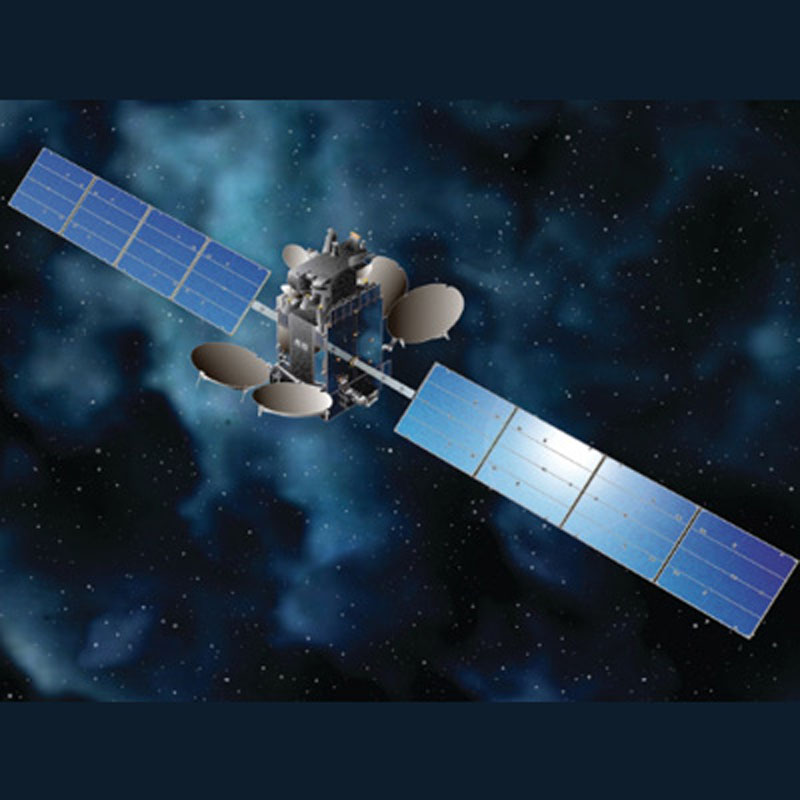
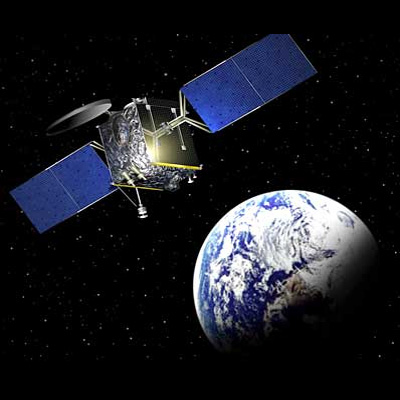
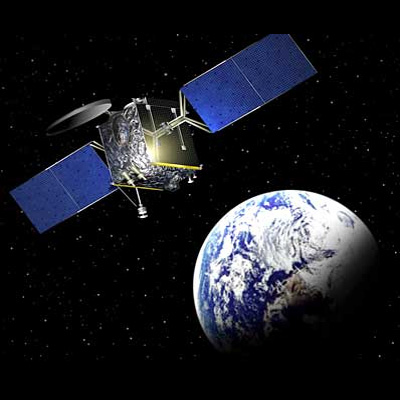
    NEW DELHI: The GSAT-11 spacecraft, a first generation high throughput communication satellite, is to be launched towards the end of 2016 or the first quarter of 2017, Space minister Jitendra Singh told parliament today.

    GSAT-11 has a lift-off mass of about 5600 kg, operating in Ka/Ku bands. It is a multi-beam satellite with 32 user beams and 8 hub beams over India. The spacecraft capability includes providing broadband connectivity to rural areas with higher bandwidth as compared to traditional communication satellites. 

    It is planned to launch GSAT-11 spacecraft using procured launch services. At present, the indigenous capability to launch this weight class of satellite is not available. The in-orbit testing of GSAT-11 satellite is planned to be conducted from the Master Control Facility (MCF) in Hassan, Karnataka and other suitable locations of ISRO Centres.