Tag: satellite

  • 5G TV may rival cable, satellite & IPTV: Report

    5G TV may rival cable, satellite & IPTV: Report

    MUMBAI: TV and video delivery is likely to become a core capability of next generation 5G wireless services, concludes a new report from Strategy Analytics. Recent demonstrations have suggested that 5G will support 1Gbps data throughput rates. Combining 5G with other networking enhancements and technologies would allow operators to support TV-equivalent services which could eat into the $500Bn global TV and video market currently served by cable, satellite, IPTV and terrestrial broadcast service providers.

    Strategy Analytics, Inc. provides the competitive edge with advisory services, consulting and actionable market intelligence for emerging technology, mobile and wireless, digital consumer and automotive electronics companies.

    “Data rates get the headlines, but other network technologies will also make or break the business case for 5G TV services,” says Service Provider Analysis director Sue Rudd. “The efficiency of the end-to-end network will determine whether 5G TV is possible, but we have seen enough from early demonstrations by operators like Verizon, Deutsche Telekom, SK Telecom, AT&T and BT to suggest that it will arrive sooner or later in many parts of the world.”

    The report points out that the number of households and devices supported by a 5G TV service within any cell will make or break the 5G TV business case. The number of termination locations can be increased by a factor of three or more by deploying several network enhancements that deliver ‘trunking’ efficiency in the Radio Access Network (RAN). These include MIMO and beamforming for optimal spectrum use, virtualization of cell sites, dynamic throughput over backhaul networks and network slicing to guarantee data rates to the household.

    “Television is already being transformed by new digital services like Netflix and Amazon,” notes Michael Goodman, Director, TV and Media Strategies. “The arrival of 5G TV wireless services could herald another wave of TV disruption through the 2020s and beyond.”

    “The emergence of 5G TV would represent a further stage in the convergence of media and communications, and wireless and fixed services,” says David Mercer, VP and Principal Analyst. “It would also raise important questions relating to the roles of different ecosystem players and the future structure of the media value chain.”

    Also Read:

    Verizon completes purchase of XO Comm fiber business

    Regulations 2016: Of DeMon challenges, changing goalposts & rampant litigation

    Sports TV 2016: Digital explosion, player consolidation & confusion

    Tata Elxsi to showcase latest innovations & solutions in BroadcastAsia 2016

  • MIB urgently seeks pending 78 channels’ equipment details

    MIB urgently seeks pending 78 channels’ equipment details

    MUMBAI: The government of India expects all TV channels to submit technical details of their respective equipment for the purpose of monitoring. In all, 78 channels have failed to do so.

    The Ministry of Information and Broadcasting issued a Notice dated 9 December 2016 to 194 TV channels to provide a set of Professional IRD for each TV channel permitted to them which can give SD-SDI output (in case of HD channels, HD-SDI output) along with one spare IRD per bouquet, to EMMC.

    Alternatively, the pay TV broadcaster/ service  provider  should  provide  Viewing  card  (VC)  with matching  CAM  module  for interfacing with de-modulators to decrypt and demodulate the channel over IP. TV channels are also required  to  provide  the  technical  parameters  as Satellite,  Frequency,  location of teleport etc.

    Accordingly, the details/ equipment from 78 TV channels have not been received so far. The Broadcasting companies of these TV channels are required to send the details/ required equipment urgently.

    The  equipment   details may   be  sent  to  Director, Electronic Media Monitoring Centre, BECIL,  Soochna Bhawan, New Delhi.

    Also Read:  81 teleports permitted to uplink, downlink TV channels

    Also Read:  The TRAI broadcasting & cable tariff order simplified

    Also Read:  TRAI may moot MRP for bouquet TV channels; no price cap on unbundled premium products

    Also Read:  53 TV channels, six teleports’ licences up for renewal in ’17

  • MIB urgently seeks pending 78 channels’ equipment details

    MIB urgently seeks pending 78 channels’ equipment details

    MUMBAI: The government of India expects all TV channels to submit technical details of their respective equipment for the purpose of monitoring. In all, 78 channels have failed to do so.

    The Ministry of Information and Broadcasting issued a Notice dated 9 December 2016 to 194 TV channels to provide a set of Professional IRD for each TV channel permitted to them which can give SD-SDI output (in case of HD channels, HD-SDI output) along with one spare IRD per bouquet, to EMMC.

    Alternatively, the pay TV broadcaster/ service  provider  should  provide  Viewing  card  (VC)  with matching  CAM  module  for interfacing with de-modulators to decrypt and demodulate the channel over IP. TV channels are also required  to  provide  the  technical  parameters  as Satellite,  Frequency,  location of teleport etc.

    Accordingly, the details/ equipment from 78 TV channels have not been received so far. The Broadcasting companies of these TV channels are required to send the details/ required equipment urgently.

    The  equipment   details may   be  sent  to  Director, Electronic Media Monitoring Centre, BECIL,  Soochna Bhawan, New Delhi.

    Also Read:  81 teleports permitted to uplink, downlink TV channels

    Also Read:  The TRAI broadcasting & cable tariff order simplified

    Also Read:  TRAI may moot MRP for bouquet TV channels; no price cap on unbundled premium products

    Also Read:  53 TV channels, six teleports’ licences up for renewal in ’17

  • 81 teleports permitted to uplink, downlink TV channels

    81 teleports permitted to uplink, downlink TV channels

    MUMBAI: A total of 892 private satellite TV channels can downlink and/or uplink from 81 teleports in the country, apart from those of Doordarshan which are uplinked directly from Prasar Bharati transmitters.

    The permission to the private channels has been according under the Uplink and Downlink of TV channels policy as last amended on 5 December 2011.

    The Parliament was told recently that while no information regarding Free to Air teleports is available, the Telecom Regulatory Authority of India has said there are 281 pay channels as on 30 September 2016. A list of such pay channels is available on TRAI’s website under the link:www.trai.gov.in/WriteReadData/List-of-pay-chanel-03.03.2015.pdf.

    It was also revealed that payment of annual permission fee 60 days before the due date will by itself be sufficient permission for continuation of a channel for a further period of one year from the due date and broadcasters which hold valid permission for uplinking and/or downlinking they would not require to obtain renewal permission from the ministry. All the TV channels and teleports are likely to benefit from this decision provided the validity of 10-year permission is available.

    The list of permitted private satellite TV channels is available in this ministry’s website i.e.www.mib.nic.in. and the list of permitted teleports as on date is enclosed.

    The channels which are not mentioned in the list may be considered as Free to Air (FTA) channels.

    Questions were raised in the Lok Sabha about details of the channels and teleports functioning in the country; details of the free to air channels and teleports at present; whether the government has completely abolished the process of obtaining an Annual Renewal for TV channels in the current forms; and it were so, the details thereof, along with the aims and objective thereto; and the number of channels and teleports likely to be benefit from the said decision.


    public://AU3598_Page_04.jpg

    public://AU3598_Page_05.jpg

    public://AU3598_Page_06_0.jpg

    public://AU3598_Page_07.jpg

    public://AU3598_Page_08.jpg

    public://AU3598_Page_09.jpg

  • 81 teleports permitted to uplink, downlink TV channels

    81 teleports permitted to uplink, downlink TV channels

    MUMBAI: A total of 892 private satellite TV channels can downlink and/or uplink from 81 teleports in the country, apart from those of Doordarshan which are uplinked directly from Prasar Bharati transmitters.

    The permission to the private channels has been according under the Uplink and Downlink of TV channels policy as last amended on 5 December 2011.

    The Parliament was told recently that while no information regarding Free to Air teleports is available, the Telecom Regulatory Authority of India has said there are 281 pay channels as on 30 September 2016. A list of such pay channels is available on TRAI’s website under the link:www.trai.gov.in/WriteReadData/List-of-pay-chanel-03.03.2015.pdf.

    It was also revealed that payment of annual permission fee 60 days before the due date will by itself be sufficient permission for continuation of a channel for a further period of one year from the due date and broadcasters which hold valid permission for uplinking and/or downlinking they would not require to obtain renewal permission from the ministry. All the TV channels and teleports are likely to benefit from this decision provided the validity of 10-year permission is available.

    The list of permitted private satellite TV channels is available in this ministry’s website i.e.www.mib.nic.in. and the list of permitted teleports as on date is enclosed.

    The channels which are not mentioned in the list may be considered as Free to Air (FTA) channels.

    Questions were raised in the Lok Sabha about details of the channels and teleports functioning in the country; details of the free to air channels and teleports at present; whether the government has completely abolished the process of obtaining an Annual Renewal for TV channels in the current forms; and it were so, the details thereof, along with the aims and objective thereto; and the number of channels and teleports likely to be benefit from the said decision.


    public://AU3598_Page_04.jpg

    public://AU3598_Page_05.jpg

    public://AU3598_Page_06_0.jpg

    public://AU3598_Page_07.jpg

    public://AU3598_Page_08.jpg

    public://AU3598_Page_09.jpg

  • ISRO launches RESOURCESAT-2A Remote Sensing Satellite

    ISRO launches RESOURCESAT-2A Remote Sensing Satellite

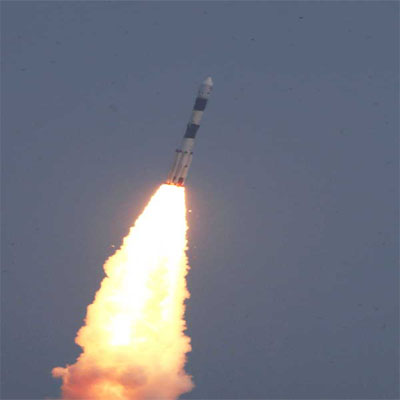
    NEW DELHI: The 1,235-kg RESOURCESAT-2A Satellite was launched successfully yesterday morning by the PSLV-C36, ISRO’s Polar Satellite Launch Vehicle, in its thirty eighth flight from the Satish Dhawan Space Centre SHAR, Sriharikota.

    This is the thirty seventh consecutively successful mission of PSLV.

    With this, the total number of satellites launched by India’s workhorse launch vehicle PSLV including today’s RESOURCESAT-2A has now reached 122, of which 43 are Indian and the remaining 79 are from abroad.

    After PSLV-C36 lift-off at 10:25 am IST from the First Launch Pad with the ignition of the first stage, the subsequent important flight events, namely, strap-on ignitions and separations, first stage separation, second stage ignition, payload fairing separation, second stage separation, third stage ignition and separation, fourth stage ignition and cut-off, took place as planned. After a flight of 17 minutes 05 seconds, the vehicle achieved a polar Sun Synchronous Orbit of 824 km height inclined at an angle of 98.725 degree to the equator (very close to the intended orbit) and 47 seconds later, RESOURCESAT-2A was separated from the PSLV fourth stage.

    After separation, the two solar arrays of RESOURCESAT-2A deployed automatically and ISRO’s Telemetry, Tracking and Command Network (ISTRAC) at Bangalore took over the control of the satellite. In the coming days, the satellite will be brought to its final operational configuration following which it will begin to provide imagery from its three cameras. The data sent by RESOURCESAT-2A will be useful for agricultural applications like crop area and crop production estimation, drought monitoring, soil mapping, cropping system analysis and farm advisories generation.

    Like its predecessors RESOURCESAT-1 and 2, RESOURCESAT-2A has a unique 3-Tier imaging system with Advanced Wide Field Sensor (AWiFS), Linear Imaging Self Scanner-3 (LISS-3) and Linear Imaging Self Scanner-4 (LISS-4) cameras. The AWiFS provides images with a sampling of 56 metres, a swath of 740 km and a revisit of five days whereas the LISS-3 provides 23.5 metre sampled images with 141 km swath and a ‘repitivity’ of 24 days. LISS-4 provides 5.8 metre sampled images with 70 km swath and a revisit of five days.

    Meanwhile, the Parliament was told yesterday that ISRO successfully carried out the first experimental mission of Reusable Launch Vehicle – Technology Demonstrator (RLV-TD) on 23 May 2016 from Sriharikota. In this mission, critical technologies such as autonomous navigation, guidance & control and reusable thermal protection system have been successfully demonstrated.
    The space minister Jitendra Singh said the Development of Reusable Launch Vehicle is a technical challenge and it involves the development of many cutting edge technologies. Presently, it is in the preliminary stage of total developmental process. A series of technology demonstration missions would be required before it is made operational.

  • ISRO launches RESOURCESAT-2A Remote Sensing Satellite

    ISRO launches RESOURCESAT-2A Remote Sensing Satellite

    NEW DELHI: The 1,235-kg RESOURCESAT-2A Satellite was launched successfully yesterday morning by the PSLV-C36, ISRO’s Polar Satellite Launch Vehicle, in its thirty eighth flight from the Satish Dhawan Space Centre SHAR, Sriharikota.

    This is the thirty seventh consecutively successful mission of PSLV.

    With this, the total number of satellites launched by India’s workhorse launch vehicle PSLV including today’s RESOURCESAT-2A has now reached 122, of which 43 are Indian and the remaining 79 are from abroad.

    After PSLV-C36 lift-off at 10:25 am IST from the First Launch Pad with the ignition of the first stage, the subsequent important flight events, namely, strap-on ignitions and separations, first stage separation, second stage ignition, payload fairing separation, second stage separation, third stage ignition and separation, fourth stage ignition and cut-off, took place as planned. After a flight of 17 minutes 05 seconds, the vehicle achieved a polar Sun Synchronous Orbit of 824 km height inclined at an angle of 98.725 degree to the equator (very close to the intended orbit) and 47 seconds later, RESOURCESAT-2A was separated from the PSLV fourth stage.

    After separation, the two solar arrays of RESOURCESAT-2A deployed automatically and ISRO’s Telemetry, Tracking and Command Network (ISTRAC) at Bangalore took over the control of the satellite. In the coming days, the satellite will be brought to its final operational configuration following which it will begin to provide imagery from its three cameras. The data sent by RESOURCESAT-2A will be useful for agricultural applications like crop area and crop production estimation, drought monitoring, soil mapping, cropping system analysis and farm advisories generation.

    Like its predecessors RESOURCESAT-1 and 2, RESOURCESAT-2A has a unique 3-Tier imaging system with Advanced Wide Field Sensor (AWiFS), Linear Imaging Self Scanner-3 (LISS-3) and Linear Imaging Self Scanner-4 (LISS-4) cameras. The AWiFS provides images with a sampling of 56 metres, a swath of 740 km and a revisit of five days whereas the LISS-3 provides 23.5 metre sampled images with 141 km swath and a ‘repitivity’ of 24 days. LISS-4 provides 5.8 metre sampled images with 70 km swath and a revisit of five days.

    Meanwhile, the Parliament was told yesterday that ISRO successfully carried out the first experimental mission of Reusable Launch Vehicle – Technology Demonstrator (RLV-TD) on 23 May 2016 from Sriharikota. In this mission, critical technologies such as autonomous navigation, guidance & control and reusable thermal protection system have been successfully demonstrated.
    The space minister Jitendra Singh said the Development of Reusable Launch Vehicle is a technical challenge and it involves the development of many cutting edge technologies. Presently, it is in the preliminary stage of total developmental process. A series of technology demonstration missions would be required before it is made operational.

  • Satellite Evolution Group’s maritime, aviation, oil&gas web site launched

    Satellite Evolution Group’s maritime, aviation, oil&gas web site launched

    MUMBAI: The Satellite Evolution Group launched its new website. It has been created to deliver the ultimate user-friendly experience with improved navigation and functionality throughout.

    ‘Content is King’ and the new website is content-rich delivering information from the ground segment through to space. Information on vertical sectors such as maritime, aviation, oil&gas can all be found, quickly and efficiently, using the predictive site search function. News, articles, brochures, products, video and events are easily accessible, easy to navigate and easy to share with others.

    “The new website — satellite-evolution.com — features some fantastic improvements compared to our former design, allowing users to find exactly what they’re looking for at first glance. As well as more pleasing aesthetics, we’ve added a dedicated Articles portal, providing easier access to the latest content from the Satellite Evolution Group and our carefully-selected industry experts,” said Satellite Evolution Group editor Dr. Amy Saunders.

    An easy-access archive of the last year’s publications can be found under the Magazines category, all of which are still available for download free-of-charge. The newly-revamped Products section keeps users up to date on the latest technology developments, while our live Twitter feed and Events section help users to stay informed on key industry news.

    “It is now paramount to have a platform that can develop quickly and respond to the introduction of the latest online, content, delivery methods. All in all, we’re extremely pleased to have launched the new face of the Satellite Evolution Group,” said managing director David Shortland.

  • Satellite Evolution Group’s maritime, aviation, oil&gas web site launched

    Satellite Evolution Group’s maritime, aviation, oil&gas web site launched

    MUMBAI: The Satellite Evolution Group launched its new website. It has been created to deliver the ultimate user-friendly experience with improved navigation and functionality throughout.

    ‘Content is King’ and the new website is content-rich delivering information from the ground segment through to space. Information on vertical sectors such as maritime, aviation, oil&gas can all be found, quickly and efficiently, using the predictive site search function. News, articles, brochures, products, video and events are easily accessible, easy to navigate and easy to share with others.

    “The new website — satellite-evolution.com — features some fantastic improvements compared to our former design, allowing users to find exactly what they’re looking for at first glance. As well as more pleasing aesthetics, we’ve added a dedicated Articles portal, providing easier access to the latest content from the Satellite Evolution Group and our carefully-selected industry experts,” said Satellite Evolution Group editor Dr. Amy Saunders.

    An easy-access archive of the last year’s publications can be found under the Magazines category, all of which are still available for download free-of-charge. The newly-revamped Products section keeps users up to date on the latest technology developments, while our live Twitter feed and Events section help users to stay informed on key industry news.

    “It is now paramount to have a platform that can develop quickly and respond to the introduction of the latest online, content, delivery methods. All in all, we’re extremely pleased to have launched the new face of the Satellite Evolution Group,” said managing director David Shortland.

  • France 24 now in HD in Asia-Pacific region

    France 24 now in HD in Asia-Pacific region

    France 24 has signed a distribution agreement with satellite operator AsiaSat, making its English channel available in HD via AsiaSat 5.

    France 24 English HD is currently available exclusively in the Asia-Pacific region and this launch marks an important new step in the channel’s development.

    This agreement reinforces the attractiveness of the channel for cable operators, DTH and IPTV as well as for major hotel chains.

    Thanks to recent distribution deals in South Korea and the granting of a broadcast license in Vietnam, France 24 is now available to 60 million TV households and more than 300,000 hotel rooms across the Asia-Pacific region.

    For further information about how to include France 24 English HD in your offer, please contact Brice Bertrand and David Couret attending CASBAA Convention 2016: