Tag: satellite

  • ISRO readies GSAT-6A satellite for launch

    ISRO readies GSAT-6A satellite for launch

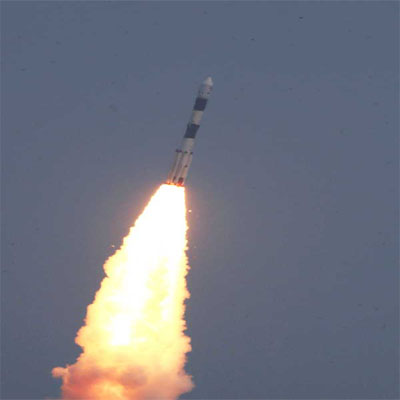
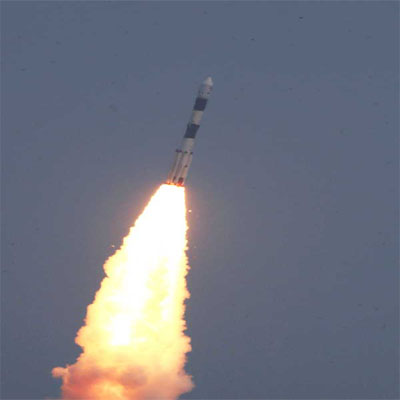
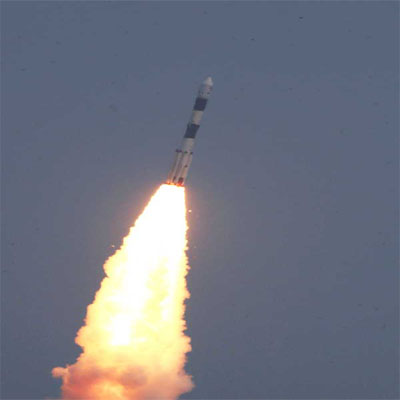
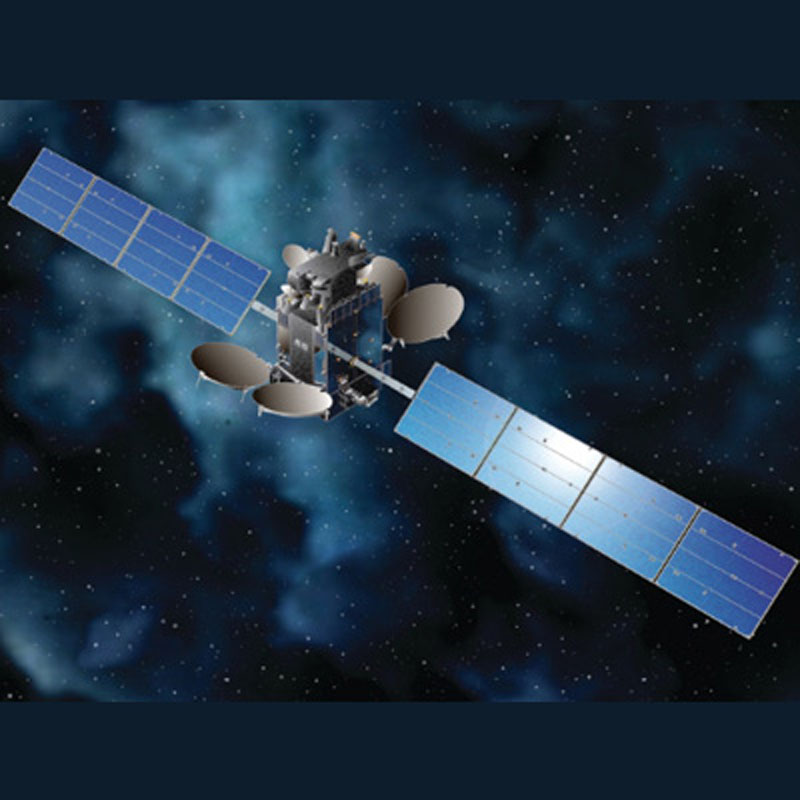
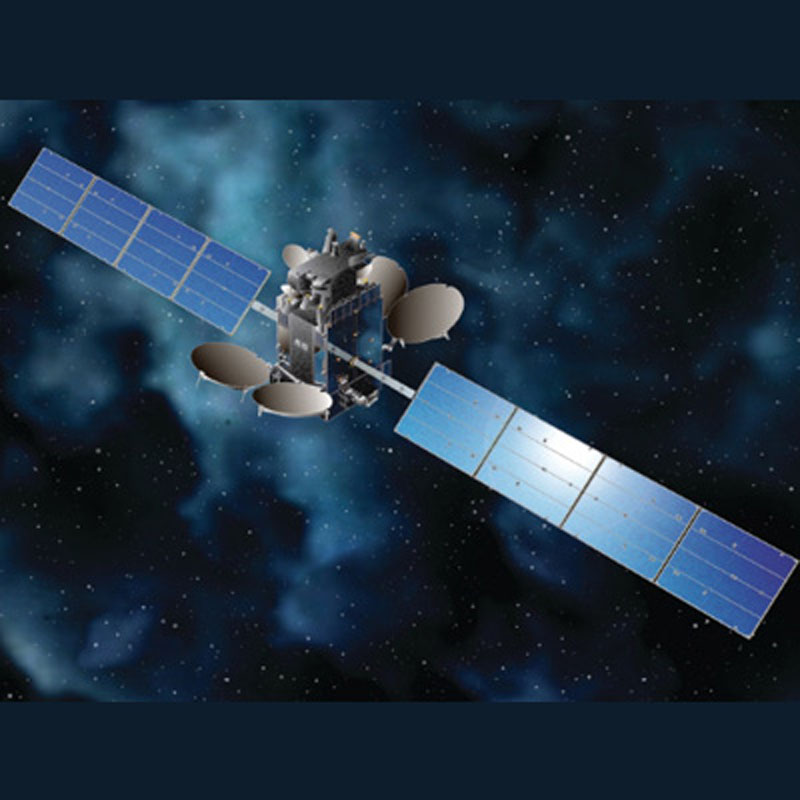
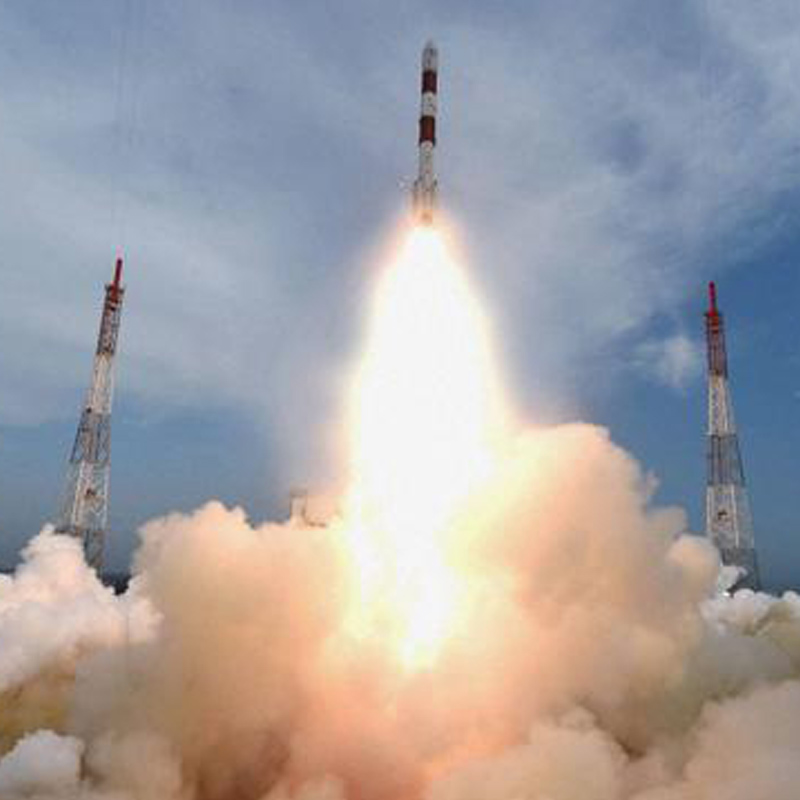
    MUMBAI: Indian Space Research Organisation (ISRO) is set to launch its high-power GSAT-6A communications satellite onboard GSLV Mk-II (GSLV F08) on 29 March 2018. The government-funded organisation will use one of its rockets for the launch, from the Sriharikota island site in Andhra Pradesh province on the edge of the Indian Ocean.

    The satellite is equipped with C-band and S-band transponders, which ISRO says will provide a platform for developing technologies such as demonstration of its massive 6m S-Band deployable antenna (the largest launched by India), which can then be used for mobile phones, vehicular communications and network management techniques as well as multimedia applications.

    It will be placed at 83 degrees East and have a life of nine to 10 years.

    This will be the Geosynchronous Satellite Launch Vehicle’s 12th flight and sixth flight with indigenous cryogenic stage. The rocket will take off from the second launch pad at the Satish Dhawan Space Centre.

    According to ISRO, GSAT-6A, weighing 2140kg, is a high-power S-band communication satellite, just like its predecessor GSAT-6.

    Also Read :

    ISRO, DoT turf wars delaying connectivity reach: govt official

    ISRO eyes 100th satellite on 12 Jan; GSAT-11 launch in April

    ISRO to double annual satellite launch

  • ISRO, DoT turf wars delaying connectivity reach: govt official

    ISRO, DoT turf wars delaying connectivity reach: govt official

    MUMBAI: India builds low-cost satellites but has the most expensive bandwidth, a senior Indian government official said on Tuesday, blaming turf wars between ISRO and Department of Telecoms (DoT) for delays in taking connectivity to far-flung areas.

    DoT special secretary N Sivasailam also flagged issues of costs and said that the Indian Space and Research Organisation (ISRO) should do more in order to take the charges at par with global experience.

    “Here is the paradox. We produce the cheapest satellite but the costliest bandwidth,” Sivasailam was quoted by PTI as saying in a report, adding that India required more transponders on satellites. He was speaking at the ongoing FICCI-Frames 2018 here at a session on ‘Digital India: Sparking the Access Revolution.’ The session also had a talk by ISRO director for the satcom and navigation programme office, K Sethuraman, who dwelled on the agency’s vision for satellite programme of India.

    Sivasailam said there is a “problem of domains” between the DoT and the ISRO that has impacted, for the last 20 years, the roll-out of connectivity in the far flung areas of the country. 

    “The problem is of domains. We [DoT] don’t want to leave our domain [of spectrum allocation]. ISRO doesn’t want to leave its domain. It is a domain related problem…I do not see people coming together and negotiating this aspect out,” he said. Admitting that there is “politics”, which “makes things difficult”, PTI reported, adding that Sivasailam pitched for both the agencies getting over the problems for an overall benefit. 

    “It is time it stopped because it is hurting business development and ultimately people are not getting [benefited],” he said. On the critical issue of pricing, he asserted it will cost around Rs 150 to serve one user with the current cost structure in the country, whereas in the US, it costs $1 or Rs 65. “If the US is getting it for $1 for the same bandwidth for the life of the satellite, I should be getting it at the same rate. There is no reason why it should not happen in India. That is my refrain,” he said.

    Conceding that ISRO helps take satellite connectivity to 5240 far-flung locations in the country, including 4300 in North-East India, Sivasailam elaborated that the cost of satellite, bandwidth and spectrum makes “operations unviable”. 

    “If you have the volume of business, we should be able to provide at the rates internationally available and that is a matter of some concern for us. We have been working on it, but not necessarily successful on this,” he said, stressing that the industry will have to find solutions on this and DoT and ISRO also need to work together on this issue.

    Speaking of self-regulation in over the top (OTT) services, he said it cannot substitute regulation. “When you talk of regulator’s way of looking at regulations, it lies on consumer side and that’s where self-regulation in itself will fail,” he said, pointing out that while it is particularly important in the telecom sector with issues of call drop and number portability, it may not be applicable too much in the broadcasting sector.

    Sivasailam also spoke of the Telecom Regulatory Authority of India (TRAI) recommendation on in-flight connectivity, which will be taken to the Telecom Commission “sooner than later” and it “could be a reality soon”. On 20 January 2018, the TRAI came out with recommendations suggesting that airlines should be allowed to offer in-flight connectivity over Indian airspace, including broadband services. The Civil Aviation Ministry, Department of Space and DoT now have to act on the suggestions to make it a reality. 

    The Telecoms Ministry official said there are discussions within the department on whether to allow both voice and data on flights or restrict it to voice connectivity alone. The new telecom policy will also be out “very soon,” he said.

    Also Read :

    M&E stakeholders need to collaborate for growth: Sudhanshu Vats

    Broadcasters see positive future for TV in India

  • TRAI suggests simplifying processes for broadcast, cable-related businesses

    TRAI suggests simplifying processes for broadcast, cable-related businesses

    MUMBAI: The Telecom Regulatory Authority of India (TRAI), in its bid to ease business norms relating to the broadcast and cable sector, has urged the government to simplify various licensing and clearance processes, putting time limits in some cases.

    The TRAI has also said that the satellite spectrum allocation process undertaken by various government agencies, such as the WPC in the telecom ministry and the ISRO/Department of Space, should be carried out throughout the year instead of “intermittent” opening of such processes.

    Some of the recommendations that have been suggested in its latest ‘Ease of doing Business in Broadcasting Sector’ paper are:

    http://www.indiantelevision.com/regulators/trai/trai-extends-dates-for-comments-on-uplinking/downlinking-consultation-paper-180116
    http://www.indiantelevision.com/regulators/trai/trai-paper-seeks-to-streamline-uplinking-downlinking-norms-171219 
    http://www.indiantelevision.com/regulators/trai/trai-releases-paper-on-national-telecom-policy-2018-180103

    – The process of granting permission/licence/registration for broadcasting services should be streamlined by removing redundant processes, re-engineering necessary processes and making them efficient using ICT.

    – An integrated portal to be set up by the government for broadcasters, teleport operators and TV channel distributors for filing, processing, tracking applications, payments, frequency assignments, endorsements, renewals etc.

    – Security clearances to be done within 60 days.

    – Setting up a system of self declaration.

    – Total time (including all kinds of ministerial clearances) to not exceed six months for granting licences or permissions.

    – Simpler process for logo, name, format and language change.

    – Create a centre for excellence for broadcasters.

    The TRAI says that the Indian broadcasting sector presents a vibrant picture but it has ‘immense potential to move on to a higher trajectory of growth by removing procedural bottlenecks and making business propositions more attractive.’ It states that checks must be done from time to time to ensure procedures are up to date or removed if no longer needed.

    A consultation paper was issued last year after which an open house was conducted with stakeholders on the topic of ease of doing business.

    Also Read:

    TRAI extends dates for comments on uplinking/downlinking consultation paper

    Trai paper seeks to streamline uplinking, downlinking norms

    TRAI releases paper on National Telecom Policy 2018

  • No new channels added in December 2017

    No new channels added in December 2017

    BENGALURU: Since 31 October 2017, the number of licences issued by the Ministry of Information and Broadcasting (MIB) has remained the same. According to an MIB status report, permitted private satellite TV channels having valid permission in India stood at 877 as on 31 December 2017. No new licences were issued in November and December 2017.

    The government had issued licences to 45 channels in 2017 as compared to 75 in the previous calendar year. In all, permission has been granted to 1,099 channels. Permission was cancelled for 222 channels, with 66 in 2017 alone. 44.4 percent or 389 of the permitted channels were news and current affairs channels; 488 channels were non-news and current affairs channels.

    Of the 877 channels, 778 channels were permitted to both uplink from and downlink into India. Of these, 369 or 47.4 percent were news channels and 409 were non-news channels. Sixteen channels, of which 5 (31.25 percent) were news channels and 11 were non-news that have been permitted for uplink from, but not downlink into, India. Sixty-eight channels have been permitted only to downlink into India and not to uplink from the country. Of these 68 channels, 15 (22.1 percent) were news channels.

    Nine new channels (one news channel and 8 non-news channels) were allowed between 1 August and 31 August 2017. In September 2017, two licences and just one licence in October 2017 were granted.

  • Private sector enters satellite building with ‘IRNSS replacement’ launch today

    Private sector enters satellite building with ‘IRNSS replacement’ launch today

    MUMBAI: India’s success in space exploration has been growing tremendously.

    One of the seven satellites in the constellation, as three rubidium atomic clocks on board had stopped functioning, the IRNSS- 1H satellite, weighing 1,425kg, will be launched from the second launch pad of the Satish Dhawan Space Centre at Sriharikota (Andhra Pradesh), on the ISRO’s launch vehicle PSLV-XL.

    The launch of India’s eighth navigational satellite IRNSS- 1H scheduled at 19:00 hrs today will mark the first time the private sector got actively involved in assembling and testing of a satellite. In the past, the private sector has supplied components for satellites, it has now been involved in the actual assembly.

    The Indian Regional Navigation Satellite System (IRNSS) is an independent regional navigation satellite system developed by India on par with US-based GPS. The system that offers services like terrestrial and marine navigation, disaster management, vehicle tracking and fleet management, navigation aide for hikers and travellers, visual and voice navigation for drivers, was named ‘NavIC’ (Navigation with Indian Constellation) by the prime minister Narendra Modi.

    The launch vehicle PSLV-C39 will use the ‘XL’ version of PSLV equipped with six strap-ons, each carrying 12 tons of propellant.

    ISRO chairman S Kiran Kumar said that a private company was for the first time involved in the integration of a satellite. Progressively, more such companies would be involved, he added. Subsystems of the payload and launch vehicle were being developed in collaboration with the industry, Kumar said.

    Around 25 per cent of the IRNSS-1H development work was successfully completed by a consortium led by Bengaluru-based Alpha Design Tecnologies, under the guidance of ISRO scientists.

    The need to launch this satellite came up after three atomic clocks on board ISRO’s first navigational satellite IRNSS-1A, launched in 2013, had stopped functioning. Imported from European aerospace manufacturer Astrium, the clocks are used to provide accurate locational data used in several earth-based applications, such as navigation and monitoring.

    The IRNSS-1H will be launched into a sub geosynchronous transfer orbit after which two solar panels of the satellite will be automatically deployed, and the master control facility at Hassan will perform orbit raising manoeuvres of the satellite.

    NavIC is useful for merchant ships in navigation and also during search and rescue operations. NavIC helps commuters to traverse distances and also enable transport operators to track their vehicles. The system is also helpful for railways in tracking trains and also giving an alert in the case of unmanned level crossing.

    NavIC is also used for other applications like location-based services, survey and alignment, time synchronised services. It provides two types of services — standard positioning service and restricted service.

  • India’s GSAT-17 communication satellite launched successfully

    India’s GSAT-17 communication satellite launched successfully

    MUMBAI: GSAT-17 became India’s third communication satellite to successfully reach orbit in the past two months. GSAT-17 was launched in the early morning hours using the European Ariane 5 Launch Vehicle from Kourou, French Guiana. The 3477 kg GSAT-17 carries communication payloads in C-band, Extended C-band and S-band for providing various services to the country.

    The satellite also carries equipment for meteorological data relay and satellite based search and rescue services. After its lift-off at 0245 hrs (2:45 am) IST and a flight lasting about 39 minutes, GSAT-17 separated from the Ariane 5 upper stage in an elliptical Geosynchronous Transfer Orbit (GTO) with a perigee (nearest point to Earth) of 249 km and an apogee (farthest point to Earth) of 35,920 km, inclined at an angle of 3 degrees to the equator.

    ISRO’s Master Control Facility (MCF) at Hassan in Karnataka took over the command and control of GSAT-17 immediately after its separation from the launch vehicle. Preliminary health checks of the satellite revealed its normal functioning.

    In the coming days, orbit raising manoeuvres will be performed to place GSAT-17 satellite in the Geostationary Orbit (36,000 km above the equator) by using the satellite’s propulsion system in steps.

    During the final stages of its orbit raising operations, the two solar arrays and both the antenna reflectors of GSAT-17 will be deployed. Following this, the satellite will be put in its final orbital configuration. GSAT-17 will be positioned at its designated orbital slot in the geostationary orbit and will be co-located with some of the Indian operational geostationary satellites. Later, it is planned to turn on the communication payloads of the satellite. After the successful completion of all the in-orbit tests, GSAT-17 will be ready for operational use.

  • Zee buys Rajini 2.0’s three-language satellite rights for Rs 110 cr

    MUMBAI: Zee Network has acquired the satellite TV rights for superstar Rajinikanth’s sci-fi thriller “2.0” directed by S Shankar for Rs 110 crore. The film will grace the global theaters on 18 October during Diwali.

    Starring Bollywood star Akshay Kumar in the role of an antagonist, the film is a sequel to the 2010 blockbuster “Enthiran”. Sudanshu Pandey, Amy Jackson, Adil Hussain and Kalabhavan Shajohn are in the supporting cast.

    Lyca Productions creative head Raju Mahalingam told PTI that it was an unprecedented deal and that they were glad to associate with Zee Network. The price is for combined Indian satellite rights for the film for all the languages (Tamil, Hindi, and Telugu).

    A R Rahman, the Academy award-winning composer, has given the music for the project, which is said to be India’s most expensive film at a budget of Rs 450 crore.

    Also Read:

    Zee signs four TV-series deal with Eccho Rights


  • Transponder rentals: Prior MIB approval not needed for EEFC forex payments

    MUMBAI: India’s ministry of information & broadcasting (MIB) has eased rules for broadcasters and teleport owners making foreign currency payments for transponder rentals for uplinking to foreign satellites. It has issued a notice that allows them to make payments from their Exchange Earners’ Foreign Currency (EEFC) accounts to them without approaching it for approval.

    The notice reiterates that “all broadcast companies and teleport operators, as per MIB’s advisory dated 25 June 2014, are advised to strictly follow the guidelines under provisions of the FEMA Act 1999 read with Master Circular No. 6/2014-15 dated 1 July 2014 along with Schedule II thereof issued by RBI. Proposals seeking prior approval would require to be sent to this Ministry only if the proposed remittance is from other than EEFC accounts.”

    According to the provisions, it requires prior approval of the MIB for making remittance of foreign exchange towards availing transponder services on foreign satellite for up-linking of TV Channels/Teleport services/DSNG Operations/Temporary events. Rule 4 of Master Circular provides that, “No person shall draw foreign exchange for a transaction included in the Schedule II without prior approval of the Government of India.

    However, a specific exemption is provided for EEFC account holders. Rule 6 (l) of Master Circular states that, “Nothing contained in the Rule 4 or Rule 5 shall ‘apply to drawl made out’ of funds held in Exchange Earners’ Foreign Currency (EEFC) account of the remitter,” according to the notice signed by under-secretary to the government of India Manmeet Kaur.

    In the past, the ministry had been entertaining such cases where payments (usually, part payments) were being made from this account, and then issuing approval for remittances proposed to be made from other than EEFC Account.

  • Willow TV acquires exclusive US media rights for IPL ’17

    MUMBAI: Willow TV, the primary broadcaster for cricket in North America, has acquired the exclusive media rights in the United States for the VIVO IPL 2017 Twenty20 tournament.

    The IPL (Indian Premier League) is the world’s leading professional cricket tournament, with record-breaking fan attendance and multimedia consumption. Willow previously broadcast the IPL in 2014, at the time setting cricket viewership records in the United States.

    “Willow is delighted to bring exclusive live coverage of the VIVO IPL 2017 to our viewers across television and digital platforms,” said Willow CEO Vijay Srinivasan. “Viewer interest for cricket in the US stands at unparalleled levels, as over 1.4 million households watched the ICC World Twenty20 on Willow in 2016. We look to continue to set new all-time high ratings this year. The IPL is the crown jewel of professional Twenty20 tournaments, and cricket fans in the US are in for a treat when the tournament kicks off on 5 April.”

    The 10th season of the VIVO IPL 2017 starts on 5 April with the defending champions Sunrisers Hyderabad against last year’s runner up Royal Challengers Bangalore. The tournament features 60 matches, played over 47 days in multiple venues across India. Willow will provide live coverage of all 60 matches, culminating with the final on 21 May.

    Willow, which is part of Times Internet (India’s largest diversified digital group), is one of the fastest growing sports networks in the U.S, and the only channel that is dedicated solely to cricket. The channel, along with its “TV Everywhere” service, is distributed by the largest satellite, cable, IPTV and OTT platforms in a variety of subscription packages.

  • How Sultan and Naagin are being pirated in Russia

    MUMBAI: Here’s some food for thought for Indian TV channel broadcasting executives zapping their channels via satellite, cable TV or VOD services into Russia and syndicating content to Vladmir Putin’s land. And this includes movies such as Sultan, and super popular shows such as Naagin.

    A survey by content and data security specialist IRDETO in partnership with YouGov amongst 1,055 Russian adults online, revealed that 87 per cent of Russian consumers believed that producing or sharing pirated video content is not against the law while 66 per cent think that streaming or downloading pirated content is legal.

    Russia, like India and many other nations, has strict regulations against unauthorized copying, broadcasting, distribution or reproduction of copyrighted material – including audiovisual content.

    More than half of those (57 per cent) who participated in the survey said that they actively watch pirated content while 22 per cent said that they watch stolen shows and films at least once a week or more.

    38 per cent of respondents said that they pirate current movies being shown in theatres, 21 per cent said theat they were interested in pirating a TV series. Pirated live sports, OTT content from Netflix and Hulu was preferred by just six per cent of those who answered the survey.

    Almost 75 per cent use their laptops or desktop computers to watch the pirated content whereas tablets and smart phones accounted for just five percent each respectively.