Tag: satellite

  • Eutelsat awards contract to deliver Hot Bird 10 broadcast satellite to Astrium

    Eutelsat awards contract to deliver Hot Bird 10 broadcast satellite to Astrium

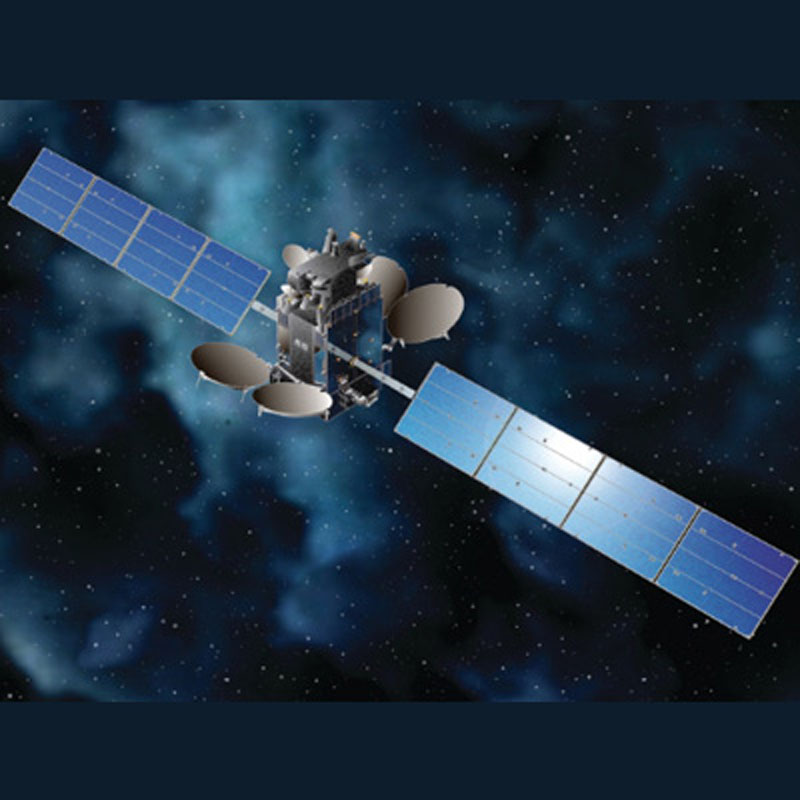
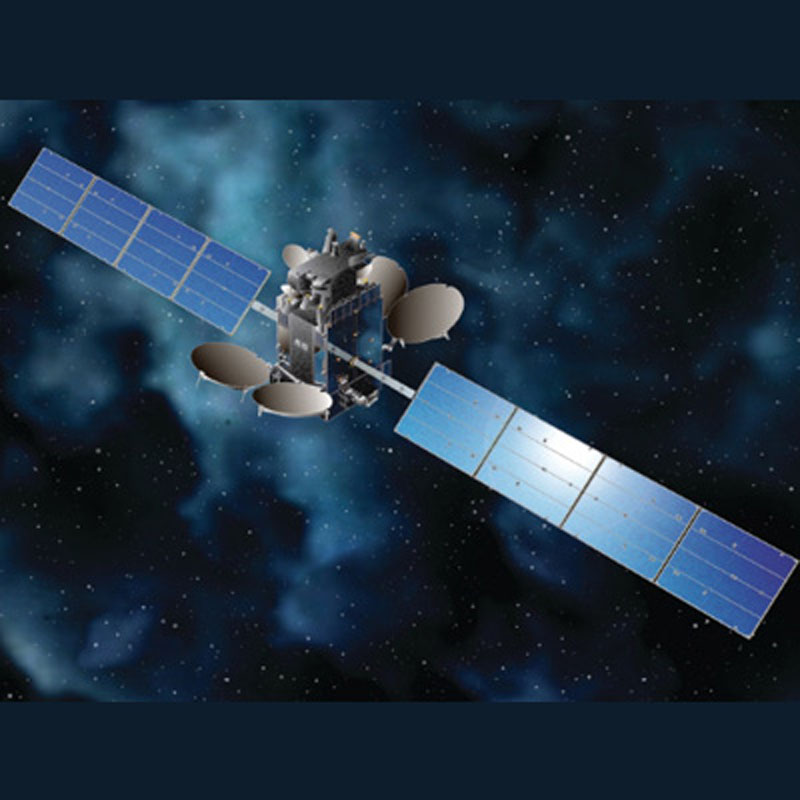
    MUMBAI: Global satellite operator Eutelsat has announced that Astrium will build the Hot Bird 10 broadcast satellite which will be launched in first quarter of 2009 and positioned at the Group’s 13 degrees East location.

    Following Hot Bird 8 and 9, it is the third high-power broadcast satellite based on Astrium’s Eurostar E3000 platform that will be located at Eutelsat’s premium video neighbourhood for cable and satellite broadcasting.

    The procurement of Hot Bird 10 underpins Eutelsat’s objectives to continue to renew capacity at its Hot Bird neighbourhood, to raise
    in-orbit redundancy and security for broadcasting clients and to increase overall flexibility across its satellite fleet.

    Eutelsat’s 13 degrees East neighbourhood broadcasts 950 television channels and 540 radio stations to 110 million cable and satellite homes across Europe, North Africa and the Middle East.

    Astrium’s Eurostar E3000 platform was selected by Eutelsat for the Hot Bird 8 satellite, which went into full commercial service this month, and Hot Bird 9 which was ordered from Astrium in May this year. With each satellite equipped with 64 high-power Ku-band transponders spanning the entire range of 102 Ku-band frequencies at 13 degrees East, they will together deliver customers security and in-orbit redundancy for the development of digital entertainment services and HDTV channels.

    Hot Bird 10’s deployment in 2009 will also enable Eutelsat to pursue its objective to develop video activities at other orbital locations. The new satellite will release the group’s Hot Bird 7A satellite from 13 degrees East in order for it to be repositioned at the 10 degrees East neighbourhood. The proximity of these two neighbourhoods enables reception of channels from both positions with a single antenna equipped with a dual feed.

    This new video mission will be initiated first by Eurobird 10 (formerly Hot Bird 3) which is scheduled to enter into service at 10 degrees East later this month, having completed its mission at 13 degrees East. Eurobird 10’s replacement by Hot Bird 7A will further increase capacity for video services in Europe, the Middle East and North Africa by providing up to 38 Ku-band transponders at 10 degrees East.

    Eutelsat CEO Giuliano Berretta says, “By boosting our resource at established and growing video neighbourhoods we are in a privileged position to benefit from the strong dynamic of broadcasting markets in Europe, Africa and the Middle East. Hot Bird 10 will further consolidate our premium Hot Bird position and will also expand the associated resource we can offer broadcasters from 10 degrees East for standard digital television, High-Definition Television and new video services using MPEG4 compression.

    ” We are also very pleased to renew our confidence with Astrium who has demonstrated the performance of its technology in our new Hot Bird 8 satellite.”

    Astrium Satellites’ business unit CEO Antoine Bouvier said, “We are extremely pleased that Eutelsat confirms their confidence in our technology by ordering a third Eurostar E3000 to perfect the core of their prime broadcasting neighbourhood. Hot Bird 10 is a Eurostar E3000 satellite, identical to Hot Bird 8 and Hot Bird 9 with the same mission capacity. Hot Bird 10 is also the third satellite ordered by Eutelsat from Astrium this year, following W2M in February and Hot Bird 9 in May, and the seventh communications satellite contract overall won by Astrium in 2006.”

    Hot Bird 10 is the 15th satellite commissioned by Eutelsat from Astrium. With the early implementation of this programme the group is advancing in-orbit investments to 2007- 2009 which were originally forecast after 2010.


  • Virgin America signs on Disney, Fox, Paramount & Warner Bros for in-flight content

    Virgin America signs on Disney, Fox, Paramount & Warner Bros for in-flight content

    MUMBAI: Virgin America, the new U.S. start-up airline has announced a collection of launch studio partners for its in-flight entertainment (IFE). The airline has reached individual agreements with Disney, Fox, Paramount Pictures and Warner Brothers to provide theatrical content at every seat and on every flight.

    Although details of the deals are not being disclosed, the agreements will provide Virgin America’s guests with the best in motion picture and television entertainment. The airline’s industry onboard entertainment will offer its customers ‘pay-per-view’ movies, live TV via satellite, a wide array of audio music entertainment including the ability to compile individual audio playlists, a broad selection of popular electronic games, and even meals on-demand, informs an official release.

    “Our partnerships with Disney, Fox, Paramount, and Warner Brothers are helping us redefine the travelling experience as it exists for airline customers today,” said Virgin America director inflight entertainment and partnerships, Charles Ogilvie. “Our guests will be able to pick from the latest and greatest Hollywood has to offer and enjoy their entertainment selections on their own schedule from the comfort of their seat.”

    “Disney is happy to be part of the Virgin America team’s challenge to redefine the inflight entertainment experience,” said Disney Non-Theatrical Distribution senior vice president, Linda Palmer. “All arms of this studio are excited about Virgin America taking flight!”

    “Interactive entertainment is a space that Paramount is excited about. Being members of the Virgin America launch team is something that we are excited about and is an important milestone as the U.S. domestic industry progresses toward more interactive inflight entertainment,” said Paramount non-theatrical distribution senior vice president Joan Filippini.

    The airline previously announced entertainment partners including CoKinetic Systems Corporation, IMS, Inflight Canada, Pace Communications, Panasonic Avionics, Spafax, and Wunderman. A new addition to team is the New York-based Anomaly agency.

  • Industry gets together to discuss Broadband Issues

    Industry gets together to discuss Broadband Issues

    New Delhi: The stage is set for a high powered seminar on broadband and IPTV which commences in New Delhi’ India Habitat Centre today. Organised by indiantelevision.com and Media Partners Asia, Hong Kong, and titled The India Broadband Digital Networks forum – Delivering the Digital Home, the seminar will feature high profile speakers such as I&B secretary SK Arora, Trai chairman Nripendra Misra, Zee TV chairman Subhash Chandra, Liberty Global director Shane O Niel, who will kick off the morning’s proceedings with their keynotes, followed by a panel discussion. The purpose of the session: to try to get a perspective from government on which way broadcasting, cable TV, broadband, IPTV, internet regulation is headed, apart from a view from industry leaders how they see the Indian market panning out.

    The afternoon session has Siticable head JS Kohli, Tata Sky boss Vikram Kaushik, Ortel Communications Jagi Mangat Panda, HSBC Securities MD and global media investment banking head Sandeep Pahwa, Comverse CBO Raghav Sahgal, NDS Asiapac operations director David Godfrey, Scientific Atlanta VP and international business GM Ken Klaer. Their focus will be to come to an understanding on why strategically digital is the way to go forward, and how each of them is dealing with this imperative to consolidate and converge.

    The last session has got Zee TV vice chairman Jawahar Goel, Star India’s revenue director Paritosh Joshi, Hathway boss K Jayaraman, HFCL Infotel CEO Surendra Lunia, Bharati Televentures technology Veep TV Sriram, HomeCable CEO Vikki Choudhry, Tandberg Television IPTV business development director Alan Delaney, Indusind Media executive director Ashok Mansukhani. The goal: to get a reality check on whether that strategic imperative is going to be achieved, what is hampering the move and how the impediments will be cleared.

    Says Indiantelevision.com CEO Anil Wanvari: “Cable TV, satellite TV, broadband, and telco operators are all keen to understand what the lay of the land will be like, how each of them can work together or independently, the business models which will be successful. We hope through this seminar to get to some of those answers.”

    The India Broadband Digital Networks Forum has Tandberg Televison, NDS, Scientific Atlanta, NDS and Comverse as the industry sponsors, with CNN IBN being the Support Sponsor, NDTV the telecast partner, CMCG as the PR partner and Cable Quest, Satellite@ Internet India and Satellite & Cable TV as the print partners.

  • Arianespace to launch Arabsat’s BADR-6 satellite

    MUMBAI: As part of its upcoming ambitious fleet renewal and expansion program for the next 3 years, Satcom operator Arabsat has selected Arianespace for the launch of its recently ordered BADR-6 satellite in 2008.

    BADR-6, a fourth-generation satellite, will be built jointly by EADS-Astrium and AlcatelAleniaSpace for the communications payload, based on the Eurostar 2000+ platform. Weighing 3,400 kg at launch, the satellite will be fitted with 24 C-band and 20 Ku-band transponders with a design life of about 15 years. BADR-6 is designed to primarily provide video broadcasting services for the entire Middle East and North Africa (MENA) region from Arabsat’s 26°East geostationary orbital location and by far the MENA region’s leading video neighbourhood.

    Co-located with the rest of the BADR constellation of satellites at Arabsat’s “hot-spot” for DTH entertainment, it will be reaching an audience of 130 Million viewers from Morocco to the Gulf and a large part of sub-Saharan Africa. Moreover, BADR-6 will also provide Arabsat with additional in-orbit back-up capacity for its core television and radio customers, as well as a significantly larger number of options for optimising its telephony and data transmissions.

    Arianespace CEO Jean-Yves Le Gall says, “Arianespace is very proud and honoured to have once again been chosen by the leading operator Arabsat. We have maintained a preferred relationship with Arabsat since launching the Arabsat-1A satellite in 1985. Furthermore, being chosen for this new satellite launch right when Arabsat has announced an ambitious deployment plan is a clear recognition of the top quality and excellence offered by Arianespace’s launch service. We consider it as a significant milestone, hopefully strengthening our cooperation in the close future”.

  • Animal Planet to showcase ‘Great Savannah Race’

    Animal Planet to showcase ‘Great Savannah Race’

    MUMBAI: The great wildebeest migration in East Africa is an annual feature. For over a million years, 1.4 million wildebeest and 200,000 zebras and gazelles undertake a dramatic journey from the vast open plains of the Serengeti to the champagne coloured hills of Kenya’s Masai Mara.

    Animal Planet uses cutting edge technology to show this natural wonder. The event will be presented as a wildlife reality show, following the million-plus participants as they run the frantic 800-kilometer Great Savannah Race. The three part series will air on 17, 18 and 19 July at 8 pm.

    Why do the animals carry out this yearly migration? Is it the wind that guides them? Or a sixth sense which leads them in search of rain-ripened grass? And, who will survive the journey and cross the finish line first? The show filmed in high-definition sets out to answer all these questions. The journey begins in Tanzania with veterinarian Patrick Garcia and scientists Anja Brinch Jensen and Sophie Grange.

    Their first goal is to fit 10 animals (seven wildebeests and three zebras) with collars so they can be tracked throughout the epic journey via satellite. The collars, equipped with miniature Global Positioning System (GPS) monitors, satellite transmitters and a VHF radio system, allows the participants to be located within a radius of 1 meter. With the help of Technical Coordinator Sébastien Lafont, the scientists hope to gain a better understanding of the great migration which will help them preserve the fragile equilibrium of the eco-system.

    The long and dangerous trek is fraught with danger. More than 250,000 animals will die along the way from sheer exhaustion, and the migration is relentlessly tracked by Africa’s great predators – lions, cheetahs, hyenas, vultures and crocodiles – waiting for an opportunity to strike weak prey. Most dramatic of all is the moment when the migration arrives at the crocodile infested Mara River, which must be crossed in order to reach the rich grazing. As the bravest takes the initial plunge into the swirling currents, thousands follow – many to inevitable death.

    The series follows the daily trials and tribulations of the 10 main characters, all of whom have been earmarked by the scientists as those most likely to complete the journey. Who amongst the main competitors is predicted to win the race? The young male bursting with energy; the old, yet experienced veteran or the female and her newborn calf?

    For the first time, The Great Savannah Race follows the vast migration from the start to the finish line, capturing all the drama, mystery, intrigue, tragedy and heroic deeds of this truly epic saga.

  • Arianespace to launch a satellite for Vietnam

    Arianespace to launch a satellite for Vietnam

    MUMBAI: French satellite launch service provider Arianespace will launch in 2008 the Vinasat-1 satellite for Vietnam Posts and Telecommunications Corporation (VNPT). Vinasat-1 will be built by Lockheed Martin Commercial Space Systems (LMCSS).

    The first Vietnamese telecommunications satellite, Vinasat-1 will be launched on an Ariane 5 vehicle during the first half of 2008 from the Guiana Space Center, Europe’s Spaceport in Kourou, French Guiana.

    Vinasat-1 is the 275th contract won by Arianespace since the company’s founding in March 1980 and the 53rd launch for a satellite operator in the Asia-Pacific region. Vinasat-1 is the 39th satellite platform built by Lockheed Martin to be launched by Arianespace.

    Weighing about 2,600 kg at launch, Vinasat-1 will be positioned at 132 degrees East Longitude, and will offer a design life exceeding 15 years. Fitted with 20 C- and Ku-band transponders, the satellite will provide radio, television and telephone transmission services for all of Vietnam and the Asia Pacific region from its geostationary orbit.

    Arianespace CEO Jean-Yves Le Gall says, “We are delighted to be working with the people at LMCSS once again. This contract is the latest mark of recognition of the excellent service and solutions offered by Arianespace. We are also very honoured to be selected to orbit Vietnam’s first communications satellite, and we are very proud to be participating in the country’s economic development.”

    Lockheed Martin Commercial Space Systems president Ted Gavrilis said, “Lockheed Martin Commercial Space Systems is proud to join Arianespace’s highly professional launch team to ensure the successful launch of Vinasat-1.

    “We are confident that the expertise and heritage we bring to the Vinasat-1 programme, along with Arianespace’s outstanding launch service, will result in superior program execution for an on-time delivery of Vietnam’s first telecommunications spacecraft.”

  • CN gets on to DD with a branded block

    CN gets on to DD with a branded block

    NEW DELHI: Not content with ruling the kids’ space in India via satellite, Cartoon Network now wants a slice of terrestrial viewership too.

    It announced has just a new one-hour programming block, Cartoon Network Duniya, on Doordarshan National.

    Starting 8 July, the new block will air every Saturday from 10:30 am to 11:30 a.m. and will feature two of Turner’s most popular and highly successful original productions, M.A.D. (Music, Art and Dance show) and Codename: Kids Next Door.

    Cartoon Network Duniya will also showcase other popular series, including Turner’s most awaited original production, Galli Galli Sim Sim, the Indian version of globally renowned pre-school series, Sesame Street.

    “Doordarshan’s extensive reach across India will enable kids in non-C&S homes to enjoy Turner’s engaging original production that has so far been limited to C&S homes. In the preliminary stage, the highly rated M.A.D. and popular animation series, Codename: Kids Next Door will serve as the perfect introduction to new viewers,” an official statement quoted Turner International India MD Anshuman Misra as saying yesterday.

    Misra added that later in the year Galli Galli Sim Sim will further enhance the appeal by showcasing content that is both educational and entertaining in nature.

    M.A.D. is an off-the-wall, interactive journey for 8-12 years olds and their families and is filled with fun tabletop ‘makes’, dynamic performances, a bit of humour and some art stunts.

    Galli Galli Sim Sim is an initiative undertaken by globally recognised, Sesame Workshop and Indian kids’ entertainment leader, Turner India.

    The show is aimed at serving the 157 million children under the age of six in India and is committed to supporting India’s Sarva Shiksha Abhiyan or universal access to education.

  • Intelsat completes acquisition of PanAmSat

    Intelsat completes acquisition of PanAmSat

    MUMBAI: Leading satellite service provider Intelsat today announced the completion of its $ 6.4 billion acquisition of rival PanAmSat. 

    The addition of PanAmSat’s video market expertise, advanced satellite fleet and blue-chip media customer base makes the new Intelsat the largest provider of fixed satellite services (FSS) worldwide to each of the media, network services/telecom and government customer sectors.

    Intelsat acquired all of the outstanding common shares of PanAmSat for approximately $3.2 billion. As a result of the merger, PanAmSat is now a wholly-owned subsidiary of Intelsat, and the common stock of PanAmSat has been delisted from the New York Stock Exchange. The total value of the transaction, including PanAmSat debt that was refinanced or remained outstanding, is approximately $6.4 billion.

    Using optimized capacity on a combined fleet of 51 satellites and a large, complementary terrestrial infrastructure including eight owned teleports, fiber connectivity and over 50 points of presence in almost 40 cities, the new Intelsat:

    — Carries one out of every four television channels transmitted over fixed satellites;

    — Supports 27 DTH platforms worldwide;

    — Operates 16 satellites that are part of video neighborhoods around the world;

    — Is the number one provider of transponders for video programming worldwide;

    — Carries more high definition (HD) programming than any other FSS carrier;

    — Is the largest provider of commercial satellite services to the government sector;

    — Is the leading provider of services to enterprise, Internet and mobile network operators; and

    — Provides communications services to 99 percent of the world’s populated regions.

  • Satellite interference affects broadcasters & consumers

    Satellite interference affects broadcasters & consumers

    SINGAPORE: We’ve recently seen it happening to Sony Entertainment Television (SET) India during the telecast of a popular film awards ceremony. Star India, too, has faced some minor problems due to this in the past. We’re talking about a growing menace called satellite interference, which affects both satellite operators and the end user.

    Whether deliberate or not, satellite interference means a huge revenue loss for broadcasters, which is eventually recovered from the consumers. 

    With an excess of 300 satellite channels in India and more than 200 in China, satellite interference is becoming an increasing problem as the technical uplinking requirements within these market places are not fully efficiently deployed.

    Satellite interference today are caused by: equipment (40 per cent), unknown (22 per cent), human error (15 per cent), crosspol (13 per cent), antenna (8 per cent), deliberate (1 per cent) and terrestrial (negligible). Apart from this, military interference is also one of the causes.

    “The different types of military interferences are: airborne and ship born radar, which generally affects downlinks; spread spectrum hidden use, which results in higher noise floor and is difficult to identify and transponder hopping. While the military are generally cooperative (except in war zones) as far as airborne and ship born radar is concerned, but in case of transponder hopping, they deny responsibility and hence it is difficult to ensure resolution,” said Satellite Users Interference Reduction Group (SUIRG) chair of the board R James Budden.

    ESPN Star Sports director of engineering Andy Rylance pondered over the economic losses caused by satellite interference. “The economic losses caused by satellite interference are very high and run into millions of dollars. At the end of the day, not just the broadcaster but even the consumer pays for it. The types of interference can be intentional (piracy or political), unintentional (faulty kit, misalignment), terrestrial and limited to channel, transponder or multi transponder,” he said. 

    So what are the costs? In terms of commercials, there is a loss of commercial breaks, which means huge revenue loss of the broadcaster. And if the interference is during prime time, the monies can run even deeper. Ratings is the other factor that are affected if the interference is extended. Apart from this, if the interference is extended, the broadcaster stands a chance of losing credibility in the eyes of the consumer, who will eventually switch to other channel, which have an uninterrupted broadcast. 

    “The broadcaster will also have to pay for extra protection and maybe have a diverse feed, which actually doubles the cost or they can use fibre. But, that needs huge care in engineering to ensure availability. Some of the indirect costs of satellite interference are that the unusable space costs satellite operators real money and locating rogue uplinks is not cheap. What’s more, the losses to satellite operators must ultimately be borne by users,” Rylance said. 

    While most interference is out of our hands, the fact is that it is draining cash from everyone’s pocket. “What ever we can do to reduce the risk, we must do. Operational and engineering best practices will help,” he concluded.

  • Reliance, Orbit target Middle East hospitality industry with RiTV

    Reliance, Orbit target Middle East hospitality industry with RiTV

    MUMBAI: Telecom service provider Reliance Communications in association with Orbit Communications Company (OCC) has launched RiTV, which is an interactive television, broadband and media solution.

    OCC and Reliance Communications have introduced a “Go to Market Strategy” that offers a variety of interactive TV services. RiTV was demonstrated at the three-day ‘The Hotel Show’ held at the World Trade Centre, Dubai.

    The new multi media solution delivers on-demand entertainment, internet access and information services through an intuitive interface. It is said to be compatible with a variety of television screens including Plasma and LCD screens and through a remote and keyboard multiple service offerings can be accessed.

    RiTV is believed to present opportunities to develop a new revenue stream for Hotels.

    RiTV CEO Gurjeet Sandhu has been quoted in media reports as saying, “The cutting edge guest room media solution offers new incremental revenue streams for hoteliers. We look forward to tap the tremendous potential of RiTV to all existing hotels as well as thousands of hotels scheduled for construction in the Middle East.”

    The latest Hotel Interactive system, is expected to enhance the customer value proposition for the hospitality industry in the Middle East. Through an interface with a hotel’s Property Management System, it also has the ability to extract data relating to customer behaviour and preferences.

    OCC business development manager Fadi Ghazzaoui added, “RiTV is a powerful interactive guest room solution offering high quality experience for guests. The system can be customised as per the need of hoteliers and has capabilities to be scaled up to meet the future needs of hotels and their guests. We will also offer integrated solutions encompassing a gamut of TV Channels, movies, Internet via Satellite and VOIP (Voice over Internet Protocol) solutions to the Hospitality market.”