Tag: satellite

  • BBC Trust approves plans to launch Freesat platform

    MUMBAI: The BBC Trust has provisionally approved UK pubcaster the BBC management’s proposal to develop and launch a free-to-view satellite platform, “Freesat”.

    BBC management envisages Freesat being achieved as a joint venture with other public service broadcasters. The Trust believes that the service would create significant public value by offering licence fee payers an additional means to access digital services, including the BBC’s digital television channels and radio services, which is subscription free and guaranteed to stay that way. It would be offered on the basis of a one-off initial payment only, to cover the cost of equipment and installation. The service would be future-proofed, through the designing in of high definition and personal video recorder compatibility, and would be marketed through retail outlets and via the internet. BBC management’s intention is to establish a joint venture company with other public service broadcasters to manage the marketing and technical aspects of the new platform. Set top boxes would be supplied by third parties working with retailers to a specification agreed with the joint venture company.

    The Trust has published its decision, and the evidence and analysis which informed its judgement, and opened a 28 day public consultation prior to making its final decision in April 2007.

    BBC chairman Chitra Bharucha said, “The BBC’s Royal Charter requires the Corporation to take a leading role in digital switchover which begins next year. From 2008 until 2012, as each UK nation and region switches to digital, all households that haven’t done so already will have to choose a new way to access television. One of the benefits arising from digital switchover will be greater choice for viewers. For those seven million homes yet to make the switch, it needs to be clear that the benefits of digital television do not need to equal ‘pay television’.

    “A new, guaranteed subscription-free satellite service would provide the public another option when deciding which platform to choose. Over half of those yet to switch fall outside the Freeview coverage area. For these homes, the new service would mean being able to access BBC digital services they have already paid for via their licence fee but until now have been unable to receive on a guaranteed subscription-free basis.

    “We have considered the market impact and whilst there may be some negative effects, in our view these should be balanced against the potential positive market impact of greater choice. Overall, we believe a “Freesat” service to be in the public interest and we hope that other public service broadcasters would join the BBC in a joint venture. We welcome all responses to our provisional conclusion during the consultation. “

    The BBC Trust has decided that Freesat meets the BBC’s Charter and Agreement definition of a ‘non-service’ activity and does not require a Public Value Test. Nonetheless, in reaching its provisional decision the Trust has considered the potential public value and market implications of launching the service.

    In particular, the Trust examined the proposition in four key areas:

    Whether the proposition would serve the best interests of licence fee payers:
    Of the 7 million homes yet to switch to digital, over half fall outside the Freeview coverage area. Inability to access free-to-view digital is an issue frequently raised by the public in its contacts with the BBC. For some, this would remain an issue until the analogue system is switched off entirely in 2012. The Trust considers failure to address this issue to be inconsistent with its public service duties.

    What public value the new platform might create:
    The Trust has provisionally concluded there is significant public value in the “Freesat” proposition. It believes such a service would have a positive impact by introducing choice to the market and a guaranteed subscription free alternative to Sky’s free satellite option. The costs to the BBC are modest and comparable with those of Freeview. Launching the proposition as a joint venture would further increase value for money.

    How the proposition fits with the BBC’s public service remit:
    The Charter and Agreement set out a number of public service duties for the BBC. The Charter includes a Public Purpose to help deliver the benefits of emerging technologies to the public, and to take a leading role in digital switchover. Meanwhile, the Agreement states that the BBC “must do all that is reasonably practicable to ensure that viewers, listeners and other users are able to access the UK public services that are intended for them”. The Trust has provisionally concluded that the objectives of the proposition are consistent with, and enhance, the BBC’s public service remit.

    The competitive impact of the proposals on the wider market:
    The Trust’s provisional conclusion is that the proposition would have some negative impact on the wider market but increase choice for consumers. The Trust’s view takes account of analysis of the proposition’s potential market implications carried out by its own independent advisers within the Trust Unit and external independent economists.

    Under the terms of the previous Charter the BBC submitted a proposal, approved by the Governors, to the Department for Culture, Media and Sport in June 2006 to launch a free open standard satellite service. However the Charter expired before the Secretary of State reached a decision and, in line with the terms of the new Charter, the decision now rests with the BBC Trust. The Trust received the open file from the Secretary of State in January. Further to detailed scrutiny at its Finance & Strategy Committee and the provision of further independent advice referred to above, the Trust reached its provisional conclusion at its meeting on 21 February.



  • FDI nod for Sun’s DTH

    FDI nod for Sun’s DTH

    MUMBAI: Kalanithi Maran’s Sun Direct TV has secured government approval to induct 20 per cent foreign equity worth $150 million. Malaysia-based Astro is making the investment in the direct-to-home (DTH) venture through its wholly owned subsidiary company South Asia Entertainment Holdings Ltd (SAHEL) of Mauritius.

    The cabinet committee on economic affairs gave its nod today to Sun Direct to issue equity shares to SAHEL. The approval is subject to guidelines issued by the ministry of information and broadcasting.

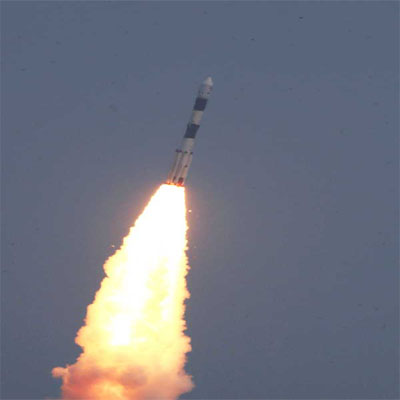
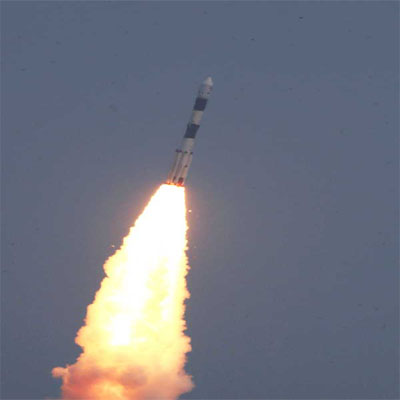
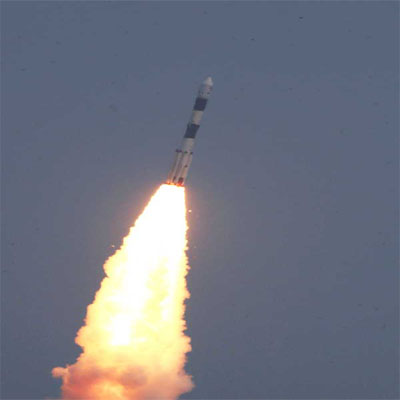
    Sun, which was waiting for a satellite and regulatory approvals, can be ready to kick off its services after Insat-4B launches on 10 March.

  • Isro being approached for more transponders for DD Direct

    Isro being approached for more transponders for DD Direct

    NEW DELHI: Doordarshan is expected to switch over to an Indian satellite Insat 4B by early May for its direct-to-home DD Direct service, but it is unlikely to get more than five transponders. The satellite is being launched 10 March from Kourou in French Guiana.

    Prasar Bharati sources tell indiantelevision.com that though the Indian Space Research Organisation (Isro) had been requested to give first priority to the public broadcaster in the matter of leasing transponders, it was learnt that the Sun Group owned by Kalanithi Maran may get six transponders for its Sun Direct DTH and one for digital satellite news gathering.

    The sources said Isro had been approached to clarify the air on the number of channels it could give to Doordarshan, particularly in view of the efforts by the public broadcaster to switch over to an Indian satellite and not spend money in foreign currency for the American-owned NSS-6 satellite.

    The switchover is expected to result in a saving of around $5 million and Prasar Bharati chief executive officer BS Lalli confirmed that he had turned down the reminder by the American satellite for a renewal of contract.

    (It is learnt that Isro agreed to the demand for Sun for transponders after the failure of the Insat-4C last year. However, Isro has given the option to Sun to take transponders on a foreign satellite with the help of the space agency, since Insat 4B was meant for DD Direct.)

    Switching over to the new satellite will mean rotating the dish antennas slightly from the existing 95 degrees to 93.5 degrees. Lalli does not think any re-programming of
    set-top boxes will be required but said that this could be done easily if needed.

    The Insat-4B, the second satellite in the Insat-4 series, will be carrying 12 Ku band and as many C band transponders for communication and broadcasting services. Airtel is understood to have booked transponders for its services.

  • Echostar buys a stake in South Korea’s TU Media

    Echostar buys a stake in South Korea’s TU Media

    MUMBAI: US satellite service provider Echostar has become the second-largest shareholder in South Korea’s TU Media.

    It operates a satellite digital mobile broadcasting (S-DMB) service.

    TU Media has raised $74.7 million.

    The company said that its largest shareholder, SK Telecom, and Echostar purchased 9.95 million new shares of TU Media to raise the company’s capital to 288.2 billion won.

    TU Media said that the partnership with Echostar would help accelerate its efforts to make inroads in overseas markets.

    In 2005, TU Media started the S-DMB service. This allows users to watch TV on a mobile device.

    The company cliams to have attracted more than 1 million subscribers for the fee-based mobile broadcasting service since its launch. It aims to raise the number to two million this year.

  • Most rapid DTH growth to come from Asia

    Most rapid DTH growth to come from Asia

    MUMBAI: Western Europe and North America continue to lead the digital satellite pay-TV market in subscribers and revenue.

    However the fastest growth over the next several years will come from other areas, especially Asia, reports market research firm In-Stat.

    Key satellite market trends include consolidation in established markets, interactivity, HD, launches, and bundling, the high-tech market research firm says.

    In-Stat analyst Michael Inouye says, “Most DTH platform launches in 2006 occurred in the less mature markets, including India and Eastern Europe. As DTH pay-TV platforms in many American and European countries have been in operation for a number of years, their subscriber growth has slowed. Total net new subscribers are growing each year, but only by single digit percentages.”

    Rsearch by In-Stat found the following:

    – Total DTH pay-TV subscribers are expected to reach over 117 million in 2010.

    – Global DTH-TV revenues will exceed $88 billion by 2010.

    – Consolidation occurred in 2006 with service providers like TPS and CanalSatellite and conditional access providers (Irdeto/ Cryptoworks).

  • FCC report suggests limiting of TV violence

    FCC report suggests limiting of TV violence

    MUMBAI: A new draft report from the US media watchdog the Federal Communications Commission (FCC) suggests the US government may be able to limit violence on TV in a way that does not violate the Constitution.

    The long-overdue report suggests that Congress could craft a law that would let the agency regulate violent programming much like it regulates sexual content and profanity — by barring it from being aired during hours when children may be watching, for example.

    An FCC official was quoted in media reports saying that violence could be treated similarly to broadcast indecency, with its airing prohibited during times when children might be watching.

    However the official the FCC hasn’t officially adopted the findings of the draft report. Congress could order cable and satellite TV providers to allow viewers to buy channels individually or in family-friendly packages to limit how much violence children see.
    The report had been requested by Congress. The report also suggests that cable and satellite TV could be subjected to an “a la carte” regime that would let viewers choose their channels.

    Citing studies, the draft says that there is evidence that violent programming can lead to “short-term aggressive behavior in children”.

  • WorldSpace kicks off satellite awards initiative

    WorldSpace kicks off satellite awards initiative

    MUMBAI: WorldSpace Satellite Radio is looking to provide subscribers with a personalised listening experience throughout this month.

    It kicked off ‘Honors Week’ with its own inaugural satellite radio awards show, Worldspace Honours, on 12 February 2007 live from Studio 2 at Abbey Road, the legendary recording studio of The Beatles.

    WorldSpace Honours is the first satellite radio award show to recognise music and artistic contribution by artists from more than 20 musical genres represented on WorldSpace channels ranging from Up Country to Jhankaar and The System to Shruti. The honorees will be chosen by WorldSpace’s executive selection committee made up of programming staff from each of the 20 channels represented.

    WorldSpace Satellite Radio VP global programming William Sabatini says, “WorldSpace Honours presents a completely new format for satellite music awards and was created to reflect the diversity of our music programming, the expertise of our staff, and the broad range of preferences of our subscribers. We are also thrilled to be announcing our choices for the WorldSpace Honours, live from the prestigious Abbey Road Studios.”

    WorldSpace VP content marketing Ted Kelly, and WorldSpace india director of network programming Velu Shankar will host the awards show and will announce this year’s 23 honourees. Specialty programming is being created by the company to showcase each artist and will include interviews, career highlights, background information and their music.

    Subscribers can listen throughout the day for all honourees and can tune in to their favorite WorldSpace Satellite Radio channel from 16-19 February 2007, when each honouree’s works will be showcased throughout the weekend.

    “Honours Week” will also feature the second annual “UPop @ Abbey Road Sessions” which has officially kicked off with the Honours Award Show on 12 February 2007 and run through 15 February. The sessions feature four days of performances and recording sessions from some of yesterday’s and today’s stars, live from Abbey Road Studio 2. Additionally, WorldSpace will again host the global broadcast of Europe’s biggest music event—the Brit Awards—on Feb. 14. The live broadcast will feature backstage and red carpet interviews, celebrity appearances and performances by more than a dozen superstars.

    Channels that will air music of the honourees include including Maestro, Riff, Potion, Radio Voyeger, Spin, Surabhi, Ghandharv, Jhankaar, Spandana and Moksha.

  • STB availability key to Cas success

    STB availability key to Cas success

    MUMBAI: Availability of set-top boxes (STBs) is one of the key concerns for the successful roll out of conditional access system, speakers at a workshop on “Cas and Digital CATV” said here today.

    Cable operators should not only look at the price of the boxes but also the quality of features it offers as there is revenue to be earned from the consumers. “While what is being pushed now in India is basic boxes, there is need also to go in for middleware that enables enhanced facilities. The important question to be asked is what the boxes can do. Cable operators will be able to, after all, earn revenues from features like video-on-demand and gaming,” said Technosat managing director Irshad M Contractor.

    The Dubai-based company is prepared to set up a manufacturing facility in India if the demand for STBs pick up. Technosat has boxes ranging from basic to premium features on MPEG-2 and is currently conducting trials on MPEG-4.

    Though multi-system operators (MSOs) are currently importing boxes, several manufacturers in India are keen to come up with local production facilities. “We are introducing 4-5 flavours of STBs that are fully developed in India. The boxes will have personal video recorder (PVR) and digital video recorder (DVR). We are integrating the encryption system with Conax. We are also in talks with other Cas technology providers,” said Surbhi Broadband general manager sales P C Mishra.

    The two-day workshop, which concluded today, was organised by Satellite & Cable TV (SCaT) magazine and attracted over 250 delegates. The focus was on facilitating cable operators to make the transition from analogue to digital cable. The issues covered ranged from digital headends to billing solutions for Cas.

    Speaking on digital headends for simulcasting digital video broadcasting – cable (DVB-C), Peter Batt of Teleste said there was need to offer on demand TV and other value-added services. The third generation headends improved footprint and power consumption while offering unicast/multicast video services and triple play. But the fourth generation IP-centric headend for DVB-C and IPTV combined everything and offered “ultimate flexibility.”

    Earlier SCaT editor and executive director Dinyar Contractor said Headend-In-The-Sky (HITS) would mean rapid digital and Cas roll out as it would reach out to the smallest and far flung last mile operators (LMOs). Even as Cas made it unviable for LMOs to set up a digital Cas headend and offer a large pay bouquet, HITS offered several advantages to them.

    “The transmodulator cost is as low as Rs 2000 per channel and the LMOs can assemble their own, local basic tier. It is economically attractive if the Telecom Regulatory Authority of India (Trai) permits nationwide Cas,” he said.

    SCaT chairman Sudeep Malhotra spoke on uplink and downlink policies, elaborating on the regulatory framework prescribed for the different genres of channels such as news and sports. “There are 164 Indian channels licensed to be uplinked from India. The channels that are registered and allowed to be downlinked into India amount to a total of 54 channels,” he said.

  • WorldSpace to celebrate Valentine’s Day with a special offer

    WorldSpace to celebrate Valentine’s Day with a special offer

    MUMBAI: WorldSpace Satellite Radio is using Valentine’s Day 14 February 2007 with Radio Amore, its international love songs channel.

    To avail of the WorldSpace Valentine Offer one can buy a WorldSpace receiver worth Rs. 1499 and get a pair of speakers free. This special offer is valid till 18 February 2007. Receivers and subscriptions can be collected from retails outlets across your city, WorldSpace lounges and special valentine kiosks set up in malls.

    One can also participate in games and other offerings being organised at the malls during this period. Subscriptions start from Rs.1000 for six months to Rs.1800 for 12 months and Rs. 3250 for 24 months.

    WorldSpace chief marketing officer Harshad Jain says, “Consumers across India have taken to WorldSpace with open arms. And, with our channel Radio Amore playing all-time favourite international love songs, WorldSpace makes an ideal Valentine gift”.

    Radio Amore plays international love songs from across the world featuring artists such as Barbara Streisand, Foreigner, Air Supply, Lionel Ritchie, Luther Vandross and Journey.

  • Trai not for mandated Cas in rest of India

    Trai not for mandated Cas in rest of India

     MUMBAI: The Telecom Regulatory Authority of India (Trai) feels Cas (conditional access system) should roll out voluntarily rather than be mandated in other parts of the country.

    “We may think of mandatory Cas for the larger metros but in other parts of the country it may not be the best way forward. We haven’t, though, made up our mind on this. We have constituted a small group representing all the stakeholders to suggest on how to take voluntary Cas forward. We realise that Cas has gained momentum and wouldn’t like to miss on that opportunity,” said Trai advisor M C Chaube while speaking at a workshop on “Cas and Digital CATV,” organised by Satellite & Cable TV (SCaT) magazine in Mumbai.

    With some cable operators continuing to transmit unencrypted signals in the Cas areas, the broadcast and cable sector regulator intends to come down heavily on them.

    “We are aware that there are still slippages and there are complaints that encryption have not taken place in some areas. We are going to take action against this as it is at the core of Cas,” said Chaube.

    Reacting to a suggestion from the three multi-system operators (Wire & Wireless India Ltd, Hathway Cable & Datacom and Incablenet) that Cas should be opened up to the other areas of Mumbai, Delhi and Kolkata by April, Chaube said the process needed a certain run-up time. “Cas is not just about three MSOs. The smaller MSOs should be given time to prepare for laying out the digital infrastructure. Consolidation is bound to happen as digitalisation requires deep pockets, but as a regulator we shouldn’t have such a time frame in mind that makes it difficult for the smaller MSOs,” he added.

    Trai would relook at such areas like pricing and a la carte issues in the middle of this year. “We are going to revisit at some of these decisions and take a call whether appropriate adjustments are needed. We would be examining such issues as similar pricing for all genres of channels, a la carte offerings and Rs 77 on free-to-air (FTA) channels,” Chaube said.

    The seeding of set-top boxes (STBs) would touch 500000 in a week’s time out of an estimated cable and satellite home of 1.2 million in the Cas belt. “The average penetration would be 40 per cent. Kolkata is seeing slow offtake because regional channels are popular and they are in FTA mode. Our aim is not to see that boxes are sold but to offer consumers choice through Cas,” Chaube clarified. The penetration percentage though will be clearer when figures are available on the number of homes that have more than one TV sets.

    The next stage of progress would be when consumer forms return to the MSOs and they are fed into the subscriber management system (SMS).

    In case of voluntary Cas, the crucial element was for the broadcasters and MSOs to enter into commercial agreements, he added.

    In a panel discussion, WWIL MD Jagjit Kohli pointed out that Trai should come out with some regulatory framework to facilitate voluntary Cas and Headend-In-The-Sky (HITS). “Broadcasters may not support voluntary Cas. So it would be essential for Trai to define some rules as the momentum for digitalisation should not be lost,” he added.

    Hathway Cable & Datacom MD and CEO K Jayaraman pointed out that cable operators in non Cas areas should be ready to adopt digitalisation which has grown much faster in India than what was being initially preicted.

    Incablenet head Ravi Mansukhani said the seeding process has been successful and the next step for MSOs would be to stop free access of pay channels in phases.