Tag: satellite television

  • Z marks 33 years since launching India’s private satellite television

    Z marks 33 years since launching India’s private satellite television

    MUMBAI: Thirty-three years ago, on  1 October 1992, Zee TV became India’s first private general entertainment satellite television channel. On its anniversary, Zee Entertainment Enterprises is reminding everyone that it got there first—and that the industry it spawned now turns over Rs 2.5 trillion annually and employs 2.8 million people – through a press release.

    The numbers tell a story of explosive growth. What began as a single channel has mushroomed into 908 private satellite channels, over 70 streaming platforms, close to 40,000 artists, music directors, lyricists and an industry producing 3,400 feature films each year. The media and entertainment sector, Zee notes, has attracted nearly Rs 1 lakh crore in foreign direct investment and is projected to grow 7 per cent to reach Rs 3.07 trillion by 2027.

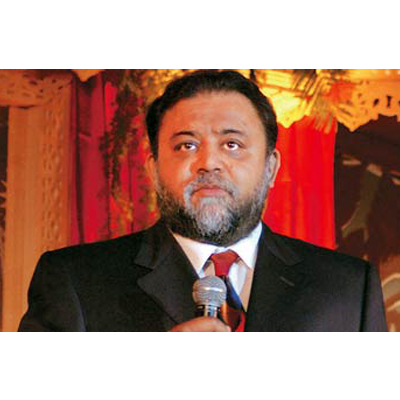
    “The journey of ‘Z’ is inseparable from the story of India’s M&E industry,” says Zee Entertainment chief executive officer Punit Goenka. The company, he argues, has not merely entertained but “empowered” the nation, whilst creating an ecosystem for artists, creators and technicians across television, digital, films and live entertainment. 

    “As pioneers of this robust industry, we at ‘Z’ view this celebration as a stimulus to power ahead
    and create a robust growth path for the future. We remain committed to shaping the entertainment industry in the years to come, by nurturing an ecosystem that enhances creativity and generates opportunities for progressive growth,” emphasises Goenka.

    Zee Punit Goenka

    The self-congratulation is not entirely unwarranted. Zee pioneered culturally rooted, vernacular content at a time when India’s entertainment landscape was dominated by state broadcaster Doordarshan. Its success paved the way for competitors and transformed how Indians consumed media.

    Yet the sector Zee helped create is now fiercely competitive. Streaming platforms have upended traditional television economics, forcing legacy players to adapt or perish. Zee itself has faced turbulence—regulatory scrutiny, a collapsed merger with Sony, and leadership controversies have clouded its recent years.

    The company says  it is “staying ahead of the curve” by entering short-form content and pursuing an “omni-channel approach.” Whether that proves sufficient in an era of Netflix, Amazon Prime and JioStar remains to be seen. But on its 33rd birthday, Zee is at least entitled to remind the industry who opened the door.

  • TRAI issues consultation paper on regulatory framework for ground-based broadcasters

    TRAI issues consultation paper on regulatory framework for ground-based broadcasters

    Mumbai: The Telecom Regulatory Authority of India (TRAI) has issued a consultation paper titled ‘Regulatory framework for ground-based Broadcasters’, inviting input from stakeholders on the need for a regulatory framework to govern ground-based television broadcasting technologies.

    The ministry of information and broadcasting (MIB) has, over the years, issued guidelines for the uplinking and downlinking of satellite television channels in India. These guidelines mandate that broadcasters use satellite-based mediums to provide their channels to distribution platform operators (DPOs). However, advancements in technology have now made it feasible for broadcasters to distribute their content terrestrially. Like satellite-based television, terrestrial broadcasting can also be carried over multiple DPO networks, allowing commercial retransmission to subscribers.

    In light of these technological advancements, there is now a recognised need for a regulatory framework to enable the use of ground-based broadcasting technologies.

    TRAI had earlier forwarded recommendations on the regulation of platform services, including those relevant to ground-based broadcasters, to the MIB in 2014. However, the MIB’s recent communication, dated 22 May 2024, notes that while guidelines on platform services were issued in 2022, the context surrounding TRAI’s 2014 recommendations regarding ground-based broadcasting may have evolved. The MIB has thus requested TRAI to review and issue fresh recommendations under Section 11(1)(a) of the TRAI Act, 1997.

    In response, TRAI is now seeking comments on the newly released consultation paper. Stakeholders are invited to submit their comments by 15 November 2024, with counter-comments due by 29 November 2024. Comments can be submitted electronically to advbcs-2@trai.gov.in and jtadv-bcs@trai.gov.in.

  • Broadcasters huddle up, as 5G roll-out plan gathers pace

    Broadcasters huddle up, as 5G roll-out plan gathers pace

    Mumbai: Just as the industry was gearing up to welcome 2022, the Telecom Regulatory Authority of India (Trai) set the ball rolling on the 5G roll-out in India. The next wave of disruption in the telecom sector is set to hit 13 cities in the first phase: Gurugram, Bengaluru, Kolkata, Mumbai, Chandigarh, Delhi, Jamnagar, Ahmedabad, Chennai, Hyderabad, Lucknow, Pune, and Gandhi Nagar.

    The auctions are likely to be held in mid-2022 following the Telcom department’s request for a recommendation on modalities such as reserve price, band plan, block size, and the quantum of spectrum. But amid all this, the broadcasters’ concerns continue to escalate, with apprehensions regarding a potential spectrum clash with 5G.

    5G Vs Broadcasters

    Airwaves in several bands including 526-698 MHz, 700 MHz, 800MHz, 900 MHz, 1800 MHz, 2100 MHz, 2300 MHz, 2500 MHz, 3300-3670 MHz, and 24.25-28.5 GHz have been identified for 5G auctions in India, whereas downlinks by all broadcasters intended for reception by MSOs are in the band of 3700-4200 MHz as prescribed by the International Telecommunication Union (ITU), and are also governed by the downlink policy by the government. Over 600 licensed satellite channels in India operate in this band.

    Ever since the 5G trials started in India in June 2021, broadcasters who claim to have faced interference on downlink frequencies during that period have been raising the issue with the MIB, DoT, and WPC (Wireless Planning and Coordination Wing of DoT), and the Trai. There are concerns regarding potential interference due to the larger C band allocation to 5G and the limited guard band of 30 MHz between the two services.

    The current upper limit of the National Frequency Allocation Plan 2018 is 3600 MHz. “A guard band of 100 MHz is ideal,” broadcasters say. They further contend that the proposed revision of NFAP-18 to include new bands for 5G use by DOT’s arm WPC may even stretch beyond 3670 MHz to 3800 MHz. This could lead to serious disruption of satellite services for media and broadcast in the 3700-4000 MHz band.

    Prasar Bharati joins the chorus against 5G

    Joining the chorus, Prasar Bharati recently raised objections to the auctioning of the 526-582 MHz frequency band that is being used by Doordarshan for providing terrestrial TV broadcasting. According to media reports, the public broadcaster argued that airwaves in this frequency range are required for expansion and modernisation of its services. Prasar Bharati has told Trai that “availability of spectrum is very crucial for planning DD TV Transmitters. Thus, the decision to use frequency band 470-698 for IMT purpose can be taken only after finalisation of terrestrial TV services by Doordarshan or other private broadcasters.”

    “Many analogue, digital-ready and digital terrestrial TV transmitters are operating in the band. Also, digital-ready transmitters are under installation in the Union Territory of Jammu & Kashmir for which the wireless planning & coordination wing (WPC) has provided for in this band only,” it added.

    Another hurdle on the way: Field trials

    Private broadcasters have also expressed displeasure about field trials of 5G services without notifying the framework – specifically the study of emission and interference on already existing C Band satellite service, non-involvement of incumbent users of the C-band who have been using the satellites for over 30 years in the trials, lack of study on the use of band pass filters at cable headends as well as no consideration of their funding, non-determination of emission safeguards and monitoring architecture for 5G emitting towers, and absence of potential options which can be implemented immediately.  

    As a solution, they have suggested the use of alternative bands for 5G – an option unavailable for C&S services. Based on trial information available with the regulator and DoT, they have further urged the authorised bodies to recommend and publish the specifications for appropriate Band Pass Filters to be used by MSOs, IPTV, and HITs operators per downlink chain for receiving satellite TV signals.

    In order to compensate for the lower availability of C-band transponder capacity, the regulators have been requested to allow broadcasters to use foreign satellites without seeking any clarification from them. Fast track approval for newer compression technologies such as HEVC or H.265 that use lower transponder capacity in comparison to present MPEG4 bandwidth recommendation without any reduction in the quality of the television channels has also been sought. The minimum bandwidth recommended for approval by all regulatory bodies for HEVC is 4Mbps per HD channel and 1.5Mbps per SD channel.

    The television broadcasting and distribution industries in India are facing major disruption under the new tariff regime. Even though they welcome the launch of 5G, which holds great opportunity for the M&E sector in the era of convergence, the smaller players have argued for government intervention in the form of subsidies if they have to move to a higher or alternative frequency.

  • TRAI tightens landing-page norms

    TRAI tightens landing-page norms

    MUMBAI: Distributors of television channels, according to a directive issued by the Telecom Regulatory Authority of India (TRAI), have been restrained from placing any registered satellite television channel whose TV rating is released by a TV rating agency on the boot-up screen or the landing channel.

    Broadcasters and distributors are required to comply with the direction within fifteen days.

    The landing channel or the logical channel number (LCN) is first displayed when the set-top box is switched on. The landing channel, or page, is normally used by the distributor of television channels for providing information to consumers and promotion of its distribution platforms.

    In the recent past, however, a number of representations from stakeholders have been received stating that the landing page has the potential to affect the viewership data of that channel and, therefore, it is susceptible to influence the television audience measurement ratings.

    Placing of a channel on the landing page is the issue relating to interconnectivity between the broadcaster and the distributor of the television channel.

    The regulator, on examination of the issue, reached the conclusion that placement of any registered TV channel, whose rating is released by a TV ratings agency, on the landing page may affect orderly growth of the sector and is against the spirit of the policy guidelines for such agencies.

  • “I may distribute a news channel. I just do not want to run one” : Kunal Dasgupta CEO SET

    “I may distribute a news channel. I just do not want to run one” : Kunal Dasgupta CEO SET

    It’s the festival of lights. And for many the festival of noise courtesy exploding fireworks. In the hope of reducing the number of those belonging to the latter tribe, we, at indiantelevision.com, decided to put a display of firecracker articles for visitors this Diwali. We have had many top journalists reporting, analysing, over the many years of indiantelevision.com’s existence.


    The articles we are presenting are representative of some of the best writing on the business of cable and satellite television and media for which we have gained renown. Read on to get a flavour and taste of indiantelevision.com over the years from some of its finest writers. And have a Happy and Safe Diwali!


    Written By: Thomas Abraham


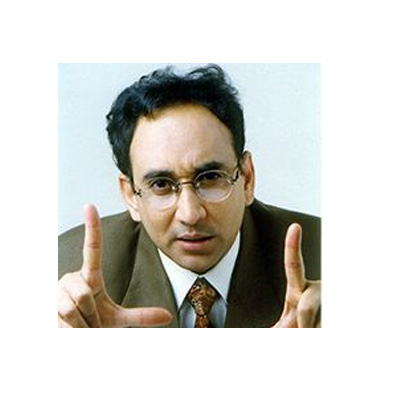
    Sony Entertainment Television has secured the cable and satellite television rights for all ICC-designated One-Day cricket for the next seven years, which includes the next two World Cups. But with a reported $255 million acquisition tab, SET CEO Kunal Dasgupta has his task cut out to profit from it. At a media briefing last Friday, Sony presented the captain of India’s successful World Cup campaign of 1983, Kapil Dev, as its brand ambassador. Dasgupta talks of this and other issues like conditional access, DTH, uplinking from India to indiantelevision.com’s Thomas Abraham.


    What made you plump for Kapil Dev as your brand ambassador?


    The point is, just as Amitabh Bachchan is the icon of movies, Kapil Dev is the icon of cricket and we expect Kapil to do for Sony Entertainment what Bachchan did for Star.


    There is this huge investment of $255 million that has been pumped into getting the rights to ICC-designated One Day cricket tournaments. Recovering that is a tough ask any way you look at it. At least as far as the ICC tourney in September and the World Cup next March, are there any programming initiatives that you have in mind?

    There are a number of them we have lined up but I don’t want to talk about these initiatives at this juncture.


    What about an outline of your overall strategy? 


    First and foremost, we want to take the game beyond the male and offer it as family entertainment. The programming initiatives that we are working on will take cricket beyond the boundary and get the families in. There will certainly be a focus on women in our plans.


    Secondly, we have to generate interest beyond the matches India is playing. And we will have to create devices that provide for that.


    And the ICC rights that we have include under-19 cricket tournaments. There is no interest for this now but we will have to generate it.


    One way is to make the cricketers more media savvy. They will need to be groomed accordingly so as to give the proper sound bytes at the proper time. Tiger Woods is not just a sporting success story but a marketing one as well and this has been achieved by a great deal of coaching on how he conducts himself.


    Now that you have acquired this massive cricket property, have you thought of an IPO. Would this not be a good time to raise funds from the market?
    My board doesn’t think so.


    “The big question is, will the law make it mandatory to declare the subscriber management systems, which are in the hands of the cable operators? How do you control this is a big worry?”


    The big debate currently is around the government’s determination to introduce conditional access systems in the country. What is your stand on this?
    Well I would have to see how it is implemented. My principal concern is that there should not be a disruption of services which is something I am sure the government would ensure when CAS is introduced.


    The Cable TV Networks (Regulation) Amendment Bill, 2002 is almost certain to get cleared in the next session of Parliament in July. How long do you think the first phase of the rollout in the four metros will take? 

    It should take about a year or so at the very least, I would think.


    What will happen to DTH in this scenario? The whole concept of having tiers means that high-end services can be offered to consumers which would incorporate interactivity and other options like pay-per-view. Would this not make the DTH option a non starter?


    The introduction of CAS as is visualised would in fact speed up the entry of DTH. If the customer has any way to invest in a set top to access channels, the quality of service that DTH provides would make it quite a feasible option if the price is right. It should be noted that in India what we are talking about as far as CAS is concerned is an analog service. To digitise, massive investment is needed for cable TV headend upgradation as well as line upgradation. What we are looking at is costs of up to Rs 50,000 crores (Rs 500 billion). At the moment, it is only Reliance that is doing this kind of cabling.


    The introduction of CAS would certainly alter the dynamics of the business. What sort of scenarios do you visualise?


    Bundling of packages will certainly be there. It will ultimately boil down to who offers the best package. There will be possibilities of a number of currently rival networks like Sony, Star and Zee for instance coming together and offering a shared bundle. India is a unique market. Ultimately, market forces will settle the issue.


    What other options are there available to the broadcaster?


    One possibility is to supply boxes directly to the consumer. That way we bypass the cable operator altogether by entering into a direct relationship with the consumer.


    If you are talking packages, then strong bouquets will still be important. Have you earmarked any candidates for joining “The One Alliance” (what the addition of the Discovery and Animal Planet channels to the Sony Entertainment bouquet of SET, MAX, AXN and CNBC India is called)?
    An English movie channel is top of our wish list. Music and niche channels are our other options.


    “We will be continuously introducing new shows but they will be short duration series. The days of the long-running serial are numbered”

    _________

    (Inset) A 1983 file picture of Kapil Dev with the Prudential World Cup trophy.


    How many new channels can we expect on the platform by the end of the year?


    Ask me on 20 June.


    What about a news channel? There is a lot of buzz that a news channel is also on your list.


    As long as I am CEO, a news channel will not happen. We do not want to get into issues of editorial management as that would involve taking sides on issues. The issue we have with running a news channel is that we prefer to remain neutral. We have a lot of products that we promote in India besides our channels. There is the movie business, music and electronics goods that we have as well, so that is the position that we are comfortable with.


    That is not to say I cannot have a news channel on my platform. I can certainly distribute a channel. I just do not want to run one.


    Now that the government has liberalised uplinking, there is talk that broadcasters who uplink abroad will be looking at transferring operations to India so as to bring in new avenues for advertising. Is Sony considering such an option?


    Not for the near term at least. If at some later date, we feel there are clear advantages to be derived, then we would have to reassess the situation.


    What of programming? Is there anything new happening on Sony?


    We will be introducing a new blockbuster series slotted for the weekend prime time. The weekend has been associated with blockbuster movies. Now we are working on a blockbuster series that will run for 39 episodes. With it, we expect to carve out the weekend prime time slot.


    Balaji has said it is readying a 39-part weekend series that is going on air within the next two months, slated to run as a one-hour show on Fridays, Saturdays and Sundays. And the talk is that you are doing a big new show with Balaji. Is this that show?
    Yes it is.


    Still, it is the weekday programming that ultimately decides the success of a channel. What have you lined up for the weekdays?


    We will be continuously introducing new shows but they will be short duration series. The days of the long-running serial are numbered.


    Do you have any big ticket shows lined up?


    One show we are seriously looking at is a game show called Russian Roulette.


    From whom are you acquiring the rights?


    It is a Columbia Tristar property.


    (Russian Roulette, produced by Columbia TriStar Domestic Television [CTDT], is a game of chance where every question could cause a contestant to literally “drop out” of the game and has been a hit in countries as wide apart as Russia and Spain. In this knowledge test, four strangers challenge each other to answer a series of multiple-choice questions. If a contestant answers incorrectly, he must pull the lever potentially triggering one or more “drop zones”. When only one contestant is left standing, that person keeps all of the money won and proceeds to the final round. In the US version, the final winner takes home an additional $100,000.)


    What about Shubh Vivaah (Sony’s blockbuster marriage reality show)? When do you see it finally launching?


    There is a hearing scheduled for 8 July. After that, we will know for certain.


    But I thought the issue was settled. Didn’t the Delhi high court ruling (of 3 March) state that Taal (which went to court over claimed copyright violation) gets a lead time of two months if its own show Swayamvar launches on or before 30 June, otherwise Sony would be free to launch Shubh Vivaah?


    Well, Taal went in appeal of that ruling. So the judge has put 8 July as the date for final hearing of the case. Basically, Taal is only employing delaying tactics. In any case, we expect to have the show out in the next few months.

  • MIB gets BSI’s ISO certification for Quality Management Systems

    MIB gets BSI’s ISO certification for Quality Management Systems

    NEW DELHI: The Information and Broadcasting Ministry (I&B) has been conferred the certificate of registration by the British Standard Institute (BSI) for the Quality Management System as required under ISO 9001:2008 in respect of various permissions / licenses issued by the Ministry for the broadcasting, print and films sectors.


    These include permission / license for satellite television channels, teleports, multi-system operators, community radio stations, direct-to-home services, publication of Indian editions of foreign, technical and scientific foreign magazines of news and current affairs sector and facsimile edition of foreign newspapers and grant of permission for foreign film producers. 

    The Ministry has been taking several initiatives to bring in more transparency and efficiency in the processes relating to grant of various permissions / licenses to the eligible applicants.


    The Ministry has put in place a well defined procedure and measures for ensuring quality of services offered to the customers on the basis of ISO 9001:2008. This will ensure delivery of services by the Ministry in a qualitative manner.  

  • Delhi High Court issues injunction to cable operators on unauthorised telecast of India-South Africa cricket series

    Delhi High Court issues injunction to cable operators on unauthorised telecast of India-South Africa cricket series

    MUMBAI: The Delhi High Court has ruled in favour of ESPN Star Sports, the official broadcaster of the India-South Africa Series, in its suit for permanent injunction filed against 66 cable operators across the country against unauthorised broadcast of the India-South Africa Series, restraining all the cable operators from unauthorisedly showing India-South Africa Series through their cable networks.

    The channel has the exclusive right to broadcast the feeds of the international cricket matches being played by India against South Africa in South Africa by terrestrial television, cable television and / or satellite television in the countries of Bangladesh, Bhutan, India, Maldives, Nepal, Pakistan and Sri Lanka, asserts an official release.

    After this order anyone still showing India-South Africa series through any unauthorised means or any other channel will be held in contempt of court and liable for prosecution. The Delhi High Court has also permitted ESPN to take action against all other cable operators not parties to the suit who are found to be unauthorisedly utilising the feed of ESPN and Star Sport without license.

    Elaborating on this, ESPN Software India Pvt Ltd chief operating officer Vijay Rajput said, “Carriage, reception or distribution of the India-South Africa series by any MSO, cable operator, sub-operator without written authorisation from ESPN Star Sports is a violation of Copyright Act, 1957 and hence an illegal activity.”

    “Also, no other channel, whether pay, free to air or terrestrial is authorised to provide, show or distribute the India-South Africa series in the territory of India. Also strict and legal action will be taken against the operators who violate the court orders. Post the order; police raids have already been started,” he added.

    The 66 cable operators restrained from the unauthorised telecast are from Tamil Nadu, Andhra Pradesh, Jharkand, Bihar, Maharashtra, Gujarat, Assam, Karnataka, Kerala, Chattisgarh, West Bengal, Bihar, Himachal Pradesh and Punjab.

    ESPN Star Sports will be broadcasting the ODI series in both English as well as Hindi feed. ESPN will telecast the series in English with ESPN’s a Few Good Men, Sunil Gavaskar, Harsha Bhogle, Allan Wilkins, Ravi Shastri and Wasim Akram joined in by South African Pat Symcox.

    The Hindi programming for the series on Star Sports will be spearheaded by Indian TV artist, Shekhar Suman and supported by Syed Kirmani, Wasim Akram, Arun Lal, Maninder Singh and Zaheer Abbas. The sports broadcaster has introduced special production and programming initiatives Planet Cricket, Cricket Crazy and Full Toss for the Indian audiences for the telecast of the series, adds the release.

  • China Mobile, Star TV in wireless music service tie-up

    China Mobile, Star TV in wireless music service tie-up

    MUMBAI: Star TV, has agreed to provide Chinese music content to China Mobile,asserts an official release.
    According to the statement, China Mobile will offer Channel V Chinese original music on its wireless service platform, which will permit interactive voting for the music programs as well as downloads.

    It is the first project since two companies announced a strategic partnership in June, adds the release.

    China Mobile is a mobile operator headquartered in Hong Kong and operating in the mainland China. The company provides various voice-related services and virtual private mobile network services to its corporate customers.

    Satellite Television for the Asian Region (Star Tv) is an Asian TV service owned by News Corporation. It is based in Hong Kong, with programming offices in India and Australia,and other Asian countries.

  • Subhash Chandra to address Bombay Chamber

    Subhash Chandra to address Bombay Chamber

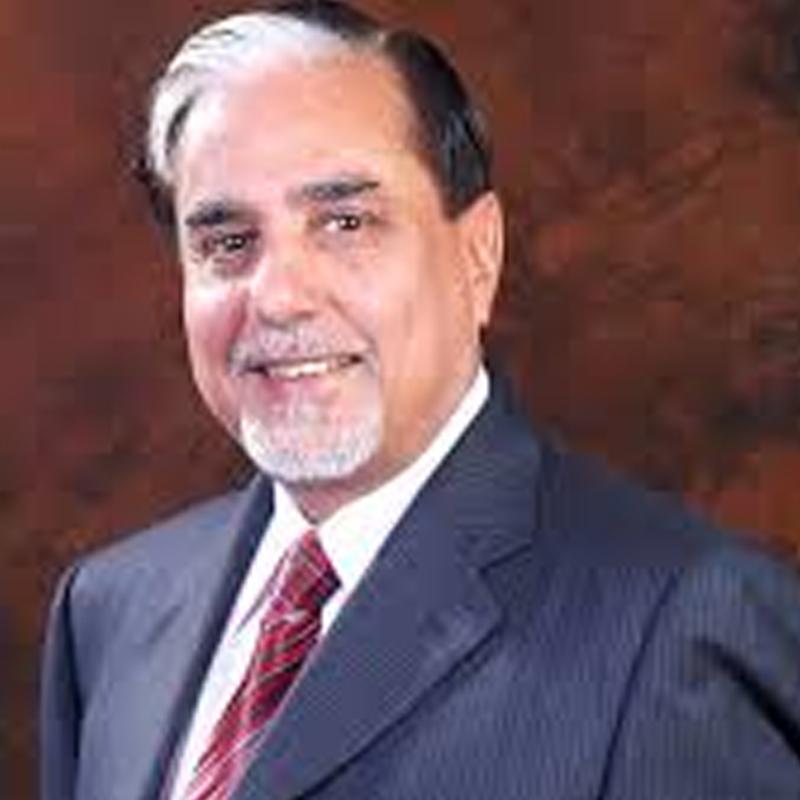
    MUMBAI: Essel Group of Industries chairman Subhash Chandra Goel will address the Bombay Chamber’s Managing Committee members on 10 October. The topic that he will throw light on through his own experiences and insights is ‘Leadership in Media and Entertainment Business’.

    Subhash Chandra is a business leader, also known as the media Czar, the founder chairman of Essel Group of Industries having a market capitalisation of approx US $1.7 billion. The Essel Group of Industries is into diversified businesses like, entertainment parks, satellite television, cable TV distribution, movie production, multiplexes, education, animation, publishing, packaging, satellite and latest online Lottery.

    His distinguished audiences will include leading corporate honchos and business tycoons, informs an official release.

    This talk is the part of the series of meetings planned by the Bombay Chamber with the aim of bettering the business environment and to equip its established members to conquer newer heights.