Tag: Satellite Communication

  • International Conference of Telecom Regulators begins in New Delhi

    International Conference of Telecom Regulators begins in New Delhi

    Mumbai: Minister of state for communications, Chandra Sekhar Pemmasani inaugurates the International Conference of Telecom Regulators, setting the stage for pivotal discussions on the future of telecom regulation. The one-day conference, organised by the Telecom Regulatory Authority of India (TRAI), takes place alongside the ITU World Telecom Standardisation Assembly (WTSA-24) and India Mobile Congress (IMC-24), bringing together global industry leaders, policymakers, and technology partners in New Delhi.  

    Pemmasani emphasises the rapid growth of India’s ICT sector, particularly the swift deployment of 5G services and the widespread adoption of digital technologies. “The growth of the digital economy and a favourable regulatory environment have played significant roles in this transformation,” he states.  

    The event also features remarks from prominent industry figures, including International Telecommunication Union (ITU), secretary-general, Doreen Bogdan-Martin and GSMA, director-general, Mats Granryd. TRAI chairman Anil Kumar Lahoti notes TRAI’s active participation in global telecom forums such as ITU and regional organisations like APT, SATRC, and ASEAN.  

    In a message read by TRAI secretary Atul K. Chaudhary, minister of communications Jyotiraditya Scindia highlights the role of regulators in protecting consumer interests while adapting to evolving technologies. He urges regulators to “craft frameworks for OTT communication” and explore the potential of non-terrestrial networks (NTNs) in expanding communication capabilities to support the United Nations Sustainable Development Goals (UN SDGs).  

    The conference focuses on “Emerging Trends in Regulation,” covering critical topics such as regulatory perspectives in standardisation, satellite communication, and OTT communication services.  
  • Communication facilities increased with 7 satellites in last 3 years

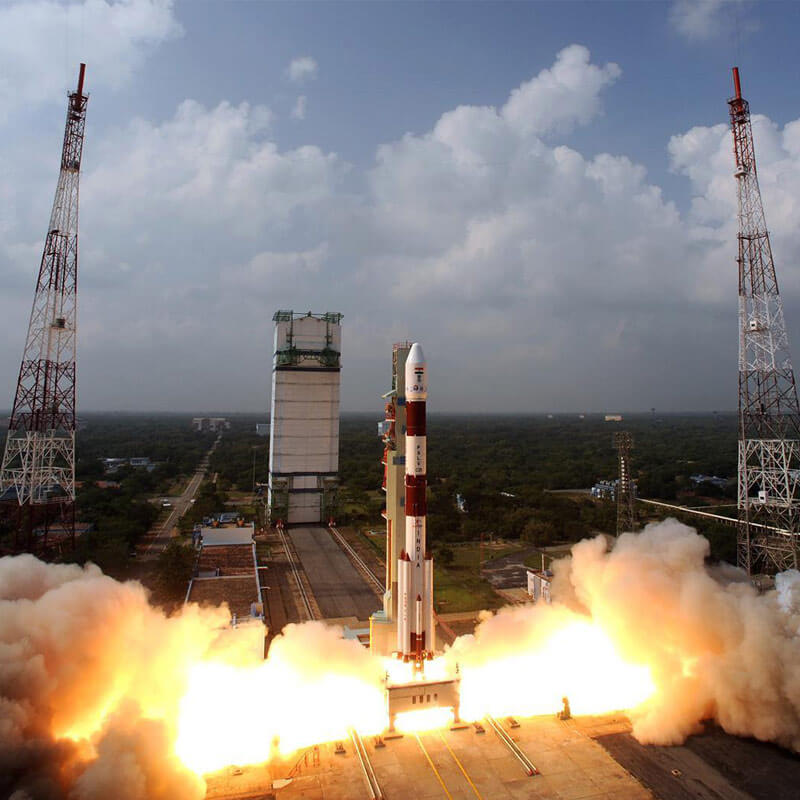
    NEW DELHI: Satellite Communication capability was augmented with seven more satellites in the last three years with GSAT-6, GSAT-9, GSAT-15, GSAT-16, GSAT-17, GSAT-18, and GSAT-19.

    Another major achievement since June 2014 has been the realisation of South Asia Satellite to enable South Asian countries to establish SATCOM based services such as Television/DTH, VSAT, e-governance, banking, tele-medicine & tele-education etc., with coverage over South Asia.

    The Parliament was told by the minister of state in the department of space Dr Jitendra Singh that the Indian Space Research Organisation (ISRO) had accomplished 41 missions, which includes 19 launch vehicle missions, 19 satellite missions and three technology demonstrator missions.

    A notable achievement has been the successful launch of the first developmental flight of GSLV-MkIII, which validated new version of Indigenous Cryogenic Engine. With this capability, it will be possible to launch upto 4-tonne class of communication satellites into Geosynchronous Transfer Orbits (GTO).

    ISRO has successfully enabled a host of applications using synergy of earth observation, communication and navigation satellites in governance and development.

    India has created a niche in the field of space science & technology with launch services, earth observation, communication & navigation and application of space technology for national development.

    Today, India stands one among the top six space faring nations in the world, the Minister said.

    The areas which are benefitted/ likely to be benefitted with the utilization of space technology and its applications include broadcasting and telecommunications.

    Also Read :

    India’s GSAT-17 communication satellite launched successfully

    32 free DTH educational channels on Dish TV & FreeDish start functioning

    GSAT 17 to be inducted into INSAT/GSAT system after tests

    Transponder leasing yields Rs 7.5 bn for communication satellites


  • Satellite Communication among various studies by ISRO and Japanese JAXA

    Satellite Communication among various studies by ISRO and Japanese JAXA

    NEW DELHI: Indian Space Research Organisation (ISRO) and the Japanese Aerospace Exploration Agency (JAXA) are to jointly collaborate in the exploration and use of outer space exclusively for peaceful purposes in accordance with the laws and regulations applicable in each country and their international obligations.

    A memorandum of understanding was signed between the two agencies in Tokyo and the Cabinet chaired by the Prime Minister Narendra Modi was apprised of this.

    This MoU provides scope for pursuing cooperation in various areas of space science technology and applications including: eearth observation, satellite communication and navigation; exploration and space sciences; Research and development (space systems and space technology); and Space industry promotion.

    ISRO and JAXA will bear the costs of their respective activities under this Memorandum, unless they decide otherwise in writing. Ability to fulfil their respective roles and activities under this Memorandum and its relevant separate Implementation Arrangement is subject to their respective funding procedures, the availability of appropriated funds and their respective national laws.

    Framework MoU would lead to joint activity in the field of application of space technologies for the benefit of humanity. Thus all sections and regions of the country will get benefited.

    India and Japan have been pursuing space cooperation for more than five decades and carried out studies in the field of atmospheric study, observation of universe and scientific investigation in remote sensing. With the formation of JAXA in 2003, an “arrangement concerning the considerations of potential future cooperation in the field of outer space” was signed in October 2005 between ISRO/ Department of Space (DOS) and JAXA.

    Subsequently both agencies have signed cooperative documents addressing lunar exploration, satellite navigation, X-ray astronomy and Asia Pacific Regional Space Agency Forum (APRSAF).

    During the ISRO-JAXA bilateral meeting held at New Delhi on April 05, 2016, both sides stressed the need for updating the contents of ‘2005 Arrangement’ with enhanced scope of cooperation. Accordingly, both sides have arrived at the draft of new ‘Memorandum of Understanding (MoU) between ISRO and JAXA concerning cooperation in the field of outer space’ and got it signed on November 11, 2016 at Tokyo during the visit of Prime Minister of India to Japan.

  • Satellite Communication among various studies by ISRO and Japanese JAXA

    Satellite Communication among various studies by ISRO and Japanese JAXA

    NEW DELHI: Indian Space Research Organisation (ISRO) and the Japanese Aerospace Exploration Agency (JAXA) are to jointly collaborate in the exploration and use of outer space exclusively for peaceful purposes in accordance with the laws and regulations applicable in each country and their international obligations.

    A memorandum of understanding was signed between the two agencies in Tokyo and the Cabinet chaired by the Prime Minister Narendra Modi was apprised of this.

    This MoU provides scope for pursuing cooperation in various areas of space science technology and applications including: eearth observation, satellite communication and navigation; exploration and space sciences; Research and development (space systems and space technology); and Space industry promotion.

    ISRO and JAXA will bear the costs of their respective activities under this Memorandum, unless they decide otherwise in writing. Ability to fulfil their respective roles and activities under this Memorandum and its relevant separate Implementation Arrangement is subject to their respective funding procedures, the availability of appropriated funds and their respective national laws.

    Framework MoU would lead to joint activity in the field of application of space technologies for the benefit of humanity. Thus all sections and regions of the country will get benefited.

    India and Japan have been pursuing space cooperation for more than five decades and carried out studies in the field of atmospheric study, observation of universe and scientific investigation in remote sensing. With the formation of JAXA in 2003, an “arrangement concerning the considerations of potential future cooperation in the field of outer space” was signed in October 2005 between ISRO/ Department of Space (DOS) and JAXA.

    Subsequently both agencies have signed cooperative documents addressing lunar exploration, satellite navigation, X-ray astronomy and Asia Pacific Regional Space Agency Forum (APRSAF).

    During the ISRO-JAXA bilateral meeting held at New Delhi on April 05, 2016, both sides stressed the need for updating the contents of ‘2005 Arrangement’ with enhanced scope of cooperation. Accordingly, both sides have arrived at the draft of new ‘Memorandum of Understanding (MoU) between ISRO and JAXA concerning cooperation in the field of outer space’ and got it signed on November 11, 2016 at Tokyo during the visit of Prime Minister of India to Japan.