Tag: satellite broadcasting

  • TRAI issues recommendations for ground-based broadcasting

    TRAI issues recommendations for ground-based broadcasting

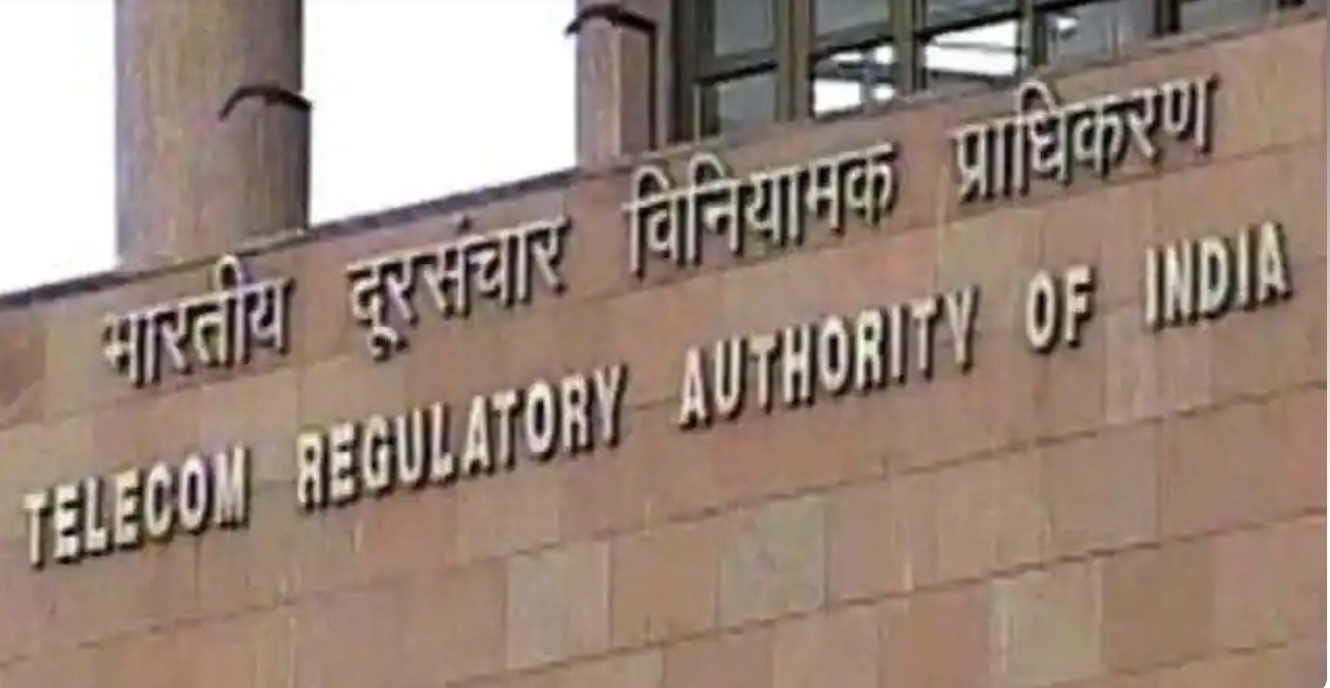
    MUMBAI: India has far been a cable and satellite TV country, apart from the single government-owned pubcaster Doordarshan which is the sole terrestrial network. That could likely change if one goes by the recommendations which the Telecom Regulatory Authority of India (TRAI) has come up with for ground based broadcasting (GBB). The recommendation are aimed at establishing a regulatory framework for GBBs in India. They focus on defining operational parameters and facilitating the use of terrestrial communication mediums by broadcasters.

    The key highlights of the TRAI recommendations are:

    * Definitions: The authority has clarified key terms such as “broadcaster,” “ground-based broadcasting,” and “terrestrial communication medium” to reflect updated practices in the industry, distinguishing between satellite-based and ground-based broadcasting.
    Regulatory Framework: TRAI recommends creating a framework for GBBs that aligns with existing guidelines for satellite broadcasters but excludes satellite-specific regulations. Ground-based broadcasters will not require authorisation from In-Space for frequency assignments but must secure other necessary clearances.
    * Delivery Mechanism: GBBs will provide channels to distribution platform operators (DPOs) using various terrestrial technologies, gaining the flexibility to utilise multiple systems as per their business strategies.
    * . Fee Structure: An annual authorisation fee of Rs seven  lakh per channel for GBBs has been proposed.
    *  Operational Areas: The service area for GBBs will be national, ensuring broad reach across the country.
    * Channel Migration Options: GBBs wishing to switch to or adopt satellite communication for their channels, and satellite broadcasters (SBBs) looking to embrace terrestrial methods, may do so with prior government approval while maintaining existing permission validity.
    * Compliance and Reporting: GBBs must report the primary language and sub-genre of their channels at the time of application, which will be displayed on the Broadcast Seva portal to assist in electronic programming guide (EPG) arrangement.
    * Examination of FAST Channels: TRAI recommends that the MIB assess the compliance of free ad-supported streaming television (FAST) channels with existing guidelines and develop policies as needed.
     

    These recommendations aim to enhance the operational landscape for broadcasters in India, promoting the effective use of emerging technologies while ensuring compliance with regulatory standards.
     

  • Broadcasters feel need for diversifying TV content, want level-playing field for growth

    Broadcasters feel need for diversifying TV content, want level-playing field for growth

    NEW DELHI: Mobile TV is going to be popular but there is a need to address compatibility issues by using a single chip on the hand held device. That is what was stressed in the `International Conference on Multifaceted Broadcasting – Present and Future’ held as part of the BES Expo 2007 – the 13th Exhibition on Terrestrial and Satellite Broadcasting.

    Speaking on the last day, speakers – including LD Mandloi of Doordarshan, Brajeshwar Singh of All India Radio, Ashok Ogra of Discovery channel, and retired Prasar Bharati official MP Lele – admitted that there was need to diversify content on TV and mobile TV but said viewership appeared to be driven by some accepted formats.

    However, this made niche channels like Discovery and National Geographic very important. They also agreed that the content on news channels was driven only by sensationalism.

    Referring to some government actions like banning of the AXN channel while letting Fashion TV to continue its telecasts, they felt there was need for a level-playing field for growth of the media.

    The three-day event – inaugurated on 1 February by information and broadcasting minister Priya Ranjan Dasmunsi at Pragati Maidan, was organized by Broadcast Engineering Society (India). It was approved by the Union government and endorsed by International Association of Broadcasting Equipment Manufacturers (IABM), and supported by Prasar Bharati (AIR and Doordarshan), Unesco, Asia Pacific Broadcasting Union (ABU), DIT and IGNOU.

    Speakers said IP-based delivery systems – DVB-IP and IPTV for television and DAB-IP for radio – were going to be very popular. Mobile TV on the Hand held devices is already here.

    Keeping in view the large rate of growth of mobile cells in the country, Mobile TV was going to be very popular. Some speakers stressed the need to bring provisions of Emergency Warning Broadcast Systems (EWBS).

    It was accepted that there was a marked shift in the consumer behaviour pattern, with people wanting ‘any time anywhere interactive access’ which can be achieved only by the convergence of broadcasting, wireless and mobile technology. The consumer will decide the primetime and the platform.

    Some of the speakers stressed the need to permit private players to set up Community Radio stations instead of keeping this low-cost technology confined to some niche institutions.
    Digital Radio and High Definition TV (HDTV), which provide much better quality, were going to be introduced in the country in the very near future.

    Around 40 speakers from India and abroad explained the latest technological development in areas like Mobile TV- Anytime Anywhere, Digital Radio – emerging scenario, Role of broadcasting in Warning and Disaster Management, Digital media life cycle, Content creation – cutting edge technology, interactive broadcasting, broadcasting in India: Challenges ahead, and assuring audio and video quality.

    Sixty-five exhibitors from India and abroad displayed the latest broadcast equipment systems and services in the field of radio, television, satellite, internet and interactive broadcasting.