Tag: satellite broadband

  • Nxtdigital, Thaicom ink strategic partnership to deploy satellite broadband services in India

    Nxtdigital, Thaicom ink strategic partnership to deploy satellite broadband services in India

    Mumbai: Nxtdigital and Thaicom have signed a deal to form a strategic partnership to enter broadband-over-satellite (BoS) market and related services in India.

    The two companies have signed a binding Memorandum of Understanding (MoU).

    The partnership includes deployment of BoS systems on India-focused capacity, which could be enhanced to provide future additional capacity on a state-of-art software define high throughput satellite; augmenting the existing IPSTAR-1 which is the first broadband satellite in the world and operational over India for several years.

    Thaicom and Nxtdigital will look to provide BoS services immediately in IPSTAR-1 focusing mainly on the rural footprint in India, comprising 60 per cent of Nxtdigital customers through the only HITS (headend-in-the-sky) platform in India.

    “The BoS service will focus on providing cost-effective and quality broadband and will give a tremendous boost to delivering education, information, entertainment, health and other services to these markets,” said the statement.

    The details of partnership elements are being discussed and will be documented in definitive agreements between Thaicom and Nxtdigital.

    “We are delighted to ink this MoU with Nxtdigital, which is easily one of the best digital platforms groups in India,” said Thaicom Public Company chief executive officer Patompob Suwansiri. “With our global satellite experience spanning nearly three decades and Nxtdigital’s distribution expertise, vast footprint and broadband penetration – we believe that together, we are best suited to delivering broadband over satellite and related services to India, not just at a high level of quality of service, but also cost-effectively. Our engagement and investments reflect our commitment to India, where we have had a presence since 2002, offering broadband over satellite since then.”

    “We have always taken our commitment to the government’s digital India mission very seriously,” said Nxtdigital managing director and CEO Vynsley Fernandes. “With HITS, we now cover over 4,500 pin codes across India with a significant presence in not just rural India but also areas where terrain poses challenges to connectivity. Through this engagement with Thaicom, a global leader in satellite technology, we will look to facilitate digital inclusion across education, healthcare, information & entertainment – by extending satellite-based broadband connectivity and services to our customers there and also to the underserved and other poorly connected markets.”

    The two companies will also develop and offer digital solutions for the government that Thaicom has already developed and deployed elsewhere in the world including satellite artificial intelligence solutions comprising space-based data technologies for agriculture, disaster relief & natural resource management public WIFI systems and drones for augmenting rural digital solutions.

    “With India’s significant dependence on agriculture and the incumbent challenges of crop management – the satellite-based AI will help by providing mission-critical data on tap,” said the statement.

    Both companies will also set up a Centre for Excellence to develop new satellite and related digital-based technologies through artificial intelligence and analytics – leveraging deep-tech research and development.

  • HCIPL, Airtel announce JV to provide satellite broadband in India

    HCIPL, Airtel announce JV to provide satellite broadband in India

    Mumbai: Hughes Communications India Pvt Ltd (HCIPL) and Bharti Airtel have announced the formation of a joint venture to provide satellite broadband services in India.

    The new entity operational as HCIPL combines the very small aperture terminal (VSAT) businesses of both companies to offer flexible and scalable enterprise network solutions using satellite connectivity for primary transport, back-up, and hybrid implementation. Now serving Airtel VSAT customers, HCIPL has a combined base of over 200,000 VSATs and is the largest satellite service operator in the country.

    The agreement, announced in May 2019, has received all statutory approvals, including those from the National Company Law Tribunal (NCLT) and Department of Telecom (Government of India) and the joint venture has been formed.

    “We are pleased to commence this joint venture, further delivering on our commitment to serving the growing demand for always on, always available network connectivity for enterprise and government customers,” said HCIPL president and managing director Partho Banerjee. “Combining the proven capabilities of both Hughes and Airtel, the partnership will bring synergies to the forefront – including multi-orbit solutions – for the benefit of customers across the length and breadth of India.”

    “We, at Airtel, are focused on supporting and accelerating the digital transformation journeys of our customers through an integrated solutions portfolio,” said Airtel Business director and chief executive officer Ajay Chitkara. “With the combined capabilities of Airtel and Hughes, customers will get access to next-generation satellite connectivity backed by proven enterprise-grade security and service support.”

  • Starlink India country director Sanjay Bhargava steps down

    Starlink India country director Sanjay Bhargava steps down

    Mumbai: Sanjay Bhargava has stepped down as country director and chairman of the board of satellite broadband company Starlink India. His last working day was 31 December 2021.

    The announcement was made on LinkedIn where he posted, “I have stepped down as country director and chairman of the board of Starlink India for personal reasons… my last working day was December 31, 2021. I will have no comments for individuals and media so please respect my privacy.”

    Starlink is a division of aerospace company SpaceX led by billionaire Elon Musk. The company announced that it would launch its services in India by 2022 pending regulatory approvals.

    Bhargava’s resignation comes weeks after the Department of Telecommunications (DoT) ordered the company to refund the deposits it had collected from Indian customers who had pre-booked a connection. It stated that Starlink was not licensed to offer satellite-based internet services in India and advised consumers to refrain from subscribing to its services until it was granted the requisite permissions.

  • HITS combines flexibility of DTH and reliability of cable: NXT Digital CEO Vynsley Fernandes

    HITS combines flexibility of DTH and reliability of cable: NXT Digital CEO Vynsley Fernandes

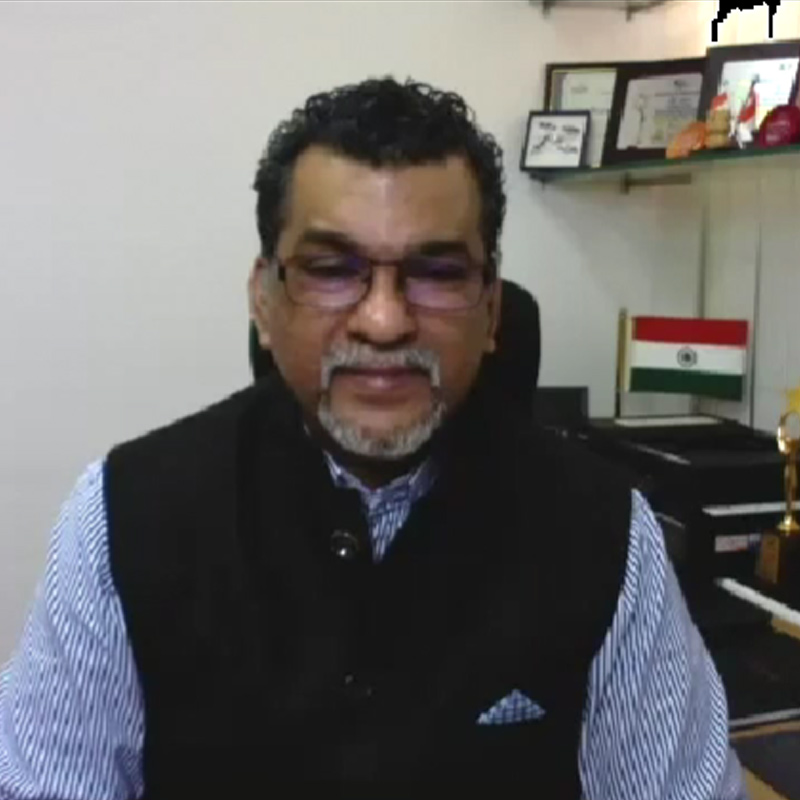
    Mumbai: Headend-in-the-sky (HITS) combined the flexibility and quality of direct-to-home (DTH) services and the reliability and pricing of cable television, said NXT Digital managing director and chief executive officer Vynsley Fernandes on Wednesday. NXT Digital is the only HITS operator in India and Fernandes is bullish on the prospects of video and broadband aggregation using HITS technology.

    In a conversation with Media Partners Asia co-founder and senior partner Vivek Couto at the Apos India summit on Wednesday, Fernandes spoke about structural developments in the TV distribution ecosystem, pricing parity for consumers, satellite broadband policy and more.

    Cable TV has been around since 1995 and the Hinduja Group introduced HITS to India in 2015. The way HITS technology works is that channels are aggregated at an Earth Station, uplinked to a satellite and instead of being downlinked directly to the customers, like DTH, they are received by cable operators via a refrigerator-sized unit and redistributed to customers, explained Fernandes. HITS allows local cable operators to digitise overnight in remote markets such as Lakshadweep, Andaman and Kargil.

    HITS is a capex light model. Post pandemic, there were last mile owners who wanted to be relevant and grow. The challenge was investing in the back-end and connecting to consumers. Fernandes said, “We already have access to 4400 pin codes and we’ve launched 40 NXT Hubs across the country. These NXT Hubs are owned and operated by us and are future-ready. Any last mile owner within 150 square feet can approach a NXT Hub and offer 650 TV channels and broadband speeds of 100 mbps overnight. It empowers the last mile owner to become a digital services provider. By the end of this financial year (March 2022) we will have 100 such NXT Hubs across the country.”

    “Last year, cyclones hit India and MSO fibre got damaged. They had the option to lay fibre but that would take a couple of months or move to another platform. We thought, what if they used our infrastructure to go digital? So, we approached the ministry and shared this idea. Credit to the ministry of information and broadcasting, literally in a few months by November 2020 it was promulgating infrastructure sharing for HITS with MSOs,” he added.

    Speaking about structural developments in the content distribution ecosystem, Fernandes said, “There are two things happening that are changing the structural makeup of distribution in terms of consumption – NTO 1.0 which is bringing parity and transparency and the pandemic.”

    “Post-pandemic, OTT platforms have realised that they can be more relevant to customers as part of an aggregated offering rather than as a standalone service,” observed Fernandes. “In metros where broadband speeds are 100 mbps and above, in towns and smaller markets, people want the same product but in smaller bundles or what we call ‘skinny bundles’. These customers have broadband speeds of 10mbps and their main consumption is not entertainment but access to e-medicine or e-education.”

    In terms of how much a consumer is willing to pay for content, Vynsley noted, “The actual prices differ widely across the country. There are markets where consumers average revenue per user (ARPU) is under $3, content cost is $2-3. In these markets, there’s not much offtake in terms of paid OTT services, instead consumers access YouTube and other freemium platforms. If you move to cities, the pricing is $300 (Rs 28,000-30,000) for an annual subscription. This is a significant opportunity for multi-system operators for flexi-play.”

    Fernandes is of the view that HITS will increase revenues for the entire ecosystem. “Today, a lot of MSOs look at certain markets as not viable because the cost of connectivity is still significant,” he said. “That’s why infrastructure sharing will benefit MSOs and broadcasters. MSO will share capacity and be able to deliver value to customers and better quality of service, while broadcasters will improve their bottom lines.”

    In Q1, NXT Digital reported five million video subscribers and one million broadband users growing at 7-10 per cent year-on-year. “There is a 30 per cent overlap between our video and broadband user base,” said Fernandes. “That means a quarter of a million customers are consuming both linear/digital products. There is a runway to grow that base to a healthy 50-60 per cent and that’s our target vision for the business. We’ve just launched our OTT product and are looking at bundled ARPUs. Linear TV ARPUs are currently at Rs 300 and OTT delivers higher ARPUs for us. It doesn’t concern me too much which part of revenue delivers but our offering should reach every demographic in the country.”

    During the pandemic, the government couldn’t reach out of several million people who resided in areas where connectivity was patchy. It was prompted to launch e-agriculture and e-medicine services and Telecom Regulatory Authority of India (Trai) has released recommendations on satellite-based connectivity for low bit rate applications. “The government is working on a clear plan and sees the tremendous need for broadband over satellite,” noted Fernandes.

    “Satellite broadband is a clear parallel to HITS which was needed to deliver video in markets that could not be serviced by terrestrial networks,” said Fernandes. “Broadband serves the same void by catering to markets that cannot be serviced by terrestrial fibre. Today, a broadband over satellite provider needs four things – reach and footprint, a company with experience working with satellite, regulatory knowledge and ability to work with industry stakeholders.”

  • Eutelsat and ViaSat ink JV to expand satellite broadband in Europe

    Eutelsat and ViaSat ink JV to expand satellite broadband in Europe

    MUMBAI: Eutelsat Communications and ViaSat Inc have inked a joint venture agreement to expand satellite broadband in Europe.

    The JV will see Eutelsat’s current European broadband business combining with ViaSat’s broadband technologies and consumer Internet Service Provider (ISP) business expertise.

    Building on a decade-long relationship, Eutelsat and ViaSat are joining forces to create a partnership that will expand Eutelsat’s current wholesale broadband business and launch a new consumer retail service in Europe.

    The joint venture will initially leverage KA-SAT, Eutelsat’s high capacity broadband satellite.

    Eutelsat chairman and CEO Michel de Rosen said: “With KA-SAT, our unique dedicated High Throughput Satellite, Eutelsat has built an effective, high-quality, broadband platform for Europe in which ViaSat has played a key role as technical partner. Broadband is an important component of our strategy, and we seek to partner with market-leading companies that contribute to enriching our offer. ViaSat is a partner that we both trust and value for its track record in setting industry standards and developing technologies that unlock broadband opportunities. Our joint venture will take our relationship to a new level and give further impetus to affordable, high-quality Internet services in Europe.”

    ViaSat chairman and CEO Mark Dankberg added, “Eutelsat is the clear leader in the European broadband market and is an obvious partner in extending our global reach. We have worked together for more than a decade – creating the satellite broadband market and sharing a vision for the future of satellite broadband. We complement each other extremely well. We offer a powerful team to close the digital divide in Europe today and well into the future. The joint venture combines an unprecedented collection of expertise in satellite operations and technology, broadband networks, and wholesale and retail distribution throughout Europe that forms the foundation for next-generation internet services. We’re excited to be working with Eutelsat to bring a proven model to the European and Mediterranean markets.”

    Since KA-SAT entered service in 2011, Eutelsat has capitalised on its high capacity satellite platform in Europe and the Mediterranean Basin to reach 190,000 customers. ViaSat has proven success in the consumer residential market.

    The joint venture will consist of two businesses coordinating efforts to expand the European broadband market:

    Wholesale Services will be focused on providing wholesale broadband services in the European and Mediterranean regions to the newly established retail services business and existing Eutelsat distributors. Eutelsat will contribute its current European broadband business including the KA-SAT satellite. ViaSat will continue to provide selected broadband technologies for KA-SAT gateways and terminals and will acquire a 49 per cent interest in the business for € 132.5 million. For future capacity, the partnership will continue to evaluate over the next few months the ViaSat-3 technology and the extent and the terms under which it would utilise the European capacity on the new ultra-high throughput ViaSat-3 platform, which ViaSat expects to bring into service in 2020. The partnership will also continue to study other options to add growth capacity in the nearer and long term.

    Retail Services will be focused on building a direct-to-consumer ISP business in Europe. Enhanced service plans will be introduced in select European countries throughout 2016, setting a foundation for growth in the retail services business with the availability of future satellite capacity. The business will be owned 51 per cent by ViaSat and 49 per cent by Eutelsat.

    Completion of the transaction is subject to regulatory approvals and other customary closing conditions, and is currently expected to close during the second quarter of 2016.

  • Eutelsat and ViaSat ink JV to expand satellite broadband in Europe

    Eutelsat and ViaSat ink JV to expand satellite broadband in Europe

    MUMBAI: Eutelsat Communications and ViaSat Inc have inked a joint venture agreement to expand satellite broadband in Europe.

    The JV will see Eutelsat’s current European broadband business combining with ViaSat’s broadband technologies and consumer Internet Service Provider (ISP) business expertise.

    Building on a decade-long relationship, Eutelsat and ViaSat are joining forces to create a partnership that will expand Eutelsat’s current wholesale broadband business and launch a new consumer retail service in Europe.

    The joint venture will initially leverage KA-SAT, Eutelsat’s high capacity broadband satellite.

    Eutelsat chairman and CEO Michel de Rosen said: “With KA-SAT, our unique dedicated High Throughput Satellite, Eutelsat has built an effective, high-quality, broadband platform for Europe in which ViaSat has played a key role as technical partner. Broadband is an important component of our strategy, and we seek to partner with market-leading companies that contribute to enriching our offer. ViaSat is a partner that we both trust and value for its track record in setting industry standards and developing technologies that unlock broadband opportunities. Our joint venture will take our relationship to a new level and give further impetus to affordable, high-quality Internet services in Europe.”

    ViaSat chairman and CEO Mark Dankberg added, “Eutelsat is the clear leader in the European broadband market and is an obvious partner in extending our global reach. We have worked together for more than a decade – creating the satellite broadband market and sharing a vision for the future of satellite broadband. We complement each other extremely well. We offer a powerful team to close the digital divide in Europe today and well into the future. The joint venture combines an unprecedented collection of expertise in satellite operations and technology, broadband networks, and wholesale and retail distribution throughout Europe that forms the foundation for next-generation internet services. We’re excited to be working with Eutelsat to bring a proven model to the European and Mediterranean markets.”

    Since KA-SAT entered service in 2011, Eutelsat has capitalised on its high capacity satellite platform in Europe and the Mediterranean Basin to reach 190,000 customers. ViaSat has proven success in the consumer residential market.

    The joint venture will consist of two businesses coordinating efforts to expand the European broadband market:

    Wholesale Services will be focused on providing wholesale broadband services in the European and Mediterranean regions to the newly established retail services business and existing Eutelsat distributors. Eutelsat will contribute its current European broadband business including the KA-SAT satellite. ViaSat will continue to provide selected broadband technologies for KA-SAT gateways and terminals and will acquire a 49 per cent interest in the business for € 132.5 million. For future capacity, the partnership will continue to evaluate over the next few months the ViaSat-3 technology and the extent and the terms under which it would utilise the European capacity on the new ultra-high throughput ViaSat-3 platform, which ViaSat expects to bring into service in 2020. The partnership will also continue to study other options to add growth capacity in the nearer and long term.

    Retail Services will be focused on building a direct-to-consumer ISP business in Europe. Enhanced service plans will be introduced in select European countries throughout 2016, setting a foundation for growth in the retail services business with the availability of future satellite capacity. The business will be owned 51 per cent by ViaSat and 49 per cent by Eutelsat.

    Completion of the transaction is subject to regulatory approvals and other customary closing conditions, and is currently expected to close during the second quarter of 2016.