Tag: satellite

  • Globecast unveils content-sharing platform for sports rights holders

    Globecast unveils content-sharing platform for sports rights holders

    MONACO: Sports broadcasters are getting a new weapon in the battle for eyeballs. Globecast will showcase Content Exchange, its latest media platform solution, at Sportel 2025 in Monaco from 20 to 22 October.

    The platform, designed for rights holders and sports federations, offers a unified, all-IP infrastructure combining satellite, fibre and hybrid cloud technologies. It enables seamless acquisition, processing and delivery of both live and on-demand content, creating a secure hub that connects content owners with broadcasters and unlocks new monetisation opportunities.

    “With the launch of Globecast Content Exchange, we’re transforming the way sports content is delivered and shared,” said Globecast head of digital media development Steve MacMurray. “It gives rights holders unmatched flexibility and control to distribute highlights, live feeds and on-demand content to partners and fans worldwide, all through a simplified, scalable and secure platform.”

    Visitors to stand G.05 can experience the technology first-hand. The solution promises scalable transmission and processing for demanding media applications, offering rightsholders greater control over distribution in today’s hybrid media landscape.

    Globecast will also spotlight its recent sports collaborations. Racer  Network, which will broadcast over 300 live motorsport events in 2025, has partnered with the company to enhance quality and streamline delivery using advanced graphics and cloud playout. Meanwhile, Globecast’s extended partnership with Premier Padel as global delivery partner for the 2025 and 2026 seasons supports the sport’s international expansion through a fully IP- and cloud-based distribution model.

  • Intelsat shoots for the stars – and lands squarely in India’s broadcast orbit

    Intelsat shoots for the stars – and lands squarely in India’s broadcast orbit

    MUMBAI:  Global satellite heavyweight Intelsat has scored a milestone regulatory victory in India — one that opens up the floodgates for cross-border broadcast services, new business, and deeper foreign participation in the subcontinent’s satellite economy.

    In a landmark decision, the Indian National Space Promotion and Authorisation Centre (In-Space) has granted Intelsat permission to directly provide satellite bandwidth to Indian media and broadcast companies. The approval covers four of Intelsat’s geostationary satellites — IS-17, IS-20, IS-36 and IS-39 — all offering high-powered C-band coverage over India.

    This isn’t just regulatory housekeeping — it’s India’s formal nod to a new satellite playbook, and Intelsat is among the first foreign players to officially get a seat at the table.

    The green light gives Indian broadcasters access to Intelsat’s fleet for everything from live news uplinks and sports distribution to linear TV delivery and multi-region content sharing. It paves the way for enhanced scalability, quality, and coverage — especially important as India’s video consumption skyrockets across satellite, cable, and OTT.

    The newly authorised satellites support high-capacity, high-reliability services, giving Indian broadcasters a powerful backup or replacement for ageing domestic satellite capacity. Intelsat’s C-band services are known for their robustness — particularly valuable in monsoon-prone regions where signal integrity can be patchy.
    The approval has already translated into new revenue: three of India’s largest media networks — rumoured to include a mix of news, regional, and GEC (general entertainment channel) players — have signed contracts with Intelsat following the IIn-space go-ahead. The deals cover a mix of primary satellite carriage, content redistribution, and international footprint expansion.

    While the names remain under wraps (JioStar is rumoured to have taken up six C-band transponders), industry watchers say this move could trigger a domino effect, with other players lining up for capacity.

    This move also signals India’s growing openness to foreign satellite operators. Previously, non-Indian entities faced a labyrinth of regulatory hurdles — needing to lease capacity through Indian agencies or enter into convoluted sub-licensing arrangements. With In-Space actively streamlining permissions under India’s commercial space policy, the gates are now open for direct engagement, competitive pricing, and tech transfer.

    “This approval represents a significant step forward in Intelsat’s contribution to India’s space commerce sector, a source of great national pride,” said Intelsat regional vice-president for Asia Pacific Gaurav Kharod. “Our extensive satellite network with four satellites covering the region will provide Indian broadcasters with reliable, high-quality connectivity solutions that meet their evolving needs. This authorisation enables us to better serve our customers and contribute to India’s growing media landscape.”

    India is now one of the fastest-growing video markets in the world, with over 900 TV channels, tens of thousands of cable and DTH operators, and an exploding OTT sector. Satellite remains a crucial backbone for content distribution, particularly in rural and remote geographies where fibre is limited and terrestrial networks are patchy.

    For Intelsat — a company with a six-decade legacy and one of the largest integrated satellite-terrestrial networks globally — this opens up a vast new revenue corridor in south Asia. It also gives them pole position as Indian broadcasters look to upgrade infrastructure, meet rising bandwidth demands, and adopt cloud-connected satellite workflows.

    The firm has long provided secure communications to governments, enterprises, and NGOs. But with this regulatory leap, India’s broadcast sector becomes its newest playground.

    As India unlocks its space economy and media sector evolves beyond borders, Intelsat’s entry may just be the first of many new uplinks between Indian content and global audiences.

  • TRAI issues CP on spectrum assignment for satellite services

    TRAI issues CP on spectrum assignment for satellite services

    Mumbai: TRAI has released a consultation paper on terms and conditions for the assignment of spectrum for certain satellite-based commercial communication services.

    This initiative follows a request from the department of telecommunications on 13 September 2021, asking TRAI for recommendations regarding the auction of spectrum for space-based communication services. In response, TRAI sought information from DoT via letters dated 27 September 2021 and 23 November 2021. On 16 August 2022, DoT provided the necessary information, which led TRAI to issue a consultation paper on the assignment of spectrum for space-based communication services on 6 April 2023, inviting stakeholder comments on the matter.

    In December 2023, the Telecommunication Act, 2023 was enacted, prompting TRAI to review the implications of this new legislation. On 8 February 2024, TRAI communicated to DoT that the request for recommendations regarding the auction of spectrum for space-based communication services might need reconsideration. TRAI asked DoT to specify the issues for which recommendations were needed.

    Responding to TRAI’s request, DoT sent a fresh reference letter on 11 July 2024, indicating that TRAI is invited to provide recommendations on the terms and conditions for spectrum assignment, including spectrum pricing. This request emphasizes the need to ensure a level playing field with terrestrial access services concerning the following satellite-based communication services:

    1.  NGSO-based fixed satellite services: These services are focused on data communication and Internet services, and TRAI is encouraged to consider the services offered by GSO-based satellite communication providers.

    2.  GSO/NGSO-based mobile satellite services: These services provide voice, text, data, and Internet services.

    The consultation paper is now available on TRAI’s website. TRAI invites stakeholders to submit their written comments on the issues raised in the consultation paper by 18 October 2024, and counter-comments by 25 October 2024.

  • Zee Media’s permission to transmit channels in Ku Band, revoked

    Zee Media’s permission to transmit channels in Ku Band, revoked

    Mumbai: The disgruntled TV networks couldn’t be any happier. In what seems to be a relief for most TV networks, an order passed by the Ministry of Information & Broadcasting (MIB) on 23 September, Zee Media’s authorisation to transmit 10 television channels available in Ku band on GSAT -15 satellite has been revoked. As noticed by MIB, the media conglomerate was gaining an unfair advantage over its competitors, as these channels were also accessible on DD Free Dish, the DTH platform of Doordarshan.

    Since quite some time, a lot of the TV networks had been vocal about the fact that Zee Media was reaping in undue advantage of having its channels being accessed on DD Free Dish. Infact, Prasar Bharati (PB) had also asked Indian TV viewership measurement body Barc to take necessary action against Zee Media regarding the same. But it was all in vain.

    Ten regional news channels of Zee Media namely Zee Hindustan, Zee Rajasthan, Zee Punjab Haryana Himachal, Zee Bihar Jharkhand, Zee Madhya Pradesh Chhattisgarh, Zee Uttar Pradesh Uttarakhand, Zee Salam, Zee 24 Kalak, Zee 24 Taas, and Zee Odisha (now Zee Delhi NCR Haryana) were permitted to operate on C-Band as per MIB’s permission, stated the recent order.

    The statement further mentioned, “Zee Media applied (in 2019) for permission to uplink the 10 channels simultaneously in Ku Band on GSAT -15 satellite from the teleport of Dish TV. The justification given by the applicant seeking uplinking on Ku-band was that many operators have desired to receive channels in the Ku-Band. These operators desire to receive only one of two channels of the Zee Media in many cases, and do not own or operate a C-Band receiving dish of 4 Meters (16 feet) due to their location in crowded locales where such installations are not possible. The applicant further mentioned that Ku-band allows smaller dish antennas for its application, hence installation is cheaper and easier and it incurs lesser terrestrial interference.”

    On the request of Zee Media, MIB had granted permission to the media giant in 2019 for uplinking of the channels simultaneously in Ku Band on GSAT 15 Satellite through the teleport of Dish TV. However, subsequently, it came to the notice of the Ministry that these 10 channels of Zee Media are getting available on DD Free Dish.

    On analysis of the dispute, it was noticed that the channels were getting available on DD Free Dish because of proximity and co-location of transponders of both DD Free Dish and Dish TV on the same satellite, that is GSAT 15 Satellite and non-encryption of the signals by both of them.

    “Due to availability of the channels of Zee Media on DD Free Dish, Zee Media was having a competitive advantage vis-a-vis other private broadcasters (who are not on Ku Band) and having a leverage of the large subscriber base of DD. The Ministry also received references from Prasar Bharati and many private broadcasters regarding this unfair advantage to Zee Media due to permission of simultaneous uplinking of 10 TV Channels on Ku-Band in addition to uplinking in C-Band,” the statement pointed out.

    Understanding that uplinking simultaneously to the two bands is prohibited, Zee Media stated that the situation had arisen due to colocation of DD Free Dish and Dish TV on the same satellite i.e. GSAT 15 Satellite and non-encryption of the signals by Prasar Bharti which is a violation of the DTH guidelines.

    “As per the Policy Guidelines for downlinking, the broadcasters should provide signals to Distribution Platform Operators (that is MSO/DTH/HITS/IPTV) only and are not supposed to reach consumers directly. Due to the permission granted by MIB (in 2019), channels of Zee Media are directly available to the consumers due to co-location. In this regard, Telecom Regulatory Authority of India (TRAI) has observed that a registered channel shall give its signals only to an authorized Distribution Platform Operator (DPO) (registered cable operator or DTH operator or Internet Protocol Television (IPTV) Service Provider or a HITS operator). However, because of the fact that the channels of Zee Media are unencrypted and are on Ku Band, they are being received by the subscribers of DD Free Dish directly and not through any DPO. Hence, this arrangement is in violation of the policy guidelines for downlinking of a TV channel.  In order to provide a level playing field to all the stakeholders in the TV channel industry, the decision for grant of permission to Zee Media for simultaneous uplinking of its 10 TV channels in Ku Band on GSAT- 15 Satellite through the teleport of Dish TV has been reviewed and withdrawn with immediate effect,” the statement said.

    For the record, the statement also made clear that Prasar Bharati is an autonomous body setup under the Prasar Bharati Act. Further, DD Free Dish has been set-up by Prasar Bharati with the approval of the Union Cabinet. The DTH Guidelines and the policy guidelines for uplinking and downlinking are applicable to only those TV Channels/distribution platforms for which any permission or license is granted by the Ministry of Information and Broadcasting. Since DD Free Dish is a special dispensation, approved by the Union Cabinet, these guidelines of MIB are not applicable to it.

  • Satellite & media industry veteran Vishaal Mathur launches consultancy firm

    Satellite & media industry veteran Vishaal Mathur launches consultancy firm

    Mumbai: After spending 17 years with leading satellite operators MEASAT (Astro group) in Malaysia and SES in Singapore, Vishaal Mathur has decided to start his own independent consultancy called Vishaal Mathur and Associates.

    Mathur has been roped in by Kacific Broadband Satellites as a consultant for Nepal and Bhutan and in parallel by PT Telkom Satelit Indonesia as a consultant and head of sales for India. Mathur will be responsible for marketing Kacific Broadband Satellite’s high throughput KA-band satellite over Nepal and Bhutan. Moreover, he will oversee PT Telkom Satelit Indonesia’s new C-band satellite over the Indian subcontinent to leading broadcasters and commercial teleport operators.

    He has also been appointed as an honorary consultant by a to-be-launched Hindi news channel owned by a Gujarat-based businessman.

    A telecommunications industry veteran with over 25 years of experience, Mathur has been associated with ESPN, Star Sports, Ten Sports, Zee Telefilms, MEASAT (Astro Malaysia) and SES World Skies during his career.

  • Measat Satellite Systems elevates G Selvaraj as CCO & J Rao becomes AVP of network engineering & operations

    Measat Satellite Systems elevates G Selvaraj as CCO & J Rao becomes AVP of network engineering & operations

    Mumbai: Measat Satellite Systems on Friday has elevated Ganendra Selvaraj and Jeevan Rao to new roles. Selvaraj has been named the chief commercial officer (CCO) and Rao has been appointed as the associate vice president (AVP) of network engineering & operations.

    Selvaraj first joined Measat in 2004 and holds a Bachelor of Science in Aerospace Engineering from the University of Kansas. With close to 20 years of experience in the telecommunications industry, Ganendra has performed a broad spectrum of technical & commercial roles within Measat leading up to this appointment.

    In his new role, Selvaraj will oversee Measat’s sales, customer engineering, business development and corporate communications functions. As a member of Measat’s executive committee, he will focus on building the Measat customer base and expanding its commercial activities in support of the Measat Group’s long-term strategy.

    Rao has been with Measat since 2008 and holds a Bachelor of Engineering in Electrical Engineering (Mechatronics) from University Technology Malaysia & Master of Science in Communications and Network Engineering from University Putra Malaysia.

    With close to 25 years of experience in satellite communications, broadcast and telecommunications industry, he brings experience in both space and ground segments; video broadcasting and DTH; VSAT and cellular backhaul networks.

    In his new role, Rao will oversee Measat’s service delivery, network management centre, remote site support, system development and information technology departments.

  • SES completes C-Band transition ahead of schedule with Harmonic’s XOS Edge Software

    SES completes C-Band transition ahead of schedule with Harmonic’s XOS Edge Software

    Mumbai: Harmonic (NASDAQ: HLIT) has completed technology upgrades associated with SES’s Phase one transition plan for C-band spectrum in just nine months, it announced on Monday.

    This was accomplished utilising Harmonic’s XOS Edge software-based solution for satellite media processing and edge delivery.

    “Tight-knit collaboration between partnering companies led to a successful world-first deployment of software solutions for the transformation of C-band spectrum,” said Harmonic senior vice president – business development Jeremy Rosenberg. “Deploying software on off-the-shelf appliances for both the uplink and at hundreds of affiliate locations enabled rapid completion of this project, exceeding the FCC’s stringent deadline. It is a testament to the flexibility that Harmonic’s edge media processing provides and has opened the door to additional and ongoing opportunities with video programmers for new edge distribution strategies.”

    Harmonic’s XOS Edge media processing solution, integrated with encryption from NAGRA, enables satellite delivery networks to distribute video services with optimised bandwidth and improved quality utilising the inherent flexibility of software.

    “We are excited to lead this transformation for the communications industry and accelerate the path to 5G,” said SES vice president of technology Steve Corda. “Freeing up the 5G spectrum while maintaining the quality and resilience of critical video services was a significant challenge. We can ensure that millions of people across the United States will continue to receive high-quality programming.”

    The project aims at seamless transition for Comcast Technology Services (CTS) and its Managed Satellite Distribution affiliates.

    “The task of freeing up C-band spectrum was massive and complex,” said Comcast Technology Solutions vice president and general manager of the Communications and Technology Provider Suite Allison Olien. “We are in the midst of a significant technology change, and SES and Harmonic provided a clear and streamlined transition path that assures service continuity for our partners and customers.”

  • Turbidite partners with AsiaSat to expand its edge data center solutions offering

    Turbidite partners with AsiaSat to expand its edge data center solutions offering

    Mumbai: Turbidite Ltd, Asia’s newest edge data center platform and Asia Satellite Telecommunications Company Ltd (AsiaSat), the region’s premier satellite solutions provider have announced their strategic alliance. The partnership will leverage AsiaSat’s existing satellite and ground infrastructure with Turbidite’s dynamic edge data center platform to support the accelerated demand for digital services.

    “We are delighted to enter into this partnership with AsiaSat as we broaden our edge data center solutions to support new mandates by the growing number of OTTs and media companies as they continue to drive up digital traffic,” said Turbidite co-founder and chief executive officer Bill Barney. “Together with AsiaSat, we are able to further empower these customers to transform into digital-ready organisations with secure access, flexible transport/bandwidth options, and real-time deployment.”

    The partnership will bring together the expertise and skills of the two companies to provide hosting services alongside satellite and ground-based connectivity from AsiaSat’s Tai Po Earth Station, said the media statement.

    “We see this partnership as one of our strategic moves to support customers with a breadth of new services to cope with the rapid pace of digital transformation,” said AsiaSat CEO Roger Tong. “Turbidite’s extensive expertise in the data center and network infrastructure deployment and management will truly complement our current satellite and ground-based solution portfolios.”


  • Govt ad spends on print down 51 per cent from last year

    Govt ad spends on print down 51 per cent from last year

    New Delhi: Print publications received a hard wallop with the outbreak of Covid2019 last year – circulation dropped, subscribers cut ties, and revenue dried up as advertisers tightened their purse strings. Now, it has emerged that the government, which is one of the biggest newspaper advertiser, slashed its spends on the medium by more than half during 2020.

    The NDA-led Centre spent roughly Rs 62 crore on print advertisements to publicise its activities and programmes during the pandemic ravaged 2020-21, which is 51 per cent down from last year. In 2019-20, the government’s total ad spend was Rs 128.96 crore.

    The information was shared by union minister for information and broadcasting Prakash Javadekar in the Rajya Sabha on Monday.

    According to the data, the government had spent Rs 430.75 crore in publishing print advertisements in 2015-16, which came down to Rs 366 crore in 2016-17, and increased substantially to Rs 462.2 crore in 2017-18. However, the downward trend began in 2018, when the print ad spends decreased from Rs 301 crore in 2018-19 to Rs 128.96 crore in 2019-20 and further shrunk to Rs 62 crores last year.

    The plummeting ad spends by the government come at a time when the print industry is struggling to survive the pandemic’s severe blow. Print media thrives on advertisement expenditure of industries including e-commerce, automobiles, and BFSI, which were also impacted by the lockdown. Many businesses ended up pulling out advertisements, as part of budget cuts and also due to a drastic fall in the circulation of newspapers and magazines. The prolonged lockdown restrictions forced several publications to limit the number of pages, shut their editions and resort to layoffs .

    Last year, the Indian Newspaper Society (INS) had also raised concerns over the rising newsprint and logistics costs and increasing preference for online content.

    The data shared also showed that the Centre spent relatively less money on advertising its programmes and policies on private satellite and cable TV channels compared to 2017. The overall ad spend on television came down from Rs 123 crores in 2018-19 to 25.68 crores in 2019-20 and just Rs 11 crores in 2020-21. The ad spends on social media remained a miniscule part of the total budget, the data indicated.

    The Bureau of Outreach and Communication (BOC), which acts as an advisory body to the government on its media strategy, undertakes information, education, and communication (IEC) campaigns of the government through its empanelled media platforms as per the policy guidelines.

    Javadekar also informed the Parliament that BOC adopted a media mix approach and it is also using digital cinema, internet websites, SMS, and social media along with print, radio and television advertisements for dissemination. He said that BOC had also conducted an all-India survey – an impact assessment study of multi-media campaigns covering 722 districts to study the impact of the campaigns run on various media platforms. 

    When asked if the government plans to increase the ad spend over the next few years, the I&B minister said, “BOC releases advertisements keeping in view the campaign requirements, target audience, availability of funds, and preferences indicated by the client departments.”

  • ISRO successfully launches communication satellite CMS-01

    ISRO successfully launches communication satellite CMS-01

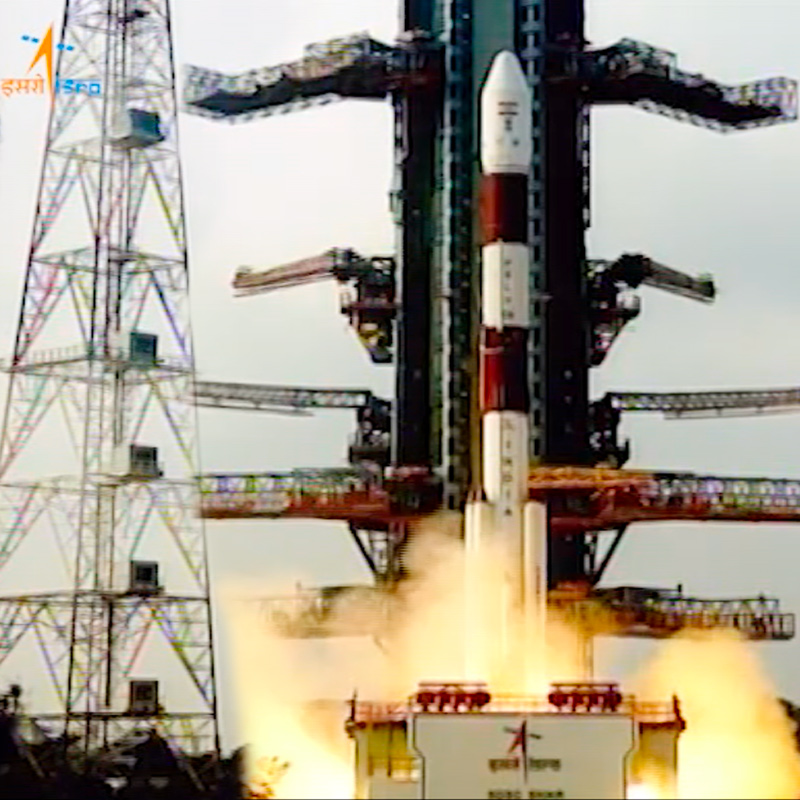
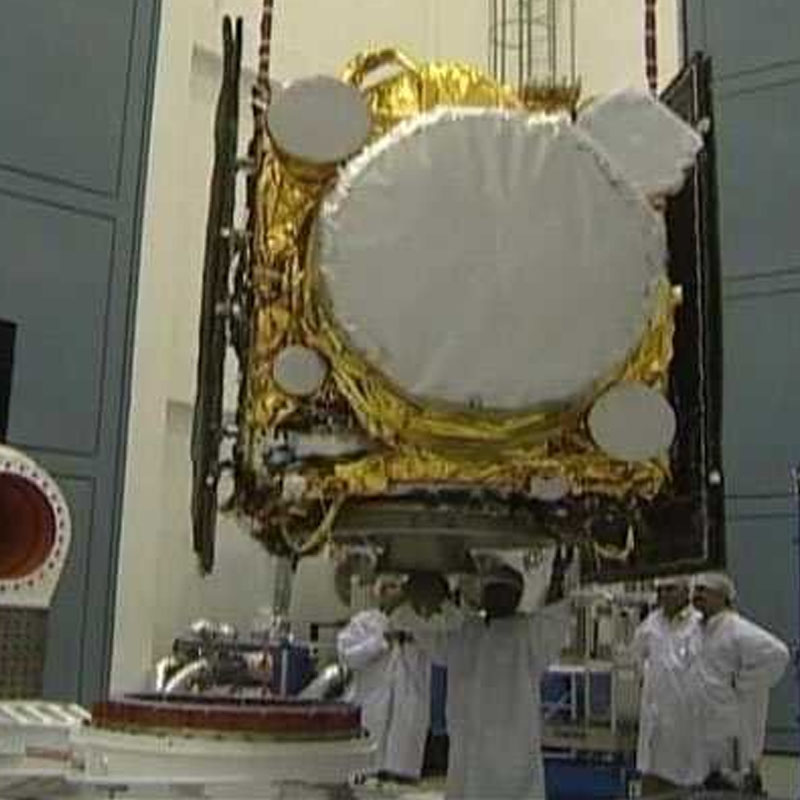
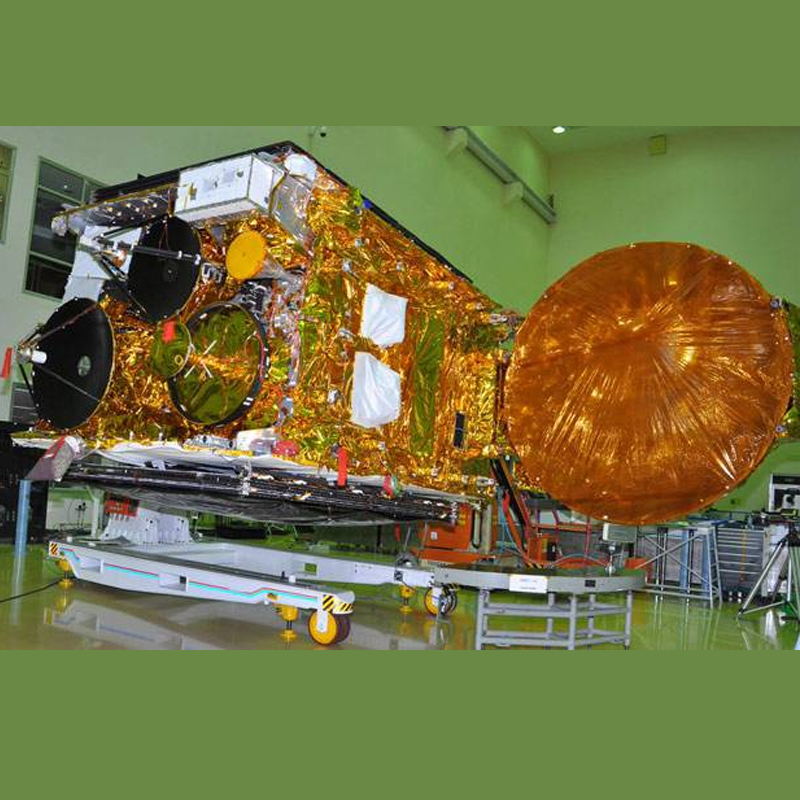
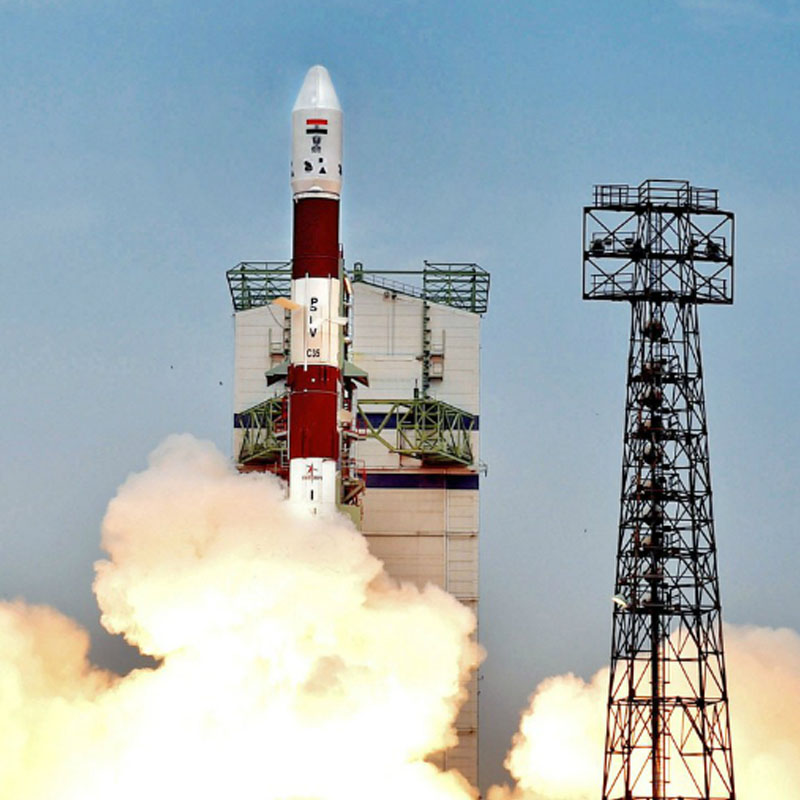
    NEW DELHI: The countdown before liftoff is always a heart-stopping moment during a satellite launch. And it was no different today at the Indian Space Research Organization's (ISRO's) second launch pad at Satish Dhawan Space Centre, Sriharikota. The space agency's scientists looked on nervously at their old workhorse, Polar Satellite Launch Vehicle, which had its forty second communications satellite CMS-01 as its payload.  However, at 3:41 pm, the  spacecraft took off as planned — in an almost picture perfect, blemish-free blastoff. And even more good news was to follow: 20 minutes after launch, the satellite separated successfully from the fourth stage of the rocket and was injected into   geosynchronous transfer orbit.

    "The satellite is functioning well and it will be placed in a specified slot in the next four days. Teams worked very well and safely under Covid2019  pandemic situation," said ISRO chairman Dr K Sivan.

    CMS-01 carries 12 Extended C band transponders which will strengthen the country's telecommunication services. The extended C band uses 3.4 to 3.7 GHz for downlink and 6.425 to 6.725 GHz for uplinks of the signals and is relatively less susceptible to rain fade and weather interference.

    With a mission life of seven years, the bird will provide coverage to the Indian mainland, Andaman &  Nicobar and Lakshadweep Islands. It will replace the ageing GSAT-12 which was launched in 2011.

    The space agency had chosen the ‘XL’ variant of the 44m high PSLV with six strapons for its fifty second  flight. In the normal configuration, PSLV is a four stage/engine expendable rocket powered by solid and liquid fuels alternatively with six booster motors strapped on to the first stage to give higher thrust during the initial flight moments.

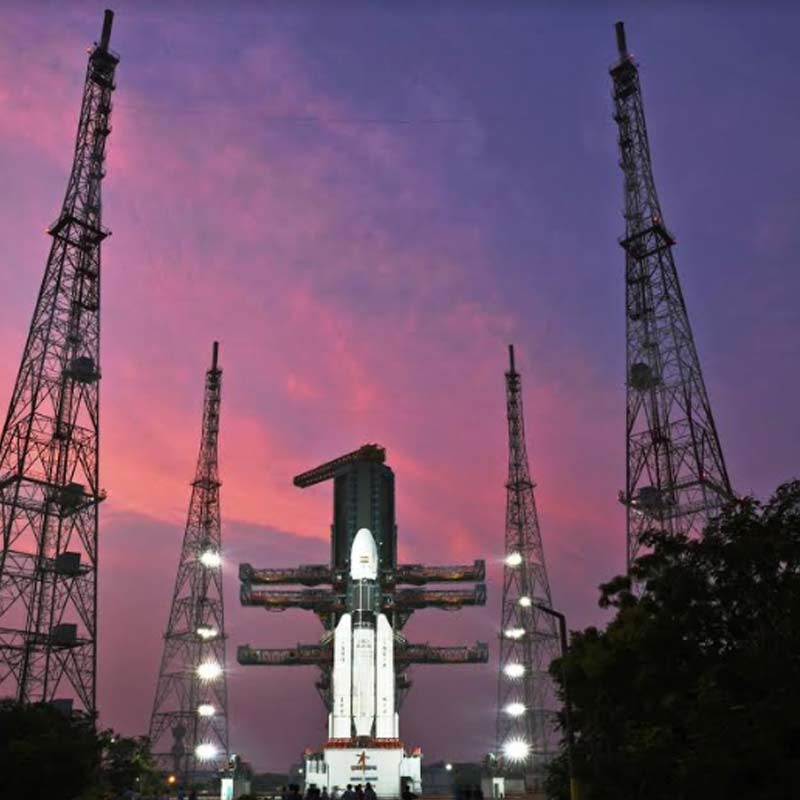
    The premier space agency is now preparing for the launch of new small rocket Small Satellite Launch Vehicle (SSLV) which will carry EOS-02 (Earth Observation Satellite). It will be followed by the launch of Geosynchronous Satellite Launch Vehicle-F10 (GSLV) which will carry EOS-3 in space.

    The other Indian satellites that are ready for launch are GISAT and Microsat-2A. The launch of GISAT-1  was earlier slated for 5 March, but was postponed due to technical reasons 24 hours before D-Day.