Tag: Sashi Sinha

  • Initiative appoints Alok Sinha as chief strategy officer

    Initiative appoints Alok Sinha as chief strategy officer

    MUMBAI: IPG Mediabrands has appointed Alok Sinha as chief strategy officer in line with the agency’s transformational vision merging legacy with new-age dynamism.

    In his new role, Sinha will be driving Initiative’s strategic planning nationally and will be working collaboratively with all clients of the agency, including Amazon, Reckitt Benckiser, Bajaj Auto, Dish TV, Too Yumm, Anchor Electricals, and Carlsberg, to name a few.

    Sinha moves from Ogilvy & Mather, where he headed strategy for the northern region as president – planning. 

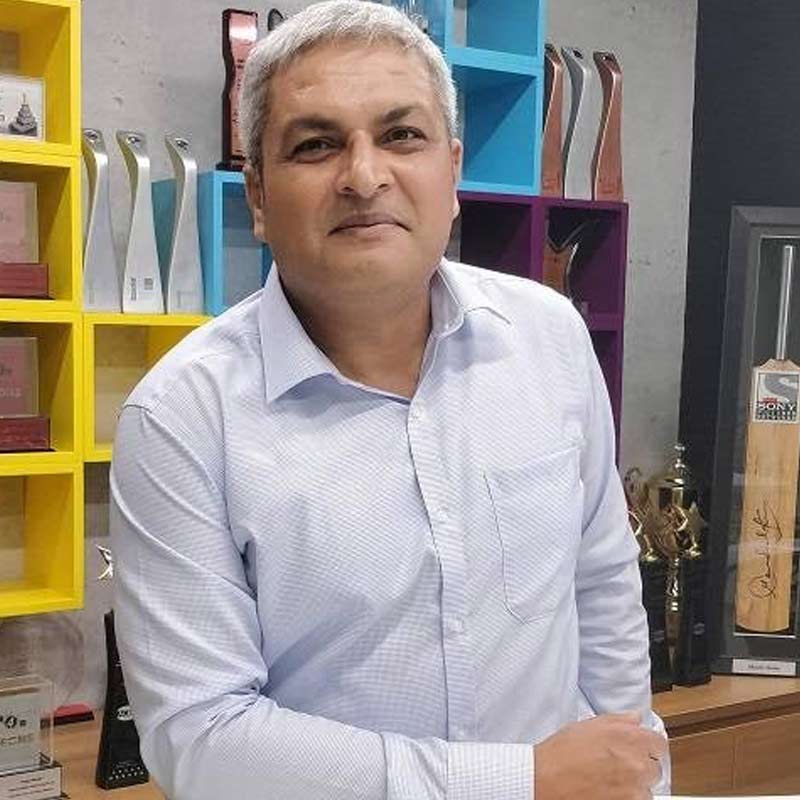
    “Alok comes with multifaceted experience which is rare to find – research, consumer insight, tools, media strategy and account planning in a creative agency. His coming on board is a demonstration of our commitment to raising Initiative’s strategy, tools and product to a whole new level. I am delighted to have him on board,” says IPG Mediabrands CEO Shashi Sinha. 

    Armed with a bachelor’s degree in Physics and an MBA in Marketing, Sinha began his career as a trainee with Lintas (now Lowe) in Mumbai with its research wing, Pathfinders. He then moved to the Gallup Organisation, where he managed to transform its smallest revenue client into its biggest.

    Seeking a more well-rounded exposure, Sinha then moved to the creative side and joined Ogilvy & Mather as a planner, where he worked on brands like IBM, Unilever and Vodafone. His stint in Ogilvy was followed by a long period in media agencies, including Carat and Mindshare, in multiple roles ranging from communication planning & business development to strategy and tools and process both in India and the Asia Pacific region.

    Talking about his association with Initiative, he said, “I am back to Media where my heart belongs. Initiative is in a process of transformation and I am thrilled to be part of this change.”

  • Vaishali Verma becomes CEO at IPG Mediabrands

    Vaishali Verma becomes CEO at IPG Mediabrands

    MUMBAI: Initiative, part of the Interpublic Group’s media management network IPG Mediabrands, has announced a major elevation and restructuring.

    Initiative COO Vaishali Verma has been promoted as the CEO of the agency. Verma will report to IPG Mediabrands India CEO Shashi Sinha, and will oversee the entire India operations.

    With over 22 years of experience in the area of media, advertising and marketing, Verma has been a strong force in helping brands connect better with consumers. Her work reflects a deep understanding of the evolution of Indian consumers backed with solid research based planning.

    Initiative – APAC regional president Will Anstee mentions, “I couldn’t be more excited to have Vaishali steer and deliver on our Initiative proposition in India. Her passion for the craft, her consistent high performance and the conscientious way she approaches every task, make her the natural choice for the role.”

    Talking about the appointment, Shashi Sinha adds, “What makes this truly special is that Vaishali is an insider and has grown from strength to strength in the group over the last 20 years. I am hugely proud to have such superlative talent from within steering the ship. She embodies IPG’s culture and values and is an inspiring leader. I couldn’t have found a better person to lead Initiative Media.”

    Verma says, “The advertising business is going through the most interesting times and it has never been more difficult than now to get consumer attention. Fortunately there is a better way of building audience relationship by being as relevant as possible and at Initiative we use culture as the bridge to stay relevant. Culture forms the canvas and the fabric of how we lead our lives. We help brands grow through culture by distributing ideas, content and conversation. At Initiative, we have the best of the global and local clients, the finest talent in the industry and cutting edge media tools. I think we have an opportunity to help shape the future of how brands engage with consumers. To be a part of this opportunity, to shape it with some of the sharpest minds in the business, is what excites me.”

    Verma started her career in advertising as a media planner with Mudra Communications in 1995, charting the media strategies of brands like McDonalds, Samsung and Nestle. She then moved to Universal McCann in 1997 as a senior media planner and worked with brands like General Motors, Reckitt Benckiser, Gillette, Madura Garments and ICI Paints. She joined Lodestar UM as general manager and handled brands like Wipro Consumer Care, Intel, ING Group and Madura Garments.

    In 2014, Verma was named the COO of Initiative and she has been overseeing the agency’s entire business in Southern India with the likes of Amazon Seller Service, MRF, Jockey, 3M, etc., leading a team of 100+ strong media professionals.

  • BARC India to conduct roadshows in February

    BARC India to conduct roadshows in February

    MUMBAI: The Broadcast Audience Research Council (BARC) is all set for 2015, as it will hold roadshows in February on the GUI (Graphical User Interface) in Mumbai, Delhi, Kolkata and Bengaluru.

    It was in 2013 when the Council held its first round of roadshows that aimed at sharing the latest updates from BARC with all constituents across the entire broadcast value chain, and, equally important, to receive feedback and suggestions, so that the new television measurement system is completely robust, transparent and representative.

    Welcoming the New Year, the council thanked its stakeholders, vendors, partners and associates as well as highlighted its achievements. With more than 275 channels having ordered for embedders, all major networks in each region and across genres are now on-board.

    As it continues to reach out to the stakeholders for feedback, the playout monitoring facilities are in action and meta-tagging of content across watermarked channels is in full throttle in Mumbai and Bengaluru.

    It has also tested the end-to-end integration of the system, which is working perfectly fine. The technology handshakes are in place and ratings are being generated from the BARC system now.

    In continuation to unravel the puzzle of TV audience measurement system in India, BARC India shared a few learnings and insights on the importance of Relative Errors and Confidence Levels in audience measurement for new beginnings.

    BARC India and the importance of Relative Error

    Over the past few months, BARC India has highlighted its commitment to data robustness and has spoken about lower Relative Errors at high Confidence Levels. It has repeatedly highlighted that Relative Errors are an important factor to be considered whenever it evaluated the ratings data, or read any research report, for that matter.

    Relative Error and its impact on research data

    It is not possible to sample every individual (except perhaps, a Census); hence, sample surveys are undertaken. Statistics offer scientific methods to estimate phenomena across entire population by studying samples. Any sample survey suffers inherently from various errors. Owing to these, statistics never talk about an average (or mean) without talking simultaneously about a measure of dispersion, usually the standard deviation.

    A researcher has to balance between demands of greater accuracy and constraints of finite resources. Statisticians therefore work with defined ‘Confidence Intervals’ and ‘Sampling Errors’. One of these sampling errors is the ‘Relative Error’, or the deviation (in percentage) of the observed value from the actual (expected) value.

    Confidence Level (or Confidence Interval)

    Confidence Level is generally defined as a percentage or a decimal figure less than one. So, if a researcher says that the Confidence Interval is 90 per cent, what he means is that 90 per cent of the samples of the same size taken from the same population will produce results within a defined range.

    Relative Error

    A TV ratings measurement system estimates that the programme has 1 TRP with a standard deviation of 0.25. This means that the actual rating is expected to lie between 1-0.25 and 1+0.25 or 0.75 and 1.25. The relative error is simply 0.25/1.0 or 25 per cent.

     A simplistic explanation that may antagonise a purist, but can be explained simply in the diagram below:

    In other words, it is important for a research to ensure least possible Relative Error at the highest possible Confidence Level; else it risks generating data with such wide variance that it becomes meaningless. Just imagine saying that a programme has 1 TRP at the above Relative Errors.

    Factors affecting Relative Error

    The most important factor that affects Relative Error is sample size. Relative Error increases in geometric magnitude as sample size decreases, while it becomes independent of sample size beyond a certain threshold.

    Sampling is also relatively simpler when estimating a homogenous population and more complex for heterogeneous population. It is hence extremely important to have a significantly large sample size, especially when calculating estimates for large heterogeneous universe.

    On how BARC India intends to handle issues related to sample size to ensure robustness of data, the council shares a hypothetical scenario – A planner wishes to evaluate programme viewership for the following TG for a premium brand – males, NCCS AB, 40+ in Delhi

    Total Sample Size: 130

    Approx. sample size for a programme with a rating of 1 per cent viewers: 13

     A sample size of 13 is way too low to do any meaningful evaluation. Hence, BARC India would not encourage such evaluations.

     To circumvent this issue, BARC India intends to aggregate the data through one of the following means:

    •        Aggregate viewership data across two or more weeks

    •        Add more cities to the sample, aggregating geographically

    •        Instead of considering a particular individual programme or a limited time, evaluate a day part, thus aggregating by time bands

    Each of the above methods would increase the sample size and would allow the planner to make his decision based on robust relevant data. The BARC India Technical Committee is evaluating options of either hardcoding the aggregations in the pre-publishing stage itself, or allowing the planner to decide the aggregation based on his/her requirements. This decision would be taken only after seeing the data for all panel homes and assessing the pros and cons of each method.

  • BARC India to install 30% of total barometers in rural India

    BARC India to install 30% of total barometers in rural India

    MUMBAI: The Broadcast Audience Research Council India (BARC India) is ensuring that it accurately captures ‘what India watches’ and hence is putting in resources to cover not just urban, but rural India as well. In keeping with this, the research body is installing approximately 30 per cent of its ‘barometers’ (people meters) in rural India.


    But how will BARC India ensure credible ratings, considering the constant power cuts in rural India? Answers BARC India CEO Partho Dasgupta, “Our meters have an inherent capability to store data for up to two months, so in case there are power cuts, we are secure.” The research body is also planning to have 10 per cent buffer homes which will enable them to reduce data vagaries due to any such factor.   
     

    “It is obviously difficult to reach across the rural parts of India, however, it has been a mandate for BARC India to capture ‘what India watches’ and hence it is important to cover that part of India as well,” adds Dasgupta. 


    BARC India, is currently busy with its roadshows, where the body is meeting with broadcasters, advertisers, media agencies and consultants, clarifying their doubts and questions. “We are delighted with the positive feedback we have received. People are receptive to change to a system which they believe will be much more robust and reliable,” says Dasgupta.  
     

    The purpose of the roadshows being held in Delhi, Bengaluru, Chennai and Mumbai is to share with the larger group of stakeholders, BARC India’s current progress, thoughts on sample design and reporting structure. “These sessions enable us to understand the needs of our end customers more closely which will ensure us to fast track the last mile,” he informs.
     

    The roadshows saw discussions looming around the status of the project to-date, initial thoughts on reporting and broad sample designs being presented to the stakeholders.


    BARC India is currently testing meters across various parts of India in the most rugged conditions. So by when will the data be rolled out? “The data is being captured for our internal analysis and this will not be published,” he informs. 
     

    Talking about the feedback from the stakeholders, Dasgupta says, “We have got a very positive response. The proof of this lies in the fact that almost Rs 100 crore has been invested additionally by the broadcasters in installing embedders and related systems. They would not have done it if they didn’t believe in the technology selected.”

    BARC India is developing its system on a future ready technology “which is two generations ahead than what is being used currently,” he informs.
     

    The body has closed deals with 26 vendor partners across 12 processes involved in the broadcast measurement system, who will contribute to the different moving parts of the system. Giving an update on the current status of the measurement body, Dasgupta informs that most of the bigger networks and channels have ordered their watermark embedders and most of them are installed or being installed. The playout monitoring systems are being tested. The sampling design is almost complete. “We are taking feedback from the stakeholders through a series of roadshows that we are doing,” he says.  

    He further adds, “You will appreciate that this will be the largest such audience measurement system globally with cutting edge technology. This requires serious technology and process handshakes all over and then testing. All this is currently underway.”

    The audience measurement body which underwent a logo change recently has been subscribed by 250 channels already. “The numbers are going up every week and there has been a smooth progress on installations as well,” adds Dasgupta.


    BARC India will provide data to Doordarshan as well.

  • BARC updates the I&B ministry on its progress

    BARC updates the I&B ministry on its progress

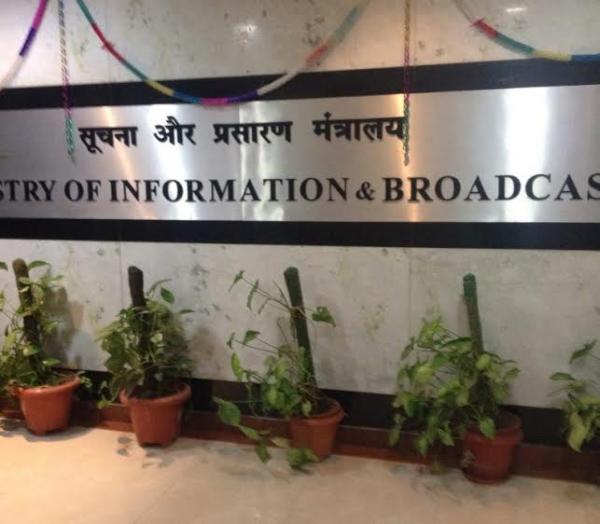
    MUMBAI: The media industry went into a tizzy last week when the union cabinet accepted the Ministry of Information and Broadcasting (MIB)’s proposed regulatory framework for television rating agencies in India. 


    The most affected from this entire episode is the Broadcast Audience Research Council (BARC) as the pressure is building up on them to speed up the process and bring the new system for TV ratings in to place. 


    Hence, BARC board members met the MIB to present an update on the progress made so far. As per a highly placed source, the council members told the Ministry that the pilot testing has already begun. “There will be three-four phases of these testing sessions before the work officially starts.” 


    Elaborating the phases, the source remarks: “Firstly, the entire ratings system has to be tested how well the equipments work with the Indian technology and ecosystem. Secondly, we will have to see if all the elements are aligned properly. Thirdly, how accurate is the data collected; and lastly, the overall panel design.” 


    Another source reveals that the Ministry has been informed that the council will start signing contracts soon. “BARC is partnering with around six to seven tech organisations to complete the process,” the source claims.


    When asked about the Ministry’s reaction on the update, the council’s chairman of the technical committee Shashi Sinha says, “The Ministry is happy with the progress we are making and even we are happy with the way things are shaping up.”


    BARC has organised a press conference on 20 January in Mumbai to discuss further progress.