| Kahin Naa Kahin Koi Hai may have served up a lemon, but has not dampened the spirits of production house UTV, which is steathily climbing the ratings charts with its shows across channels.
TV content COO Manish Popat believes that the ratings game is merely a cyclical process and that all that goes up must some day come down. In response to indiantelevision.com’s queries, Popat outlined where UTV is at today and where it’s headed in the days to come. |
|||
| More of UTV’s shows are currently in the top 50 in the TRPs. Do you believe UTV is on a comeback curve and can seriously challenge Balaji Telefilms? Firstly, the figures speak for themselves. Five months back, we had two programmes in the top 50, today we have 14. Five months back, Balaji had 38 programmes in the top 50, today they have 25. I wouldn’t like to comment on the number 1 and number 2 status in the industry. As we all know, this is a cyclical process. It is true that Balaji has a good lead and a large market share, based on their four daily programmes on the number 1 channel i.e. Star. This itself gives them a formidable lead even if it is emanating out of only four shows on a single channel. As the TV division of UTV, we continue to remain highly competitive and have got enough programmes in development, as well as negotiations with multiple channels, to see that our present list of 14 programmes in the top 50 goes past the half way mark very soon. |
|||
| ‘Avinash IPS’ was taken over by UTV in order to bring in more action, and consequently better ratings. It does not, however, seem to have taken the TRPs by storm. What may the reason be, and is there any plan to improvise? Avinash is now an action packed serial. The plot lines moved very fast. Soon after we took over, the ratings crossed the 4 TRP mark. It is, at the end of the day, a 11 pm programme. We have many exciting stories in the pipeline and do believe that we will keep the TRPs at a high level as per the benchmark set by Star. |
|||
| What sets Shaka Laka Boom Boom… apart from the children’s serials currently on air? What is the response it has got thus far? We need to all first understand that they aren’t that many ‘children’s serials’ on air. They are sporadic. By and large, children’s viewership has been composed of horror shows and other such dramas. We believe that Shaka Laka Boom Boom appeals to a wide range of audience. With a fair amount of research that we have done on this programme, we premiered it on Vijay TV in the south, and it was an instant hit. As you can see from the ratings, in the first three weeks itself, it’s been climbing, week on week and as ratings go, is higher than any or all prime time programmes on Zee and Sony plus higher than many of the 8 pm and 9 pm slots on Star itself. |
|||
| While UTV shows on Star (‘Kehta Hai Dill’, ‘Shagun’) have done well, those on other channels (‘Sarhadein’, ‘Choti maa…’, ‘K3H’) seem to be suffering from lack of viewer interest. Is there any reason for this? Kehta Hai Dil, Shagun and Bhabhi have done extremely well. We need to keep in mind, that Shagun and Bhabhi are both non prime time programmes and in the afternoon band, that makes it an even more challenging task, to establish itself as a hit. We are extremely proud of Choti Maa… and Sarhadein on Zee. They were both very different genre programmes, and did receive a lot of acclaim. As programmes go, they will be an excellent library for Zee, even when they run them again and I am sure, with the right buoyancy on the channel, these will display high TRPs as they would have. K3H was a new concept. We do believe that some aspects of the concept were before its time. Viewer reaction also indicates that we needed to go a lot more “behind the scenes” and less in the glamour part. This was also launched at a time when Sony was re-positioning itself. It would be interesting to note, that from the very first episode itself, the ratings did not stick. I guess, therefore, it is a combination of the concept as well as the overall desire for audiences to try new programming genres at this stage. |
|||
| “The future of Indian television is and will be a constantly changing landscape. Nothing is written in stone and nothing is carved in gold” | |||
| ‘K3H’ was UTV’s big ticket show. With it crashing, has there been a rethink on the kind of shows to be done henceforth? Will UTV stay away from celebrity based shows ? At UTV, we have always pioneered new genres and concepts whether it has been the first ever daily soap opera in India with Shanti, and then with a high seas drama in Sea Hawks or in the early 1990s with the first medical hospital series – Lifeline (Jeevan Rekha). As mentioned, we believe that K3H faced many challenges and it has been a learning experience. We do not ever shy away from the concept of constantly innovating and pioneering new genres and learning from our mistakes and what research and viewer feedback tell us. |
|||
| Apart from the mainstream channels, is UTV venturing into shows for other channels like Sahara? The TV division of UTV is engaged in making programmes for multiple channels and yes, we have many concepts in development with Sahara also as well as other channels. We also develop multiple programmes for overseas channels in Singapore, Malaysia and just completed a 26 part series The Asian Cuisine Show for PBS in Canada. |
|||
| UTV was doing a big show on the army helicopter division. How far has it progressed? Sea Hawks was a path breaking concept in 1995-96 and did very well for UTV. In line with that, we think the time has come for new path breaking and big budget dramas. Presently, we are developing two concepts : One, on the armed forces and another, a spy series set against the backdrop of various cities all over the world. |
|||
| So, does the future in Indian television belong to daily soaps or weekly shows? The future of Indian television is and will be a constantly changing landscape. Nothing is written in stone and nothing is carved in gold. |
|||
|
|||
|
Which other genres are you looking at now? As a long term perspective and also in the short term? |
|||
| What is your current relationship with Doordarshan? Are there any new shows in the pipeline for the public broadcaster? We have had a decade long relationship with Doordarshan. Our relationship with them has always been on-going, cordial and productive. Presently, we have three concepts under development for slotting with Doordarshan in early 2003. Furthermore, we have made very detailed proposals for them for packaging a one hour band of the best of Indian television of the last three to five years. This will give a huge boost to the public broadcaster and we are hopeful that we can move in that direction. |
|||
| How do you view the current impasse in the clearance of the conditional access system in the country? Is it a boon or a bane for the short term? For over a decade, television broadcasting grew without many regulations, and that was a great boon. However, one of the victims of lack of regulation was the unregulated way in which the cable industry grew. We do believe that regulation and legislation is clearly required. If a clear cut, well defined and legitimate pay revenue does not emerge in the very near future, it will set back the entire growth of the broadcasting and content industry for another five years. Therefore, any form of regulation, presently in the form of CAS, will be beneficial both in the short and long term. The challenges obviously are the criterion of who will select which channels will be free and which channels will be paid for, and the entire revenue aggregation resulting from that. Of course, there will be mixed agendas for everybody. But overall it’s required, it’s urgent to implement and will be beneficial in the short and long term. |
|||
| What about Tamil language programming? How many shows are you currently making? Is the proportion to Hindi shows increasing? We are active in the Tamil language space. We also have an active JV in Vijay TV in content programming and others. Presently, we have one daily soap on air on Vijay which will increase to three dailies by December/ February. With this rise in our Tamil language output, our ratios between Hindi and Tamil will be 80:20. This excludes all our English language programmes for the global market which in itself constitutes 20 per cent of our overall TV content share. |
Tag: Sarhadein
-
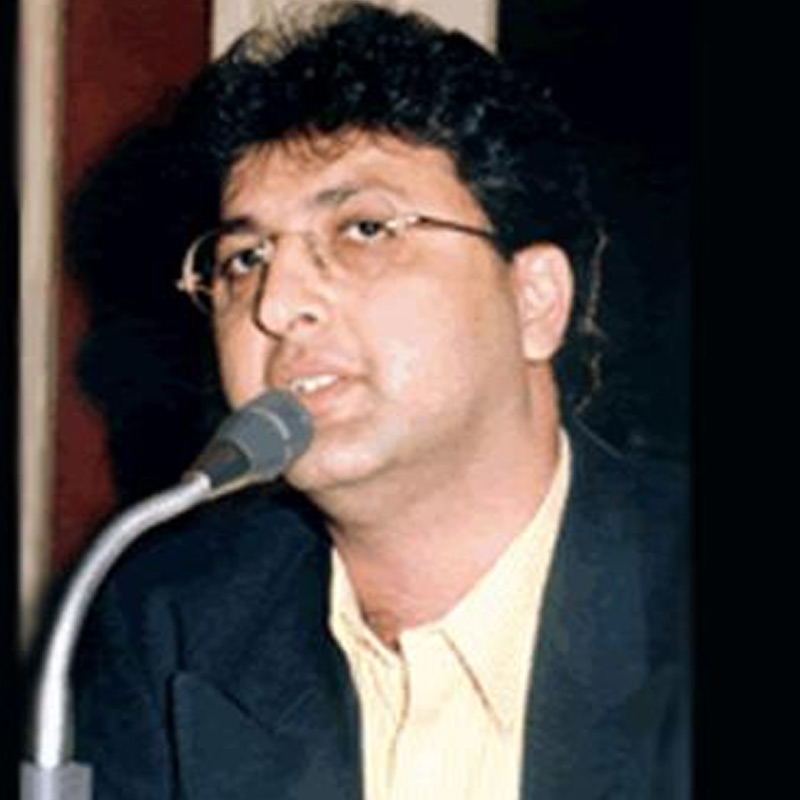
“Five months back, we had two programmes in the top 50, today we have 14” ; UTV TV content COO Manish Popat
-
“Five months back, we had two programmes in the top 50, today we have 14”
Kahin Naa Kahin Koi Hai may have served up a lemon, but has not dampened the spirits of production house UTV, which is steathily climbing the ratings charts with its shows across channels.
TV content COO Manish Popat believes that the ratings game is merely a cyclical process and that all that goes up must some day come down. In response to indiantelevision.com’s queries, Popat outlined where UTV is at today and where it’s headed in the days to come.
More of UTV’s shows are currently in the top 50 in the TRPs. Do you believe UTV is on a comeback curve and can seriously challenge Balaji Telefilms?
Firstly, the figures speak for themselves. Five months back, we had two programmes in the top 50, today we have 14. Five months back, Balaji had 38 programmes in the top 50, today they have 25. I wouldn’t like to comment on the number 1 and number 2 status in the industry. As we all know, this is a cyclical process. It is true that Balaji has a good lead and a large market share, based on their four daily programmes on the number 1 channel i.e. Star. This itself gives them a formidable lead even if it is emanating out of only four shows on a single channel.As the TV division of UTV, we continue to remain highly competitive and have got enough programmes in development, as well as negotiations with multiple channels, to see that our present list of 14 programmes in the top 50 goes past the half way mark very soon.
‘Avinash IPS’ was taken over by UTV in order to bring in more action, and consequently better ratings. It does not, however, seem to have taken the TRPs by storm. What may the reason be, and is there any plan to improvise?
Avinash is now an action packed serial. The plot lines moved very fast. Soon after we took over, the ratings crossed the 4 TRP mark. It is, at the end of the day, a 11 pm programme. We have many exciting stories in the pipeline and do believe that we will keep the TRPs at a high level as per the benchmark set by Star.What sets Shaka Laka Boom Boom… apart from the children’s serials currently on air? What is the response it has got thus far?
We need to all first understand that they aren’t that many ‘children’s serials’ on air. They are sporadic. By and large, children’s viewership has been composed of horror shows and other such dramas. We believe that Shaka Laka Boom Boom appeals to a wide range of audience.With a fair amount of research that we have done on this programme, we premiered it on Vijay TV in the south, and it was an instant hit. As you can see from the ratings, in the first three weeks itself, it’s been climbing, week on week and as ratings go, is higher than any or all prime time programmes on Zee and Sony plus higher than many of the 8 pm and 9 pm slots on Star itself.
While UTV shows on Star (‘Kehta Hai Dill’, ‘Shagun’) have done well, those on other channels (‘Sarhadein’, ‘Choti maa…’, ‘K3H’) seem to be suffering from lack of viewer interest. Is there any reason for this?
Kehta Hai Dil, Shagun and Bhabhi have done extremely well. We need to keep in mind, that Shagun and Bhabhi are both non prime time programmes and in the afternoon band, that makes it an even more challenging task, to establish itself as a hit.We are extremely proud of Choti Maa… and Sarhadein on Zee. They were both very different genre programmes, and did receive a lot of acclaim. As programmes go, they will be an excellent library for Zee, even when they run them again and I am sure, with the right buoyancy on the channel, these will display high TRPs as they would have.
K3H was a new concept. We do believe that some aspects of the concept were before its time. Viewer reaction also indicates that we needed to go a lot more “behind the scenes” and less in the glamour part.
This was also launched at a time when Sony was re-positioning itself. It would be interesting to note, that from the very first episode itself, the ratings did not stick. I guess, therefore, it is a combination of the concept as well as the overall desire for audiences to try new programming genres at this stage.
“The future of Indian television is and will be a constantly changing landscape. Nothing is written in stone and nothing is carved in gold”
‘K3H’ was UTV’s big ticket show. With it crashing, has there been a rethink on the kind of shows to be done henceforth? Will UTV stay away from celebrity based shows ?
At UTV, we have always pioneered new genres and concepts whether it has been the first ever daily soap opera in India with Shanti, and then with a high seas drama in Sea Hawks or in the early 1990s with the first medical hospital series – Lifeline (Jeevan Rekha).As mentioned, we believe that K3H faced many challenges and it has been a learning experience. We do not ever shy away from the concept of constantly innovating and pioneering new genres and learning from our mistakes and what research and viewer feedback tell us.
Apart from the mainstream channels, is UTV venturing into shows for other channels like Sahara?
The TV division of UTV is engaged in making programmes for multiple channels and yes, we have many concepts in development with Sahara also as well as other channels. We also develop multiple programmes for overseas channels in Singapore, Malaysia and just completed a 26 part series The Asian Cuisine Show for PBS in Canada.UTV was doing a big show on the army helicopter division. How far has it progressed?
Sea Hawks was a path breaking concept in 1995-96 and did very well for UTV. In line with that, we think the time has come for new path breaking and big budget dramas. Presently, we are developing two concepts :One, on the armed forces and another, a spy series set against the backdrop of various cities all over the world.
So, does the future in Indian television belong to daily soaps or weekly shows?
The future of Indian television is and will be a constantly changing landscape. Nothing is written in stone and nothing is carved in gold.“We think the time has come for new path breaking and big budget dramas”
Which other genres are you looking at now? As a long term perspective and also in the short term?
We pursue multiple genres in the fiction and entertainment category on an ongoing basis. Other than soaps and dramas, we have many concepts under development in the children’s programme category, in the high budget action series category, game shows, sitcoms (one of the most difficult categories to develop), as well as in the categories of horror, supernatural and real life drama.What is your current relationship with Doordarshan? Are there any new shows in the pipeline for the public broadcaster?
We have had a decade long relationship with Doordarshan. Our relationship with them has always been on-going, cordial and productive. Presently, we have three concepts under development for slotting with Doordarshan in early 2003. Furthermore, we have made very detailed proposals for them for packaging a one hour band of the best of Indian television of the last three to five years. This will give a huge boost to the public broadcaster and we are hopeful that we can move in that direction.How do you view the current impasse in the clearance of the conditional access system in the country? Is it a boon or a bane for the short term?
For over a decade, television broadcasting grew without many regulations, and that was a great boon. However, one of the victims of lack of regulation was the unregulated way in which the cable industry grew. We do believe that regulation and legislation is clearly required. If a clear cut, well defined and legitimate pay revenue does not emerge in the very near future, it will set back the entire growth of the broadcasting and content industry for another five years.Therefore, any form of regulation, presently in the form of CAS, will be beneficial both in the short and long term. The challenges obviously are the criterion of who will select which channels will be free and which channels will be paid for, and the entire revenue aggregation resulting from that.
Of course, there will be mixed agendas for everybody. But overall it’s required, it’s urgent to implement and will be beneficial in the short and long term.
What about Tamil language programming? How many shows are you currently making? Is the proportion to Hindi shows increasing?
We are active in the Tamil language space. We also have an active JV in Vijay TV in content programming and others. Presently, we have one daily soap on air on Vijay which will increase to three dailies by December/ February. With this rise in our Tamil language output, our ratios between Hindi and Tamil will be 80:20. This excludes all our English language programmes for the global market which in itself constitutes 20 per cent of our overall TV content share. -
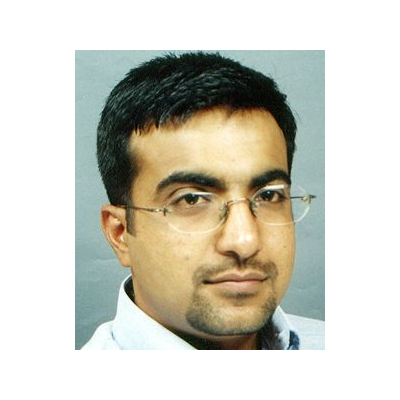
“There are no bad actors, only bad directors” : Sourabh Narang
At 29, Sourabh Narang is one of the youngest and most sought after directors on TV today. The critically acclaimed Haqeeqat, Shhh… Koi Hai and Kagaar are some of the serials he has directed. Saurabh is also proud of the fact that he is already reputed for the serials he has refused- Sarhadein and Aap Jo Bolein Haan to Haan…, whose pilot he shot – a telling statement of how discerning he has been. Sourabh is extremely enthusiastic and passionate about his work. He is also coolly candid when he says that all he wanted from life was a nice wife and some movies to direct. Here are his views on life, reel and real, as they unspooled in a conversation with indiantelevision.com correspondent, Amar.
How did the idea of being a director come into your mind?
I graduated from St Stephens College in Delhi where I would participate in debates extensively. Debating gave me an opportunity to speak my mind and express myself freely. Barkha Dutt (NDTV correspondent), who was my senior in college, suggested that I take up Mass Communications at the Jamia Millia Islamia University. By the time I completed the course, I was obsessed with the thought of making a movie. That’s how I came to Mumbai. Once here, I assisted K Shashilal Nair on Grahan and after that moved to TV serials.What is that special something that makes for an effective director?
Observation, vision and discipline.It is unfortunate that all a TV director does today is look at the monitor and then look at his watch.__________

Which subjects appeal most to you?
Anything that can be developed into something very dramatic. It could be the story of a 16-year-old girl raped by the police during riots or the story of a boy trying to work up the courage to propose to a girl he meets every day at the bus stop.It is often said that TV is a writer’s medium? Your comments?
I don’t agree with it. Such a statement is made mainly because most of the TV software today is dialogue-driven. But people saying this tend to underestimate the levels to which the director and the cinematographer can raise a written work. I would rather subscribe to another dictum – that there are no bad actors, only bad directors; even though I know how bad an actor can be (laughs).How much of a writer does a director have to be? Are you involved with the scripting of what you direct?
I have scripted a few episodes of Rishtey and Saturday Suspense which I have directed. Even today, when I direct Haqeeqat or an episode of Shhh Koi Hai, I spend a lot of time lining up the pre-production work and going through the entire script in minute detail. Wherever I feel certain changes in the script would help, I have made positive contributions to it.What kind of research goes into Haqeeqat from the point of view of direction?
Actually, BAG Films (the production house) has an excellent news infrastructure spread across the country, so getting factual details for episodes of Haqeeqat is no problem. Besides, we have a research team that works exclusively on the serial. But getting factual details is one thing, creating the actual feel of the places where these incidents occurred is quite another. For that too, we have our ways of doing things. For an episode that featured some 25 inmates in a Chennai asylum getting burnt to death, we actually created a huge set in Mumbai that resembled the asylum. For an episode which dealt with the story of two lovers being hanged to death by their families in rural Haryana, my casting director took pains to search for actors who could actually speak the language of the region. The only actor who could not speak the dialect was the female protagonist but she was made to rehearse her part with the other actors for five days before the actual shoot.What are the factors you never compromise on as director?
Commitment – because, in a way, the word is all-pervasive. I will not compromise on the total commitment I expect from each and every member of my unit – whether its an actor who needs to have done some ground work on his role or my own assistants.Who are the directors you regard highly on Indian television?
Two directors on TV who I have great regard for are Umesh Padalkar and Anuraag Basu. The funny part over here is that people don’t plan to fail, they simply fail to plan.
__________Are there any stylistic elements you’ve imbibed from them?
In the case of Umesh, I’ve liked his rather Hollywoodish technique of shooting, wherein the same scene is cut from various angles. This really minimizes the scope for a re-take. As far as Anuraag Basu is concerned, the best part about his work is that it’s very crisp, very taut with no extra flab in it.Do you find channel executive producers overbearing?
See, that is a matter of personal opinion and experience. Personally, its been a pleasure to work with Sahara TV because no channel would allow the kind of creative freedom that Sahara does.What are the factors you consider before taking someone under your wing?
More than technical knowledge, I would go for the person’s educational and family background because I don’t compromise on commitment and sincerity; and only a person with good character and the right set of values is expected to do justice on these fronts.Do you enact scenes out as a method of instructing actors?
I don’t enact scenes unless it is necessary, that is if I want the scene to be emoted in a certain manner and the actor is not able to comprehend it. As far as possible, I avoid enacting scenes because that tends to affect a natural performance.How many projects do you like to work on simultaneously?
Ideally I would like to work on a weekly soap and do one-off stories at a time.I avoid enacting scenes because that tends to affect a natural performance.__________

Given the industry vagaries, do you undertake some long term planning of the projects to do in the future to ward off phases when you don’t have work?
The funny part over here is that people don’t plan to fail, they simply fail to plan. What is lacking is the sheer enthusiasm to give a project your very best. You will be surprised when I tell you that Mahesh Bhatt had called me recently just to tell me that Ramesh Taurani of Tips Industries was so moved by a story shown in Haqeeqat which portrayed the parents of a person killed in Punjab by terrorists waiting for compensation, that he decided to personally compensate them. Now isn’t my work being watched by people who really matter and do I need to worry so much about the future? In fact, more than the projects I do, I am already known for the projects I’ve refused – I was supposed to do Sarhadein which I didn’t, I had directed the pilot episode of Aap Jo Bolein Haan To Haan…, but didn’t direct any of its episodes after that.How much time do you normally take to shoot one episode?
I take two days or three shifts to shoot one episode because that is the time I require to deliver top quality work. I have refused some very promising serials because the producers wanted me to shoot one episode a day and I don’t operate that way. It is unfortunate that all a TV director does today is look at the monitor and then look at his watch.So, are you absolutely closed to doing a daily soap?
Yeah, I’m offered at least one daily soap a week, which I have been refusing.On hindsight, do you feel a specialized course in direction is required or is training under somebody more important?
A specialized course is important because formal education sets up the right foundation and enables you to get your basics right. One can always train under somebody after that.What marks Sourabh Narang in style?
It’s a little difficult to answer. You will have to see my work to see the passion and involvement that goes behind it. In a nutshell, let me just say, I don’t do different things, I just do things differently.Where do you see yourself ten years down the line?
(laughs) Given the amount I smoke, I should be dead. Jokes apart, I have always wanted two things in life – I wanted a beautiful wife and I wanted to direct a movie. Now that I’ve got the former, I just want to direct movies. -

Zee reschedules three new shows to get more viewers
Two months into its relaunch campaign, Zee TV has shifted around three of its shows in an effort to increase their audience share.
Game show Nilaamghar, hosted by the irrepressible Shekhar Suman, has been shifted from the weekend (Saturday-Sunday 7:00 PM) to a weekly slot – Tuesday-Wednesday 10:00 PM, with effect from 16 October.
Sarhadein has been pushed back from the 11 PM slot on Mondays to Wednesdays, to 10:45 PM on the same days. The change came into effect from 15 October.
Interestingly, the much hyped interactive show, Aap Jo Bole Haan To Haan…Aap JO Bole Na To NA has been cut down from four days a week to two days. Instead of being telecast from Sunday to Wednesday at 10:00 PM, it is now being beamed at the same time, but only on Sundays and Mondays, from 14 October.
Says Zee TV director (marketing) Partha Sinha: “Some changes have been made based on viewer feedback. Eleven PM was considered too late for Sarhadein, hence we moved it back to 10:45 PM” Sinha points out that the network was lining up specials in order to cash in on the Diwali season. “These are at the finalisation stage,” he says. “We are responding to changes at the ground level.”
He also sought to dispel any notions that the network was on the back foot. Says Sinha: “Despite the media’s onslaught on Zee Telefilms’ falling marketshare, the facts are that Zee News has emerged as the numero uno channel in Mumbai. Additionally, Kohi Apna Sa currently occupies the no 12 position as per current ratings. Choti Maa Ek Anokha Bandhan is going along steadily and given another six to eight weeks it should establish itself. Both Nilaamghar and Aap JO Bole…, which are finding increasing audiences should also do well. These are some of the good shows and we expect good results from them.”
That some of its new shows will gain cachet with audiences given time is a tautology and is something that even indiantelevision.com has been advocating for quite some time now.
And whatever may be Sinha’s views on the matter, the channel’s dogged persistence with flop interactive show Aap JO Bhole… and its atrocious host Suhel Seth continues to surprise the industry, including all of us at indiantelevision.com. Maybe there’s something here that we are all missing.
-

Zee scrip spiraling downwards
If anyone thought the Zee Telefilms scrip had finally bottomed out better think again. Down is where it has been plummeting since yesterday. And there seems to be no end to it all. On the day of Zee’s AGM, the share price was hovering between the range of Rs 90 and RS 92. But it seems that the AGM could only dampen the market sentiment, rather than supporting the price.
The reasons attributed to the fall in price are many. The first is pessimistic picture painted by chairman Shubhash Chandra during the AGM. He warned investors that the overall negative market scenario prevailing was going to impact on financials as companies cut back on advertising. The search for a strategic investor for Zee Telefilms being put on hold only added to the sentiment.
‘Zee has always gone up or down on the ‘news’ and not on fundamentals,’ says an analyst with a foreign equity research firm. Short trading takes place in the script based on the same news, so players normally take positions for short periods of time and immediately exit when there are small fluctuation in the price. The price is simply not allowed to settle down.
The market also seems to be very concerned about the huge outstanding the company has. Even though Chandra has categorically made clear that there will not be any further financial transactions between any Essel Group company and Zee Telefilms, the market does not believe that, opined one analyst. ‘Zee has always made such commitments which were later not kept. There are various items which are waived off in the financial statements at the end of the year. And this is possible in this case also.’ The market is concerned about the amount (close to RS 900 million) that is still to be paid by Essel Group to Zee and the close to RS 1 billion to be received from Buddha Films.
The recent relaunch exercise hasn’t fetched much results. Apart from Baazi Kiski and Nilaam Ghar, which are game shows, other soaps are not doing that well. “It’s been almost a month and half, and the shows are not yet picking up. Dailies should not take that long to show the results.” As far as the new programmes go, most analysts were of the opinion that a few shows like Choti Maa, Sarhadein and Koi Apna Saa were really good and should be developed.
As for the movement of the scrip on the bourses today, it (up 4.94% to RS 74.30) bounced back on renewed buying interest after Monday’s fall. The stock shed 10% on Monday amid fears of a slowdown in earnings, and a possible delay in the induction of a strategic partner by the company.