Tag: Sardar Patel

  • Trumping India

    Trumping India

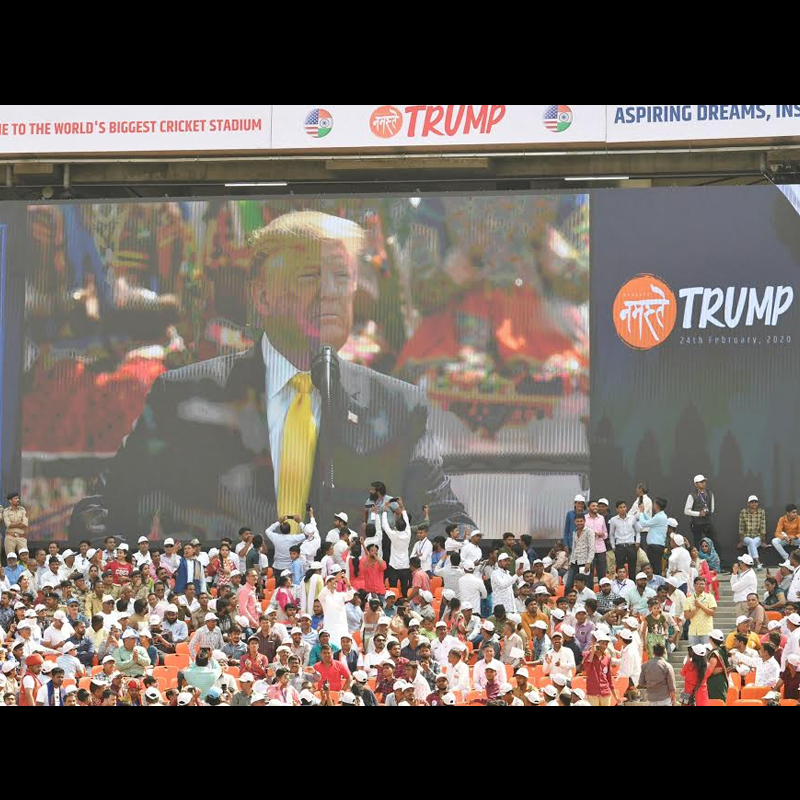
    MUMBAI: From Bollywood to cricket and terrorism to defence, US president Donald Trump made an attempt to woo Indians and send a positive message back home to the Indian-Americans in his 26-minute-long speech during an event ‘Namaste Trump’.

    The event, Namaste Trump, is considered to be strategically important to Trump as the US presidential elections are slated later this year. Seeking a second term in office, he has been trying to create positive vibes and raise his brand value across the globe which eventually could have an impact back home. In the US, as many as 40 lakh people Indian-Americans are crucial, capable of swaying votes in his favour.

    Media pundits and experts are of the opinion that Trump’s India visit is a well-calculated marketing initiative.  

    Havas Media chief executive officer Anita Nayyar said: “Indian-Americans are contributing a lot to the US economy and could be the potential campaign fundraisers.”

    Nayyar believes it was a well-planned marketing gambit of Team Trump to come to India a few months ahead of the presidential elections to woo the Indians and the Indo-Americans back home. It may be recalled that in 2018, the US president turned down India’s request to be a chief guest for the Republic Day event.

    She adds: “Trump talked about India very well in his address. He talked about Indian festivals and the country’s cultural diversity. He also touched upon topics such as movies, cricket – all those good aspects where India is progressing.”

    Trump quite often has a habit of making loose comments, which can have repercussions, at domestic and international levels. “I was quite surprised that Trump remembered and touched upon all the areas where the Modi government has made progress,” explains Nayyar.

    Literally playing to the gallery and earning the applause of the cheering crowd at Motera stadium, the US president eulogised Bollywood and mentioned Dilwale Dulhania Le Jayenge and Sholay. He very well struck a chord with the audience by talking about cricket, which is almost like a religion to the masses. He also mentioned the cricket legend Sachin Tendulkar and the Team India skipper Virat Kohli in his speech.

    Despite facing problems in pronunciation, Trump also praised the work of Swami Vivekananda and Sardar Patel in his speech. He also lauded India’s effort to reach the moon’s southern pole.

    The president’s popularity in India has soared to 56 per cent from 14 per cent since his candidacy in 2016, a Pew Research poll said in a report. Nayyar says: “The sole credit for the increase in confidence within Indians for Trump goes to Modi as their bonhomie has been quite visible for the last few years.”

    The president, all along with his speech, kept praising India, Indians and prime minister Modi and his government’s work. “India will hold a very special place in our hearts,” he said. “America loves India, America respects India and America will always be a loyal and faithful friend to Indian people.”

    Nayyar also said that it was expected that Trump would speak on the common problem shared by both the two nations: terrorism. Trump in his speech said: “India and the US are committed to fighting terrorists and their ideology; that is why my government is working with Pakistan to crack down on terror groups.”

    Moreover, on defence strategy, he also announced an over $3 billion military deal between the two nations that would be signed on Tuesday. “The Indian armed forces will get the absolute finest state-of-the-art military helicopters and other equipment through this deal,” he said.

    Echoing Nayyar’s views, Dentsu Aegis Network’s chief executive officer Anand Bhadkamkar says: “Trump is a great marketer and he understands the pulse exactly where to reach out. He definitely will make use of every  opportunity he comes across.”

    He believes that the recent visit to India could be termed as Trump’s approach to woo Indians in India as well as in America. “Indian-Americans are quite large in the US and this visit cannot only be seen as the upcoming US election agenda, but an enhancement of bilateral and trade relations between India and the US.”

    “Trump is a quite sharp businessman and great politician, which he has proved in the last few years. Trump as a brand has great value and people do respect him for what he’s creating. He has maintained what he was before and he’s very conscious and aware of the same,” says Bhadkamkar.  

    The Namaste Trump event is a return gift to the US president. “Five months ago, the United States welcomed your great Prime Minister at a giant football stadium in Texas and today India welcomes us at the world's largest cricket stadium right here in Ahmedabad,” Trump said in his address.

    Quid Pro quo?

  • Movies Now & MN+ to simulcast ‘Gandhi’ on 30 January

    Movies Now & MN+ to simulcast ‘Gandhi’ on 30 January

    MUMBAI: Times Network’s movie channels Movies Now and MN+ will simulcast – Gandhi – a biopic on the life of Mohandas Karamchand Gandhi on 30 January, 2016 at 1 pm.


    Directed and produced by Richard Attenborough and written by John Briley, the film features Ben Kingsley as Gandhi, Saeed Jaffrey playing the role of Sardar Patel, Alyque Padamsee as Mohammed Ali Jinnah and Roshan Seth as Jawaharlal Nehru. The 1982 biopic dramatises the life of Gandhi, the leader of India’s non-violent struggle for independence from the British, and also stars Amrish Puri as Khan, Candice Bergen as Margaret Bourke-White, John Gielgud as Lord Irwin and Martin Sheen as Walker, among others.


    Gandhi has bagged eight Oscars along with 10 Golden Globe awards, and several top creative and technical awards from some of the most reputed guilds and associations across the world.


    The movie will also have a repeat telecast on Movies Now at 11 pm on the same day.

  • Movies Now & MN+ to simulcast ‘Gandhi’ on 30 January

    Movies Now & MN+ to simulcast ‘Gandhi’ on 30 January

    MUMBAI: Times Network’s movie channels Movies Now and MN+ will simulcast – Gandhi – a biopic on the life of Mohandas Karamchand Gandhi on 30 January, 2016 at 1 pm.


    Directed and produced by Richard Attenborough and written by John Briley, the film features Ben Kingsley as Gandhi, Saeed Jaffrey playing the role of Sardar Patel, Alyque Padamsee as Mohammed Ali Jinnah and Roshan Seth as Jawaharlal Nehru. The 1982 biopic dramatises the life of Gandhi, the leader of India’s non-violent struggle for independence from the British, and also stars Amrish Puri as Khan, Candice Bergen as Margaret Bourke-White, John Gielgud as Lord Irwin and Martin Sheen as Walker, among others.


    Gandhi has bagged eight Oscars along with 10 Golden Globe awards, and several top creative and technical awards from some of the most reputed guilds and associations across the world.


    The movie will also have a repeat telecast on Movies Now at 11 pm on the same day.

  • Sardar Patel, Indira Gandhi to be remembered by AIR, DD on their anniversaries

    Sardar Patel, Indira Gandhi to be remembered by AIR, DD on their anniversaries

    NEW DELHI: Both All India Radio (AIR) and Doordarshan are celebrating India’s Iron Man Sardar Vallabhai Patel’s birthday this week with different programmes.


    AIR has organised a discussion today, which will be broadcast on 31 October.  This year’s topic is Marxism, Socialism and Integral Humanism. The speaker is veteran mediaperson and member of Parliament Chandan Mitra.


    Meanwhile, AIR Delhi will also broadcast live the function relating to the 30th Death Anniversary of former Prime Minister Indira Gandhi from 1 Akbar Road, New Delhi on 31 October from 8.15 am onwards on Indraprastha Channel MW 366.3 mtr and a Radio Report  on the various functions  held  in the capital to commemorate the anniversary and will be broadcast on 31 October 2014 at. 8.30 pm. This report will be broadcast from Indraprastha Channel 366.3 mtr and National Network.


    DD Bharati is telecasting “Sardar Patel”: Vallabh Bhai Patel Birthday Celebration on 31 October at 06:00 pm, with repeat telecast at 02:00 am and 10:30 am.


    DD National is going to remember him through the Hindi Feature Film ‘Sardar’ directed and produced by Ketan Mehta scheduled for telecast at 09.30 p.m. on DD-National.


    DD National will also telecast at 08:00 am the events of the Rashtriya Ekta Diwas with the paying of floral tributes at Patel Chowk, New Delhi. This will be followed by the Unity Pledge and Run for Unity from Vijay Chowk to India Gate, New Delhi.


    There will be a documentary on the Sardar after the morning function, and the film YUGPURUSH: A film on Sardar Vallabhbhai Patel at 10.00 am.


    The feature “SARDAR” by Ketan Mehta will be telecast on DD National in the Friday Houseful slot at 9.30 pm.


    DD News has also slated programmes to pay their tributes to the Sardar and the former Prime Minister. A half-hour discussion will be telecast at 7.30 pm on the Sardar, and the social media; Tweets and YouTube alerts will be given for the function. The Sardar Patel lecture will be telecast in news bulletins. The live programme will start at 7:30 am and go live till 10 am with two anchors and two guests with inputs from Police Parade, Hyderabad. This will be followed by a half-hour programme, named Lauh Purush which will be repeated at 7:30 pm. There will be a discussion in the late night news bulletin on DD News at 8.10 pm.


    During the day, all the events in which Prime Minister Narendra Modi takes part will be streamed live on YouTube. There will be tweets on PM’s function and speech, apart from posts on Facebook. 

  • Broadcasting woes

    Broadcasting woes

    If we are to transform India, a realist or ‘Patelist’ engagement with the rest of the world is what we must implement; engaging the world from strength while recognising reality for what it is, foreswearing hubris and belligerence”, remarked Shiv Shankar Menon during the Patel Memorial Lecture of All India Radio last year. India in effect continues with Sardar Patel appreciation against taking the Kashmir issue to the United Nations and has been successful in averting international manipulation in our internal affairs.  In the recent past, reports appeared in sections of the press that our neighbours are active in rolling controversies and possible resentment for rehabilitating surrendered militants via Nepal. Yasin Bhatkal’s revelation of Nepal remaining the favoured nation for transiting members of the Indian Mujahideen further fuelled diplomatic irritation.


    The most disturbing vilification campaign alleging torture of Nepalese people whipping up local sentiments and a number of FM stations with content paid up by vested interests and mixing attractive Bollywood stuff in Nepal are psy weapons that merit the nation’s intervention. Gorkhas of Nepalese origin have shared triumphs and sorrows battling in all theatres of operations as part of the glorious Indian Army. As of today, there seems to be no coordinated trans-border broadcast policy to air either views or the stand point of the nation. India’s National Public Broadcaster, Prasar Bharati, continues to be sub-optimally utilised.


    After Independence and up to the eighties, the External Services Division of AIR functioned in close coordination with MEA through External Publicity Division with greater interaction between the two keeping in view foreign policy requirements, dynamics of foreign relations, and priorities set from time to time.


    Due to its colonial links with England, AIR entered the domain of external broadcast in 1939 purely as a tool for propaganda for the allies during World War II with service in Pushto language in order to counter German Radio blitzkrieg and complement the efforts of the BBC in this region.  When the theatre of operation expanded to South East Asia and East Asia by 1945, External Services Division had a total of 22 language services.  The importance waned once the War ended, plummeting from 22 to just 10 languages. The capacity of ESD remains to cover 100 countries with coverage of 75% of world population in 16 foreign and 11 Indian languages with a targeted audience of 9 neighbouring countries comfortably.


    But gone are the days of diplomatic bags overflowing with letters addressed by radio audiences from all over the world to External Service Division of AIR. The Urdu Service widely popular among Pakistan and at home is in a state of disarray and listeners’ feedback has become a trickle. Chinese domination in the visual and audio medium is of concern since a substantial Arunachalee tribal population living in East Syong, Tirap, Changlong, Ajnow, Lohit, Upper and Lower Dibang Valleys could access Chinese TV channels of  High Power Transmissions from Chinese territory whereas our own Doordarshan, Itanagar, covers a few kilometres through Low Power Terrestrial Transmission. However there being no impediment to satellite TV through DTH, the case for Set Top Boxes for DD free Dish is indispensable if Prasar Bharati has to prudently cover the North East. It is our national duty to reach inaccessible terrain inhabited by tribal Indians in and around Tawang who witnessed chaotic battle scenes during the 1962 operation and upper reaches near Leh, Ladakh.


    In the changing scenario of popularity of FM channels compared to Medium Wave and Short Wave transmissions, the country needs to shift its primary broadcast to FM radio with relevant content retaining its own and traditionally loyal trans-border audience. There are more than 150 independent Radio Stations operating in Nepal. If India has to retain audience base in Nepal, augmentation of transmission power and number of FM stations is necessary as of yesterday.  As far as Bhutan, English added on to Dzonka could cover the whole population with increased presence of FM.  In times of crisis, it is AIR, BBC or Indian satellite channels which are tuned into in Pakistan for credible news; Maj Gen Mohd Azam Asif of PAK Army observed once, substantiating the relevance of AIR.


    Coverage of regional content, news and current events for external audience could only succeed with local dialect and flavour. There is all round apathy about external radio broadcast of ESD among all stakeholders including MEA, resulting in progressive decline of our broadcast as an instrument of diplomacy relegated to the background, adversely impacting its performance, notwithstanding the historic role played.  It is unfortunate and ironic that our external broadcast is touching the nadir at a time worldwide efforts are on to re-invent the importance of external broadcast expanding and consolidating their position, adopting the newest of technologies including new media to meet the changing realities of international politics.


    Complete dismantling or discontinuation of external broadcast may not be in the larger national interest and may turn out to be throwing the baby with the bucket of water. Credible assessment of external audience indicates decline in short wave and medium wave, suffers clarity due to concrete congestion and sky scrapers in Urban India and the neighbourhood. Simulcasting in FM, web streaming, proliferation in internet and availability in hand held devices would rejuvenate AIR. Unless ESD functions with regular interaction from stakeholders like MEA, MoD, MHA, meeting the needs of foreign policy and priorities, the vast infrastructural wealth of the nation in the hands of Prasar Bharati will continue to be wasted, risking its painful death. The nation has a duty and great opportunity to revisit and formulate an integrated policy on our external broadcast which is in the Government domain.


    (These are purely personal views of the writer and do not represent the official views of Prasar Bharati and indiantelevision.com does not subscribe to these views)

  • Govt. defends advisory to TV news channels on PM’s Independence Day Speech

    Govt. defends advisory to TV news channels on PM’s Independence Day Speech

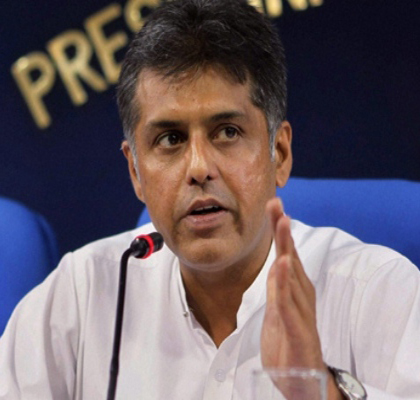
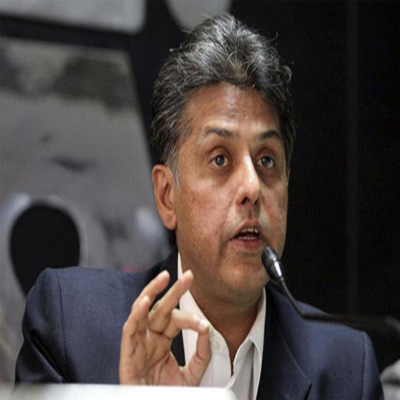
    NEW DELHI: Information and Broadcasting Minister Manish Tewari today staunchly defended the advisory issued by his Ministry asking news television channels to make a distinction between a speech delivered by the Prime Minister from the ramparts of Red Fort on Independence Day and speeches made by different political leaders.

    He said at a press meet here that the President’s address to the nation on the eve of Republic Day or the Prime Minister’s address on Independence Day were not speeches made as leaders of any party but as leaders of the nation. It was therefore wrong to draw parallels between these speeches and those made by leaders of different political parties.

    At the same time, he drew attention to the word ‘advisory’ and said the Ministry’s viewpoint was meant to be just that and not any dictat to the media.

    He said the present government had always stood for freedom of the media and would continue to do so.


    Referring to a question about a film on Sardar Patel, he said that the National Film Development Corporation would consider such a proposal if any filmmaker plans to do so.

    He reiterated that while the United Progressive Alliance had always given newspaper advertisements on the birth and death anniversaries of eminent leaders, but it was the previous National Democratic Alliance which had failed to do so, according to figures given by the Directorate of Advertising and Visual Publicity.

    Referring to the government’s view on opinion polls conducted by different media publications before the elections, he said that his party was not opposed to them but it could not be denied that such polls could be manipulated. He said the Congress party’s stand on this had been consistent. He said that the Central Election Commission had in fact sought the opinion of all political parties on this issue. While the stand of his party was consistent, the Bharatiya Janata Party had been opposed to opinion polls in 2004 but had supported these in its present view given to the Commission.    

  • Tewari issues clarification on Sardar Patel ad releases by govt

    Tewari issues clarification on Sardar Patel ad releases by govt

    NEW DELHI: The Government gave out 2164 newspapers advertisements on the occasion of the birth anniversary of Sardar Vallabhbhai Patel between 1998 and 2003.

    Interestingly, the Information and Broadcasting Ministry said in a statement in response to statements by certain political leaders that no advertisements were released during the years 1999, 2000 and 2001.

    However, 20,915 newspapers were given the advertisement between 2004 and 2013. No advertisement was given in the year 2008. 


    The Ministry said the Directorate of Advertising and Visual Publicity had been regularly releasing advertisements on the birth anniversary of prominent national leaders including Sardar Patel.

    In this context, I and B Minister Manish Tewari said: “The Ministry of Information & Broadcasting has always followed a policy to acknowledge the contribution of prominent national figures in nation building by releasing advertisements. The advertisements released on the birth anniversary of Sardar Patel are part of the continued policy of this Ministry of expressing gratitude to great leaders for instilling confidence and inspiration in the young minds.”  

  • Govt. defends advisory to TV news channels on PM’s Independence Day Speech

    Govt. defends advisory to TV news channels on PM’s Independence Day Speech

    NEW DELHI: Information and Broadcasting Minister Manish Tewari today staunchly defended the advisory issued by his Ministry asking news television channels to make a distinction between a speech delivered by the Prime Minister from the ramparts of Red Fort on Independence Day and speeches made by different political leaders.


    He said at a press meet here that the President’s address to the nation on the eve of Republic Day or the Prime Minister’s address on Independence Day were not speeches made as leaders of any party but as leaders of the nation. It was therefore wrong to draw parallels between these speeches and those made by leaders of different political parties.


    At the same time, he drew attention to the word ‘advisory’ and said the Ministry’s viewpoint was meant to be just that and not any dictat to the media.


    He said the present government had always stood for freedom of the media and would continue to do so.


    Referring to a question about a film on Sardar Patel, he said that the National Film Development Corporation would consider such a proposal if any filmmaker plans to do so.


    He reiterated that while the United Progressive Alliance had always given newspaper advertisements on the birth and death anniversaries of eminent leaders, but it was the previous National Democratic Alliance which had failed to do so, according to figures given by the Directorate of Advertising and Visual Publicity.


    Referring to the government’s view on opinion polls conducted by different media publications before the elections, he said that his party was not opposed to them but it could not be denied that such polls could be manipulated. He said the Congress party’s stand on this had been consistent. He said that the Central Election Commission had in fact sought the opinion of all political parties on this issue. While the stand of his party was consistent, the Bharatiya Janata Party had been opposed to opinion polls in 2004 but had supported these in its present view given to the Commission.