Tag: Saraswati Chandra

  • Vivek Bhutyani quits Star; to start own OTT biz

    Vivek Bhutyani quits Star; to start own OTT biz

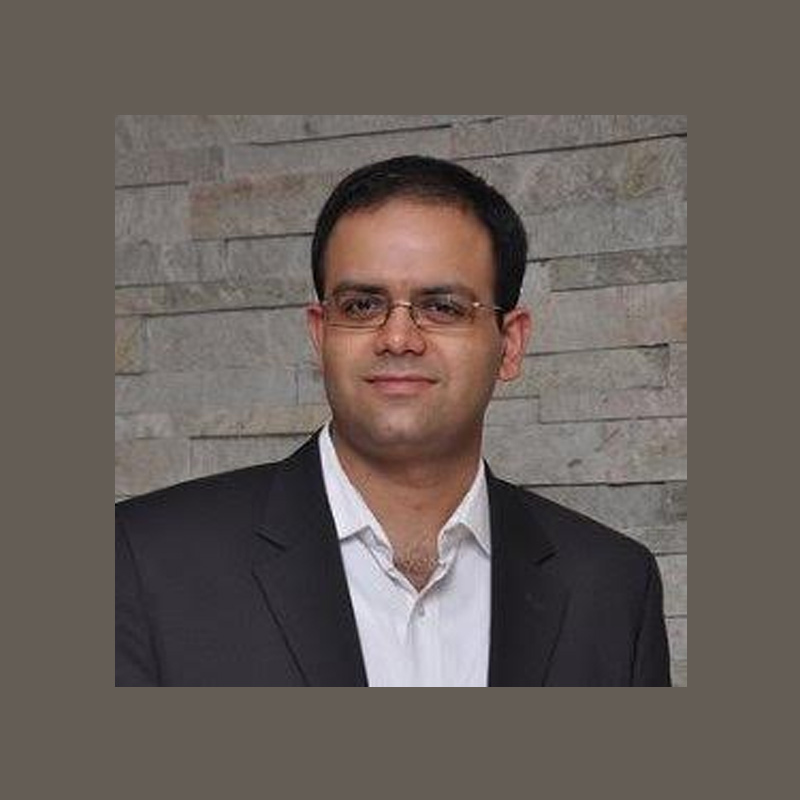
    MUMBAI: Close on the heels of Star India business head Nikhil Madhok’s exit, another high-profile resignation has taken place at the channel. Star India vice-president and head – content sales and syndication Vivek Bhutyani has put in his papers.

    Sources confirmed that Bhutyani, also an alumnus of IIMB like Madhok, who was with the channel since April 2014, has called it a day. Bhutyani plans to start his new venture in the over-the-top (OTT) space, sources revealed.

    The person who will stand in for Bhutyani is the AVP Leena Salins, who was earlier with Star Gold programming. Gurjeev Kapoor has taken over global syndication from Sandeep Jain. However, Star is yet to find a replacement for Madhok.

    During his tenure at Star, Bhutyai was instrumental in taking the channel’s international syndication business to new heights. With the success of ‘Saraswati Chandra’, he opened the doors of Turkey and Latin America for Indian content. And, with the successful run of “Is pyar ko kya naam do” in Turkey, all Indian broadcasters are now eyeing a share of the Turkish content market.

    Bhutyani was also responsible for moving Star’s focus from domestic to international syndication and has taken its reach to more than 75 countries and entry into premium markets such as Latin America. He also grew the topline business more than 100 per cent in two years and international business by three times as stated on his Linkedin public profile.

    Under Bhutyani’s leadership, Star signed a fiction formats deal with Eccho Rights, the first time that Indian content will be pitched alongside international content from Hollywood studios and other majors which might mark a new major revenue stream for Star India. No other Indian broadcaster has been successful in selling fiction formats and remakes globally, sources claimed.

    Before joining Star India, Vivek was the B2B head (west) at Nokia from December 2011 to April 2014. Earlier, he was managing global accounts for India and APAC as the senior account director at BT Global Sales.

  • Vivek Bhutyani quits Star; to start own OTT biz

    Vivek Bhutyani quits Star; to start own OTT biz

    MUMBAI: Close on the heels of Star India business head Nikhil Madhok’s exit, another high-profile resignation has taken place at the channel. Star India vice-president and head – content sales and syndication Vivek Bhutyani has put in his papers.

    Sources confirmed that Bhutyani, also an alumnus of IIMB like Madhok, who was with the channel since April 2014, has called it a day. Bhutyani plans to start his new venture in the over-the-top (OTT) space, sources revealed.

    The person who will stand in for Bhutyani is the AVP Leena Salins, who was earlier with Star Gold programming. Gurjeev Kapoor has taken over global syndication from Sandeep Jain. However, Star is yet to find a replacement for Madhok.

    During his tenure at Star, Bhutyai was instrumental in taking the channel’s international syndication business to new heights. With the success of ‘Saraswati Chandra’, he opened the doors of Turkey and Latin America for Indian content. And, with the successful run of “Is pyar ko kya naam do” in Turkey, all Indian broadcasters are now eyeing a share of the Turkish content market.

    Bhutyani was also responsible for moving Star’s focus from domestic to international syndication and has taken its reach to more than 75 countries and entry into premium markets such as Latin America. He also grew the topline business more than 100 per cent in two years and international business by three times as stated on his Linkedin public profile.

    Under Bhutyani’s leadership, Star signed a fiction formats deal with Eccho Rights, the first time that Indian content will be pitched alongside international content from Hollywood studios and other majors which might mark a new major revenue stream for Star India. No other Indian broadcaster has been successful in selling fiction formats and remakes globally, sources claimed.

    Before joining Star India, Vivek was the B2B head (west) at Nokia from December 2011 to April 2014. Earlier, he was managing global accounts for India and APAC as the senior account director at BT Global Sales.

  • Hit at the box office, flop on TV

    Hit at the box office, flop on TV

    From Anurag Kashyap’s Yudh for Sony Entertainment Television (SET), Ashutosh Gowariker’s Everest on Star Plus, Vipul Amrutlal Shah with Pukaar – Call For The Hero on Life OK, Anil Kapoor’s 24 to Sanjay Leela Bhansali’s Saraswatichandra on Star Plus, the small screen has always welcomed big filmmakers with open arms. However, it is a different story that not many of them have been able to make a mark on television.

    Despite having deep pockets, the crowned kings of weekend box office, somehow fail to rule weekdays on television. Moreover, these were not your “typical Indian daily soaps.” With oodles of star power and mammoth production budgets, these shows took programming on Indian television to a different level.

    Producers are now pumping in more money in daily soaps, be it for grander sets, better special effects or skilled writers and directors. For instance, each of these episodes costs upwards of Rs 1.25 crore as compared to the normal budget of Rs 6-8 lakh for 30 minutes of fiction.

    Moreover, these handful of shows are attempting to push the fiction envelope in the Rs 43,000-crore Indian television industry today.

    Unfortunately, the production cost incurred by these shows fails to justify the visibility the shows garner.

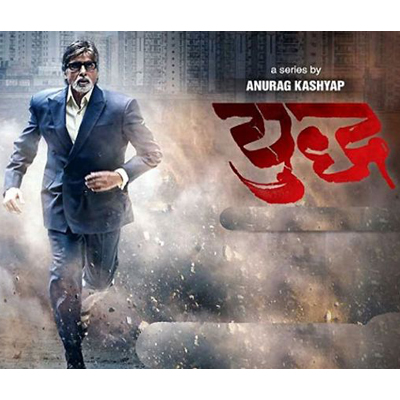
    Let’s start with Yudh. This was one of the most talked-about shows of 2014 with Bollywood megastar Amitabh Bachchan making his television fiction debut on Sony. The show ran for four weeks, with five episodes a week. The estimated cost of the show, per episode, was around Rs 3 crore. While the channel promoted the property extensively, the buzz hit the rocks when it clocked an average of 1,199 TVTs in its opening week. The industry termed it as ‘dark’ content for the 10 pm slot on Indian television. 

    Similarly, Bhansali’s Saraswatichandra spent close to Rs 12 lakh per episode, little higher than what a fiction daily soap would spend. Though it started on a good note with 5,730 TVTs, it later lost track and the numbers fell drastically.

     After Bhansali, Star Plus brought Bollywood filmmaker Gowariker back to the small screen with Everest. Touted as one of the most expensive fiction shows, it was shot at locations like Nepal, Uttarakhand and the Dokriani glacier. With technical equipments like GoPro cameras, 4K technology etc, the production cost per episode was around Rs 35 lakh. The channel had pinned high hopes on the show but it failed to generate ratings as expected. It registered 2,845 TVTs in its opening week.

    Another show with a different perspective titled Pukaar had men as the main protagonists. Based on a story with an army background, it saw filmmaker Vipul Shah making his debut on television. Close to Rs 13 lakh had been spent per episode on production. Needless to say that Pukaar failed to call in the audience.

    While more often than not they’re armed with a magic formula for success on the big screen, why do these filmmakers’ high-budget television stint fail to bring in viewers?

    Indiantelevision.com spoke to industry experts to know whether Bollywood biggies have simply lost their way or have audiences grown tired of their particular brand of filmmaking?

    Media planners feel that no matter how much money a maker puts in, if the content doesn’t reflect the taste and preferences of Indian viewers, the show is bound to flop.

    Helios Media managing director Divya Radhakrishnan opines that television and movies are very different mediums. “In a movie, you get two hours to tell your story and a maker knows how to build it section by section. Television is 22 minutes in and out. How you can link the 22 minutes and have a 24-hour gap before you come up with next 22 minutes is important. So, there is a different knack of doing television, which is very different from movies,” she says.

    Similarly, Radhakrishnan believes that television makers can’t do movies. “Look at the mindset, for instance, from a hijack sequence in Diya Aur Baati Hum to a wedding scene in Yeh Rishta Kya Kehlata Hai, a viewer’s mindset is changing constantly. Assuming that a person is watching Star Plus end-to-end, this is the kind of graph that goes on television. However when you are watching a movie, a viewer, right from the first minute to the end of the three hours, is fully in tune with the character. Movie format is very different from that of television.”

    Another observer feels that film producers are so oriented towards movie making that they have to re-orient themselves for television, which is very difficult for someone of creative caliber like Gowariker, Bhansali etc.

    “It’s not about a show doing well or not doing well, but when BARC rollout happens, the benchmarks are going to change. The mindset of a Baalika Vadhu viewer will be different from that of a Yudh viewer,” adds Radhakrishnan.

    Concurring with Radhakrishnan, a media analyst feels that the grammar of storytelling on television is different from films. “On the big screen, filmmakers have support of huge stars, which is one reason for the film doing well. On TV, big filmmakers will definitely have the money to pump in but no big stars, which can back them up with the content they deliver. Shooting at exotic locations and increasing production cost are not necessarily recipes of good content.”

    Argue that Yudh failed to make an impact on viewers despite having probably the biggest star there ever has been in Bachchan and the burden of failure immediately falls on the frail shoulders of content, which invariably is king.

    Another point to factor in here is the crew that works on the production. A media analyst feels that by getting the crew that works on films will not necessarily work on television. “The way creative people think for movies and television is way different. You can’t get the same set of film people to write or direct for television,” the analyst opined.

    From a purely demand and supply point of view, mainstream watchers do not look for intellectual content after a day full of hardship. “They just want entertainment, which Yudh failed to deliver,” opines a top executive of a production house. “After full day of work, who would want to watch ‘dark’ content? What one needs is good content, which can de-stress the mind.”

    Another observer believes that in the US, TV series form a substantial market for various studios, and it is taken quite seriously by all participants like studio, writers, producers, director, actors and the audience. “In India, the television industry is yet to achieve that status. For this to happen, the content and formats on Indian television needs to witness a sea change.”

    While one has caught a glimpse of this change wherein big-budget shows like 24, Bigg Boss, Satyamev Jayate and Mahabharat have worked, the fact remains that such shows are far and few. A media planner says, “Why is it that these high-budget shows worked on television? It is because the content directly clicked with the audiences as the makers understood what the audience of today wants.”

    Offering a different take, a Hindi general entertainment channel (GEC) executive says, “The target audience for most Indian TV shows is households that don’t prefer watching anything sophisticated but only the typical serials. For many years, saas-bahu serials, in which Ekta Kapoor thrived, ruled the roost. Over the years, many other themes opened up like dance, music competitions, historical serials etc. However, in all these the inherent style remains the same, just the setting changes.”

    How important is time slot for the success or failure of shows? To this, Radhakrishnan says, “People chase good content. For instance, last year Colors filled up the 9-10 pm slot with two shows Beintehaa and Rangrasiya, which did average in numbers and less in viewership. Why didn’t these shows work in the primetime slot? However, now the channel airs Ashoka Samrat in the same time slot. The show has a very strong base and so it’s doing well. At the end of the day, it’s all about having good content.”

    A trait that people lack today is patience. Radhakrishnan argues that people are not patient nowadays and will go wherever they find content that appeals to them. It boils down to the game of content and the appeal it brings to the table. “Otherwise Saath Nibhana Saathiya at 6.30 pm and Yeh Hai Mohabattein at 11 pm wouldn’t be the top rated programmes in the genre. Similarly, Diya Aur Baati Hum for a very long time was the top rated show on the TAM TV ratings chart. However, the last four weeks had a different story to tell when the numbers dropped drastically with the show losing its numero uno position. Thus, to get the audiences back, the show took a generation leap to bring it back on track. In the interim, KumKum Bhagya of Zee has become number one.”

    High production budget and big names don’t necessarily result in getting the eyeballs. So while Karan Johar may produce a show tomorrow starring Shah Rukh Khan and Katrina Kaif, if the content is not strong enough, be rest assured that the viewer is not going to lap it up.

  • King Khan takes Zee to top spot on GEC chart: Week 43

    King Khan takes Zee to top spot on GEC chart: Week 43

    MUMBAI: It seems the 40 crore acquisition of Zee TV has paid off. The channel’s biggest acquisition Chennai Express worked wonders for the channel. In the week 43 of TAM TV ratings, Zee TV has finally overtaken Star Plus, thanks to the biggest blockbuster of the year which the channel premiered on 20 October that earned 19,541 TVTs.


    It has notched up the channel’s ratings taking its tally to 505,442 GVT’s (409,304). Second placed, Star Plus shed and marked at 492,849 GVTs (517,048). Colors is at the third position earning 423,584 GVTs (384,496).


    Life OK’s position was constant at number four with 334,635 GVTs (316,904). Sab is at number five with 331,674 GVTs (319,214) and Sony remains stable at number six with 281,638 GVTs (292,327). Sahara One continues to be at the bottom of the chart with 36,323 GVTs (32,081).


    Coming back to the chart topper, Zee TV’s fictional offering Qubool Hai witnessed a drop and scored 4,998 TVTs (5,412). Pavitra Rishta generated 4,419 TVTs (4,736). Sapne Suhane Ladakpan Ke secured 4,843 TVTs (4,660). Period drama Jodha Akbar noted 8,299 TVTs (8,551), while drama series, Do Dil Bandhe Ek Dori Se registered 4,412 TVTs (4,726). The new sitcom Bh se Bhade generated 2,856 TVTs. The channel recently launched its reality dancing show, DID 4 which registered 6,075 TVTs.


    Star Plus ranked second in the rating, but its popular show, Diya aur Baati Hum fared well with 10,367 TVTs (9,981), Yeh Rishta Kya Kehlata Hai scored 7,347 TVTs (6,819), Pyar Ka Dard Hai generated 7,178 TVTs (6,878) and Saathiya registered 7,474 TVTs (7,007). Epic series, Mahabharat witnessed a rise and scored 5,530 TVTs (4,815). Saraswati Chandra scored 5,170 TVTs (6,009).


    Interestingly, Colors’ longest running fiction series Balika Vadhu saw a huge rise in its ratings and marked 7,735 TVTs (5,767), Madhubala – Ek Ishq Ek Junoon scored 4,305 TVTs (4,230) and Uttaran reported 3,722 TVTs (3,663). Comedy Nights with Kapil maintained its stability and registered 5,250 TVTs (5,228). It’s much hyped adaptation of the international 24 starring Anil Kapoor witnessed a rise and scored 3,050 TVTs (2,776). And its popular reality show, Bigg Boss scored 4,587 TVTs (4,246).


    Fourth placed, Life OK’s top mythological series Mahadev scored 3,759 TVTs (3,316). Do Dil Ek Jaan stood at 1,719 TVTs (1,711), Savdhan India rated 2,577 TVTs (2,563). Shapath generated 3,699 TVTs (3,460) and Ek Boond Ishq noted 2,749 TVTs (2,673). Reality series The Bachelorette India stood at 2,052 TVTs (1,875).


    Sab’s fiction show, Taarak Mehta Ka Ooltah Chashmah continues to lead among all its other shows with 8,161 TVTs (7,224). Chidiya Ghar saw a rise and rated 3,852 TVTs (3,386). Lapataganj generated 2,217 TVTs (2,189) and Baalveer registered 2,904 TVTs (2,750). It was a roller-coaster ride for other fiction shows as well.


    Sony, which is at number six, saw a rise and recorded 5,009 TVTs (3,229) for its longest running crime series CID, Crime Petrol too saw a rise and registered 3,947 TVTs (2,940). The channel’s historical show Maharana Pratap witnessed 2,772 TVTs (2,680). KBC garnered 3,570 TVTs (3,796). Other fiction shows either held on to their viewership or dipped marginally during the week.


    In the movie channel genre, Zee Cinema reported 195,223 GVTs (205,828); Star Gold witnessed a rise and registered 190,414 GVTs (179,697) and Movies OK scored 124,887 GVTs (116,200). On the other hand, &pictures garnered 67,725 GVTs (64,687), Zee Anmol rated 52,731 GVTs (52,080) and Max scored 198,492 GVTs (199,906).


    Let’s see what’s in store for the channels in the coming weeks.

  • Telly Talk India soars high on popularity

    Telly Talk India soars high on popularity

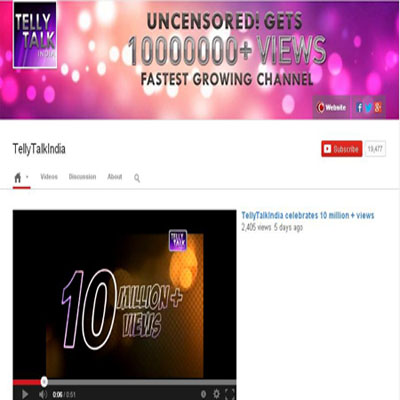
    MUMBAI: Telly Talk India, the brand new online channel, has its pulse on all the things that go on after the daily soap cameras stop rolling and reality TV gets real. Showcasing some of the most exclusive and sensational telly scoops, Telly Talk India is making heads turn. It has crossed one crore video views on YouTube within six months of its launch. The digital channel has been successful in establishing itself on the basis of its irresistible entertaining content. In fact, within two months of its launch, more than 10 videos from Telly Talk India were trending on YouTube charts.


    Telly Talk India is owned and operated by one of the leading Bollywood channels, Zoom, which is also India’s biggest TV brand in the digital space. Zoom has over 81 crore views and nearly 3.3 lakh subscribers on YouTube, over 52 lakh fans on Facebook, nearly 2.8 lakh followers on Twitter and over 12 lakh people in its circles on Google+. The basic idea of the online channel Telly Talk India emerged from Zoom’s weekly TV show “Telly Talk” that covers the off-screen lifestyles of the most popular TV celebrities.


    Telly Talk India has become the most sought after destination for the Indian television lovers, giving them an uncensored access to the life of their favourite telly stars. From identifying the “good-friends” in the industry, to RK from Madhubala (Colors) disclosing his real life romance and Saras from Saraswati Chandra (Star Plus) talking about the upcoming twists in the serial to revealing telly stars’ personal wardrobes to how they celebrate their anniversary and what goes on behind-the-scenes on the sets, this digital channel is not just good at sourcing the latest scoops from telly land, but has the distinction to uncover the in-depth stories first.


    Enthralling the viewers with some exciting content innovations, Telly Talk India has exceeded expectations and has constantly delivered engaging content. Telly View, a segment on Telly Talk India, is the only online review show that rates the Indian TV shows. From predicting the runaway successes to short on-air life of shows, Telly View has been bang-on in predicting the fate of the latest launches on television.


    Mashup – a fun series of mashed up star-conversations is a roaring success because of its highly addictive tongue-in-cheek humour. Telly Express is a spicy one-minute roundup of all the biggest stories in Television.