Tag: Santosh Nair

  • Zee Keralam delivers content that Malayali viewers aspire for: Santosh Nair

    Zee Keralam delivers content that Malayali viewers aspire for: Santosh Nair

    MUMBAI: Neithedukkam Jeevitha Vismayangal, which means ‘Let’s weave wonders in life’ is the brand promise of Zee Keralam, one of the most recent additions to ZeeL’s stable of channels. Since its launch in November 2018, the general entertainment channel (GEC) has been swiftly growing, achieving 13 per cent market share, along with 300+ GRPs in the Kerala urban market, more than 65 per cent of the total TV population. Speaking to its success with the Malayalam audience is its second-highest TSV of 146 minutes per week.

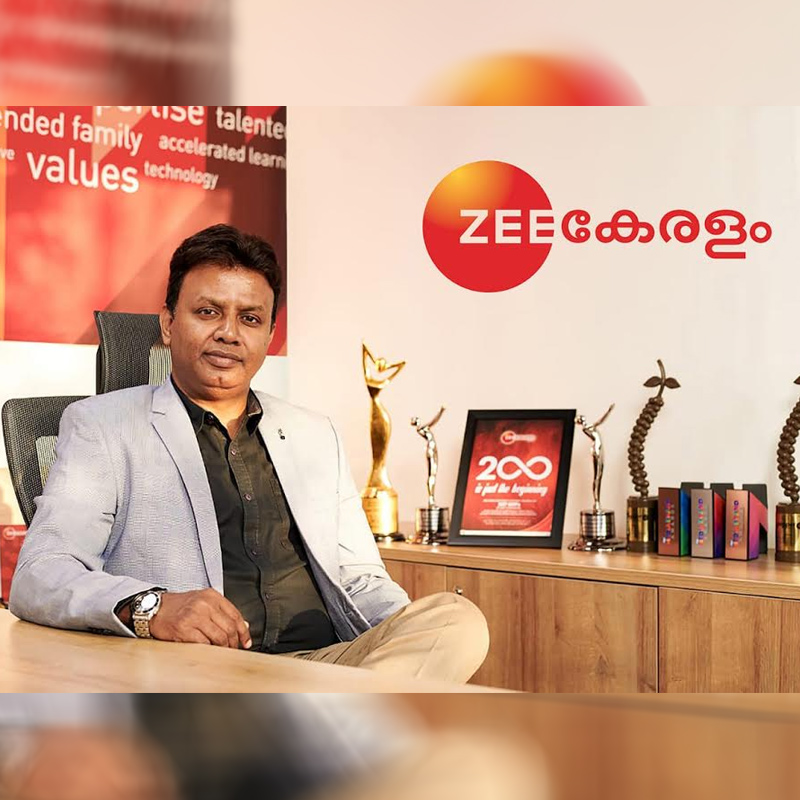
    Zee Keralam business head Santosh Nair remarked that the biggest takeaway he’s had in these two years is that good content is always well received and accepted. Said he: “Currently, our audience is looking for relatable stories with aspirational values. We try to mirror the heart and soul of every Malayali family. We did not consider ourselves at a disadvantage just because we were a brand-new channel, we looked into filling the gaps in the market for storylines that were different from existing ones, storylines that featured the true new Malayali family.” This approach worked well for the brand and helped it gain acceptance with its audiences.


    Kerala as a market is home to legacy channels that have been around for 25+ years with a strong and consistent viewership. The market is currently dominated by Star India's Asianet followed by Flowers TV, Mazhavil Manorama, Zee Keralam is at fourth spot followed by Surya, according to the BARC data for week 47 (Saturday 21 November, Friday 27 November 2020). 

    Zee Keralam’s initial challenge was to create a shift in the viewing patterns of the Malayali audience with differentiated content, positive storylines and a mixture of original and dubbed fictions, novel non-fiction shows on weekends and a decent movie library. The channel wanted to provide the audience with extraordinary content they hadn’t seen before.

    Within the span of two years, Zee Keralam is among the top five Malayalam channels. Nair shared that the channel’s focus on creating extremely solid storylines for its fiction shows has been a main contributing factor for its growth. The channel tries to make them as realistic, fresh and relatable as possible; and this has been well received by the audience. In addition to this, its non-fiction shows have generated a lot of hype and buzz in the market. The channel also has a decent movie library that completes the entertainment package. He mentioned, “Our original content hours are at par with our competitors. That has been one of the key factors behind the growth of Zee Keralam as a brand.” 

    Another major challenge, just like any other sector, has been the Covid2019 pandemic and lockdown. Nair detailed, “Even as we resumed shoots, we placed the safety of our cast and crew first which led to slower production timelines and output. But it was worth the risk since we wanted to ensure that we provided quality entertainment as well as adhere to all the safety protocols set by the government. Now as the world is slowly recovering, it’s heartening to see how we have pulled through this difficult phase together.” As of now, the channel has managed to conduct all its shoots without much delay while adhering to all safety protocols set by the government.


    From PT 19.30 hours, the original programming line-up starts, and it goes up to 22:00 hours. The weekends feature entertaining non-fiction content in a variety of genres like comedy, reality and game show formats. Nair highlighted that the team constantly listens to feedback from its viewers and tailors the content in accordance with their tastes and preferences. Zee Keralam actively creates campaigns for all its launches and concentrates aggressively on the sustenance phase as well. The current sponsors on the channel include Cutee, BSY, myG, Swayamvara Silks, spices and condiments brand Eastern, Herbal Baby Kajal, and more.

    Mplan Media CEO Parag Masteh revealed that post Onam there has been a good momentum, market sentiment is relatively positive in Kerala, ad-rates and inventory fill-in rates are almost at 70-80 per cent. He explained that all south states are a complete independent ecosystem all together, so the GEC space in each state is pretty huge by itself and therefore advertisers pay premium prices only. Said he, “Regional channels are performing better than national channels because you reach out to a precise audience and they are aware about the consumer behaviour pattern. When you do the national campaigns there is no primary trend that arises, it is just a large sample size but when you go through regional route, you are aware of how a Keralite will buy a product and what their brand affinity is.”

    Masteh further revealed that at the entry-level there are many big brands that advertise regionally. Pharmaceutical brands are actively advertising in the south market. There are a lot of brands that have their supply chain only in a particular state. He’s of the view that while these brands have big pockets, they will not put their money on big channels because the supply chain is limited.

    Kerala is the land of spices; hence, food brands would naturally come on board. Jewellery brands are not far behind. According to Masteh, the state is a very important market for jewellery majors like Abharan, Kalyan Jewellers, and Bheema, to name a few. Retail sector businesses are also active. Apart from this a lot of standalone individual companies also advertise. Also, a lot of national brands prefer to do hyper-local marketing. However, compared to last year ad rates have declined by 20-30 percent.

    One of the highlights of Zee Keralam is that all shows in the primetime slots are equally well received and have a steady viewership, said Nair. In fact, he shared, in the last week three shows have crossed the 4+ average weekly TVR – Chembarathi at 19:00 hours, Neeyum Njanum at 19:30 hours and Karthikadeepam at 20:30 HRS. The channel’s latest non-fiction launches like Mr. & Mrs. and Let’s Rock N Roll are fast garnering a steady family audience base.

    The channel’s immediate plan of action to engage audiences doesn’t end here – two more new shows are in the pipeline. The channel’s fiction shows feature prominent faces from the Malayalam industry like Vaishnavi Saikumar featuring in her debut serial Kaiyyethum Doorath and Swasika, one of the most popular artistes in the Malayalam industry, as the lead in upcoming serial Manampole Maangalyam. It has also roped in some of its popular SaReGaMaPa finalists like Aswin Vijayan and Swetha Ashok to sing the title songs of shows which further engages the audience who are familiar with the Zee Keralam family, while also pulling in new viewership. Nair added, “When shows reach peak points in their respective storylines, we feature a maha episode for uninterrupted viewership, which helps us build a larger audience base. We are looking forward to amping up our content line up with original content in all genres.”

    Zee Keralam’s current content strategy is fiction driven, the primary objective is to concentrate on fiction shows and take them to the next level in terms of the storyline as well as production quality. The channel aims to provide “extraordinary entertainment” that is both progressive and rooted in the Malayali culture.

    According to Nair, the channel currently has a good programming strategy, but it is looking to build it even further to make it an extraordinary one.

  • Doordarshan gets a technology boost

    Doordarshan gets a technology boost

    MUMBAI: The otherwise quiet Doordarshan is now making headlines, and all for good reasons. The pubcaster that has brought in a slew of new shows to strengthen its programming is now also looking at upgrading its backend services.


    In the latest, Doordarshan has decided to move on from its semi-integrated software that handles different departments manually, to Broadcast Air Time Scheduling System (BATS) software, which integrates all the departments online. The software will be provided by Media Nucleus.


    The decision was taken after Doordarshan realised that there were too many manual interventions in every department. Unlike private broadcasters like Star and Zee, where every department is interconnected through Broadcast Traffic Signaling System, the pubcaster until now had been working manually in most of the departments.  


    BATS is a software that integrates different departments of the broadcaster; right from the administration to the programming, ad sales, marketing and billing among others. The software is useful, since it allows departments to work in their own capacity and yet compile everything to be put on air, without any revenue leakage.


    The software ensures accurate billing by effectively managing account hierarchy, different packages and products, pricing plans, library with barcode tracking, content rights management, automated ad booking along with discounts offered on bulk deals, charges, billing cycle, invoicing, payment processing and collections.


    “There are chances of huge revenue leakage when billing is done manually,” informs Media Nucleus director Santosh Nair. Doordarshan (finally) realised that with so many Kendras, decentralised operation and regional channels, the outstanding revenue was difficult to monitor since all was done manually. Hence, the Information and Broadcasting Ministry (MIB) decided to remove the existing manual system and put in place a new technology which is used by broadcasters worldwide. 


    “With BATS, all the management and ministry level officials and director generals working in DD will get up-to-date information of how much revenue is being booked. With this software they do not have to call people from Delhi to Mumbai or send fax sheets of the revenue collected. It is all available on a webpage, which the management can check to get an understanding of what is happening across the 21 channels of DD, how much revenue is coming from each Kendra and which advertiser has got them the maximum revenue,” adds Nair.


    Media Nucleus won the bid after a thorough study conducted by Doordarshan. “We undertook a study of the BATS software of Media Nucleus and GEN 21 of Indonesia. While both the softwares were at par, we chose Media Nucleus, because one it is indigenous and two because it has provided us more customisation, which is what we needed,” informs Doordarshan deputy director general CK Jain.


    Jain also points out that they chose Media Nucleus despite getting offers from other companies, who were willing to create special softwares for the pubcaster. “But we wanted something that was already tested. Also, a lot of Indian broadcasters were switching from their existing BATS software to the one by Media Nucleus,” adds Jain.


    Doordarshan has 400 stations which will be integrated through BATS. “We evaluated the company and its software for six months and then signed the agreement, two months back,” informs Jain. The contract is on a long term basis with no closure date.


    The installation of BATS will be done in three stages. In the first stage BATS will integrate the nine marketing division, DD commercial centre and the 17 Kendras. “This should be completed in the next two and a half months. The whole process should be up and running by early 2015,” says Jain.


    The hardware installation has already started. “This has been done after completion of the system requirement study. It was through this study that we understood the kind of customisation that was needed for us,” says Jain.


    How will this system help DD? Answers Nair, “We have been chosen on the basis of our experience, expertise and deployments. With our software, DD will be at par with any international broadcaster whereby they will be able to provide end to end seamless integration of all departments with live broadcast. This will also augment enhanced revenues with tight check on billing and outstanding increasing the pubcaster’s profitability.” 


    The pubcaster through this is looking to be at par with the other broadcasters. “This is a response to the needs of the advertiser. We will surely be at par with other private channels,” concludes Jain. 

  • New technology simplifies collection for cable ops

    New technology simplifies collection for cable ops

    MUMBAI: Even as industry prepares for phase III of digitisation, here comes a technology that is likely to get more than a warm welcome from cable operators.

    UPASS, a front-end automation for the cable sector and mobility solutions provider, has announced that it has successfully integrated with the subscriber management system of Media Nucleus; a development set to change the collection system. While Kottayam-based Star Vision Cable Networks is the first LCO to use the integrated solution, Media Nucleus is in talks with three other operators for installing the solution to their systems.

    It was at the recently concluded SCaT that the collaboration took place. “We finished the integration and also showcased a part of it during SCaT,” informed Media Nucleus director Santosh Nair. He explained the working of the solution as: “Each subscriber will have an ID, subscriber number or name that will be stored in the subscriber database. Once the subscriber pays the monthly fees, the collection agent will type it on the mobile phone that has all the details relating to the package etc. Also, there is a Bluetooth printer connected to this device, which will help him print a receipt immediately.  The same data will also be sent to the database, which clears the subscriber’s outstanding amount.”

    Technically speaking, UPASS’s cloud model acts as data bridge between the mobile device and the SMS server. There is an option for collection entries to be made either in cash or cheque and the relevant data is passed on to the SMS server in real-time.

    UPASS managing director Ravindra Deshmukh said: “We are excited that Media Nucleus and UPASS are collaborating to help operators overcome the challenges of billing and collection hurdles by providing data in real-time as trusted and actionable information. Our system benefits end users quickly and with self-service, regardless of data volumes and variety, or whether the data is on-premise or in the cloud.”

    The advantages of the solution are three-fold. One, it will make the collection process easier. Two, it will make the system more transparent and help MSOs with instant data on subscribers and revenue collected per day. Three, it is more economical, since it can be used even on a simple Rs 500 mobile phone.

    Nair said every operator had collection issues and with this system in place, “MSOs will just have to follow up on the data. They will get instant information, unlike earlier, when LCOs would collect data and sometimes, not even reveal it. The information will give an upper hand to MSOs as well, who can show it to their investors.”

    The new solution will help both the MSOs and LCOs by making collection easier, says Santosh Nair Explained Media Nucleus director technology and delivery Rajiv Tomer: “We had been providing the core solution of subscriber management solution and were looking at integration services to enable collection at the ground level become a part of our solution to our clients.  UPASS, having an industry benchmark solution, gave us the right option to be a go-to-market, providing end-to-end technology with a single integrated platform. We have enabled it in such a way that operators can provide the basic handset to the collection agents, which gets integrated with our SMS.”

    The solution will be available to operators at a one-time investment of Rs 2500. This apart, “the operator will have to pay less than Re 1 per transaction per month,” informed Nair, adding, “We will be meeting operators from Pune next week. We have been getting a good response for the technology.”

    Maharashtra Cable Operators Federation president Arvind Prabhoo said the technology would address the biggest problem of digitisation, which is collection. “The cost of collection for the operator is approximately Rs 25. Also, there is a huge process involved with it- right from collecting money from each subscriber to putting the data on computer etc. The solution will reduce this burden and make the system more transparent.”

    “Rs 2500 is just 10 customers for an operator, so it is very economical for them. Also, getting two-three handhelds will also reduce their burden. As for the MSO, they have for long wanted a transparent system, which they can achieve through this,” Prabhoo said.

    The UPASS solution claims that it provides customer data capture and STB activation in real time, channel/package activation from the LMO phone as well. 

  • New technology simplifies collection for cable ops

    New technology simplifies collection for cable ops

    MUMBAI: Even as industry prepares for phase III of digitisation, here comes a technology that is likely to get more than a warm welcome from cable operators.

    UPASS, a front-end automation for the cable sector and mobility solutions provider, has announced that it has successfully integrated with the subscriber management system of Media Nucleus; a development set to change the collection system. While Kottayam-based Star Vision Cable Networks is the first LCO to use the integrated solution, Media Nucleus is in talks with three other operators for installing the solution to their systems.

    It was at the recently concluded SCaT that the collaboration took place. “We finished the integration and also showcased a part of it during SCaT,” informed Media Nucleus director Santosh Nair. He explained the working of the solution as: “Each subscriber will have an ID, subscriber number or name that will be stored in the subscriber database. Once the subscriber pays the monthly fees, the collection agent will type it on the mobile phone that has all the details relating to the package etc. Also, there is a Bluetooth printer connected to this device, which will help him print a receipt immediately.  The same data will also be sent to the database, which clears the subscriber’s outstanding amount.”

    Technically speaking, UPASS’s cloud model acts as data bridge between the mobile device and the SMS server. There is an option for collection entries to be made either in cash or cheque and the relevant data is passed on to the SMS server in real-time.

    UPASS managing director Ravindra Deshmukh said: “We are excited that Media Nucleus and UPASS are collaborating to help operators overcome the challenges of billing and collection hurdles by providing data in real-time as trusted and actionable information. Our system benefits end users quickly and with self-service, regardless of data volumes and variety, or whether the data is on-premise or in the cloud.”

    The advantages of the solution are three-fold. One, it will make the collection process easier. Two, it will make the system more transparent and help MSOs with instant data on subscribers and revenue collected per day. Three, it is more economical, since it can be used even on a simple Rs 500 mobile phone.

    Nair said every operator had collection issues and with this system in place, “MSOs will just have to follow up on the data. They will get instant information, unlike earlier, when LCOs would collect data and sometimes, not even reveal it. The information will give an upper hand to MSOs as well, who can show it to their investors.”

    The new solution will help both the MSOs and LCOs by making collection easier, says Santosh Nair

    Explained Media Nucleus director technology and delivery Rajiv Tomer: “We had been providing the core solution of subscriber management solution and were looking at integration services to enable collection at the ground level become a part of our solution to our clients.  UPASS, having an industry benchmark solution, gave us the right option to be a go-to-market, providing end-to-end technology with a single integrated platform. We have enabled it in such a way that operators can provide the basic handset to the collection agents, which gets integrated with our SMS.”

    The solution will be available to operators at a one-time investment of Rs 2500. This apart, “the operator will have to pay less than Re 1 per transaction per month,” informed Nair, adding, “We will be meeting operators from Pune next week. We have been getting a good response for the technology.”

    Maharashtra Cable Operators Federation president Arvind Prabhoo said the technology would address the biggest problem of digitisation, which is collection. “The cost of collection for the operator is approximately Rs 25. Also, there is a huge process involved with it- right from collecting money from each subscriber to putting the data on computer etc. The solution will reduce this burden and make the system more transparent.”

    “Rs 2500 is just 10 customers for an operator, so it is very economical for them. Also, getting two-three handhelds will also reduce their burden. As for the MSO, they have for long wanted a transparent system, which they can achieve through this,” Prabhoo said.

    The UPASS solution claims that it provides customer data capture and STB activation in real time, channel/package activation from the LMO phone as well.

  • Indian tech success story takes the next step with wins in Africa

    Indian tech success story takes the next step with wins in Africa

    MUMBAI: Mumbai based Media Nucleus continued its impressive growth story with its first wins in the African continent.Media Nucleus has clients across India, South Asia, South East Asia, Middle East, I and now Africa.

    ANN7 based out of South Africa and TVC News in Nigeria have both chosen Media Nucleus’ flagship product, Broadcast Air Time Scheduler (BATS), to optimise revenues and deliver efficiencies in their broadcasting operations.

    The flexibility of the modular structure along with the intuitive features of the software that ensures reduction of human error that delivers accurate billing and programming were key to BATS winning.

    Value for money and the comprehensive, high quality yet cost effective were the main features that swayed the decision towards BATS in this case.

    These broadcasters join global brands such as Fox and CNBC, top Indian brands such as Star World, India News, Fox Movies, Dhammal, PTC, to name a few along with a growing number of other channels across India,Middle East and now Africa who use BATS to run their entire operational processes or parts of it. The ability of BATS to integrate with industry standard broadcast technology infrastructure as well as ERP products such as Oracle or SAP are some of the features Media Nucleus clients value.

    Media Nucleus Operations Director Santosh Nair believes this trend of gaining customers abroad would continue especially from the emerging markets that are undergoing through the digitisation revolution. Africa is the initial target but by no means the only one.

    “Africa is a big continent with varied levels of market maturity however technology is proving to be a great equaliser in many respects and “digitsation” would open new opportunities as well as challenges,” he said.

    “Our experience in supporting broadcasters and other content owners optimise revenues and deliver efficiencies in their operations and meet the challenges of digitisation in India and Middle East make us perfectly poised to do the same in Africa. “

    Although BATS is the flagship, he points out that CAMS (a subscriber management system for Cable and DTV Operators) has also established itself as one of the market leaders in its space. The product was launched timely to aid cable operators and others in the industry to comply with digitisation requirements

    The SaaS service model with little infrastructural costs and ease of use are some of the criteria that has made CAMS a success, but Nair believes, it is the comprehensive, high quality innovative nature of the product that defines it success especially as it also delivers quick RoI and results.

    Nair goes on to say: “Our commitment to delivering value for money with quality products and services supported by excellent customer services has helped us become a market leader in India and we are confident that we can replicate the same success in other emerging economies.”

    Aside from BATS, the company product portfolio also includes subscriber based management system (CAMS), a broadband billing system (BBS) and services that are aimed at optimising revenues and delivering efficiencies for all parts of the value chain in the media and entertainment industry.

    This Mumbai company with offices in London and Dubai has set its sight on making an impact in the global media industry by helping clients succeed in a complex and rapidly changing competitive landscape.

  • ‘Regional language content has a huge scope in volume biz’ : UTV Television COO Santosh Nair

    ‘Regional language content has a huge scope in volume biz’ : UTV Television COO Santosh Nair

    UTV Television, one of the foremost television production studios in India, has seen many ups and down in the past. At one stage it was one of the premier TV production houses in the country. Then a clutch of upstarts – Balaji Telefilms, BAG Films, Big Synergy, Sphere Origin, Director‘s Kut, Shakuntalam, and Endemol – came and swept business from under its feet.


    But over the past couple of years, the division of UTV – promoted by Ronnie Screwvala – has been piecing together its story show by show. It began by venturing into the production of Marathi and southern Indian language shows. Then it focused on putting together a slate of Hindi non-fiction shows. The fact that the quantum of fiction shows on its genre sheet all but disappeared did not perturb the pioneer of TV in this country.


    The man helming the division is Santosh Nair, who was earlier in UTV‘s air time sales division. Nair spoke to Indiantelevision.com‘s Gaurav Laghate about the developments so far and the roadmap ahead.


    Excerpts:


    What are the changes you introduced in UTV‘s television content business after taking over as head a year back?
    I joined UTV in May 2005 but was taking care of the airtime sales division down south. Since last year, I have taken over the overall television business.


    We have really worked towards putting together the best creative team. We got back Indrajit Ray as chief creative officer. And we have put the right people at the right place.


    Now we are concentrating on developing show formats. Two major and much talked about formats that our team has developed are – Dance India Dance (season one) and Emotional Atyaachaar.


    Apart from this, I can say a lot of thought has gone into setting the roadmap for the future.


    Was there a need to change the team structure?
    We have different teams looking after fiction and non-fiction content. Both the verticals have their development teams also, which develop home grown ideas. Dance India Dance was part of that, and recently Emotional Atyaachaar was internally homegrown.


    All these separate teams are driven by different individuals.
     
     
    We are seeing a greater focus on non-fiction shows rather than fiction. Why?
    Yes, in the last couple of years, our strategy had been to focus on an area, which was very wide open, that is non-fiction. And now we are the only content company that produces shows in Hindi, Marathi, Tamil, Kannada, Malayalam and Telugu.


    But why was the focus greater on non-fiction shows?
    We wanted to fill the vacuum that was sitting over there in terms of a content delivery vehicle for non-fiction content. I think we have been fairly successful in doing that because in that span of two years, we did only non-fiction.


    We had non-fiction shows like Chhota Packet Bada Dhamaka, Dance India Dance first season (on Zee TV), Ek Haseena Ek Khiladi (Colors) and Cash Cab (Bindass).


    Apart from one long running saga Bhabhi (on Star Plus), we didn‘t have any other fiction to look at.


    But don‘t you think the fiction quotient, what generally is termed as the staple diet, has come down?
    These shows clearly established us as a non-fiction brand. But yes, having said so, people started looking at us as a pure non-fiction content provider. They forgot that we started as a company which delivered great fiction content.


     ‘People started looking at us as a pure non-fiction content provider. They forgot that we started as a company which delivered great fiction content‘


    So how are you positioning yourself now?
    We are focused on growth. 2009-10 has been to cement this entire platform in terms of being looked as both a fiction as well as a non-fiction provider.


    Talking about projects, how many new shows do you have in the pipeline ?
    The second quarter is when we will go all guns blazing. We have many shows in the pipeline; we are starting with a primetime show on ETV Marathi.


    We also have four fiction shows for Hindi GECs including one (Rakt Sambandh, a remake of a Telugu show) for Imagine TV. For the other three shows, I can‘t share the details as we are in the process of signing the LoI. But I can tell you that we are working with the top channels.


    There are also two non-fiction shows, out of which one is the mother of all reality shows. But again I cannot give details right now.


    Are these standalone initiatives or are they being done in partnership with others?
    We have a partnership with UTV Tele Talkies Ltd (UTTL), wherein we have on board Prashant Jadhav, the man behind Kasauti Zindagi… We are working on a fiction show for Imagine TV. It will be on air by end of this quarter.


    We have also been producing Sonu Sweety with Rajesh Berry Entertainment Ltd for Sab.


    And about your recent entry in the regional space…
    In Marathi yes, but for Southern languages our association with Sun has been since the time of the network‘s inception.


    But you were not producing shows for the Sun Network. You were primarily doing airtime sales…
    In the last couple of years, we have moved from being purely an airtime sales outfit to a more of a mix and match of own productions and marketing the same.


    How do you see the growth in regional markets like Marathi?
    In the last couple of years, regional markets have been systematically growing. And if you look at pan-India or Hindi GEC, you will see shows catering to the Marathi audience, like Pavitra Rishta.


    There is huge scope, but only if you do volume business as margins are very less. But yes, it is a growing market and we are looking at it in a serious manner. The Bengal market is also where we are looking to expand, but only after establishing ourself in the Marathi space.


    Coming to your content, you are producing Emotional Atyachaar, which is a bit edgy in nature. How is the response for the show? You are planning a second season also?
    Emotional Atyachaar has really cut the ice with audiences as far as Bindass is concerned. The audiences actually liked it. It has got the channel to a GRP level where it had never reached before. It had also beaten cult shows on competitive channels.


    And talking about Bindass, it is a youth channel, so it is okay to have edgy content. Anyway there is a very thin line. And yes, the second season of Emotional Atyachaar is coming in very soon.


    So you see a change in viewership trends?
    Viewership patterns are definitely changing. People are ready to experiment; they are looking at some kind of differentiation of content and that‘s where you see successes like Sach Ka Saamna and Emotional Atyachaar.


    For example, in the midst of a huge crowd of Hindi GECs, Colors came in. Everyone thought what is this? But they took their punt and it worked. See it is the small differentiator, which will drive the content. Otherwise it is going to be one mundane thing where daily sagas are coming in. So for the daily soaps also that we are working on, we are trying to do something different. The story might remain the same, but it is all about the treatment, how you take it forward. 

     
    You said DID was your format, but the IPR remains with Zee?

    With Hindi broadcasters, what happens is that the IPR remains with the channel. And historically it has been happening this way. But we took a bold stand when we decided to retain the IPR of Shararat.


    But that was a long time back, now all the IP is vested with the broadcaster. It is as simple as that. Emotional Atyaachaar‘s IPR is with Bindass, although it‘s a group company. 

     
    So if you don‘t have IPR, how are you intending to grow? If you see international production houses like Endemol and Frementle, they all retains their IPRs.
    We have already started working on some projects where we can retain IPR as it is going to be the future. We are working on certain finite series, where we will retain the IPR. We will produce it first, before even going to the channel and pitching it.

     
    And how do you intend to fund it?
    We will opt for internal funding. And we will de-risk it by producing four episodes and sampling it to broadcasters.


    In case we have a very solid finite – 13 or 22 – episodic series, then we can think of producing it in full. 

     
    Internationally, we see the syndication model in the television business. It allows producers to take on the risk of production and getting the reward by selling it to various outlets globally. Why can‘t we have such a model here?
    See, in India since we don‘t retain IPRs we cannot have the syndication model. And channels that run repeat content, are mostly low cost in operations.


    And even if some demand comes from international markets, the broadcaster, with the IPR, makes most of the money. 

     
    But with shows on Sun Network you can guard the IP.
    The benefit any company that works with Sun has, is that they can retain their IPR. The model there is completely different – you produce, you market, you pay slot fees. That‘s the benefit with Sun. So you have shows which are running there, which you can remake in other languages. We have a long standing relationship with Sun Network.


    And at the same time you can not produce content for competitors. That‘s the condition Sun has?

    Well, in terms of revenue and feasibility it makes sense to work with Sun as it is the biggest network down south. 


     So apart from the IPR issue, what other challenges are there for a production house?

    We have already seen one big challenge when recession happened. Channels were looking at cutting down expenses including production costs. They want the same product at a lesser cost. So that was the biggest challenge and learning that we got in the last so many years.


    We really had to sit back and think on how to strategise and minimise the cost. Not only in terms of our business but on a macro level also.