Tag: Sansaar

  • TV is not a medium for fiction, it’s more conditioned for news and current affairs programming. : Partho Mitra

    TV is not a medium for fiction, it’s more conditioned for news and current affairs programming. : Partho Mitra

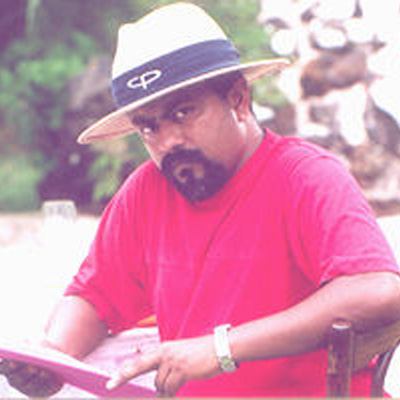
    If popularity is the index of a director’s success, Partho Mitra should surely rank as one of the best directors on TV today.

    Partho, who started his career on television with Shanti, Indian TV’s first daily soap, went on to direct Banegi Apni Baat, Ghar Ek Mandir and is now directing Sansaar. For someone whose passion was still photography, Partho has come a long way as director. Partho’s work is marked by his absolute commitment towards all aspects of filmmaking. He takes a personal interest in casting, oversees the development of the storyline and is particular about maintaining a high level of production values.

    He comes across as a very frank person, at ease in speaking his heart out. We present excerpts of a no-holds-barred interview he gave to indiantelevision.com’s correspondent, Amar.

    What brought you to direction?
    In my college days, I was very passionate about still photography. After college, I assisted Deepak Roy, a documentary filmmaker for some time, before getting an opportunity to learn filmmaking at the Columbia School of Cinema, Los Angeles, in 1988. Two years later, I was on internship with the Jewish TV Network and covered the Gulf War. All this led to my coming home in 1991 and doing a couple of small budget films in Delhi. A couple of years later I moved to Mumbai and my first major project was the daily soap Shanti.

    What factors do you keep in mind before starting a new project?
    TV is essentially a writer’s medium, so I consider the script most important. Even in the script, I essentially look for powerful characterisations that can leave an impact. I took up Patang, mainly for the character of Niki Aneja who plays a woman shattered by marriage.

    A daily is more of a production exercise than a direction exercise. It’s more about how many scenes you can squeeze in a day, rather than the quality of the content.
    __________

    As a director, how involved are you with the storyline?
    Tremendously. I won’t do a project if I don’t have a tab on the storyline. Even when I am shooting extensively, I insist that one-liners of the screenplay of future episodes are sent to me first, only after I have read and approved them does the writer go ahead and write the entire script.

    Do you have any favourites among writers?
    My favourite writer is Sutapa Sikdar. She does most of my writing.

    Who are your favourite producers?
    I have an excellent personal equation with Adib Contractor and enjoy working with him. I have also enjoyed working with Raman Kumar and Vinta Nanda. What I find best working with them is their level of faith in me and the freedom I get to execute my ideas.

    What are the changes in temperament one has to make between shooting a daily and a weekly?
    From a director’s point of view, I have found a daily to be more of a production exercise than a direction exercise. It’s more about how many scenes you can squeeze in a day, rather than the quality of the content. Dailies are more verbose – the thrust is more on the dialogues rather than on the screenplay. I would, in fact, equate the nature and feel of a daily with a radio programme.

    But you’ve done well directing dailies too- Shanti and Ghar Ek Mandir?
    Shanti was India’s first daily soap. It was truly a challenge to make the concept a success. Even with Ghar Ek Mandir and Bandhan, I was the director of the early episodes only. I was entrusted the responsibility of establishing these serials successfully, which I believe I did. Another reason I did these dailies was because all of them were shot with a multi-camera set-up which made work smoother. But beyond a point, a daily did not give me the freedom and initiative I look for, so I quit.

    How much of an actor does a director have to be?
    I don’t feel a director needs to be an actor himself. It is important that he understands the nuances of acting and the chemistry of the actor he is dealing with. Personally, I don’t believe in enacting scenes as a method of instructing the actors. What happens with this is that actors who are new and lacking in confidence become very conscious and start aping you without applying their minds.

    Most directors feel that TV is a very limiting medium. Do you agree?
    I believe TV is not quite a medium for fiction, it’s more conditioned for news and current affairs programming. I say this because, invariably it makes for passive viewing. Even the best made programs are not received so well because unlike in the cinema halls where your sole concentration is on the screen, at home you tend to do other things simultaneously- receive calls, prepare meals etc. This is one of the reasons that bring about disillusionment. Besides, budgetary constraints and the pressure of meeting deadlines also create some unpleasantness about the medium.

    So are you also planning to join the movies bandwagon?
    I am certainly working on the script of a movie. Hopefully in the next six months, the complete script will be ready.

    A director needs to be an avid reader- one who has a wide point of view and one who is not bogged down by fixed notions.
    _____________

    What are the natural instincts required of a successful director?
    A director essentially needs to have the sensibility to understand varied emotions and situations. A director needs to be an avid reader- one who has a wide point of view and not one who is not bogged down by fixed notions. Being the captain of the ship, he has to be stern and authoritative, yet effective man-management also requires him to be a diplomat.

    What are the qualities you would look for in a person before taking him under your wing?
    Essentially it would be his keenness to learn in a very humble way. I would look for a basic level of technical expertise also. But that would be secondary. It’s the attitude that is more important.

    Today, would you recommend a specialized course or training under somebody for a person who wants to be a director?
    I would believe training hands-on is the best form of learning direction. A specialized course does endow you with better skills of film appreciation and helps you understand cinema better, but personally I feel there can be no substitute to training under somebody.

    What are the factors you never compromise on as director?
    I’ve already told you about the importance of the storyline in my scheme of things. That apart, I am also very particular about the technicality, maintaining high production values and the casting.

    Who are your favourite actors?
    Irfan Khan, Surekha Sikri and Niki Aneja.

    Have you modelled yourself on any particular director?
    Not consciously, though I have been inspired by the stylistic elements of a few renowned directors. I have been inspired by the script sense of Hrishikesh Mukherjee, the visual finesse of Guru Dutt and overall by the impeccable genius of Satyajit Ray.

    What makes Partho Mitra different from the crowd? What is it about his work that makes him stand apart?
    I believe I have evolved a style of working of my own wherein I can take important decisions very fast, without compromising on the quality and where I am at utmost ease with my actors. All this does lead to a certain feel about my creations, which is distinctive and essentially mine.

    How do you unwind?
    With music. When I am not shooting, I spend as much time as possible with my family. In fact, that is the reason we have shifted to Pune. When I am not shooting, I am in Pune.

    Which has been the happiest moment of your career?
    That’s difficult to answer. I would say it’s been all those occasions when I have started work on a project. I have felt extremely charged up, optimistic and full of energy on these occasions.
  • ‘A writer needs powers of observation and sensitivity’ : Vinta Nanda

    ‘A writer needs powers of observation and sensitivity’ : Vinta Nanda

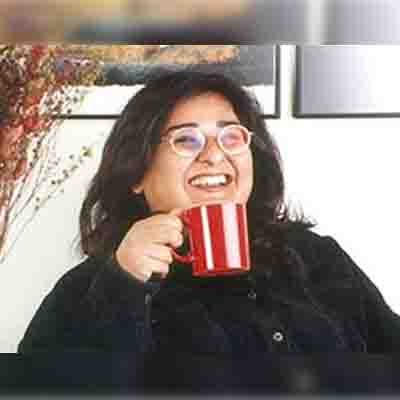
    Vinta Nanda started out as an assistant to Raman Kumar on the unforgettable Yeh Jo Hai Zindagi. As assistant director, she was actively involved on the screenplay of the serial. For several years thereafter, Nanda directed documentaries highlighting social concerns until Tara happened.

    Tara, which was bold and path-breaking, has left an indelible mark on Indian television. But its huge success also incurred the wrath of critics who accused her of writing degenerative stuff- allegations that Nanda strongly refutes.

    Zee’s re-launch last month also saw Nanda bounce back with two new serials – Sansaar and Deewane to Deewane Hai, both of which are trendsetters again if one takes into account the scale on which these serials have been planned and shot. Sansaar will rank as the first serial that has a story spread across five continents and which is actually shot in all the five continents. Spurred by the success of these two serials, Nanda is writing two more serials that will take off shortly.

    Nanda took time off from her hectic schedule to speak to www.indiantelevision.com’s correspondent, Amar. Excerpts:

    What brought you into TV writing?
    Well, creativity, imaginativeness and a flair for writing were there in me from the very start. I wrote my first play in school when I was all of 8 years old. After graduation from Chandigarh, I came to Mumbai to become a journalist. But while I was training to be a journalist, I joined Frank Simone Advertising in their production department and took an instant liking for the medium. Thereafter I started assisting Raman Kumar on Yeh JO Hai Zindagi. As Raman Kumar’s whole approach is writer-driven, I first started writing for YJHZ. My first independent project as writer was Tara.

    What are the natural instincts required to be a successful writer?
    Power of observation and sensitivity. The rest is the application of these two instincts into any given idea.

    Where do you draw your inspiration from?
    It would be difficult to pinpoint any particular source. I would say I draw my inspiration from my experiences in life. For instance, the idea of Tara came from my own initial days of struggle in Mumbai. The motivation of course comes from the faith that people of the caliber of Mahesh Bhatt (for the Plus Channel produced Kabhi Kabhi) and Raman Kumar have bestowed upon me.


    Aditya Hitkari as ‘Vicky’ with co-actor in Deewane To Deewane Hai aired on Zee
    ‘I don’t feel totally alienated from any of the characters that I’ve created. Most of these characters have some traces of me in them.’

    Outline the whole process from the stage you conceive a project to the stage when the final script is complete.
    It all begins as a one-line thought or concept. Thereafter it is drafted as a one-page story and submitted to the channel. Once the channel gives its nod, I start developing the characters in depth. Then all characters are woven into the story I had in mind. I the
    develop the story for 250 episodes before we start shooting. The dialogues for a given number of episodes are written from time to time.

    What do you do as a series writer?
    See, when I’m developing four or five concepts or stories simultaneously, it is not possible for me to be personally involved with the dialogues and other intricacies of every scene. I do decide from where to where the story is going to move in each episode and work on the screenplay. But beyond that, the dialogue writers do the needful.

    Do you identify with any of the characters that you’ve created?
    Yeah. Let me put it this way. I don’t feel totally alienated from any of the characters that I’ve created. Most of these characters have some traces of me in them. I’ve identified in a way with “Tara”. I identify with the “Rahul” of Deewane To Deewane Hai. Like me when I was his age, he aspires, has dreams, knows his goals and knows how to achieve them. The fact that we are of the opposite sex hardly makes any difference.

    Do real life incidents play a role in your writing?
    Oh yes, they do. A couple of years back, on one of my visits to New York, I met an Indian victim of a hit and run case who was in hospital with all of 49 broken bones. When I met him ten months later, when he had almost recovered, the doctor told me he was surprised a patient in such bad shape and having to undergo such a prolonged course of treatment did not need a psychiatrist. But do you know why he didn’t require a psychiatrist? It was because his family could do what the psychiatrist could not. His mother who was in India and both his brothers’ wives who were in the U.K. were selfless enough to leave their work to be with him. This bond which is so peculiar among Indians even when they are physically existing in entirely different parts of the world is what forms the theme and driving force behind the story of Sansaar.

    ‘It is the traditional regression that is shown today, the make-believe joint family dramas. What you see
    is the convolution of creativity.’

    Even though Tara was a huge hit, it drew some flak for the degenerative portrayal of women? Comment on your responsibilities as a writer towards people’s sensibilities.
    How can you possibly accuse me of offending people’s sensibilities with Tara? If anything offends their sensibilities, it is the traditional regression that is shown today, the make-believe joint family dramas. What you see today is the convolution of creativity. Tara, on the contrary was the story of an ambitious, progressive and courageous woman, who was independent, wanted to break free from the dregs of hypocritical society and who did not need a man for her dependence. Has Tara, or for that matter any of my serials, harped on extramarital affairs? I fail to see any reason why I should be accused of writing something degenerative.

    A scene from Sansaar aired on Zee
    ‘Writing just requires an urge and the right frame of mindly.

    Is being writer-director of the same project beneficial or harmful?
    Personally, I don’t write the projects I direct and vice-versa. It is a policy decision that Raman and I have taken. He directs the projects written by me and I direct the projects written by him. This is because we feel that having a second person’s opinion minimises the scope for error.

    What kind of a writing schedule do you normally follow?
    I am quite indisciplined as far as my schedule goes. I write once in the day – that could be in the morning, afternoon or evening for a few hours.

    Does writing require isolation from people in order to concentrate?
    Not really. It just requires an urge and the right frame of mind. I have even written on the sets.

    Do you write in English or Hindi?
    Mostly in English, sometimes it’s a mix of English and Hindi. The language is just the dressing on the cake. As long as the ideas come across in a powerful manner, the language does not matter so much.

    Doesn’t TV writing tend to get clichéd and monotonous? Vipul D. Shah has said in his interview that TV writing is hardly inspiring because what is shown in the 20th episode can be repeated in the 25th episode with some minor changes.
    I have never approached TV writing so dispassionately. That would amount to taking the audience for a ride. My documentaries have required me to travel extensively across the country and I’ve been struck by the amazing levels of intelligence and creativity possessed by our people living in the smaller towns of the country. We need to respect this intelligence of our audience. All the projects I have written have been written with utmost passion and commitment.

    Are you hassled by the executive producers in channels to change your storyline from time to time?
    No, not at all. We have an excellent working relationship with Zee TV. Right at the time the serial gets approved, we are given a team of executive producers for our show. Every decision that we take, be it on the storyline or any other aspect, is worked in tandem with them. Sometimes, I even accept their ideas and reject what I myself had originally thought because after all they know better what sells for the channel and what doesn’t.

    The subjects that I would like to dwell on are the status of women in our society, what role religion plays in their exploitation, status of law and human rights, the tragedy resulting out of the criminalisation of society.

    But what is the secret of this beautiful relationship you have with Zee when most producers have fallen out with the channel at some point of time or the other?
    If you ask me, I feel the producers have not been able to deliver on Zee’s quality demands. See, Zee is totally content driven as against other channels which depend heavily on their packaging or dressing. If we enjoy such a good relationship with Zee, it is due to the fact that our content as far as the story goes has been very strong.

    Are enough story lines/ concepts being tackled today or have we reached a dead end?
    No, we can never reach a dead end as far as TV goes. Yes, there are trends which tend to dominate and overshadow everything else. That I guess was the case till about a month back but Zee’s new programmes have brought about a refreshing change.

    Which are the subjects closest to you at the moment?
    See, all these years, I have continued to make documentaries on issues of social concern and it is these concerns that are closest to me at the moment. The subjects that I would like to dwell on are the status of women in our society, what role religion plays in their exploitation, status of law and human rights, the tragedy resulting out of the criminalisation of society. In fact, Sazaa, a movie I am directing, has a similar offbeat theme. It revolves around the plight of a 30-year-old virgin widow who was married at the age of six and became a widow at the age of eight.

    Which has the happiest moment of your career?
    Mahesh Bhatt calling me up to tell me that I was directing a movie which is being produced jointly by Vishesh Films and PNC (Pritish Nandy Communications). It was like my most cherished dream coming true.