Tag: Sanjiv Puri

  • ITC to acquire Mother Sparsh, expands natural baby care portfolio

    ITC to acquire Mother Sparsh, expands natural baby care portfolio

    MUMBAI: ITC Ltd. has announced definitive agreements to acquire the remaining 73.5 per cent stake in Mother Sparsh Baby Care Private Ltd. an Ayurvedic and natural baby care brand for Rs 81 crore, through a mix of primary subscription and secondary share purchase. This will bring ITC’s total investment in Mother Sparsh to approximately Rs 126 crore.

    Mother Sparsh, which has been an associate company of ITC since 2021, has built a strong reputation among Indian mothers for its Ayurvedic, natural products spanning baby personal care, health and hygiene, and specialised baby care solutions. The brand’s digital-first model and robust presence across its D2C platform and e-commerce channels have helped it achieve an impressive annual revenue run rate of over Rs 110 crore.

    The acquisition aligns with ITC’s ‘ITC Next’ vision, spearheaded by chairman Sanjiv Puri, which is focused on creating a future-ready portfolio by tapping into high-growth, digital-first segments.

    ITC Ltd. divisional chief executive, personal care products business division Sameer Satpathy said, “This acquisition is an exciting opportunity, aligned with our aspiration to build a formidable portfolio of future ready, best-in-class innovative offerings that delights Indian consumers. Mother Sparsh in a true spirit of entrepreneurship, has created a reputed brand with Indian ethos in the natural baby care space, powered by an assortment of innovative products and a robust digital ecosystem.”

    Mother Sparsh founder & CEO Himanshu added, “We are delighted that ITC, who came on board as an early investor, is now taking Mother Sparsh to the next level. This partnership is a testament to the brand’s potential in the fast-growing natural baby care segment. We’re confident that ITC’s institutional strengths will help serve the evolving needs of Indian mothers for generations to come.”

    The acquisition process will be completed over the next two-three years, with the Mother Sparsh team including founder & CEO Himanshu continuing to head operations during this transition phase.

  • Indias path to Nation’s Future at Business Today’s India@100 Summit

    Indias path to Nation’s Future at Business Today’s India@100 Summit

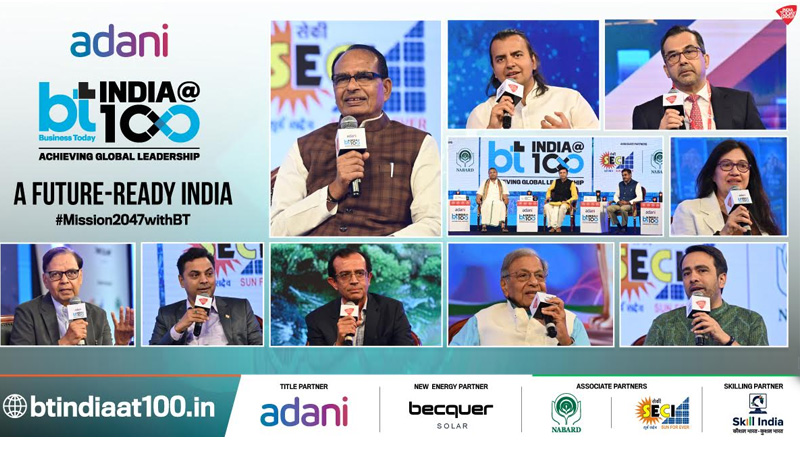
    Mumbai: At the third edition of the Adani BT India@100 summit, held on August 20 at the Leaders’ Lounge, Bharat Mandapam in New Delhi, the discussions centered around strategies for India’s future as the country approaches the centenary of its Independence in 2047.

    Hosted by Business Today, the summit brought together over 300 delegates, including top government officials, policymakers, entrepreneurs, and business leaders, for a series of 14 insightful sessions. The summit was supported by Title Partner Adani, New Energy Partner Becquer Solar, Associate Partners NABARD and SECI, and Skilling Partner Skill India.

    Arvind Panagariya, Chairman of the Sixteenth Finance Commission, stated that India could become a $50 trillion economy by 2047 by focusing on sustainability, digital transformation, and public-private partnerships. He emphasized these areas as crucial for driving growth and establishing India as a global leader.

    Krishnamurthy Subramanian, Executive Director at the International Monetary Fund, took that number a notch up, saying with sustained investment in infrastructure, technology, and education, the country could potentially reach a $55 trillion economy by its centennial. He pointed out that this would require a 15-fold increase in the current economy, which stands at $3.3 trillion.

    Nivruti Rai, Managing Director and CEO of Invest India, outlined the country’s target of attracting $1 trillion in foreign direct investment (FDI) over the next decade. She identified sectors such as pharmaceuticals, textiles, renewable energy, and technology as crucial to this effort and stressed the need for India to strengthen its supply chain, simplify regulations, and invest in a skilled workforce.

    Addressing public sector inefficiencies, N.K. Singh, former Chairman of the 15th Finance Commission, called for regulatory reforms and modernisation, particularly in the telecommunications sector. He noted that issues like spectrum allocation and service disruptions during elections have hindered the sector’s growth and argued that reforms are essential for improving service delivery and ensuring public sector organisations contribute effectively to national growth.

    Shivraj Singh Chouhan, Union Minister of Agriculture & Farmers Welfare, presented a five-point strategy for the agriculture sector at the summit. He emphasized the government’s focus on increasing production, reducing costs, ensuring fair crop prices, addressing global farming threats, and diversifying crops beyond staples like wheat and rice. Chouhan highlighted Prime Minister Narendra Modi’s commitment to transforming India into a developed nation, particularly through advancements in agriculture.

    Ruchir Sharma, Chairman of Rockefeller International, provided a cautious perspective on India’s economic future, questioning whether the country could achieve developed nation status by 2047 without significant reforms and higher growth rates. He underscored the challenge of sustaining the necessary 10-12% annual GDP growth, noting that only a few countries, such as China and South Korea, have managed to do so over long periods.

    Employment and skill development were also key themes. Manish Sabharwal, Vice Chairman of TeamLease Services, highlighted the issues of low wages and skills mismatches, pointing out that nearly 85% of India’s workforce is in the informal sector. Jayant Chaudhary, Minister of State for Skill Development and Entrepreneurship, announced new skilling initiatives aimed at aligning vocational training with market demands.

    Ola Founder Bhavish Aggarwal emphasized the importance of data sovereignty and robust management policies to leverage India’s vast digital ecosystem. He introduced his AI initiative, Krutrim, as part of efforts to build India’s capabilities in artificial intelligence, stressing that the country must retain control over its data resources.

    Sanjiv Puri, Chairman & MD of ITC, discussed challenges facing the MSME sector, which accounts for about 30% of India’s GDP and employs over 110 million people. He highlighted the need for inclusive growth, climate action, and support for MSMEs, stressing the importance of intellectual property and innovation in maintaining India’s competitive edge globally.

    The summit also saw Congress leader Karti Chidambaram express concerns over lateral entry into the Indian bureaucracy, advocating for the preservation of social justice and affirmative action. His views were challenged by BJP leaders, who defended the current administration’s policy, arguing that it infuses new energy and expertise into the bureaucracy.

    Vikram Gandhi, a professor at Harvard Business School, discussed the financial challenges of achieving India’s net-zero carbon emissions target by 2070, pointing out that substantial international financial assistance and investment in green technologies are crucial for meeting these climate goals.

    As India approaches its centenary of independence, the Adani BT India@100 summit underscored the opportunities and challenges the nation faces on its path to becoming a global economic powerhouse.
     

  • ITC pays tribute with ‘Desh Ek Raag’ by ITC Sangeet Research Academy

    ITC pays tribute with ‘Desh Ek Raag’ by ITC Sangeet Research Academy

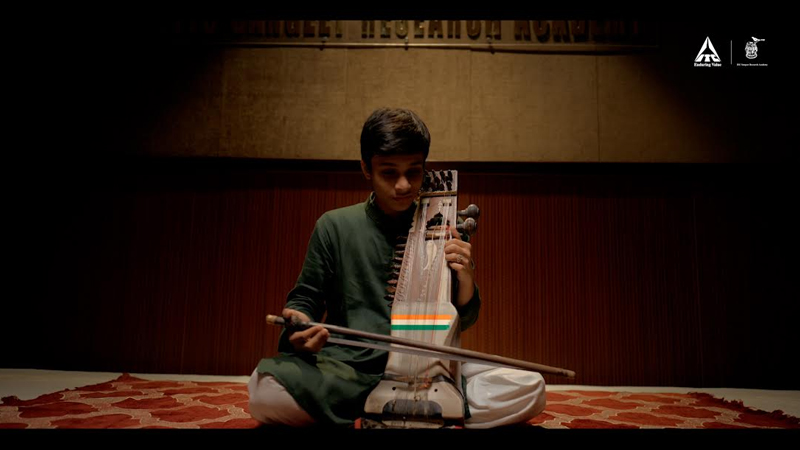
    Mumbai: On the occasion of India’s 78th Independence Day, ITC Ltd. has paid tribute to the Nation with the creation of a unique musical composition ‘Desh Ek Raag’ performed by the Gurus and Shishyas of the ITC Sangeet Research Academy (ITC-SRA). The soul-stirring composition captures the confluence of Hindustani Classical Music forms, rooted in the cultural traditions of the country. The musical ensemble innovatively combines western and Indian instrumental accompaniments to play Hindustani Classical tunes to contemporise Indian classical music for the younger generations. The composition, rendered in a musical video, was shared by Sanjiv Puri, chairman of ITC, through a post on LinkedIn today. Puri is also the chairman of the Board of Trustees of ITC-SRA.

    Performed by ITC-SRA Gurus and scholars, in collaboration with other artists, the special composition is an ode to the Nation, in which Parampara and Pragati (Tradition & Progress); Viraasat and Vikas (Heritage & Development) go hand-in-hand. In line with ITC’s credo of ‘Nation First: Sab Saath Badhein’, which underscores the Company’s core belief in creating inclusive and enduring value for the nation, the Desh Ek Raag initiative is testimony to ITC’s commitment to contribute meaningfully to preserve, nurture and promote India’s rich heritage of Hindustani Classical Music.

    Crafted by some of ITC-SRA’s Gurus, the special composition is based on Raag Desh, which is an integral part of Vande Mataram – the National Song of India.

    Speaking about the initiative, ITC Ltd chairman Sanjiv Puri said, “I am delighted that, as a tribute to our country on the occasion of the 78th Independence Day, ITC Sangeet Research Academy (ITC-SRA) has created a special composition, presented in the form of a music video ‘Desh Ek Raag – an Ode to the Nation’. This musical masterpiece by the talented scholars of ITC-SRA draws inspiration from Raag Desh, stirring a profound sense of pride and admiration for our great nation.”

    “For nearly 5 decades, ITC has nurtured and promoted Hindustani Classical Music through the ITC-SRA, a one-of-its-kind institution. ITC-SRA has been enriched over the years by India’s acclaimed Gurus who have imparted precious knowledge and training through a unique Guru-Shishya Parampara that embodies the country’s rich heritage,” Puri added.

    The musical video showcases the Gurus and scholars performing at the picturesque ITC-SRA campus in Kolkata, a pioneering national institution that promotes Indian Classical Music through the enduring Guru-Shishya Parampara – the rich tradition in which eminent Gurus of the Academy impart intensive training and quality education in Hindustani Classical Music to the scholars in the ecosystem of a residential Gurukul. The ensemble video features musical maestros and eminent scholars of ITC-SRA including Pandit Ajoy Chakrabarty, Vidushi Subhra Guha, Pandit Omkar Dadarkar, along with the creators of the composition, Shri Abir Hossain and Shri Brajeswar Mukherjee.

    The selection of young artists, varied instruments and diverse musical genres from across the country for the composition is testimony to the confluence of ‘the modern’ and ‘the traditional’ in today’s India.  Through the unifying power of music, the video seeks to convey the core ethos of ITC-SRA – to keep Hindustani Classical Music relevant among newer generations of music lovers.

    Established in 1977, ITC-SRA, over the decades, has grown in impact and significance, reinforcing ITC’s sustained commitment to preserving the national musical heritage. Today, ITC-SRA houses more than 40 scholars in its sprawling Kolkata campus.

    The galaxy of acclaimed Gurus of ITC-SRA includes Nissar Hussain Khan (Sahaswan Gharana), Hirabai Barodekar (Kirana Gharana), Ishtiaq Hussain Khan (Rampur Gharana), Nivrittibua Sarnaik (Atrauli-Jaipur Gharana), Girija Devi (Benaras Gharana), Latafat Hussain Khan (Agra Gharana). A. Kanan, Malabika Kanan and many more.

    ITC-SRA will be celebrating its Golden Jubilee in 2027. 

  • Sunil Bharti Mittal, Prathap C Reddy & Amitabh Kant honoured at the Business Today MindRush & Best CEO Awards

    Sunil Bharti Mittal, Prathap C Reddy & Amitabh Kant honoured at the Business Today MindRush & Best CEO Awards

    Mumbai: Like every year, the Business Today MindRush and Best CEO Awards, a much-awaited event for India, recently concluded with much pomp and fervour, with the who’s who of India Inc. in attendance. Hosted by the India Today Group, the event serves as a pivotal platform for industry stalwarts, entrepreneurs, and thought leaders to converge, exchange ideas, and recognise outstanding achievements in business leadership.

    The annual event, known for its robust discussions on emerging trends and challenges in the business landscape, witnessed the captains of India Inc. across sectors coming together to share insights and experiences. This year’s BT MindRush was no exception. There were several thought-provoking sessions at the event. Hardeep Singh Puri, Union Minister for Housing & Urban Affairs and Petroleum & Natural Gas, said that the time had come for the Indian private sector to shed some of its inhibitions and to accept global challenges, which were “low-hanging fruit for them”.

    In another session, India’s G20 Sherpa Amitabh Kant said that the country could not only grow on the back of services. “It has to grow in manufacturing, services, sustainable urbanisation, and also agricultural productivity,” he said. Apollo Hospitals Enterprise executive vice chairperson Preetha Reddy said there was an urgent need to transform healthcare into a fundamental right, aligning it with education, while Bharti Enterprises chairman Sunil Bharti Mittal, in a message for young Indian entrepreneurs, said that India was a country of possibilities and opportunities. Federal Bank MD & CEO Shyam Srinivasan said that India was witnessing a Cinderella moment in terms of banking and economy, while ITC Ltd chairman & MD Sanjiv Puri, highlighted the resilience of India, adding that consumer demand should be back in a couple of quarters.

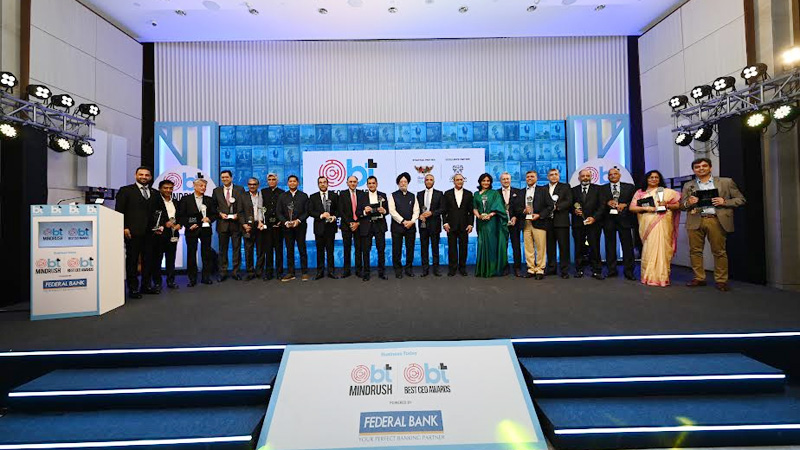
    The highlight of the event was the felicitation of this year’s awardees of the prestigious BT-PwC India’s Best CEOs ranking, where a distinguished panel of industry experts picked the winners awards after a rigorous process.

    This year, telecom tycoon Bharti Enterprises chairman Sunil Bharti Mittal, was honoured as the “Business Icon of the Year”, symbolising resilience and visionary leadership in the face of challenges. The jury also picked India’s G20 Sherpa Amitabh Kant as the “Impact Leader of the Year”, a special award underscoring his significant contributions to the country’s economic growth and global stature. Another distinguished awardee was healthcare pioneer Dr Prathap C Reddy. The visionary founder chairman of Apollo Hospitals was honoured with the “Lifetime Achievement Award” for his unparalleled dedication to healthcare and innovation.

    Winners were recognised across diverse sectors of Indian business, including infrastructure, healthcare, consumer goods, IT, energy, and more. The awardees included Kushal N Desai, CMD of APAR Industries, Satyanarayana Chava, founder & CEO of Laurus Labs, and Sunil Vachani, executive chairman of Dixon Technologies (India), among others. Meanwhile, Satish Pai, MD of Hindalco Industries, won in the category of super large companies; Sanjiv Puri, CMD of ITC Ltd for large companies; and Abhyuday Jindal, MD of Jindal Stainless, in the mid-sized category.

    The event also celebrated emerging companies and leaders who are shaping the future of the Indian business landscape. Naresh Jalan, MD of Ramkrishna Forgings, and Pradeep Gaur, CMD of RVNL, were among the distinguished awardees. Business leaders were also recognised for demonstrating exceptional leadership qualities and resilience. Patanjali G. Keswani, CMD of Lemon Tree Hotels, won the “Resilient CEO” award, while K.P. Ramasamy, Chairman of KPR Mill, received the award for “Glocal CEO”.

    Exemplary achievements in deal-making and disruptive innovation were recognised, with LTIMindtree CEO & MD Debashis Chatterjee, receiving the “Best Deal” award, while OfBusiness co-founder & CEO Asish Mohapatra won in the “Unicorn” category.

    India Today group chairman and editor-in-chief Aroon Purie also spoke on the occasion, outlining that while India had made progress on many fronts, there was more work to be done in moving from a regulatory mindset to that of facilitation. He lauded the efforts of the winners in creating enterprises that India can be proud of.

    The special issue of Business Today on India’s Best CEOs was also unveiled at the event.

  • ITC to use 100% reusable, recyclable or compostable packaging

    ITC to use 100% reusable, recyclable or compostable packaging

    MUMBAI:  Multi-business conglomerate, ITC Limited has pledged that over the next decade, going beyond its Extended Producer Responsibility, it will deploy superior solutions so that 100 percent of its product packaging will be reusable, recyclable or compostable.

    ITC also reiterated that it is committed to scale up its solid waste management programmes and sustain its leadership position as a Solid Waste Recycling Positive Company.

    ITC’s initiatives in the solid waste management of which plastic waste management is a significant component, aim at providing a 360-degree solutions framework to address the critical issue of waste management through packaging optimisation, resource conservation, recycling of waste generated in its operations, source segregation, collection, reuse and recycling. Already over 99 percent of waste generated in ITC’s operations is recycled. ITC’s holistic solid waste management initiatives has now extended to 10 states across the country, covering cities, towns, villages and temples.

    In a true spirit of public-private-people partnership, ITC’s waste management models including the flagship initiative Wellbeing Out of Waste, encompass community awareness, segregation, promotion of recycling and reuse through capacity building and development of social entrepreneurship. 100 per cent dry waste including plastic waste is sent for recycling.

    ITC Ltd managing director Sanjiv Puri says, “The problem of solid waste management is one of the epic proportions and requires each organ of the society and more so, enterprises that are large economic organs of the society, to make a meaningful contribution. Wellbeing out of Waste (WOW) focuses on providing an end-to-end sustainable and a scalable solution spanning the entire value chain right from awareness, segregation, collection and promotion, reuse or recycle of solid waste. The benefits of these are already available to 77 lakh citizens of the country and over time, we are going to scale this up and enhance our contribution to the Prime Minister’s Vision of Swachh Bharat.”

    “As a Company which is carbon positive, water positive and solid waste recycling positive for over a decade, ITC is committed to shaping a secure, sustainable and inclusive future through superior Triple Bottom Line performance,” he added.

    Other than the Wellbeing Out of Waste (WOW) programmes that is operational in cities and large towns, ITC has initiated a number of community-managed projects in villages and towns to address the issue of waste management. Under ITC’s Green Temple initiative, three of Tamil Nadu’s eminent temples are turning their premises into zero garbage zones by recycling the organic waste from daily offerings – benefitting both the temples and their neighbourhoods with cleaner and healthier surroundings.

    ITC is also collaborating with the municipal corporations of Delhi, Hyderabad, Bengaluru, Saharanpur, Muzaffarpur, among others to ensure cleaner and greener cities.

    WOW works by building partnerships, giving each stakeholder including rag-pickers and waste workers a role and responsibility and leveraging their capabilities as productively as possible. It optimises resources – using existing infrastructure where available and creating new where required.