Mumbai: This year, Goafest has adapted to new horizons, bringing the 17th edition of the festival to the vibrant city of Mumbai.
As they celebrated numerous ground-breaking ideas, they rose a toast to adaptability – the key to success in their ever-changing world. From diverse view-points to cutting-edge strategies, set amidst the serene backdrop of Powai Lake, this year’s Goafest ignited the creative spark and empowered people to navigate the exciting unknown.
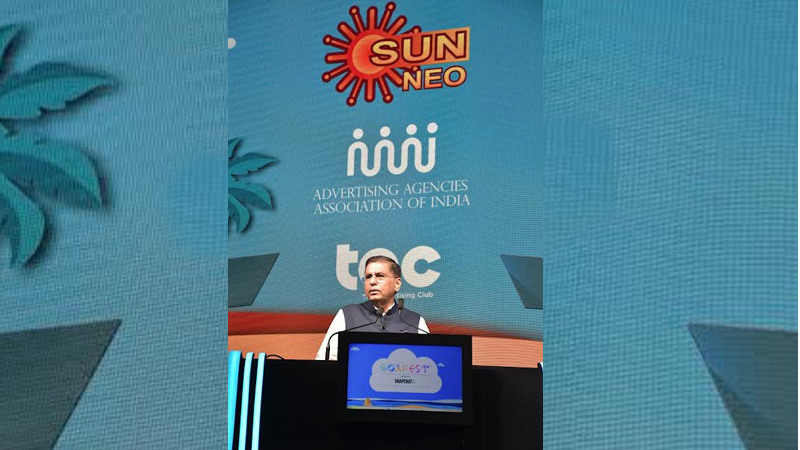
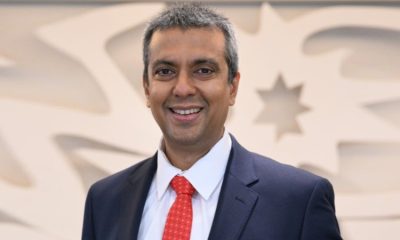
The second session of Sun Neo presented an enlightening session titled, Navigating The Age Of Adaptability: Leading with Vision, Flexibility, and Purpose, led by L Catterton India executive chairman Sanjiv Mehta. In this compelling talk, Mehta delved into the critical elements of leading with vision, flexibility, innovation, agility, and dynamic purpose in today’s ever-changing market landscape. He articulated how visionary leadership combined with the agility to pivot and a strong sense of purpose can drive business success and resilience. “Agility demands spare capacity and the ability to redirect talent towards value creation”, he mentioned.
Mehta also highlighted the importance of innovation through several examples, noting that no business follows a linear trajectory. Instead, resilience and adaptability are essential for organisations to bounce back and thrive in a dynamic environment. He stated, “Learning happens when you have the humility to say, ‘I don’t know?’” – by admitting so’, organisations and corporations open themselves to new knowledge and understanding, fostering a growth mindset that enables them to learn and grow from others’ expertise and experiences, not just myopically thinking of profit generation.
He highlighted myriad leadership attributes, including sensemaking, a term coined by Karl Weick, which involves piecing together disparate information to foresee and navigate complexity. He also spoke about care and compassion being a core value for leaders. Moreover, focussing on the value of team over individuals, he accentuated, “The concept of a great leader is a myth; it is always the work of a great team.” Overall, this session offered invaluable insights, highlighting the need for businesses to remain adaptable and forward-thinking to navigate and thrive in the age of constant change.
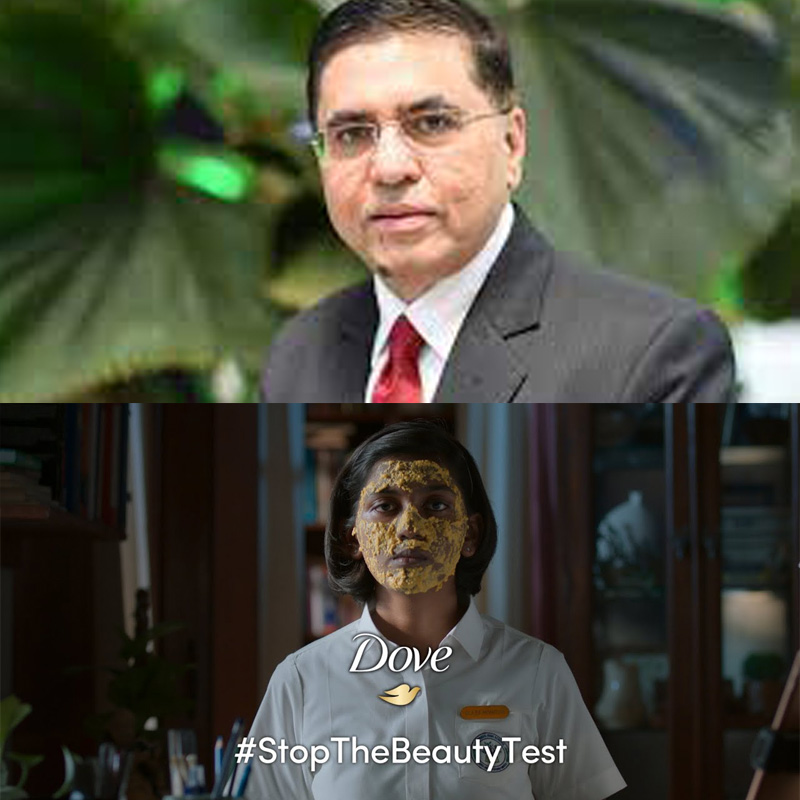
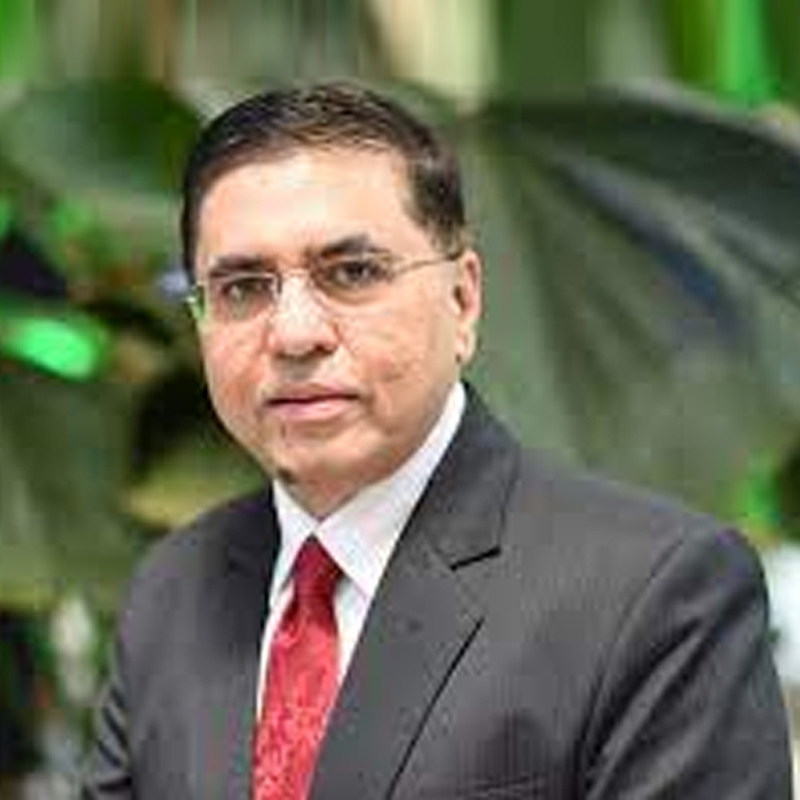
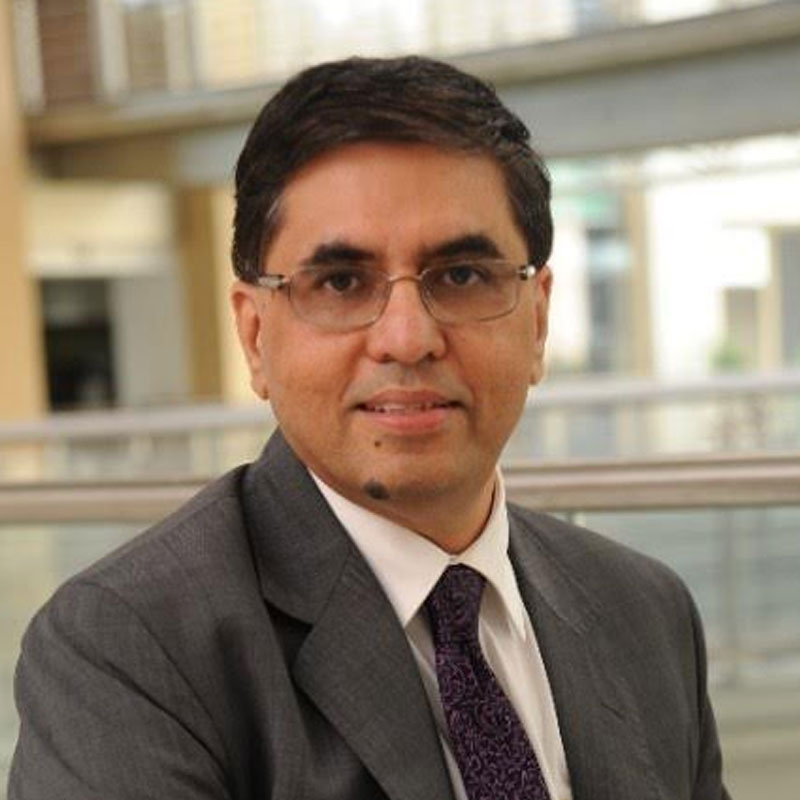
Mumbai: Dove’s latest campaign questioning society on the beauty-based judgements that young girls are subjected to has been garnering attention, not always for the right reasons however. As was probably discovered by the Hindustan Unilever Ltd (HUL) MD & CEO Sanjiv Mehta when he recently shared a post on the campaign on a social networking platform.
Sharing the brand film on LinkedIn Mehta wrote: “Ahead of #InternationalDaughtersDay pleased to launch phase 2 of our #StopTheBeautyTest movement. Our new brand communication sheds light on the scrutiny and low self-esteem young girls encounter in society because of unrealistic beauty norms.”
“As a father to two lovely daughters, I feel deeply for the cause. You would agree that our children’s formative years are critical, and if done right, we set them up for life. Therefore, we must create an environment where girls can feel more confident about themselves and focus on who they are as individuals, not how they look,” he continued.
Let us pause, reflect and eliminate beauty biases that prevent India’s daughters from achieving their full potential, Mehta added before concluding with the plea “Please let us all #StopTheBeautyTest.”
While several netizens lauded him and Dove for taking up the cause of women by asking consumers to confront beauty stereotypes laid down by society, there were other voices which questioned HUL’s seemingly contradictory stance when it came to its other flagship brand Glow & Lovely (formerly Fair & Lovely).
“Fascinating ad from the company that makes Fair & Lovely,” pointed out a user, referring to the ‘skin-lightening’ cosmetic product of Hindustan Unilever introduced to the Indian market in 1975. The user, Savitha Rao, further demanded to know if Unilever would make an ad on how so many companies are marketing products by making the customer feel inadequate. “For decades, Fair & Lovely promoted a solution to dark complexions, which was shown as a problem,” she added.
The film was also criticised for showing parents and teachers in a bad light ‘to sell a soap.’
“A campaign ad that shows hardworking mothers, grandmothers, and teachers as the real villains, pushing for unrealistic beauty standards, while not just absolving oneself, but branding oneself as the torchbearer of change. I am yet to come across a better example of hypocrisy,” declared a netizen.
LinkedIn user Anirudh Kunte while being appreciative of the campaign, did not hesitate to give the company a reality check on it’s ‘not-so-fair’ history. “Good initiative. However, admitting your mistakes is the first step towards correcting them,” he wrote, recalling the tag lines/ narratives propagated by the conglomerate. “These aren’t exact, but the gist is similar: ‘Fairer skin got me a job/ romantic date/groom’, ‘Gora nikhaar laye jeevan mein bahaar’, ‘Get 2 shades lighter skin in 4 weeks’. All of these, perpetuated for decades, by the brand’s parent company (and specifically some of its products) in India,” he stated.
“All of these, perpetuated for decades, by the brand’s parent company (and specifically some of its products) in India,” he stated.
Responding to the campaign’s exhortation of ‘Dove kehta hain #StopTheBeautyTest‘, another user wrote, “Sirf Dove kehta hai… But what about Fair & Lovely and all the other brands that have told every little girl to constantly worry about glowing skin/ shining hair / makeup that hides them.”
“There is demand and there is supply.. I propose you cut the supply of useless confidence shattering products and demand shall wade off. Be the first movers if you really care!! N not just for the Daughters Day campaign,” she emphasised.
Yet another netizen minced no words while replying to Mehta’s post. After seeing this short film, the first thing that crossed my mind is a popular saying in Hindi language, he wrote. “It goes like this… Sau chuhe kha kar, billi chali Haj ko.”
He continued,” I’m sorry, no amount of campaign like this can undo the damage that Unilever India has done to the psyche and self-confidence of millions of young girls in India in the last several decades, milking their emotions and preying on their low self-esteem with campaigns for brands like Fair & Lovely, Pond’s, Lakme, etc. to make millions of dollars in profit.”
“And what’s worst is that I have personally contributed to this by selling F&L for over 2.5 years while working for HUL in rural India,” he added.
LinkedIn user Gautam Pradhan was also scathing of the post even as he lauded the initiative. “Good initiative Sanjiv, But Unilever has actively contributed to believing that fair skin colour is beautiful with massive advertisement campaigns from 1975 to 2020,” he wrote. “The height was when Hindustan Unilever started giving seven shades scale in the pack. I have seen my sisters growing up with the Fair and Lovely brand. And they are comparing skin tone on the scale,” he further shared.
“Keep running this campaign on TV until you change the belief system of an Indian household that skin colour doesn’t matter,” he emphasised.
Dove’s latest campaign claims to bring to fore beauty-based judgements that young girls are subjected to by the society in the guise of advice.
Last year, the soap brand launched the #StopTheBeautyTest campaign throwing a spotlight on how beauty biases are amplified during the process of finding a life partner. The campaign showcased how the remarks deeply impacted the self-esteem of prospective brides.
The second and latest leg of the campaign has shifted its focus on ‘the root of the problem’ – from prospective brides to teenage girls. The film features girls who narrate their stories of how they have been subjected to varied beauty tests based on their appearances and thereby rated by society on their looks instead of their intellect / aptitude.
Watch the Dove film here:
Mehta’s post also faced backlash from a section of users who pointed out how the campaign seemed removed from the reality of today’s times, even as some LinkedIn users responded by complimenting Dove for bringing social issues to light with their ‘wonderful purpose driven campaign’.
“Something is not right with these ads. Indian mother daughter relationship has changed at least aspirationally. In the households depicted in the ads pressure from mother is for studies and ambitions mothers have for their daughters. The middle class India has changed. The ads looked unreal to me for a hashtag#realbeauty brand,” wrote a user in response to Mehta’s post.
“Our girls have crossed this barrier long back. Ask your team to work on some other strategy to connect with girls,” trolled another, even as another section of users commended the ad for being relatable and true. This prevails in many families, even ‘educated and cultured families’, they noted.
Some users called the brand’s latest campaign another ‘marketing gimmick’.
“Good to see a change, but large questions remain on the way most of Unilever’s products are marketed and pushed into the minds of the vulnerable. Till the bigger change happens, these ads will be viewed by most as a mere gimmick,” wrote a user.
“It IS a gimmick. An expensive , slick gimmick. What is the locus standi of a company that makes Fair & Lovely , Lakme to preach #StopTheBeautyTest to consumers,” insisted another user.
Are they asking Dove consumers to not buy Fair & Lovely, Lakme products, a user demanded to know.
MUMBAI: The folks at Hindustan Unilever Ltd (HUL) are in a celebratory mood. Reason: the FMCG multi-product major has announced shiny financial results for the quarter ended 30 June 2022, even though the economy is sailing through rough weather. The company’s turnover grew 19 per cent with underlying volume growth of 6 per cent. HUL continued to grow significantly ahead of the market, gaining value and volume market shares1. EBITDA margin at 23.2 per cent remained healthy despite unprecedented inflationary headwinds. Profit after tax before exceptional items (PAT bei) grew 17 per cent and profit after tax (PAT) grew 11 per cent.
Home care: Stellar performance continues
Home care delivered 30 per cent growth driven by strong performance in Fabric Wash and Household Care. Both categories grew in high double-digits with all parts of the portfolio performing well. Liquids and fabric sensations continued to outperform driven by effective market development actions. Calibrated price increases were taken across fabric wash and household care portfolios as input cost continue to inflate at significantly high levels. During the quarter Comfort Delicates was launched which is specially made for delicate clothes.
Beauty and personal care: Strong growth ahead of the market
Beauty & personal care growth of 17 per cent was broad based. Hair care grew in high double-digit led by strong performance in the premium portfolio. Soaps delivered price-led double-digit growth driven by strong performance in Lux, Dove and Pears. Skin care and color cosmetics delivered strong YoY growth on a soft base. Premium portfolio in skin care performed well and is significantly ahead of pre-Covid levels. Calibrated pricing actions were taken across the portfolio to offset the impact of record inflation in input costs. During the quarter, Tresemme’s hair care range ‘Pro Pure’, Baby Dove Derma Protect Baby Wash, Vaselines’s summer range of body moisturisers and Lakme’s Facial Foams were launched.
Foods and refreshment: Steady performance on a high base comparator
Foods and refreshment grew 9 per cent driven by solid performance in ice-cream, coffee and food solutions. Ice cream had a very strong quarter broad based across brands and formats taking it significantly ahead of pre-COVID levels. Tea delivered steady performance and cemented its market leadership. Coffee had a strong quarter growing in double-digit. Health food drinks continued to gain market share and penetration on the back of focused market development actions. Foods grew in double-digit led by jams. Unilever Food Solutions delivered a solid performance and continued to build its salience with professional chefs.
Operating margins remain healthy
EBITDA margin at 23.2 per cent remained healthy despite the unprecedented inflation in input costs. YoY EBITDA margin declined 110 bps. PAT (bei) was up 17 per cent YoY. PAT at Rs 2,289 Crore was up 11 per cent YoY. The difference between PAT (bei) and PAT growth is largely due to a one-off prior period tax credit we had in base period. The company says it continues to manage “its business dynamically driving savings harder across all lines of P&L and taking calibrated pricing actions using the principles of net revenue management. It continues to invest competitively behind our brands. “
CEO & managing director Sanjiv Mehta said: : ‘In an environment which remains challenging, marked by unprecedented inflation and consequential impact on consumption, we have delivered yet another quarter of robust topline and bottom-line performance. We have grown competitively whilst protecting our business model by maintaining margins in a healthy range. While there are near term concerns around inflation, the recent softening of commodities, forecast of a normal monsoon, and monetary/ fiscal measures taken by the government augur well for the industry. We are confident of the medium to long term prospects of the Indian FMCG sector and remain focused on delivering a consistent, competitive, profitable and responsible growth. ‘
Mumbai: FMCG major Hindustan Unilever Ltd (HUL) has become a Rs 50,000 crore turnover company, the first pure FMCG firm to achieve this milestone. The company’s revenues for the full year increased 11.3 percent to Rs 51,193 crore, as compared to its revenues of Rs 45,996 crore for FY21, a flat volume growth due to unprecedented inflation notwithstanding.
Sharing the news on LinkedIn, HUL CEO and managing director Sanjiv Mehta wrote: “The Hindustan Unilever journey has been a growth story powered by our purpose ‘To Make Sustainable Living Commonplace’.”
Calling the HUL of today “a perfect example of #ProfitsThroughPurpose,” Mehta stated that the results demonstrate how their “values & purpose-led, the future-fit business model delivers superior financial performance.”
“We have created a water potential of over 1.9 trillion litres by working in thousands of villages in India. Our carbon emissions from manufacturing have reduced by 94 per cent against the 2008 baseline,” detailed Mehta.
“We achieved plastic neutrality, empowered 1.6 lakh rural women micro-entrepreneurs through Project Shakti and have helped thousands of people living in the slums of Mumbai get a better life through Suvidha, our scalable community hygiene & sanitation centres. And during these last nine years, we have doubled our turnover, tripled our EBITDA, and quadrupled our market cap to over Rs five lakh crores or $70 billion,” he further shared.
The HUL executive additionally went on to thank all their consumers, stakeholders and employees for ‘believing in and unequivocally supporting’ the company along the way.
The company released its financial performance for the quarter and year ending 31 March on Wednesday.
“In challenging circumstances, we have grown competitively and protected our business model by maintaining margins in a healthy range,” Sanjiv Mehta commented, adding, “I am also pleased that we have become a Rs 50,000 crore turnover company in this fiscal. Our consistent performance is reflective of our strategic clarity, strength of our brands, operational excellence, and dynamic financial management of our business. While there are near-term concerns around significant inflation and slowing market growth, we are confident of the medium to long term prospects of the Indian FMCG sector and remain focused on delivering a consistent, competitive, profitable and responsible growth.”
The FMCG behemoth’s revenue from sales of products during the fourth quarter stood at Rs 13,468 crore, up 11 per cent, as compared to the corresponding period a year ago, HUL said in its regulatory filing.
The company now has 16 brands with a turnover of Rs 1,000 crore each and reported a 5.34 per cent increase in its consolidated net profit to Rs 2,307 crore for the fourth quarter ended in March 2022, a flat volume growth due to unprecedented inflation notwithstanding. The profit and revenues reported by the company were higher than analyst estimates.
Home Care growth at 24 per cent was broad-based with a strong performance in fabric wash and household care category. Both categories grew in strong double-digits with all parts of the portfolio performing well. Liquids and fabric sensations continued to outperform driven by effective market development actions, the company stated.
Beauty and personal Care grew competitively at four per cent, while foods and refreshments grew five per cent on a very high prior-year comparator, driven by solid performance in beverages, foods, and ice-cream.
Skin Cleansing category delivered double-digit growth driven by pricing and led by strong performance in ‘Lux,’ ‘Dove,’ and ‘Pears.’ A calibrated approach towards price increase in skin cleansing and hair care has helped protect the FMCG’s business model even as vegetable oils continue to inflate at record levels. Skin care and colour cosmetics had a muted quarter with Covid-19 third wave and high inflation impacting discretionary consumption.
Meanwhile, HUL has consistently remained among the top-ten advertisers on television, according to Broadcast Audience Research Council (Barc) India’s report on advertising trends for week 16 (16 to 22 April). The FMCG giant had an advertising volume of over 4,775 seconds on the medium, which’s nearly equivalent to the sum of the next top four advertisers’ ad volumes.
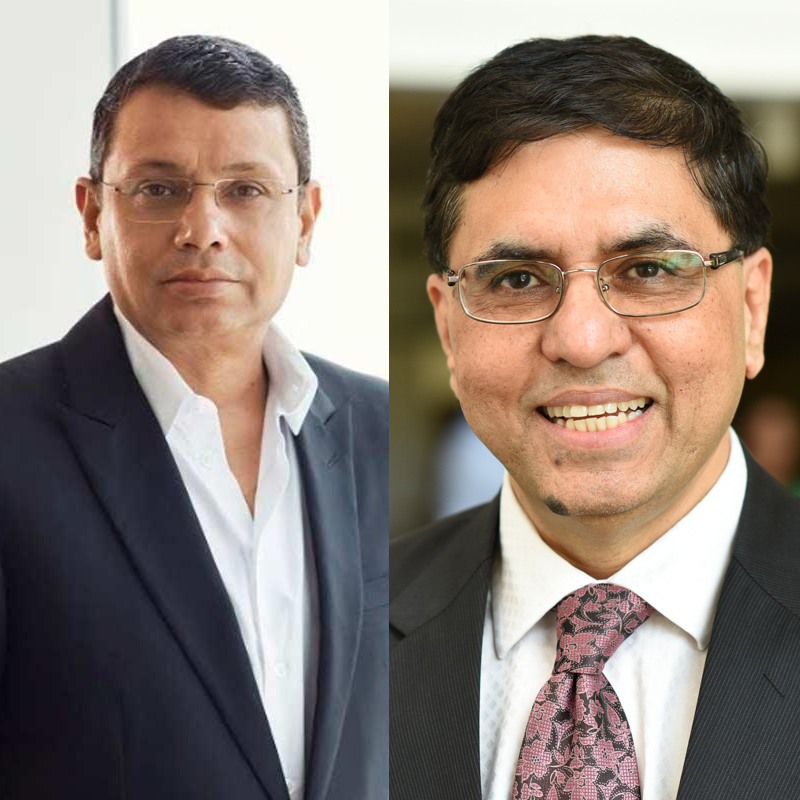
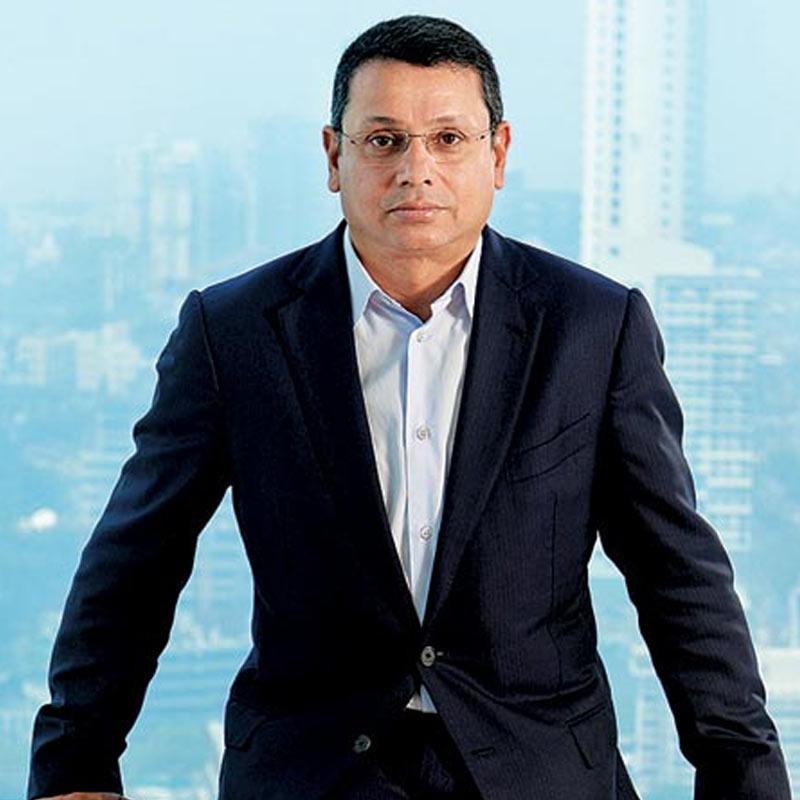
Mumbai: The Federation of Indian Chambers of Commerce and Industry (FICCI) has announced that Hindustan Unilever Ltd (HUL) chairman and MD Sanjiv Mehta will succeed veteran media executive Uday Shankar as president of the association. The appointment will be effective on 18 December.
Mehta is presently officiating as FICCI senior VP. He will be holding the office as president for the year 2021-22.
“During his eight years at the helm, HUL’s market capitalisation has increased by over $55 billion making it one of the most valuable companies in the country. In this period, HUL has won several awards and recognitions including the prestigious Economic Times ‘Company of the Year’ and ‘Corporate Citizen of the Year’ awards, Business Standard’s ‘Company of the year’ award and the ‘Best Governed Company’ award by the Asian Centre for Corporate Governance and Sustainability,” said the industry body in a press statement.
Besides leading HUL, Mehta is also a director on the board of the Indian School of Business, a member of the Breach Candy Hospital Trust, and the South Asia Advisory Board of Harvard Business School. He chairs Xynteo’s Vikaasa, a coalition of top Indian and MNC companies.
Last year, Uday Shankar took over the top position in the industry body from Sangita Reddy who is Apollo Hospitals Group’s joint MD. At the time of his appointment, Shankar was The Walt Disney Company’s APAC president of operations and Star & Disney India chairman. He stepped down from his position at Walt Disney before holding office at FICCI.
BENGALURU: FMCG major and the largest player in terms of advertising and marketing spends, Hindustan Unilever (HUL) upped its advertising spends by 43 per cent during the second Covid2019 quarter – (Q2 2021, the quarter ended 30 September 2020, quarter or period under review) as compared to the immediate trailing quarter Q1 2021. The company had pared quarter over quarter (q-o-q) and year-on-year (y-o-y) advertisement expenses in the first quarter of fiscal 2020 (Q1 2021, quarter ended 30 June 2020) during which the Covid2019 lockdown was in place by over 30 per cent to Rs 800 crore from Rs 1,175 crore (down 31.9 per cent) in Q4 2020 and Rs 1,167 crore (down 31.4 per cent) in Q2 2020 respectively. For the period under review, HUL spent Rs 1,144 crore towards advertisement expenses as compared to Rs 1,200 crore in the corresponding year ago quarter. All numbers in this report are consolidated numbers unless stated otherwise.
The company reported 15.2 percent y-o-y and 8.2 percent q-o-q increase in total revenue at Rs 11,776 crore as compared to Rs 10,223 crore in Q2 2020 and Rs 10,885 crore in Q1 2021 respectively. However, in terms of percentage of total income (operating revenue plus other income), HUL’s ad spends during fiscal 2021 were down when compared to previous periods. The FMCG major’s ad spends in Q2 2021 of Rs 1,144 crore were 9.7 percent of operating revenue of 11,776 crore. Please refer to the figure below:
For the half year ended 30 September 2020 (H1 2021) the company had spent Rs 1,944 crore (8.6 percent of total revenue), which was 17.9 per cent lower than the Rs 2,367 crore (11.4 per cent of total revenue) during the corresponding year ago quarter. For FY 2020 and FY 2019, HUL had spent Rs 4,688 crore (11.9 per cent of total revenue) and Rs 4,552 crore (11.7 per cent of total revenue) respectively.
The company reports numbers for four segments, the largest of which in terms of revenue is the beauty segment, followed by the home, foods & refreshments, and ‘Others’.
The company has reported y-o-y revenue growth for the four segments. In an earnings press release, HUL said that growth in Q2 2021 was competitive and profitable with reported turnover growth of 16 per cent and domestic consumer growth (excluding the impact of merger of GSK CH and acquisition of ‘VWash’) of 3 per cent. The FMCG player avers that the strength of its portfolio is demonstrated by the fact that 70 per cent of its business was gaining penetration and that health, hygiene and nutrition products, which formed cumulatively 80 per cent of its portfolio, grew in double digits.
Company Speak:
HUL chairman and managing director Sanjiv Mehta said: “In the context of a challenging economicenvironment, our growth has been competitive and profitable. We continue to demonstrate execution prowess,agility, adaptability, resilience, and passion of our people. We have expanded our portfolio with consumerrelevant innovations and have invested strongly behind our brands. Our operations and service levels are now back to pre-COVID levels and we have accelerated the pace of digitizing our operations under the ‘Re-imagine HUL’ agenda. The economic outlook has improved given the various initiatives taken by the Government and Reserve Bank ofIndia. In our sector, rural markets have been resilient but the demand in urban India especially in metropolitancities has been muted. We believe that the worst is behind us and we are cautiously optimistic on demand recovery.”
Segment Results
Excerpts from the HUL Q2 2021 earnings release
Home Care:
Household Care delivered strong performance across all segments led by continued penetrationgains. We have stepped up our innovation intensity to address the ‘clean living’ needs of consumers; ‘Domex’ range is now available nationally. In Fabric Wash, we have reduced our prices to pass on benefits of lowercommodity costs to consumers. Category consumption of Laundry has been adversely impacted due to confinedliving. Continued focus on driving market development has enabled us to grow our Liquids and Fabric Sensationsegments strongly.
Beauty & Personal Care:
Skin Cleansing grew in double digits on back of a very strong performance in ‘Lifebuoy’and a good delivery in ‘Lux’. Hand Sanitizers and Handwash segments continue to gain penetration and havedelivered robust growths. Oral care grew in double digits with accelerated momentum in ‘Close Up’. Hair Care alsogrew in double digits; our portfolio interventions along with repurposed communications are resonating well withconsumers and driving salience. In Skin Care, ‘Glow & Lovely’ and ‘Glow & Handsome’ have successfully landed onshelves across the nation and we continue the journey towards a more inclusive vision of beauty. While theessential part of Skin Care saw pickup in demand, ‘winter portfolio sell-in’ was impacted due to muted tradesentiment and liquidity constraints.
Foods & Refreshment:
Foods, Tea and Coffee sustained the high growth momentum and grew in double digits; ourconsumer-focused activations and innovations are leveraging the ‘in-home consumption’ trend. Our prudent anddynamic management of unprecedented inflation in Tea has enabled all our brands to grow in double digits andthis positions us well. Performance of our Nutrition business was competitive and disrupted supply lines are nowfully restored. In the quarter, we expanded ‘Boost’ nationally with the narrative of ‘Play a bigger game’ andlaunched a special film on ‘Horlicks’ to celebrate the deeper meaning of growth that stems from courage andconfidence. While we saw sequential improvement, Ice Creams, Foods Solutions and Vending businesses continueto be impacted due to out-of-home consumption loss.
HUL, the major FMCG major and a leading advertiser, has reported a profit of Rs 2,009 crore in the quarter ended September 2020, against the Rs 1848 crore in the same period last year recording a growth of 8.7 per cent.
It was further reported that the overall sales grew by 16 per cent during the quarter. Underlying domestic quarter business sales also grew by three per cent during the quarter.
The BSE filing further mentioned that the revenue from operations increased 16.1 percent to Rs 11,442 crore in Q2FY21 compared to Rs 9,852 crore in corresponding period last fiscal. EBIDTA for the quarter stood at Rs 2,869 crore against Rs 2,443 crore in same period last year. It grew by 17 per cent and margin improved by 30 bps.
The profit after tax before exceptional items for the quarter stood at Rs 2,035 crore against Rs 1,832 crore in the same period last year. It grew by 11 per cent.
The board has declared an interim dividend of Rs 14 per equity share of face value of Rs 1 each for the period ended September 2020.
HUL CMD Sanjiv Mehta said, “In the context of a challenging economic environment, our growth has been competitive and profitable. We continue to demonstrate execution prowess, agility, adaptability, resilience and passion of our people. The company’s operations and service levels are now back to pre-Covid levels and they have accelerated the pace of digitizing the operations under the ‘re-imagine HUL’ agenda.”
“The economic outlook has improved given the various initiatives taken by the government and Reserve Bank of India. In our sector, rural markets have been resilient but the demand in urban India, especially in metropolitan cities has been muted. We believe that the worst is behind us and we are cautiously optimistic on demand recovery,” he added.
HUL shared that its household care segment delivered strong performance across all segments led by continued penetration gains. The brand has reduced the cost of fabric wash to pass on benefits of lower commodity costs to consumers. The category consumption of laundry has been adversely impacted due to confined living. “Continued focus on driving market development has enabled us to grow our liquids and fabric sensations segments strongly,” the filing further mentioned.
The company’s skin cleansing segment grew in double digits on back of a very strong performance in ‘Lifebuoy’ and a good delivery in ‘Lux’.
Its hand sanitizers and handwash segments continued to gain penetration and have delivered robust growths. Its oral care grew in double digits with accelerated momentum in ‘Close Up’, while hair care also grew in double digits. Its skin care brands ‘Glow & Lovely’ and ‘Glow and Handsome’ also continue to grow.
Food, tea, coffee sustained the high growth momentum and grew in double digits. Its performance of nutrition business was competitive and disrupted supply lines were completely restored. However, ice creams, food solutions and vending machines continue to be impacted as the out-of-home consumption was affected.
“Our strong savings funnel, judicious and calibrated pricing in tea, synergies in nutrition have enabled us to successfully manage headwinds of commodity inflation and adverse mix,” HUL said in a release.
“We have significantly increased our investments behind our brands and our spends continue to be competitive,” it added.
HUL commands a large portfolio of brands across categories and it is one of the largest advertisers of the country.
New Delhi: OYO Hotels & Homes, one of the world’s leading hotel chains has partnered with Unilever, the global consumer goods company, to enhance OYO’s ‘Sanitised Stays’ initiative with the help of Unilever’s leading home and personal hygiene brands which will be used in the cleaning and disinfecting of OYO properties.
With higher hygiene standards, minimal-touch services, and enhanced credibility topping the list of customer requirements, Unilever’s R&D team will work with OYO to co-create Standard Operating Procedures for cleaning to maximise the positive effects of Unilever products. OYO properties where these operating procedures are used will display a tag on booking pages to show Unilever products have been used in cleaning services. This global partnership will begin in India and then go live across Indonesia, Vietnam, the US, LATAM and Europe.
Through this partnership, select OYO properties will have Unilever hygiene kits for guests and cleaning supplies for staff, including products from brands such as Lifebuoy, Domex, Sunlight and Cif. To provide a cleaner and more hygienic experience to guests right from check-in to check-out, OYO has upgraded its cleanliness and hygiene protocols to suit the ‘new normal’ with ‘OYO Sanitised Stays’.
OYO founder & group CEO Ritesh Agarwal added, “As the world begins to travel again, we must all collectively ensure that health and safety remain the absolute priority. The scientific expertise of Unilever and assurance of their brands Lifebuoy, Domex, Sunlight and Cif are second to none and we are confident that our guests will have a quality and stress-free experience with ‘OYO Sanitised Stays’ with Unilever’s leading home and personal hygiene products. We’re pleased that by partnering with Unilever and providing their trusted products, we are able to help customers, as well as our staff, stay as safe as possible. With our committed asset owners, we are ready to host consumers across the world and we promise to give our customers the confidence to enjoy the OYO experience as we help drive higher standards in hygiene”
Hindustan Unilever chairman and MD Sanjiv Mehta said, “With Hindustan Unilever’s long history in India, we are determined to do our part to protect lives and livelihoods and are glad to have found a strong partner in OYO who shares this vision. Through this partnership, Unilever is pleased to be able to help, through our known and trusted home and personal hygiene brands and education on correct use. We remain committed to improving the health and wellbeing of millions across the globe, and keeping our communities safe during these times.”
MUMBAI: Federation of Indian Chambers of Commerce & Industry (FICCI) has elevated Uday Shankar as senior vice president of the apex industry body in the country.
Shankar had been holding vice-president role at FICCI since 2018 and this is for the first time that Indian media executive would assume the second in command leadership charge of the chamber.
Shankar is currently chairman and chief executive officer of Star India and president of 21st Century Fox (Asia); he has been given additional charge as chairman of Star and Disney India and president of Walt Disney (Asia), which he will assume charge of new role post takeover of 21st CF by Disney.
Shankar began his career as a political journalist with The Times of India, and eventually rose to Editor and CEO position at Star News, the first 24-hour news channel in India. He played a prominent role in making Star India one of the largest media & entertainment companies in India.
He spearheaded the launch of Aaj Tak (2000) and Headlines Today (2003) as Hindi and English news channel respectively while being at the helm of Editor, News Director’s position at TV Today Group.
Being the chairman of FICCI Media & Entertainment Committee, Shankar has been at the forefront of landmark changes in self-regulation and pushing access for consumers to digitized distribution.
Shankar holds an M Phil in Economic History from the Jawaharlal Nehru University, Delhi. He is an avid reader and his knowledge domain transcends from literature to politics, economics, and sports.
Along with Shankar’s elevation, the chamber has also appointed Apollo Hospitals Group managing director Sangita Reddy as president, Hindustan Unilever’s chairman and managing director Sanjiv Mehta as vice president.
MUMBAI: Unilever recently promoted its president for foods and refreshment Nitin Paranjpe to the post of chief operating officer. In his new role, Paranjpe will be responsible for Unilever’s go-to-market organisations, driving and co-ordinating in-year performance across their countries in line with the company’s divisional strategies.
Hanneke Faber will take up the role of president foods and refreshment post him. Faber was previously appointed as president for the Europe region.
There have been several other key appointments and reshuffles in the top management of the global giant.
Sanjiv Mehta, who was earlier the EVP South Asia, has now been elevated to the post of president for the same region. He will be joining the Unilever Leadership Executive, bringing emerging markets expertise to the executive team.
Peter Ter Kulve, chief digital officer and EVP South East Asia and Australasia (SEAA), has been appointed president, home care. He will be replacing Kees Kruythoff who has decided to leave Unilever after 27 years of service.
The roles of President Europe and EVP SEAA will not be replaced. The country organisations in these regions will report into the COO.