Tag: Sanjeev Srivastava

  • Bajaj Allianz signs internet’s ‘dancing uncle’

    Bajaj Allianz signs internet’s ‘dancing uncle’

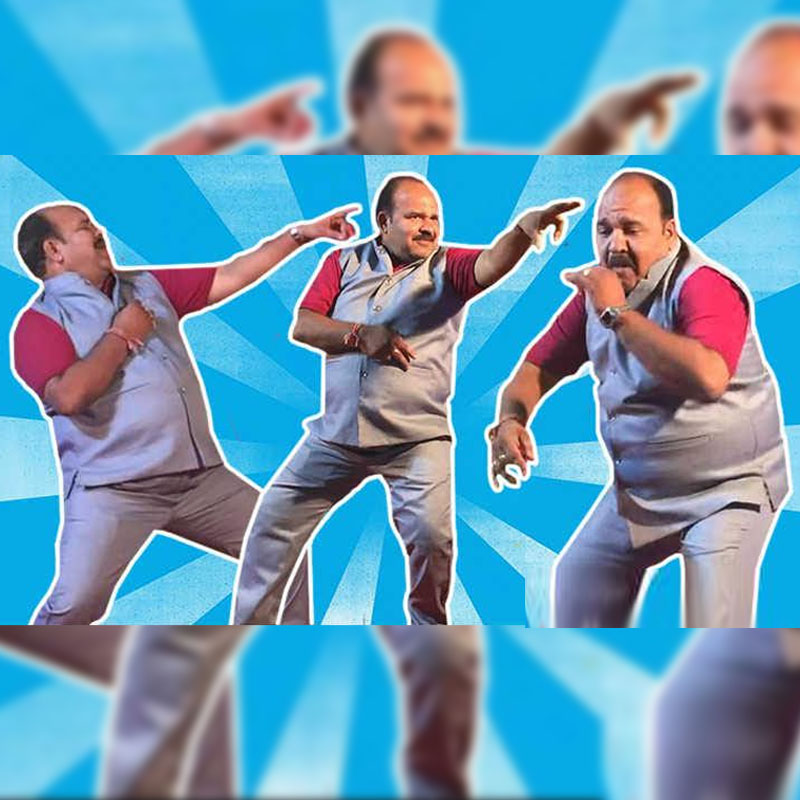
    MUMBAI: Professor Sanjeev Srivastava, whose videos have gone viral on the internet and is trending as #DancingUncle and #GovindaUncle, has been signed up by Bajaj Allianz Life Insurance for their latest video.

    Tapping on Sanjeev’s popularity, Bajaj Allianz Life has roped in the ‘Dancing Uncle’ to shake his legs on their latest announcement of one-time special bonus for their policyholders. The latest video sees him dancing to Bajaj Allianz Life’s new jingle ‘Samjho Ho Gaya’ that captures the essence of the brand’s new philosophy ‘Life Goals. DONE.

    This is the fourth video from the internet sensation that has gone LIVE and has got huge traction in a matter of minutes. His earlier videos where he danced to Govinda’s tracks that made him a superstar overnight have already crossed millions of views and saw his fan following increase by the day including the who’s who of Bollywood.

    Bajaj Allianz life insurance chief marketing officer Chandramohan Mehra says, “Sanjeev evokes our brand values of optimism, confidence and youthfulness. The idea was to ride on the popular wave and ensure our customer-centric bonus offer is reached out in an engaging manner. The idea emanates from our belief that life insurance is about enabling our policyholders to live life to the fullest and help them achieve their Life Goals”.

    After rolling out the brand transition campaign “Samjho Ho Gaya”, Bajaj Allianz Life Insurance has been raising the bar with their marketing initiatives. As part of its earlier digital initiatives, the company launched bite-sized three episodes web series #GameOfLifeGoals where they roped in two popular faces from the web comedy world Rahul Subramaniam and Kumar Varun. It was a follow-up to the vox pop video of #GraveyardOfLifeGoals that was launched in end of March 2018 with popular YouTube star Sahil Khattar.

  • THE BOSS MEETS ETV VIEWERS

    THE BOSS MEETS ETV VIEWERS

    NEW DELHI : ETV and Honda created a platform for the viewers of ETV to personally meet the Bollywood superstar, THE BOSS : Akshay Kumar along with the other star cast of the movie today, at Hotel Taj Palace, New Delhi.

    ETV partnered with Viacom 18’s movie BOSS, to promote the movie through a customized contest designed for it’s viewers to participate and win couple movie tickets, as well as a chance to meet Akshay Kumar in person. The initiative was presented by Honda Dream Neo.

    The BOSS contest, that was aired on ETV Uttar Pradesh/Uttarakhand, ETV Madhya Pradesh/Chhattisgarh, ETV Rajasthan and ETV Bihar/Jharkhand, created an excitement among the viewers to meet Akshay Kumar. An aggressive participation was seen during the contest.

    10 winners were selected at the end of the contest. Sanjeev Srivastava, from Kota, Sridhar from Dehradun, Yogendra from Noida, Bhagat Aggarwal from Gorakhpur were the winners to name a few. Akshay Kumar was present at the event to meet these winners personally in order to congratulate them, get pictures clicked and sign autographs for them. Immense excitement and nervousness was seen among the winners as it was a dream come true experience for all of them.

    Senior representatives from ETV, Honda and Viacom 18 were present at this do.

    Honda and Viacom 18 expressed their gratitude and congratulated ETV to have initiated this activity like never before and mentioned about their willingness to associate in the future too.

    Akshay Kumar talked about the upcoming Grand Finale of ETV Rajasthan Ke Superstars, scheduled for 16th October, 2013, in Hotel Clarks Amer, Jaipur and congratulated ETV to have created a platform with such a noble cause of honoring the ordinary people, for doing something extraordinary for the society.

    The BOSS star interviews and clippings of this meet and greet show, will be aired in this week, only on ETV! Keep watching…

    ETV Network offers enriching infotainment via 12 regional channels; ETV has its strong foothold in over 10 states of India- Uttar Pradesh, Madhya Pradesh Bihar, Rajasthan, Gujarat, Maharashtra, Orissa, West Bengal, Andhra Pradesh and Karnataka. Apart from being present in all the state capitals, ETV provides unmatched regional coverage with specialised dedicated teams for small towns and districts. With its own Earth Station for up-linking and expediting timely transmission of news, ETV is among the country’s biggest satellite TV operations. For more information, visit www.etv.co.in 

  • Prime time content on news channels needs to evolve

    Prime time content on news channels needs to evolve

    NEW DELHI: What would one expect when editorial heads from some of the premiere News Television channels in the country participate in a panel discussion? Riveting stuff is what comes to mind.


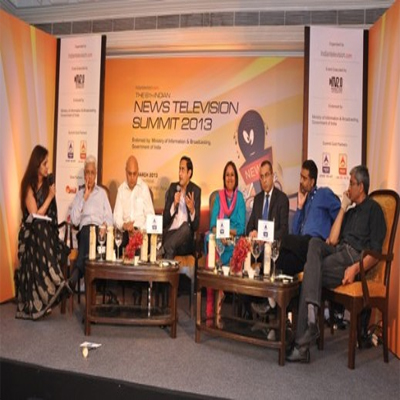
    And that’s what unfolded when Barkha Dutt, Karan Thapar, Vivek Law, Rahul Kanwal, Sanjeev Srivastava, Deepak Chaurasia, Ashutosh, all joined in to discuss the issue of, “Differentiating Prime Time News TV Shows/ Content” at the 6th Indian News Television Summit 2013.


    Session moderator BBC Global News COO India Preet Dhupar kick-started the session with a question to the panellists on prime time content and its impact on the ultimate stakeholders.
        

    CNN-IBN’s Karan Thapar said, “Content during prime time is in a confused mess. It is all about multiplicity of screeching heads. Anchors instigate people to quarrel on their shows and the ultimate product is unsatisfactory. When news is governed by ratings, it becomes an issue. What is really needed is a structure based discussion; focus on current affairs based debate and bifurcation between news and entertainment.”


    Doordarshan’s Sanjeev Srivastava while agreeing with Thapar, added that prime time content has become similar to edit pages of newspapers wherein the thoughts of the editor or the anchor are often reflected. But he also called for a ‘balance between forming opinions and proper dissemination of news.’


    Also agreeing with Thapar, Bloomberg TV India Editor Vivek Law said that the concept of talking heads of channels was not new and it was possible that organisations were revolving business model around it.


    NDTV Group Editor Barkha Dutt struck a cynical note by saying, “TV channels are stuck in a sluggish cycle. There is nothing interesting happening as channels have failed to tap appealing people who can talk sense. I don’t share too much optimism about prime time space.”


    Headlines Today Managing Editor Rahul Kanwal, had a diverse opinion. “Well, I am very proud of what I do and I must state that TV channels have played a stellar role in making politicians accountable and voicing the fact that no one is untouchable.”


    He also talked about the audiences’ demand for masala (adding juiciness) to news packaging.


    The debate between Hindi and English News channels was sparked by IBN 7 Managing Editor Ashutosh who said that English channels were elitist in their approach and embarked on intellectualism whereas Hindi channels had larger and “many layered” audiences to cater to.


    India News Editor-in-Chief Deepak Chaurasia observed, “News channels must understand that people have changed over the years. The environment and approach have also changed. One has to understand this to realise the confused state of affairs during the prime time slot.”


    Chaurasia also stressed on the fact that renowned faces were reluctant to come for interviews and discussions on Hindi channels as compared to English ones. Disagreeing with Chaurasia, Kanwal said that he had interviewed many politicians on his Hindi show.


    Other subjects that were touched upon in brief were budgetary cuts that production teams faced, the need for more reportage by anchors, whose reputations drew eyeballs to the show.


    All the panellists agreed that prime time content should focus more on news which would educate the masses.

  • Govt needs to regulate distribution and licensing of news channels

    Govt needs to regulate distribution and licensing of news channels

    NEW DELHI: Television news content is getting redefined as costs spiral and revenue is under constant pressure, senior newscasters said here today.

    The investment in news gathering is being sacrificed and content is much weaker today amid an uncontrollable distribution cost, launch of a plethora of channels, and glamorisation of the profession.

    “As an industry, there has been a decline in content. Better TV journalism was done 10 years back. We can’t look at content in isolation from the commercial environment we operate in,” said IBN18 Editor-in-Chief Rajdeep Sardesai, while speaking at the third Indian News Television (NT) Summit.

    The chase for eyeballs, in fact, has resulted in news getting commoditised. The fundamental challenge for content makers is to free from these “ratings pressures” and create differentiated content.

    “The real crisis is the lack of distinction. In an age of clutter, how different can we be. That is the important question,” said NDTV managing editor Barkha Dutt.

    A glaring example is the “sameness” of guests across news channels. “We have started working on formula,” admitted Aaj Tak news director QW Naqvi.

    Elaborated Dutt: “The crisis is more with political journalism.”

    The problem at hand, particularly in the case of Hindi news broadcasters, is when there is a collective effort to swing from a niche to a mass market as this means introducing higher doses of entertainment content.

    “We have created an industry solely dependent on ad revenues while we have to pay heavily for distribution. Channels are forced to cut costs to stay afloat. Editors are moving into jingoism or trivialisation and news is getting commoditised. English news channels are beginning to learn from Hindi channels,” said Sardesai.

    While noting that self-regulation of content was bound to happen, Sardesai said the government should also ensure regulation of distribution and licensing of new channels. “Less than 10 per cent of the cost is being spent on content. Around 50 per cent is going into distribution,” Sardesai said.

    Naqvi said news selection is done often on the basis of what will ‘sell’ or accepted. He blamed the problem of TRPs but said this was something that news channels could not avoid.

    Author and former TV journalist Nalin Mehta said Indian television was the third largest and fastest growing medium in the world, but was also the most unregulated. There was necessity to put an independent regulator in place. Despite complaints that news on Indian channels appeared similar, the viewership of news channels had gone down by 30 per cent in the past year.

    Sahara Media India CEO and Editor-in-Chief Sanjeev Srivastava who moderated the discussion accused most news channel heads of being ‘escapists’ who did not want to try anything new. He also blamed lack of research for this.

  • Sanjeev Srivastava to head Sahara’s media biz

    Sanjeev Srivastava to head Sahara’s media biz

    MUMBAI: Sahara India Pariwar has appointed Sanjeev Srivastava as CEO and editor-in-chief, heading all media related activities of the Group.

    Srivastava, currently India editor at BBC, will take up this new role starting January. He comes with over 25 years of experience in journalism with various media organisations including the Times of India and Indian Express. Working for 16 years with the BBC, he most recently led the entire BBC Hindi output generated from India across all platforms of delivery, including FM, short wave and online.

    Sahara has also appointed Upendra Rai as editor and news director. Both Srivastava and Rai will be reporting directly to Sahara Group chairman Subrata Roy.

    Meanwhile, Rai is coming back to Sahara from Star News where he was senior editor. Rai started his career as a journalist with the Sahara group for over 12 years ago.

    Roy says: “Sahara enjoys a loyal base of audiences across print and electronic media, but we realise that we cannot afford to be complacent. I am confident that Srivastava, with his experience and vision, will strengthen and streamline our offering across the entire media spectrum. Rai’s skill and expertise will complement this endeavour and together they will lead Sahara’s media offerings to scale greater heights. Their appointment is part of Sahara’s strategy to secure a rightful place in a highly competitive environment.”

  • Sahara India Media CEO and Editor-in-Chief Sanjeev Srivastava quits

    Sahara India Media CEO and Editor-in-Chief Sanjeev Srivastava quits

    MUMBAI: Barely after a four-month stint at Sahara India Media, Sanjeev Srivastava has quit as CEO and Editor-in-Chief.

    Srivastava had joined Sahara Group in January this year, and was heading all media-related activities of the Group.

    Confirming to Indiantelevision.com, Srivastava said, “Yes I have quit today. I have a few options but have not decided as of now.”

    Prior to Sahara, Srivastava was India editor at BBC. He comes with over 25 years of experience in journalism with various media organisations including the Times of India and Indian Express. Working for 16 years with the BBC, he most recently led the entire BBC Hindi output generated from India across all platforms of delivery, including FM, short wave and online.

  • BBC appoints Sanjeev Srivastava as BBC Hindi service India editor

    BBC appoints Sanjeev Srivastava as BBC Hindi service India editor

    MUMBAI:The Hindi Service of the BBC World Service broadcasts — BBC Hindi has appointed Sanjeev Srivastava as India editor, heading the radio and online operations in India.

    Srivastava moves from his current post as the BBC’s India correspondent to take up his new role in August 2006.

    As India editor, Srivastava will be responsible for all BBC Hindi output generated from India across all platforms of delivery, including FM, short wave and online. Based in Delhi, he will be leading a team of experienced broadcast and online journalists on all BBC Hindi editorial initiatives in India.

    BBC Hindi India editor Sanjeev Srivastava

    According to an official release, Srivastava has been reporting from India for the BBC, in a variety of roles, for over 12 years. He started his broadcasting career in 1994 when he joined the BBC Hindi service in London. He launched the BBC’s first Mumbai bureau, reporting across BBC television and radio in English, Hindi and Urdu. Then, following a stint as India business and western India correspondent, he joined the BBC’s South Asia Bureau in Delhi in March 2003 as India correspondent. Prior to the BBC, he worked in print journalism including The Times of India and The Indian Express.

    Srivastava has been exclusively reporting on the life of modern day India over the last two decades. He has covered social, economic and political issues, such as the successive general elections, earthquakes in Gujarat and Kashmir and the bird-flu outbreak in Gujarat. He has also tracked India’s fast changing place in the global order, geo-political and economic, as well as the country’s foreign policy, particularly Delhi’s relations with its South Asian neighbours, China, US and Europe. In addition, he has reported extensively on India-Pakistan relations, the ongoing peace initiative and Kashmir.

    BBC Hindi service head Achala Sharma says: “India is an important market for the BBC – we are the leading international broadcaster. Our Hindi radio audience has grown by nearly five million in recent years and we know from our relationship with listeners that our new programming is popular. But we cannot afford to be complacent. India is changing fast and news is a competitive business. I am confident that in Sanjeev Srivastava we have someone with the skills, experience and vision to provide excellent editorial leadership. He is top grade BBC news journalist with an impressive track record and passion for reporting India.”

    Commenting on his new role, Srivastava adds: “The BBC stands for quality journalism people can trust. Over 15 million listeners trust BBC Hindi to serve their needs with a range of news programmes. I look forward to building on that trust and expanding our Hindi audience with new editorial initiatives, which will engage them, inform them and entertain. These are exciting times in Indian media, and I relish the opportunity to play a role at this important time.”