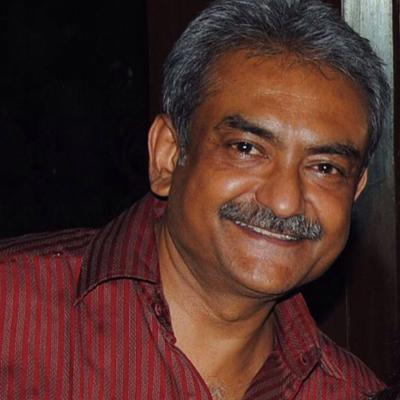
Tag: Sanjeev Hiremath

  • A wrong to correct a wrong

    A wrong to correct a wrong

    MUMBAI: If you look back a few years it was the MSOs who were arm twisting the Broadcasters and carriage subsidies shot up to an estimate of about 1800-2000 crores so it was but obvious that the broadcasters had to resort to some countervailing power and adopted the age old saying of ‘in unity there is strength’ to fight back. Hence, the mergers and partnerships to create the Aggregator now termed the Aggressor!


    But the battle here is not between the MSO and the Broadcaster. Unfortunately, both have been caught in a situation and a created one at that. Both are responsible for this situation. The Broadcaster wanted distribution beyond available bandwidth, the MSO but naturally driven by common supply – demand market dynamics fleeced exorbitant carriage fees. To demand higher shares of which he started grabbing more territory. For doing so he gave significant concessions towards the subscription collections. Soon it reached a stage that they began to subsist on this easy money and forgot about the upward flow of subscriptions. So, the broadcasters were giving and getting back their own monies and plus or minus a little depending on the so called legacy of the channels rather than any rationale of popularity. That is where the business model started floundering. It’s not that the subscriber was getting a free view. Sure 20,000 + crore was getting collected and of course most of it in cash.


    So, where did all this money go? And why are both the Broadcasters and MSOs bleeding. One has to examine the value chain and leakages in the upward flow. The interface to the customer is the LCO/LMO the one who is making the collections. A reasonable share of this will need to flow upward to the broadcasters. Content too with all the competition is only getting more expensive especially with international formats and Bollywood hosts.


    How much should be a fair share is secondary. First, one needs to ensure that there actually is a streamlined reverse flow. The bottlenecks and leakages lie in the value chain and systems created by both the MSO and the broadcasters. In addition to the MSO in the middle between the LCO/LMO at one end and the Broadcaster at the other end, there are at least three more middlemen in the current system that prevails. The agent aggregator, their dealers and the distributor/JV partner of the MSOs. The money the consumer pays goes through five hands before what’s left will eventually reach the broadcaster. Obviously there are not one but two too many middlemen and this is where the ecosystem needs change.


    Now in all of this, how’s the consumer or subscriber faring? We are the cheapest cable market in the world and honestly without an iota of debate our consumers have been spoilt. For three to five dollars a month subscription, we get the most premium of content. (Given the way our rupee is depreciating we’ll soon be down to $2 subscriptions!) And for that an abundance of choice with half a dozen channels per genre. Live sports of pretty much every event around the world and movies within two months of theatrical release.


    Wow! Even if the Govt. is floundering in providing Roti, Kapda aur Makaan nobody is complaining about the 4th essential – Entertainment. Sure everyone’s complaining about the cost of electricity and fuel and multiple taxes but no one’s saying cut off my cable!


    Fortunately, we are also the 2nd largest cable and satellite market in the world and so can provide affordable entertainment and the best there is to offer. There’s enough to go around for legitimate stake holders we just need to get the business model right. Imbalances will correct themselves over time.


    As to the regulator and regulation, digital addressable system (DAS) is great, but for now let’s just focus on getting the boxes. Let it just be an exercise in technological evolution. Enjoy the digital experience and abundance of choice. We are a privileged lot. Trying to introduce addressability and ‘pay for what you want’ is only going to increase the consumer’s monthly outflow or severely restrict choice. When DAS gets to that stage of choosing and billing, it is not going to be a populist regulation.


    So Mr Khullar Sir, the aggregator has been disarmed (agent regulation), the MSO reigned in (max 50 per cent of state control) and the broadcaster chastised (12-minute ad cap). The LCO is still trying to figure out how by merely putting a box, the MSO claims the home whereas he’s the guy who has been upgrading the cables and amplifiers for over two decades. Let’s not add a confused customer to this. He’s happy leave him alone for now. Let the market dynamics come into play and let it all settle for a while. Average Revenue Per User (ARPUs) will increase but not at the cost of denying the consumer what he is already used to. Niche content, value added services and TV on the go are new revenue streams and customers will be willing to pay more for these. Affordable internet access is the key to this next phase of growth wherein traditional media and what we call new media need to converge. What will certainly be interesting is to see who will be the players here to emerge.


    (The author is a media observor and consultant, and the views expressed are his own.)

  • TRAI’s toothless content aggregator regulations

    TRAI’s toothless content aggregator regulations

    The Telecom Regulaotry Auhtority of India  (TRAI) was right in both identifying and bringing in new regulation in an attempt to curb content aggregator aggression (read: broadcaster aggression). However, the restrictions are very minimal and on the face of it, they don’t seem to have too much teeth. Aggregators can get renamed as Agents but will TRAI’s effort at redoing and notifying regulations for them really act as an agent of change?


    There is no restriction on the ownership of agent companies or how many broadcasters they can represent. (Will need to be addressed in issue of cross media.) Broadcasters belonging to the same group can bundle channels. For the immediate future it is more likely to lead to a futile exercise in splitting existing contracts and  and overtime and consulting fees for the guys in black suits (read: lawyers).


    Already agreed terms including carrying weak channels and desired packages are the tradeoffs by which the DPOs negotiate to their advantage, so contrary to TRAI’s belief that they add to unwanted costs, they actually subsidize the DPOs costs – whether for carriage, packaging or for a preferred LCN.


    Restricting multi-broadcaster packages is not important. What is important are the DPO’s packages which are what subscribers eventually subscribe to. As mentioned, these are negotiation tradeoffs.


    In any case most of the channel pricing and bouquets evolved arbitrarily at a time when there were already existing TRAI restrictions on a-la-carte, bouquets, price freeze on existing channels etc and very often broadcasters introduced highly priced new channels to offset the freeze on existing channels pricing. Even internal allocations between various broadcasters within an aggregator skewed rationale on pricing.


    The new regulations have not addressed many potent issues which have been plaguing the business and continue to beg solutions. For starters, let us understand that the entity signing the RIO is of little consequence to the consumer.  Where are the guidelines for DPOs to price to consumers? Should the retail pricing be determined by the DPO or Broadcaster and who should communicate this to the consumer?  Same goes for the packages. Is the DPO the real content aggregator buying in wholesale and then retailing to consumers or is he merely offering his delivery infrastructure and payment gateway for a commission?  What is the business model TRAI envisages? Is it going to continue as a B2B or should there be complete transparency to consumer in a B2C approach? 


    Third party channels within aggregator/agent will be most likely impacted. The Stars and Zees are big enough bouquets by themselves, same goes for the TV18/Viacom18 group channels. (Presuming 50 per cent ownership qualifies to label a broadcaster a Group Company!). Yes, Sony and Discovery channels on paper need to be split but their distribution venture has survived many long years and they can resolve any internal issues without upsetting present equations.


    The onus is now on the various DPOs – whether DTH or MSO – to leverage the only real advantage and actually negotiate separately for each of the various broadcasters’ bouquets. Some positive effect of this is likely but it would take a while for the dynamics of negotiations to change. For now it will more likely be just a paper tiger.


    All of this makes sense only if the end objective of DAS is achieved: which is individual consumer choice and billing. For now it seems to be stuck in a farcical CAF exercise. No one has really asked the consumer if he is happy paying his 150-200 bucks (ARPU) and wants to continue having his unlimited thali and buffet! And if one were to do the maths on this basis for current pay TV homes and allocate say 40 per cent to content- well, everyone’s happy!


    (The author is a media observor and consultant, and the views expressed are his own.)

  • Industry leaders’ thoughts on Independence Day

    Independence. We in India have had it for so many years that the India that is emerging does not know what it is like to not be free. For millions, the struggle to get freedom from the British, Portuguese and sundry other rulers are just chapters in their history books. But occasions like Independence Day and Republic Day remind us that we were once subservient and that we overcame bondage and won our freedom.

    15 August is the 67th year of our independence. For sure, the Indian flag will be hoisted in neighbourhoods all over India. Smaller flags will be mounted on cars, cycles and bikes. And even smaller ones pinned on our shirt pockets. Patriotic songs will be played out on radio and on TV.

    And hopefully for a day we will forget all our complaints against rising prices, economic upheaval, a political and administrative class that is showing little backbone for fair governance and well-being of its citizenry, corruption and the lack of respect that many in India have for women. Hopefully, we will remember the price that was paid for the valuable freedom that we enjoy today. And feel proud to be Indian. We, at indiantelevision.com surely are and even proudly carry it in our name.

    Indiantelevision.com‘s young team of journalists spoke to senior professionals from the advertising, broadcasting, cable TV and marketing sectors to get a fix on their feelings on India‘s 67th Independence Day. And also to gather from them on what their favourite patriotic song or movie is. Read on to feel patriotic:

    O&M India executive chairman & NCD Piyush Pandey

    I am very proud to be an Indian. I think India is a very significant country with many diverse cultures and we have come a long way. In the future, I wish the country to be in a much better shape than what it is currently.

    Mile Sur Mera Tumhara is my favourite patriotic song and truly depicts the light of Indian culture and unity amongst Indians.

    NDTV executive vice chairperson Narayan Rao

    I feel good that we live in an independent country but it shouldn‘t be taken for granted.

    I‘d like broadcasting to be world class and for journalism to have high standards, credibility and ethics.
    My favourite song is Saare Jahan Se Achchha.

    Publicis director, CCO south Asia Bobby Pawar

    Yes I am proud and happy as well that I am living in an independent country as an independent man.

    I really don‘t have any ideas about where the industry is headed. If I did know, then I probably would make millions on it. However, I am very optimistic about the growth in the industry.

    My favourite movie is my friend‘s Prasoon Joshi‘s film Rang De Basanti and the title song from the same movie is my favourite song.

    Discovery Networks Asia Pacific, sr VP & GM, head of revenue, pan-regional ad sales & south asia, Rahul Johri

    I am proud of being an Indian and happy about it. I think in the coming years the broadcasting industry will evolve as the market evolves. I see many more options on offer for viewers and I see the broadcasting industry only growing further.

    My favourite patriotic song is the video Ye Mera India by Saleem and Suleiman which is on Animal Planet.

    Zee, chief content and creative officer Bharat Kumar Ranga

    I renamed myself from Mukesh to Bharat, when I was in the fourth standard. I fell in love with Manoj Kumar‘s character as Bharat inUpkaar. So when I was filling my form for fifth standard, I renamed myself as Bharat. This is how deeply I feel about India. Though firangi competition is welcome, but in India only Indians will rule. I am among those, who believes in the country.

    It is in India, that media enjoys the stature of being the fourth pillar. It started with print and went on to books and films. There was a certain independence given to broadcasters, but that was not utilised to the maximum. Though India has done well in a lot of sectors, but growth in media has not been great. We need to break away from daily and weekly competitions to unleash the power of media.

    My favourite patriotic song is Mere Desh Ki Dharti from the movie Upkaar, I still get all charged up hearing the song. Purab and Paschim was one movie which aptly brought out the power of India, and that is my favourite patriotic movie.

    Draftfcb+Ulka advertising ED & CEO Ambi M G Parameswaran

    I am proud to be an Indian. And I value my freedom. 
    As a nation, the change I would like to see is that the slowdown, which we are witnessing, goes away. I know it will be another 12-18 months before that happens, but then we will see double digit growth after that. The GDP growth needs to regain momentum, business confidence need to rise, rural development really needs to happen, and food prices need to come down.

    My favourite patriotic movie is the Tamil film Kappalottiya Thamizhan.

    Star Den Media Services, CEO Gurjeev Singh Kapoor

    We feel proud to be independent and we celebrated Independence Day at our workplace too on 14 August. Everyone was wearing small paper flags across their hearts proudly. We decked up the office with balloons and placed a small flag on every workstation.

    In broadcasting, freedom of expression is critical and this has rarely happened in the past, but it is witnessing a change. Things have gone through a revolutionary change and kudos to the industry for bringing in this welcome change.

    I love patriotic movies, but Saat Hindustani (1969) andShaheed (1965) figure among my favourites.

    Zee News CEO Alok Agrawal

    I feel good as an Indian. We are living in a democratic country. There are lots of things we need to do to improve. We all have some amount of influence that we can use.

    We are launching an entire new initiative Bharat Bhagyavita. Our responsibility as media is to inform and empower people with knowledge and make them aware of their rights and encourage them to do something about what‘s going on.

    Nothing comes to mind. I don‘t go by defining a favourite. Any patriotic song is fine. I like almost all songs.

    Media Consultant, Sanjeev Hiremath

    For me patriotism is a feeling and cannot be defined in a song, though I really love the Hollywood movie ‘Independence Day‘.

    In the 67th year of Independence, the biggest achievement for India is that it is no longer considered as a developing nation. A lot of Indian companies are now investing in overseas business. Our GDP is robust and we are above world average. I am proud to be an Indian and the reason is its diverse culture. My only concern is that though individually we are progressing, the country collectively isn‘t. Even today 70 per cent of the population lives on 1.50 dollars a day. It makes me sad. The political scenario needs to improve.

    What is good about the cable and satellite industry is that we are not 10 years behind when we compare ourselves to other countries. We have been making gradual progress and now with DAS, in the next two years we will be up close with the world cable and satellite industry.

    Playtime Creations TV producer Hemal Thakakar

    As an Indian we feel proud that we had so many great men and women who gave their lives for freedom we enjoy today. Somewhere I think we have failed them and have misused freedom which they got for us. I hope, pray and wish we correct that.

    For broadcasters, future is shining. Digitisation is beginning of new horizon as our country gets hungry for more entertainment and infotainment. New avenues are discovered and looking at the Indian diaspora and the fact that we are a young nation, the broadcast industry is going to get a major boost.

    My favourite song is the title track from the film Swades and Kandho Se Milte Hain Kandhe.

  • Dish TV appeals to govt against MTV, Nick

    Dish TV appeals to govt against MTV, Nick

    MUMBAI: Subhash Chandra’s DTH service Dish TV has upped the ante by invoking government help in getting those TV channels on board who have refused to do so till now.

    Dish TV’s wrath has been particularly directed at MTV and Nick with which the former has been fighting a legal battle since last year.

    In a letter to the information and broadcasting ministry, Dish TV has petitioned that despite sector regulator’s directive on making available content to all platforms and a favourable judgement from disputes tribunal TDSAT, the “conduct of MTV” has been “clearly in violation” of the interconnection regulation of 2004.

    Dish TV’s parent ASC Enterprises has contended despite carrying on commercial negotiations with MTV Networks India for several months, the content provider and its distributors in India (One Alliance) have stalled any fruitful conclusion of such talks.

    The Dish TV letter to the government states, “We would request you to take cognizance of the consistent refusal of MTV Networks to provide the channels, MTV and Nick, on our DTH platform and non-compliance of the interconnect regulation of Trai (Telecom Regulatory Authority of India)
    and the order of TDSAT before the registration certificate for downlinking of (the) channels is granted to the broadcaster.”

    The government while acknowledging the letter from Dish said it hasn’t taken a view on the issue yet.

    In a related development, an executive of Dish TV said it will be “placing the execution appeal” at the TDSAT within few days.

    Contacted by Indiantelevision.com, MTV senior vice-president, network development South Asia (licensing and merchandising) Sanjeev Hiremath, refused to comment saying the matter relating to Dish TV was subjudice.

    A spokesperson for Discovery-Sony joint venture One Alliance today said that negotiations with Dish TV have been continuing fruitfully and are “likely to be concluded in a few days time.”

    ASC Enterprises, the DTH licence holder for Dish TV, had moved TDSAT in 2005 against MTV’s refusal to provide its channels for the DTH platform.

    Early this year, TDSAT directed MTV to make available its channels to Dish TV on a commercial basis within 30 days by 10 March, 2006.

    MTV Networks appealed against the TDSAT order in the Supreme Court, which admitted the appeal, but did not stay the disputes tribunal’s order.

    During the last hearing on 9 May, the apex court said the case would be taken up again on 12 July after the summer recess.

    Dish TV has also moved the TDSAT against Star India on similar grounds of noncompliance of interconnect regulations.