Tag: Sanjay Tripathy

  • HDFC Life extends association with ‘Hawaa Hawaai’

    HDFC Life extends association with ‘Hawaa Hawaai’

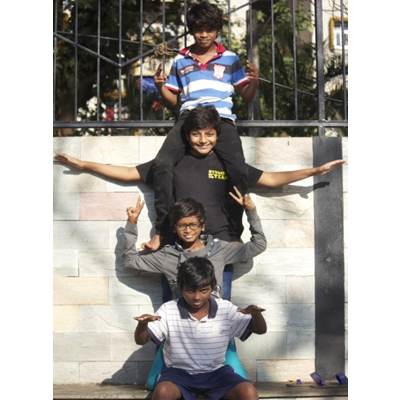
    MUMBAI: HDFC Life, has extended its association with Hindi film ‘Hawaa Hawaai,’ directed by Amole Gupte and presented by Fox Star Studios, by sponsoring the education of the four children featured in the movie, who come from financially challenged backgrounds.


    HDFC Life senior executive vice president and head, marketing, products, digital & e-commerce Sanjay Tripathy said, “As a brand, we have always propagated ‘Independence and Self respect’ or ‘Sar Utha Ke Jiyo,’ as a way of life. In line with our brand philosophy, we were very keen to ensure that the four children featured in the movie receive quality education and any other vocational or co-curricular training required to help them build a sound foundation. We, in association with Aseema Charitable Trust, a Mumbai based NGO working for the rights of underprivileged children, are sponsoring the school education of the four financially challenged children featured in the movie.”


    For the three children studying in municipal schools, the sponsorship would include all educational material, complete school uniform, participation in co-curricular activities such as art, sports, computers, etc., extra classes and remedial help within and outside school hours, counseling if required, a nutritious meal in school every day. “For the fourth student studying in another school, this would include school fees, expenses for uniform and educational material and any tuition or after school support required,” added Tripathy.


    Fox Star Studios India CEO Vijay Singh said, “Hawaa Hawaai is a very special film for us. Amole Gupte’s magical film touched the hearts of the people of the country and we are thankful to all our partners specially HDFC Life for believing in Amole’s dream as we did and supporting it with the way they have. It’s a very special relationship that we shall continue to cherish.”


    Gupte concluded, “On behalf of Salman Chhote Khan, Ashfaque Khan, Maaman Memon and Thirupathi Kushnapelli, I thank HDFC Life for sparing a thought for their well being by supporting their education at Santacruz Municipal School and St. Elias High.”

  • In 2020, the role of Chief Consumer Officer may emerge

    In 2020, the role of Chief Consumer Officer may emerge

    MUMBAI: Like everything else today, marketing too has acquired a digital focus.


    Not surprisingly, companies now need specialised professionals to handle the various aspects of online marketing. Indeed, Chief Marketing Officers (CMOs) and in turn, HR heads of companies are increasingly facing this challenge.


    Mahindra & Mahindra HR- vice president, auto & farm sector Namrata Gill is of the opinion that today, company CEOs are digital-educated. Gone are the days when top management needed to be informed about the power of digital to justify marketing investments. While the western world is busy decoding the power of big data, many Indian marketers are yet to bring on board people with the right skill sets. The hurdle they face is mainly that Indian brands still have a long way to go to get the data right.


    Much is discussed about roping in the right talent but what needs to be taken into consideration is the integration of talent. According to Gill, the best person may not be able to work along with the marketing team and that is where the change needs to begin. CMOs want to look beyond functional teams and HR heads agree to this need.


    According to HDFC Life senior executive vice president- marketing, product, digital and e commerce Sanjay Tripathy, the need of the hour is to start hunting for people with a technology base along with good operational skills and content and data expertise. Tripathy thinks that a marketing team will be perfect with such talent.


    Many experts believe there is a discipline of data existing in many western markets and Indian professionals need to upscale themselves in the long run. The year 2020 is predicted to be the time when the nature of world business and technology would change for the best. For marketing too, the year 2020 is predicted to be the time when communication would take a leap.


    Mahindra Holidays & Resorts India chief marketing officer, Deepali Naair believes that by 2020, when roles get integrated, there will emerge a new role of “Chief Consumer Officer.” It will be interesting to see when talent across different domains comes together to take marketing to the next level.


    Will CEOs invest in bringing such roles into existence? Well, only time will tell!

  • HDFC Life, Amole Gupte join forces for ‘Hawaa Hawaai’

    HDFC Life, Amole Gupte join forces for ‘Hawaa Hawaai’

    MUMBAI: It isn’t uncommon for brands to piggyback cinema as the medium with arguably the greatest mass outreach.


    HDFC Life is no stranger to this strategy; having co-promoted the franchise Spiderman in 2007 and in 2010, followed it up with an association with the Hindi film, Patiala House. This time round, the brand has gone a step further with in-film placement and theme integration with director Amole Gupte’s upcoming film, Hawaa Hawaai, about the triumph of the human spirit in the face of insurmountable odds.


    Through this collaboration, HDFC Life wants to send out the message that strong determination and sound planning (pakka iraada and pakke plans) go a long way in helping you fulfill your personal and financial goals.


    Of the association, HDFC Life marketing, product, digital and e-commerce senior EVP and head, Sanjay Tripathy says: “As a brand, HDFC Life has always propagated ‘independence and self respect’ or ‘Sar utha ke jiyo’ as a way of life and the film’s core message is a perfect fit with our brand philosophy. Through this film, we are celebrating people who help fulfill others’ dreams through their efforts and live life with their head held high.”


    Gupte’s team has gone so far as integrating the line, Sar Utha Ke Jee, in a song from the film to bring out the strong thematic and philosophical connect.


    Associating with films is not new for brands across FMCG, banking, financial services, and insurance (BFSI), what with marketers constantly searching for newer and better ways to reach out and connect with customers. HDFC Life has consistently launched marketing campaigns that bring out the relevance of life insurance for consumers.


    “Our core brand thought – Sar Utha Ke Jiyo – is about ‘financial independence’ and ‘self respect,’ which has always been a core value for all Indians. We stand for and celebrate achievement of every individual’s dreams and aspirations, being triumphant against all odds, and thereby, living life with the head held high,” says Tripathy.

  • HDFC Life’s ‘Birthday’ gift

    HDFC Life’s ‘Birthday’ gift

    MUMBAI: “Not today but surely tomorrow,” is something we all say even though tomorrow never comes. And if it does, it’s usually because someone or something triggers us into action.

    Similarly, HDFC Life’s new campaign ‘Birthday’ to promote its long-term financial plan to secure the future of a child tries to inculcate among young parents the habit of disciplined and systematic investment planning by using their kid’s birthday as trigger.

    HDFC Life didn’t want its campaign to be labelled as something that simply lures people but as an informative ‘trigger’ that would help them secure their child’s future.
    Watch the video: YoungStar Plans from HDFC Life

    Drawing a parallel with the Cadbury ad which uses the tagline ‘Shubh Aarambh’ telling people to eat something sweet before starting something new, HDFC marketing, product, and direct channels senior executive vice president Sanjay Tripathy says: “Previously too, brands, especially FMCG brands, have used trigger-based communication successfully. Hence, we thought of using the same thought.”

    “Birthday seemed the best option because as parents, one can plan a long-term and every b’day will act as a reminder for the payment of the premium. Timing and the context plays a very important part. We did this by showing in our film a younger kid and young parents and one of our contextual ads also shows age for buying the product, which is between 3-9 years so that parents can have a long investment horizon of 10-15 years for a bigger corpus available when the child turns 16, 18 or 21, ready to take up under or post graduation.”

    Won’t the economic slowdown impact the plan and in such a scenario, will the trigger work?
    Child plans are some of our major plans and close to 15% of our business comes from this, says Sanjay Tripathy

     “Child plans are some of our major plans and close to 15% of our business comes from this. And when we did research, we found out that the parents are very involved in the planning of birthday celebrations, the other part that came out was that the mother is very involved in the planning of the financial future of the child. And lastly, people are not very clear about when to take the step? So we thought this a nice way to convey the message of when is the right time for the parent to start investing,” replies Tripathy.

    The 360-degree campaign covers TV, print, radio, OOH and digital and will run for six weeks. Asked about the spend break-up, he says: “Television and print by nature are costly, and the amount I’m spending on digital might be less compared to them but it might be sufficient for that medium so I won’t be fair to break it down.”

    With Leo Burnett having done the ATL (print, TV and radio), NCD KV Sridhar talks about campaign execution as: “Most of the times, the important parenting decisions are overshadowed by urgent ones. Through our campaign, we’ve tried to communicate to parents that investing in a child plan at the right time is equally important. And we thought what better day than a child’s birthday to remind parents to start investing for their future. After all, only when they invest on time will their children get the support they need to fulfil their dreams when they grow up”.

    Digital agency Propaganda has handled the campaign’s digital side.

  • HDFC Life’s ‘Birthday’ gift

    HDFC Life’s ‘Birthday’ gift

    MUMBAI: “Not today but surely tomorrow,” is something we all say even though tomorrow never comes. And if it does, it’s usually because someone or something triggers us into action.

    Similarly, HDFC Life’s new campaign ‘Birthday’ to promote its long-term financial plan to secure the future of a child tries to inculcate among young parents the habit of disciplined and systematic investment planning by using their kid’s birthday as trigger.

    HDFC Life didn’t want its campaign to be labelled as something that simply lures people but as an informative ‘trigger’ that would help them secure their child’s future.

    Drawing a parallel with the Cadbury ad which uses the tagline ‘Shubh Aarambh’ telling people to eat something sweet before starting something new, HDFC marketing, product, and direct channels senior executive vice president Sanjay Tripathy says: “Previously too, brands, especially FMCG brands, have used trigger-based communication successfully. Hence, we thought of using the same thought.”

    “Birthday seemed the best option because as parents, one can plan a long-term and every b’day will act as a reminder for the payment of the premium. Timing and the context plays a very important part. We did this by showing in our film a younger kid and young parents and one of our contextual ads also shows age for buying the product, which is between 3-9 years so that parents can have a long investment horizon of 10-15 years for a bigger corpus available when the child turns 16, 18 or 21, ready to take up under or post graduation.”

    Won’t the economic slowdown impact the plan and in such a scenario, will the trigger work?

    Child plans are some of our major plans and close to 15% of our business comes from this, says Sanjay Tripathy

     “Child plans are some of our major plans and close to 15% of our business comes from this. And when we did research, we found out that the parents are very involved in the planning of birthday celebrations, the other part that came out was that the mother is very involved in the planning of the financial future of the child. And lastly, people are not very clear about when to take the step? So we thought this a nice way to convey the message of when is the right time for the parent to start investing,” replies Tripathy.

    The 360-degree campaign covers TV, print, radio, OOH and digital and will run for six weeks. Asked about the spend break-up, he says: “Television and print by nature are costly, and the amount I’m spending on digital might be less compared to them but it might be sufficient for that medium so I won’t be fair to break it down.”

    With Leo Burnett having done the ATL (print, TV and radio), NCD KV Sridhar talks about campaign execution as: “Most of the times, the important parenting decisions are overshadowed by urgent ones. Through our campaign, we’ve tried to communicate to parents that investing in a child plan at the right time is equally important. And we thought what better day than a child’s birthday to remind parents to start investing for their future. After all, only when they invest on time will their children get the support they need to fulfil their dreams when they grow up”.

    Digital agency Propaganda has handled the campaign’s digital side.

  • HDFC Life’s new ad campaign targets youth

    MUMBAI: HDFC Life, India‘s leading life insurance company, has launched a new advertising campaign to increase awareness about early retirement planning among country‘s youth.

    The campaign follows the launch of HDFC Life‘s two pension plans – HDFC Life Pension Super Plus (a regular premium unit linked plan) and HDFC Life Single Premium Pension Super (single premium unit linked plan).

    HDFC Life EVP and Head Marketing, product and direct channels Sanjay Tripathy said, “Our new campaign talks to a younger audience, to help change their mindset that retirement planning is an exercise which one needs to take up only when he is 40-45 years old and all other financial planning objectives have been met.”

    Created by Leo Burnett, the communications concept of HDFC Life‘s retirement campaign is ‘a solid back-up plan,‘ which signifies that ‘you will enjoy the fruits of your labor without any worries, when your future is secured‘. The creative expression is,?Retirement plan karo taaki aapka kal bilkul aaj jaisa ho‘.

    Leo Burnett national creative director KV Sridhar said, “Young professionals think retirement is too far away to worry about it today. This campaign taps into the insight that these people, all of whom grew up in a liberalized economy, prize their current lifestyle a lot and would like it to continue post-retirement.”

    HDFC Life plans to take its new campaign through different platforms and intensify the brand experience. Apart from television, this film will be supported by other mediums such as print, OOH, and digital will have significant focus.

  • HDFC Life’s ad to create awareness about ‘Financial Freedom’

    MUMBAI: HDFC Life has unveiled a new marketing campaign aimed at driving financial freedom among urban Indian women.

    The campaign has been conceptualised and created by Leo Burnett.

    The creative route of the new campaign is Director of Happiness.‘ The communication insight is that a woman‘s financial independence will let her be a stakeholder in the family decision making process. Financial independence will let her care for others, which gives her true happiness. It will help fulfill all her dreams and aspirations and make them come true for her loved ones as well. Financial independence will thereby, make her the Director of Happiness. This also links back to the company‘s brand philosophy of “Sar Utha Ke Jiyo.”

    Leo Burnett NCD KV Sridhar said,”The Smart Woman product and campaign is targeted towards progressive women-of-today. Keeping this niche target audience in mind, the campaign builds on the commonly felt emotion and insight of the joy in making a landmark contribution towards the family. Keeping the product offering in mind, the film encourages young women to secure their future, so that they can do all that they desire for their family.”

    HDFC Life EVP and head-marketing product and direct channels Sanjay Tripathy, said, “Following the launch of our flagship women‘s product ‘Smart Woman,‘ we have embarked on this new marketing campaign to drive awareness about ‘financial freedom‘ among urban Indian women.”

    The film is centered on a female protagonist and opens in a middle class house showing playful conversations between dad and daughter. They argue to come to a decision about where the parents should go for a vacation on their wedding anniversary. While the father tries to control the budget and keeps suggesting cheaper options, the daughter keeps upgrading to international locations. When the daughter suggests Europe tour, dad refuses because he cannot spend so much, to which the daughter replies “Par main toh kar sakti hoon na.” “Ab aap poochenge, itne paise kaha se aaye. Dad kaafi time se plan kiya hai. Happy anniversary!” All this has been a surprise for the mother all along, who now asks “Kya planning chal rahi itne din se “. Dad gets emotional and replies “Jisse kandhe pe ghumata tha, aaj humme Europe ghuma rahi hai.”

    HDFC Life plans to take its new campaign through different platforms and intensify the brand experience. Apart from television, this film will be supported by other media such as print, OOH, radio, and digital.

  • Digital the silver lining amid dark ad clouds

    Digital the silver lining amid dark ad clouds

    MUMBAI: As the industry braces itself for the impending slowdown, there might actually be a sector that is preparing to manage an increased workflow. Digital marketing is expected to maintain its pace or even speed up this year as advertisers look to scale back spends on expensive mediums like print and hoardings.

    Experts say there will be no major deviation from Mindshare‘s early year forecast that digital would grow at 30 per cent in 2012, in the same rate as the earlier year.

    Maxus, part of WPP group, agrees that digital will not see any specific slowdown this year. “It should grow at 30-31 per cent from the first part of the year trends,” says Maxus South Asia head of digital Unny Radhakrishnan.

    In fact, insurance companies like HDFC are looking at increasing their digital spends this year.

    Says HDFC Life EVP marketing and direct channels Sanjay Tripathy, “I only see the spends going up because the whole media pie has been asymmetric all this while. If you look at the reach frequency formula and compare it to TV, print, radio and then digital, you will agree with me. There are more people spending time on digital in comparison to other traditional media touchpoints. I only see the digital percentage increasing in the overall pie.”

    With India‘s economy slowing and the bottom line of companies coming under pressure, advertising spends are bound to become increasingly result oriented. This is where digital scores over its media counterparts as it allows for more targeted marketing and better measurable RoI.

    Says Brandlogist CEO Saurabh Parmar, “Digital offers clients an ease in measuring RoI and helps target a wider demographic. What is more important is that digital offers an economic advertising to the small and medium-sized businesses that aspire to advertise among the masses but do not have the budgets of TV and print.”

    As consumers tighten up their purse strings, they would want to carry out detailed research as well before they arrive at a purchase making decision. The Internet is becoming the research tool of choice for several consumers, offering brands the opportunity to become more visible and interactive.

    In the wake of such trends, Parmar feels that the percentage of ad spends dedicated to digital will see a spurt to 11 per cent in 2012, up from 3-5 per cent last year.

    While building brands take a backseat in times of slowdown, it is an exercise that can‘t also be neglected.

    Admits Mindshare principal partner Jai Lala, “Digital, specifically social media, offers brands a platform to interact with its customers. This serves a two-pronged benefit of getting feedback and enhancing the brand image by being responsive and interactive. This is one of the main reasons why digital is growing so rapidly.”
    Also Read:

    Ad Slowdown Looms

    Signals are for a mild ad slowdown: Mindshare‘s Lala

    Slowdown to impact outdoor advertising

  • HDFC Life returns to Rajasthan Royals as associate sponsor

    HDFC Life returns to Rajasthan Royals as associate sponsor

    MUMBAI: Strengthening its association with the Rajasthan Royals, HDFC Life has announced extension of its sponsorship deal with the team for the fourth consecutive year as associate sponsor.

    Talking about its journey and association with Rajasthan Royals, HDFC Life EVP & Head – Marketing and Direct Channels Sanjay Tripathy said the values epitomised by Rajasthan Royals is in sync with the company‘s philosophy.

    He also emphasised the fact that a sports sponsorship should be on a long-term basis in order to gain maximum mileage.

    “Our focus on ‘long-term‘ reflects in our association with Rajasthan Royals since the last three years. Our journey with Rajasthan Royals has been very eventful and momentous. A team known for their self belief, pride, and confidence, Rajasthan Royals continues to epitomise the values of resilience, commitment and intensity and never say die attitude. This spirit goes well with our brand thought – Sar Utha ke Jiyo,” Tripathi said.

    HDFC life will continue with ‘Sar Utha Ke Jiyo – Most Valuable Player’ award instituted during the first year of association.

    The Rajasthan Royals coaching staff along with the team captain will select the Most Valuable Player from the Rajasthan Royals team, who will receive this honour along with a cash incentive.

    Rajasthan Royals CEO Raghu Iyer said, “We are delighted to continue our association with a brand of the stature of HDFC Life as we have always looked at building long term relationships with our sponsors. I truly admire our association till date with HDFC Life as it goes beyond mere brand visibility.

    “HDFC Life through its innovative communication has managed to capture the true essence of Rajasthan Royals – tremendous self belief & confidence. What they do is not merely deriving value out of the association like traditional sponsors but adds a lot of value to the equity of Brand Rajasthan Royals.”

    HDFC Life plans to drive the core essence of the association through different platforms and intensify the brand experience.

    Apart from television, digital and social medium will have significant focus. On the digital medium, the company will leverage all channels — search, display, social, mobile and video — to reach out to IPL fans across the country.

    The company is also associating with various NGOs across the country that is involved in promoting and raising awareness about ‘every children‘s right to education.‘

    ‘Children and Education‘ is one of the core themes of HDFC Life’s overall CSR framework and the company aims to enable underprivileged children to dream big. Throughout IPL, there will be diverse initiatives launched to bring the children closer to their dreams by witnessing the matches and spending time with their favourite cricketers.

  • ‘The challenge is to differentiate in a cluttered market’ : HDFC Life executive VP marketing and direct channels Sanjay Tripathy

    ‘The challenge is to differentiate in a cluttered market’ : HDFC Life executive VP marketing and direct channels Sanjay Tripathy

    HDFC Life‘s advertising spend will stay flat this year as it seeks to turn profitable for the first time.


    The insurance company, which ranks No. 4 among the top 10 advertisers in the category in terms of ad volumes, is looking to spend more judiciously and utilise a 360 degree approach to reallocate money across new mediums like digital and OOH.


    While 70 per cent of HDFC Life‘s marketing spend goes towards above the line, 50 per cent of this goes towards television. On television, HDFC uses news and sports for advertising as it fits into the 25-45 male target audience.


    Print, radio and OOH play a supportive role. HDFC Life has also started using social media to engage the youth.


    In an interview with Indiantelevision.com’s Ashwin Pinto, HDFC Life executive VP marketing and direct channels Sanjay Tripathy talks about how insurance companies need to differentiate in a cluttered market and build a brand equity that includes the youth.


    Excerpts:

    Why did HDFC Life go in for a brand makeover last year?
    We did a brand equity study as we wanted to see where our brand is and how it is faring versus competition. We had last done a similar study way back in 2005. We wanted to see the changes; we wanted to know how through our cmmunication and marketing activities the brand had progressed in people’s minds.


    Consumers found the brand ethical and the service value was strong. Then we asked about the areas where they felt the brand could be improved upon. They wanted it to look like belonging to the same HDFC family; they felt that the brand could look more modern and dynamic.


    Indian consumers are getting younger. People work in areas like BPO and they look at life insurance at an early age. A person buys their first insurance product between 23-28 years of age. As a brand, we wanted to attract the youth towards our products; we needed to be in the youth segment. We spoke to our board and got a favourable response.


    Also, the word standard only conveyed the basic level of facilities; it was not giving the message of Standard Life being an international brand. We wanted to be seen as being a customer centric brand. Through the rebranding, we wanted customer centricity to come out more strongly for us. The new logo represents a youthful, energetic HDFC brand.

    How do consumers perceive HDFC Life as a brand compared to the competition?
    Our awareness has gone up by 30 per cent over last year. Our communication has been well accepted.

    When marketing to consumers, what challenges do insurance companies like you face?
    The market is cluttered. There are over 23 players. The challenge is to differentiate and ensure that consumers can see your service offerings and products.


    We need to be seen as having products that are more consumer friendly; the challenge is to see that the consumer understands your brand and products.

    How do you build and leverage brand equity in the insurance category which is getting more competitive?
    We started six years back to find out why consumers buy insurance. We found that they bought it as they do not want to depend on anybody else; they want insurance for self respect. They do not want to depend on their parents; similarly, the parents do not want to depend on their children. This is how the thought for our campaign came about which is – Sar Utha ke Jiyo. We positioned our brand under the ‘self respect’ motive.


    Over time, we took the thought of Sar Utha ke Jiyo across our platforms – be it for children, pension, youth or home loan cover. It gives you a long term solution for pressing needs and self respect. Insurance operates in a long term savings plan; investment in insurance has to be linked to a long term need. This is what we have focussed on and have built consumer segments.

    To what extent will your marketing budget go up for the year?
    We are maintaining a similar spend as last year. This is the first year we are trying to become profitable. We are looking to spend more judiciously and utilise a 360 degree approach to reallocate money. New mediums have come in like digital and OOH. The aim is to make a more judicious mix of mediums available.

    “Our ad spend will stay flat this year. We are looking to spend more
    judiciously and utilise a 360 degree approach to reallocate money. New
    mediums have come in like digital and OOH”

    To what extent was this category affected by the economic downturn in terms of sales and marketing spends?
    New companies are spending heavily. Some of the older players who want to go for a public listing and want to make marketing money work harder are keeping a check on their spending. Spending in this category went down by around 20 per cent during the downturn.

    Which marketing vehicle is the most effective for you – print, TV, radio, online?
    Seventy per cent of our marketing spend is for above the line activities; fifty per cent of this goes towards television as it is the most effective medium for us.


    As we are present in over 700 cities, television offers a more cost effective reach. It provides an emotional touch point. You can link the customer with your brand and emotional thought. You can explain your concept in a situation linked to his day to day life.


    Print, radio and OOH play a support role. We have started using social media more to engage the youth.

    Which genres do you use on television?
    News and sports for TG 25-45 males works. Apart from cricket, we also do on-air sponsorship of Euro, Fifa World Cup and Wimbledon. We also spend on regional news and regional entertainment; they are pretty big for us.


    The aim is to get the top-end audience in metros and mini metros. The cost of contact may be high but cost of impact and cost to the top-end segment is less compared to other vehicles. This is the most profitable customer segment for insurance.

    Do you advertise heavily only during the end of the financial year?
    We advertise across the year. Our IPL campaign is running at the start of the fiscal. When schools open, we can run a ‘Children Plan’ campaign. Advertising in the insurance category has moved from just being end of the year to being more spread out.

    What about the festive time?
    Advertising at that period does not work. People think about spending and not about saving. It could be a counter campaign to do it in Diwali; this has not worked in the past.

    Do you use brand ambassadors?
    No! HDFC Life is a product for the common people. The thought is powerful when you connect to people; they want to see communication where people like them are investing rather than seeing somebody who does not need life insurance but is still talking about it.

    What campaigns have been done recently?
    The last campaign was a rebranding one. You don’t need to spend Rs 3-5 billion for this if you realise the core thing that you need to convey. It is not that overnight you have to change every single collateral and signage. The consumer has to be convinced that your rebranding is actually being delivered on the ground; they look at rebranding more in terms of on-ground delivery rather than on just an image or a design change.


    We also did a children’s plan campaign. We used more persuasion which was different from what was done earlier. We explained that while the child is doing fine, seats are limited and competition is severe. Parents need to plan properly; it will help the child reach that goal and get into the institution they like. The aim is to make a parent see that while things are happening normally, they still need to do something.

    As a platform, how has the Rajasthan Royals deal worked out for you?
    We look at associations where there is a good brand fit. In case of Rajasthan Royals, while Shane Warne is the captain, ordinary Indian players who people might not have heard of are given a platform. Warne helps them think like winners. If you look at the premise of believing in yourself, this goes well with our tag line ‘Sar Uthake Jiyo’.


    As a team they support youth and some of them have started playing for India. Shane Watson’s career also got revived with this team. It helps youth to think that they can beat world beaters.

    In terms of activation with that IPL franchise, what innovations did you do this time around?
    We brought a social angle into our activities for the home games. We used to take employees and distributors to meet players. We also used players for ads. We gave fans the opportunity to get tickets to enjoy the match and spend time with the cricketers. We took fans for the toss. This was run on Facebook. We also gave tickets to underprivileged people.

    Last year the franchise got into trouble with the BCCI. Did that force you to temporarily change tack in terms of your campaign?
    Not really! The IPL was over by the time these issues came up. The team management kept us informed about the steps they were taking and why they believed that they were in the right. They said that there were no issues and kept us in the loop all the time. We have a one year deal with them.

    Rajasthan Royals has not fared well during the IPL. Are you concerned at any negative brand rub off for HDFC Life?
    No! For a while, they were in the top rung of the points table. You have to look at the core strength of the association rather than one off wins or losses. The youth looks at ‘Sar Uthake Jiyo’ in a different light. The team has more youngsters compared to the previous year. So we came up with the tag line ‘Sar Utha ke Jeene ka Naya Andaaz’.

    How many campaigns do you do in a year and are there new audiences that you have started to address?
    We will do four to five campaigns and are looking at new audience segments. We have done a lot of research on this.

    The rural areas have a lot of potential but the marketing vehicles that work in the major metros might not work there. So how do you connect with those consumers?
    More than just marketing, the basics of the business have to be in place. Insurance is a long term business – and you need to understand the rural area. We do pilots to understand the rural area much more; this has multiple models that have to be run simultaneously.


    You need partners like microfinance institutions so that you can reach out to them in a much more cost effective manner. The rural areas consist of the rural rich and poor. You need different products for them while their aspirations are similar.


    We are trying to do partner marketing at the moment. We do below the line activities with partners who have the trust factor in that area. The aim is to make the brand relevant and differentiated at a local level. We do things like street plays. We need somebody to carry the message and explain it. That is why below the line activities are important.

    Could you give me examples where experiential marketing has worked for you?
    We do ‘Spelling Bee’ in 35 cities. Children in classes six to nine participate. We have 300,000 children and over 1500 schools taking part. It allows children to understand things like vocabulary and sentence formation. Parents encourage children to do this. It is a good engagement activity. Parents are also engaged in terms of helping the child spell correctly.


    Somewhere your brand rub off is also very high. The parent thinks that HDFC Life has brought a competition which they want their children to participate in. Consumer engagement is key for our category. The consumer should keep engaging with you over a longer period of time. What we are seeing is that people buy five to six insurance products over a lifetime.


    People like a brand but the decision may be deferred. I need to stay engaged constantly. I may create an engagement now, but later you may buy competition. The engagement has to be done through different methods. That is why we look at a 360 degree approach.

    Could you talk about the growing importance of OOH for you?
    This has really increased. In metros and mini metros, consumers spend time out of home. TV viewing time has come down. There is innovative media available. Obviously, hoardings have been there for a long time. Airports and stations have OOH media. You have to figure out how you can catch your TG when they spend time away from their home.

    But isn’t lack of measurement a problem?
    This is why it is a support medium. If you utilise it for the right reason and use it to support the main communication, it works well. As a support medium, it gives good ROI. OOH always complements the TVC. I can measure ROI better that way.

    Do you address women?
    In India, most homes have a single income. The male is the breadwinner; women in the working segment are still small and their needs are similar to working men. Their media consumption is similar. The campaign for men works for them also.


    We addressed upwardly women through an endowment plan campaign. The only segment that is different from men is the unmarried working woman. Other categories for women are similar to men; so I do not need to do a separate campaign for them.