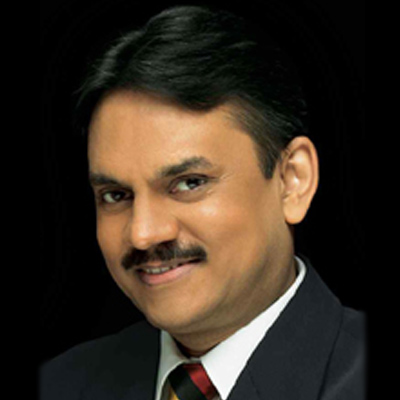
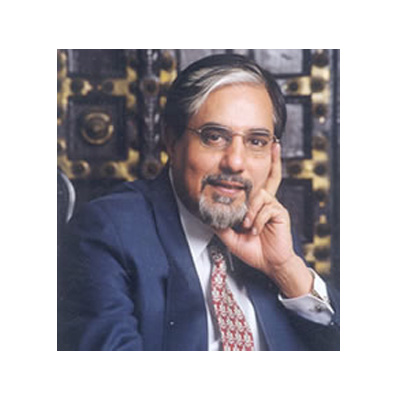
Tag: Sanjay Pugalia

  • CNBC awaaz’s Peheredaar now in a changed avatar

    CNBC awaaz’s Peheredaar now in a changed avatar

    MUMBAI: In today’s world, consumerism is seasoned in every aspect of modern life. Corporate and brands have to adapt to this new reality where consumer is really the king. CNBC AWAAZ is changing the avatar of their very popular program ‘Pehredaar’, which has over the years given a new impetus to consumer activism.

    Pehredaar to start the new season and will be joined by 3 main regulators of the country who have been entrusted with the responsibility to ensure that consumers should not be taken for a ride. The show will be joined by Competition Commission of India’s Chairman Mr. Ashok Chawala, Telecom Regulatory Authority of India’s Chairman Mr. Rahul Khullar and Reserve Bank of India’s Deputy Governor Mr. K C Chakrabarty.

    The objective is to reach a conclusion about the consumer’s well-being and what more is needed to be done in the country, to ensure a fair play in the crowded marketplace. Pehredaar will set an Agenda for an empowered consumer.

    Commenting on the re-launch, Sanjay Pugalia, Editor-in-chief, CNBC AWAAZ said “A show like Pehredaar has gained widespread acceptance in its very successful existence till date. It is a unique offering in the consumer grievance space. It gives us a great sense of fulfillment and pride to re-launch it in a strong new avatar. Pehredaar now will see the show much sharper, to represent consumer rights better- which is what our country needs with consumer protection and representation going through an identity crisis of sorts.”

    Priyanka Sambhav, Anchor, Pehredaar said “We realized that companies operating here are taking the consumers for a ride. With Pehredaar, we set out to change this imbalance and ensured that consumers’ voice is heard and issues they face get resolved. With the new innings we intend to take Pehredaar to the next level with expanding the reach and making it more effective.”

  • CNBC Awaaz partners Entrepreneur magazine to launch new show

    CNBC Awaaz partners Entrepreneur magazine to launch new show

    MUMBAI: CNBC Awaaz, the Hindi business new channel from the TV18 stable has partnered with Entrepreneur magazine to launch a new show Awaaz Entrepreneur. It will focus on the Small and Medium Enterprises (SMEs) across the country.

    The weekend show will launch on 15 May and will be aired Every Saturday at 8.30 pm.

    Awaaz Entrepreneur will profile SME’s and talk to various stakeholders. The series will also showcase the journeys of eminent industry figures who have witnessed the SME phase and have now transformed into larger businesses. People from across the country can also have their queries resolved through an expert on the show.

    CNBC Awaaz Editor-in-Chief Sanjay Pugalia said, “Awaaz Entrepreneur is a series solely focusing on SMEs. Our intention is to aid and educate budding entrepreneurs and make them understand the nuances of starting and building their own ventures successfully. This is a step forward in our pursuit to supporting the emerging businesses in India.”

    Small and Medium Enterprises are the driving force of the Indian economy and CNBC Awaaz, with this initiative is aiming to reveal the journeys of various SMEs and also bring out various ideas, options and solutions available to various sections of society who yearn to venture out and make it big on their own.

  • CNBC Awaaz launches market show ‘Market Ke Khatron Ke Khiladi’

    CNBC Awaaz launches market show ‘Market Ke Khatron Ke Khiladi’

    MUMBAI: CNBC Awaaz, the Hindi business news channel from TV18, has launched a new show, Market Ke Khatron Ke Khiladi. The show will display live all the action from the dealing room, between 8.30 am and 3.30 pm.

    The channel claims that the viewers will not only get an opportunity to witness individuals buying and selling in stocks live, but will also hear from these traders daily the rationale behind their trading strategies.

    The programme will give viewers an opportunity to understand various trading strategies and daily moves of experienced stock traders.

    Market Ke Khatron Ke Khiladi will also feature a segment after the market closes which will analyse whether the stocks selected and strategies adopted by the traders during the day have really paid off.

    CNBC Awaaz Editor-in-chief Sanjay Pugalia said, “CNBC Awaaz Market Ke Khatron Ke Khiladi is a unique and first-of-its kind initiative that show experienced Indian traders live in action in the dealing room, trading in stocks every day. With an aim to educate and guide the investors, especially the day traders about the complexity of trading in stocks, CNBC Awaaz has taken a step forward by providing a live experience of real traders on a daily basis. This segment is a natural extension of educating viewers on making informed decisions on trading in different stocks and the risks involved.”

  • ‘We have helped in the democratisation of the business news market space’ : CNBC Awaaz editor-in-chief Sanjay pugalia

    ‘We have helped in the democratisation of the business news market space’ : CNBC Awaaz editor-in-chief Sanjay pugalia

    Five years and counting big. CNBC Awaaz dominates the Hindi business news segment, leaving counterpart Zee Business behind, and even marching ahead of elder sibling CNBC TV18 in terms of audience reach.


    CNBC Awaaz has become more interactive along the way and has shaped up as a well-defined channel with a clear focus on utility news. It treats news with the aim of helping viewers take informed positions on investments.


    The fundamental challenge that CNBC Awaaz faces is in scaling up revenues. The cost restructuring will, however, help the channel in improving its profitability.


    In an interview with Indiantelevision.com‘s Gaurav Laghate, CNBC Awaaz editor-in-chief Sanajay Pugalia talks about the channel‘s growth in the last five years and the path ahead in terms of content that would guide viewers in the verticals of stock, tax planning, commodity and SMEs.


    Excerpts:
     
     
    CNBC Awaaz has completed 5 years. How has the Hindi business news market shaped up?
    Five years back there was no Hindi business news channel. Today, with just two channels in this segment, there are close to 38 million Hindi business news viewers and we command a 70 per cent market share in this.


    If you take the total viewership of the business news channels, it was close to 10 million five years back. Within two years of our launch, the pie grew to 30 million. Today, the combined viewership base for English and Hindi business news stands at almost 55 million.


    How come the Hindi viewership base is higher from just two channels while the revenue is much lower?

    On a mass basis, our appeal is larger then even CNBC TV18. Our viewers include small investors, consumers and businessmen. So in a way we have helped in the democratisation of the business news market space.


    On the revenue front, even some English business news channels can‘t command the kind of advertising rates we do. But yes, it is also true that the dynamics of the market is that English business channels get higher rates.


    So is it true that Hindi business news channels do not have a scalable model?
    There is a myth that Hindi is not so upmarket. But if you do an affluent audience profiling, we are as good as that of CNBC TV18. And if you see our viewership pattern, most of them come from Mumbai and Delhi, followed by Gujarat and Maharashtra.


    It is pertinent to note that the initial five years were a build-up stage. We will see much faster growth from now on.


    What made you edge out Zee Business when both were launched around the same time?
    The focus of our channel is in outlining the utility of news. There might be 10 important stories in a day, but how many are affecting our viewers? We decode such news in a manner that helps them understand the implications.


    We will be covering other news as well, but our main emphasis will be user-centric. We focus on helping our viewer make the right investments to increase their wealth. Take real estate as an example. Our focus stories will be on the ground realities the sector faces rather than talking about how to improve the policies on real estate. Our object will be how to help viewers decide on which property to buy and we will suggest the rates and other things there.


    Going forward, do you see space for more channel launches in this segment?
    Business news viewership will definitely increase with time. With more and more people getting capital to invest and more awareness spreading on personal finance management, this market segment is set to grow.


    Our estimate is that out of every 100 new consumers, two-thirds will come from the Hindi speaking belt, so you can imagine the future that the Hindi business news genre has.


    I would say there is scope for new channels, but the success will depend on the strength of the network and how much credibility they can build. It won‘t be easy for new players.


    Recently TV18 went through a cost restructuring and 12 per cent permanent jobs were cut. How effective has the move been in achieving profitability?
    Cost rationalization is a necessity for any business. But you will not see any change in the editorial content. I can‘t share the absolute numbers, but very few editorial jobs have been cut.


    ‘The focus of our channel is in outlining the utility of news. There might be 10 important stories in a day, but how many are affecting our viewers? We decode such news in a manner that helps them understand the implications‘


    So do you mean to say there was flab?
    No. There were different growth plans during the bull run. We were focusing on extended news gathering. Now the market scenario has changed. We also have sensed that the news gathering needs are different. You see, the market dynamics are changing very fast and we have to change our FPC as per viewer‘s needs.


    So we have reduced the number of shows but consolidated the information in them. We have also increased the coverage on commodity, personal finance, stocks and property.


    How has the channel evolved over time?
    Along with time, we have become more interactive; we promote direct involvement and grievance redressals. The treatment towards the stories has changed – and we are now positioned as an innovative business news channel.


    We are catering to the specific needs of our viewers. I get more then 6000 SMSes and emails daily. And we try to reply to most of the queries. We are not just a business news channel; we run more like a campaign or a movement.


    So what will the future focus be?
    As I said earlier, the focus will predominantly be on the markets, SMEs, commodity and tax planning.


    We will also continue to reach to our consumers on-ground with our activations and award properties.


    The way India is progressing, there will be lot more new and young entrepreneurs. Our one-year focus is to organize more of financial literacy campaigns, help SMEs to grow, and cover miraculous entrepreneurial stories from different places.


    And what about hard news?
    I am not missing out on news. News hour shows are sacrosanct. But we need to have other strong offerings.


    Hindi general news channels are into sensationalising content for gaining TRPs. Do you also see such a need for the business news segment?

    I do not think there is any need to sensationalise. I am not against presenting news in an interesting and stylish way, but there is no need or room to sensationalise. 


     So how will you define your channel?

    To sum it up in one sentence, we help viewers in spotting opportunities to prosper.

  • CNBC Awaaz celebrates 5th Anniversary with special lineup

    CNBC Awaaz celebrates 5th Anniversary with special lineup

    MUMBAI: CNBC Awaaz, the first Hindi business news channel of India, is completing five years of operations tomorrow. The channel, which was unveiled on 13 January 2005 by PM Dr Manmohan Singh, has planned a special line up to celebrate the anniversary.

    Says CNBC Awaaz editor-in-chief Sanjay Pugalia, “We are proud to carry on the vision that Dr Manmohan Singh shared with us when he launched CNBC Awaaz five years ago. It has been 5 years of building a financially literate India, of empowering small and medium enterprises, of fostering entrepreneurship, of enabling and transforming the lives of a billion Indians.”

    CNBC Awaaz claims a 96 per cent growth in terms of channel share over the past five years which has reflected in the 45 per cent jump in the entire business news genre. It also boasts of a 350 per cent growth in its viewer base in the last five years.

    Adds TV18 business media COO Anil Uniyal, “CNBC Awaaz has not only created a new genre and expanded the business audience but has also fuelled an all new consumption boom amongst progressive, Hindi speaking audiences in India, besides increasing retail participation in the equity markets, both directly and indirectly.”

    The channel has titled programming aspect as “Five years of Redefining Business”.

    The programming will focus on the defining moments in the last five years, through panel discussions and one-on-one interviews with industry and political big wigs who will present their views on how the economy has shaped the country and what can be expected in the next five years.

    Some of the key shows on the channel will be:

    5 Years – Markets Special: A half hour show where market experts will bring out the five year journey of the Stock & Commodities markets, the transition and the manifold growth achieved and what is expected in 2010.

    5 Years – Personal Finance & Investments: A half hour episode that will encapsulate the magnanimous growth that the personal finance and investment sector has witnessed in the last five years, in terms of the number of investors, the total volume of investment in various investment avenues like stocks, mutual funds, insurance and more.

    5 Years – Industry Special: This half hour will be a round up of all the major events and trends witnessed by Indian industries in the last five years, with industry figures highlighting the exponential growth achieved and the way forward.

    5 Years Specials: A series of three special half hours of one-on-one interviews with individuals from industry and politics, to discuss their view on the past five years and their expectations for the next 5 years from the industry and the economy

    5 Years – Defining Moments & The Realty Sector: Two special half hours dissecting the growth achieved by the realty sector in the past five years and discussing occasions, events, announcements during the past five years, that became defining moments in the history of the nation. 

  • CNBC Awaaz in content tie-up with Bhaskar Group

    CNBC Awaaz in content tie-up with Bhaskar Group

    MUMBAI: CNBC Awaaz, the Hindi business news channel, has announced a content tie-up with Bhaskar Group’s Hindi business newspaper, Business Bhaskar.

    With Business Bhaskar, which has a presence in 17 cities across five states, the channel will jointly bring out exclusive content on a daily and weekly basis.

    With this tie-up, viewers can look forward to daily news and analysis from CNBC Awaaz in Dainik Bhaskar and insightful stories from Business Bhaskar on the channel, claims the two companies.

    Says CNBC Awaaz editor-in-chief Sanjay Pugalia, “The partnership will lead to the creation of new synergies, helping both CNBC Awaaz and Business Bhaskar reach a wider audience.”

    Adds Dainik Bhaskar Group managing editor and Business Bhaskar editor in chief K Yatish Rajawat, “The viewer of CNBC Awaaz is also a reader of Dainik Bhaskar and Business Bhaskar; therefore, it was natural for us to bridge this gap editorially, which is what we have done to add more value to our readers and viewers.”
     

  • TV18 goes live from NSE TV18 Media Centre

    TV18 goes live from NSE TV18 Media Centre

    MUMBAI: The Television Eighteen Group (TV18) and the National Stock Exchange have come together to form the NSE-TV18 Media Centre.

    CNBC AWAAZ went live this morning from the NSE-TV18 Media Centre housed at the NSE premise in Mumbai. The partnership aims to provide a platform to bring real-time reportage, corporate earnings and discussions with company management to a larger national and international audience.

    On the launch of the NSE TV18 Media Centre, Television Eighteen India Limited managing director Raghav Bahl ‘We believe that this is a concrete step further in enhancing levels of transparency and communication with investors. This is a first in the history of the Indian stock markets and TV18 is extremely proud to partner India’s leading stock exchange, the NSE.’

    National Stock Exchange managing director Ravi Narain added, ‘The setting up of the media centre is a step in line with global practices. Most of the leading exchanges worldwide have set up such platforms for real time coverage of markets. This I believe takes the exchange to the doorstep of the investor.’

    CNBC Awaaz editor Sanjay Pugalia also pointed out, ‘CNBC Awaaz has successfully completed 2 years in India and is the fastest growing channel in the country today. CNBC Awaaz cuts through jargon and gives information in a language understood by everyone, reaching out to a wider audience and that is the reason why CNBC AWAAZ is solely responsible for 55% growth in the business genre viewership. The partnership with NSE is our endeavour to make real time stock market information available for the investors’.

    The ‘e-inauguration’ beamed live on CNBC AWAAZ and was simulcasted on other TV18 network channels.Speaking on the occasion finance minister P Chidambaram said, ‘It is now time to focus our efforts on making information available instantaneously to the entire target audience – domestic and overseas. The joint initiative of TV18 and NSE to set up a media centre to bring real time linkages between markets, corporates and investing communities, live from the media centre is a step in this direction. I am sure that this would bring the viewer closer and will improve the level of communication between the company management and the shareholders’.

    Market hour programming on CNBC-TV18 and CNBC Awaaz will go live from the NSE.Also earnings coverage of NSE listed companies and listings on the NSE will be announced live from the NSE TV18 media centre.

  • CNBC Awaaz lines up a slew of shows for 2007

    CNBC Awaaz lines up a slew of shows for 2007

    MUMBAI: CNBC Awaaz has lined up fresh new shows in 2007 like Smart Shopping with Tech2, Stree Super Achievers – II, What’s Cool and Hot , a brand new Capital Report, and Hafte ka Audit in a new avatar.

    The channel has also slated best of shows and seasons from careers, shopping, holiday destinations, cars or influential people, to wrap up the year 2006, asserts an official release.

    CNBC Awaaz will revive the year 2006 with programmes like:

    Best of Smart shopping

    22 December 4:30 pm – Gifting Special
    25 December 4:30 pm – Toys Special

    26 December 4:30 pm – Party Dressing for Gals

    29 December 4:30 pm – Party Dressing for Guys

    Weekend Masti on 30 December 11:30 am, Holiday Special will wrap up the year 2006 with a holiday special featuring the top national and international destinations. This special will also feature the best holiday packages for the New Year.

    Best of Khas Mulaqat on 30 December at 8:30 pm will see CNBC AWAAZ anchor Sanjay Pugalia in intense one-on-ones with the people who make a difference. The year end show will be a Khas Mulaqat special featuring excerpts from the most interesting episodes of Khas Mulaqat.

    Chalti Ka Naam Gadi on 30 December at 3:30 pm, the year end show will feature all the top cars that will hit the road in 2007. Experts comments, brand comparisons, pricing and technical analysis all and more.

    Hum Honge Kamyaab, Top jobs special on 23 December 4:30 pm The year end special will focus on the top jobs, best career option, courses and top premier institutes of the country. The show will educate the viewer on the best career choices of the year 2006 and what to expect from the Year 2007.

    Prime Property, Hot Spots 2007 a half hour episode on 30 December at 9:30 pm will give you a run down on the best cities and places to invest in real estate. Inter and intra city real estate comparisons in terms of quality of construction, facilities, location and infrastructure, adds the release.

  • ‘I never lose sight of topline, bottomline growth’ : Subhash Chandra – Zee Telefilms Chairman ( Gave the interview to Awaaz )

    ‘I never lose sight of topline, bottomline growth’ : Subhash Chandra – Zee Telefilms Chairman ( Gave the interview to Awaaz )

    It’s been a long haul back on the upward curve for Subhash Chandra’s Zee Telefilms but things are certainly moving north for his network (including the Zee scrip which is currently quoting at Rs 250). With flagship channel Zee TV firmly ensconced in the number two slot in the Hindi entertainment stakes, Chandra’s has a lot to say on the heightened action in the media and entertainment.

    Given below is an interview the media baron gave to Sanjay Pugalia, editor of CNBC TV 18’s Hindi news channel sibling Awaaz, which aired on 17 March. Indiantelevision.com has excerpted it with due permission:

    There is a perception about you that you start something and then forget about it. You move on and start a new project. Whatever you do is known for its novelty. There are reports that you are planning a mega entertainment city. We want to know more about that.
    Our newspaper friends broke the news before time. Still I will say that we are planning an entertainment, health and sports SEZ. Several SEZs have been planned in the country but none in the field of entertainment, health and sports. I clearly see an opportunity in these areas. As you know getting treatment is very costly abroad. Several insurance companies are thriving on this. I have heard insurance companies abroad asking its customers to go to India and get themselves treated. They are even willing pay for airline ticket. Such is the cost advantage in India.
    Similarly, so many people in Hollywood are interested in shooting their films in India. But the process is so complicated. They need 70-80 clearances to shoot their films here. With such SEZ in place, they can come and shoot their films without any hassle.

    How hopeful are you of getting clearance and tax concessions for such SEZ?
    We had applied for it when the SEZ policy was being formulated. We have been planning such a venture for almost five years now. This is not an overnight affair. I am not asking for any extra favour. We are hopeful of getting what is due.

    What is the kind of investment do you see and when do you expect to complete the project?
    What we will do is to build the infrastructure so that others can come and make use of that. We have some land and have asked for some more from the Maharashtra government.

    After such hard work, Zee Telefilms has finally become number number two. When you look back what do you think went wrong?
    Let me correct you. Zee Telefilms has always been number one. It is Zee TV that had slipped. Now Zee TV has reached number two position. However, with the kind of effort that has been put in now I am confident that it will soon regain number one position.

    Suddenly we see Zee stepping up its expenditure on marketing, new shows and new channels. What will be its impact on the revenue side of the company?
    Once you slip you need to put that extra bit to regain the top slot. We are doing exactly that. But this is an investment which will pay rich dividends. As far as new channels are concerned, I am of the opinion that entertainment space is going to expand further and you need to be present in all the segments. While existing players can afford that, it is going to be pretty tough for the new players.

    One of the criticisms against you has been that you spread yourself too thin. That you lose focus. That you are present everywhere even if that means some compromise on quality. Can you recall how many channels the group has at the moment?
    Yes I can. There are nearly 25 channels. I don’t need to personally focus on all the channels. There are good people in our group. Four of my brothers and five people from the next generation are involved with various projects. Then there are capable people who are almost like my family. They are capable enough to handle things on their own. At the level of perception, though, we are seen to be compromising with quality. But that is only at the level of perception. I am confident that this will also change soon.

    What are you focusing on currently? There’s the sports channel about which there is a view that it will take some time before making its presence felt as it didn’t get cricket telecast rights?
    Those who follow the beaten track think that sports channel cannot survive without cricket. I am not one of those. It is a different matter that we could have got a head start if we had cricket. But there are other areas to be explored. India is a cricketing nation. I want it to be a sporting nation. We have got telecast rights for football for ten years. In association with the Indian Football Federation we want to establish many football clubs across the country. I believe that in the next five years, football will be bigger than cricket in the country. As per my own focus, I look after the sports channel and with my colleagues I look after the launch of new channels in South India.

    As you said you are focusing on sports and regional channels. What are the other new initiatives?
    We are doing so many things in the existing ventures. As per new initiatives, we have just launched channels in Indonesia and Malaysia. What we are doing is dubbing Indian content in their local languages. Soon we are going to launch a similar channel in Afghanistan. Efforts are on to dub Indian content in four foreign languages. This will be over and above what we have been doing so far. Zee network is already present in 120-125 countries.

    There are reports that you are planning a channel with international content. Maybe a news channel?
    Now you are forcing me to say things. It is true that we are planning a channel for more than two years. The work on content has already begun and I can assure you that it will be quite unique. Now I will tell you why we slipped. As long as we tried out new and innovative ideas we had no competitor. We launched a show on extra-marital affair theme way back in 1994-95. The launch of Sa Ra Ga Ma was equally unique. We slipped because we started imitating others. Now this is going to change. We have started doing new things. We have realized that the spirit of entrepreneurship is quite strong among Indians. So many people want to do things on their own. To catch that spirit we have planned a new show called Business Bazigar. The contest is open to all. We invite ideas, scrutinize them and if they are worthwhile, arrange for funding.

    Maybe this programme is a reflection of your business journey. Will you please elaborate on this? How will it help people with ideas?
    We invite entries. So far we have received 1.2 lakh (120,000) entries. Our experts scrutinize those ideas. If they feel that ideas are good we invite people to explain their plan. When we realize that they have a sound plan to execute their ideas we make them go through difficult tasks like setting up office in four hours, surviving in Mumbai on a rupee and a glass of bottle for 24 hours. Once through this also, we arrange for funding those projects. It could be five lakhs or ten crore rupees (Rs 100 million). We arrange funds.
    From a shareholders’ perspective, when they see you going for so much investment they often wonder what will be the value of their investment?
    I never lose sight of topline, bottomline growth. As long as topline is growing bottomline will keep growing. So more investment means more topline growth.
    So many people would have asked you this question before. Do you think Indian television space is crowded? Will so many players survive? Is consolidation bound to happen?
    Consolidation has already begun. Your group has bought over Channel 7. Some more things are happening behind the scenes. So consolidation is bound to happen and it has already started. I believe that it will be tough for independent channels to survive.

    So you mean to say that groups with one, two or three channels will find it tough to survive?
    It will be difficult. But you never know. The country never fails to surprise us. I see so many newspapers coming out from so many towns and cities. I cannot figure out what is their source of revenue. But they are there. Maybe they have some other income.


    I keep telling Mr Murdoch that India is not a soft state. It has certain laws which need to be followed


    Quite a strong view on other income of newspapers. What is your assessment of the journey of DNA so far?
    It started off with two lakh copies and the figure is growing everyday. The circulation has reached 2.3 lakhs. We expect that in the next 12 to 18 months it will be close to The Times of India.

    Planning new editions of DNA?
    Yes.
    I believe the next edition will be from Delhi.
    Not necessarily.
    Your group has presence in whole host of businesses.Will you please list out your businesses- from real estate to wireless radio- for people who are not so familiar with those aspects of your group?
    In real estate we are developing properties in Delhi and other cities in North India under the brand name Sun City. We have a partner in this venture. And our joint venture is doing quite well. In the business of wireless radio, we have 18 operating licenses and 80-85 per cent market share. We are thinking of expanding this business.
    In percentage terms what is the contribution of your different businesses to the entire group?
    In percentage terms, media and entertainment business contributes 20 per cent to the group’s revenue, rest 80 per cent comes from elsewhere. There is a group company called Essel Propack. It has 19 plants in 12 countries. It is truly a multinational company and number one in the world in its area of operation. It manufactures tubes for toothpaste and cosmetic items. It has 40 per cent market share in the world.

    Following the High Court order where do you see the implementation of CAS headed now and how will CAS and DTH impact each other?
    I don’t think CAS is an appropriate name. The name sounds a bit negative. CAS is bound to happen. The toss up is between analog and digital signal and I think it is in viewers’ interests to have digital signal. In this respect CAS is bound to happen. One broadcaster is opposing the implementation of CAS because it wants to roll out its DTH business. But I don’t think that is fair.

    How is your DTH business doing?
    We have got one million subscribers so far.

    DD has more?
    Yes, DD has more. It caters to a different segment. It doesn’t charge anything whereas our subscribers have to pay some amount every month.

    This has happened without Sony or Star?
    Yes. Now Sony, Discovery and some other channels are joining our platform. However, we have proved that one million customers can live without Saas Bahu.

    Now that Star too is gearing up to launch its DTH business what will be its impact on the DTH business? What about must carry clause?
    Must carry clause came into force in December 2004. However, Star group never bothered to comply with the clause. Star Group doesn’t seem to have any respect for the law of the land.

    With recent reorganization and all where do you see Star Group headed now?
    My best wishes for Mr Rupert Murdock. We do talk to each other sometimes. He was my partner earlier. I keep telling him that India is not a soft state. It has certain laws which need to be followed. You cannot keep flouting rules and regulations every now and then. Law of land will catch you in due course. But when you are successful you don’t listen to even sane voices.

    Do you think broadcasting sector should have a separate regulator?
    Definitely. Indian media houses representing print, radio and television businesses came together to form Indian Media Group. We have demanded that broadcasting sector should have an independent regulator.

    Given the favourable response of the present government towards globalisation do you see other media giants freely accessing Indian market, something you may not like?
    India already is the most open country in this respect. Each and every country worth its salt has some restriction in this sector. Almost everywhere preferential treatment is being given to local players. We don’t want preferential treatment. We want level playing field. All businesses that operate in this country have to pay taxes.

    One final question. Are you satisfied with the
    present rating system? Do you think it is authentic?

    Like all areas, competition should be there in the
    rating business also. It is not fair to judge people’s mood on the basis of 4 to 5 thousand meters. I think given India’s size, there should be at least 20,000 meters to gauge people’s perception.