Tag: Sanjay Mehta

  • Sanjay Mehta launches Ananta Quest to reimagine life after 50

    Sanjay Mehta launches Ananta Quest to reimagine life after 50

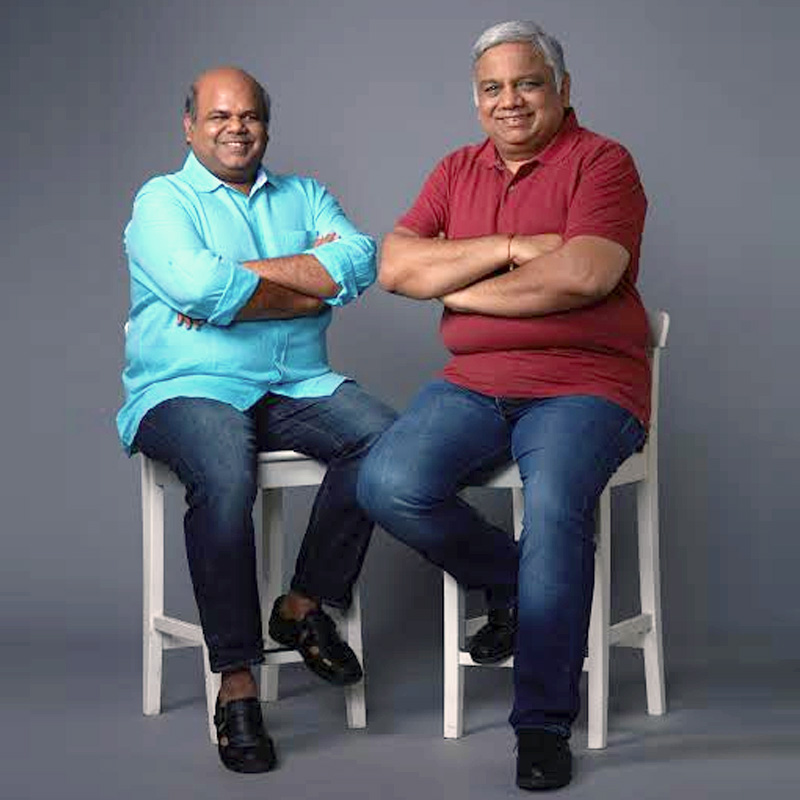
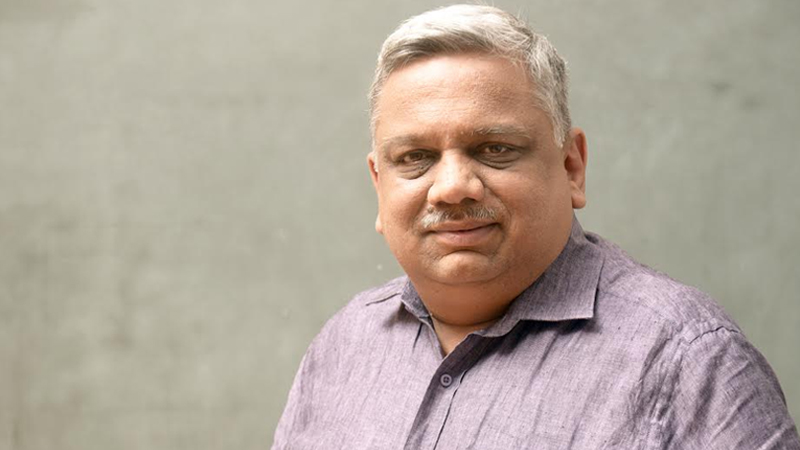
    MUMBAI: Sanjay Mehta, best known for founding Mirum, a pioneering digital agency, has launched a new venture, Ananta Quest. The platform targets Indians aged 50 to 65 who are grappling with questions of identity, health and purpose.

    Ananta Quest is built on three pillars: health (prana), wealth (artha) and community (ekatra). Its aim is to provide structure and action, not just reflection.

    Mehta has a record of spotting opportunities early. He created Homeindia.com in 1998, among the country’s first e-commerce sites, and Mirum in 2009, when social media marketing was nascent. His latest project stems from his own exploration of ageing, which he has documented through a content series called What If You Live to Be 100?.

    “Even the most accomplished individuals face hard questions after 50,” he said at the launch. “We want to create a trusted space where they can move from ambiguity to reinvention.”

    India’s over-50 population is expanding fast. Ventures such as Ananta Quest seek to shift the narrative about ageing, framing later life not as decline but as renewal.

  • Mirun wins digital mandate for Hero Electric

    Mirun wins digital mandate for Hero Electric

    New Delhi: Mirum India has won the digital mandate for Hero Electric, a pioneer and market leader in the Indian Electric two-wheeler industry. The account was won after a multi-agency pitch and will be serviced from Mirum India’s Delhi office.

    With Mirum onboard, Hero Electric aims to shift the consumer buying behaviour from fuel-based scooters to environment-friendly electric scooters, and spread awareness about the positive impact on the ecology.

    Mirum will be responsible for brand communication, digital strategy and execution; and performance-focused media campaigns. Mirum will also be providing technology and web development services for the brand.

    Hero Electric India CEO Sohinder Singh Gill said, “A strong digital presence has become more important than ever for brands today. By on-boarding Mirum as our digital marketing partner, we intend to strengthen our digital game plan with the expertise the agency brings to the table. We’re looking forward to some exciting times ahead.”

    Mirum Inda joint CEO Sanjay Mehta said, "We are happy to partner with India’s leading electric scooter company – Hero Electric. We look forward to working with them to drive a change in consumer behaviour towards a sustainable mode of transport, and create memorable campaigns on the way.”

  • Mirum CEOs Hareesh Tibrewala & Sanjay Mehta on digital solutions and modern CMOs

    Mirum CEOs Hareesh Tibrewala & Sanjay Mehta on digital solutions and modern CMOs

    MUMBAI: Mirum, the borderless agency from the WPP network is on a venture to transform the digital marketing scenario of India into an experience-led domain led by great technological interventions. Earlier known as Social Wavelength, before WPP acquired it in 2014, the agency, under the astute leadership of founders and joint CEOs Hareesh Tibrewala and Sanjay Mehta is going leaps and bounds to make the Indian marketing campaigns stand at par with the global models.

    Tibrewala and Mehta, who make 40 per cent of the revenue from global clients, tell Indiantelevision.com that global clients are just a year ahead of us in terms of their requirements from the digital marketing agencies.

    Hareesh Tibrewala elaborates, “The focus on digital in India is still as a marketing medium whereas our global clients are using it to build more customer experiences. They have moved from ‘digital marketing’ to see ‘digital as a solution provider’. What it means is that you are looking at the consumer through the lens of every brand touchpoint and seek where you can add value. Complete customer experience is the focus.”

    Sanjay Mehta adds, “The difference this makes for us as an agency is that we are now looking at building full-fledged business solutions for the companies and not just one another creative campaign. We have a far more critical role to play. For example, the Mirum team in the US has created a product, which can retrofit in older cars to give them features like modern smart cars, for a telecom company.”

    He continues, “When you are playing such a big role as an integral part of the client’s business, you get more respect. You work directly with the CEOs and not just the brand managers and that also changes the way we (as agency partners) feel about our own work. It is good to feel that we are contributing to a larger solution.”

    Tibrewala and Mehta added that both the type of work and revenues from the western markets are better than what Indian clientele offers.

    Tibrewala says, “The difference is because of a few reasons. One is that we get better margins from markets abroad than in India, as they pay in dollars. Also, there the project terms are longer. For example, if we are working on a technology project, it might go on for a year or maybe two. It again boils down to the fundamental difference of digital marketing and digital solution provider approach that the clients have towards the agencies. The engagement levels are better there.”

    Mehta also shares similar views as he notes, “It is the whole rupee-dollar denomination difference that creates gaps in the revenue. Also, it depends on how much time you are taking in creating a digital asset. In the west, they are looking for that digital asset to move for several years. There the number of clients willing to invest in such digital properties are more and they invest more.”

    However, Mehta notes that Indian clients will take just a little time to bridge this gap in creativity. “The Indian client is evolving. Earlier the gap was bigger, but Indians are just a year behind their western counterparts. With technology, the world has shrunk and now the Indian clients have more exposure to where the world is going. There are quick learning and faster adoption. The kind of input that digital is giving into their business is definitely becoming more critical. So, the kind of work now Indian clients are expecting is improving significantly. In the past 2-3 years, it has grown much faster than you would expect.”

    Tibrewala adds, “The revenue gap, I feel, will bridge quickly. One of the reasons being global brands’ big investment in India. Plus there are certain sectors, for example, financial services, which are going completely digital-driven. Also, the Indian CMO is very literate now. They come with a lot of talent and understanding of the digital domain. Lots of companies, in fact, have created the chief digital officer profiles within the system.”

    Concurrently, Mehta feels while the CMOs of today are younger and are more willing to invest in technologies and work with agencies in creating path-breaking all-round solution-providing campaigns than just creative campaigns, it is quite complicated for them to get the budget approval from the management.

    He says, “If you may see five years back, there was little hesitation that Indian companies showed while adopting digital technologies. The reason was that people running marketing in these organisations saw digital as something that they did not know and they were apprehensive of taking the steps in this direction. Now, the CMOs are much younger and they know digital. With the workforce and clients becoming younger, the acceptance of digital technologies is much easier.”

    Mehta further adds, “Having said that, we also have to look at the role of CMO from just being the head of marketing to someone who also has to report to the management board. There is still a little baggage that they feel while working with these boards in terms of how you get the budgets across.”

    Citing the example of JW Marriott Hotels, which has worked tremendously well in utilising technology to create better customer experiences, Mehta says that an Indian CMO might also have the aspiration to do something on a similar scale but it comes at a higher price. “The aspiration is there, the interest is there but the budgets don’t flow at that pace. Large budgets are not easy to get sanctioned.”

    He clears that getting marketing budgets into digital is no longer a problem as it was a few years back, but companies are still hesitant in using transformational level budgets. Some of the reasons, he mentions, behind this lag is the legacy thought process of the management boards and lack of good Indian examples.

    “It is not as if we need thousands of crores for that. It is just a technology investment. So money is not the issue but belief and conviction are. If a CMO who was working with Rs 10-20 crore worth of budget asks for hundreds of crore suddenly, obviously, doubts will creep in,” Mehta points out.

    Mehta says that change is surely happening since some early-adopter brands are creating path-breaking stuff. “It just requires two or three really good examples to happen in the industry and the rest will surely follow as they just can’t not do this. It is a matter of survival.”

    Apart from this, the agency is now also trying to expand in the specialised verticals space, starting with the healthcare sector which has been somewhat laggard in adopting digital technology. But they can’t afford to not be present on digital now.

  • Shoppers Stop launches new campaign ‘Denim to Work’

    Shoppers Stop launches new campaign ‘Denim to Work’

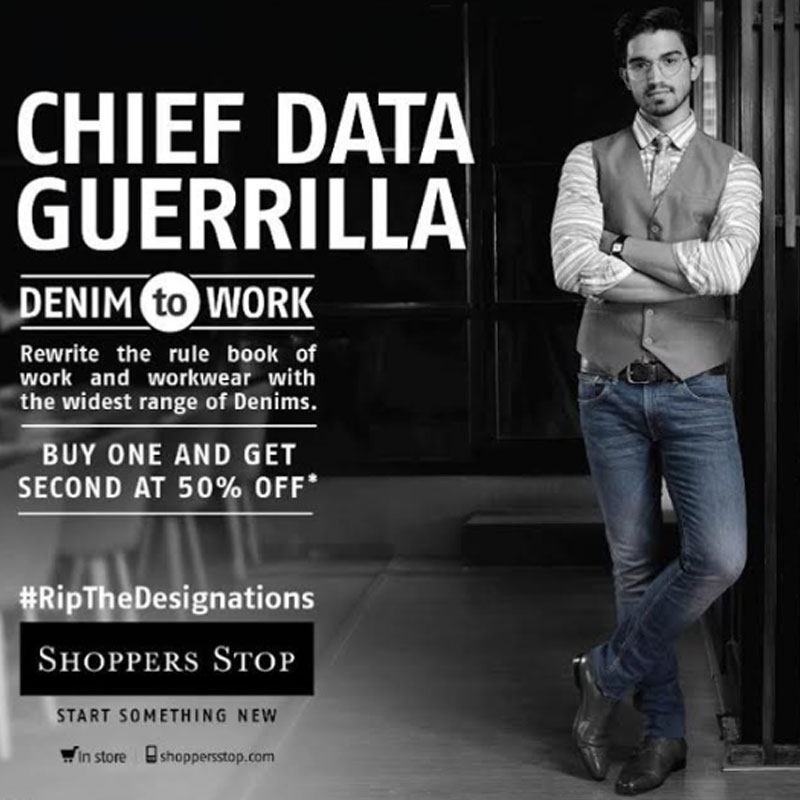
    MUMBAI: Shoppers Stop has introduced the Denim to Work campaign, a unique initiative encouraging working professionals to include denim in their workwear wardrobes. The first-of-its kind campaign is inspired by iconic young CEOs and leaders across industries, a generation that believes in rewriting the rules of the game.

    Denim to Work is a bold campaign which has been introduced to break the traditional formal work week wear with an aim to empower and redefine the new codes of leadership towards building a fresh work culture. With the new-age companies and start-ups relaxing the norms and with introduction ofFriday dressings and casual dressings to work, denims are increasingly becoming an acceptable dress code at work.

    Commenting on this, Shoppers Stop customer care associate and managing director Govind Shrikhande said, “With growing awareness and an increasing affinity towards denims across age groups, we believe there is a huge untapped market for denim segment in the apparel industry. Organised retail sector, young population, online penetration of denims, growing popularity of engineered/ distressed denim, varied fabric washes and changing classification of consumer’s wardrobe are some of the key growth drivers which will further fuel the growth of this segment. Shoppers Stop aims to tap into this market growth and leverage its large offering in the denim category through the ‘Denim to Work’ campaign which has been rolled out across multimedia platforms with print, radio, outdoor and a digital film.”

    Head of art contract (India) Vineet Mahajan says, “Walking into work wearing a pair of jeans is a common sight now. But denims have never been promoted as workwear. We thought this idea was quite disruptive and we hit the sweet spot of an idea by celebrating the designations of a new age workplace. Shoppers Stop has always broken new ground in fashion retail communication and this one was no different.”

    Mirum joint CEO Sanjay Mehta said, “For me, this denim-to-work campaign closes the loop in a certain kind of way. For the last six years, I’ve been wearing blue denims to work every single day and have been extremely comfortable in these. Over this period, I have also seen a shift in the way denims are perceived in the corporate world. People have accepted it as a part of the whole workforce culture. Also, I’m excited about the campaign as it gives people an opportunity to see denims in a definite kind of role and setting. I’m sure that more companies will accept denims as a part of their evolving office culture after seeing this campaign.”

    Click on the link to watch the Denim to Work digital film: https://youtu.be/k8m6WLWrD8E

    As per study, the market size of Indian Denim Wear was estimated to be Rs 20,205 crore in 2016. The market is now projected to grow at a CAGR of 14.5 per cent and reach Rs 39,651 crore by 2021, and Rs 77,999 crore market by 2026.

    The digital film  Denim to Work campaign is produced and directed by Mirum and the ad creatives have been created by Shoppers Stop’s ad agency Contract Advertising. Conceptualised by Mirum, the digital film aims to break down the rules laid by rigid corporate culture. In line with Shoppers Stop’s brand philosophy Start Something New the film features young employees at various levels of hierarchy and how they #RIPtheDesignations to stand out in the system with their own attitude and style. The film inspires young professionals to flaunt their own sense of style and exude confidence at the work place with denims as a part of their work wear wardrobe.

  • Harish Manwani to retire as HUL’s chief operating officer

    Harish Manwani to retire as HUL’s chief operating officer

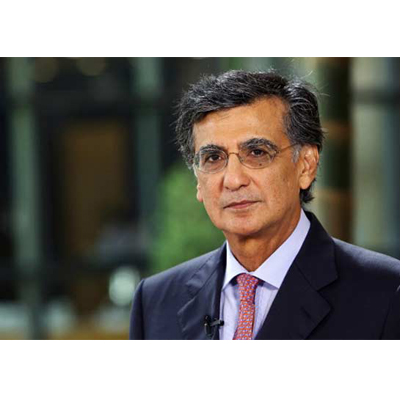
    MUMBAI: After 38 years of service, Harish Manwani, Unilevers’ chief operating officer has decided to hang his boots.


    Manwani will retire from Unilever on 31 December 31; however, he will continue in his capacity as the non-executive chairman of Hindustan Unilever Limited (HUL).


    Manwani, who had joined HUL as a management trainee in 1976, grew the personal products business from a nascent business to one of the key growth engines of the company. Subsequently,  he enjoyed success in many roles, covering both categories and markets, and across many parts of the world. This included stints as SVP Global Hair Care & Oral Care and Home & Personal Care president first of Latin America and later of North America.


    Unilever CEO Paul Polman said, “Harish is an inspirational leader and leaves a remarkable legacy. He has been at my side in helping to drive the turnaround of Unilever, making this once again one of the most admired companies in the world. Over the last three years, especially as Chief Operating Officer, Harish has been instrumental in the transformation of the company. Under his leadership we have seen a step-change in our go-to-market organisation and there has been a relentless focus on flawless execution globally.  He has role-modelled the 4G sustainable growth model – Competitive, Consistent, Profitable and Responsible – which has become such a strong focal point for the Markets.”


    Paul added, “I would like to thank Harish once more for his enormous contribution.  He is both a friend and a much admired and respected business leader. In everything he has done, Harish has lived the values that make Unilever such a great company. Through his passion, commitment and endless energy, he leaves a lasting impact on the business he has served with such distinction. I will personally miss his friendship and wise counsel.”


    As COO, Manwani’s key achievement have been his leadership of the global markets where he established and aligned the market clusters across the world behind a clear agenda, creating a better and more integrated go-to-market organisation. It has also allowed the business to be managed more dynamically, resource allocation to be done more efficiently across markets and best practices to be transferred more seamlessly. This has allowed Unilever to become increasingly more competitive in a tougher business environment.


    Manwani  said, “I am deeply grateful to all those colleagues who have helped to make the last 38 years at HUL and Unilever so memorable and fulfilling. It has been a privilege to serve such a great company. Today, Unilever is in a strong position with a clear strategy and capabilities to drive long-term responsible growth. This makes it a good time for me to make this personal transition. I look forward to working with Paul and the leadership team over the coming months to ensure a smooth transition and to further build our growth agenda.”


  • ‘Filmistaan’ to be released in more than 450 screens

    ‘Filmistaan’ to be released in more than 450 screens

    NEW DELHI: In a rare case, a film with no romantic angle or female character and based on the backdrop of terrorism is being released on 6 June in more than 450 screens across the country.


    The film, ‘Filmistaan’ by debutante director Nitin Kakkar, is about interplay for a no-man’s land where the only connect between the two main characters of whom one is an Indian prisoner is their love for Bollywood.


    Kakkar told indinatelevision.com in an interview that he wanted to highlight that cinema has no division of caste or religion.


    ‘Patriotism is the reality and jingoism is how one sells this sentiment’ he said in reply to a question on how filmmakers attempt to show patriotism.


    Asked why he had kept the end open-ended, he said he wanted to convey the message that people are standing at the borders even today in the hope that these will open someday. He had also ensured thereby that the film was neither romanticized nor gloomy.


    H also stressed that the focus was always on the love for cinema and not politics or terrorism. He attributed this to the fact that he had been seeing films from childhood which indulged in anti-Pakistani jingoism.


    ‘Filmistaan’ had won a National Award for 2012 and has received good response in several international festivals including Busan, across the United States and Europe and in Jaipur.


    The response had been very positive even from those from Pakistan who saw the film at these festivals, Kakkar said.


    Produced by Shyam Shroff and Balkrishna Shroff, the film stars Sharib Hashmi, Inaamulhaq, Kumud Mishra, Gopal Datt, Sanjay Mehta, Ravi Bhushan, Waseem Khan, Tushar Jha, Saroj Sharma, Manoj Bakshi, Sagnik Chakrabarty, Habib Azmi, Kavita Thapliyal, Punit Nijhawan, and Neela Gokhale. The lyrics are by Ravinder Randhawa and music is by Arijit Datta.


    Kakkar said he based the film at the Bhatinda-Rajasthan border which is very close to Pakistan and people often cross the border easily.


    The film was shot in just 20 days – 16 days in Bikaner, and two days each in Jaipur and Mumbai.


    Interestingly, the film did not face any problems with the Central Board of Film Certification and was granted a ‘U’ certificate.


    Asked about the involvement of UTV and Shringaar, he said they came in at the last minute.


    He said the cost of marketing a film was often more if not equal to making it, and therefore independent filmmakers had to prove themselves before any distributor put his money into the film. He said what Bollywood needed at this time was high content and catchy stories.


    The story is about affable Bollywood buff and wannabe actor Sunny who is kidnapped by an Islamist terrorist group when he is in Rajasthan with an American crew to work on a documentary, where an Islamic terrorist group kidnaps him. The house in which he is confined belongs to a Pakistani whose trade stems from pirated Hindi films. Soon the two realize that they share a human and cultural bond. .


    Born in Mumbai, Kakkar made his first short film “Black Freedom” in 2004 which won some awards at various short film festivals. Since then he has been working on some television projects. This is his first feature, but he said he had three scripts ready and would get down to making them as soon as this film is released. 

  • Unilever expands Sustainable Living plan

    Unilever expands Sustainable Living plan

    MUMBAI: In its third year, Unilever’s Sustainable Living Plan has made good progress, and with an intention to expand it further to bring about broader change on a global scale, the company plans to undertake more projects.


    Unilever CEO Paul Polman said, “In the three years since we launched the Unilever Sustainable Living Plan we have learned that sustainability drives business growth and a much deeper connection with our employees and consumers. In 2013, we’ve seen good progress, particularly on targets within our direct control. Our Plan is helping us to save money, reduce risk and drive innovation, and brands that have done the most to embrace sustainable living, like Dove, Lifebuoy, Pureit and Domestos, are enjoying some of our fastest growth.”


    Highlighting the progress made in India, Hindustan Unilever (HUL) MD & CEO Sanjay Mehta said, “Our Sustainable Living Plan is what makes our business model different from others because sustainability is integral to how we do business and how we build growth. The success of brands like Lifebuoy clearly demonstrates that there is no contradiction between sustainability and profitable growth. We are happy with the progress we have made on our Plan in India in 2013. We have further built on our plan with the launch of ‘Prabhat’, which is a part of our long term effort to engage with and contribute to the development of local communities around our manufacturing sites. Prabhat focuses on health and hygiene, livelihoods and water conservation initiatives which are fully aligned to the Unilever Sustainable Living Plan priorities.”


    The company will continue to focus its scale, influence, expertise, and resources on making a fundamental change to entire systems, not just incremental improvements. This will involve stepping up plans to tackle several major global sustainability challenges, including:


    · helping to combat climate change by working to eliminate deforestation, which accounts for up to 15% of global greenhouse gas emissions

    · improving food security by championing sustainable agriculture, and improving the livelihoods of smallholder farmers who produce 80% of the food in Asia and Sub Saharan Africa

    · improving health and well-being by helping more than a billion people gain access to safe drinking water, proper sanitation and good hygiene habits

    In the area of social compliance, Unilever also confirmed that the Sustainable Living Plan has been expanded with a more substantive Enhancing Livelihoods programme focusing on:

    · fairness in the workplace

    · opportunities for women

    · developing inclusive business


    These three areas of focus are fundamental to the way Unilever aspires to do business and will help support its continued growth.


    Announcing the expanded plan, Polman, said, “We’re making good progress in reshaping our business for sustainable, equitable growth. But we need to do more. We have always recognised the bigger role that businesses need to play, and now is the moment for Unilever to step up and expand efforts in key areas, driving transformational change where we know we can make the biggest impact. In this way we will leverage our scale and work collaboratively in partnership with others to reach a tipping point in areas that will make a significant difference.”

  • Brands engage with Twitter influencers to reach out

    Brands engage with Twitter influencers to reach out

    MUMBAI: According to the Internet and Mobile Association of India (IAMAI), as of March 2013, Twitter had 33 million users across the country. An Economic Times report said that Twitter is eyeing India’s over 500 million mobile consumers as potential users, given that its service can be used on feature phones.


    With statistics like that, no wonder brands are milking the popularity and reach of the micro-blogging site, albeit through people called ‘influencers’.


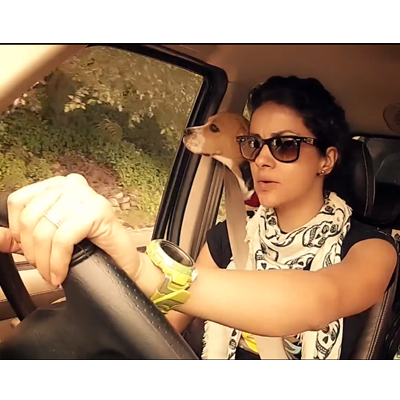
    Earlier this month, a national dairy brand created a Twitter splash with the help of 50 influencers, with the campaign being the most talked about at the time. Similarly, Mahindra has identified an ‘influencer’ for its SuPer Milo in actress Gul Panag, who connects with the brand at many levels and campaigns regularly on Twitter.


    So, who are these influencers whom brands are increasingly seeking out in order to grow their consumer base and widen their reach?


    Social Wavelength joint CEO Sanjay Mehta says that there are three types of influencers. Firstly, the celebrity kinds, who may generate influence across many different areas and people; secondly, subject matter influencers, who are domain specialists and wield influence in specific categories such as automobiles or gadgets or fashion; and thirdly, peer influencers, who may not fall in the first two categories but have good influence over a sizeable group of tweeple (people on Twitter) who interact with them.


    Mehta points out that of late, several brands have been engaging with influencers, in big or small ways; be it getting influencers to talk about their new mobile phone or getting them to initiate a tweetinar (a seminar on Twitter) on a topic of relevance. “At the end of the day of course, it is about getting engagement with the influencers, and through such engagement, managing to get an amplification of the brand via the wider network reach of the said influence,” Mehta explains.


    A common perception among social media enthusiasts is that Twitter influencers are those who have a huge follower base. While FoxyMoron co-founder, director – new business Pratik Gupta, is of the view that while this is a crucial criterion and an influencer must have at least 1,500 followers, other factors too need to be taken into consideration. “The brand must select an influencer whose opinion and tone is in sync with the brand philosophy. The content tweeted must be consistently of good quality and at the same time, be memorable and valuable. Also from a brand perspective, it is important to ensure that the chosen influencer has not endorsed a competitor in the past. The final criterion one must look out for is dedication; the influencer must regularly and religiously tweet in order to keep his/her followers intrigued,” says Gupta.


    For instance, for Maybelline New York India, Foxymoron identified a core group of influencers and called them the ‘Beauty Brigade’. This was done in order to create better products and a unique identity in a highly competitive market. Members of the brigade were the first to receive product samples and hear about contests. They played a major role in promoting brand awareness and product loyalty.


    Gupta says that these days, brands engage with influencers in different ways including product sampling, reviews on blogs and DIY YouTube tutorials. Influencers give their opinions in the form of reviews and connect with their followers on a personal level. So, they tend to gain the trust of their followers apart from adding advocacy to brand campaigns. “They support the brand by enabling it to tap into their own fan base. Every consumer then becomes a potential word-of-mouth marketer, which is one of the biggest benefits to the brand. This becomes a win-win situation for the brand and the consumers”, explains Gupta.


    That said, most brands are not very open about engaging with influencers on social media. And still, part of the success of the brand on Twitter campaigns definitely goes to its influencers!