Tag: Sanjay Kaul

  • Fintech is going to be a major disruptor for rural: Impact’s Sanjay Kaul

    Fintech is going to be a major disruptor for rural: Impact’s Sanjay Kaul

    MUMBAI: It is said that India lives in its villages. With more than 65 per cent of its population residing in rural areas, it would not be a stretch to state that Bharat represents the real India – that is, more than 800 million people. It is little wonder then that ‘Go rural’ is the marketer’s new slogan and companies, both Indian as well as multinational, have their vision firmly set on the rural markets.

    In a free-wheeling conversation with indiantelevision.com’s Anupama Sajeet, Impact Communications founder & CEO Sanjay Kaul, who also serves on the advisory board of Rural Marketing Association of India (RMAI), talked about some of these issues including the challenges, the possible disruptions in the market and the way forward for the industry when it comes to rural India. Kaul has recently stepped down from his position after leading the marketing agency for over two decades.

    Edited excerpts:

    On how rural marketing has shaped up over the last two decades.

    The transformation is tremendous. Rising incomes, the advent of new technology, and the increase in media penetration have fuelled the demands, consumption, and aspirations of rural India. Earlier, the content dissemination was slow because of the low penetration of mobile phone technology. We just had wall paintings or billboards. The reach of newspapers was limited. All this has changed now. The advent of technology, banking, ATMs, government initiatives like Jan Dhan Yojana, have changed the way a rural marketer now approaches these areas.

    On the investments witnessed by the rural market from FMCG and BFSI sectors.

    FMCG is a $1.1 trillion sector in 2020, out of which 30-35 per cent comes from rural areas. Companies like Unilever, Dabur, Colgate – up to 50 percent of their sales come from rural areas. Even Maruti, Hero MotoCorp – more than half their sales happen in rural India. So those who got on to the rural bandwagon early have an advantage. Most of the major FMCG companies see rural as their “next growth” destination.

    The rural FMCG market in India is expected to grow up to $220 billion by 2025. The opening of accounts by the government proved to be a game-changer for the BFSI sector. Next, fintech is going to be a major disruptor in the future for rural. Most of the banks, even traditional ones – whether it's HDFC or SBI – all have tie-ups with fintech companies to enhance their rural reach. Especially in these uncertain times, BFSI has a great future in rural areas with fintech collaboration.

    On consumption trends and the march of e-commerce.

    There is a misconception, that rural areas have not been able to keep up with the urban areas when it comes to e-commerce. In fact, both Amazon and Flipkart have got a majority of their sales coming from tier-2 and tier-3 cities. Consumer aspirations are shaping up and there is a demand for more and more branded products. Since most brands do not have all the range of products available in stores in small cities and towns, a lot of the transactions take place through these e-commerce channels. Experts are pegging rural as the major driver for the next fiscal.

    On the challenges faced by brands trying to expand their rural footprint.

    There are two major issues – trust deficit and logistics. The companies are trying to overcome these hurdles. Amazon has tied up with post offices for logistic support, which helps service certain inaccessible pin codes. The trust barrier still exists when it comes to online shopping. One way out would be to create hub models locally for trust fulfilment, then maybe the deficit factor can be reduced. The logistics challenges can be overcome through micro-distributors who are already supplying to village outlets. They can be used as fulfilment centers, which these big e-tailer companies can leverage. Myntra, Flipkart and Amazon have already tied up with large distributors who serve as their last-mile fulfilment centers.

    On the next big opportunity in rural and the way forward for the industry.

    Earlier, we used to do BTL activations by aggressively reaching out to people. Now, the ‘digital first’ strategy has to be leveraged along with a physical presence. We saw how the local kirana shops took off during the pandemic. There is a lot of investment the companies can do to do to build up these channels and not just be dependent on the wholesale distributors. Technology-enabled solutions will also make a difference. One can scale the communication, marketing operations, distribution in a feasible manner when it's technologically enabled. Today the challenge for brands is not just to make the product available to the rural user. Consumers are spoilt for choice in every brand category. Brands need to remain engaged with the customer constantly.

    On his future plans.

    My new journey would entail a technology-enabled rural market development company. One needs to create a demand for the brand in the rural market areas and then grow the brand with persistence. It will all be technology-based and an aggregate model for all the brands, which will be a first of its kind in rural areas.

  • Sanjay Kaul steps down as Impact Communications CEO

    Sanjay Kaul steps down as Impact Communications CEO

    NEW DELHI: Impact Communications founder & CEO Sanjay Kaul has stepped down from his current position. He is an industry veteran with more than three decades of experience in rural marketing and has been instrumental in building Impact as a rural marketing practice in India. He also serves as the chairman of National Advisory Board of Rural Marketing Association of India.

    Kaul has handed over the mantle to the new leadership team. Nidhi Singh, who has been part of the founding team will be the new CEO, while director- strategy planning Kalpana Raina will take the role of chief operating officer. Both have been part of the core team from the organisation’s formative days.

    “My journey of building Impact from scratch has been fulfilling, enriching and nothing less than a celebration,” said Kaul. “I have been fortunate to have a passionate and talented bunch of professionals in my team, who have both been part of my challenges and success, will always cherish those wonderful memories. I am leaving Impact at the helm of very creative, experienced and knowledgeable professionals and with a solid foundation. I am sure new leadership has both capacity and capability to take Impact to next level as rural is evolving and changing faster than ever before.”

    Kaul is embarking on a new entrepreneurial journey, with plans to build a technology enabled rural market development, sales and distribution company.

    “We have already plunged into this exciting new journey and will make formal announcements next month. Data driven approach and measured growth will be at the heart of the service offerings of the new venture,” he added.

  • SonyLiv to scale up via Amazon Fire & Apple TV, courtesy Cisco IVP

    MUMBAI: Sony Pictures Networks (SPN) and Cisco will together extend SonyLiv video experience to Amazon Fire TV and Apple TV customers in India.

    The Cisco Infinite Video Platform (IVP) provides SonyLiv with a fully cloud-based infrastructure, allowing it to offer more than 40,000 hours of broadcast-quality premium viewing experiences, including Live TV.

    Cisco IVP features superior security protocols that protect the video content from all kinds of threats. Through Cisco IVP, SonyLiv will be able to scale up, brand and market its OTT app on Amazon Fire TV and Apple TV in India.

    Users have access to rich content including movies, a strong line-up of events across all sports, shows, music, TV shows and much more across multiple devices and platforms.

    SonyLiv EVP and Head – Digital Business Uday Sodhi said,“SonyLiv has reinvented how users immerse themselves in unmatched entertainment experience. Our association with Cisco provides us the ability to extend our SonyLiv offering to a new set of consumers,allowing them access to our vast content catalogue. Our focus is on bringing the best of Cisco’s technology expertise and our content prowess to establish new benchmarks in the OTT space.”

    Cisco India & SAARC MD – service provider business Sanjay Kaul said, “Superior-quality videos are the way forward. Video will be 75 per cent of India’s mobile data traffic by 2021. Therefore, it is imperative that content-providers are equipped to scale up and deliver dynamic user experience. Cisco’s Infinite Video Platform offers SonyLiv an opportunity to secure its place as the leader by delivering broadcast-quality entertainment to Amazon Fire TV and Apple TV consumers.”

  • Video will take 76% of Net in ’21, Indian users will double & devices grow by 2bn

    NEW DELHI: Digital transformation will continue to drive IP traffic in India with the projected increase in Internet users from 373 million in 2016 to 829 million or 59% of the Indian population in 2021, which is among the highest in the world.

    In addition, there will be two billion networked devices in 2021, up from 1.4 billion in 2016 and the overall IP traffic is expected to grow fourfold from 2016 to 2021, a compound annual growth rate of 30% – thus reaching 6.5 Exabytes of data per month in 2021, up from 1.7 Exabytes per month in 2016.

    M2M connections will represent 22% of the total two billion devices and connections and will account for 5% of IP traffic by 2021. Advancements in IoT applications such as smart meters, package tracking, digital health monitors and a host of other next-generation M2M services is driving this incremental growth—nearly 21% increase in the next five years, according to Cisco Visual Networking Index (VNI) Complete Forecast..

    Video will continue to dominate IP traffic and overall Internet traffic growth – taking 76% of all Internet traffic in 2021, up from 57% in 2016. India will reach 84 billion Internet video minutes per month by 2021, which is 1,60,000 years of video per month, or about thirty two thousand video minutes every second.

    “Mobile networks, devices and connections in India are not only getting smarter in their computing capabilities but are also evolving from lower-generation network connectivity (2G) to higher-generation network connectivity (3G, 3.5G, and 4G or LTE). Combining device capabilities with faster, higher bandwidth and more intelligent networks is leading to wide adoption of high bandwidth data, video and advanced multimedia applications that contribute to increased mobile and Wi-Fi traffic” said Cisco India & SAARC Managing Director, Service Provider Business, Sanjay Kaul.

    He added: “We are witnessing a burgeoning rise in usage of mobile applications and connectivity by end users. The need for optimized bandwidth management, network automation, e2e security and ultimately network monetization through cost efficient data production is fuelling the growth of network automation, mass market 4G deployments and adoption, soon to be followed with 4.5G and 5G. Service providers around the world are busy architecting their networks to be more autonomous and capable of handling high bandwidth to help them meet the growing end-users demand for more bandwidth, higher security, and faster connectivity on the move. Many providers have also started field trials for 5G and are gearing towards rolling out 5G deployments towards the end of the VNI forecast period.”

    India Internet Growth and Trends:

    1. Increase in Internet Users, devices & connection
    · In India, there will be 829 million total Internet users (59% of population) in 2021, up from 373 million (28% of population) in 2016
    · In India, there will be 2.0 billion networked devices in 2021, up from 1.4 billion in 2016

    2. Increase in IP Traffic & Internet Traffic
    · In India, Consumer Internet video traffic will reach 3.0 Exabytes per month in 2021, the equivalent of 756 million DVDs per month, or 1 million DVDs per hour
    · In India, Consumer Internet video traffic was 535 Petabytes per month in 2016, the equivalent of 134 million DVDs per month, or 183,261 DVDs per hour
    · In India, Internet video traffic will be 77% of all consumer Internet traffic in 2021, up from 58% in 2016
    · In India, Internet traffic will grow 4.0-fold from 2016 to 2021, a compound annual growth rate of 32%
    · In 2021, the gigabyte equivalent of all movies ever made will cross the Internet every 54 minutes
    · Indian Internet traffic in 2021 will be equivalent to 291x the volume of the entire Indian Internet in 2005

    3. Increase in Per capita Usage
    · In India, IP traffic will reach 5 Gigabytes per capita in 2021, up from 1 Gigabytes in 2016

    4. Internet users & Faster Broadband Speed
    · In India, there will be 829 million total Internet users (59% of population) in 2021, up from 373 million (28% of population) in 2016
    · In India, the average fixed broadband speed will grow 2.8-fold from 2016 to 2021, from 6.6 Mbps to 18.2 Mbps

    5. Increase in Mobile, Internet Video
    · In India, mobile data traffic will grow seven-fold from 2016 to 2021, a compound annual growth rate of 49%
    · In India, mobile data traffic in 2021 will be equivalent to 88x the volume of the entire Indian Internet in 2005
    · In India, IP video will be 83% of all IP traffic in 2021, up from 69% in 2016
    · In India, Internet video traffic will grow 5-fold from 2016 to 2021, a compound annual growth rate of 40%
    · In India, total Internet video traffic (business and consumer, combined) will be 76% of all Internet traffic in 2021, up from 57% in 2016
    · In India, HD will be 51.4% of Internet video traffic in 2021, up from 12.0% in 2016 (87.9% CAGR)
    · In India, 84 billion minutes (159,201 years) of video content will cross the Internet each month in 2021. That’s 31,840 minutes of video streamed or downloaded every second
    ·In India, Internet video traffic will grow 5-fold from 2016 to 2021, a compound annual growth rate of 40%

    6. Increase in Networked Devices
    · In India, there will be 2.0 billion networked devices in 2021, from 1.4 billion networked devices in 2016, and 1.3 billion in 2015
    · In India, 67% of all networked devices will be mobile-connected in 2021

    7. Growth in Internet video & gaming traffic
    · In India, Internet video traffic will be 77% of all consumer Internet traffic in 2021, up from 58% in 2016
    · In India, gaming traffic will grow 7-fold from 2016 to 2021, a compound annual growth rate of 49%

    Key Findings & Milestones from Global Traffic Projections and Service Adoption Trends

    1. Strong Growth in IP & Internet Traffic
    · Global IP traffic is expected to reach 278 exabytes per month by 2021, up from 96 exabytes per month in 2016. Global IP traffic is expected to reach an annual run rate of 3.3 zettabytes by 2021.
    · Busy hour Internet traffic is increasing faster than average Internet traffic. Busy hour Internet traffic will grow 4.6-fold (35% CAGR) from 2016 to 2021, reaching 4.3 Pbps by 2021, compared to average Internet traffic that will grow 3.2-fold (26% CAGR) over the same period reaching 717 Tbps by 2021.
    · Content delivery networks (CDNs), will carry 71% of all Internet video traffic by 2021 (up from 52 percent in 2016).

    1. Average DDoS (Distributed Denial of Service) attacks size increasing steadily and approaching 1.2 Gpbs— enough to take most organizations completely offline
    · DDoS incidents can paralyze networks by flooding servers and network devices with traffic from multiple IP sources.
    · The peak attack size increased 60% Y/Y and represents up to 18% of a country’s total Internet traffic while they are occurring.
    · Average DDoS attack size increased to 22% which is relatively the same rate as Internet traffic at 29 percent Y/Y.
    · The DDoS attacks grew 172% in 2016 and will increase 2.5-fold to 3.1 million by 2021 globally.

    2. Globally, total public W-Fi hotspots (including homespots) will grow 6-fold from 2016 to 2021 from 94 million in 2016 to 541.6 million by 2021.
    · Globally, total Wi-Fi homespots will grow from 85 million in 2016 to 526.2 million by 2021.
    · Globally there were 91 percent of public Wi-Fi hotspots in 2016 and by 2021 it is projected to reach 97 percent.
    · Leading hotspot countries: China (170M by 2021), US (86M by 2021), Japan (33M by 2021), and France (30M by 2021).

    3. By 2021, more than half (56 percent) of connected flat panel TV sets will be 4K up from 15% in 2016
    · Installed/In-service 4K TV sets will increase from 85M in 2016 to 663M by 2021.

    4. Cord-Cutting household traffic is 86 percent higher
    · A global cord-cutting household generates 117 GB per month in 2017, compared to 63 GB per month for an average household.

    5. Global Enterprise SD-WAN Traffic
    · SD-WAN traffic will grow at a CAGR of 44% compared to 5% for traditional WAN SD-WAN will increase 6x and will be 25% of WAN traffic by 2021
    · End-User Internet traffic is moving closer to the Edge. Nearly half of traffic will bypass core completely by 2021.

    Regional IP Traffic Growth Details
    · APAC: 107.7 exabytes/month by 2021, 26% CAGR, 3.2-fold growth
    · North America: 85 exabytes/month by 2021, 20% CAGR, 2.5-fold growth
    · Western Europe: 37.4 exabytes/month 2021, 22% CAGR, 2.7-fold growth
    · Central Europe: 17.1 exabytes/month by 2021, 22% CAGR, 2.75-fold growth
    · Latin America: 12.9 exabytes/month by 2021, 21% CAGR, 2.6-fold growth
    · West Asia and Africa: 15.5 exabytes/month by 2021, 42% CAGR, 5.8-fold growth

  • Convergence ’17: Planetcast plans virtualised broadcast, Cyient lauds JAM

    MUMBAI: Convergence India 2017 presented a complete picture of the current industry landscape and emerging technologies in the ICT, broadcast and digital media sectors. The inspiring keynotes and tech workshops on timely topics, led by industry experts encourage innovative thinking.

    Every year technology czars and startups alike descend on New Delhi to either showcase the amazing products and solutions or to clinch deals behind the scene at Convergence India. Planetcast, a leading provider of technical services and solutions in the Indian broadcasting sector, will soon roll out virtualised broadcast services to provide seamless and secure remote access to customers so that they can monitor and control processes wherever they are.

    Covering a broad set of topics, starting from ‘Digital India campaign’ to ‘How Internet of Things is Transforming Business for Enterprises’ to ‘Why Adoption of Cloud Technology is Important’ to ‘5G-The Next Big Step in Mobile Communication Technologies and How It will Revolutionise the Customer Experience’ to ‘Digitisation Challenges in India’ to ‘Next Gen TV’, the sessions engage in discussions crucial to the advancement of the ICT, broadcast and digital media sectors.

    ‘Digital India’ discussions focused on the Digital India 2020 priorities and building a successful digital service ecosystem.

    Cyient India founder & executive chairman BVR Mohan Reddy said, “One of the biggest examples of Digital India is JAM, i.e. Jandhan , Adhaar and Mobile connectivity. With such initiatives, we can see direct benefit being transferred to the end user. The biggest challenge in India is a lack of quality education and therefore many people still cannot use any of the digital platforms. Additionally, there is an urgent need to address cyber security issues.”

    Stating that the three pillars of the Digital India campaign include vision of the government, policy matters, and user behaviour, CISCO India & SAARC MD Sanjay Kaul said, “Digitisation will impact all industries and it may seem as a disruption in the beginning, but at the end it will be valuable for the progress of the country.”

    The session, ‘Mobile Phone Industry – Torch bearer of the Make in India and the Digital India initiatives,’ witnessed discussions aimed at strengthening the Indian mobile phone manufacturing ecosystem in sync with Prime Minister Narendra Modi’s ‘Make in India’ and ‘Digital India’ initiatives.

    Intex India senior advisor Ramesh Vasvani said, “Mobile phones have created a great success story in India and are a boon to our economy. The mobile handset manufacturing industry has emerged as a platform for schemes like Make in India and Digital India, which has helped in increased transactions through e-wallets.”

    Xolo India business head Sunil Raina added, “One of the greatest advantages is that most of the software for mobile phones is created in India.”

    Elemental, an Amazon Web Services Company, empowers media companies to deliver premium video experiences to consumers. At the booth, visitors learned about how the company provides media organisations with a family of on-premises, hybrid, and cloud-based solutions for Internet-based video delivery.

    The ‘open’ part of the new platform will allow data owners, developers and others to add, mix, and manipulate data for themselves. Content providers to the platform might be car manufacturers, business owners, transit authorities, government agencies, and more.

    The latest innovative and ground-breaking release of Skyline Communications’ global leading end-to-end network management platform DataMiner makes it possible to manage operations more easily and efficiently. DataMiner 9.5 provides unprecedented visibility on user experience, and enables unrivaled orchestration in the most complex and versatile technology ecosystems.

    At the Centre for Development of Telematics (C-DOT) booth, see how C-DOT’s GPON (Gigabit Passive Optical Network) solution is fueling the backbone of BharatNet, the prestigious nationwide optical fibre based network connecting 2.5 lakh Panchayats in the nation with high speed broadband. C-DOT’s unflinching determination towards promotion of “Digital Literacy” is well reflected in its unique innovation, GyanSetu, that is capable of extending the benefits of Internet to the illiterate populace of India including the specially abled in an easy and convenient manner thus spurring the socio-economic growth.

    Verimatrix, which specialises in securing and enhancing revenue for multi-network, multi-screen digital TV services around the globe, showcases the Verimatrix Verspective™ Intelligence Center that offers a cloud-based security platform.

    UNLIMIT, the first dedicated business unit, is completely focused on providing Internet of Things (IoT) services to enterprise customers throughout India. The company is working on some very interesting new products which will be rolled out as services.

    LaCie, the premium brand from Seagate Technology plc, announced the LaCie® 12big Thunderbolt 3 and 6big Thunderbolt 3, aimed at helping video professionals excel with ultra high-resolution footage. With up to 120TB of massive capacity, the breakthrough performance of Thunderbolt 3 and RAID 5/6, the LaCie 12big and the LaCie 6big help video professionals meet the data demands of 4/5/6K cameras.

    AJA Video Systems introduced the Ki Pro Ultra – a next generation file-based 4K/UltraHD and 2K/HD video recorder and player with a built-in HD LCD monitor. Ki Pro Ultra is capable of capturing edit-ready 4K (4096 x 2160), UltraHD (3840 x 2160), 2K (2048 x 1080) and HD (1920 x 1080) Apple ProRes files. Ki Pro Ultra also supports a range of video formats and frame rates up to 4K 60p, and offers flexible input and output connectivity.

  • Videocon d2h enhances video expereince with Cisco Virtual DCM

    Videocon d2h enhances video expereince with Cisco Virtual DCM

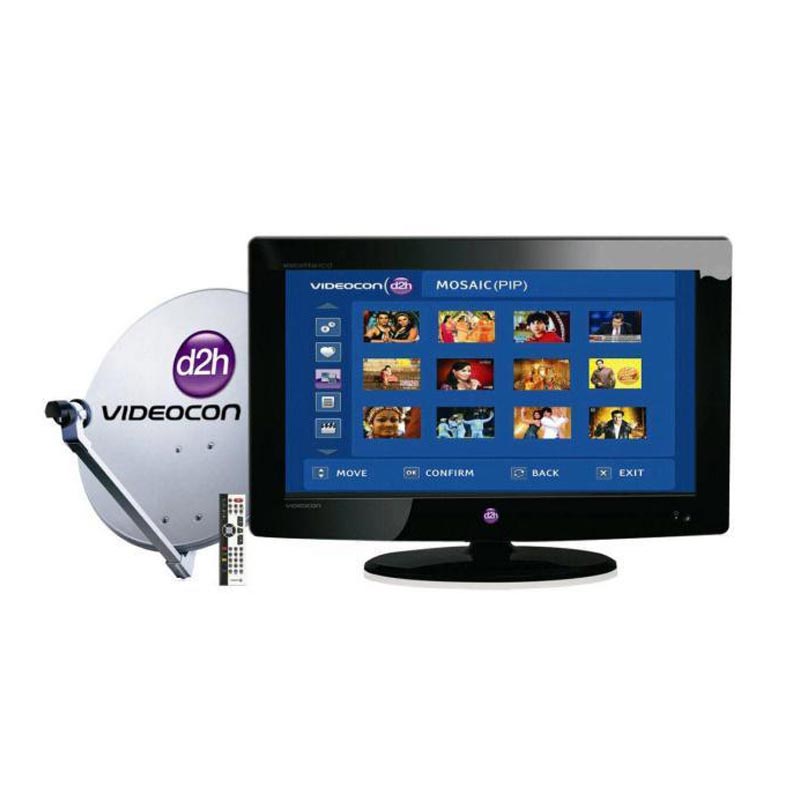
    MUMBAI: Cisco today announced that Videocon d2h India’s leading DTH platform has selected the Cisco Virtual DCM® to provide its subscribers with superior video experiences. The deployment provides Videocon d2h with a flexible infrastructure and simplified operations for advanced video processing functionality taking advantage of virtualization and orchestration from Cisco’s Virtualized Video Processing (V2P) platform. The Virtual DCM provides Videocon d2h the bandwidth efficiencies to deploy new services and meet ever-increasing consumer demands for 4K, multiscreen, OTT and Cloud DVR. The Cisco Visual Networking Index Forecast 2015-2020 predicts that by 2020, 82% of IP traffic by will be video, and 50% of IP video traffic will be HD/UHD, and mobile devices will drive most of the growth, making 43% of IP traffic. With availability of more content for an ever ­­­­­increasing number of video-enabled devices, it is critical to maximize video delivery over available bandwidth and multiple networks.

    Videocon d2h executive director Saurabh Dhoot said, “Our association with V2P platform of Cisco provides us the ability to enhance, extend and enrich video offerings so that today’s consumers receive more immersive and personalized viewing experience. Our focus is on innovating and extending the service offerings like 4K UHD, OTT as per the changing preference thus enriching viewing pleasure.”

    “The time is right to capitalize on the unprecedented opportunities presented by the wave of digitization in the country. When it comes to customer service, digitization empowers us to better understand our customers.” said Videocon d2h CEO Anil Khera. “We are committed to creating the highest-quality consumer experience. 4K content is the future and with this development we are completely geared up and future-ready to embark on the cloud journey. We look forward to working closely with Cisco on the implementation of the solution to provide better consumer experience.” he added

    “Today digital platforms are changing the way people experience television. Cisco’s V2P solutions help our customers meet the ever-changing demands of the video industry. Cisco is providing Videocon d2h with a platform to transform its business in India to develop and deliver dynamic, secure new services with the agility and speed necessary to stay ahead of competition. Our association with Videocon reflects our continued commitment to deliver the right IT platform to enhance their customer service and loyalty” said Cisco India & SAARC service provider business MD Sanjay Kaul.

  • Videocon d2h enhances video expereince with Cisco Virtual DCM

    Videocon d2h enhances video expereince with Cisco Virtual DCM

    MUMBAI: Cisco today announced that Videocon d2h India’s leading DTH platform has selected the Cisco Virtual DCM® to provide its subscribers with superior video experiences. The deployment provides Videocon d2h with a flexible infrastructure and simplified operations for advanced video processing functionality taking advantage of virtualization and orchestration from Cisco’s Virtualized Video Processing (V2P) platform. The Virtual DCM provides Videocon d2h the bandwidth efficiencies to deploy new services and meet ever-increasing consumer demands for 4K, multiscreen, OTT and Cloud DVR. The Cisco Visual Networking Index Forecast 2015-2020 predicts that by 2020, 82% of IP traffic by will be video, and 50% of IP video traffic will be HD/UHD, and mobile devices will drive most of the growth, making 43% of IP traffic. With availability of more content for an ever ­­­­­increasing number of video-enabled devices, it is critical to maximize video delivery over available bandwidth and multiple networks.

    Videocon d2h executive director Saurabh Dhoot said, “Our association with V2P platform of Cisco provides us the ability to enhance, extend and enrich video offerings so that today’s consumers receive more immersive and personalized viewing experience. Our focus is on innovating and extending the service offerings like 4K UHD, OTT as per the changing preference thus enriching viewing pleasure.”

    “The time is right to capitalize on the unprecedented opportunities presented by the wave of digitization in the country. When it comes to customer service, digitization empowers us to better understand our customers.” said Videocon d2h CEO Anil Khera. “We are committed to creating the highest-quality consumer experience. 4K content is the future and with this development we are completely geared up and future-ready to embark on the cloud journey. We look forward to working closely with Cisco on the implementation of the solution to provide better consumer experience.” he added

    “Today digital platforms are changing the way people experience television. Cisco’s V2P solutions help our customers meet the ever-changing demands of the video industry. Cisco is providing Videocon d2h with a platform to transform its business in India to develop and deliver dynamic, secure new services with the agility and speed necessary to stay ahead of competition. Our association with Videocon reflects our continued commitment to deliver the right IT platform to enhance their customer service and loyalty” said Cisco India & SAARC service provider business MD Sanjay Kaul.