Tag: Sanjay Jaju

  • Netflix updates IC 814’s opening disclaimer responding to MIB concerns

    Netflix updates IC 814’s opening disclaimer responding to MIB concerns

    Mumbai: Well, it did turn out to be a storm in a teacup – the huge controversy over IC814: The Kandahar Hijack, the original series on streamer Netflix.  

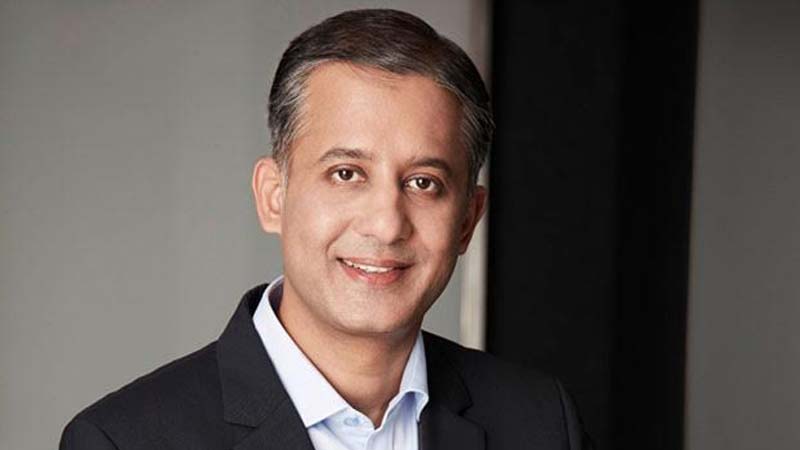
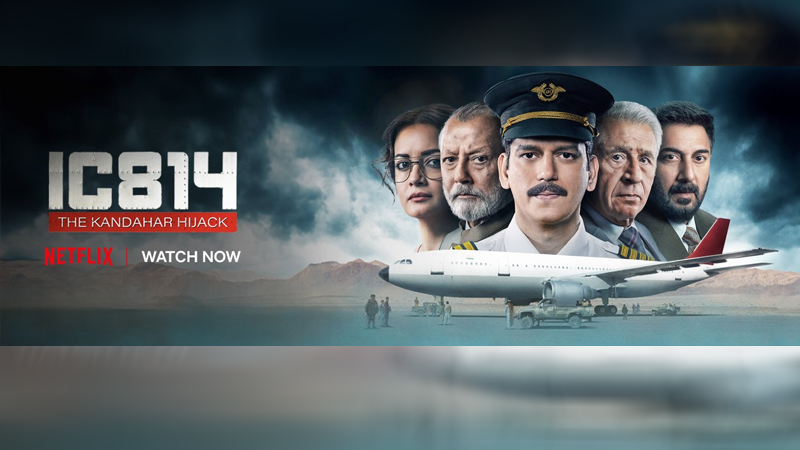
    Netflix India content head Monika Shergill met the with information & broadcasting secretary Sanjay Jaju for about 40 minutes who informed her about the sentiments expressed by a large section of the society about the Hindu code names that were ascribed to two of the Pakistani terrorists who hijacked an Indian Airlines plane from Delhi and flew it to Kandahar from where they negotiated the release of three Pakistani prisoners in exchange for freedom  for  the plane’s passengers. He also apprised her of the need for platforms to be sensitive while handling such topics.

    Armed with research and factual documents, Shergill pointed out that the intent of the  platform and the film maker was to be as factually accurate in the dramatized version as possible. And the series was based on a book Flight Into Fear by the pilot Devi Sharan (and Srinjoy Chowdhury) of the hijacked plane which also pointed out that two of the hijackers had actually referred to themselves as Bhola and Shankar as long as the plane was under their control. She pointed out to  a home ministry note released around that time which also acknowledged the same. She also assured the secretary that Netflix  will ensure that the content of its future projects will take into account the sentiments of the Indian public.

    Later in the evening Shergill, came out with a statement saying that Netflix  had updated the opening disclaimer of the series.

    “For the benefit of audiences unfamiliar with the 1999 hijacking of Indian Airlines Flight 814, the opening disclaimer has been updated to include the real and code names of the hijackers,” she said through a spokesperson.  “The code names in the series reflect those used during the actual event. India has a rich culture of storytelling — and we are committed to showcasing these stories and their authentic representation.”
     

  • Creators’ economy, a wonderful tool to showcase our rich cultural heritage and way of life: Ashwini Vaishnaw

    Creators’ economy, a wonderful tool to showcase our rich cultural heritage and way of life: Ashwini Vaishnaw

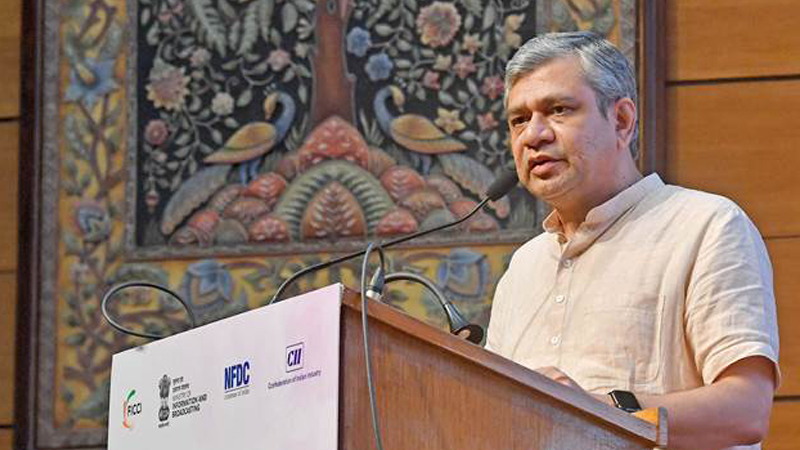
    Mumbai: Union minister of Information and Broadcasting (I&B), Ashwini Vaishnaw has launched 25 challenges as part of the ‘Create in India Challenge – Season 1’ for World Audio Visual & Entertainment Summit (WAVES). Speaking at the launch, Vaishnaw said that todays’ launch is a reflection of our growing and evolving economy. A totally new creators economy has been created and the same is also recognised by the prime minister of India as reflected in the first-ever National Creators Award presented by him in March 2024.

    Growing creators economy: Opportunities, infrastructure, and job creation

    While highlighting the immense potential in this economy, the union minister mentioned that the creators’ economy has become a wonderful tool to showcase our rich cultural heritage, way of life, yoga, traditional medicine system, and diversity in our cuisines. The Government of India is leaving no stone unturned to encourage this economy and therefore, we need to ensure the talent & skill development and availability of necessary infrastructure in this sector.


    To further develop this creators’ economy, the government is focused on creating world-class talent development programs and infrastructure. There are plans to establish world-class universities and facilities that will enhance the capabilities of creators in media and entertainment, he added.

    Harnessing new technologies in filmmaking: Job creation

    Emphasising that filmmaking is one of our strengths, Vaishnaw mentioned that in today’s era there is a great scope of using new technology and tools in this sector thereby ensuring a good scope for employment generation. It is estimated that if successfully executed, the program can generate 2-3 lakh jobs in the sector.

    Social Responsibility

    At the same time, the union minister also reminded that citizens have to ensure that the society is not harmed in this journey and the responsibility lies not just with the government but also with society, industry and all of us.

    To capitalise on the immense potential in this sector, WAVES is being organised and is set to emerge as a big phenomenon in future, he added.

    Secretary, Ministry of I&B, Sanjay Jaju, additional secretary, ministry of I&B, Neerja Shekhar, director general, FICCI, Jyoti Vij, vice chairman, CII National Committee on Media & Entertainment, Biren Ghose were also among the dignitaries who attended the event.

    ‘Design in India, Design for the World’

    While speaking at the occasion Sh. Sanjay Jaju mentioned that this initiative is a significant milestone in our ongoing mission to nurture and elevate India’s creative ecosystem. “It aligns seamlessly with our Prime Minister’s visionary call of ‘Design in India, Design for the World’ as articulated during his 78th Independence Day address.”, he added. Highlighting the immense potential and talent within our nation, he said that WAVES stands as a testament to this potential and will serve as a global platform where the brightest minds, most talented creators, and visionary leaders from around the world will converge to share knowledge, exchange ideas, and push the boundaries of creativity.

    ‘Create in India Challenge – Season 1’

    These challenges, hosted by leading industry associations and organisations, cover a wide range of disciplines including animation, filmmaking, gaming, music, and visual arts. These challenges are being done in the run up to the main event.

    List of ‘Create in India’ Challenges – Season 1

    1. Anime Challenge by Media and Entertainment Association of India 
    2. Animation Filmmakers Competition by Dancing Atoms 
    3. Game Jam by India Game Developer Conference 
    4. Esports Tournament by Esports Federation of India 
    5. City Quest: Shades of Bharat by E-gaming Federation 
    6. Handheld Educational Video Game Development by Indian Digital Gaming Society 
    7. Comics Creator Championship by Indian Comics Association 
    8. Young Filmmakers Challenge by Federation of Indian Chambers of Commerce & Industry and Whistling Woods International 
    9. XR Creator Hackathon by Wavelaps and XDG 
    10. AI Film Making Competition by InVideo 
    11. WAVES Promo Video Challenge Indian Broadcasting & Digital Foundation 
    12. TruthTell Hackathon by India Cellular & Electronics Association 
    13. Community Radio Content Challenge by Community Radio Association 
    14. Theme Music Competition by Indian Music Industry 
    15. WAVES Hackathon: Adspend Optimizer by Advertising Agencies Association of India 
    16. WAVES AI Art Installation Challenge by Internet and Mobile Association of India 
    17. WAVES Explorer by Internet and Mobile Association of India 
    18. Reel Making Challenge by Internet and Mobile Association of India 
    19. Film Poster Making Competition National Film Archive of India – National Film Development Corporation 
    20. Virtual Influencer Creation Contest by AVTR meta labs 
    21. Battle of the Bands by Prasar Bharati 
    22. Symphony of India by Prasar Bharati 
    23. India: A Bird’s Eye View by Broadcast Engineering Consultants India Limited 
    24. Anti-Piracy Challenge by Confederation of Indian Industry 
    25. Trailer Making Competition by Federation of Indian Chambers of Commerce & Industry

  • MIB pushes for GST exemption on digital news subscriptions

    MIB pushes for GST exemption on digital news subscriptions

    Mumbai: The Ministry of Information and Broadcasting (MIB) has urged the Department of Revenue to either exempt digital news subscriptions from the Goods and Services Tax (GST) or reduce the tax rate from 18 per cent to 5 per cent, as per media reports. In a letter addressed to Revenue Secretary Sanjay Malhotra, Information and Broadcasting Secretary Sanjay Jaju emphasised that newspapers are exempt from GST due to the importance of providing “correct and factual information” to Indian citizens.

    A note attached to the letter warned that the current higher tax burden could hinder the growth of the online news sector, potentially pushing it towards an advertising-based model, which could negatively impact the quality and credibility of news content.

    “With the growing internet penetration in India and the nascent stage of the online news industry, it is requested that the disparity between GST on printed newspapers and digital/online news subscriptions be addressed by either exempting the GST on the latter or reducing it from 18% to 5%, aligning it with the rate on e-books,” the letter stated.

    Digital publishers have been advocating for this change even before finance minister Nirmala Sitharaman presented the budget for the fiscal year 2024-25 on 23 July. MIB referred to a 29 September 2023, office memorandum that recommended exempting online news subscriptions from GST to create parity with printed newspapers. However, the revenue department’s office memo dated 5 June 2024, noted that the GST Council had discussed this proposal during its meeting on 11 July 2023, but did not endorse it.

    The MIB also cited a similar issue resolved in 2018 when the GST Council reduced the GST rate on e-books from 18 per cent to five per cent through a notification dated 26 July 2018. The 54th GST Council meeting is scheduled for 9 September, following the last meeting held on 22 June.

    In the attached background note, the MIB highlighted that very few internet users in India pay for online news. A higher GST rate on digital news subscriptions could push the online news sector toward an advertising model, potentially affecting the quality and credibility of content through practices such as clickbait, sensational headlines, and fake or misleading news.

    The MIB also pointed out that the 18 per cent GST on online news subscriptions generates approximately Rs 21.6 crore in revenue from a total revenue of Rs 120 crore. The MIB argued that reducing the GST to either nil or 5 per cent “may not lead to substantial revenue forgone by the government exchequer.” Online news subscriptions fall under the category of services for the “supply of images, text, and information and making available of databases.” The MIB stressed that providing “credible and factual information in the nature of news” is distinct from other online content services, as it “empowers citizens to make informed decisions and be aware of their rights and responsibilities.”

    Currently, printed newspapers, journals, and periodicals are exempt from GST. Under the IGST Act, online news subscriptions are taxed at 18 per cent as Online Information Database Access and Retrieval (OIDAR) services, which are internet services lacking a physical interface between the supplier and the recipient.

  • NFDC and Netflix partner to launch “The Voicebox”

    NFDC and Netflix partner to launch “The Voicebox”

    Mumbai: National Film Development Corporation, a public sector enterprise under the aegis of the Ministry of Information and Broadcasting (MoIB), has joined hands with Netflix India to launch an upskilling program for voice-over artists in India called “The Voicebox”.

    The occasion was graced by Shri. Sanjay Jaju, Secretary, MoIB, Vrunda Desai, joint secretary (Films), MoIB, Shri. Aditya Kutty, legal director, Netflix, Freddy Soames, head of competition policy, Netflix, and Sharad Mehra, chairman, Pearl Academy, among others.

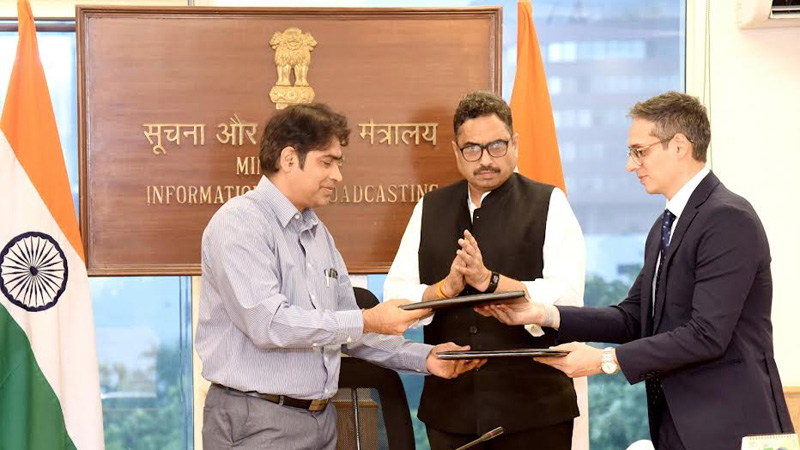
    Today at Shastri Bhawan, Prithul Kumar, managing director, of National Film Development Corporation (NFDC) and joint secretary (Broadcasting II), MoIB and Kiran Desai, general counsel, and senior director – of business and legal affairs, Netflix India, signed the MoU to formalise the partnership, which aligns with NFDC and Netflix’s combined vision to promote Indian cinema and nurture talent in the Media and Entertainment industry.

    “The Voicebox” program will offer Recognition of Prior Learning (RPL) training for voice-over artists focusing on English, Hindi, Marathi, Bengali, Malayalam, Tamil, Telugu and Gujarati languages. As part of the program, structured workshops, which would include training (featuring guest lectures and mentoring sessions), followed by an assessment, will be conducted in seven major cities of India – New Delhi, Mumbai, Kolkata, Ahmedabad, Hyderabad, Chennai, and Kochi. Each batch would accommodate up to 30 candidates, with 210 participants selected through preliminary screening. At least 50 per cent of the participants will be women.  

    Pearl Academy, India’s leading design institute will join as a Training Partner for this program. Seven top participants from every batch will be chosen to contribute to Netflix’s special project, “Azaadi ki Amrit Kahaniya”, where they will lend their voices to narrate stories reflecting the Indian independence movement.

    The program is open to professionals, preferably women, with more than two years of experience in the media and entertainment sector, who are eager to enhance their skills in voice-over.

    This Voicebox program is sponsored by the Netflix Fund for Creative Equity, which has dedicated $100 million a year over five years to setting underrepresented communities up for success in the TV and film industries through programs all around the world.

  • Bharat Pavilion at the 77th Cannes Film Festival inaugurated with fanfare

    Bharat Pavilion at the 77th Cannes Film Festival inaugurated with fanfare

    Mumbai: In a year that spells magic for Bharat at the 77th Cannes Film Festival, with numerous official selections across sections, The Bharat Pavilion was inaugurated amidst much fanfare today at the 77th Cannes Film Festival in France.

    Organized each year at the prestigious Cannes Film Festival by FICCI as a industry partner and NFDC under the aegis of the Information and Broadcasting Ministry, this significant milestone marks India’s continued commitment to showcasing its rich cinematic heritage and fostering international collaborations with the global film fraternity.

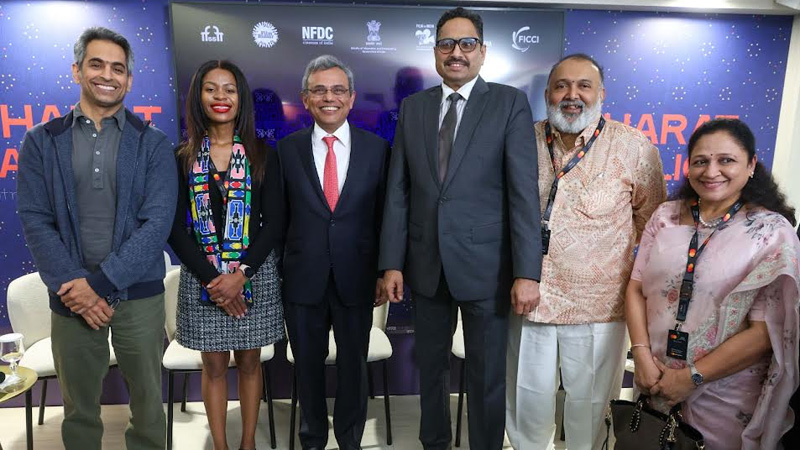
    The grand inauguration ceremony was led by secretary of ministry of information and broadcasting, Sanjay Jaju along with H.E. Jawed Ashraf, ambassador of India to France.

    The momentous inauguration was also witnessed by esteemed dignitaries, renowned filmmakers, and industry leaders coming together to celebrate the essence of Indian cinema. Guests present included Tholoana Rose Ncheke, chairperson, the National Film and Video Foundation, South Africa, Christian Jeune, director of films department, deputy general delegate, Cannes Film Festival, and Filmmaker Richie Mehta among others.

    Speaking at the inauguration, Shri Sanjay Jaju said “Heartening to have more Indian projects in the Cannes official selection this year, one each in the competition in uncertain regard and let me also confess that both these projects have been the beneficiaries of the support from the government in terms of the incentive as well as the official core productions.”

    “The Bharat Pavilion here would serve as a hub for networking, collaboration, promotion of Indian Cinema on the global stage. We would like to foster a greater collaboration between the Indian audiovisual industry and international counterparts, thereby enhancing the visibility and accessibility of Indian Cinema worldwide and serve the national goal of using the power of Cinema to enhance the country’s soft touch.” Added the Secretary.

    “India is gaining attention worldwide, both geopolitically and economically, due to its philosophical contributions, thoughts, and ideas. Its role in a multipolar world of great uncertainty is significant as we transition from the existing international order into a new one. All these aspects are interconnected, making it increasingly important for us to have a greater presence abroad, particularly in cinema” Said H.E. Jawed Ashraf.

    “It’s such a momentous occasion of Indian cinema here. Personally, for me, I wouldn’t have a career if not for the film festival community. The festivals have helped me unlock a career. It’s a real honour to be a part of this inaugural.“ said Richie Mehta.

    Many states like Jammu & Kashmir, Karnataka, Goa and Maharashtra among others are present representing India at Cannes Film Market this year.

    The Bharat Pavilion serves as a dynamic platform, providing a gateway to the diverse landscape of Indian films, talent, and industry opportunities and is set to host a series of scintillating panel discussions and networking sessions during the 77th Cannes Film Festival.

  • Streaming is seeing phenomenal growth in India: Prime Video India’s Sushant Sreeram

    Streaming is seeing phenomenal growth in India: Prime Video India’s Sushant Sreeram

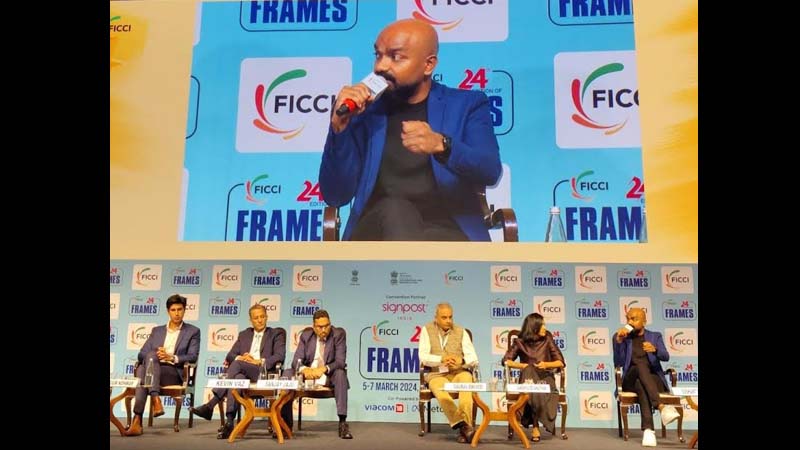
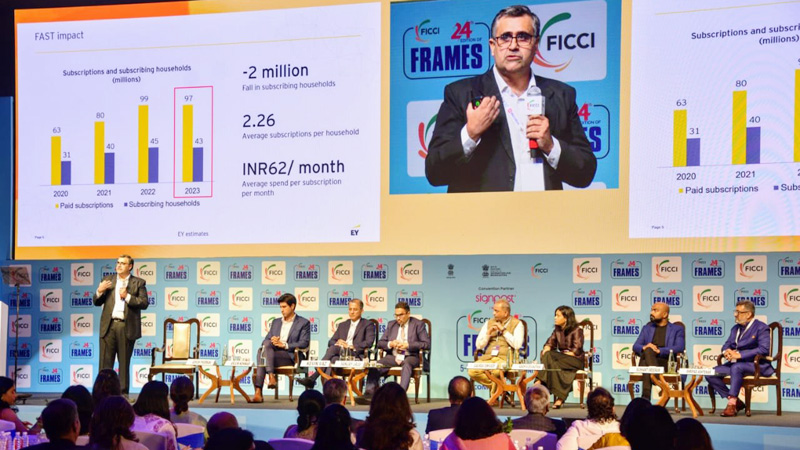
    Mumbai: In a highly engaging panel curated on the opening day of FICCI FRAMES 2024 titled ‘Reinvent: Navigating the Future of the Media and Entertainment Industry’, Prime Video India country director Sushant Sreeram delved into the dynamic landscape of the streaming industry in India, exploring growth trends while highlighting Prime Video’s business and content commissioning strategy.

    Moderated by Ernst and Young partner Ashish Pherwani the panel began with a keynote from Ministry of Information and Broadcasting secretary Sanjay Jaju.  In addition to Sushant Sreeram, the panel saw the participation of industry leaders from multiple M&E sectors, including Prasar Bharti CEO Gaurav Dwivedi, FICCI Media and Entertainment Committee chair and Viacom18 CEO – broadcast entertainment Kevin Vaz; FICCI Media and Entertainment Committee co-chair and Meta India VP and head Sandhya Devanathan; FICCI Media and Entertainment Committee co-chair and Warner Bros Discovery general manager – India & South Asia Arjun Nohwar, and Signpost India chairman & managing director Shripad Ashtekar.

    Responding to a question on key trends across SVOD, TVOD and AVOD business models, Sushant said, “Streaming is seeing phenomenal growth in India. It has, in fact, become a dominant use-case for internet in the country, and a large part of that growth is coming from outside the metros.  We have about as many people streaming content in India, as those watching linear TV. This is a very significant inflection point for the video streaming industry in India.”

    He went on to share, “Another key point to note is that there is no one single customer for streaming, our customers sit across the spectrum of accessibility, affordability, and the languages in which they prefer to consume entertainment. Therefore, our strategy for building solutions for India has always been to focus on “AND” solutions, rather than making choices between “this” or “that”. That is exactly why Prime Video’s entertainment hub – where all the different VODs come into play, continues to do incredibly well. In fact, India is one of the frontrunners on new customer adoption for Prime Video globally. Also, our Channels proposition, where consumers get access to content from popular streaming services with add-on subscriptions, has grown well, with more than 20 partners on the service. Further, our Movie Rentals service where consumers – both Prime members and those who aren’t yet Prime Members, can rent movies ala carte, is seeing great consumer uptake across the country. Mini TV, Amazon’s free ad-supported service, also posted steady great growth in 2023. When we think about how to serve India, we prioritize what is important for customers – great value, great selection, and convenience. It is true for what we do at Amazon overall and the same holds true for Prime Video as well.”

    Responding to a question on the cost of content, Sushant spoke about the fact Amazon and Prime Video is invested for the long-term in India. Elaborating on the same, he said, “It is important to place this in context – our investment thesis is built on developing this category over a fairly long period of time. That’s the time horizon that we operate with for all our investments at Amazon, and the same holds true for Prime Video. The second is that we want to create a category of great cinematic storytelling and we know that consumers value that. We realized that creating an ecosystem across the board, not just the service, but creators and the technical ecosystem is an investment that is well made.”

    He went on to add, “The other thing about our investment thesis is that we look at it through the lens of how we bring in customers to enjoy this multi-benefit proposition for Prime, which is a unique proposition for customers and Prime Video is a part of that. That changes how customers evaluate what is value for money, and that gives us the impetus to continue to make investments. And finally, we want to make all the great stories that we can, but we realize that we can’t make all of them. We’re therefore always excited about the collaborations that we can forge, with creators, Channel partners and studios to build out a true video entertainment marketplace. The fact that Prime Video has close to 100 projects right now in various stages of production and development is a clear indication that there is appetite for great stories in the country!”

    To wrap up the highly engaging session, each participant was asked their Mantra for 2024, to which Sushant replied, “For us, it’s still Day one!” Day one is both a culture and an operating model that puts the customer at the center of everything Amazon does. Day one is about being constantly curious, nimble, and experimental.

  • FICCI FRAMES 2024: #Reinvent: Navigating the future of media and entertainment industry

    FICCI FRAMES 2024: #Reinvent: Navigating the future of media and entertainment industry

    Mumbai: The Indian media and entertainment industry is witnessing significant changes, with shifting consumer preferences for high-quality content, new broadcasting technologies, pressures on advertising spend, and the advent of AI. The #Reinvent session at FICCI Frames 2024 examined the dynamics driving this transformation and explored a range of enabling policies designed to support an industry navigating through a period of significant upheaval.

    The keynote of this session was given by Ministry of I&B secretary Sanjay Jaju, who said, “As we move forward, the Government of India’s focus is on creating a conducive environment for the Media and Entertainment industry to thrive.”

    The session was moderated by Ernst and Young partner Ashish Pherwani.

    “In the last one year, the skilling ecosystem of Maharashtra has supported 48,000 youths from Maharashtra to be trained only in media and entertainment. This was something of a record under M&E skill council. A big thank you to Mangal Prabhat ji and his government for their proactive efforts to train rural and urban youths,” FICCI India AVGC-XR Forum chair Ashish Kulkarni.

    “Globally, the media and entertainment industry is witnessing remarkable shifts with digital innovation reshaping consumption patterns and content creation dynamics,” FICCI Media and Entertainment Committee chair and Viacom18 CEO – broadcast entertainment Kevin Vaz.

    “India is a significant priority market for Meta globally. We have invested considerable time in developing products tailored to the diverse needs of the hundreds of millions of people using our platforms. We are dedicated to serving both users and businesses by continually enhancing our offerings,” FICCI Media and Entertainment committee co-chair and Meta India VP and head Sandhya Devanathan.

    “There is no one single customer. Customers sit across a spectrum of accessibility, affordability, of languages in which they want to watch their entertainment and what their entertainment needs are. For us, building solutions for India has always been about what we need to build as an end solution and not making piecemeal choices,” Amazon Prime Video country head Sushant Sreeram.

    “Free dish has been growing continuously and consistently. In 2003, when it started, the industry was at a very nascent stage and it set the context for the rest of the industry to grow and develop,” Prasar Bharati chief executive officer Gaurav Dwivedi.

    “We usually focus on the who, what and where. Who is consuming us, what kind of content they are consuming and where do they prefer to consume. I think the new dynamic that is now emerging is for us to focus on when and traditionally linear TV networks didn’t focus on that. By when, I mean consumption patterns that are arising from the situation that you are in – like in an elevator, waiting for a bus or picking your child from school. And in that 30-second to five-minute moment, do you have content form that they find engaging,” FICCI media and entertainment committee co-chair and Warner Bros Discovery Sr VP and general manager  – India & South Asia Arjun Nohwar.

    “Out-of-home advertising is playing a great role in sustenance of smart cities because when we see any social spaces – roadside shelters, libraries or any basic first mile or last mile connectivity solutions, it is the responsibility and obligation of out-of-home player where they invest in basic infrastructure. It is beyond billboards and includes investing in smarter solutions like charging points too,” Signpost India chairman & MD Shripad Ashtekar.

  • AVGC policy to facilitate investments, foster innovation and contribute to building world-class infrastructure: Sanjay Jaju, Secretary, MIB

    AVGC policy to facilitate investments, foster innovation and contribute to building world-class infrastructure: Sanjay Jaju, Secretary, MIB

    MUMBAI: Sanjay Jaju, secretary, ministry of information and broadcasting, Govt of India today said that the media and entertainment industry play a pivotal role in shaping our society, influencing our perspectives, and has a multiplier effect on our economy. “The sector is renowned for its creativity, innovation, and cultural richness. It serves as a beacon not only for our nation but also for the world,” he added.

    Addressing the ‘FICCI FRAMES 2024’,   Jaju stated that the government recognizes the pivotal role that the Indian media and entertainment sector plays in shaping our society, influencing our perspectives, and reflecting our collective efforts. “India is going through a digital transformation phase and the sector is also witnessing rapid shifts with the availability of content which is online,” he stated. We are also witnessing a rapid increase in foreign investments especially in the OTT segment which paves the way for looking at this segment as a chief contributor to India’s soft power, noted   Jaju.

    Speaking on the various government initiatives along with the AVGC policy, Jaju further emphasised that the policy is now in an advanced stage. “I can assure you that this policy is not only going to facilitate investments within our country and the states but will also foster innovation. It will ensure skill development and help protect intellectual property and will also contribute to building world-class infrastructure. We also envisage setting up of National Center of Excellence for animation, VFX, and extended reality sector along with setting up incubation centres,” he added.

    Jaju further highlighted that the government is giving a thrust for foreign filmmakers to make films in India. “The Indian media and entertainment sector not only has huge growth potential but also brings in a lot of employment. Our focus will be on creating a conducive environment for the industry to thrive. All stakeholders need to collaborate and innovate to capitalize on the huge opportunities,” he noted.

    Govt of Maharashtra minister of skill development and entrepreneurship Mangal Prabhat Lodha said that the realisation of ‘Viksit Bharat’ depends on the collective contribution of everyone, and skilling is integral to the future of our country.

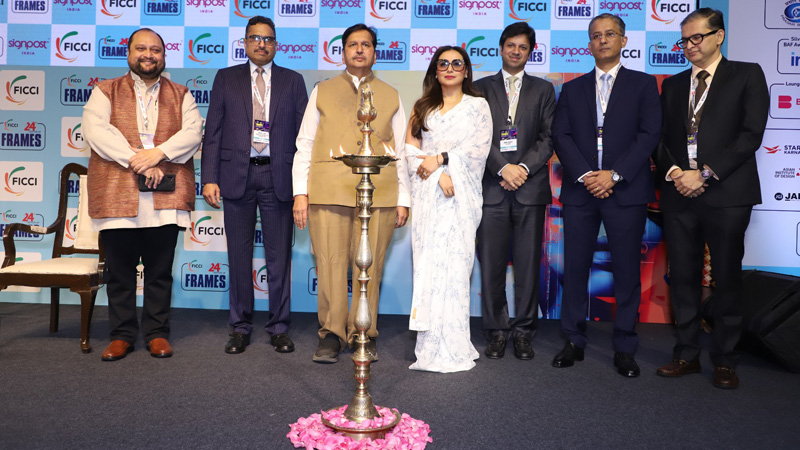
    An Indian actress Rani Mukerji said that FICCI FRAMES 2024 has set the agenda for an ever-changing media and entertainment industry. “The pandemic forced us to adapt, innovate, and reimagine the ways in which we connect with audiences. As consumer preferences evolve, there is a growing demand for unique and innovative content delivery,” she added.

    FICCI and vice chairman, RPG group vice president Anant Goenka said that FICCI FRAMES 2024 has been a cornerstone over the years, significantly influencing the trajectory of India’s media and entertainment industry. The Indian media and entertainment sector has witnessed remarkable growth over the past decade, and the digital revolution has reshaped our industry.

    FICCI Media and Entertainment Committee and CEO of broadcast and entertainment, Viacom 18, chair Kevin Vaz, said that the road ahead for the industry is brimming with possibilities and challenges alike. The integration of artificial intelligence promises to reshape the landscape of content creation, distribution, and consumption, particularly generative AI, which is now an inexorable part of M&E supply chains, he added.

    AVGC-XR committee chair Ashish Kulkarni, FICCI delivered the vote of thanks.

  • “Traditional media in India is also experiencing a steady growth”: Kevin Vaz

    “Traditional media in India is also experiencing a steady growth”: Kevin Vaz

    Mumbai: Viacom18 CEO- Broadcast entertainment Kevin Vaz reflected on the Media & Entertainment sector, both on a global scale and within the Indian context at FICCI frames 2024 event. He said, “In 2023, our industry witnessed a remarkable era of content creation, with over 200,000 hours of content produced annually. Indian content has transcended international boundaries, captivating audiences in more than 160 countries and topping streaming charts on global platforms. In 2023, Indian content bagged not one but two Oscars for the best song and the best documentary respectively. Indian music talent has bagged 3 Grammys recently. 2 Indians (Vir Das And Ekta Kapoor) won the prestigious International Emmy’s awards. This shift indicates a new era where local flavors and stories are embraced by audiences worldwide, showcasing the universal appeal of Indian stories and our storytelling.

    The integration of digital technologies in the Indian M&E industry is at a scale without parallel amongst the comity of nations. Driven by accessible and affordable internet, with Commercial 5G services rollout propelling the growth of India M&E, we must recognise the virtuous cycle of investments in creativity that drive the expansion of affordable internet in India. We can be proud of the fact that Indian companies, Indian creators, Indian producers, are at the forefront of the digital content revolution, be it in films, music or gaming.

    Platforms like JioCinema have revolutionized sports viewership in India, offering accessible and affordable access to live matches like the IPL. This goes to show the importance of internet accessibility in driving the growth of the M&E industry. Unlike other industries, M&E has caught the digital transformation wave early and stand ready to reap the benefits with supportive developments in the all-critical triad of infrastructure readiness, consumer market growth, and enabling public policies.

    The surge in digital media is forecasted to propel the M&E sector’s growth to a 10% annual rate, reaching INR 3 Trillion by 2026. Technological innovations have brought with it a paradigm shift in consumer preferences. Consumers now demand more personalised, interactive, and immersive content. This creates another facet to the growth of the entire digital media segment, including online curated content, digital advertising, online gaming, to name a few. Each of us need to reflect on how these preferences will change the way we think about the future of M&E, and the business models that are most suited to respond. To navigate the future, all of us at various intersections of the industry need to adopt innovative strategies and create engaging content across multiple platforms, leverage big data analytics, collaborate with global partners, and explore new revenue streams.

    Despite this digital boom, traditional media in India is also experiencing a steady growth, showcasing India’s diverse media consumption habits. While this might appear to be a paradox when viewed through a singular global lens, this is the truth of India – a market of AND, not OR.

    As we reflect on the journey of 2023, it becomes clear that it was a year marked by both challenges and triumphs. The first half was subdued, with modest growth rates across various segments of the industry. However, as raw material prices stabilized and marquee events like the ICC Cricket World Cup and Assembly Elections unfolded, we witnessed a significant uptick in the second half. And while the M&E industry is estimated to grow at 10% CAGR through the next few years led by digital, traditional mediums such as Television and print are also poised to grow.

    This growth underscores the enduring appeal of linear TV, particularly among established advertisers who value its unmatched brand-building capabilities at scale. It’s essential to acknowledge the continued significance of traditional media, including television, print, and outdoor advertising, in reaching diverse audience segments, especially in regional markets.

    The road ahead for the industry is brimming with possibilities and challenges alike. The integration of artificial intelligence promises to reshape the landscape of content creation, distribution, and consumption. Particularly generative AI, which is now an inexorable part of M&E supply chains. Advances in generative AI, while still relatively nascent, have produced an explosion of possibilities in the creative sector. It has ushered in a new dimension to the creative process, allowing the industry to explore uncharted territories of creativity and push the boundaries of productivity.

    As AI technologies continue to evolve, they offer unprecedented opportunities for personalized experiences and targeted advertising. However, this next-gen transformation also presents challenges such as data privacy concerns, reskilling and the need for ethical considerations – concerns that the industry and government together need to explore and address.

    Amidst these dynamics, the industry must also address the pressing need for stronger intellectual property rights protection to safeguard the integrity of our creative ecosystem. The proliferation of digital platforms and content creation tools has exponentially increased the avenues for creative expression, yet it has also heightened the risk of copyright infringement. Strengthening our IPR laws is essential to foster a conducive environment for innovation and creativity while ensuring fair compensation for content creators. The National Intellectual Rights (IPR) Policy, established in 2016, is due for review. This presents an occasion for all of us to engage on how we think about monetisation, commercialisation of content as well as the protections required for it, in a fast-evolving technological environment.

    The road ahead encompasses both opportunities and challenges in equal measure. As we navigate this complex landscape, as stakeholders of this vibrant sector, we must all remember that at the heart of it, our industry is about our consumers in a very human sense – their emotions, relationships, talents – their stories. All of us here today are simply facilitators – connecting stories to audiences and audiences to stories.

    As we begin FICCI Frames 2024, I look forward to the next three days filled with enlightening discussions, insightful sessions, and meaningful collaborations. Let us seize this opportunity to chart a course towards a future that embraces innovation, leverages technology, and upholds the timeless values of creativity and expression.

    Finally, I’d like to express my gratitude and admiration for Leena Jaisani and her team for putting FICCI Frames 2024 together. This is the 24th edition of India’s biggest media and entertainment symposium and it just keeps getting bigger and better. So kudos to the team for scaling this up consistently!” he concluded. 
  • OTT originals growing significantly in regional languages: Sanjay Jaju at IDS 2024

    OTT originals growing significantly in regional languages: Sanjay Jaju at IDS 2024

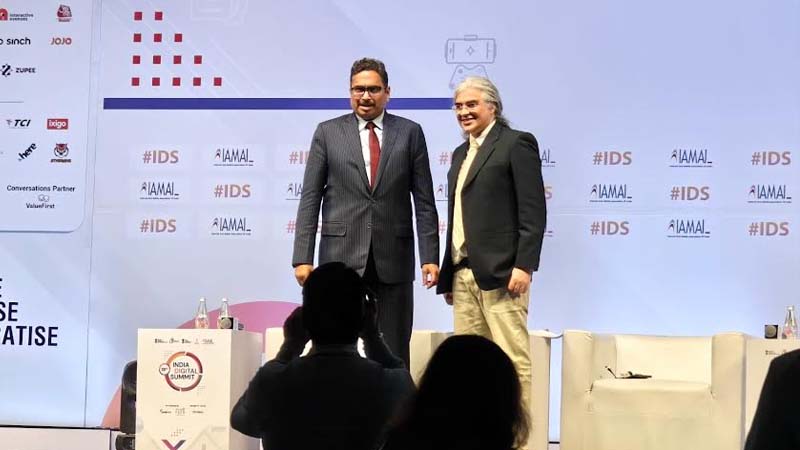
    Mumbai: OTT platforms are growing significantly in various regional languages across India. Ministry of information and broadcasting, government of India secretary Sanjay Jaju indicated this in his keynote address at India Digital Summit (IDS) 2024, in Mumbai. He pointed out that there were over 60 OTT platforms in India out which 30 per cent OTT Originals were operating in regional languages. The number is expected to go up to 50 per cent this year.

    Jaju also said that the media and entertainment sector was a huge sector and played a pivotal role in the Indian economy. “It’s been growing phenomenally at a rate of 20 per cent and is approximately Rs 2 Lakh Crore. In that, the digital media segment is the second largest sub-segment, and has been showing a growth of approximately 30 per cent — around Rs. 60,000 Crores — and the film segment has a 25 per cent growth rate,” he said. Sharing data, he added that over 200 films were released on the digital platforms in the last year, including 75 films which were released directly on the digital platform without a theatrical release.

    Regarding the growth of the digital gaming industry, Jaju said, “The online gaming industry has been growing by 34 per cent and animation and VFX have close to around 30 percent growth rate, expected to become a $2 billion industry by 2025.”  

    Jaju also announced some new initiatives that the government is taking to provide a boost to the media and entertainment sector in India. These include the setting up of a National Centre of Excellence in Maharashtra to create world class media talent and an incentive scheme to attract international projects. He pointed out that, this would help the industry undertake a lot of co-production treaties with multiple countries and create a number of audiovisual co-productions.

    India Today Group CMO & COO Vivek Malhotra consumer revenue moderated the session.

    IDS 2024 is being organised by IAMAI in partnership with the ministry of electronics and information technology (MeitY), the ministry of information and broadcasting (MIB), the union ministry of tourism, UIDAI, Indian Cybercrime Coordination Centre (I4C), Government eMarketplace, in-space and skill India digital. The Summit is co-powered by Peak XV and WhistleFEED, and brought to you by META.

    Other IDS partners include Aaj Tak, Affle, Agrahyah Technologies, Air India Express, AiSensy, Albatross Media, Asianet News, Atmegame, Australia Trade & Investment Commission, Bharat BillPay, BillDesk, Builder.ai, Careers360, Chalo, Dataeye Asia, DigiBoxx, Ethinos, Fi Money, HERE India, indixital, Infinity Learn, Infobip, Interactive Avenues, ixigo, Jagran New Media, JOJO, Lionsgate, Liqvd Asia, MakeMyTrip, MapmyIndia, Markscan, Neokred, PhonePe, PhysicsWallah, PivotRoots – A Havas Company, Razorpay, Shiprocket, Sinch, Times Internet, Transport Corporation of India, True Balance, ValueFirst, and Zupee.