Tag: Sanjay Gupta

  • World Television Premier of ‘Shootout at Wadala

    World Television Premier of ‘Shootout at Wadala

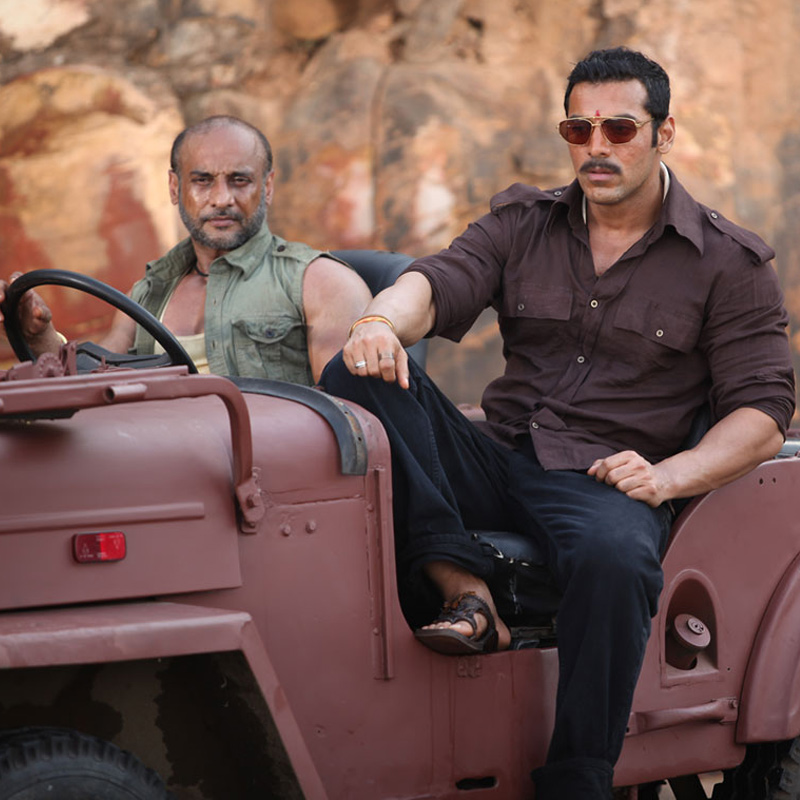
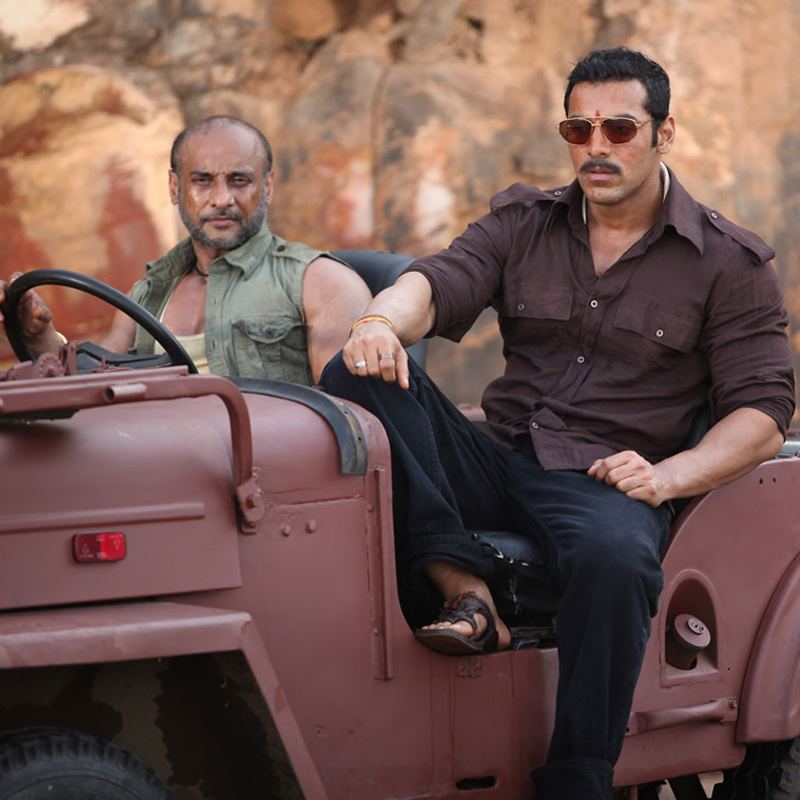
    MAX, the premium Hindi movies and special events channel brings to you the World television Premier of this year’shardcore action gangster film, ‘SHOOTOUT AT WADALA’ on Friday, 18th October at 9PM and Sunday 20th October at 1PM only on MAX.


    The movie revolves around the character of ManoharSurve alias ManyaSurve, a decent college going student, good in studies and very success oriented. Manohar’s fate changes when he tries to save his older brother,BhargavSurve from a scuffle with Bhaskar’s goons. The brothers end up killing one of the goons for which they land up in jail. The movie then turns into a plot of dare devilry and strategic planning and thus gives birth to ManyaSurve. This film is based on a true story about the first-ever registered encounter by the Mumbai Police, which took place on November 1, 1982.


    Speaking about playing the central character,ManoharSurve,who turns into the gangster ManyaSurve, John Abraham says “The first day I met Sanjay Gupta (director) he had a newspaper article in his hand which was about a Bombay gangster called ManyaSurve.I read the article, looked at Sanjay and told him, this is a film we shoulddefinitely make. I did loads of research as it’s important to have the right look and right performance graph in this film. These roles don’t happen every day and I took it with utmost seriousness.”


    Talking about the action and thriller sequence which is an integral scene in the movie and is shot in the midst of a dhobi ghat, Anil Kapoor recollects, “It was a very gripping and an extremely exciting sequence. The floor was very slippery and I was wondering how I would do the scene where I have to run fast. I am very proud of that sequence. The entire film has been shot at many real locations and that’s the reason there is a sense of rawness, intensity and drama.”


    John Abraham also recollects the accidentwhich took place on the first day of shoot, “One of the guys I was fighting in the scene hit his head on my nose and it was bleeding like a tap on the first day of the shoot. The shot is still in the film, and if you notice carefully my nose is swollen to twice its size. It was very painful. I guess accidents are important to make a film work and I think sometimes are lucky for a film. It’s happened to me practically in every film of mine which has worked.”


    Watch this crime thriller with a punch of adrenaline rush in the World Television Premiere of Shootout at Wadalaon Friday, 18th October at 9PM and Sunday, 20th October at 1PM only on MAX.

  • “We will focus on compelling sports content, across multiple sports and languages”

    “We will focus on compelling sports content, across multiple sports and languages”

    By the end of 2011, Star had clearly established itself as the premier entertainment network in India and for Indians worldwide, with 400 million people watching our drama and movie channels in seven languages every day. In one of the most competitive markets in the world, we had established substantial leadership in every genre and in most geographies.And while Star and Fox had built an attractive franchise in entertainment, in sports, very unlike our traditional approach, we had tucked the business away in a joint venture with ESPN that was not managed or controlled by us.
     

    Starting in April 2012, this started to change. We acquired the rights to India’s international cricket calendar that month; a few months later, our parent company bought out its partner from the ESPN Star Sports joint venture in Asia with the intent to roll the Indian part of the joint venture into Star; we launched two new domestic leagues in university cricket and hockey; and we renewed the rights to English Premier League football with a substantive bid. All in all, we invested a billion dollars in less than six months.As a result, by the end of 2012, we had established ourselves as India’s leading sports broadcaster.

    So, why did we get aggressive on a business where the traditional wisdom is that no one makes money?

    Many experts mused loudly that Star had found a way to quickly kill a highly profitable franchise built on leadership in entertainment across genres and languages. I still run into these questions every day. Just two days ago, a leading Indian business daily ran a big story wondering why Star had entered a business that usually never makes money. After all, one sports broadcaster had gone bankrupt trying to pay the bills for the Indian cricket rights, another is struggling to break even and yet another is trying to run a sports business without much sports content. Why would Star make such a big, bold move particularly at a time when the overall

     sentiment on the India story has gone cold?

    So, again, why did we do this? Did we lose the plot?

    In order to answer this question, it is important to take a close look at a few facts, some conventional wisdom and many myths that surround the Indian sports business.

    Everyone in this industry knows one thing. India is a single sport country. It is a country where cricket is a religion, where passion for the game is deep and where the country shuts down when the national team is playing.

    And yet, this is only half the truth. Even for a big match where India plays arch rival Pakistan, consumers do not view the entire match, they view only 15 per cent of the match on an average. The reality outside of really big tournaments is even starker. Out of more than 1000 hours that an Indian viewer spent watching television last year, only 20 hours was on cricket, about 2 percent.This is actually less than the time spent on a single successful show on Star Plus!Consumption of domestic cricket is even worse. Although matches are played round the year, only 50 matches are broadcast on television in a year.And very often, the best of the country’s talent do not participate in these games.

    Imagine if soccer crazy England manifested its interest in the game only by watching the FIFA World Cup once in four years and only really paid attention when England played Spain or Italy. That is the equivalent of India’s current state in cricket viewership. In fact, until the Board of Control for Cricket in India introduced the Indian Premier League, there was not even a domestic league, the equivalent of an EPL or an NFL.

    So, India is not a single-sport country, it is at the moment a zero-sport country that occasionally follows 11 Indian cricketers when they play a big marquee tournament.

    For us, though, the more interesting question is why this happened, and what has led to the current state of affairs. We believe that the biggest culprit is the Indian sports broadcaster. Let me explain why.

    A big shift happened in the last twenty years in cricket in the profile of its followership. It moved from being a sport for the urban elite to one that has a mass following across the country.The BCCI deserves credit for this transformation by making substantial investments to improve the quality of stadiums and infrastructure around the country.Today, some of the country’s best cricketers come from outside the large cities; and small towns host international matches on a regular basis. It is also a country where less than 1 per cent of the population has actually watched any sport in a stadium.

    And, yet, sports broadcasters have not made any effort to make their programming more relevant to the new audience.

    In a country where less than 10 per cent of the population understands English, and a much smaller number are native speakers, sports broadcasters programmed only in one language: guess which one? English. This, despite the fact that everyone knew that the big growth in entertainment consumption in the country came when programming on satellite switched to Hindi and other local languages. And even for the very few that actually understand English, it is quite a world they have to navigate to understand the diversity of commentator accents on television: from the Westernised Indian accent to the local Indian accent to the Aussie accent to the Kiwi accent to the Scottish accent to the West Indian accent. It is almost as if the sports broadcasters were not relaying sports, they were running extraordinarily painful accent training programs on television for the very small English speaking audience that came to watch in the first place.

    The pain did not stop there. Around the world, sports graphics is used to bring the game closer to the viewer and to help the viewer understand the game. Yet, in cricket, graphics is more a nuanced tool meant to tickle the sensibilities of the few deep masters of the game, not the 99 per cent of the country that has never even been to a stadium. The same story extends to television commentary too. Rather than being the anchors of the game who explain the game and bring the excitement of the stadium to the viewer’s living room, the cricket commentator is invariably an expert talking to his peers.

    It is no surprise then that the Indian viewer does not spend much time on sports on television.

    But, it would be unfair to put all the blame on just the sports broadcaster. The broadcaster has had many fellow partners-in-crime in ensuring that sports viewership remains miniscule.

    It’s biggest partner has been the cable and satellite platform. Around the world, sports have been a huge driver of revenue and profit for pay television operators. In India every operator complains about the low ARPUs they get from the business. And yet, instead of using compelling sports content to get more money from consumers and reduce churn, the cable and satellite operators make it difficult for their subscribers to discover and develop a habit of consuming sports.

    And this attitude shows up in the distribution of sports channels, which are treated less like the mass product that they should be, and more as premium add-on products for a small, rich, niche audience.

    To make matters worse, these platforms turn off the channel when a marquee event is not on. While this may have made sense in the old, bandwidth-limited analog world where you could only put 20-30 channels, it makes no sense that even DTH operators are employing the same tactic when they have 300 channels to offer. Compare this to other content categories. They do not switch off a news channel when a breaking news event is not on; they do not turn off the movies channel when a blockbuster is not on. But this is exactly what they do in sports. It is the worst kind of behaviour that limits the ability to build habit for the sports fan.

    Even worse is the behaviour of a few platforms that have created their own channels that switch to the most marquee sports events of multiple broadcasters. While they hide under the pretence that they are addressing a consumer need, what they are really doing is illegal piracy. But what is distressing is that they do not understand the long term damage they are doing to the business. Instead of multiplying choices and triggering demand, they are creating a structure that will ensure that viewers only watch a few cricket events.

    Put together, it is therefore not a surprise that the reach of sports channels lags that of even niche channels like Discovery and MTV!

    So in a zero-sport country, sports broadcasters and pay-TV platforms have worked very hard to make sure that it is only the deeply committed, rich expert fan comfortable with English that actually watches a match on television.

    Of course, if the sports broadcaster and the platform have done their part in eroding the value of sports franchise, the regulator and the government have not been far behind.

     
    For the regulator and the government, the overwhelming objective must be to further consumer interest. It is in the interest of consumers to have more and more sports available for them. It is in the interest of any country to have more and more people play sports. And the reality is that people play sports only when they passionately follow games and teams. If India has to break its poor status in international sports and use sports to create a virtuous cycle for the larger society, then the regulator and the polityhave a powerful role to play.

    I am reminded of an incident that happened in Canada last year. When the hockey union went on strike, the prime minister of the country got involved because his fear was that a prolonged strike would have an adverse impact on the GDP of Canada! More than anything, it showed the power of sports and its ability to be a huge economic growth engine. It also shows the lens with which politicians and executives approach sports globally.

    However, the regulator, the bureaucracy and the political class have not shown such an enlightened approach to sports in India.

    Of all things, the regulator has imposed a cap on prices. A price cap is never good for the long term health of a business but it is especially absurd in the context of sports, where the market we operate in is truly global, where the acquisition costs for rights reflects a global market.

     What is even more absurd is that a news channel, a general entertainment channel, an education channel and a sports channel are all capped at the same level, without any linkage to the underlying cost of content or the relevance of its shelf life. Shockingly, Star Sports which has the most compelling portfolio of content in the country can charge no more than the country’s weakest sports channel with practically no sports on it.

    To make matters worse, the government has mandated that the most expensive sports events are events of national importance that need to be made available to the public broadcaster – who in turn not only retransmits an unencrypted signal to all its subscribers for free, but also makes it available to private platforms to carry the content under a statutorily mandated ‘must carry’ law. So even as you are making no effort to ensure wider coverage for all sports for the long term, you are killing the economics of the sports broadcaster by forcing it to share the most popular content today without adequate compensationand also legitimizing piracy by permitting access to sports content by platforms for free.

    The entire eco system has therefore unwittingly conspired to ensure that sports broadcast is unprofitable, sports consumption is limited and sports followership is minimal.

    So, the question comes back to: if things are looking so bad, why did Star decide to make a big push into sports?

    For only one reason.The current state of affairs is just not right, is not sustainable and is not good for anyone. Somebody needs to change this unhealthy equilibrium which is hurtingthe country, the consumer and the media industry.

    And as the country’s media leader, and as a company that has faced such hurdles before and still managed to build an outstanding franchise, we believe that we can shape this change.

    Clearly, change will not happen overnight. It will require a lot of effort to break the status quo. We will have to ensure that we create compelling sports content, across multiple sports, across multiple languages, with an economic structure that will add value for all.

    But, we are patient, as we always have been in India. And our history, our parentage and the coherence of our approach gives us confidence that we will build India’s first successful and profitable sports franchise.


  • Star Sports campaign for Oz series focuses on new Team India

    MUMBAI: As the India-Australia series approaches, Star Sports has launched a full-fledged campaign, with the core theme ‘Asli Test Baaki Hai‘, to promote the India-Australia Test series which gets under way in Chennai on 22 February.

    McCann Worldwide Tag Ideation has designed the campaign for the series called as Border-Gavaskar Trophy. The television ads in the campaign have been shot by Red Ice Films.

    The campaign is based on the concept that for Indians to idolise next generation of cricketers they need to prove their mettle on field with the Test series against Australia. It highlights the fervour of budding cricketers who would not take anything lying down.

    The advent of new stars like Pujara, Ashwin, Kohli, Maxwell, Starc and Pattinson ensure that the series still remains a stern test of cricketing excellence. Hence the campaign line – ‘Asli Test Baaki Hai‘.

    Star India COO Sanjay Gupta said, “Through the BCCI season we have been focusing on a new team India with its new set of heroes. While we applaud the new talent we are also cognizant that in the future they will have to face a lot of stern tests before they can truly become world beaters. The overarching creative thought comes out from this – ‘True heroes only emerge from the toughest battles‘.”

    The sports broadcaster has also lined up an expert panel of cricketing stars for commentary as well as studio analysis on every match day in English (Star Cricket and Star Cricket HD) and Hindi (Star Sports). The commentary line-up includes legends like Sunil Gavaskar and Allan Border.

    “We‘re delighted to welcome VVS Laxman on board the Star Sports commentary, presentation and analysis team. He is famous for his prolific record against the Aussies,” Gupta added.

    MWG Tag chief creative Ashish Chakravarty said, “The idea of the campaign is to highlight the increasing expectations of the viewers from the new team India. It is time for them to step up and showcase the nation that they can stand up to their expectations. In their unique and simple way, Red Ice Films translated this vision to reality.”

    Red Ice Films‘ owner and founder Gary S said, “This campaign was challenging as it was an attempt to bring out the mindset of the audience. That they need to choose the first among equals, so the trick was to communicate that without passing a judgement on any talent.”

  • Star India claims solid engagement levels on its cricket portal

    Star India claims solid engagement levels on its cricket portal

    MUMBAI: Star India, which recently launched Starsports.com, says that the site has recorded the highest time spent by users on any sports website per visit.

    Cricket fans, the broadcaster says, spent as much as 19 minutes per visit and viewed 342 years-equivalent of video in the first month of launch.

    The average time spent per visit in December, as per Comscore, despite the site being active for only five days that month, was 17.8 minutes and increased to 19 minutes in the first month.

    The 5.5 million unique viewers to the site across devices are enough to fill 83 `Eden Gardens‘ that, according to BCCI, has a capacity of 66,349. Starsports.com crossed 100,000 concurrent users consuming video during the third one-day international between India and England.

    The cricket timeline allows users to pull out past matches, view top moments, play around with the scorecard, while all the while enjoying unmatched video streaming.

    Star India COO Sanjay Gupta said, “Sports content in India has not seen much innovation across mediums. We want to change that and give fans the control to engage even more deeply with their favourite content. Through the world‘s first cricket timeline, viewers can pick the exact moments they want to see, during or after the live match.”

    “In fact we want to seamlessly integrate data and video throughout the site so that it‘s an unmatched viewing experience. We are excited about this leap and the response so far, and look forward to scaling it up further,” Gupta said.

    The broadcaster said every feature of the site aims to engage the consumer – from the video timeline to the reinvented commentary section that focusses on the action ball-by-ball, while pulling in real-time conversations on social media. The site boasts of a video scorecard bringing alive the statistics with video clips, analytics and graphics.

  • Mumbai HC relief for Sanjay Gupta

    Mumbai HC relief for Sanjay Gupta

    MUMBAI: In a case of cheating and forgery against filmmaker Sanjay Gupta for allegedly copying the letterhead of the Mumbai Police Commissioner registered by the Mumbai police, the Bombay High Court has granted him anticipatory bail against a bond of Rs 10,000. Earlier, the Sessions Court had rejected anticipatory bail for Gupta.

    Soon after, Gupta approached the HC for justice. Justice A V Nirgude, who was officiating in the matter, said in his order: “This is an innovative invitation, that’s it. The police officers who registered the offence have lost their sense of humour,” he observed.

    It was alleged that Gupta Wadala carried the rubber stamp of the Mumbai Police that was used on invites sent out for the unveiling of his film Shootout At Wadala for a press conference at Mehboob Studios last week.

    The court observed that no intention to commit fraud was disclosed by the police in the case. The police could not prove any wrongful gain or loss on part of the producers of the movie, the court remarked.

    However, additional public prosecutor Rajeshree Gadhvi said that the invitation was misleading and the producers had not taken prior permission from the CP to issue it using the seal of his office.

    Shootout at Wadala, based on the first-ever registered encounter by Mumbai police who shot dead gangster Manya Surve at Wadala in 1990s, is being produced by Balaji Motion Pictures along with Gupta’s White Feather Films. The film stars Anil Kapoor, Kangana Ranaut, John Abraham and Tusshar Kapoor.

  • Mumbai police book Sanjay Gupta of cheating and forgery

    Mumbai police book Sanjay Gupta of cheating and forgery

    MUMBAI: Filmmaker Sanjay Gupta has been booked on charges of cheating and forgery by allegedly misusing the name of Mumbai Police Commissioner‘s Office in the invitation card sent for the press conference to announce the launch of his forthcoming film Shootout at Wadala that was held at the Mehboob Studios.

    The invites sent by Gupta for the launch of Shootout at Wadala carried the rubber stamp of the Mumbai Police. The police chief would be present at the event and would also brief the media on the current status of crime in the city, the invitation read.

    Shootout at Wadala is based on the first-ever registered encounter by Mumbai police who shot dead gangster Manya Surve at Wadala in 1990s.

    “Sanjay Gupta, Balaji Motion Pictures (Producer) and Glamsham.com (Bollywood movie portal) were booked for cheating and forgery as they misused the name of the office of the Mumbai Police Commissioner by using the rubber stamp of police to promote their film,” senior inspector at Versova Police station has been reported to have said.

  • Gupta gets NOC to use real-life names in the film

    Gupta gets NOC to use real-life names in the film

    MUMBAI: The Mumbai police has granted permission to director Sanjay Gupta to name the characters in his film Shootout At Wadala after the real-life policemen involved in the 1982 incident in Mumbai.


    Gupta said, “After we‘ve got a no objection certificate (NOC) from the police department, we‘re free to name any of the cops who were part of the incident.


    “We‘re now in the process of covering all legal hurdles as far as naming every character from the underworld is concerned.”


    In this regard, Gupta had sought the services of Mumbai lawyer Ameet Nayak to be amply sure that all loopholes are plugged so that he can call a spade a spade or a Dawood a Dawood.


    Shootout At Wadala, a prequel the 2007 film Shootout At Lokhandwala, recreates the gunfight in which gangster Manya Surve was shot dead.


    Gupta‘s film will begin with a claimer: “Everything you‘re about to watch happened on the streets of Mumbai.”

  • Priyanka Chopra to be honoured in New York

    Priyanka Chopra to be honoured in New York

    MUMBAI: New York City’s South Asians in Media, Marketing and Entertainment Association (SAMMA) will present actress Priyanka Chopra with this year’s Trailblazer award at its North America conference.

    Said SAMMA co-founder Rajan Shah, “With Priyanka’s push in the US as a musician and singer, she is pushing into exciting new creative territories and taking creative risks which is essential to being a great artist. SAMMA is honoured to award Priyanka Chopra our 2011 Trailblazer Award, blazing a new path for Indians in entertainment.”

    “Through her hard work, sincerity and her personal ambition to push herself as an artist, Priyanka is the perfect role model for South Asians in entertainment, not just in the US but around the globe,” he added.

    Previous recipients of this prestigious award include filmmaker Rohan Sippy and CNN correspondent Sanjay Gupta.

    The conference will be held on 16 and 17 September.

  • Bollywood goes mobile with Barcelona launch

    Bollywood goes mobile with Barcelona launch

    MUMBAI: The world’s largest film industry joined forces with the global mobile communications world today in spectacular fashion – as Bollywood premiered its first feature films for mobile viewers at the 3GSM World Congress (February 12-15) in Barcelona.

    The Congress marks the start of the adaptation of thousands of vibrant Bollywood productions for the mobile screen – a development that could have a huge impact on the global mobile entertainment market, already worth some $US23 billion.

    The Bollywood Mobile Initiative is driven by Roamware, the global leader in roaming and mobile connectivity solutions; Hungama Mobile, the world’s largest aggregator, developer and publisher of Indian entertainment and Bollywood content; Sanjay Gupta, a leading Bollywood director; and the GSM Association (GSMA), the global trade association for mobile operators.

    Roamware’s Media Call technology is providing the capability to integrate the cinematic content into the everyday mobile experience for film fans.

    “Media Call redefines mobile communications from voice to visual media, enabling the sharing and promotion of film clips to accelerate the growth of the mobile movie market,” said Bobby Srinivasan, CEO of Roamware.

    Two Bollywood short films “Zahir” & “Matriomony” were premiered in Barcelona today. These films are a part of the feature film ‘Dus Kahaniyaan’ (10 Stories) produced by Sanjay Gupta of White Feather Films, starring more than 20 leading Bollywood stars including Dia Mirza, Suneil Shetty, Sanjay Dutt, Neha Mandira Bedi, Aftab Shivdasani and many others. Sanjay Gupta is one of Bollywood’s leading filmmakers who has produced and directed many hugely popular movies such as Kaante, Musafir and Zinda.

    The films demonstrate the viral potential for Bollywood movies on the ‘fourth screen’ –the mobile device. Set pieces with action and dialogue scenes interspersed with song and dance make the vibrant, fast moving movies a compelling entertainment experience for the mobile viewer.

    “Bollywood today is the world’s largest movie industry, producing more than a thousand movies a year with an audience of more than two billion viewers across 127 countries. Formatting that content for the mobile audience and ensuring simplicity of delivery and accessibility provides staggering reach and revenue possibilities,” said Bobby Srinivasan, CEO and Chairman, Roamware.

    “The GSMA is delighted to welcome the stars and directors from the Bollywood world to the world’s largest mobile event,” said Bill Gajda, Chief Marketing Officer of the GSMA. “We are excited by the tremendous potential for Bollywood entertainment on mobile phones, and delighted to support the efforts of Roamware and Hungama Mobile in their commitment to bringing a rich array of Indian film entertainment to the fourth screen for a global audience of millions.”

    “India is the fastest growing market in the mobile world, and the world’s fourth largest market. It has the potential to be the largest market globally by 2010. It is the most logical market from which to launch the mobile movie industry and present a brand new avenue of cinematic entertainment for mobile users everywhere. The potential is truly amazing. Hungama Mobile has already launched a Bollywood channel directly on operator decks around the world in nearly 30 countries, with over 70 operators. This channel contains music, imagery, video and games from Bollywood. Showcasing Bollywood movies on mobile is a natural extension both as a tremendous new marketing opportunity as also revenue for all the stakeholders,” said Neeraj Roy, Managing Director & CEO, Hungama Mobile.

    Hungama Mobile’s content assets and a two year foray in taking Bollywood to the mobile world, coupled with Roamware’s global reach, holds huge promise for the mobile market. The dramatic evolution of communications technology, from download speeds and battery life to compact form factors, screen sizes and resolution, as well as memory enhancements, means mobile devices are now capable of delivering a compelling, high quality and uniquely personal viewing experience.

    Bollywood is one of the fastest growing entertainment industry segments and has an appeal not only for the 150 million mobile phone users in India but for markets across all continents. Indian cinema is now dubbed in over 35 languages and accounts for as much as 16.5% of theatrical business in markets such as UK. Indian films have made it into the top 10 charts in markets such as USA, UK, Germany, Australia, Singapore and South Africa. More than 3.6 billion admission tickets are sold each year, across the world and now Hungama Mobile and Roamware will take this to some 2.5 billion mobile screens.

  • Balaji Telefilms forms movie business subsidiary

    Balaji Telefilms forms movie business subsidiary

    MUMBAI: In a significant move, Balaji Telefilms Ltd. has decided to set up a wholly owned subsidiary company to manage its movie business.

    The company has tentatively been titled Balaji Motion Pictures. “The entire business related to movies will be transferred to the subsidiary company,” a company statement says.

    Balaji Telefilms has so far taken a cautious approach to the movie business and has no releases this fiscal. The company produced two films in the last fiscal and raked in a revenue of Rs 104 million, incurring a minor loss. While Kya Kool Hai Hum was a success, the second film Koi Aap Sa didn’t fare well in the box office.

    The leading TV content company then decided to venture into co-production deals as a de-risk strategy. Balaji tied up with White Feather Films, a company started by Sanjay Dutt and Sanjay Gupta, for producing Shoot Out at Lokhandwala at Rs 120 million which is expected to release in the next financial year.

    Balaji Telefilms has posted a 49.26 per cent jump in net profit to Rs 214.76 in the third quarter ended 31 December. Income from operations rose 21.49 per cent to Rs 850.30 million.

    Revenue mix from commissioned and sponsored programing

    Commissioned category continues to drive Balaji’s revenues.

    How the channels stack up

    The channel-wise revenue distribution during the third quarter of the current fiscal is as follows:


    Programming split

    The hour wise programming distribution during the quarter breaks up in favour of the commissioned category.


    Change in Programming during the quarter 
    The following serial/s went off air during the quarter ended 31 December 2006.

    Serials on air

    As on 31 December 2006 the following 15 serials were on air on various channels.