Tag: Sanjay Gupta

  • SMAAASH ropes in FW Sports Investment Fund as strategic investor

    SMAAASH ropes in FW Sports Investment Fund as strategic investor

    MUMBAI: FW Sports Investment Fund LP (FSIF), a Mauritius-based private equity fund, has acquired a significant minority stake in Mumbai based Smaaash Entertainment (SMAAASH).


    This is the first round of private equity funding into the company.


    Pioneering the field of sports simulation technology in India, SMAAASH has developed a unique concept that blends sports, music and dining into an immersive and involved social entertainment experience. It’s first such sports-based entertainment centre that was started in 2012 in Mumbai. The centre is home to highly interactive sports simulators across different sports such as cricket, football and racing, as well as many other thrilling and recreational attractions. The Company is promoted by serial entrepreneur Shripal Morakhia, who had earlier founded SSKI &ShareKhan.


    “SMAAASH is an emotionally and physically engaging proposition that uses technology to meet consumer aspirations. We are very excited at having FSIF as our partner. Our plan is to open multiple centres across India and globally over the next couple of years, and FSIF’s involvement will help us immensely with our global plans”, said SMAAASH founder director Shripal Morakhia.


    Cricket icon Sachin Tendulkar and STAR India are also associated with this unique venture from its inception.


    Sachin Tendulkar who is a strategic investor in SMAAASH said, “The advanced simulators at SMAAASH are fascinating and are very close to real life experience. Sporting enthusiasts can leverage the technology at SMAAASH to harness their skills and gain experience of challenges faced on the field. The facilities at SMAAASH cater to the demands of the young, sporting minds of the nation”.


    “SMAAASH demonstrates creativity and innovation at its best — principles that form the very core that drives Star. That innovation has meant that SMAAASH is quickly emerging as the sports entertainment destination among today’s youth,” said Star India COO Sanjay Gupta.  “We are very proud to partner this unique venture and its team led by Shripal from its very conception to pilot and now its growth phase. There’s no doubt SMAAASH will soon grow to be one of the biggest global enterprises in active sports entertainment.”


    This is the second major investment by FSIF, Asia’s first sports dedicated fund. Earlier this year, FSIF had acquired a significant minority stake in Technology Frontiers, a leading global provider of in-stadia activation solutions. The fund is led by Anand S. Krishnan, who has earlier been a managing director at JPMorgan in America and Asia.


    Commenting on the investment, Anand S. Krishnan said, “SMAAASH leverages sports as a medium to connect with customers – families, corporates, and retail. The company is uniquely positioned to expand its footprint throughout India and worldwide; its innovative, differentiated, and aspirational offering addresses the bourgeoning demand for active entertainment. We are excited to be a part of this story and look forward to working with the SMAAASH team.”


    Anand S. Krishnan and Sripat Pandey will be joining the board of directors of SMAAASH.


    EY India acted as the exclusive investment bankers on the transaction and J. Sagar Associates acted as the legal advisor to FSIF. EYIndia partner Ajay Shah, who led the transaction said, “The Indian sports-based entertainment industry has grown rapidly over the last few years, driven by an increase in discretionary spending ability of the consumer. SMAAASH now has a total equity capital base of approximately Rs 150 crore. This capital base will be a catalyst for the company to achieve its aggressive expansion plans and meet its objective of providing social entertainment via a fun filled, value-for-money experience”.

  • Gurjeev Singh to head Star India international business

    Gurjeev Singh to head Star India international business

    MUMBAI: After the big split last month of Star and Zee’s distribution JV MediaPro, Star India has announced that MediaPro former COO Gurjeev Singh Kapoor will head the company’s international business initiatives.


    Once the MediaPro transition is complete, Singh will shift to his new base in London and report to Star India COO Sanjay Gupta. In his new role, Singh will handle distribution, syndication, ad sales and new content development in the US, South Afriaca, West Asia, the UK, Europe, south Asia and Southeast Asia.


    “The international business has huge growth potential which has not yet been fully tapped and we believe Gurjeev will add tremendous value to the organization and will build on the foundations that have been put in place and take the International business to new heights,” said Gupta.


    “Gurjeev shares our values and our focus on the business and he has proved to be an extraordinary leader throughout his stint with Star and its ventures,” he added.


    Singh will take up his new posting only after a few months. Speaking on his new role Singh said, “I am looking forward to be back into Star’s fold and delighted with the opportunity to expand our global footprint. Star is uniquely placed to drive aggressive growth in the international markets based on its great content advantage.”


    Star India’s channels are available in more than 120 countries globally. And Singh has his task cut out for him: Zee Entertainment Enterprises channels are available in more than 160 countries globally and a very aggressive IndiaCast has been working aggressively to further the distribution of the Viacom18, Network18 channels worldwide.


    Concurrent with Singh’s new responsibility, Star India’s national distribution has been split into two: TS Panesar has been given the task of handling national distribution on DTH and in the digitised markets, while Summit Grover has been brought in to look after  distribution in the emerging markets of DAS phase III and IV. Both are expected to report into Singh.


  • Nike Cricket brings the new ‘Men in Blue’ jersey

    Nike Cricket brings the new ‘Men in Blue’ jersey

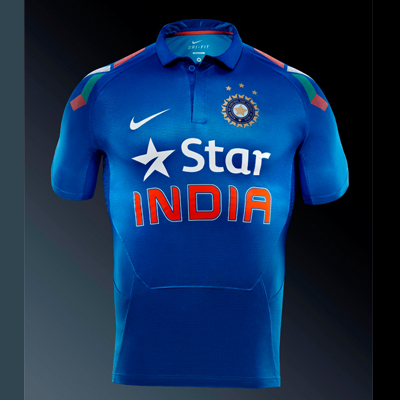
    MUMBAI: Nike, the official apparel sponsor of the Board of Control for Cricket in India (BCCI), has revealed the limited-overs uniform that Team India will wear this cricket season.

    Nike’s Team India kit draws inspiration from the passion and support fans have for the sport and the national team. The uniform is a striking contemporary blue, with a textured, premium finish.

    Designed to enhance the modern requirements of the game and its players, the jersey has a dynamic fit tailored to the athlete’s body, a result of 3D body mapping of the world’s top athletes and insights gleaned from collaboration with the Indian cricket team.  Players expressed the desire for a jersey that moves with them and is comfortable enabling a complete focus on their game. The jersey is accented with a cutting edge graphic on the shoulders.

    Nike India VP and GM Bob Coombes said in a press statement: “The country’s love for the sport and its team is what drives us to deliver our very best in technology and design to cricket India. This kit combines superior lightweight performance made from 100 per cent recycled polyester, causing minimal impact on the environment while ensuring that the design aptly reflects the winning attitude of the team.  We stay committed in our endeavour to deliver the best and continue to wish our ‘Men in Blue’ greater success in the coming tournament.”

    In an earlier interview to indiantelevison.com Star India – also the official sponsor for Team India – COO Sanjay Gupta had stated: “Cricket helps build awareness of brands and associations and we are seeking value coming from both. It is a serious value that we see as a business and hence this sponsorship.”

    Star India with the association with Team India cricket, is very clear on using the placement of its logo on the jersey to make the Star brand more salient in its viewers eyes. With the sponsorship rights from 2014 to 2017 and over 100 matches to be played, Star is clearly leveraging its association with sports and continuing to invest heavily on sports.  

    In keeping with Nike’s Better World philosophy, Team India’s kit is constructed with 100 per cent recycled polyester fabric that is lightweight, reinforced with increased stretchability and enhanced moisture-wicking capabilities. Improved ventilation zones provide additional comfort and cooling.

    The four-way stretch pants for Team India complete the kit. The pants feature a more streamlined, shrink-wrap fit for better movement on the field. A woven fabric has been introduced to help athletes move better and enhance durability.

    The Team India kits will be available at select Nike retail outlets.

  • Kabaddi gets a new life with ‘Pro Kabaddi League’

    Kabaddi gets a new life with ‘Pro Kabaddi League’

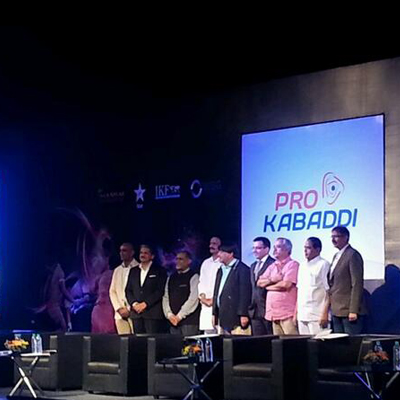
    MUMBAI: After various leagues around cricket, hockey, badminton, football and tennis, it was time for Kabbadi to make a foray. Not missing the opportunity to bring back the rustic Indian sport to the limelight, Mashal Sports and the International Kabaddi Federation (IKF) launched the Pro Kabaddi League at the National Sports Club of India today.


    The sport has progressed from being a loved Indian game to the international platform. The League aims to extend its reach further to the international arena by bringing Indian and international players along with acclaimed Indian personalities and sports authorities on the same platform.


    The official website www.prokabaddi.com will be a repository of information on all things related to Pro Kabaddi as well as Kabaddi in general while Star Sports will be the official broadcast partner for the League, the matches of which will be held on a ‘home and away’ format with daily, LIVE, prime-time coverage.


    Star India COO Sanjay Gupta said: “Our association with Kabaddi is in line with our stated objective of transforming the sports landscape and enabling the growth of a multi-sport culture in India. Pro Kabaddi will build an ecosystem that can potentially take this game to the next level. We plan to offer an immersive and engaging experience for the Kabaddi viewers.”


    Mashal Sports co-promoter Anand Mahindra, who will play a key role in taking Kabaddi to another level, tweeted: “Had asked you about supporting indigenous sport, specifically Kabaddi. Well proud to be a co-promoter of #ProKabaddi league we launched today.”


    During the launch of the league, he also stated: “A vibrant, professional sports league can bring about a transformational change for the sport and its players. Pro Kabaddi is our attempt at bringing this change to our very own, extremely popular sport of Kabaddi. The modern, international, competitive form of the quintessentially Indian sport is already extremely popular across the world and with good television coverage and passionate team owners; Kabaddi’s massive following has the potential to make it the next big thing in sport.”

    Mashal Sports MD and well known commentator, compere and quizmaster Charu Sharma, who is the force behind conceptualising and organising the league recalled how he was pleasantly shocked to see the power, passion and reach of Kabaddi while commentating during the 2006 Doha Asian Games. “I just knew, instinctively then, and more surely now, that modern, international Kabaddi has all the ingredients required to make it a major, visible force in the world of sport. I am truly grateful to the many visionaries who have made Pro Kabaddi possible,” he remarked.


    World Sport Group (WSG) is the official commercial and event partners of the Pro Kabaddi League that has seen significant franchisee interest. Already pledging their support as team owners are leading entrepreneurs such as Ronnie Screwvala, Rajesh Shah (Mukand Group) and Kishore Biyani. Advanced discussions are on with other corporate giants such as the GMR Group and Murugappa Group. Even Shah Rukh Khan is known to be interested in it.


    The league has been organised in association with International Kabaddi Federation, Asian Kabaddi Federation and Amateur Kabaddi Federation of India.


    All Pro Kabaddi League matches will be played on a specially developed mat in state of the art indoor stadiums across eight cities. Top Kabaddi players from across India and the globe will participate in a show of intense competition and sporting camaraderie. A 10-minute exhibition match between top players in an ‘arena-within-an-arena’ at the NSCI Indoor Stadium, Mumbai spectacularly showcased the fresh, exciting and international face of Kabaddi. 


    Ogilvy & Mather executive chairman and creative director South Asia Piyush Panday said: “Kabaddi is the ultimate combination of power, agility and tactics. It is one of India’s unique treasures and I am glad that we are able to present it an international stage in such an exciting format.”


    The matches will be preceded by a player auction, where each of the teams will get equal opportunity to build their squads. Almost 100 players will be auctioned, out of which 72 players will be Indian and the rest will be international players from Afghanistan, Bangladesh, Canada, England, Indonesia, Italy, Islamic Republic of Iran, Japan, Malaysia, Nepal, Pakistan, South Korea, Sri Lanka, Thailand, Turkmenistan, United States of America, Vietnam and Zimbabwe.


    The League is set to take the sport to a new level of prominence and ensure that stars such as Navneet Gautam, Rakesh Kumar, Ajay Thakur and Rajaguru are bound to become the new sporting heroes.


    Matches will be played as per the current international rules and regulations of the IKF. The Federation is also seriously considering making some small but significant changes to the game, to enhance its appeal on television. 


    Pro Kabaddi League, will have robust marketing strategies. Each franchisee will not only have their team colours and star players but also create their own fan following with innovative media outreach strategies. Sports enthusiasts, in India and across the world, can keep track of the matches, scores, and players as well as participate in the game through social media platforms such as the league’s website www.prokabaddi.com, Twitter handle @prokabaddi and Facebook page Pro Kabaddi.

  • Television…. will remain eternal

    Television…. will remain eternal

    MUMBAI: Television will continue to be a dominant medium notwithstanding the emergence of new means of consuming content. New mediums of content delivery are likely to change viewing habits, but more importantly are likely to increase the time spent on watching the stories that are delivered and also provide more opportunities to content creators.


    Rather than fragment television viewership, new mediums of content delivery would open up new opportunities for content creators as well as platform providers.


    To drive home this message, India’s largest broadcaster Star India COO Sanjay Gupta pointed out that 10 years ago the topic of discussion was that newspapers are dead. The fact is that in the last 10 years the size of the newspaper industry has doubled.


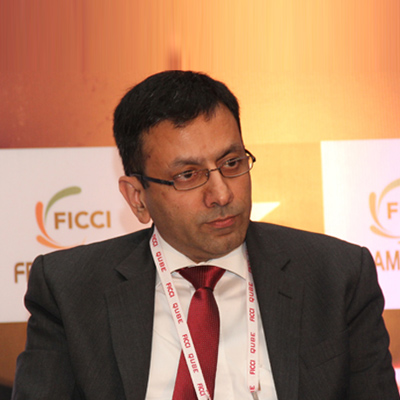
    The topic now is ‘Television is Dead’ but like the newspaper industry television will continue to grow, said Gupta, participating in a panel discussion on “Television is Dead – Long Live Television” on the second day of FICCI Frames 2014.


    Fundamentally, new mediums provide new avenues to carry content and to tell stories, Gupta said underlining that there will be greater opportunities with the digital medium opening up.


    IndiaCast Media Distribution Group CEO Anuj Gandhi said, “Fundamentally, we as a nation are a daily soap market. In India daily soaps sell.”


    IndiaCast distributes a multitude of content but in the global markets it has found demand for its serial 24, based on an American thriller series in a real-time format, and not for the Indian staple daily soaps. IndiaCast is mandated to drive domestic and international channel distribution, placement services and content syndication for TV18 Broadcast, Viacom18 and A+E Networks I TV18.


    Celestial Tiger Entertainment CEO Todd Miller echoed the prevalent view. He said, “It is still the living room that is the bulk of our business.” Celestial Tiger is a Hong Kong-based diversified media company that focuses on Asian consumers.


    TELEVISION TO TRANSFORM


    Television as a medium is expected to undergo a transformation from being a linear gadget to a multi-functional smart device. The reinvention of television will allow it to not only survive but blossom despite the onslaught of new mediums of content delivery.


    Effective use of the mobile as a means of content delivery is still a distant given the bandwidth constraints. “For me the biggest challenge is bandwidth. 3G and 4G will change consuming patterns. It will still be sports and news that will be largely consumed on mobiles,” said IndiaCast’s Gandhi.


    There have been so far no serious efforts at making differentiated content. With 3G and 4G, there would be real efforts at making meaningful content.


    Star India’s Gupta said Star Sports’ tie-up with Vodafone has shown there is deep desire among consumers to view content on mobile, even though not at huge costs but by spending smaller amounts.


     “Millions are coming in to check content on Vodafone. They may not want to spend in small amounts,” Gupta said.


    Consumers will seek more and more stories, different stories with the rise of the digital medium of content delivery.  The broadcasters as they now exist and the new means of content delivery and the new content creators would be collaborating rather than working at cross-purposes.


    IndiCast’s Gandhi reiterated that TV Everywhere in the digital era will still remain largely confined to shorter duration content.


    CHANGING DYNAMICS


    Almost 50 per cent of Olympics was watched on mobile. This suggests there is great opportunity to deliver what the consumer wants.


    “We can’t wish it away. Dynamics are changing fast. The distinction between the content creators and platforms is blurring,” said Gupta.


    Industry players expect disruptions to happen but are wary as history shows an outsider has most of the time been the disruptive force.


    New mediums will provide new platforms for content. The broadcasters may go downstream to business to consumer model and the distributors may move up the chain to be the content producers.


    In the US, the average time spent watching television is six hours. In India the average time spent is three hours and the new mediums are seeing an increase in the time spent watching television content.


    Celestial Tiger’s Miller said, “Most of the innovation that comes is from Telcos and DTH.”


    Media Partners Asia executive director Vivek Couto, anchoring the panel discussion, said, “Precedents have already been set for digital deals in the US.”


    Gupta, however, said the cap on prices of television content is hindering creation of quality content. “People are willing to spend. We have 2.5 million HD customers, which is likely to rise to 8 million by the end of this year,” he said.


    The whole ecosystem of story-telling is set for a transformation aided by improved delivery platforms and more creative content creation, and a dominant part of the viewership would still be on television.

  • M&E industry can grow much more than it is right now: Sanjay Gupta

    M&E industry can grow much more than it is right now: Sanjay Gupta

    MUMBAI: Star India CEO Sanjay Gupta while talking during the final session of day one at the 15th edition of FICCI Frames 2014 — “Talking Numbers: Hard Facts about M &E’s Economic Contribution” — said that it seems that “as the media and entertainment (M&E) industry we have really forgotten how big we truly are, we are not just about showbiz. I believe we are undervaluing ourselves and instead of being a $15 billion industry we should be somewhere around $ 60 billion (that is, four times).”


    Gupta thinks that the industry has a potential to grow at the rate of 15 per cent, but it is rather doing just a shade below five per cent. “The industry, comprising of the stakeholders and the regulators, is having a very myopic view on how can we all come together to serve the consumer with what they want,” he remarked.


    He also brought to the fore the hurdles that a new player in the market can come across. “If I want to introduce a product which is of superior quality than what other products are offering, I have regulatory restrictions on the pricing not to mention the pressing taxation on the content,” he said.


    The session, which was anchored by Motion Picture Association (MPA) India MD Uday Singh, brought up many major points about the contribution of the M&E Industry in the country’s economy and the hurdles that need to be overcome to improve the numbers.


    Besides Gupta, the panel comprised Viacom 18 Media group CEO Sudhanshu Vats, Disney India MD Siddharth Roy Kapur and Aditya Birla Group chief economist Dr Ajit Ranade who underlined the improvements that need to be brought in regulations, infrastructure, cutting down on piracy and much more.


    It was Viacom 18 Media group CEO Sudhanshu Vats, who called attention to the issues associated to digitization. He said: “With an expected growth of 21 per cent in subscription revenues and 15 per cent in advertising revenue by the end of phase three and four of the digitisation, the future for the M&E industry looks bright. But the pressing issue that needs to be addressed is though 40 odd cities have been seeded with boxes are they also addressable?”


    However, he thinks the future is bright for subscription driven markets with the oncoming of 100 per cent ad free channels like HBO Hits and HBO Defined.


    The panelists also discussed the contribution of the three major players in the Indian movie business — Hindi, Tamil and Telugu cinema — that contribute nearly 43 per cent, 19 per cent and 14 per cent respectively to the total revenue generation from the film industry. Singh remarked that with nearly 1.8 million people working in this industry, it is certainly one of the important contributors to the GDP of the country.


    Disney India MD Siddharth Roy Kapur said: “As far as the film industry is concerned, the three major areas of concern are creativity, infrastructure and piracy. Once we as a community get together and address these perils, I am sure the world will become a much happier place.”


    According to Kapur, the top 10 box-office hits contribute to nearly 50 per cent or more to the overall collections from the film sector alone, and the top seven male stars contribute to 45 per cent of the year’s overall box-office collections.


    Singh also brought up the topic of distribution and ARPUs (Average Revenue Per User), stating that with better addressability and packaging the ARPU will witness a substantial rise.


    Aditya Birla Group chief economist Dr. Ajit Ranade concluded the discussion with some mind-numbing numbers and facts. “The industry is currently going through a rapid transformation and the contribution to the overall GDP will see improvement in coming time but we need to take into account that the government is always struggling with a fiscal deficit, thus reducing taxation is not the final resolution.”


    “The right way forward is to move towards a micro payment format where the consumer pays for all the facilities he/she uses this will reduce a lot of disparities and only go onto strengthen the growth of the market and further contribute to the economy,” he concluded.

  • Vodafone Sports: Changing the sports viewing landscape

    Vodafone Sports: Changing the sports viewing landscape

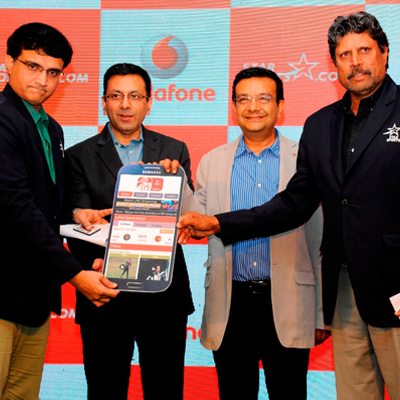
    MUMBAI: What do you get when one of the leading telecom players in the country joins forces with one of the biggest television network? The result is uninterrupted, curated and the best delivery of sports content on the go.


    The partnership between Star India and Vodafone India will make available to consumers a first-of-its-kind service that brings the best on track, on court and on field action to feature phones as well as smart phones.


    Star India COO Sanjay Gupta says: “Sports is something the network truly believes in, and we have put our money where our mouth is time and again.”


    Vodafone Sports powered by starsports.com will offer customers premium live and curated in-depth content built around some of the most popular sports in India such as cricket, football, tennis, hockey, golf and motorsport. The portal  (live.vodafone.in/sports) will feature cricket, football and hockey and will cover other major sports like F1, tennis, etc.


    Star India head digital Ajit Mohan says: “Since the launch of starsports.com in June 2013, we have witnessed good traction among sports fans and have become the YouTube of sports in India.”


    Launched in June 2013, starsports.com has become the go-to destination for following the best of international sports. It has in a way redefined the sports experience through a revolutionary video timeline that is a first of its kind in the world of sports, and allows the viewer to keep track of live sports as well as catch up on games with ease.


    The company has also built an advanced technology infrastructure that enables HD quality streaming across multiple devices. It will now bring the power of the proposition to the most important screen in the country – the mobile, for Vodafone consumers.


    “The fact that the content available on Vodafone Sports will be generated from starsports.com works well for the network as we will be able to reach the homes where TV sets and internet facility is not easily accessible,” Mohan explains.


    Recent studies have shown that there are more mobile handsets in the country than TV sets in homes. With this strategic partnership with Vodafone, Star India has certainly played an ace card. It would now be able to propagate its message of supporting the growth of sports in the nation even better; reaching out to the millions of Vodafone subscribers and delivering live as well as curated content at an economical price.


     “Our core business has always been services and after the success of Vodafone Music, we were looking at taking things to a whole new level,” expounds Vodafone CCO Vivek Mathur on the reason for partnering with Star India.


    “India in many ways is in the forefront as far as mobile internet consumption is concerned. We are only second to Germany and we truly believe that mobile internet is the future. We were on the lookout for a partner with some terrific content to deliver and we are glad to have found that partner in Star India,” Mathur adds.


    As a result of the tie-up with Star, customers using Vodafone Sports will have access to an exhaustive array of legal, unadulterated content at their fingertips, including all the latest news, trivia, scores and results, instant access to live matches, interactive video scorecards, exclusive insight and analysis, columns, photos and wallpapers across sports.


    The interactive video scorecard, for example, will allow users to watch the fall of a wicket or replay individual innings highlights for a particular player right from the scorecard, so if you miss a pivotal, game-changing moment in a game, or a match-winning knock, you can replay it at the touch of a button. Apart from live games, customers will also be able to sample additional archived video content, such as the best of M.S. Dhoni’s sixes or Sachin’s straight drives, created from over 10,000 hours of cricket footage.


    Gupta says: “Our aim is to change the way sports is perceived in the country. We need to change the mindset of people who feel that sports is a waste of time and resource and will not benefit in anyway. We continue to stay committed to building all sports and the best way to encourage young adults to play sports is to increase the consumption of sports.”


    The service will be available exclusively to Vodafone consumers in attractive packages. The ‘Snack Pricing Plan’ will allow consumers to watch a single match for a minimal price of Rs 10 or 20; a curated video clip for Rs 3 or Rs 5 and also give them an opportunity to download wallpapers at as low a price of Rs 3.


    The ‘All You Can Eat Plan’ will give the consumer a chance to sign up to enjoy watching a series and the price ranges between Rs 49, Rs 99 and Rs 150. This plan also allows the subscriber to enjoy archival videos of some of the best shots or sixes by a cricketer for Rs 30 or Rs 50 depending on the length of the clips.


    And there is also an option to subscribe on a day-to-day and monthly basis at Rs 5 and Rs 150 respectively. Mathur says: “We want to encourage our customers to consume as much of sport as they wish to and thus we have tried to keep the prices very reasonable.”


    This is certainly a giant step taken by the Star network in continuing to deliver on its promise of delivering the best in sports, but does it also plan to get its other properties on the digital platform in a big way?. Gupta clarifies: “We do have plans of taking a lot of our other properties on the digital platform in the near future, but currently we are focusing on sports as we as a network truly believe it has struck a chord with the youth of the nation and we will continue to deliver on our promise.”


    The road ahead certainly looks very rosy for Indian sports fans and Star Sports as a network is certainly making a statement with such bold moves. Guess it’s time for other broadcasters to wake up and smell the coffee.

  • “We will use the Indian jersey to promote all our brands” : STAR INDIA COO SANJAY GUPTA

    “We will use the Indian jersey to promote all our brands” : STAR INDIA COO SANJAY GUPTA

    Cricket – a game played on the greens with men in various colours battling it out with a bat and a cherry. And watched by billions of viewers worldwide. And the Rupert Murdoch-owned 21st Century Fox’s Indian arm Star India once again reaffirmed how much it is committed to  the game when the Board for Control of Cricket in India (BCCI) announced that it had agreed to become the title sponsor of the men in blue for the next four years.

    It already has the television, internet and mobile broadcasting rights to domestic cricket, it made a lucrative offer to become an associate sponsor of the IPL, and is investing in different language streams of commentary and channels for the game, and what have you. Clearly, apart from entertainment, sport is coursing through the management’s veins in India.

    Indiantelevision.com’s Seema Singh spoke to Star India COO Sanjay Gupta on the reasons behind the sports drive, the title sponsorship of team India, the challenges that lie ahead in monetising all its investments.

    Excerpts: 

    What was the need to take the title sponsorship of the Indian cricket team? How many days of cricket will be played from 2014 to 2017?

    It is a very important sponsorship for us. Cricket helps build awareness of brands and associations and we are seeking value coming from both. It is a serious value that we see as a business and hence this sponsorship.  Broadcast right gives us the opportunity to put TV ads on air. What the Title Sponsorship gives us is the name on the jersey, which is a very different asset. So now we can put an ad and also logo on the jersey. So in my mind, the way we are using it is that the jersey will be used to make the Star brand more salient in our viewer’s minds. Approximately 100 or more matches will be played in this period.

    Are you planning on any innovation as compared to Sahara, the previous title sponsor?

    We believe that sport is an asset that can be used for building and marketing brands in a very effective way. This hasn’t been exploited so far in India, as compared to sports globally.

    Our aim is to reinvent sports and we spoke about this when we said ‘refresh sports.’ We thought of adding non-live content and we wanted to do it in Hindi.

    We would be using Star brands, and it could be Star Sports, Star Plus or Life OK, which could find its presence on the Indian jersey once our sponsorship commences. We would like to build our brand in a very effective way using this association.

    When Sahara sponsored the Indian team, it never put any money on television. But, we believe that the combination of putting money on television and sponsoring the jersey could be a great innovation to build stronger brands. We will get a multiplier with television.

    When the jersey has a Star Plus logo, viewers will also be informed about Star Plus shows and what the channel stands for.

    Are you allowed to change the cricketing gear as part of the title sponsorship deal?  If yes, are you looking at changing the look of the jersey?

    The jersey’s look is the call of BCCI.  Since we are the title sponsor, the jersey will now have our brand name. We are looking at using multiple brands on the jersey depending on the need. So we could start with Star Plus, and after a year think of putting Life OK’s logo on the jersey.

    With Star India banking getting its hands so deeply embedded in cricketing, there is a perception of a monopolistic setup coming into the picture?  Your take on that.

    In my mind, if I look at cricket content, it is very equitably distributed amongst all the three sports channels. So, while we have the BCCI content, Sony runs the IPL, which is the biggest cricket tournament. Besides this, Ten Sports has the rights to South Africa, West Indies and the Sri Lanka series.

    All the three brands have strong cricket content. This makes it interesting, since having cricket on all platforms makes it reach larger audience base and in turn builds sports in the country.

    Many feel that cricket is overvalued, then why is Star investing so much on the sports?

    In my mind, cricket is undervalued. If you see all pieces of content: drama, sports, news, Bollywood, the content which has the biggest affinity and reaches the largest audience is cricket. 64 crore people watched the sport last year, which is higher than any piece of content and this cuts across all regions and languages. So cricket according to me is not at all overvalued.

    Sports help build brands, not locally, but nationally. And most people who today look at building brands are looking nationally and not only in select states. Anybody who feels that cricket is overvalued and doesn’t have power, needs to see its power through its reach and the impact it has on consumers.


    I personally feel that the sports content has been limited to English language and a few people. So taking sports deeper into regional market is essential and this hasn’t been done so far.

    The biggest heroes are the cricketers of the country. They are young talented people, performing well. Investment in sports and cricket is justified.

    You can never get enough of good quality sports and content; viewers  will always want more.

    Will you be backing other sports and diversifying your sports portfolio?

    Yes! We want to. We think cricket is the main stake, but we are not a single sports nation. There is a large followership of football. We are investing in football and hockey in a big way. We are going ahead and investing in Hockey India League. We have already shown our intent in badminton, by sponsoring the Indian Badminton League. We will invest money in all sports.

    Cricket was the one sport where we were not the partners. Now we have invested in that as well.

    With India losing on foreign grounds, do you see that as a problem for your investment and viewership?

    No, I don’t. I have high level of confidence that both sport in general and cricket in particular, will have its following and deeper engagement. We have opportunity to perform better even outside and it is not that we haven’t performed. In England we did well. We performed well across best teams and across best seaming pitches. It is a phase in any team.  But fundamentally, I feel that Indian team is performing dramatically. The game of cricket has got deeper in this country. All these new cricketers are from smaller towns. Even younger generation now feels they can be a part of team. The coming in of IPL has just deepened that desire of becoming a part of the team.

    What is needed to monetise your investments in sports? Do you think digitisation will help? Even if it is not proceeding as smoothly as you expect? 

    I personally feel that the sports content has been limited to English language and a few people. So taking sports deeper into regional market is essential and this hasn’t been done so far. So to fortify sports we want to reach out to different regions and into other sports, beyond cricket. We want to make sports big for every member of the family.

    Monetisation of sports is a challenge, given there is very limited transparency in terms of numbers given by analogue distribution system. I think, with digitisation we are seeing that changing over the next few years.

    Yes, there is a challenge with the MSO vs LCO tussle. But, I am an optimist and I feel there will be a better tomorrow than what is today. Also I think the overall content and media market is growing so much that every stakeholder has a potential to earn and earn reasonably and in a fair way.

    So, I see a very fair distribution of income and every stakeholder: MSO, LCO, Broadcaster will earn a fair amount.  The reality is that of the 140 million cable TV homes, already 70 million are digital between DTH and cable, which is a big leap in two years time. This market is large and is growing fast. Though there are hiccups, I am confident that things will be better.

    Digitisation will ensure that every household is well connected with a transparent set top box, a measurement system which is more transparent and fair money will exchange hands. I don’t know if it will happen in couple of months, but I am sure that in the next three to five years, life will be dramatically different.

    But the time is limited between the sponsorship, the broadcast rights and digitisation. What if there is a mismatch? How will you recover investments?

    Our sponsorship is a way to build our brand.  We have an opportunity to make our brands bigger.  As far as the broadcast rights are concerned, we will work towards resolving issues on the ground and related to monetisation as we move forward. Yes, I agree there is a risk, but we believe there is a reasonable risk and hence the investment. 

    Is your associate sponsorship continuing for the IPL?  Also would you take the broadcast rights once the rights for Sony expires in 2017?

    We had taken the rights for three years. So it will continue for two more years.
    As for the broadcast rights, there is nothing definite right now. We have invested a lot of money in sports already and we would like to see some returns first, before we make up our mind if we want to invest more. The big question for us today is how to ensure that the big investments we have made start reaping results.
    Our commitment made in rights is close to Rs 20,000 crore. It is a huge bet. We need to now unlock value and how do we take content deeper and also invest in more sports.

    Are you seeing an uptick in Star India’s ad revenues?

    Overall the mood in the economy is not very buoyant and I think everybody this year has been very careful on where they are investing. However, as we move forward, people will look at building their brands, so they will spend on advertising as it helps build strong brands. We will have bilateral discussions with brands. We are excited about the future.

    Growth rate in this country will not be less than 4.5 to 5 per cent in the next few quarters. And it may get better depending on the policies, with the party coming to power.

    Star India is seeing a very healthy growth rate, much ahead of what the market is seeing. I think the market will in the next seven to nine months grow at 10-12 per cent and we are significantly ahead of that in terms of numbers.

    Is there scope for sports viewership to grow in India and what is the advertising revenue earned through this reach?

    The sports channel viewership is approximately 4 per cent in India, while that globally is 15 per cent. We think there is a scope for growth and Hindi and other regional language commentary will help achieve that growth in reach.  Of the total advertising revenue, sports amounts to 10 per cent revenue share. 

  • Star Plus gets a new GM

    Star Plus gets a new GM

    MUMBAI: There is a change at the top in the Star Plus office. The leading general entertainment channel has a new General Manager — Gaurav Banerjee, who will fill in the space for Nachiket Pantvaidya, who quit in September this year. He will report to Star India COO Sanjay Gupta.


    Gaurav was the executive vice-president, content strategy of Star India. He joined Star Plus in October 2009 and played a pivotal role in shaping the content around the theme, “Rishta Wahi Soch Nayi”. In his previous role at Star India, Banerjee had helped in content development for Star Plus as well as Life OK for shows like Mahadev, Diya aur Baati Hum and Sasural Genda Phool.


    An alumnus of St Stephen’s, Delhi University and MCRC, Jamia Milia Islamia, Banerjee joined Aaj Tak in 2000. He anchored The War Room that covered the Afghan war and elections. He then joined Star News and anchored the 9 pm news and was the executive editor of prime time news. He also played an important role in the launch of Star Ananda that was a big success from day one. He also set up Star’s regional channels and is credited to take Jalsha to the number one spot.

  • Sanjay Gupta to use extensive VFX in Mumbai Saga

    Sanjay Gupta to use extensive VFX in Mumbai Saga

    MUMBAI: Old, decrepit mills from yesteryear Mumbai make their way into Sanjay Gupta’s upcoming film Mumbai Saga. It will showcase the city from the bygone era. And the filmmaker will be incorporating a lot of special effects in the project to bring back the old and out- of use mills that used to once operate out of the city in the ’ 80s and the ’ 90s.


    The film dwells on the subject of how hordes of mills, some famous for the wrong reasons, were forced to shut shop during that era.


    Says Gupta, “The movie will show these vacant properties, fully operational. We will be recreating miniatures of these mills to show them being burnt down.” The film’s crew will also be heading to Belapur to shoot some action sequences.


    “We will be shooting some scenes with a train that used to run on the tracks in the ‘90s. Now, it can only be seen in Belapur,” adds the director.