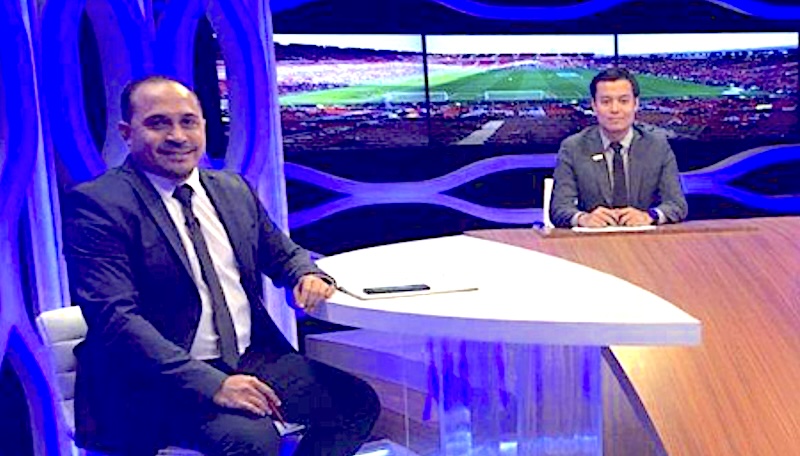
Tag: Sanjay Duda

  • beIN ropes in Planetcast for sports broadcasting tech across Asia

    beIN ropes in Planetcast for sports broadcasting tech across Asia

    MUMBAI: beIN Asia Pacific has drafted Planetcast Media Services to power its sporting ambitions, striking a deal that will see the technology provider manage 14 HD sports channels across southeast Asia and Australia.
    The Singapore-based broadcaster, part of beIN Media group, has enlisted Planetcast’s cloud-first NexC platform to handle everything from playout to disaster recovery—ensuring sports fans don’t miss a second of action when their team is on the pitch, track or court.

    At the heart of this digital partnership sit two key technologies: Cloud.X Turbo, a nimble playout solution that promises ultra-low latency (tech speak for “you’ll see the goal almost before the goalkeeper does”), and Recaster, which delivers broadcast-quality streams over the public internet without breaking a sweat.

    “beIN Sports is a leader in live sports media innovation,” said beIN Asia Pacific vice-president of media technology  Sabil Salim who clearly believes his company has netted a winner with this partnership. “Planetcast’s proven expertise in managing major sports like the Indian Premier League (IPL), its leading-edge Cloud.X Turbo solution, and its robust NexC cloud platform provide the scalability, reliability, and seamless integration we need to elevate sports broadcasting across the region.”

    Planetcast  chief executive Sanjay Duda returned the compliment, suggesting the tie-up would give beIN “a competitive edge” in a broadcasting landscape that changes faster than football managers after a bad season.

    The deal comes as beIN looks to flex its muscles across 12 countries in the region, where it holds rights to premium sporting contests including Formula 1, UEFA Champions League and the Australian Open.
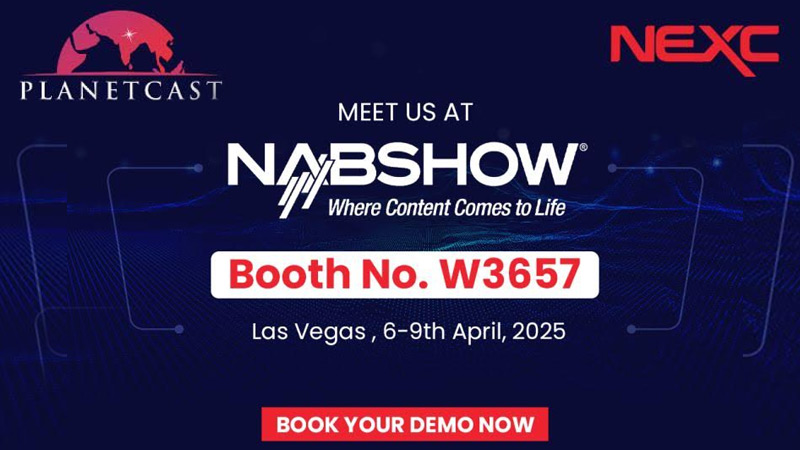
    Planetcast, meanwhile, will use the upcoming NAB Show in Las Vegas (5-9 April) to showcase its NexC platform—presumably hoping to attract more suitors with its cloud-native charms and AI-powered content automation. 

    Game on.

  • Planetcast takes media to the cloud with cutting-edge AI at NAB 2025

    Planetcast takes media to the cloud with cutting-edge AI at NAB 2025

    MUMBAI: Planetcast Media Services is set to make waves at NAB Show 2025 in Las Vegas, unveiling a suite of AI-driven, cloud-first innovations designed to streamline content workflows and supercharge media monetisation. As the industry grapples with rising complexities, the company’s unified Nexc platform promises a seamless, cost-effective solution for broadcasters, streamers, and content owners.

    “NAB Show is where the media industry’s future takes shape, and at Planetcast, we’re delivering the agility, intelligence, and cost-efficiency that broadcasters, streamers, content owners, and rightsholders need to thrive,” says Planetcast Media Services CEO Sanjay Duda. “From cloud-native playout and IP-based distribution to AI-powered content prep and metadata automation, our integrated solutions suite ensures seamless content management, delivery, and monetization across every platform and screen.”

    At the core of Planetcast’s NAB 2025 showcase is NexC, an end-to-end, cloud-first media content supply chain orchestration platform designed to streamline workflows and maximise efficiency. NexC seamlessly integrates content supply chain management, from ingestion to archival, ensuring smooth processing. Its hybrid cloud playout offers flexible, scalable, and ultra-responsive solutions for live and linear content, while its robust IP-based distribution enables software-defined delivery for both live and on-demand media.

    The platform also enhances post-production and compliance services with AI-powered content quality control, metadata enrichment, subtitling, and localisation. Additionally, Nexc unlocks new revenue streams for content owners through white-label OTT and FAST channel solutions, solidifying its role as a game-changer in modern media management.  

    At the heart of Planetcast’s showcase is Nexc, a next-gen media content orchestration platform that integrates cloud-based playout, IP-driven distribution, AI-powered content QC, and white-label OTT solutions.

    Planetcast is set to unveil major enhancements to its NexC solutions suite at NAB Show 2025, introducing cutting-edge innovations in sports playout, AI-driven content processing, and postproduction. Cloudx-Turbo, an ultra-responsive sports playout solution, delivers real-time content automation, AI-generated highlights for multi-platform distribution, and dynamic ad insertion for maximised monetisation. The company’s AI-powered content supply chain automation now features advanced metadata extraction, automated segmentation, and compliance enhancements to streamline content prep while ensuring cultural and regulatory adherence.

    Additionally, PlanetPost, Planetcast’s first collaboration with Postudio, brings AI-optimised postproduction capabilities, including customisable workflows, high-precision colour grading, Dolby Atmos audio, and a cloud-native platform for seamless collaboration. These advancements reinforce Planetcast’s commitment to transforming media workflows with efficiency, intelligence, and scalability.  

    With fully managed services integrated into its offering, Planetcast ensures clients not only have cutting-edge tech but also the operational support to maximise efficiency.

    “The reality is that, while media companies love great technology, they increasingly need tech tightly integrated with managed services to stay competitive,” said Planetcast Media Services EVP Mark Johns. “Our customers are choosing Planetcast over Software-as-a-Service-only providers because we don’t just sell, we operate it. The success of our service model in Asia and beyond demonstrates clearly that managed services can drive significant cost efficiencies.”

    As the industry looks to future-proof its content supply chains, Planetcast invites media professionals to Booth #W3657 at NAB 2025 for an exclusive look at how Nexc can redefine their distribution and monetisation strategies.

  • Planetcast Media Services to showcase NexC at IBC2024

    Planetcast Media Services to showcase NexC at IBC2024

    Mumbai: Planetcast Media Services, the global broadcast technology and media services provider, will be demonstrating its new end-to-end, single-window media management and delivery offering at IBC2024 (RAI Amsterdam, 13-16 September, Booth 5.H59). The event will witness the public EMEA debut of Planetcast’s cloud-first NexC architecture. NexC empowers media companies to overcome the complexity challenge of today’s distribution landscape, enabling frictionless movement of content assets across each stage of post-production, content management, distribution, and monetisation.

    “We are showcasing NexC’s capability to solve the complexity challenge faced by media companies today as they deal with even more formats, markets, devices, and distribution points than ever,” said Planetcast Media Services CEO Sanjay Duda. “Media organisations find it increasingly cumbersome and costly to navigate the various stages of post-production, content delivery and monetisation. Our in-house development team of over 250 professionals are meticulously building and upgrading NexC to offer a seamless integration of media asset management, cloud playout, over-the-top (OTT), and IP distribution. In addition to developing the NEXC product roadmap, the team also provides bespoke solutions tailored to specific customer needs, significantly reducing time and cost compared to outsourcing.”

    NexC: A game-changer for the media industry

    As a comprehensive, cloud-based service suite, NexC offers a unique platform as a service (PaaS) proposition. It integrates content supply chain management with upstream services like post-production and content prep as well as downstream services like cloud playout, digital delivery, FAST and OTT into a single system, streamlining operations and enabling clients to meet the complexity challenge of today’s media industry.

    “NexC pairs flexible workflows with product-level customization, providing the best of both worlds,” Duda explained. “Its ability to scale and deploy solutions at significantly lower cost is highly popular among CTOs & CFOs with tight budgets.”

    By integrating content supply chain management, content preparation, metadata enrichment, tagging, subtitling, dubbing, editing, playout, OTT platforms, and FAST channels into a single, cohesive system, NexC stands out as a comprehensive solution for media companies. The platform’s architecture is built on several core components, each accessible through Planetcast’s unified customer user interface (UI) and dashboard:

    . Contido – content supply chain orchestration and media asset management.

    . Content preparation and localisation services – a full suite of core technical post-production services from quality control, technical and compliance checks to subtitling, dubbing, editing, and re-scoring.

    .  RECASTER – a dynamic and robust IP transport solution, which delivers a secure internet stream from anywhere to anywhere, be it a linear channel or a live sports stream.

    .  Scheduling, playout and distribution through Cloud BATS scheduler, Cloud.X playout and RECASTER digital delivery platforms.

    .  MediaHQ – a white-labelled OTT solution for non-linear content distribution that has delivered complex, multi-award-winning online streaming solutions, from ingest to delivery, for major brands and live events worldwide, including the Olympics, FIFA World Cup, and Formula 1 for customers such as Foxtel Australia and Media Prima Malaysia.

    .  FAST channel services – provided by Planetcast across the US, Europe, Latin America, and Asia, in tandem with established ad-tech partners in USA, Europe and Asia.

    In addition to the core components of NexC, Planetcast’s team will also talk about the company’s other services, including:

    .  Post-production – a software and cloud-curated ecosystem of services with a high degree of process automation, plus AI-enabled capabilities to provide best-of-class services at impressive turnaround times and competitive rates.

    .  Playout disaster recovery – cloud-based DR solution that provides incredibly cost-effective protection against broadcast service disruption.

    Demonstrating innovation and strategic investments

    “Our acquisition of Switch Media earlier this year highlights our drive to expand our solutions portfolio to provide customers with proven world-class OTT capabilities,” noted Duda. “As audiences become more reachable, we recognise that there is a growing need to leverage technology that will empower media companies to open new markets and broaden their audience base. Switch Media’s modular and flexible solutions and versatile workflow engine, Planetcast ensures that its customers can power exceptional online content for viewers and drive OTT monetisation.”

    Planetcast’s in-house development of intellectual property provides a significant competitive advantage for its customers. This agility allows for rapid deployment of new solutions, enabling quick response to market demands and client needs.

    “The seamless integration of individual solutions into our NexC unified platform simplifies user workflows and enhances content management efficiency,” Duda noted. “Our focus on innovation and strategic investments, particularly in multi-cloud-based solutions, is crucial as the industry moves towards more personalized and integrated viewing experiences, enabled by advanced analytics and AI-driven technologies.”

  • Planetcast Media Services sets new standards in live sports broadcasting

    Planetcast Media Services sets new standards in live sports broadcasting

    Mumbai: Planetcast Media Services is proud to announce its faultless delivery of the Indian Premier League (IPL) 2024 season, with zero downtime or glitches across 74 matches held in 13 stadiums. This exceptional performance continues Planetcast’s legacy of providing top-tier media services for major cricketing events, including the recent T20 World Cup (2 to 29 June), which ended with India defeating South Africa.

    Having established itself as a leader in seamless, high-quality broadcasting and streaming solutions, Planetcast has been a trusted technology partner for the IPL for the last 17 years and, in 2024, ensured that cricket fans enjoyed coverage of the T20 World Cup via Star Sports, Hotstar and Times Internet Group’s Cricbuzz. Planetcast’s advanced media services enabled the delivery of advertising of around $450 million for the IPL rightsholders (almost equally split between broadcast and digital platforms, and on par with the $465 million in 2023).

    For the 2024 IPL season, Planetcast provided the following services:

    1   Star Sports: Delivering domestic TV broadcast to 17 channels in 11 languages with services such as encoding, live transmission, playout, packaging, and delivery solutions.

    2   Viacom18: Supporting over-the-top (OTT) streaming on JioCinema.

    3   Times Internet: Facilitating international OTT streaming and playout for Cricbuzz.

    “Our long-standing partnership with IPL rightsholders underscores our capability to handle live events of significant scale that generate advertising revenues of $450 plus million,” said Planetcast Media Services’ CEO Sanjay Duda. “With the financial stakes so high, it’s critical that we remain dedicated to performing flawlessly and that we enhance match coverage across all the platforms we handle. We are also incredibly excited to have provided media services for the T20 World Cup, which concluded last weekend with India hoisting the trophy after the exciting win against South Africa.”

    The IPL’s exponential growth is evident in the record-breaking viewership figures year after year. Star Sports, Disney Star’s broadcasting channel for IPL 2024, drew a record-breaking audience of 546 million over the first 67 matches, according to figures from India’s Broadcast Audience Research Council. JioCinema’s streaming figures show a 38 per cent increase in viewers streaming IPL in 2024 over 2023, with 620 million viewers watching matches on the Viacom 18 service. IPL’s opening 2024 match alone attracted 111 million fans on JioCinema, marking a staggering 51 per cent increase from the year before.

    Building on its IPL success, Planetcast is also providing comprehensive services for the T20 World Cup, including:

    1   Star Sports: Managing the world feed via satellite, covering 17 channels in three languages, and providing encoding, live transmission, playout, packaging, and delivery solutions.

    2   Hotstar: Delivering disaster recovery services, channel content replacement, and vertical feed delivery.

    3   Times Internet Group (Cricbuzz): Implementing AI-based editing for instant highlight creation, near-real-time ad insertion, and graphic insertion and playout for the US market.

  • Planetcast expands online content streaming services with acquisition of Switch Media OTT, Australia

    Planetcast expands online content streaming services with acquisition of Switch Media OTT, Australia

    Mumbai: Planetcast Media Services, a leading media technology services provider in India and Southeast Asia, today announces the acquisition of one of its key partners, Switch Media, a white-label OTT platform provider deployed across Asia-Pacific, Europe and the US. The transaction, which has been finalised, will transfer full control of all Switch Media’s assets to Planetcast.

    Founded in 2006, the Australian-headquartered Switch Media has innovated and delivered complex, multi-award-winning online streaming solutions, from ingest to delivery, for major brands and live events worldwide, including the Summer and Winter Olympics, FIFA World Cup and Formula 1 for customers such as Foxtel Australia and Media Prima Malaysia. Switch Media is already a strategic partner of Planetcast and has been providing cutting-edge OTT solutions to the company. The acquisition enables Planetcast to fully integrate Switch Media’s online video solutions with Planetcast’s unified platform, NexC and ensure that Switch Media’s OTT product roadmap is perfectly aligned with Planetcast’s customer requirements.

    “Switch Media is the perfect acquisition for Planetcast’s NexC platform, providing us with proven world-class OTT capabilities that are a vital cornerstone of our media services and solutions portfolio and one that will help us build out our international expansion strategy,” said Planetcast’s CEO, Sanjay Duda. “Battle-tested across varied customer segments such as Pay TV Operators, broadcasters and Telcos, Switch Media’s OTT platform has successfully hosted some of the most sensitive global sports and entertainment properties. We welcome the Switch Media team to the Planetcast family. We are looking forward to more tightly integrating its feature-rich OTT solutions with NexC, our cloud-first unified-service platform, to ensure that our customers can streamline content operations and drive monetisation.”

    Commenting on its plans for Planetcast, Apollo Global head of India Private Equity Utsav Baijal said: “Because Planetcast adds significant value to its Indian and Asian customers, we are actively looking for such synergistic cross-border, global transactions such as Switch Media as the most effective way to build their international footprint and capability set.”

    Developed over almost two decades, Switch Media’s modular and flexible solutions meet the media and entertainment industry’s changing requirements, through a versatile workflow engine that enables customers to ingest, manage, deliver, monetise, and analyse online video. The result is exceptional online content for viewers and a flexible suite of capabilities enabling customers to drive OTT monetisation.

    Switch Media’s CEO Mark Johns said of the acquisition: “Our journey with Planetcast promises to open up new markets and broaden our

    customer base. The integration with Planetcast’s NexC platform will unlock tremendous value for Switch Media’s customers seeking to better leverage their content. Additionally, Planetcast’s large support infrastructure will further enhance agility and availability of support to Switch customers.” 

  • Planetcast expands online content streaming services acquiring Switch Media OTT, Australia

    Planetcast expands online content streaming services acquiring Switch Media OTT, Australia

    Mumbai: Planetcast Media Services, a media technology services provider in India and Southeast Asia, has announced the acquisition of one of its key partners, Switch Media, a white-label OTT platform provider deployed across Asia-Pacific, Europe and the US. The transaction, which has been finalised, will transfer full control of all Switch Media’s assets to Planetcast.

    Founded in 2006, the Australian headquartered Switch Media has innovated and delivered complex, multi-award-winning online streaming solutions, from ingest to delivery, for major brands and live events worldwide, including the Summer and Winter Olympics, FIFA World Cup and Formula 1 for customers such as Foxtel Australia and Media Prima Malaysia. Switch Media is already a strategic partner of Planetcast and has been providing cutting-edge OTT solutions to the company. The acquisition enables Planetcast to fully integrate Switch Media’s online video solutions with Planetcast’s unified platform, NexC and ensure that Switch Media’s OTT product roadmap is perfectly aligned with Planetcast’s customer requirements.

    “Switch Media is the perfect acquisition for Planetcast’s NexC platform, providing us with proven world-class OTT capabilities that are a vital cornerstone of our media services and solutions portfolio and one that will help us build out our international expansion strategy,” said Planetcast’s CEO Sanjay Duda. “Battle-tested across varied customer segments such as Pay TV Operators, broadcasters and Telcos, Switch Media’s OTT platform has successfully hosted some of the most sensitive global sports and entertainment properties. We welcome the Switch Media team to the Planetcast family. We are looking forward to more tightly integrating its feature-rich OTT solutions with NexC, our cloud-first unified-service platform, to ensure that our customers can streamline content operations and drive monetisation.”

    Commenting on its plans for Planetcast, Apollo Global head of India private equity Utsav Baijal said: “Because Planetcast adds significant value to its Indian and Asian customers, we are actively looking for such synergistic cross-border, global transactions such as Switch Media as the most effective way to build their international footprint and capability set.”

    Developed over almost two decades, Switch Media’s modular and flexible solutions meet the media and entertainment industry’s changing requirements, through a versatile workflow engine that enables customers to ingest, manage, deliver, monetise, and analyse online video. The result is exceptional online content for viewers and a flexible suite of capabilities enabling customers to drive OTT monetisation.

    Switch Media’s CEO, Mark Johns said of the acquisition: “Our journey with Planetcast promises to open up new markets and broaden our customer-base. The integration with Planetcast’s NexC platform will unlock tremendous value for Switch Media’s customers seeking to better leverage their content. Additionally, Planetcast’s large support infrastructure will further enhance agility and availability of support to Switch customers.”

  • VBS 2024: Driving distribution success with NexC

    VBS 2024: Driving distribution success with NexC

    Mumbai: India is in the grips of seismic changes as far as video and broadband consumption is concerned. Pay TV cord-cutting is rampant even as free TV subscriptions are on the rise and OTT buy-ins are churning with the signs up for certain platforms stagnating even as others are seeing rapid increases and some are seeing cataclysmic drops. Aggregators of OTTs are popping up on the horizon promising cheap bundles along with value-added services for cable TV and DTH. There’s a rush to set up free advertising-supported TV channels by TV set manufacturers and smart TV device makers. There’s the Jio factor where it is seeking to convert most pay TV customers to free streaming of video content by offering access to consumers at no cost. The consumer continues to demand bandwidths higher than ever imagined even as prices are dropping. Margins are under pressure as every player goes one-up on each other to acquire and retain customers.

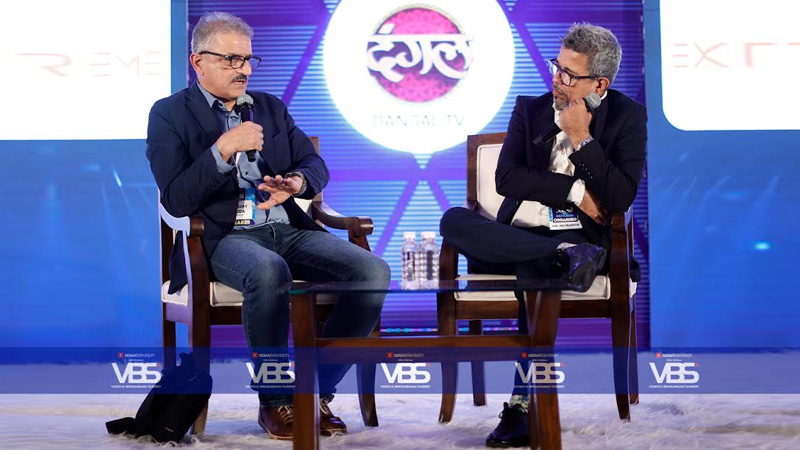
    Clearly, the video and broadband distribution landscape has not been as vibrant as it is now… How long will this pot-boiling continue? What will the magic potion of video and broadband look and taste like? And what’s the end game? Indiantelevision.com held its 20th edition of Video and Broadband Summit better known as VBS at Sahara Star Hotel, Mumbai.

    The fireside chat on the topic: ‘Driving Distribution Success with NexC’ had Planetcast CEO Sanjay Duda in conversation with Indian Television.com group founder, chairman & editor-in-chief Anil NM Wanvari.

    Wanvari began the conversation by asking, “What are the major trends that you all see in terms of the workflows that are going on in production, acquisition, creation, and distribution?”

    Duda answered, “Largely what we’ve seen in the last 25 years and more so in the last seven years, most of the trends are being driven by the fact that on both sides, production and consumption, the creation environment is exploding. There are large, medium, and very small content creators, and they need to deliver ever-increasing profiles of people, and viewers who are viewing across multiple devices. So there are multiple options for delivery and there are multiple creators on this side. This actually is what is creating most of the pressure, it’s creating most of the direction to development. Clearly, content will always be king. It will always be the most important determinant of success. The stress right now is, how do you get your content to the right cohorts of viewers? How do you monetise your content? How do you get your money for the content that you’ve created in the most effective and efficient way? And how do you retain your viewers time after time? Slowly earlier, this whole pipeline had multiple stages, multiple players, there were three or four middlemen, so to speak. There were content creators used to provide the content to a large broadcaster and aggregator. Then they used to process that and then deliver it to the next stage for maybe creating linear channels for playout and slowly creating VOD assets. It then used to go to the next digital platform or cable platform, cable head-end or DTH head-end from where it was then distributed to final consumers who were managed by local cable operators or a DTH operator. This whole pipeline was well-oiled. There were clear business models, people were making money. But now what has happened is everything has been disrupted by the fact that the entire environment has become digital. And we are seeing that the content creator is increasingly able to see who’s viewing the content. Everything is getting driven by data. Information on who is viewing the content, how long they’ve been viewing the content, and that has created avenues for many technologies to come in. Like advertising or targeted advertising, so that you can even earn more for every viewer that you’re reaching. So this is how the overall ecosystem has changed.”

    He added, “From a production perspective, how this has now forced people, forced creators to think, innovate on how to produce your content. Content is of two to three types. One is the live content, which is actually driving this pipeline. Then there is the episodic content, user-generated content. The UGC content technologies are driven by the fact that users should be very easily able to create, curate, and deliver the content. The GECs or the episodic content or the movies, which is the library content, has its own non-linear production behaviour. There too technologies have changed. There’s a lot of VFX, a lot of virtual productions. The world is changing so that you don’t have to create one studio and then break it down and then create it for the next show. And in-between this, is the live. In the live content aggregation, there are a lot more changes. There’s a lot immersive content coming in. Now people get 360 degree cameras at the venue, creating a kind of remote viewer or an e-viewer kind of situation. Also now, data regarding the content that’s going in is also traveling with it. So there’s for sports, for example, all the information about the players is traveling along with it. A lot of the time, you can create a game. Already it’s happening, based on the performance of the players, the rating is determined on a daily basis. There’s a whole gaming industry. So these are the things that are driving the production technology at this end.”

    Wanvari then asked, “Where does your company come into play?”

    Doda replied saying, “I think all the players in this industry have seen change. Initially, there was some amount of denial and then acceptance, innovation, and then change. So we started our journey, providing essentially, distribution over satellite, bringing live videos from the arenas, be it news or sports. But largely satellite driven. We created a huge infrastructure for uplinking, DSNG services. We set up the first commercial teleport in the country and then as the media industry was growing rapidly in the country, our only thought was how do we create more teleports? How do we set up more facilities at that point of time? Then we saw that there are two things that are happening. A: people were going into a zone where they were not too sure. Earlier, most of our services were, because we needed to invest a lot of money to set up this infrastructure to provide services to our four or five customers, we used to always say five-year agreements or 10-year agreements. But as we all have stepped into a world where people have to keep trying. The viewers or the consumers have become very choice-oriented. They don’t want to watch a particular channel or a particular platform all the time. They need the right to stop the subscription and go somewhere else. Similarly, all the broadcasters, therefore, they would also like to experiment, but if they have to be tied down with three-year, five-year contracts, they won’t go there. Therefore, we also realised that we need to create solutions, which are flexible in terms of commitment from customers. And eventually, as some of these services have become robust and they’re accepted, then you’ll automatically see long-term commitments.”

    Doda added, “What we did was we expanded from very infrastructure-heavy services to a set of platform-driven services. We are moving from our on-prem to cloud. What that has done is, on cloud, there are two things you can do. One is that even your services can be flexible in terms of commitments from the customer and you can even deliver services globally anywhere. It connects the entire world and opens it up to you. Whereas infrastructure-based services are you need to set up something and they’re very regional in their influence. What NexC does is, as we have seen over the years, the content journey has four individual stages. One stage is the creation, where you’re creating the content, once you’ve created the content, the content needs to be made addressable. There is a lot of data that has to be attached, meta tagging has to be done, content has to be prepared for consumption, you’ve to check it for quality, technical quality, and SNP, to make sure it meets the content rules and regulations based on where you want to sell the content. You also then create another layer of it, which is localisation. If I’m creating content in India, and the broadcaster or the other publisher wants to deliver it in Korea, or Middle East, or Malaysia. So there’s a requirement for subtitling, dubbing, and SNP. So these are the localisation inputs that go into the client. So that part is essentially content management. Then when you’ve made the content, there is a need to create promos around it so that you’re able to market your content. Then we have the post-production, where you do on-air promotion, creating OEPs or teasers. That’s the second part of the stage that the content goes through these days.”

    Duda further added, “Once that is done, your content is essentially ready for consumption. Either it will go as a VOD asset, which is then delivered to an OTT platform or it could be archived for later use or it will be sent to a playout solution where it is converted into a linear stream. So, that is the third stage. Once it’s created into a linear stream, it is then delivered either directly to customers, or it can be delivered to a cable operator or a digital head end, or a FAST TV channel or FAST digital head end. Delivery is the other aspect of it. So essentially, the content once it’s created, moves from one stage to the other and then the to final destination, which could be your handsets where you’re watching it either on Instagram, YouTube, or Meta. So every platform has its own, technical specs, and you need to create the content for each spec, or it can be delivered to a teleport from where it can be uplinked, or it can be delivered to a digital head-end from where it is delivered through an OTT platform. These three main solutions or you can say modules. We have been involved with all of these three modules over a period of time. First, we started with essentially, delivery, then we did playouts. Maybe six to seven years ago, we got into the post-production domain. Now since we realised that we need to go global, we need to go on cloud, the need was to put it all together under a single umbrella, so to speak. What we found was that it missed only the last stage, which is the OTT. Why we did not go very aggressively initially for OTT because everybody wanted to set up their own OTTs. But we have seen over the years now and we know that it’s going to happen sooner, people will eventually want to outsource the OTT function as well. Right now every OTT has different feature sets. Every OTT player believes that their OTT is something very special, that only they know, they have created. Eventually, all OTT technology will become quite standard, and all features offered will be quite standard. That is where everybody will want to outsource it. It is just a technical platform and that’s what it is. So we therefore put together the entire set of solutions, right from acquisition to delivery to consumption, and this we’ve named NexC, where C stands for comprehensive. Incidentally, it rhymes with sexy.”

    Moving on to his next question, Wanvari asked, “Have you found customers for it so far within India and overseas?”

    Duda replied, “Yes, in fact, we had customers who were using each of these modules, anyway. So as we have started evangelizing the NexC concept, it becomes automatically an upgrade for them. We are able to upsell the other stages, and other services on either side of what they’re using. A playout or customer is ready to utilise the content aggregation. A content aggregation customer is happy to do post-production with us. So that we find a very easy-to-sell, easy-to-manage platform. In almost everything, in all these technologies, what you’ve seen is, that you think of all the problems that you’re solving, and you create a product, and once the product is used, it starts generating its own workflows, its own advantages, and it creates another set of development requirements on top of it. We are already seeing that, because everything is on a single platform, you’re saving a lot of multiple functions, be it a single sign-on, or a common database. We are able to pull a lot of metadata from various stages and eventually, it’s a part of our development plan. We will enable AI-based analytics based on all the data that we’re collecting, and that will automatically give you reports or give you advice on which content is selling better, and which content needs to be sent to which platform, and you can get literally get a real-time feedback on what is happening here.”

    Adding on to that, Duda said, “The idea is that it saves money because you are cutting out a lot of repetition of processes and at the end of the day, it is a solution you can use as long as you want. It takes in all formats. The input formats can range from MXF to MOV to any movie to any. In fact, we are using it for one of our customers, who brings in live feeds from outside. They sometimes bring the worst quality feeds and we are able to stabilise those feeds and put them back into the system. The fact is that this is nothing new. It is well tested, well used by our customers. So it’s nothing new. It’s just putting things together so that people can make better sense of what they’re doing. You’ve seen that there’s so many more questions than answers that are coming up these days. The least that you can do is make things easier and simpler.”

  • Planetcast launches its NexC cloud-first architecture to enable media companies

    Planetcast launches its NexC cloud-first architecture to enable media companies

    Mumbai: Planetcast Media Services, a broadcast technology and media services provider, announced the launch of its NexC architecture to simplify content management, distribution, and monetisation services and technologies. NexC provides a single-window, content supply chain management system, enabling users to beat the complexity challenge of today’s media and entertainment landscape.

    Benefits of NexC include:

    •    Frictionless movement of content assets between most-used services increases efficiency and minimises cost.
    •    NexC’s collaboration tools mean that global teams can work together without leaving NexC
    •    The inclusion of major functionalities in one interface, including content supply chain, playout and distribution, FAST, OTT distribution, and post-production, enables Planetcast customers to effortlessly add services without complex processes or having to deal with multiple vendors.
    •    NexC’s cloud-based infrastructure and content-repurposing features enable users to monetise content quickly and cost-effectively across more formats and geographies than ever before.

    “Media organisations are finding it increasingly cumbersome and expensive to navigate the various stages of post-production, content delivery, and monetisation,” said Planetcast chief executive officer Sanjay Duda. “In addition to seeking to enhance profitability, many media & entertainment companies are expanding geographically, while at the same time targeting new distribution points and functionalities, such as over-the-top (OTT), Free Ad-Supported Streaming TV (FAST), and pop-up channels. This leads to an exponential increase in the requirement for media processing and management, which we call the ‘complexity challenge’. Planetcast’s NexC unified service layer architecture meets this challenge through its flexibility and cloud-first approach, enabling customers to maximize efficiency and cost-effectiveness.”

    The NexC architecture consists of the following elements, all accessed through Planetcast’s unified customer user interface (UI) and dashboard:

    •    Contido content supply chain and management solution
    •    Content Preparation & Localisation Services, a full suite of core technical post-production services from quality control and compliance to subtitling & dubbing, etc.
    •    Scheduling, Playout and distribution through the CloudX hybrid cloud playout and Recaster digital delivery
    •    Planetcast OTT, a white-labelled OTT solution for non-linear content distribution

    In addition, the NexC platform offers partner-integrated value-added services such as:

    •    FAST Playout with partner-driven Server-Side Ad-insertion, Ad-Demand Management and Platform partner management.
    •    Cloud-based Creative Post Production which includes the full suite of creative services such as Editing, Colour Grading, VFX, etc. on Cloud.

    “Planetcast’s success has been built upon the ability to adapt to changing distribution and monetisation trends over the last two decades while successfully handling some of the world’s most valuable sports and entertainment properties,” said Planetcast’s chief operating officer, digital, Venugopal Iyengar. “Our strength lies in having organically built end-to-end distribution value chains using our in-house software development capability, mostly built with our own IP, served by a 200+ software team. We believe that the ‘complexity challenge’ is the greatest issue facing media companies today. To meet this challenge, we have designed the NexC architecture from the ground up to provide all the power and functionality media companies need, combined with the simplicity of a single sign-on collaborative user interface.”

    Further, to ensure sustained value enhancement in this rapidly developing industry, NexC will offer API integration support for any Generative AI solutions that serve to enhance the workflows and functionality of the Platform.

    Planetcast has developed one of the industry’s most comprehensive cloud-driven media services offerings and is trusted by many of the world’s most demanding global media companies, including Amazon Prime Video, Discovery, Disney, Indian Premier League (IPL), Star TV, Sony, Viacom, and Doordarshan, India’s premier public broadcaster. These unique solutions are right now being integrated into the NexC unified service layer architecture.

  • Planetcast promotes seamless content management, distribution and monetisation at IBC2023

    Planetcast promotes seamless content management, distribution and monetisation at IBC2023

    Mumbai: Planetcast Media Services, a leading global broadcast technology and media services provider, has announced that it is promoting its full portfolio of cloud first media suite including the unified service orchestrator for content processing, distribution and monetisation services and technologies at IBC2023 (15-18 September, RAI, Amsterdam, Hall 5, stand H78). Planetcast’s single-window, seamless content supply chain management will show how media companies can utilize an integrated suite of services that enable frictionless workflows and a hyper-connected approach to content creation and distribution.

    “We are excited to be promoting at IBC2023 our unified service layer that puts the customer at the centre of the content processing, distribution and monetization journey,” said Planetcast’s chief executive officer Sanjay Duda. “As operators seek new opportunities, there is a growing number of components and service providers in the value chain that can make the process of creating, distributing, and monetising content more complex and costly. At IBC we will be promoting  our single window offering that brings together all our existing modules – including content management, post-production and localisation, cloud playout, IP distribution, OTT and FAST channel services – as a seamless, yet modular, fully integrated solution.”

    At IBC2023, Planetcast will show how it enables broadcasters and other media and entertainment companies to employ cloud solutions more efficiently – together or as separate components. Innovative services and solutions Planetcast is demonstrating live on its booth include:

    ●   CLOUD.X, its cloud playout platform, which enables FAST workflows and rapid ad insertion in partnership with Wurl, a world leader in dynamic ad insertion for streaming TV services;

    ●   Contido, a leading-edge, cloud-native content supply chain management solution designed to handle video processing and publishing across multiple platforms.

    ●   Switch Media will showcase Its versatile suite of OTT solutions – whose customers include Foxtel (Australia), Antenna (Greece), Media Prima (Malaysia), and Freeview (New Zealand).

    Planetcast has developed one of the industry’s most comprehensive cloud offerings, trusted by the world’s most demanding global media companies, including Disney, Star TV, Viacom, and Doordarshan, the premier public broadcaster in India. Other world-class clients include Amazon Prime Video, Discovery, Indian Premier League (IPL), and Sony.

    As the global media landscape continues to evolve rapidly, throwing up new challenges for media companies trying to meet the changing needs of consumers, Planetcast has looked for ways to help its customers meet new demands on their businesses.

    In addition to providing demos of the company’s innovative and proven cloud playout and MAM solutions at IBC2023, the Planetcast team will discuss other elements of its comprehensive media services portfolio, including:

    ●   Recaster – a dynamic and robust IP transport solution, which delivers a secure internet stream from anywhere to anywhere, be it a linear channel or a live sports stream;

    ●   Managed Post-Production Services – a software and cloud-curated ecosystem of post-production services with a high degree of process automation, plus AI-enabled capabilities;

    ●   Playout Disaster Recovery – cloud-based DR solution that provides incredibly cost-effective protection against broadcast service disruption;

    ●   OTT solutions, which it is offering internationally in partnership with Australia-based Switch Media, whose customers include Foxtel (Australia), Antenna (Greece), Media Prima (Malaysia), and Freeview (New Zealand).