Tag: Sanjay Das

  • “The non lottery playing segment has been the toughest to convert” : Sanjay Das Pan India Infravest Network CEO

    “The non lottery playing segment has been the toughest to convert” : Sanjay Das Pan India Infravest Network CEO

    The paper lottery market in India stands at an overwhelming Rs 35,000 to Rs 50,000 crore. The fledgling online lottery business, on the other hand, currently commands merely a fraction of this booming trade.


    Playwin, the company from Subhash Chandra’s Essel Group, created the online gambling space in India by forming an infrastructure that has terminals connected to a virtual private network, with signals being transmitted to and from the central servers — and the entire structure processed with the help of satellite broadcasting. Playwin was also a tempting FMCG concept and a great opportunity for a brand building exercise for parent Essel.


    Floated in November 2001, Playwin started with the online lottery franchises for the governments of Sikkim, Karnataka and Maharashtra. In April this year, however, the company suspended its agreement with the Maharashtra government, but soon after, pocketed contracts for the Arunachal Pradesh and Mizoram lotteries.


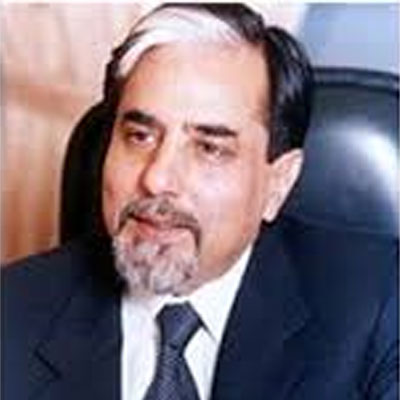
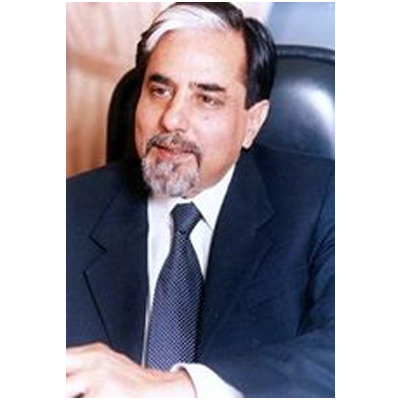
    Pan India Infravest Network CEO Sanjay Das spoke to indiantelevision.com’s Aparna Joshi about the Playwin journey thus far and the strategy for the future.


    Excerpts:

    What is the strategy the company will adopt now that at least eight new players are poised to enter the market?

    The strength of Playwin is in the depth of its penetration. We need to talk to more people to keep the excitement going. We will be launching more games, more variety in the next one to two months to keep the players engrossed. However, converting the non players has been our most daunting task.


    Playwin netted Rs 660 crore last fiscal and hopes to double the figure this year. The projected revenues for this year are between Rs 1,000 and Rs 1,200 crore.

    Media campaigns earlier this year tried to concentrate on the executive and the upper crust, in an effort to get the segment to play? Has the gambit paid off?

    Our target remains the entire population. We did try to focus on SEC A and B, but these have not responded favourably. For our bread and butter, we have to rely on SECs C, D and E. The target audience is the existing paper lottery players. The untapped segment of non lottery players offers tempting potential but is a tough nut to crack. Paper lottery has its critics in the form of lack of transparency but the distribution and reach of paper lottery makes it a formidable rival.

    How have the new entrants, Dhan Dhana Dhan and Fortune, affected Playwin?

    Our strategy is now on how to tackle the competition, many of which have resorted to placing their terminals very close to or even on the premises of Playwin outlets. We have an exclusivity contract with our retailers which helps us to stem this problem, but the rivals have also gone in for better margins for distributors to lure them away. But we believe that if the basic product is good and the games offer enough attraction, we are bound to win in the final reckoning. The main thing is to open new terminals almost every day.

    But the company was not able to meet the target in the setting up of new terminals in the last fiscal.

    True. While we targeted 8,000 terminals last year, we were able to put up 4,000. Part of the problem was our termination of contract with Maharashtra, although that did not seriously affect our budgets. This year, we intend to be more focused on setting up new terminals, at the rate of 150 to 200 per month. By the end of this fiscal, we hope to add four to five thousand terminals across the country.

    Each new campaign, centering on a new acquisition typically has an ad budget of Rs two to 2.5 crore

    What went wrong with Maharashtra?

    We had operational difficulties. There were certain terms and conditions which we interpreted differently from what the government did, creating problems on the ground for us which did not allow us to fulfil the agreement. Maharashtra was indeed a valuable property for us, particularly as we are headquartered here. Right now, our lawyers are negotiating, and if anything favourable does result, it could still take some months to be sorted out.

    How much does the company spend on marketing and promotions for each franchise? How are the collections the company makes split?

    About 50 to 60 per cent of the collections go to the prize money, 10 to 20 per cent are the respective state government’s share while the rest is allocated to trade margins and other expenditure.

    Awareness building exercises entail a huge expense budget — ads are regularly placed in 68 publications in 10 languages in the 13 states where lottery is played. The first stress was to build the Playwin brand, the focus is now on building the individual brands. Max Lotto was launched on 2 August this year. Each new campaign, centering on a new acquisition typically has an ad budget of Rs two to 2.5 crore.

    Is Playwin trying to give any value additions to the consumer, now that new players are offering the same product?

    Our main offering is clean and transparent games. Others who have entered the fray now are merely trying to copy the formula set down by us. Thus far, we have created 1,500 lakhpatis, 34 crorepatis and an overall crore of winners in the 16 months that we have been around. Isn’t that a lot of value?


    Besides, in states like Karnataka and Sikkim, the midday meal schemes of the government and projects for building rural schools and hospitals are the value addition that we have helped create.


    Which states is Playwin eyeing now?

    We have just bagged the Mizoram account, which will be launched in the first week of September. There will be a daily as well as a weekly draw. We are now looking at Rajasthan, Kerala and Haryana as well. We had also responded to the tenders floated by Bhutan for its lottery, but no decision has been taken on that front.

    How do you see the online lottery market changing in the coming months?

    There will be a shakeout, definitely. In absolute value, we are still higher than any other. By the time the market stablises, there will be two to three players left. Those who deliver value will be the ones who will continue to be in the market. The me-toos will have to bow out.


    There have been complaints that consumers who have won prizes of a higher denomination have not received their dues on time….

    The average time taken for payment is 70 to 80 days. For prize money over Rs 5,000, the amount needs the sanction of the state government concerned, which is why there is a certain delay at times. But so far, we have been able to settle all the claims within a maximum of 90 days. Sometimes, though there have been problems when prize money won in the Mega Win Maha Lotto (Maharashtra) is still pending with the government.


    Is Playwin trying to reach the non-metros is a bigger way in the coming days?

    The approximate proportion of terminals in metros and non-metros is 50:50. While the playing population for paper lottery could be humungous in the non-metros, for online lottery, the metro is still the base. Then there are states like Karnataka which are more tech savvy and hence more open to online lottery. On the other hand, there are states like Maharashtra and West Bengal which are more paper lottery oriented.

    Is there a trend of paper lottery consumers moving to online?

    There is, but only slight. It is difficult to emulate the massive distribution that paper lottery commands. Abroad it may be a different scenario, but paper lottery in Indian will always keep a 60 to 70 per cent share of the entire lottery business.

    What was the rationale behind the change of nomenclature at the company?

    Playwin has slowly become the brand name for our lottery. While lottery will remain the mainstay of the business, we are now aiming to expand as an infrastructure company. It could mean providing various services, including bill payments — electricity, gas etc. It could even offer a service competing with ATMs. That was the rationale of converting Playwin Infravest into Pan India Infravest Network Ltd, which will be the parent company. Right now, we are conducting the technical feasibility on the kind of services we would be able to offer in the future.

  • Playwin to add Mizo lottery to kitty

    MUMBAI: After Karnataka, Sikkim and Arunachal Pradesh under its belt, Playwin, the lottery from the Essel stable, is adding Mizoram online lottery to its kitty.
    Pan India Infravest’s CEO Sanjay Das says Mizoram Lotto to be out by September Floated under the name of Dakshin Media, the Mizoram lottery will be launched by mid-September, according to Pan India Infravest Network CEO Sanjay Das. The company, rechristened from the earlier Playwin Infravest, has recently launched the online lottery for the Arunachal Pradesh government under the brand name Max Lotto.


    The Mizo lottery will have a weekly and a daily game and the formats will be similar to those used and popularised thus far, says Das, while declining to give out further details of the under-wraps games.
    The company is now beefing up its distribution and marketing strategy to gear up to the challenge posed by the latest entrant, Forbes’ Dhan Dhana Dhan, as well as the proposed online lottery ventures by Videocon, Modis, Apollo and Fortune-Essar.
    While the company aims to add another 4,000 to 5,000 new ticket dispensing terminals across the country by the end of this fiscal, it did suffer a setback in April this year, when it pulled out of the barely three-month-old Maharashtra online lottery, branded Megawin Maha Lotto, after ‘a disagreement over the interpretation of the terms and conditions’.
    Pan India, which posted revenues of Rs 660 crore (Rs 6,600 million) in the fiscal just ended, hopes to touch Rs 1,000 to Rs 1,200 crore (Rs 10 billion to Rs 12 billion ) by March 2004.
    The company is now eyeing other states Rajasthan, Kerala and Haryana for a tie up for their online lottery business, even as Tamil Nadu continues its ban on lottery imposed earlier this year.

  • Playwin’s Keno gets off to quiet start

    Playwin’s Keno gets off to quiet start

    MUMBAI: Playwin Infravest’s newest online game on the block, Keno, kicked off without much fanfare and promotions yesterday.
     
     
    From the Karnataka online state lottery stable, Keno has been hailed as a more refined form of Tambola. “The more risk you take, the more you stand to win,” says Playwin CEO Sanjay Das. 20 of the available 80 numbers are picked out as winners in the daily draw, enabling participants to win that much more.

    Apart from the lack of overt promotion (Keno’s siblings Lucky 3, Thunderball and Mahawin’s Lotto have already had extensive outdoor promotions), Keno will have to contend with a broadcast partner in Zee Music, a channel that has been awaiting a revamp for a long while.

    The daily Keno draw will be held between 9 and 9.30 pm on Zee Music and Das believes the channel is a prudent choice as parent channel Zee TV is currently telecasting seven draws a week, including Karnataka’s Lucky 3. “Unlike serials, where viewers need continuity, Zee Music is a channel into which viewers keep flitting in and out and is ideal for Keno’s daily draw telecast,” says Das.

    The clearance for the promotions has just come through, says Das, and a huge press and television campaign is about to be unleashed. Since the target group for Keno remains the middle class, railway stations are to form a major platform to promote the lottery.

    Playwin is however pushing for a different image for Keno. “It is not a hardcore lottery game. It is more interactive, where the participant can play at 35 different levels,” says Das, “It is more of a fun kind of game.”

  • Essel launches Maha Lotto, eyes other markets

    MUMBAI: Subhash Chandra’s online lottery juggernaut just gets bigger and bigger. Following the successful launch of Maharashtra’s first online lottery “Megawin Bonus Ball”, E-Cool Gaming Solutions, unveiled India’s biggest online lottery-“The Megawin Maha Lotto” on behalf of the Maharashtra Government.
    The Chandra-promoted Essel Group extended its online lottery business with one more special initiative, a mega jackpot of Rs 500 million. And to stimulate gaming lovers around the country, an additional Rs 500 million as prize money for Match V, Match IV and Match III winners was also announced.
    Playwin Infravest will market the Megawin Maha Lotto in all the 14 lottery-playing States of India. Playwin has a tie up with E-Cool Gaming Solutions, the licensee company for the government of of Maharashtra. Megawin Maha Lotto, by virtue of its jackpot size is the biggest online jackpot game introduced ever.
    With Sikkim, Maharashtra and Karnataka under its belt Playwin is now eyeing other markets as well. Playwin has spotted a big opportunity in Chennai, says CEO Sanjay Das. Speaking to indiantelevision.com on the sidelines of today’s launch function in south Mumbai, Das said: “The Tamil Nadu government has already floated a tender and the mindset of the Tamilian is very much in sync with the lottery. The Punjab is another state, which has floated tenders. Nearly 93-94 per cent of the winnings are claimed and the rest goes back to the government.”
    Declining to comment on rival plans for lottery in other states (Modis, Manipal Group and Essar are both poised to enter the fray), Das said that Playwin had already set a high standard and it would be up to the competition to reach it or create innovation for the sake of differentiation.
    Das said,” Since launching nine months ago, we crossed Rs 450 crore (Rs 4.5 billion) in turnover. We expect to cross Rs 1000 crore (Rs 10 billion) within the next three months. For Megawin Maha Lotto, we have targeted Rs 2500 crore (Rs 25 billion) in the first year and out of this, Rs 250-300 crore (Rs 2.5-3 billion) will go to the Maharashtra government. As of now, we have already disbursed Rs 90 crore (Rs 900 million) to the three state governments in Sikkim, Karnataka and Maharashtra. We sell 20 million tickets every week. As of yesterday, we touched 80,00,000 winners and have given away Rs 190 crore (Rs 1.9 billion) in prize money. We have created 12 crorepatis and 900 lakhpatis, 30 per cent of whom are from Maharashtra.”
    Meanwhile, to create synergy for its dedicated viewers, Zee has also announced the Zee TV Viewers Quiz Dekho Dhoom, which will take place every Sunday from 5 January. In addition to this, Zee has announced a daily show wherein viewers can win Rs 10 million on the same Megawin Maha Lotto ticket; and a weekend Sunday show where the stakes are as high as Rs 40 million.
    In a 30-minute show starting at 9 pm, six questions are asked and different groups are created depending on how many right answers have been given. One person who has answered all six questions correctly gets 2 million from a lucky draw. The next person with five answers gets Rs 1.5 million and so on.
    The lucky draw will take place on the channel two weeks after the questions have been asked.
    An innovative TVC has been created which emphasises the number 50. It shows people going mad with excitement at the thought of moving away from a humdrum existence involving overcrowded trains and the ilk.
    The tickets will be on sale from 3 January 2003 onwards and the same will be made available on all the 4,500 plus terminals of Playwin across the 14 lottery playing States.
    The Megawin’s Maha Lotto game consists of a playslip, which allows its players to play upto 3 panels of games. Each game is priced at Rs 100. Each player selects 6 numbers between 1 to 61 per panel by striking them and if all the 6 selected numbers match with the numbers drawn then the player will be eligible to win the Megawin Maha Lotto Jackpot of Rs 500 million. If the player matches five of the same numbers drawn he can win Rs 2.5 million, this amount is para-mutual, which means that the amount may vary with the total number of winners and the total prize pool.

  • Third Essel-backed online lottery Megawin launched

    Third Essel-backed online lottery Megawin launched

    MUMBAI: And then there were three. After Sikkim and Karnataka, Subhash Chandra’s online lottery venture added Maharashtra to its portfolio with the launch last night of the state’s online lottery game Bonus Ball.

    Essel Group subsidiary E-Cool Gaming has been licenced to operate the lottery while Essel’s Playwin Infrawest – as is the case for Sikkim and Karnataka – will provide the infrastructure.

    As per the agreement reached in March, E-Cool has made a minimum guarantee to the Maharashtra government of Rs 1 billion in the first year of operation. E-Cool has committed a total return to the state of over Rs 50 billion (Rs 51.5616 billion to be exact) over the next ten years on a net present value calculated at Rs 19.04 billion discounted at the rate of 14 per cent a year.

    Playwin currently has 4,000 online lottery terminals in 280 cities across the country, CEO Sanjay Das said. This number would be go up to 10,000 by the end of March 2003, Das said.

    Queried as to what was the revenues being generated by the online lotteries, Das said it was Rs 200 million a week. Das also clarified that, at least in the near term, Playwin was not planning to tap any more states to start online lotteries.

    In brief, Megawin’s operations run in this manner. The central server is located in the Mumbai suburb of Vashi. Lottery terminals situated at prominent locations across the state will scan payslips submitted and these will then be communicated to the central server. The central server will give a unique validation number as well as the security barcode to the terminals which will then be printed out. To give the audience a flavour of what could be expected one free ticket was issued to all present. One had to vertically strike out six numbers in a single block.

    The draws will be shown live on Zee TV. All lottery tickets will carry the elephant logo, which belongs to the department of state lotteries.

    Fending of criticism that the move was encouraging gambling, state chief minister Vilasrao Deshmukh said that a fund would be set up which would devote a portion of proceeds estimated to be around 40 per cent to the development of rural areas in the state. Deshmukh also said that the lottery would be available in other states as well but that the government would have to constantly innovate the gaming system as agents appointed by other states give a much lower share of the profit to the government.

    The media attention largely focussed on the stars of ‘Devdas’ Aishwarya Rai and Shah Rukh Khan, both of whom made a late entrance. Also part of the Bollywood brigade were Vivek Oberoi, Bipasha Basu and Priyanka Chopra. They, as well as the politicos, were welcomed on arrival by the roll of drums and trumpets to give the proceedings a local Maharashtrian ambiance.

    All that remains to be seen now is what per cent of Playwin’s total revenue is generated from Maharashtra.

  • Playwin fever spreads

    Playwin fever spreads

    The Playwin buzz is catching on.

    The Essel group promoted online lottery fever is spreading through Mumbai city, if the success of its print campaign in today’s newspapers is any indication. Eveninger Mid Day, which carried coupons allowing free tickets, had two extra print runs to cater to the overwhelming demand, according to local vendors.

    The “trial-inducing sampling” as Playwin Infrawest CEO Sanjay Das terms it, has obviously clicked. Similar coupons were printed in most dailies in the country today, including The Times of India, all Marathi, Tamil, Bengali, Hindi newspapers (in Punjab and Haryana). The ploy to ensure that the new concept catches on is working – the number of Playwin tickets sold is anywhere between 600,000 and 1 million daily, says Das. While Das says that all segments of society have been lured by Playwin’s novel concept of live, credible and transparent lottery, industry sources say it is in the ‘not-so-premium’ areas that ticket sales have really sky-rocketed.

    Needless to say, the lottery is ensuring viewership for sister channel Zee TV as well. Zee’s new show celebrity talk show Jeena Isi Ka Naam Hai, which has been receiving good reviews, has an added attraction in that the weekly Super Lotto results are aired on the show.

    Das says that while only 30 to 37 persons got five of the six numbers right during the live draws, ensuring prize money of upto Rs 20 million; a total of Rs 50 million will be given away this Thursday. The money will be divided among the number of five digit number winners equally, thus giving an impetus to lottery buyers to gamble even more.

    Word of mouth publicity, banners at strategic places in metros and extensive advertising across the Zee network are all part of the multi- media strategy that has been put into place to promote Playwin. According to reports, the company has invested nearly Rs 3000 million on machines manufactured by International Lottery and Totalizator Systems of the US and has a nearly Rs 350 million ad budget.

    But it seems a small price to pay. Accounting major PriceWaterhouse Coopers estimates that the turnover of Indian online lottery will be nearly Rs 200 billion at the end of the first year and Rs 1,000 billion by the end of the fifth. Zee, it seems, has truely hit its jackpot.

  • Playwin fever spreads

    The Playwin buzz is catching on.

    The Essel group promoted online lottery fever is spreading through Mumbai city, if the success of its print campaign in today’s newspapers is any indication. Eveninger Mid Day, which carried coupons allowing free tickets, had two extra print runs to cater to the overwhelming demand, according to local vendors.

    The “trial-inducing sampling” as Playwin Infrawest CEO Sanjay Das terms it, has obviously clicked. Similar coupons were printed in most dailies in the country today, including The Times of India, all Marathi, Tamil, Bengali, Hindi newspapers (in Punjab and Haryana). The ploy to ensure that the new concept catches on is working – the number of Playwin tickets sold is anywhere between 600,000 and 1 million daily, says Das. While Das says that all segments of society have been lured by Playwin’s novel concept of live, credible and transparent lottery, industry sources say it is in the ‘not-so-premium’ areas that ticket sales have really sky-rocketed. 

    Needless to say, the lottery is ensuring viewership for sister channel Zee TV as well. Zee’s new show celebrity talk showJeena Isi Ka Naam Hai, which has been receiving good reviews, has an added attraction in that the weekly Super Lotto results are aired on the show.

    Das says that while only 30 to 37 persons got five of the six numbers right during the live draws, ensuring prize money of upto Rs 20 million; a total of Rs 50 million will be given away this Thursday. The money will be divided among the number of five digit number winners equally, thus giving an impetus to lottery buyers to gamble even more.

    Word of mouth publicity, banners at strategic places in metros and extensive advertising across the Zee network are all part of the multi- media strategy that has been put into place to promote Playwin. According to reports, the company has invested nearly Rs 3000 million on machines manufactured by International Lottery and Totalizator Systems of the US and has a nearly Rs 350 million ad budget. 

    But it seems a small price to pay. Accounting major PriceWaterhouse Coopers estimates that the turnover of Indian online lottery will be nearly Rs 200 billion at the end of the first year and Rs 1,000 billion by the end of the fifth. Zee, it seems, has truely hit its jackpot. 

  • Playwin fever spreads

    Playwin fever spreads

    The Playwin buzz is catching on.

    The Essel group promoted online lottery fever is spreading through Mumbai city, if the success of its print campaign in today’s newspapers is any indication. Eveninger Mid Day, which carried coupons allowing free tickets, had two extra print runs to cater to the overwhelming demand, according to local vendors.

    The “trial-inducing sampling” as Playwin Infrawest CEO Sanjay Das terms it, has obviously clicked. Similar coupons were printed in most dailies in the country today, including The Times of India, all Marathi, Tamil, Bengali, Hindi newspapers (in Punjab and Haryana). The ploy to ensure that the new concept catches on is working – the number of Playwin tickets sold is anywhere between 600,000 and 1 million daily, says Das. While Das says that all segments of society have been lured by Playwin’s novel concept of live, credible and transparent lottery, industry sources say it is in the ‘not-so-premium’ areas that ticket sales have really sky-rocketed. 

    Needless to say, the lottery is ensuring viewership for sister channel Zee TV as well. Zee’s new show celebrity talk show Jeena Isi Ka Naam Hai, which has been receiving good reviews, has an added attraction in that the weekly Super Lotto results are aired on the show.

    Das says that while only 30 to 37 persons got five of the six numbers right during the live draws, ensuring prize money of upto Rs 20 million; a total of Rs 50 million will be given away this Thursday. The money will be divided among the number of five digit number winners equally, thus giving an impetus to lottery buyers to gamble even more.

    Word of mouth publicity, banners at strategic places in metros and extensive advertising across the Zee network are all part of the multi- media strategy that has been put into place to promote Playwin. According to reports, the company has invested nearly Rs 3000 million on machines manufactured by International Lottery and Totalizator Systems of the US and has a nearly Rs 350 million ad budget. 

    But it seems a small price to pay. Accounting major PriceWaterhouse Coopers estimates that the turnover of Indian online lottery will be nearly Rs 200 billion at the end of the first year and Rs 1,000 billion by the end of the fifth. Zee, it seems, has truely hit its jackpot.