Tag: Sanjay Cable Network

  • Cas paves way for consolidation

    Cas paves way for consolidation

    MUMBAI: The complexion of the cable TV industry is fast changing. Cas (conditional access system) is paving the way for consolidation as cable operators need to find money to subsidise set-top boxes (STBs), set up a digital system, and build a proper service network.

    The might of the three big multi-system operators (MSOs) is prevailing with the weaker players tumbling down under in the markets opened for Cas barely a month ago. Delhi has already gone that way with Home Cable Network, Spectranet, Satellite Channels, Sanjay Cable Network and Star Broadband Services aligning with Hinduja-owned Incablenet, Hathway Cable & Datacom or Zee Group’s Wire & Wireless India Ltd (WWIL).

    Soon Mumbai’s Cas subscribers will also get shared between these three MSOs. Raja Nadar, an independent cable operator, says his JPR Network will surrender its independent status and partner with an MSO by the end of this month. Though he has seeded 5,000 STBs, he is struggling to fund new arrivals and is losing subscribers to WWIL. “There is no business model left for us. We can’t raise debt and even if we somehow do, we can’t recover revenues large enough from our digital subscribers to work out a repayment schedule,” he says.

    Cas in Delhi and Mumbai is becoming a three-MSO battle. “That’s the record for everybody to see. That’s the reality. There were 14 independent headends in Delhi who had shown interest to operate but not one could launch. In Mumbai, it is the same story,” says the head of a leading MSO on request of anonymity.

    Making the ground tough is the fact that digitalisation is coming cheap in India. Cable operators are offering a subsidy of Rs 1000-1500 per STB while average revenue per user (ARPU) is set to fall with the Telecom Regulatory Authority of India (Trai) capping a la carte pay channels at Rs 5. The revenue share is also regulated with broadcasters taking away 45 per cent while 30 per cent stays with the MSOs and 25 per cent with the local cable operators.

    “Digital cable is a game for those who have deep pockets. Cable operators will not only have to subsidise the boxes but the service as well,” says WWIL managing director Jagjit Singh Kohli.

    If Kolkata has not seen enough of bulldozing, it is because there is not much of demand for STBs. But Sristi has crumbled down with WWIL and Manthan sharing the spoils. Cablecom is tottering but has survived.

    As STBs pick up in Kolkata, Incablenet and Hathway will look at entering the market. This will pave the way for further consolidation as penetration will mean financing more boxes. Manthan has already raised a debt of Rs 100 million from individuals and is looking at another Rs 200 million as way of bank financing.

    The need for pumping in big money will be larger as Cas spreads. In the initial phase, Hathway is arranging for a Rs 1 billion debt while WWIL wants to pump in Rs 7.14 billion over two years with a plan also to acquire last mile of cable operators.

    What can be disturbing is that after the initial euphoria, the demand for boxes seems to be already slowing when we have just crossed 400000 in a Cas market which has over 1.5 million cable and satellite homes. “If this trend is true, it should be a matter of concern for all the stakeholders except the local cable operators,” says Zee Turner CEO Arun Poddar. In the Cas areas, local cable operators are allowed to pocket the entire Rs 77 they collect from subscribers for the free-to-air (FTA) channels.

    With not as many boxes moving, broadcasters are particularly worried as they were forced to drop the rates of their pay channels. The sector regulator has chalked out a policy that makes business sense only on high volumes. “We will need higher volumes to make up for the pricing policy prescribed by Trai. Besides, the boxes are not yet entirely synchronised with the subscriber management system that would register what channels are subscribed by the consumers. The whole project will depend on how fast and effective SMS gets activised,” says Poddar.

    A surge in demand for the boxes is expected before the ICC World Cup starts in March. Besides, marketing campaigns will have to be launched promoting digitalisation. “MSOs will have to start marketing the boxes more aggressively. Broadcasters can also launch joint campaigns with them,” says SET Discovery president Anuj Gandhi.

    Nobody knows how the market will finally emerge. But the trend is clear: smaller MSOs in the Cas areas will find it difficult to subsidise the boxes and will need to take support of the bigger ones.

    “Consolidation can start with Cas and spread out in other areas. In many non Cas places, we are also seeing consolidation because of fear of losing subscribers to direct-to-home operators,” says the head of a MSO.

  • MSOs on prowl, Incablenet to support Home Cable in Delhi

    MSOs on prowl, Incablenet to support Home Cable in Delhi

    MUMBAI: Conditional access system (Cas) is forcing multi-system operators (MSOs) to strike alliances as they take up the challenge of expanding their digital subscribers.

    The latest to join hands is Incablenet and Vikki Choudhry’s Home Cable Network. Incablenet will be supplying its feed and digital set-top boxes (STBs) to the subscribers of Home Cable Network in South Delhi.

    “We have entered into a strategic alliance with Incablenet. They will be providing STBs to our subscribers. For those consumers who want to take our advanced boxes which are priced at Rs 2150, we will be providing them our systems. Others will have an option to take the Incablenet STBs,” says Choudhry.

    Incablenet uses a different encryption system and its boxes will not support the feed from Home Cable Network. “We have agreed to share each others fibre and infrastructure as we go ahead,” says Choudhry.

    Incablenet offers subscribers digital STBs at Rs 1500 (plus taxes) while cable TV subscription is free for six months on three bouquet packages. Home Cable, on the other hand, has an outright purchase scheme with the STB priced at Rs 2150. It offers 10 pay channels on a monthly subscription fee of Rs 45 while the 60-channel package is available for Rs 225.

    “Smaller MSOs in the Cas areas will find it difficult to subsidise the boxes and will take support of the bigger ones. Besides, they do not have enough boxes and know that any delay will mean that their subscribers will go away to other available options,” says an analyst who tracks the cable industry.

    Earlier, Wire & Wireless India Ltd (WWIL) had expanded its footprint in Delhi by acquiring a 51 per cent stake in Satellite Channels and signing up with Spectranet and Sanjay Cable Network for supplying digital services.

    In Kolkata, Sristi Broadband takes the feed from Manthan Cable Network. A group of operators of Sristi Cable TV are using the feed from Mathan and Zee’s Indian Cable Net as it could not make arrangements for STBs.

    “Sristi Broadband and a group of operators from Sristi Cable are taking feed from us,” says Manthan director Gurmeet Singh. Manthan has recently introduced a package for the second TV set where subscribers will have to pay Rs 90 a month for 50 pay channels. Manthan’s STB costs Rs 2599.

  • WWIL acquires 51 per cent in Delhi MSO for CAS

    WWIL acquires 51 per cent in Delhi MSO for CAS

    MUMBAI: Wire & Wireless India Ltd (WWIL) is expanding its footprint in Delhi. The demerged cable company of Zee Group has acquired a 51 per cent stake in Satellite Channels, a multi-system operator (MSO) who was operating in the Cas (conditional access system) notified area of Delhi, for an undisclosed amount.

    WWIL has also signed up with Spectranet and Sanjay Cable Network. All these MSOs were disqualified for Cas as they were found not ready by the Telecom Regulatory Authority of India (Trai) for making the switchover to addressable system by 31 December.

    “We have bought 51 per cent in Satellite Channels and have signed up with Spectranet and Sanjay Cable Network,” WWIL CEO Jagjit Kohli tells Indiantelevision.com.

    Earlier, WWIL had acquired control over 5 Star which operates in Andheri, a western suburb of Mumbai. Kohli claims to have added 250,000 subscribers in recent months through aggressive acquisitions. WWIL is offering to cable operators a valuation of Rs 2,000-3,000 per subscriber where it will hold 51 per cent stake.

    “However, our focus now is to roll out the digital boxes. We will be soon introducing various packages,” Kohli says.

    WWIL will introduce a combo package where consumers who buy STBs on outright purchase and take annual subscription will be offered an attractive subsidy, Kohli says. This scheme will make available 100 TV channels. “We will be offering under this at least 20 pay channels. We will be subsiding the boxes,” he adds, while declining to spell out the pricing structure of the package.

    WWIL’s initial fund requirement is Rs 5 billion and the company plans to invest Rs 7.14 billion over two years. “We have already lined up a debt of Rs 2.15 billion,” Kohli says.

    WWIL is likely to list by mid-January or early February, he adds.

  • ‘Trai has kept entry barrier low to make Cas acceptable’ : Nripendra Misra – Trai chairman

    ‘Trai has kept entry barrier low to make Cas acceptable’ : Nripendra Misra – Trai chairman

    The cable TV industry is on the cusp of change. The multi-system operators (MSOs) have chalked out plans to roll out digital cable, a transition that they believe will make their business models viable and add value to their networks.


    Perturbed by the cap on a la carte pricing of their channels at Rs 5, the broadcasters, on the other hand, have taken shelter in legal cases.


    Crucial to making Cas (conditional access system) a reality has been the role played by the Telecom Regulatory Authority of India (Trai). It has not only come out with a consumer-friendly tariff order but also made sure that progress is made by the MSOs on the implementation front.


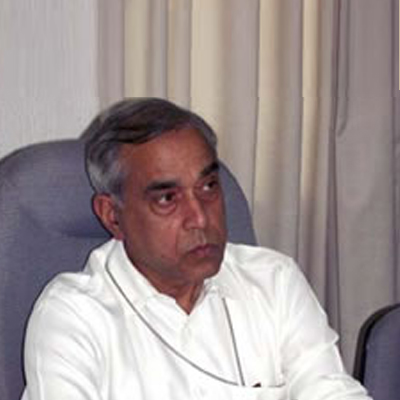
    In this interview with Indiantelevision.com‘s Sibabrata Das, Trai chairman Nripendra Misra reiterates that digitalisation is the way forward. Cas will be implemented and even regulating direct-to-home (DTH) in areas of quality of service is on Trai‘s radar.


    Excerpts:

    How ready are the multi-system operators (MSOs) to implement Cas in the notified areas of Mumbai, Delhi and Kolkata?

    The progress is satisfactory and let there be no doubt in the minds of stakeholders that Cas is going to be implemented on the due date. There is no element of uncertainty. We already have reports of 10 MSOs (as of 16 December) having conducted the trial runs for testing out their digital systems under Cas. We want to be sure that there are no glitches in implementation of Cas and that the transition is smooth.

    In Delhi, Spectranet, Satellite Channels, Sanjay Cable Network and Star Broadband Services have been issued letters by the information and broadcasting ministry that they are not in a position to switchover to addressable system by 31 December as they are not ready with the digital systems including headend, Cas and set-top boxes (STBs). What is the action Trai has taken?

    There are four networks who we found are not in a position to roll out their service. We have asked the other MSOs (Hathway Cable & Datacom, Incablenet, Wire & Wireless India Ltd. and Home Cable Network) to step in so that consumers falling under the Cas belt of Delhi do not suffer blackout of their cable TV service. We are constantly monitoring the progress made by the MSOs.

    How many MSOs have applied for licence and got approval to operate in the Cas areas?

    There were 21 MSOs and five more applied later. Our focus is on 21. Out of this, as I told earlier, 10 (as of 16 December) have started trials.

    Estimates are that there are around 1.2 million cable & satellite homes in the Cas areas. Have the MSOs brought in adequate number of STBs?

    There are already a total of over 300000 boxes available with the MSOs. It is tough to estimate the exact number of C&S households in the Cas region. The whole cable TV industry is marked by high levels of under-reporting of subscribers. But supply shouldn‘t be a problem as the MSOs say that they can quickly import the STBs in case of demand. Their argument is that they shouldn‘t be stuck up with investments if Cas, for any reason, doesn‘t pick up. We expect 40 per cent of analogue subscribers converting into digital. That apparently is in line with the global trend. Digitisation is a way forward and consumers falling under the Cas notified areas should start ordering for STBs from now so that there is no crowding towards the end.

    What gives you the confidence that Cas will take off this time?

    Unlike in 2003, we now have a broadcast and cable regulator in Trai. We have kept the entry barrier as low as possible so that Cas can get accepted by everybody. Consumers also can select individual channels and we have fixed a price cap on a la carte channels at Rs 5. The tariff order also means that STBs are available on rental schemes with a fixed deposit amount (Rs 30 per month on a deposit of Rs 999 and Rs 45 for a deposit of Rs 250). Besides, this time there is competition from direct-to-home (DTH) with DD Direct, Dish TV and Tata Sky already offering their services. In fact, we have found medium-sized MSOs in some non Cas areas investing around Rs 15 million on diogital headends so that they can compete against DTH.

    The average monthly bill for digital cable TV subscribers will not see a sigificant drop as they will be loaded with an entertainment tax of Rs 45 (other areas different), Rs 45 as rent on the STB (if they pay a deposit of Rs 250) and a service tax. Add to this a payout of Rs 77 on free-to-air (FTA) channels and there is a slim chance of lowering down the bills. Would you agree?

    We shouldn‘t be talking of a system where we do not pay taxes. The taxes are applicable even under the current system. That is no way to calculate the cable TV subscription rates. Consumers can now pay as little as Rs 5 for the channel they want to see and limit their bills.

    ‘Regulating DTH in the quality of service area is certainly on our radar

    Will the rental schemes attract value added tax (VAT)?

    Yes. In any case, taxation is not a subject which falls within the purview of Trai.

    Consumers complain that costs will go up as they have to pay for the second TV set as well?

    We have decided not to regulate on the concessional rates for the second or more TV sets. Market forces should take care of that – as has been happening now. In any case, a large percentage are single TV households. We shouldn‘t regulate wherever we can, but only in areas where there is need.

    How long will this price of Rs 5 and a minimum subscription commitment of four months for any channel last?

    We are open to taking a relook at this. As we determined on a price as low as Rs 5, we also decided to balance it by asking consumers to subscribe a channel for at least a period of four months. After six months, we intend to first assess whether a review on the pricing and other related issues is necessary at all or not.

    Are you looking at coming out with some kind of regulations for non Cas territories?

    We are considering if we should step in and regulate the non cas areas so far as quality of service is concerned.

    Will Trai try to encourage various modes of digitalisation?

    We have a forward-looking approach. We generally feel digitisation is the road ahead. Besides mandated Cas, we are looking at voluntary spread of digitisation across all technologies. We will be having a serious of discussions from January-June. The first round table kicks off on 27 January. There are various alternatives – DTH, Cas, IPTV. We will be having a series of regional meetings where we want to discuss and review all these things. Then we will send our recommendations to the government.

    Is Trai going to regulate DTH as well?

    Perhaps, we need to look at regulating DTH in the quality of service area. It is certainly on our radar. As the DTH base grows, subscribers need to be protected. But DTH is at an infant stage and it may be too early to regulate it like cable. Let us not forget that cable TV has grown in India so far as an unorganised industry.

    As the DTH base grows, subscribers need to be protected. But DTH is at an infant stage and it may be too early to regulate it like cable. Let us not forget that cable TV has grown in India so far as an unorganised industry.