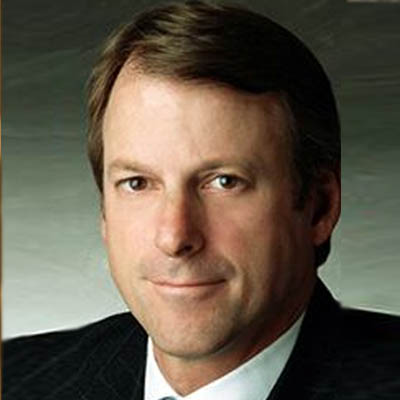
No frills. All business. That’s Alexander “Sandy” Brown for you. In and out of meetings at his headquarters in Singapore’s International Plaza, head down to the job at hand – which is to steer CNBC’s operations in the Asia Pacific after what has been a choppy 2002. The worst seems to be over though and Brown, who took over at the helm last May, says revenues are 200 per cent higher this quarter than during the corresponding one last year.
If business continues to ramp upwards for the rest of the year, Brown should be home dry. He, however, remains cautious and says it’s too early to make any assessments.
He hasn’t been quite so cautious as far as his career moves over the past nine years or so are concerned though, having tried his hand at quite an eclectic mix of job profiles. From sports to business – with a stopover in between as president and COO of New York-based 3D animation technology firm Virtual Spectator Inc – Brown has certainly added variety to his portfolio.
For Brown, Singapore is a happy hunting ground, having spent nine years here from 1992 to 2001, first as MD of ESPN and later as MD of ESPN Star Sports when the erstwhile rival channels joined hands.
Brown managed to fit in “exactly half an hour” for a matter-of-fact tete-a-tete with indiantelevision.com’s managing editor Thomas Abraham at his office in Singapore recently. Excerpts from the interview:
|
Out of the seven channels that you run in Asia, what is the pecking order in revenue terms? The mother ship is obviously CNBC Asia. How the others stack up is difficult to say. I will say this though about our India operations. India is a very important market for us. We are extremely satisfied with TV18 and I wish our other franchises could be as well run. |
|
|
Keeping to the revenue front, how is it split between distribution and marketing in the different markets? The bigger share is provided by advertising. I can’t give percentages. |
|
|
I assume you’re in a January to December fiscal. How was 2002 for CNBC Asia? It was a tough year no doubt, but we made it through in the end. October was a difficult month as we laid off some people (CNBC cut 40 jobs while restructuring its Asia-Pacific operations). |
|
| “I don’t have to buy cricket to drive ratings like I had to when I was with ESPN” | |
|
What about 2003? What are your targets and expectations? Our revenues are 200 per cent higher this quarter than they were during the corresponding one last year. If we can use the first quarter as a proxy for the rest of the year we should be pretty sound but it’s too early to say. |
|
|
Any major programming initiatives that you’re planning in 2003? Or is the present programming template working well enough so’s not to require any change? We have a few things that we’re looking at. One of the challenges is dealing with the weekends really. The goal is to create a lot more lifestyle programming for the weekends. We’re also looking at business programming that’s a lot more controversial, in the talk show format. We see a lot of opportunities in the weekend. |
|
|
Raghav Bahl manages CNBC India with only the CNBC World feed coming in at set times. What are the inputs from your end? How does the arrangement work? Editorially, we really leave them to their own devices. TV18 has done well in managing the business there. It’s a good situation that we haven’t had to get involved. The ratings bear that out. And it’s all driven by the quality of programming that we generate. I don’t have to buy cricket to drive ratings like I had to when I was with ESPN. |
|
| “Looking ahead we would certainly like to do more shows like ‘The Big Heist’. However, such programmes are very expensive to put together” | |
|
2002 was a bad year for the corporate world, with scandals one after another. How does CNBC handle these issues in the light of all that’s happened? What are the important checks and balances that have been instituted? To go back a bit. The last two years have been tough for our network. There’s been a lot of bad news. We’ve seen an enormous erosion of wealth all round. And in such times, marketing budgets are what go for a toss first. Then there were rationalisations of businesses all round last year.
Having said that, being associated with Dow Jones (CNBC is a joint venture between Dow Jones and NBC) carries a quality tag that cannot be compromised. So you do the best job you can, strained circumstances notwithstanding.
Looking ahead, we would certainly like to do more shows like The Big Heist (an investigative report into the AOL Time Warner merger and it’s aftermath). However, such programmes are very expensive to put together. |
|
| “As far as ad spend is concerned, even special interest channels like Discovery are our competitors, not just news channels or Bloomberg. It is for a piece of the same ad pie that we are all fighting” | |
|
When we are talking Asia, who’s your biggest competitor? Is it Bloomberg or are all news channels as far as the fight for ad dollars is concerned? As far as ad spend is concerned, even special interest channels like Discovery are our competitors, not just news channels or Bloomberg. It is for a piece of the same ad pie that we are all fighting. |
|
|
Your most recent initiative has been the full encryption of all CNBC channels across the region. Which were the feeds that were encrypted in the recent past? India as you know has always been an encrypted feed. The other six (Asia, Australia, Nikkei – Japan, MBN – South Korea, Singapore and Hong Kong), which were digital non-encrypted feeds have now become encrypted. |
|
|
In India, one of the key issues now is conditional access systems and its rollout. What is the distribution environment like in the rest of Asia? I know Singapore is fully CAS driven and addressable and I would expect Japan to be the same, but what about the others? Not too different from India really. We are grappling with similar problems of underdeclaration that we see in India in places like Taiwan and Korea as well. |
|
| “I will say this though about our India operations. India is a very important market for us. We are extremely satisfied with TV18 and I wish our other franchises could be as well run“ | |
|
Last June, CNBC and TV Tokyo did a stake swap wherein CNBC picked up a three per cent stake in TV Tokyo for $ 25 million while TV Tokyo took a 14 per cent stake in Nikkei-CNBC. Have any similar stake swaps happened in the recent past? Our taking a stake in TV Tokyo was as a long-term prospect. We hope to extract advantages out of this if and when the IPO comes. Regarding shareholding patterns other than India, where we have an equity relationship with TV 18 (51:49), in South Korea our presence is through a licencing deal. The other four are wholly owned subsidiaries. |
|
|
You’ve made some major switches in the course of your career and none seem to have any clear connects. There was ESPN Star Sports, then you moved to animation company Virtual Spectator, and now you’re with CNBC. So what next for Sandy Brown? The television business is what I’ve been involved with my entire career. We’ve enjoyed great success with ESPN Star Sports. Right now I have to put my head down, tail up and work. I’m not looking beyond that at the moment. |