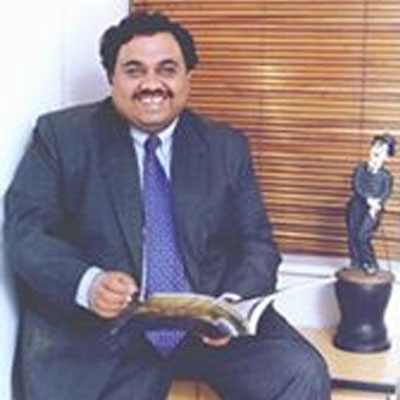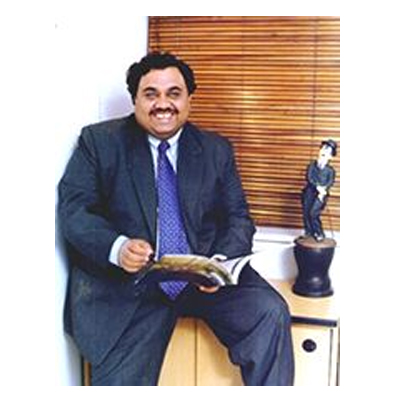
Tag: Sandeep Goyal

  • Next by Rediffusion names Asheesh Malhotra as executive director

    Next by Rediffusion names Asheesh Malhotra as executive director

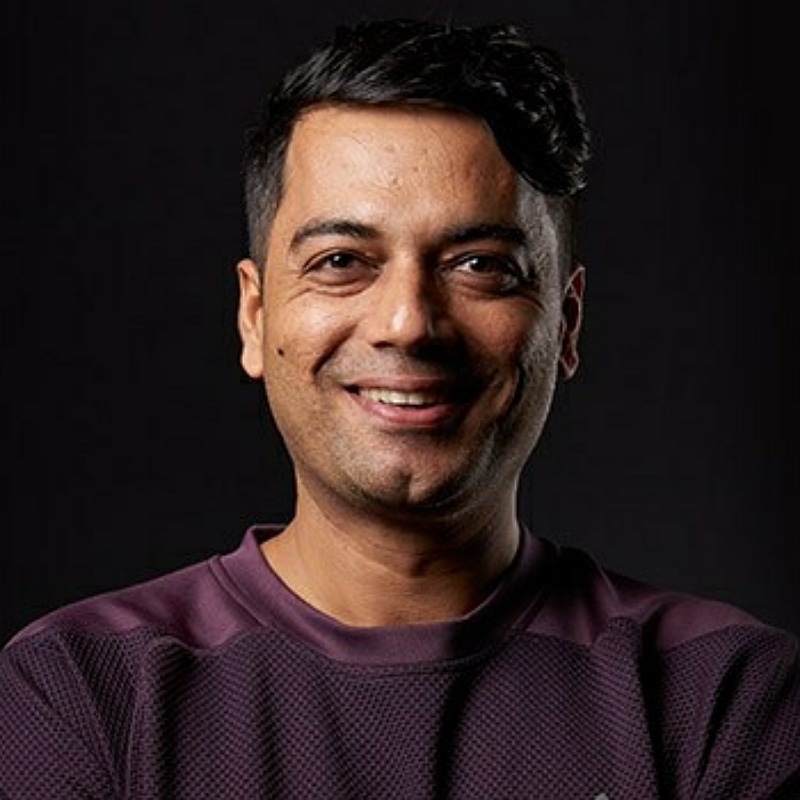
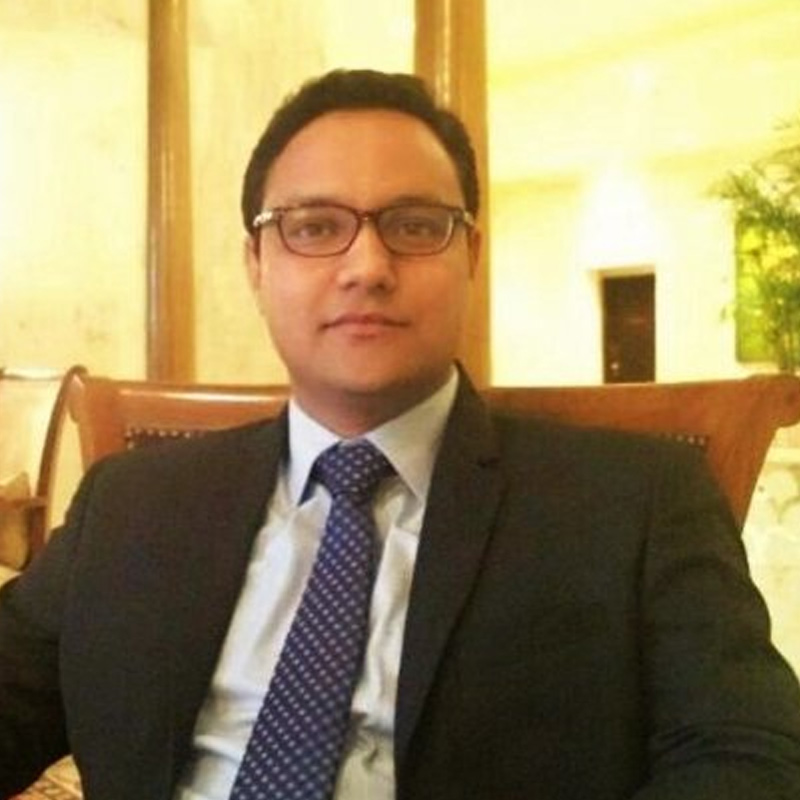
    MUMBAI: Next by Rediffusion has roped in Asheesh Malhotra as its executive director. Asheesh joins the Rediffusion group from Dentsu. The launch of Next was announced by Rediffusion on 15 August.

    With over 25 years of experience in the advertising industry, Asheesh has worked in leadership roles at Dentsu, Ogilvy, Lowe and Bates. He has straddled strategy and business functions on global & local businesses alike. He helped launch India’s first private life insurance company, ICICI Pru. He led global business hubs for Castrol and BP across Europe, Asia and also the business of Unilever beverages.

    Asheesh has over the years won the prestigious Effie awards for Unilever, ICICI Pru, Mondelez in India and APAC regions. He has also worked on the launch of Royal Enfield Meteor and Classic and Malabar Gold’s Brides Of India campaigns.

    Additionally, he teaches marketing and advertising students at institutes like SP Jain and Northpoint Center of Learning. He is also on the advisory councils of a couple of universities, and an active member of Intach.

    Asheesh did his schooling at St Edwards in Shimla and went on to pursue his higher studies at Delhi University. Thereafter, he attended the New York Film Academy and studied film and content development. Asheesh is also a certified apple orchardist having grown up in the pristine Kullu valley.

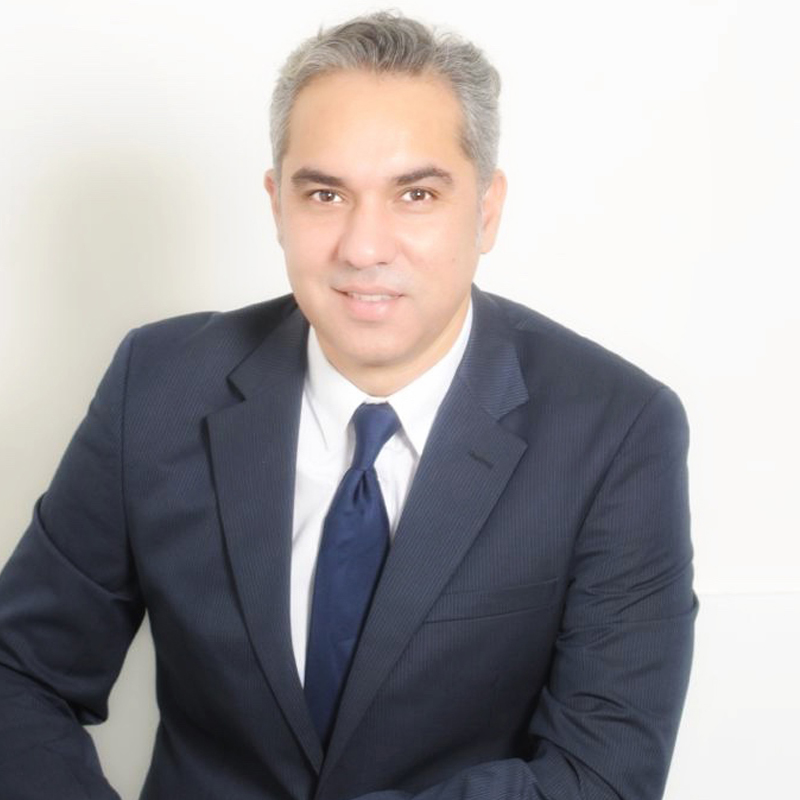
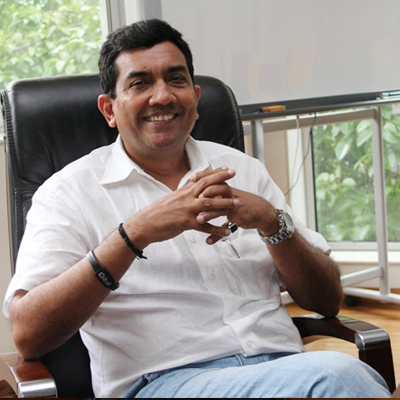
    Welcoming Asheesh Malhotra to Next by Rediffusion, Rediffusion group managing director Dr Sandeep Goyal said, “In Asheesh, we have a true blue-blooded professional who has worked across categories, domains, brands and geographies. I have personally worked with him during his earlier stint at Rediffusion when he was handling the Taj hotels business nearly 20 years ago. We again worked together when he led the Toyota business in Bangalore at Dentsu. Asheesh is client-focused, strategically strong and very good with creative teams. The assignment at Next by Rediffusion is just right for him – a combination of innovation and experience”.

    “This is my second innings at Rediffusion. I love the easy informality at the agency. Also, the wide canvas afforded everyone to do their best. Next by Rediffusion is a rare opportunity for me to create a completely new metaphor in advertising and communication. All soonicorns and unicorns, despite their size and apparent success, need a lot of help with brand building and ideation. We will do just that at Next by Rediffusion”, added Asheesh Malhotra.

    Asheesh Malhotra will be based in Mumbai. Next Rediffusion aims to have offices pan-India in the next 18-24 months.

  • How is movie marketing evolving in the times of web 3.0

    How is movie marketing evolving in the times of web 3.0

    Mumbai: Movie marketing has come a long way from static print posters advertising an upcoming blockbuster. In today’s attention-deficit times, the marketing of films has had to evolve to become more engaging and focused in order to grab the audience’s attention. The way movies are marketed has been changing at a rapid pace over the past decade, and now, with the metaverse becoming one of the biggest platforms for marketing, it is due for a paradigm shift in the very near future.

    The film industry is known to devise innovative marketing strategies to promote their movies. Filmmakers need to adapt or risk being left behind in ways to attract the attention of their target audience. Hence, filmmakers, in association with agencies, are now taking their marketing campaigns a notch higher with the advent of blockchain technology and trying to use the metaverse and NFT space to promote films using totally immersive experiences that take the viewers into a different world altogether.

    Rediffusion Red Lab’s report titled “Web 3.0 – A new revolution in the world of Indian Cinema,” which examined the link between web 3.0 and Bollywood, concluded that the convergence will be here sooner than we imagine.

    [[{“fid”:”1092789″,”view_mode”:”default”,”fields”:{“format”:”default”,”alignment”:””,”field_file_image_alt_text[und][0][value]”:false,”field_file_image_title_text[und][0][value]”:false},”type”:”media”,”field_deltas”:{“1”:{“format”:”default”,”alignment”:””,”field_file_image_alt_text[und][0][value]”:false,”field_file_image_title_text[und][0][value]”:false}},”attributes”:{“class”:”media-element file-default”,”data-delta”:”1″}}]]

    In the foreword to the report, Rediffusion managing director Sandeep Goyal says, “Bollywood needs to comprehend, if only to understand how the next generation of consumers hopes to be entertained and engaged.” NFTs, or non-fungible tokens, are digital identifications that are recorded on a blockchain. They certify an owner’s authenticity and rights to a specific piece of digital content, such as an image, a video, or a specific animated character in a franchise.” 

    “NFT holders can start to get fan club-like perks that might include wider access, early screenings, and, in many cases, the right to create their own iterations of the character or asset they own,” further says Goyal. He points out, however, that the ethos could be a direct clash with the tight control that Bollywood studios have long enjoyed over content, while adding that the advent of web3 will change a lot of that. 

    The NFT rage seems to have taken over Indian cinema too. Many movies are riding the NFT wave for movie promotions, with actors launching their own NFT series to connect with their fans. Not long ago, Salman Khan ventured into the NFT space where he launched a series of 200 NFTs based on the “Dabang” film series. The actor also launched the $GARI token by Chingari, a short video app, and became the brand ambassador for the platform’s NFT marketplace.

    Popular South Indian actor Rajnikanth too launched a series of NFTs based on his 2007 movie, “Shivaji the Boss,” even as his peer Kamal Hassan went a step further and celebrated his 67th birthday by launching an NFT series and creating a digital avatar to enter the metaverse.

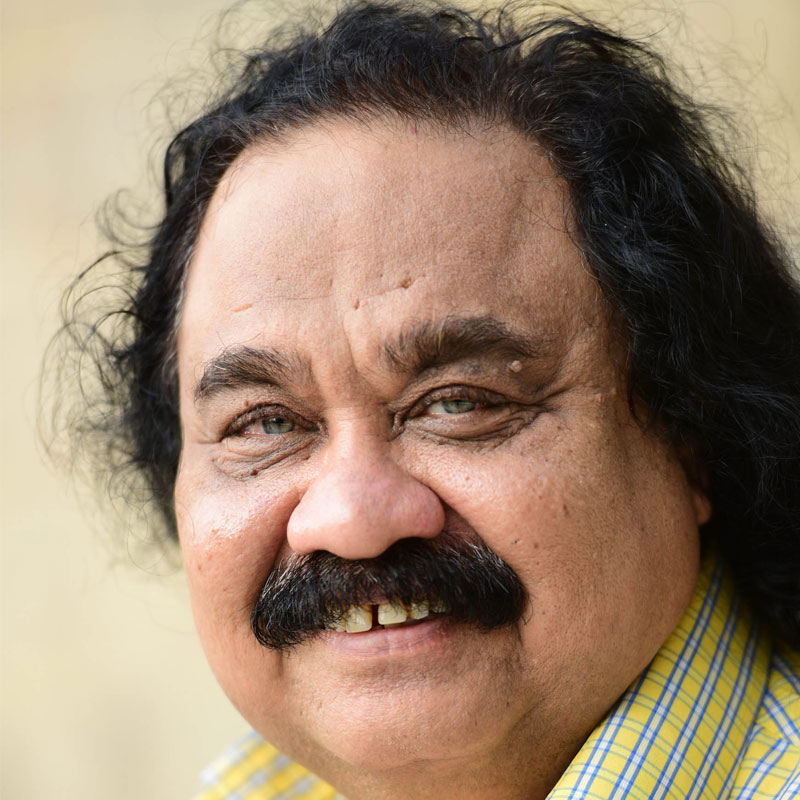
    According to TheSmallBigIdea (TSBI) CEO & co-founder Harikrishnan Pillai, while the metaverse space is still evolving, it is just a matter of time before it becomes a big part of the movie marketing industry. “People today are aware that the metaverse is beyond just a buzzword. At the moment, a lot of the initiatives are short-term in nature, but soon things will become long-term and immersive in nature. Once that happens, things will become captivating,” he says.

    The TSBI agency recently collaborated with Ajay Devgn and Hefty Verse to devise metaverse marketing strategies for the “Runway34.” On how metaverse marketing is emerging as a new means of movie marketing in the Indian film industry, Pillai says, “Marketing in the metaverse has two advantages. One, it allows you to connect with an audience set that is completely new. Also, it allows the current audience to immerse themselves in a much deeper manner. Both benefit the film marketing process.”

    In such times, when movies, OTT shows, and events are eyeing a similar audience set, the metaverse presents itself as an innovative solution for film marketing, he adds.

    NFTs have also recently excelled as a tool for promoting films, according to the Rediffusion report. Two NFTs honouring the recently released Amitabh Bachchan-starring Hindi movie “Jhund” have been produced by the film’s makers. These NFTs, which cost more than Rs 2,15,000 each, were created in association with the US-based NFT marketplace Superstar Xchange, says the report. 

    Additionally, the film “83,” which celebrated India’s victory in the 1983 World Cup, also introduced a line of “83” collectibles, which included tangible cricket memorabilia that had been personally signed, video clips, animated digital avatars, and previously unseen posters and photos.

    VistaVerse partnered with “Rocketry – The Nambi Effect” to introduce some spectacular and desirable NFTs in the metaverse. This partnership resulted in the film going on to become the first Indian film with 10,000 NFTs claimed, says the Rediffusion report.

    “This film represents my labour of love and the team gave it their all to make my dream come true. I’m ecstatic that the long-awaited “Nambi Narayanan” movie is now being shown on a grand stage with fans getting an opportunity to participate in the web 3.0 environment for a personalised experience,” said the film’s director and actor R. Madhavan.

    “The fundamental edge that the metaverse provides is the bragging value of doing things in a virtual dimension,” says Pillai, talking about the opportunities the metaverse presents to movie marketing. “It allows you to do everything that you do in real life, but in a virtual avatar and setting. The other advantage is that it takes monetisation to a different level. It also cuts physical barriers and has the ability to teleport experiences to any environment.”

    Citing the example of the “Runway34” movie, he says,”For the “Runway34″ game we developed, the audience could interact with Ajay Devgn’s character from the film and fly a plane with him, sitting in the comforts of their home. Or they could buy NFTs of Ajay Devgn’s glasses, or Amitabh Bachchan’s attire, or Rakul’s jacket, and also get the real physical item to own, with the NFT authenticating it.”

    “When we approached Ajay Devgn with the idea of him being in the metaverse space, he seemed quite enthusiastic about it,” Pillai says, while talking further about the collaboration. The actor had the foresight to recognise that this was the next and a new approach to audience engagement, he adds. “Further, to bring to life this entire concept, we found the right technology partner in Heftyverse and joined hands with them. We launched more than a dozen NFTs along with an immersive “Runway 34″ game.” 

    Nevertheless, it’s not a cakewalk, and challenges remain as the space is still evolving. “The effort versus the returns is probably not as high as it should be, but the buzz value is pretty high,” says Pillai. “We have to move beyond the novelty of being first movers. There is still some time left as far as the metrics to convert and measure that buzz to a film’s success are concerned.” 

    The Rediffusion report lists several ways in which the metaverse, along with NFTs, could potentially revolutionise the film industry: Even as NFTs can be utilised to crowdfund film projects, it can give a boost to the industry when movies do not do very well in theatres. Since November 2021, industry players have raised around four million dollars by selling NFTs, going on to show NFTs are here to stay and will add to the revenue streams of the Indian cinema industry.  

    The way we view films is also going to be changed by the metaverse, as they can potentially be used to create more immersive experiences and potentially allow viewers to become part of the storytelling experience.

    “The novelty of short-term initiatives will fade away. Brands and films, especially film universes and studios, should become early entrants and build their space in the metaverse to provide an immersive audience experience and create monetisation opportunities,” opines Pillai on leveraging the metaverse further as an important marketing tool for promoting films. The next and prudent step for marketers would be to think long-term, he signs off.

  • Rediffusion elevates Pramod Sharma to national creative director

    Rediffusion elevates Pramod Sharma to national creative director

    Mumbai: Rediffusion has fostered its creative leadership by elevating Pramod Sharma to the position of national creative director. He earlier served as executive creative director at the agency’s Mumbai office.

    In his new role, Sharma will lead the creative team and drive the next phase of growth for multiple brands under the Rediffusion umbrella with a focus on further cementing the creative value proposition across all disciplines – creative, media, health, digital and design, said the statement.

    Sharma joined Rediffusion seven years ago and has played a pivotal role in some of its acclaimed work, especially for State Bank Of India, SAB TV, Parle Products, PGIM, Exide, TVS Tyres, Shyam Steel and creation of investor education campaigns for Nippon India Mutual Fund. This is his second innings at the agency.

    He has been credited with the creation of the iconic ‘Tata Motors Ace Gold Campaign.’

    “In the past year, our focus has been to build a strong business foundation, strong client partnerships and bring back Rediffusion’s past glory,” Rediffusion managing director Sandeep Goyal said. “We want to focus on building great brands and elevate the agency ranking to the top five, therefore it is imperative for us to re-establish a strong creative reputation to maximise our ability to create work that works and wins for our client partners. Pramod is a great creative leader who has worked closely with me at Dentsu too. He will closely work with me, Navonil Chatterjee, Kalyani Srivastava and Rajendra Gupta to take the agency to higher pinnacles.”

    “At Rediffusion, as we head into our 50-years celebration, there is a huge amount of energy and enthusiasm,” Sharma said, about his new role. “We have been hiring some very fine talent over the past year. More recruitments are in the pipeline. We are looking at a whole lot of new-age formats that clients desire, and we deliver. Rediffusion 2.0 is about customer joy at every touchpoint of the brand’s journey. My job is to make creatives that bring happiness and satisfaction to our clients’ consumers through messaging that is cut-through and highly memorable.”

  • Rediffusion throws open consumer research wing Red Lab

    Rediffusion throws open consumer research wing Red Lab

    MUMBAI: Rediffusion Brand Solutions has launched its specialised consumer research and analysis wing called Rediffusion Consumer Lab (Red Lab).

    This unit will specialise in consumer understanding, consumer behaviour and trend spotting to come up with actionable business intelligence which can then lead to brand solutions. Red Lab will be reporting to Rediffusion joint president Navonil Chatterjee.

    Rediffusion Group chairman Diwan Arun Nanda said, “I have always believed in the power of brands, and brand building is all about looking beyond the short term and focussing on the long term. It involves understanding consumer behaviour and sometimes, even changing consumer habits. That’s possible only through actionable, data-backed intelligence and not lose assumptions and vague gut feelings. And Red Lab will be that voice of wise counsel for our client partners and prospects.”

    Rediffusion Brand Solutions managing director Sandeep Goyal added, “This was a clear priority area so far as I was concerned. In the olden days, sailors looked at stars and constellations to navigate their way around in the high seas. To tide over the choppy waters of a hypercompetitive market, brands too need guiding stars and accurate category, market and consumer information can be those guide-marks for brands. Besides right from my Airtel and Mogae days, I have been a strong advocate of data-based marketing and this is a step in that direction from Rediffusion.”

    Chatterjee said, “Think of it as a first step towards brand consultancy. We already had some fantastic brand workshopping and creative ideation tools and techniques. Coupled with that, this consumer intelligence gathering wing will help us further in spotting trends and insight mining, and we sincerely hope that we end up mining gold here.”

  • Sandeep Goyal to take over as the managing director of Rediffusion

    Sandeep Goyal to take over as the managing director of Rediffusion

    New Delhi: Advertising agency Rediffusion founders Diwan Arun Nanda and Ajit Balakrishnan on Monday announced their decision to step back from the day-to-day management of the ad agency.

    Mogae Media founder and chairman and industry veteran Sandeep Goyal, who served as president of Rediffusion  from 1997 to 2001, will take over as the managing director.

    The 48-year-old agency has been acquired by Goyal led Integrated marketing and communications agency Mogae Media which was set up in 2012. The deal also includes sibling agency Everest Brand Solutions.

    While Nanda will continue to mentor the agency and will stay on as chairman, Balakrishnan will step back from all day-to-day operations here. “He will focus his attention on Rediff.com, the technology world and public service and will be always available to Rediffusion for any guidance it may need going forward,” said the agency in a statement issued on Monday.

    One of the largest independent full service ad agencies, Rediffusion was set up in July, 1973 by Diwan Arun Nanda, Ajit Balkrishnan, and Mohammed Khan. In 1994, agency holding network WPP had acquired Rediffusion and merged it with US agency Young & Rubicam (Y&R) to form Rediffusion Y&R. In 2018, Nanda and Balakrishnan gained 100 per cent control of the agency to become an independent entity once again.

    Over the years, it has created some of India’s most iconic and memorable advertising for brands like Jenson & Nicholson, Eveready, Parle, Garden Vareli, Godfrey Phillips, Tata Tea, Lakmé, Telco (Tata Motors), Colgate Palmolive, Citibank and Maruti Suzuki.

    It was also credited for launching the brand Airtel in 1995. The agency currently works with Tata Sons, Parle, Tata Trusts, Tata Motors, State Bank of India, Liebherr, Larsen & Toubro, Brookfield, PGIM, Orra, Eveready, Dey’s Medical, Sulekha, Danone, Sun Pharma, Dr. Reddy’s, Audi India and many more.

    “Rediffusion has been known over the years for ‘advertising that became famous and part of the language and the culture of the people’, and helped brands build long term, and lasting equity with consumers”, said Rediffusion chairman Diwan Arun Nanda on Monday.

    ‘Whenever you see colour, think of us’ for Jenson & Nicholson was a path breaking campaign. So was ‘Hum Red & White peene walon ki baat hi kuchh aur hai’ for Red & White cigarettes, ‘Annu taazgi de de’ for Tata Tea, ‘Gimme Red!’ for Eveready and the recent ‘Isko laga dala, toh life jhingalala’ for Tata Sky. Rediffusion was also responsible for creating the cult ad film featuring AR Rahman, with the very memorable Airtel brand tune that has had the highest number of downloads in history.

  • Sandeep Goyal led Mogae Media to acquire Rediffusion

    Sandeep Goyal led Mogae Media to acquire Rediffusion

    New Delhi: Integrated marketing and communications agency Mogae Media is all set to acquire independent advertising agency Rediffusion.

    The deal also includes sibling agency Everest Brand Solutions.

    Rediffusion was launched by Diwan Arun Nanda, Ajit Balkrishnan, and Mohammed Khan in 1973. In 1994, agency holding network WPP had acquired Rediffusion and merged it with US agency Young & Rubicam (Y&R) to form Rediffusion Y&R. In 2018, Nanda and Balakrishnan gained 100 per cent control of the agency to become an independent entity once again.

    It is learnt that post the current acquisition, Mogae Media founder & chairman Sandeep Goyal will take over as the managing director of the agency. Goyal was president at Rediffusion (Rediffusion Y&R) between 1997 and 2001, after which he left the firm to become Zee Group’s chief executive officer. He had exited the Zee Group a year later and entered into a joint venture with dentsu to become its group chairman. In 2011, he sold his stake and launched Mogae Media.

  • Zee TV at 28: A walk down memory lane

    Zee TV at 28: A walk down memory lane

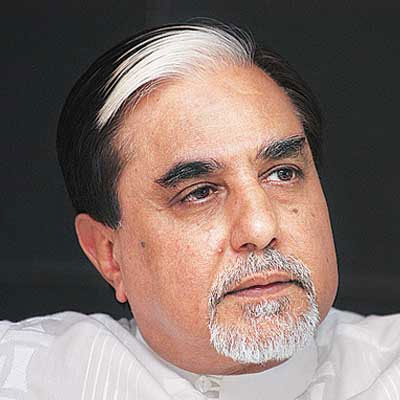
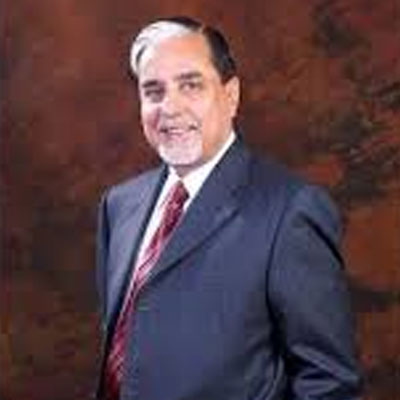
    MUMBAI: 28 years sounds like a long, long time. But it seems to have gone by in a flash – for Zee TV’s founders, for TV viewers, for media observers and for investors. It was certainly an audacious move when a goateed gentleman by the name of Subhash Chandra Goyal decided to set up an entertainment channel in 1992. The only TV entertainment we were familiar with was that of public broadcaster Doordarshan for close to twenty years. The last nine or 10 of those were in colour, while the first 10 were in black and white.

    Small cable TV operators with single master antenna television services (SMATV) used to serve us with those original Hiba (Nari Hira) movies, stolen copies of popular Hindi films, pirated versions of Mind Your Language, and Top of The Pops, as well as pornos late in the night during the late eighties and early nineties. Then they began to air Satellite TV Asian Region (Star TV) channels and shows including The Bold and the Beautiful, and Chinese subtitled movies and a mix of international and Chinese songs and finally CNN and BBC, when Li Ka Shing and Richard Li flagged off the ambitious service. Successful at tapping into the minds of India’s metro dwellers, the shows gave women in the first class compartments of trains enough to chat about – such as the exploits of Eric Forrester and Brooke Logan. VJ Nonie on MTV, which was part of the STAR bouquet..

    Into that uncharted territory stepped a bunch of maverick entrepreneurs. Among them: Subhash Chandra, better known for making lamitubes for toothpaste under Essel Packaging, and a cable TV operator named Siddharth Srivastava from the southern part of Mumbai. Srivastava beat everyone to the punch, launching ATN with the promise of many more channels offering songs, movies and sports to come. ATN was interesting but was on an ageing Russian satellite which wobbled. When it did, cable TV operators had to reorient their dishes, which was pretty frequent. Hence, when Zee TV was beamed off Asiasat-2 with its bright pictures and differentiated entertainment shows, Indians became glued to it. Not just in the metros, but in smaller towns and cities, and in some prosperous villages as well.

    And it seemed like Zee TV could do no wrong, even as others attempted to get into the same entertainment channel space. Business India TV and the Times of India unveiled flashy plans while the Hindustan Times and Dr JK Jain launched channels as well. But in time they dropped out of the race, a clear indication that experience in print or out of home media need not guarantee success in television. The highly successful Business India founder, Ashok Advani, borrowed big for his BiTV and cable TV forays, but floundered so badly that his publishing empire almost went belly up.

    Meanwhile, the business savvy Chandra attracted the shrewd Rupert Murdoch to partner with him, locking him in a deal which helped Zee TV grow, and kept the Star TV network in check. The duo finally parted ways with Chandra paying off the Ozzie media baron. 

    Chandra and team seemed to have his finger on the pulse of what viewers wanted to watch: both in non-fiction and fiction. He pioneered singing talent hunts, long before the Idol franchise was created globally, tried almost every genre of fiction programming, right from drama to crime to thriller to horror to adventure to kids. He also had the foresight to acquire rights to movies, paying what seemed like top dollar in those days to acquire them for perpetuity. .

    He succeeded beyond anyone’s wildest imagination: an increasing number of channels followed. Some succeeded, some he effortlessly folded up when he discovered that audiences did not approve. He forayed into cable TV with Siti Networks, DTH with Dish TV, news with Zee Media  – all of which are assets which have served the group well. Yes,  the group could definitely monetise them better, but for that regulations have to be conducive.

    Along the way, he brought in a string of executives who promised to grow his empire. CEOs like Digvijay Singh, Vijay Jindal, RK Singh, Sandeep Goyal, Pradeep Guha came and left. Yes, the TV network did grow, but it did, at times, randomly based on Chandra’s growth urge.

    It required his elder son Punit Goenka to come in and bring some sense of order into the company by hiring professionals from mainline FMCG companies. Of course, it’s to Chandra’s credit that he supported or maybe fronted those decisions. The group forayed into print with DNA – a segment which was challenged then and is  under even more pressure today with the spread of digital. Thankfully, better sense prevailed and the legacy business was shut down.

    Chandra tried to diversify the group into other ventures like infrastructure, which required a lot of capital. To fund those projects he pledged the family’s ownership of Zee. Unfortunately, the infrastructure venture did not go according to plan and the lenders came calling. They gave the group time to pay back. And Goenka promised he and his team would deliver.

    In the meantime, many in the industry and media wrote off Chandra and sons, saying they are sitting targets for an investor-led coup, or that they would be ousted by India’s richest industrialist. They questioned the business practice transparency levels of the Zee group. Others ridiculed and dismissed indiantelevision.com’s belief in Zee’s abilities to turn the situation around.

    The forebodings of naysayers and detractors never came to pass. Today, the family owns a minority stake in the business. But it has the trust of investors who helped the promoters pay back their debts against pledged shares to banks and financial institutions. Goenka heads the organisation, his younger brother Amit leads the international and digital businesses, while Chandra is chairman emeritus. Of course, old friends such as ad man and investor Ashok Kurien continue to support the family and are on-board. Goenka has put in place measures on transparency which have more than satisfied the investor community.

    Like many other companies in the media and entertainment space, revenues have plummeted this year due to Covid2019, lockdowns and precautionary measures put in place by the government. But team Zee has been slogging it out to pull a larger share of those earnings in. Some of those initiatives are working. Goenka is sanguine that Q3 and Q4 are going to show signs of turnaround. And next year is going to be stellar. The group is banking on its widespread network of channels serving several languages in India and its OTT streaming platform Zee5 to provide entertainment and information to its viewers in the country and globally. And bring in the revenues. Zee5 is showing every sign of scaling up even further – both on the SVoD and AVoD spaces. It has signed a slew of partnerships for content and distribution and is gaining viewers, without any sport as part of its programming.

    To Chandra’s, Amit’s  and Punit’s credit, Zee has a productive studio business which churns out films and TV shows, a music label and publishing initiative and even a live venture, – all of which were halted in their planned expansions and growth courtesy the pandemic. But they have a lot of potential, undoubtedly.


    Over the last several months, Zee has taken steps to aid different state governments in their battle against Covid2019, whether it be by  gifting ambulances, or providing funds for PPEs and medicines. In their twenty eight year run, even while grappling with their own financial pressures, Chandra and sons have been thinking about the public good.  Just the same as when he launched Zee TV to entertain Indian audiences.

  • Mogae acquires Ashish Dabral’s Ao1 with share-swap

    Mogae acquires Ashish Dabral’s Ao1 with share-swap

    MUMBAI: A leading provider of integrated mobile marketing services Mogae Media has acquired Ao1 personalized video platform from Dentsu Marcom CEO Ashish Dabral. He had been developing this new-age technology platform for the past 18 months with a young tech team out of Gurgaon.

    The transaction is a cashless one, involving a share-swap that will see Dabral joining Mogae Media as the executive director and Mogae taking full ownership of the tech platform. Mogae will fund the further development and deployment of the platform.

    Ao1 is actually an acronym for ‘Audience of One’ which is what Mogae’s new acquisition seeks to deliver. “This is a wonderful technology that combines technology with creativity. It is like producing a TV commercial for just one person as audience”, said Mogae Media chairman Sandeep Goyal. “Worldwide, the trend is towards more and more video content consumption. With Ao1 we can personalise that content. So messaging to high-value customers can be individualized, and personalized such that the recipient feels special, and more positively disposed towards both the brand and its communication.”

    Ao1 works as a sell/cross-sell/up-sell engine for customer loyalty. It works to enhance the messaging in any CRM effort of banks, insurance companies, telecom operators, retail, airlines, hotels, e-commerce destinations and all such business that seek to engage their customers better. Mogae Media has in the past worked with Idomoo of Israel, the pioneer-leaders in video personalisation.

    The platform connects with the database of any client. The real-time personalisation engine resides in a cloud that enables the right video to be served to the right customer at the click of a link received by the customer in an email or text message. The driving principles behind Ao1 are engage (involve and inspire customers), connect (make it personal), satisfy (reward loyalty) and impact (create visible positive ROI).

  • Mogae acquires Ashish Dabral’s Ao1 with share-swap

    Mogae acquires Ashish Dabral’s Ao1 with share-swap

    MUMBAI: A leading provider of integrated mobile marketing services Mogae Media has acquired Ao1 personalized video platform from Dentsu Marcom CEO Ashish Dabral. He had been developing this new-age technology platform for the past 18 months with a young tech team out of Gurgaon.

    The transaction is a cashless one, involving a share-swap that will see Dabral joining Mogae Media as the executive director and Mogae taking full ownership of the tech platform. Mogae will fund the further development and deployment of the platform.

    Ao1 is actually an acronym for ‘Audience of One’ which is what Mogae’s new acquisition seeks to deliver. “This is a wonderful technology that combines technology with creativity. It is like producing a TV commercial for just one person as audience”, said Mogae Media chairman Sandeep Goyal. “Worldwide, the trend is towards more and more video content consumption. With Ao1 we can personalise that content. So messaging to high-value customers can be individualized, and personalized such that the recipient feels special, and more positively disposed towards both the brand and its communication.”

    Ao1 works as a sell/cross-sell/up-sell engine for customer loyalty. It works to enhance the messaging in any CRM effort of banks, insurance companies, telecom operators, retail, airlines, hotels, e-commerce destinations and all such business that seek to engage their customers better. Mogae Media has in the past worked with Idomoo of Israel, the pioneer-leaders in video personalisation.

    The platform connects with the database of any client. The real-time personalisation engine resides in a cloud that enables the right video to be served to the right customer at the click of a link received by the customer in an email or text message. The driving principles behind Ao1 are engage (involve and inspire customers), connect (make it personal), satisfy (reward loyalty) and impact (create visible positive ROI).

  • Has RK Singh departed from Zee & the Essel Group?

    Has RK Singh departed from Zee & the Essel Group?

    The rumour mill has gone into overdrive again at Subhash Chandra’s corporate offices. The grapevine has it that RK Singh, chief executive, Playwin Infrawest, Essel Group, has left the company as of yesterday.

    It is not clear what exactly the circumstances of his leaving involved, but when contacted, Singh, who is in Chandigarh at the moment, would only say that he is on leave.

    Singh joined Zee Telefilms in September 1999 replacing Vijay Jindal as CEO. He came on board Zee from ESPN Software where he was CEO. In December 2000, after AT Kearney submitted its report on restructuring the organisation, Singh was made group head of corporate services.

    His tenure there was however, shortlived as five months later Sandeep Goyal joined the organisation as Zee group broadcasting CEO. Singh was subsequently put in charge of new Essel Group company Playwin Infravest – closely held by Chandra and members of his family – which marked the group’s entry into the online lottery business.