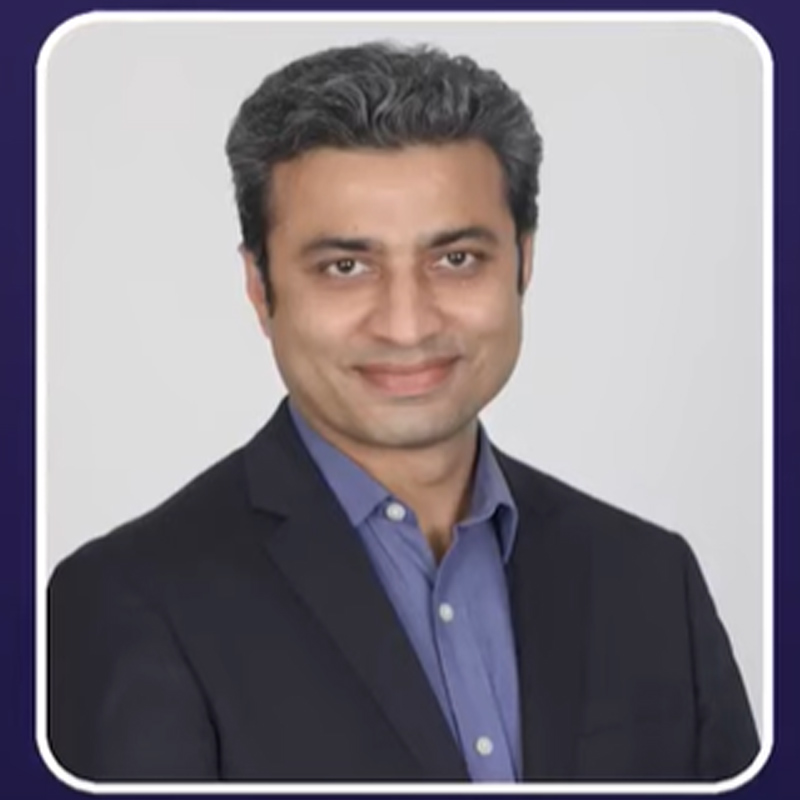
Tag: Sandeep Bhushan

  • Sandeep Bhushan logs out of Meta after seven years

    Sandeep Bhushan logs out of Meta after seven years

    Mumbai: Meta’s director business group India Sandeep Bhushan has announced his decision to move on from the tech conglomerate. Bhushan took to LinkedIn to announce that he will be moving on from the company before the end of this year.

    “I want to share that later this year I will be leaving Meta to start the next phase of my professional life,” he wrote.

    Although he did not disclose his future plans, he mentions that having completed 25 years of his professional journey this month, he is keen to go deeper into the social sector and “build new learning muscle” that can guide his contribution over the next 25 years.

    Bhushan further added, “I will be on a listening and reflection tour for a while as I plan the details ahead. Before that, I will be at Meta for the next few months to extend all possible transition support to Ajit Mohan and the team for their ambitious plans for Meta’s social and business impact in India.”

    Prior to taking on the role of director at Meta business group India, Bhushan was serving as the director and head of global marketing solutions India for six years.

    Furthermore, he is also an invitee to the Board at the Advertising Standards Council of India, in addition to being a board member at MMA APAC.

    He has also worked with companies such as Samsung Electronics, HT Media, and Hindustan Unilever towards the beginning of his career.

  • Google’s Aditya Swamy, FB’s Sandeep Bhushan join ASCI board

    Google’s Aditya Swamy, FB’s Sandeep Bhushan join ASCI board

    Mumbai: Director of Google India, Aditya Swamy has joined the Advertising Standards Council of India (ASCI) board and Facebook India head of global marketing solutions, Sandeep Bhushan will be a special invitee to the board, announced ASCI on Friday. 

    As the advertising self-regulatory body shapes the narrative of Indian advertising in a post-COVID world, representation from two of the world’s largest digital companies on its top decision-making body is a landmark step.

    The wealth of experience and insights Swamy and Bhushan bring to the table will not only help the self-regulator formulate better policies and guidelines for the advertising industry, but it will also enable a better understanding of new challenges and their solutions, the organisation said in a statement. “As ASCI works to ensure the protection of consumer interests, along with those of other stakeholders like brands and agencies, having Google and Facebook on the board will help it to sharpen its ability to implement its guidelines as well,” it added.

    Swamy and Bhushan’s appointments strengthen ASCI’s refreshed vision for the future, which reflects in the recent launch of its new logo. The appointments also mark ASCI’s fast-widening focus on digital advertising and platforms, which began last year with a partnership with TAM to monitor 3,000 digital platforms for misleading marketing claims, as well as the launch of the Influencer guidelines and influencer monitoring through an AI platform.

    ASCI chairman Subhash Kamath said, “I am delighted to welcome both Aditya and Sandeep to the board, this is a landmark moment. As we strengthen our roots in the digital space and streamline its functioning, it is extremely important that we collaborate with and learn from the leaders. Google and Facebook are the biggest digital players. We look forward to them helping us become a better conscience keeper of the industry.”

    ASCI, secretary-general, Manisha Kapoor said, “Having Google and Facebook on our board is a great start to the new journey ASCI is embarking upon. It is vital for us to have a keen understanding of digital operations. We will benefit greatly from the expertise that both these companies bring with them.”

    As advertisers’ focus shifts from traditional media to digital spaces, ASCI is ensuring that it stays ahead of the curve and streamlines the shift. 

  • Covid2019 boosts digital influence on consumers

    Covid2019 boosts digital influence on consumers

    NEW DELHI: Over the course of the last three months, consumers attitude and behaviour has gone through some very fundamental changes, shared Nimisha Jain, managing director and partner, Boston Consulting Group, while releasing the latest Facebook India-BCG findings. The novel SarsCov2 crisis has given a major boost to digital influence on consumers in the country. 

    The findings were revealed during a virtual event and panel discussion attended by several leaders of India Inc, and saw businesses such as Samsung India, Mondelez India and Big Bazaar, all of which have deep offline retail networks, throw light on how they’ve leveraged digital in these times.

    “If you go back in history, SARS in 2003 was a tipping point for e-commerce in China. We believe that this [the pandemic and lockdown] is an important time when we could have a similar shift in India as well,” Jain added.

    A key takeaway from the reports is that 70 per cent of urban consumers for mobile and 55-60 per cent for apparel will be digitally influenced. It’s critical that brands amp up their digital engagement and customise their proposition to win in the new normal.

    The report says that the online share for mobile phones is likely to reach 45 per cent in the coming two years; up from 38 per cent in the pre-crisis days. 

    The report has highlighted smartphones as an ‘essential’ category in consumer’s daily life, consumer spending sentiment for mobile phones continues to garner mixed responses. Around 29 per cent of the respondents to the BCG survey said they are more likely to decrease spending in the next six months; 40 per cent of which might buy a cheaper variant of a mobile phone, while 15 per cent of them might look at a cheaper brand altogether.

    The report says that three kinds of consumer trends have made the smartphone even more central to our lives—a reversal of past trends such as bringing the outside in-home through virtual experiences, acceleration of past trends leading to stronger adoption of digital and online, and the formation of new habits such as DIY. No wonder that 55 per cent of those surveyed said that they intend to increase spends on mobile phone via an online channel in the next six months.

    “We know that digital influence has significantly increased across the path-to-purchase – up to 70 per cent for some categories. We are now seeing businesses convert this increased digital influence into tangible business outcomes. A significant digital acceleration has happened on the back of social media, and with 400 million + Indians connected on the Facebook family of apps in India, we play a consequential role in the consumer journey. The opportunity for businesses now is to adopt new solutions that are now available, across the funnel – replicate in-person experiences by bringing alive virtual experiences, focus on efficiency and truly incremental outcomes by platform, and leverage friction-less ways of staying in touch with the consumer in times of physical distancing," shared Facebook India director and head global marketing solutions Sandeep Bhushan.

    90 per cent of consumers who have purchased apparel online during the lockdown has shown a willingness to continue. Within CPG, this figure is 80 per cent for food-related sub-categories, and 84 per cent for non-food-related sub-categories, these trends might follow beyond the pandemic, says the report.

    Futurebrands consulting MD and CEO Santosh Desai, one of the panellists, shared that the pandemic has made us adapt to new habits for instance online education, cooking etc. “Today we are forced to think of things in a new way and what will remain are the opportunities. Marketers should not be complacent, they should dig deep to challenge the current trends.”

    Furthermore, the report reveals that people intend to explore online channels a lot more for purchasing smartphones, consumer packaged goods, and apparel in the coming six months. For instance, 55 per cent intend to increase online spends on mobile phones in the next six months.

  • Digital influence in urban consumers rises up to 70%: Facebook India-BCG

    Digital influence in urban consumers rises up to 70%: Facebook India-BCG

    NEW DELHI: Facebook India and Boston Consulting Group have released three new reports that delve into Covid2019-induced changes in the consumer path-to-purchase across mobile phones, apparel, and consumer packaged goods (CPG) categories. The reports are the follow up to the ‘Turn The Tide’ report released last month.

    A key takeaway from the latest reports is that digital influence has increased significantly in urban consumers – up to 70 per cent for mobiles , 55 to 60 per cent for apparel, and up to 20-25 per cent for non-food CPG categories.

    There are three kinds of consumer trends that we are witnessing that have made the smartphone even more central to our lives – reversal of past trends such as bringing the outside in-home through virtual experiences, acceleration of past trends leading to stronger adoption of digital and online, and formation of new habits such as DIY.

    The findings were revealed during a virtual event and panel discussion attended by several leaders of India Inc, and saw businesses such as Samsung India, Mondelez India, and Big Bazaar, all of which have deep offline retail networks, throw light on how they’ve leveraged digital in these times.

    Said Facebook India director and head, global marketing solutions Sandeep Bhushan, “We know that digital influence has significantly increased across the path-to-purchase – up to 70 per cent some categories. We are now seeing businesses convert this increased digital influence into tangible business outcomes. A significant digital acceleration has happened on the back of social media, and with 400 million+ Indians connected on the Facebook family of apps in India, we play a consequential role in the consumer journey. The opportunity for businesses now is to adopt new solutions that are now available, across the funnel – replicate in-person experiences by bringing alive virtual experiences, focus on efficiency and truly incremental outcomes by platform, and leverage friction-less ways of staying in touch with the consumer in times of physical distancing.”

    The reports also points out that some of these trends are here to stay even beyond the pandemic. 90 per cent of consumers who have purchased apparel online during the lockdown show willingness to continue. Within CPG, this figure is 80% for food related sub-categories, and 84 per cent for non-food related sub-categories. Furthermore, the reports reveal that people intend to explore online channels a lot more for purchasing smartphones, consumer packaged goods, and apparel in the coming six months. For instance, 55 per cent intend to increase online spends for mobile phones in the next six months.

    Boston Consulting Group, managing director & partner Nimisha Jain said, “Across mobile, apparel and CPG, we are observing changes in how and what consumers buy. We expect the online sales market for mobiles to touch 45 per cent in the next 2 years. 8 in 10 consumers are avoiding going out, which will lead to casualization of wardrobes. Nearly one in two consumers plan to increase spend on heath and immunity related food products. 70 per cent urban consumers for mobile and 55-60 per cent  for apparel will be digitally influenced. It’s critical that brands amp up their digital engagement and customise their proposition to win in the new normal”

    How Leading Brands Are Building For The New Path-To-Purchase

    Samsung India senior vice president Asim Warsi said, "As India's largest consumer electronics company, we have taken the onus to create new shopper journeys to aid physical distancing by leveraging our digital technologies with our deep retail presence in India. Facebook is our partner in this journey of helping our retail channel discover and target local consumers digitally. In addition, we have enabled consumers to purchase our mobile and electronic products online, whilst getting the deliveries offline from their neighborhood Samsung retail stores. Also, we are now delivering our financing solution – Samsung Finance+ – to the consumers' doorsteps. These digitally forward initiatives have helped us make a sharp recovery post lockdown.”

    Mondelez India director-marketing (chocolates) Anil Viswanathan said, “At Mondelez India, we understand the role our products play in our consumers’ life. While essential items continue to remain a key priority amongst consumers, in home snacking has come to take precedence as part of the ritual of spending more time with family or with oneself. Amplified social media influence has also triggered a trend wherein homebound consumers are now increasingly looking at ways to indulge in or create at home moments and in doing so they are predominantly relying on trusted brands like Cadbury, Oreo, Tang etc., which represent superior quality and the assurance of safety amid these uncertain times. Understanding that time and safety are the essence of the moment, we are leveraging all existing channels, and experimenting with new ones ala Direct to Consumer to serve our consumers. The key is to continue to remain agile and adapt to the changing requirements of our consumers and to facilitate ease of service across channels.”

    Three Steps Business Can Take Across The Funnel To Build For The Increasing Digital Influence:

    Leveraging the cross-industry experience and consumer understanding of Boston Consulting Group and Facebook India, the report also lays out recommendations for mobile, CPG and apparel businesses to explore along the new path-to-purchase. Examples highlighted below.

    Pre-Purchase: 

    o   Create digital experiences and influence to replicate in-person experiences: Due to physical distancing, less number of people are likely to walk into a store, experience the product, and make a consecutive purchase. Therefore, more virtual experiences need to be built for the remote living reality.

    Brand example: Recently Samsung partnered with Facebook to train offline retailers to go digital in a big way. In the first phase, Samsung and Facebook have already trained more than 800 offline retailers, with more training sessions lined up in the coming weeks. The training is focused on enabling offline retailers build a digital presence through the Facebook family of apps, making their business known locally, and building credibility among the local population by setting-up their business pages and accounts on Facebook, Instagram and WhatsApp. As a result, the offline retailers are likely to witness a growth in their business as they discover more local consumers online.

    Purchase:

    o   Relook at media mix model urgently to build efficiency in acquisition: As businesses, and especially those with traditional product categories, start spending more online, they would feel the urgent need to understand truly incremental outcomes by platform as well as cross-platform efficiency. This would increase the need for industry-leading digital measurement standards.

    Brand example: Cadbury 5 STAR ran Facebook and Instagram video ads in 2019, and saw*:

    o   2.6X return on ad spend from Facebook as indexed to TV

    o   1.8X return on ad spend from Instagram as indexed to TV

    o   5.8X return on ad spend from short video ads on Facebook and Instagram

    o   1.3X higher return on ad spend from ads with upfront branding

    *As per custom mix modelling (CMM) by Nielsen

    With the rise in demand for in-home snacking during lockdown, Cadbury Chocolates leveraged their website to bring consumer's favorite snacking brands right to their doorstep. Both Facebook and Instagram were instrumental in getting the message across. Cadbury Chocolates witnessed 1.2x return on investment as a result of this.

    Post-Purchase

    ·       Stay connected with your consumer in times of physical distancing: In times of physical distancing, it’s essential to stay in touch with the customer and continuously eliminate friction in the path-to-purchase. Consequently, conversational marketing digital solutions driven by WhatsApp, Facebook Messenger, and digital CRM tools can prove to be very effective to engage the consumer with value-driven outreach after the purchase has taken place.

    Brand example: With increased digital adoption (recharges, bill payments etc.) amongst the telecom customers, Vodafone Idea Limited (VIL) launched a WhatsApp chatbot to cater to consumer's needs

    Follow Tellychakkar for the consumer facing news & entertainment

  • Facebook’s New Ads Bundle Signals Growing Importance of Interactivity in Online Advertising

    Facebook’s New Ads Bundle Signals Growing Importance of Interactivity in Online Advertising

    New Delhi: Facebook is rolling out a suite of new interactive ad solutions today including Poll ads, Augmented Reality (AR) ads, Instagram poll stickers for Stories ads, and Brand Playables. The new Ad solutions released today are built on people’s natural desire to interact, engage, and touch. Interactive Ads enable instant two-way communication and get people involved, which is a natural fit for how people, especially the youth, engages on mobile phones. With the festive season coming up in India, this suite of interactive Ads can help advertisers engage with their consumers in new and interesting ways. 

    "At Facebook, we build for people first. This means our products, services, and Ad solutions have evolved to meet people’s growing desire to engage and participate in ideas. This is also a key reason why they have delivered consistent business results for our advertisers, large and small. In the age of reducing attention spans, Interactive Ads are one of the most effective ways of holding the attention of the consumer. They are also easy to execute – a poll Ad can be created in just five seconds. The new Ad bundle will especially add value to brands looking at high-engagement festive campaigns,” said Sandeep Bhushan, Director and Head of Global Marketing Solutions (GMS), at Facebook India. 

    Increasingly people want to participate in a brand’s big idea and they’re using innovative ways of doing so – less words, more GIFs, Lives, Reactions, emojis, face filters, and stickers. In turn, brands and people are becoming more intertwined and it’s changing digital advertising from a one-way push communication to an ongoing dialogue powered by creativity. “This behavior is unfolding across our family of apps. Already, 60% of businesses on Instagram use an interactive element such as @mention, hashtag or poll sticker, in Stories every month. What started with exploring new things on mobile has morphed into vast and varied conversations that welcome people’s participation and will eventually immerse them into shared experiences. To help brands further embrace this trend, we are announcing new ad solutions that encourage a playful experience between people and businesses, and deliver results,” said May Seow, APAC Creative Strategy Lead, The Creative Shop at Facebook.

    Facebook is now bringing video poll ads to Facebook mobile Feed, globally available this month. Poll ads allow advertisers to insert polls to video ads and enable an interactive, personalized advertising experience. Facebook is launching three variants of poll ads, and each will support the reach, brand awareness objective (BAO), traffic, and app installs objectives:

    ·       Poll Only: enable advertisers to interact with their target audience to drive brand lift.

    ·       Poll plus Watch & Browse: enable advertisers to capture peoples' preference for personalized journeys on their websites.

    ·       Poll plus Watch & Install: enable advertisers to interact with people and drive them toward an app install.

    Advertisers can insert a poll question and two corresponding response options to a video ad campaign in the Facebook mobile News Feed. “In early findings, we’re seeing poll ads in Feed drive increased brand awareness and conversions. For example, in 5 out of 9 brand lift studies, we observed poll ads increased brand awareness compared to video ads,” Seow said.

    In addition to interactive questions, people use face filters and fun animation in the 1 billion stories shared every day across Facebook, Instagram, and WhatsApp. For businesses, the augmented reality opportunity is clear. For WeMakeUp, a US-based cosmetics brand, AR Ads on Facebook enabled customers to try on its latest shade of lipstick, and as a result the brand drove a 27.6 point lift in purchases with the average person spending 38 seconds interacting with the ad unit. Facebook is now expanding this AR opportunity to more advertisers, entering open beta for AR Ads globally over the next few months.

    Lastly, Facebook is also expanding its playable ad format that allows people to play a game to drive downloads, conversations, and brand objectives. Uber India used the Playable format for a campaign during the 2019 Cricket World Cup and saw 3X higher Ad Recall Lift Rate and 10% higher click through rate (CTR) compared to other brand awareness campaigns.

    The expansion of playables is now available for all advertisers globally.

  • OPPO partners with Instagram for the ‘Challenge Yourself’ campaign for OPPO Reno 2

    OPPO partners with Instagram for the ‘Challenge Yourself’ campaign for OPPO Reno 2

    MUMBAI: OPPO India announced the launch of a new marketing campaign, ‘Challenge Yourself’, in partnership with Instagram, to challenge GenZ and millennials to visually imagine the unthinkable with the OPPO Reno2. The campaign aims at highlighting the revolutionary OPPO Reno2 features such as the 20x Zoom, Ultra Dark Mode and the Ultra Steady Video, that empower people to discover new perspectives in photography.

    For years, people have stood in front of the Taj Mahal and got their pictures clicked in the same way. People click the same pictures of airline wings or the sunset or of feet on the beach. OPPO’s ‘Challenge Your Perspective’ campaign and the Indian version ‘Challenge Yourself’ campaign is built on this insight. OPPO has partnered with Instagram for the campaign to drive awareness and share the campaign message in a creative and authentic way.

    Commenting on the campaign and the collaboration OPPO India VP – product & marketing Sumit Walia said, “Targeting at the creative young trendsetters with a passion for self-expression, we have partnered with Instagram to provide our youthful consumers a platform to create the most imaginative and unique content. To further fuel their creativity, we have launched the #ChallengeYourself campaign, which encourages them to challenge their perspective and unleash their playful imaginative spirit using the Reno 2 series.”

    Facebook director and head of India GMS Sandeep Bhushan said, “Visual storytelling is now mainstream, with Instagram playing a lead role as people widely share their passions on it. Businesses of all sizes are on Instagram to drive awareness, increase customers and share their story amongst a highly engaged audience. We’re glad to have co-created the ‘Challenge Yourself’ campaign with OPPO, to challenge millennials to even better visual storytelling by working with creators who influence culture today.”

    The campaign leverages the power of influencers to best represent the creativity and authenticity desired by the campaign. A #ChallengeYourself contest has also been initiated on Instagram to crowdsource meaningful consumer engagement. To participate, users need to visit the nearest OPPO store, capture creative content from Reno2 and upload it on OPPO’s Instagram handles using #OPPOReno2 and #ChallengeYourself. The best entries will stand a chance to win a new OPPO Reno2 EVERY HOUR! As an additional reward, few lucky winners will also have an opportunity to attend an Instagram mentoring session by Facebook India.

    Dedicated to pushing the boundaries in smartphone photography, the OPPO Reno2 comes equipped with 20x zoom quad camera that provides a full focal length imaging system; offering a 5x Hybrid Zoom with Optical Image Stabilization. The device is also packed with OPPO’s industry-leading Ultra Dark Mode that helps in capturing brilliant images even in dark environment and Ultra Video Stabilisation Mode technology which ups the stability of videos, enabling users to capture steady videos.

  • Ad honchos: Digital to be central to advertising very soon

    Ad honchos: Digital to be central to advertising very soon

    MUMBAI: Today’s marketers are working in a complex environment with increasing consumer choice and fragmenting media environment. With mobile becoming central to our lives, content consumption through it has skyrocketed. This has created a dynamic consumer purchase cycle and an opportunity for businesses to find newer sources of growth.

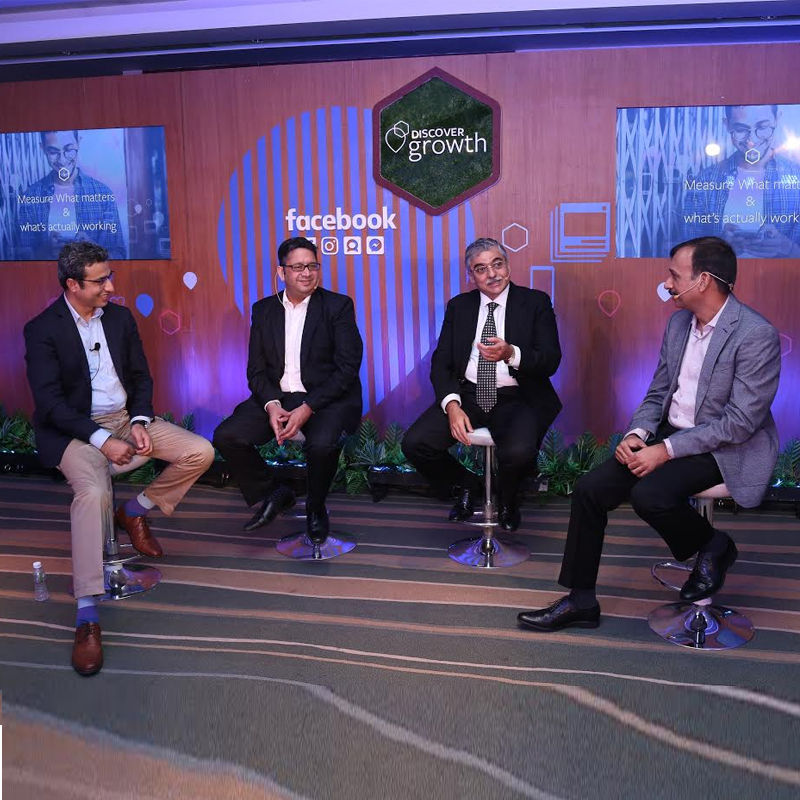
    Addressing the needs of the industry, marketers sat down to discuss how brands are tapping into this shift in consumer behaviour and discovering growth at Facebook’s ‘Discover Growth’ session. The session moderated by Facebook India and South Asia interim MD Sandeep Bhushan, had panelists including Dentsu Aegis Network chairman and CEO South Asia Ashish Bhasin, GSK Consumer Healthcare general manager of marketing excellence Alok Agarwal and Ambuj Chandna, head – retail liabilities, investment and payment products at Kotak Mahindra Bank.

    Brands today understand the value of mobile because 75 per cent of Indians accessing Facebook do so from their smartphones. The presence of over two million business pages on Facebook indicates that companies expect customers and growth to come from it.

    Bhasin opened the panel by pointing out some key trends that are seen in digital. He pointed out that digital is now becoming equivalent to mobile. Digital has benefited some major brands in the country that are investing heavily on the platform.

    With 40 per cent of Dentsu Aegis Network’s revenue coming in from its digital operations, Bhasin sees a clear shift in the way digital will impact brands and clients going forward. He expects 25 per cent of the market to be digital by 2020 and digital to be the single largest medium in the industry by 2023 but traditional mediums will continue to grow as well.

    Banking was one of the earliest sectors adopters of digital when it provided online banking facility to its existing customers but lately, BFSI sector has also been investing moderately in digital content. This is in contrast to 15 years ago when nothing but physically presenting yourself at the bank could allow a transaction.

    Chandna added that almost 60 per cent of Kotak’s active customers is transacting digitally. Kotak Mahindra Bank launched 811, a digital only bank account early this year. The 14-year-old bank has 10.5 million customers as of June 2017 and saw a jump of 30 per cent in two quarters only because of 811 account. “The physical world rules don’t apply to digital as it is important to create value proposition for digital and if you get that right, a brand can scale up dramatically,” he added.

    Alok Agarwal mentioned that though internet typically is a male-skewed platform, female consumers are increasingly spending more time on it. “High time spent on internet leads to funnelling of brand spends as they want to tap the customers at all touch points.”

    Consumers are platform-agnostic, which is shifting dynamics from television planning to video planning.

    Bhasin raised an important point of the need for a common measurement metric system for the advertising industry in the next two to three years. “We are a year away from a very big inflexion point where digital is going to be hugely central if not peripheral,” he adds.

    Agreeing to Bhasin on the need for a measurement metric, Chandna cited that initially Kotak heavily depended on traditional media advertising but stopped that when they realised it was only creating a category and not launching a product. The brand is leveraging in a big way to create ease of doing business and have a better connect with its customers. “Kotak Bank’s digital spends have increased by 40X and a majority of that goes into Facebook as we get detailed analysis and data there which is not available on other digital platforms,” he states.

    Alok Agarwal concluded the panel by emphasising that Facebook allows GSK to geo-target the customers in ways that were not possible earlier. A brand can also go for advocacy on digital where consumers can react and share their feedback in real time which is not possible on television.

  • Facebook India’s Umang Bedi quits, Sandeep Bhushan to be interim MD

    Facebook India’s Umang Bedi quits, Sandeep Bhushan to be interim MD

    MUMBAI: Facebook India and South Asia MD Umang Bedi has put in his papers. Facebook has confirmed the development.

    For a smoother transition, Facebook confirmed that Bedi, who had joined in July last year, will be staying on for three months. Although no replacement has been announced, Sandeep Bhushan would be the interim MD.

    A Facebook spokesperson said, “We confirm that Umang Bedi will be leaving at the end of this year. He’s built a really strong team and business during his time with us, and we wish him all the best.”

    Bedi is the recipient of the prestigious ‘40 Under Forty: India’s Hottest Business Leaders Award 2014’ given away by The Economic Times and Spencer Stuart in 2014.

    Bedi, an engineering graduate from University of Pun and an alumnus of Harvard Business School, had come to Facebook from Adobe India, where he was the managing director south Asia, replacing Kirthiga Reddy — who had served for over five years and returned to Facebook headquarters in the US.

    ALSO READ :

    Regional news’ online viewership is billion-plus every month: Vidooly

    Nick and Colors Kannada among top FB, YouTube monthly views: Culture Machine analysis

    Facebook exec ponders: How to hold the brain’s attention?

    Differentiated brand critical as online video, mobile ads may expand at 40-51 pc CAGR by ’21: KPMG-FICCI

  • Third Content Marketing Summit Asia announced list of speakers

    Third Content Marketing Summit Asia announced list of speakers

    MUMBAI: CMS Asia 2016 continues its tradition of delivering great content through a very unique set of experts & speakers year on year. As the event gets ready for its 3rdedition, the event organizers have released first list of speakers. This year experts from Facebook, Flipkart, Google, ScoopWhoop, ESPNCricinfo, Yashraj Films, Panasonic, Craftsvilla, Reliance, Autocar, GroupM, HCL, VML among others will be seen at the grand stage. The detailed first line up is as following

    Brands

    Senjam Raj Sekhar, Head of Corporate Communications, Flipkart
    Sandeep Bhushan, Business Head – India & South Asia, Facebook
    Amarjit Singh Batra, CEO, OLX
    Pankaj Khushani, Head – Media Technology Solutions: SEA, India & Korea, Google
    Naveen Malhotra, Head – Marketing & Product Planning, Mahindra Two Wheelers
    Sarthak Seth, Head – Brand & Marketing Communications, Panasonic
    Sandep Walunj, CMO, Reliance Nippon Life Insurance
    Bianca Ghose, Chief Content Officer, HCL
    Manish Kalra, Chief Business Officer, Craftsvilla

    Publishers 

    Ashish Patil, Vice President, Yashraj Films
    Sambit Bal, Editor-in-Chief, ESPNCricinfo
    Sattvik Mishra, CEO, ScoopWhoop
    Hormazd Sorabjee, Managing Director, Autocar India
    Pradyuman Maheshwari, CEO, MXM India
    Gautam Bhimani, Cricket Commentator

    Marketing Partners & Agencies

    Samir Bangara, Managing Director, Qyuki
    Roopak Saluja, CEO, The 120 Media Collective
    Mallikarjun Das, Group CEO, Starcom Mediavest Group
    Tushar Vyas, Chief Strategy Officer, GroupM South Asia
    Tripti Lochan, CEO, South East Asia & India, VML

    As always, the largest content marketing conference in APAC brings together many C-Level experts to share their experience with delegates. The speakers are a good mix of advertisers, publishers, agency partners, technology providers & celebrities from Cricket & Bollywood. CMS Asia 2016 plans to have 30+ speakers for the 3rdedition.

    The 3rd edition of annual Content Marketing Summit Asia plans to strike the right balance between Ground Reality & Virtual Reality which has always been the challenge for new age marketers but will be crucial as we step into the future of marketing. Content promises to be the bridge but is always looked at as a short-term tactic to win quickly. Scale & ROI have always been relatively unanswered questions when it comes to content marketing. While everyone tries to figure out wherein lies the future of marketing, CMS Asia 2016 provides a platform to explore it collectively. It also touches upon softer aspects like Quality of Content and Art of Storytelling for consumers today who are flirting with multiple platforms simultaneously. With content marketing practitioners in the house from leading brands & technology companies, the platform is all set this year to take Content Marketing discussion to its next level.

    According to RP Singh, Conference Producer & Chairperson, “We are thrilled to have a great set of speakers this year too and I am grateful to all the experts for taking out time from their busy schedules to help create & spread the ecosystem of content marketing in India. With a joint effort like this, I have no doubts that the discipline is only set to grow from here in this part of the world”

    He informs further that for this year, CMS Asia has started getting registrations quite well in advance as compared to previous editions, which signifies the importance, & expectations people have from this event.

    CMS Asia as an event caters to Marketing professionals, PR professionals, Content Creators, Agency Partners & Technology companies in this space.

  • Third Content Marketing Summit Asia announced list of speakers

    Third Content Marketing Summit Asia announced list of speakers

    MUMBAI: CMS Asia 2016 continues its tradition of delivering great content through a very unique set of experts & speakers year on year. As the event gets ready for its 3rdedition, the event organizers have released first list of speakers. This year experts from Facebook, Flipkart, Google, ScoopWhoop, ESPNCricinfo, Yashraj Films, Panasonic, Craftsvilla, Reliance, Autocar, GroupM, HCL, VML among others will be seen at the grand stage. The detailed first line up is as following

    Brands

    Senjam Raj Sekhar, Head of Corporate Communications, Flipkart
    Sandeep Bhushan, Business Head – India & South Asia, Facebook
    Amarjit Singh Batra, CEO, OLX
    Pankaj Khushani, Head – Media Technology Solutions: SEA, India & Korea, Google
    Naveen Malhotra, Head – Marketing & Product Planning, Mahindra Two Wheelers
    Sarthak Seth, Head – Brand & Marketing Communications, Panasonic
    Sandep Walunj, CMO, Reliance Nippon Life Insurance
    Bianca Ghose, Chief Content Officer, HCL
    Manish Kalra, Chief Business Officer, Craftsvilla

    Publishers 

    Ashish Patil, Vice President, Yashraj Films
    Sambit Bal, Editor-in-Chief, ESPNCricinfo
    Sattvik Mishra, CEO, ScoopWhoop
    Hormazd Sorabjee, Managing Director, Autocar India
    Pradyuman Maheshwari, CEO, MXM India
    Gautam Bhimani, Cricket Commentator

    Marketing Partners & Agencies

    Samir Bangara, Managing Director, Qyuki
    Roopak Saluja, CEO, The 120 Media Collective
    Mallikarjun Das, Group CEO, Starcom Mediavest Group
    Tushar Vyas, Chief Strategy Officer, GroupM South Asia
    Tripti Lochan, CEO, South East Asia & India, VML

    As always, the largest content marketing conference in APAC brings together many C-Level experts to share their experience with delegates. The speakers are a good mix of advertisers, publishers, agency partners, technology providers & celebrities from Cricket & Bollywood. CMS Asia 2016 plans to have 30+ speakers for the 3rdedition.

    The 3rd edition of annual Content Marketing Summit Asia plans to strike the right balance between Ground Reality & Virtual Reality which has always been the challenge for new age marketers but will be crucial as we step into the future of marketing. Content promises to be the bridge but is always looked at as a short-term tactic to win quickly. Scale & ROI have always been relatively unanswered questions when it comes to content marketing. While everyone tries to figure out wherein lies the future of marketing, CMS Asia 2016 provides a platform to explore it collectively. It also touches upon softer aspects like Quality of Content and Art of Storytelling for consumers today who are flirting with multiple platforms simultaneously. With content marketing practitioners in the house from leading brands & technology companies, the platform is all set this year to take Content Marketing discussion to its next level.

    According to RP Singh, Conference Producer & Chairperson, “We are thrilled to have a great set of speakers this year too and I am grateful to all the experts for taking out time from their busy schedules to help create & spread the ecosystem of content marketing in India. With a joint effort like this, I have no doubts that the discipline is only set to grow from here in this part of the world”

    He informs further that for this year, CMS Asia has started getting registrations quite well in advance as compared to previous editions, which signifies the importance, & expectations people have from this event.

    CMS Asia as an event caters to Marketing professionals, PR professionals, Content Creators, Agency Partners & Technology companies in this space.