Tag: San Francisco

  • Photograph food for Chef’s Table

    Photograph food for Chef’s Table

    MUMBAI: Food, glorious food. We love to eat it, we love to watch others cook it, and above all, we love to photograph it. From the director of Jiro Dreams of Sushi (David Gelb) comes Chef’s Table, a Netflix original documentary series, that is returning globally for a second season on Friday, 27 May.

    To celebrate season two, the search is on across Asia for the Chef’s Table official Instagrammer. The chosen Instagrammer will visit the six restaurants featured in season two (Mexico! Slovenia! Chicago! Brazil! San Francisco! Thailand!) and document their sensory experience through beautifully-set, mouth-watering and hunger-inducing Instagram shots.

    Sounds delectable? Join in to:
    1. Follow @Netflix_IN
    2. Post your best original food photo to Instagram
    3. Hashtag #MyChefsTable

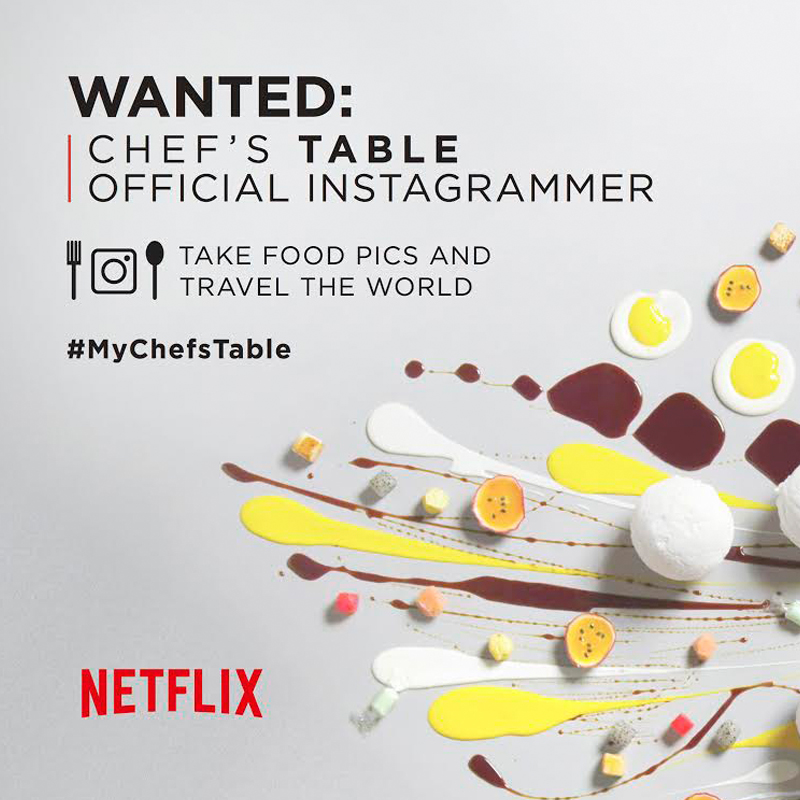
    For more information, please head on to mychefstable.netflix.com, or refer to the appended image.

    The renowned chefs featured in season 2 of Chef’s Table include: Alex Atala (Brazil); Ana Ros (Slovenia); Dominique Crenn (United States); Enrique Olvera (Mexico); Gaggan Anand (Thailand); and Grant Achatz (United States). The series provides a rare, inside look at the lives and careers of some of the world’s best chefs today on their quests for sensory perfection.
    Chef’s Table season one is now streaming globally on Netflix.

  • Photograph food for Chef’s Table

    Photograph food for Chef’s Table

    MUMBAI: Food, glorious food. We love to eat it, we love to watch others cook it, and above all, we love to photograph it. From the director of Jiro Dreams of Sushi (David Gelb) comes Chef’s Table, a Netflix original documentary series, that is returning globally for a second season on Friday, 27 May.

    To celebrate season two, the search is on across Asia for the Chef’s Table official Instagrammer. The chosen Instagrammer will visit the six restaurants featured in season two (Mexico! Slovenia! Chicago! Brazil! San Francisco! Thailand!) and document their sensory experience through beautifully-set, mouth-watering and hunger-inducing Instagram shots.

    Sounds delectable? Join in to:
    1. Follow @Netflix_IN
    2. Post your best original food photo to Instagram
    3. Hashtag #MyChefsTable

    For more information, please head on to mychefstable.netflix.com, or refer to the appended image.

    The renowned chefs featured in season 2 of Chef’s Table include: Alex Atala (Brazil); Ana Ros (Slovenia); Dominique Crenn (United States); Enrique Olvera (Mexico); Gaggan Anand (Thailand); and Grant Achatz (United States). The series provides a rare, inside look at the lives and careers of some of the world’s best chefs today on their quests for sensory perfection.
    Chef’s Table season one is now streaming globally on Netflix.

  • Dentsu Aegis launches agency to serve $200 billion B2B sector

    Dentsu Aegis launches agency to serve $200 billion B2B sector

    MUMBAI: In a bid to cater to the business to business (B2B) market, which is accelerating at speed and commanding $200 billion in estimated marketing spend, Dentsu Aegis Network Ltd. has launched Interprise, a full-service global agency specialising in B2B solutions to address expanding marketing demand in this area.

    Headquartered in London and with offices in New York, San Francisco, Singapore, Hong Kong and Sydney, Interprise will expand into other major markets during 2016.

    In addition to increasing client needs, the launch of the new agency was prompted by the increasing investment in their B2B divisions by more than 50 per cent of the world’s top global market brands and their proactive marketing activities.

    The establishment of the new agency will further strengthen the services already being provided by the Dentsu Group in the B2B domain, increase synergies with other Group companies, and expand its footprint.

    Looking ahead, the existing specialist B2B media team across the Carat Enterprise network will be integrated within Interprise to support new and existing brands with their B2B requirements. With B2B capability in creative services, media planning and buying, search, data, programmatic, events, content and out-of-home advertising, Interprise will provide new solutions in all the major markets.

    Interprise will be headed by Stuart Giddings as global president.

  • Dentsu Aegis launches agency to serve $200 billion B2B sector

    Dentsu Aegis launches agency to serve $200 billion B2B sector

    MUMBAI: In a bid to cater to the business to business (B2B) market, which is accelerating at speed and commanding $200 billion in estimated marketing spend, Dentsu Aegis Network Ltd. has launched Interprise, a full-service global agency specialising in B2B solutions to address expanding marketing demand in this area.

    Headquartered in London and with offices in New York, San Francisco, Singapore, Hong Kong and Sydney, Interprise will expand into other major markets during 2016.

    In addition to increasing client needs, the launch of the new agency was prompted by the increasing investment in their B2B divisions by more than 50 per cent of the world’s top global market brands and their proactive marketing activities.

    The establishment of the new agency will further strengthen the services already being provided by the Dentsu Group in the B2B domain, increase synergies with other Group companies, and expand its footprint.

    Looking ahead, the existing specialist B2B media team across the Carat Enterprise network will be integrated within Interprise to support new and existing brands with their B2B requirements. With B2B capability in creative services, media planning and buying, search, data, programmatic, events, content and out-of-home advertising, Interprise will provide new solutions in all the major markets.

    Interprise will be headed by Stuart Giddings as global president.

  • CBS Sports’ Super Bowl 50 coverage creates TV history with 167 mn viewers

    CBS Sports’ Super Bowl 50 coverage creates TV history with 167 mn viewers

    MUMBAI: The CBS Television Network’s coverage of Super Bowl 50 featuring the Denver Broncos’ 24-10 win over the Carolina Panthers on 7 February was watched in all-or-part by a record 167 million viewers, making it the most-watched single broadcast in television history on an all-or-part basis according to Nielsen’s Fast Total Audience Estimates. These include those who watched at least six minutes of the telecast.

    The previous high was CBS’s coverage of Super Bowl XLVII in 2013 (164.1 million; Baltimore Ravens-San Francisco 49ers).

    The 167 million viewers is a television-only number and does not include online and mobile streaming.

  • CBS Sports’ Super Bowl 50 coverage creates TV history with 167 mn viewers

    CBS Sports’ Super Bowl 50 coverage creates TV history with 167 mn viewers

    MUMBAI: The CBS Television Network’s coverage of Super Bowl 50 featuring the Denver Broncos’ 24-10 win over the Carolina Panthers on 7 February was watched in all-or-part by a record 167 million viewers, making it the most-watched single broadcast in television history on an all-or-part basis according to Nielsen’s Fast Total Audience Estimates. These include those who watched at least six minutes of the telecast.

    The previous high was CBS’s coverage of Super Bowl XLVII in 2013 (164.1 million; Baltimore Ravens-San Francisco 49ers).

    The 167 million viewers is a television-only number and does not include online and mobile streaming.

  • ‘Too much of sensation, not enough sense; too much of Delhi, not enough on the rest:’ Rajdeep Sardesai

    ‘Too much of sensation, not enough sense; too much of Delhi, not enough on the rest:’ Rajdeep Sardesai

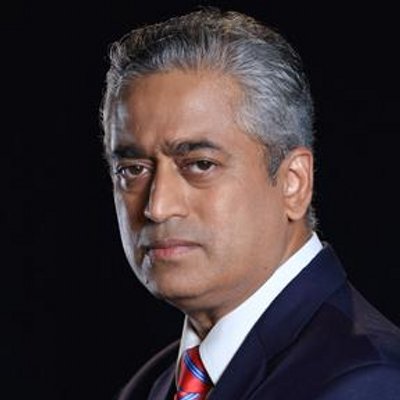
    ‘Main zindagi ka saath nibhaata chala gaya,’ is the song that you hear when you call him. With a journalistic experience of 26 years in print and television specialised in covering national politics, this man lets his work do the talking for him. He has never abandoned hard hitting real life stories behind his brand name and has always been open and unbiased about his thoughts. Known for his fearless coverage of news and love for music, he is none other than India Today Group consulting editor Rajdeep Sardesai.

    He is also the author of 2014: The Election that Changed India. Sardesai started his career in 1988 and entered television journalism in 1994. He has bagged several awards for his journalistic excellence. Known for his humble nature and love towards his family, cricket, music, food and news, Sardesai has seen the struggle for a byline in print to an anchor on TV news channel.

    Speaking to Indiantelevision.com’s Megha Parmar, Sardesai sheds some light on PM Narendra Modi, his new hire, social media trends and the big stories witnessed in 2015.

    Read on:

    2015 was all about PM Modi traversing the world… to countries far and wide. Do you believe news channels did justice to the coverage? Don’t you think it was more about discussing his wardrobe choices and pondering about the purpose of him visiting a country rather than putting light on other important ones?

    PM Modi travelling to different parts of numerous countries is just one part of the insight. There are lots of other insights to it. If you see from his point of view, his visits abroad are his highlights. I think no Prime Minister has ever got such coverage before. Manmohan Singh had also travelled to as many countries as Modi in his tenure as a PM, but we didn’t see any coverage on that. Modi is known by his nature and is a great showman. Be it his trip to San Francisco or his trip to Australia, he knows what will sell. Talking about if we did justice to the coverage, I think yes, we did manage to highlight few other important details behind his visit. Having said that, I have also observed that many a times TV news channels act more like cheerleaders and not as journalists while covering such stories.

    In your book, ‘2014 The Election that Changed India,’ you mention about being neutral towards Modi. How difficult was it for you to remain neutral after covering what happened in 2002?

    The 2002 riots have affected me and as an observer I have the right to question politicians and criticise them. The book is my perception on where I stand on Modi. I have just put down my views about the same in my book. I share strong feelings with what happened back in 2002.

    How difficult was it to let go a channel that you had built from scratch? How has been your journey with the India Today Group so far?

    It was very difficult to part ways from the channel. That has been the most emotionally and professionally difficult decision of my life. Talking about the India Today Group, the journey has been good so far. They have been very supportive and have allowed me journalistic freedom and that’s what I value more than anything else.

    Indian media went bonkers over the Sheena Bora case, was it really required or was it simply another way of pleasing the voyeur in us?

    Frankly, it was not required at all. In my view, it’s just an example of how sensationalism replaces sense. The fact though lies that it was indeed a great news story. Mother killing a daughter story is always going to be a great news story. Having said that, we could have covered it much better. We could have laid down many facts than going into so much of gossip and trivia. We lacked on showing less facts, which needed to be covered. It was a big story. But the two questions that are to be asked is, the proportion i.e. did we over cover it and secondly, did we focus more on gossip and trivia and not facts?

    Has the age of a neutral journalist gone? Do anchors or journalists have to start taking sides?

    I don’t want to use the word neutral but according to me the age of the serious journalist, who takes up journalism seriously is under serious threat. A serious journalist would like to do stories beyond what was done in the Sheena Bora case. I don’t think we as journalists should be limited in our thoughts. Though few organisations believe in the idea that unless he or she does not take a strong stand about something, the viewers will be confused. Therefore they resort to taking sides at times for the sake of a strong position. A journalist should always push himself and should be hungry to get something exclusive and unique from a story.

    You voiced your opinion on how news channels missed the bus on the Chennai floods coverage. What steps can be taken by news broadcasters to ensure that this doesn’t happen again?

    The way out is to realise that there is a world beyond Delhi. We need to change our mindset. It is just with the mindset of the people. They have to change their mindset and have to understand that news is not only about Delhi. We followed the Nepal story better than what we did for Chennai floods and we should ask ourselves the reason behind this. I think every big story should be covered in a major way by not restricting ourselves to demographic boundaries.

    Do you think journalists are under threat from people or do you believe that social media is acting as a threat too? Can it affect the newsrooms on what stories to be followed through its trends?

    I don’t think it is a threat. I think social media is a gift to us. One can and should always try to use social media more creatively and constructively. We can’t follow social media just because of the trends or the #tags. It can be a great source of information for good stories. It can play as a compliment to the journalists. But if you only follow what is trending on Twitter or the ‘masala’ on Facebook, then I don’t think we are utilising social media to its fullest.

    If there is a large group on social media that follows me but still targets me, I take pride in that. I have the right to dissent just like everyone but you cannot abuse me. People have to understand what role we as journalists have to play in society.

    Talking about social media affecting newsrooms, today a company can fix the #trends. If the newsrooms get influenced by it, it’s terrible and I think one needs to re-think about what he is exactly trying to do by resorting to such things.

    Do trending #tags like presstitutes bother you?

    It bothers me deeply. It bothers me more because it came from a minister who used such kind of a language. I think and strongly believe that General VK Singh owes an apology to journalists for using that word in the manner he did. And the unfortunate part is that if the ministers do it, then the public will also resort to such things. They will also say that journalists are ‘presstitutes.’ There will be a few journalists who may have done a few things you could object to, but still you can’t use such words. It’s a very unfortunate word and I am sorry to say that a minister has used such a word. Twitter is a double-edged sword. As I said, it can be a great source of information or it can be a deadly aggregator of hate and anger that targets people and will lead on to building enemies. 

    Your views on the usage of the keyword intolerance and the way it was ridiculed.

    I think the way it began was unfortunate. In our country there is so much of threat that even if I give you a serious answer someone will object to it. It’s not about intolerance or religious intolerance. It’s about the lack of respect towards someone’s viewpoint. If I say something you don’t agree with, you might get angry and call me anti-national. That troubles me. India is an extremely tolerate country in many ways. What we are losing is our capacity to listen to the other side’s point of view. I think we need to get some perspective behind this entire debate and we should realise that we need to have a dialogue with each other. Everyone is saying their own thing and moving away in the society, which is not leading any of us to a logical conclusion.

    Is there a reason behind the profession attracting so much of negative criticism in the society?

    I think the fact is that we as journalists have also somewhere lost our way. We have lost our moral compass. We tend to do things sometimes in a manner that it’s bound to face criticism. It’s not that we can hide from that. We are also involved in it. If you mix sense with sensation, there will be people commenting ‘yeh toh nautanki hi karte hai.’ If you reduce a studio to a fish market, people will point fingers at you. But it still does not justify the use of words like ‘presstitiutes.’

    A few days back Harsha Bhogle said how he no longer understood television and its role in sport when he came across young journalists and their obsession with negativity because their editor would not allow anything that was non-confrontational, not aggressive or demanding. What do you have to say about this?

    I am an optimistic. I myself believe that we should have more positive stories. I myself try to do at least one positive story in a day. I agree that there is too much of negativity currently, and you need to have more positive feel-good stories as well. But that doesn’t mean that journalists should abandon negative stories. When there is a negative story, we will obviously have to report it. If in a 24 hours new channel, we cannot see one positive story then there is something wrong and we have to rectify that. It’s all about proportion; cover the Sheena Bora case but don’t cover it at the expense of the other news. Cover other news, but don’t cover it at the expense of the Chennai floods.

    Will we soon see TV news divided into two parts? Debates and News?

    I think viewers are tired of what many of the news channels are providing them. I know it’s a staple diet in the news space; but it is the cheapest way of doing journalism. Getting five people in the studio and making them fight is cheap. It doesn’t cost you much. The viewers want different ways of stating factual information from you. It will work but not in the long run.

    With growing competition, news channels have to witness a fight of breaking news first. What is your take on that?

    The thing about being first is the most stupid thing that you can have in journalism. It is stupid to go through this ‘tamasha’ of who breaks it first. What is important is the way you write and interpret it rather than being the first to break it. Breaking news at one level is breaking down now.

    Is digital gradually taking over TV when it comes to breaking news? What should news broadcasters be doing to keep the TV news audience enact?

    Yes I think so. I think earlier TV was the first resource for information. The traditional is losing its importance now. I think we will have to do much more quality stuff. Quality differentiating news is the need of the hour. The future is about quality and not quantity. The quicker the media changes its working structure; the lesser the TV channels will have to worry about its audience. They will follow the news channels eventually.

    Should ratings determine the editorial strategy as only few people have meter boxes whereas there are so many digital followers of the news channels? Is it fair to curate content for people meters and forget the followers?

    I think we should be conscious about ratings but it cannot decide content, in my view. Content should be decided on the basis of quality. If you give out quality content, you will get good enough ratings in the long run. The system itself is so flawed, that you cannot have ratings to decide your content. It is definitely unfair for the followers who are not a part of the ratings. In the end, we would be left pleasing and entertaining the people rather than enlightening them with quality news.

    Your views on the declining standards of news media is no secret. Where do you think news went wrong in 2015?

    One of the stories that we missed out in this year is Chennai floods. We did not cover it properly in the early days. Later on it was good. The first part wherein Chennai was being hit by the floods is something that I would call as our failure. We have to move beyond the Delhi centric view of the world. And I still think that we tend to focus more on the sensation element rather than on the sense.

    The other one is the Sheena Bora case and how we covered it. I personally enjoyed covering the Bihar elections where I was talking to the people and not the politicians. I think you can cover politics differently and not only through politicians. I think there is too much of sensation, not enough of sense and too much of Delhi, not enough coverage on the rest.

    Will 2016 also see news going the HD way? Is it the need of the hour?

    I think so. But even that depends on the economics of the channel. I don’t think at this moment news channels are going that way. Economically it doesn’t make sense to me. I am sure it will happen in a year or two.

    What will you advise young igniting minds who aspire to be journalists?

    To the evolving mindset I will suggest to keep your minds free and open to ideas. Always be passionate about news and never force your mind towards anything.

  • History TV18 to air ‘Metropolis’ mini-series

    History TV18 to air ‘Metropolis’ mini-series

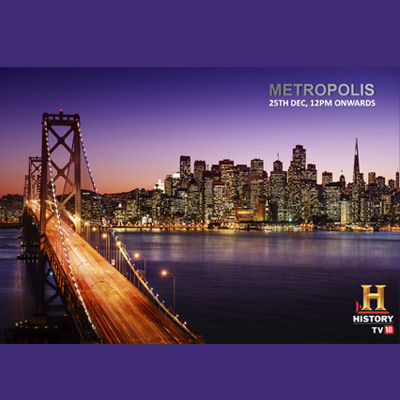
    MUMBAI: History TV18 will be airing a landmark series that captures the iconic images, emotions and the unique experiences of some of the renowned cities in the world. The series titled Metropolis will air on 25 December at 12 pm with back to back episodes all day long.


    The miniseries showcases six global destinations namely New York, Paris, Rome, San Francisco, London, and New Orleans. Viewers will be granted extraordinary access to each location through stunning 3D graphics and hands on knowledge from charismatic locals.


    The channel will also enlighten viewers with stories of how each city came into existence and how have they shaped the world’s borders changing landscapes. The show will unlock the secrets of how were these cities built and how they shape us through captivating depictions and stylised flashes of drama reconstruction.

  • Discovery Science to premiere ‘Strip the City’

    Discovery Science to premiere ‘Strip the City’

    MUMBAI: Discovery Science is gearing up to premiere Strip the City on 5 December at 9 pm. The show will showcase eight major cities and unveil the hidden technology that protect the people from the onslaught of nature’s most terrifying threats.


    The viewers will be taken deeper into the city, bringing to light an alien landscape of underground volcanoes, hidden rivers, subterranean cliffs, fragile fault lines, and ancient catacombs. The show will also hear from leading engineers and geologists as they will be seen examining the ingenious designs, innovative technologies and teams of forward thinking professionals who are instrumental in keeping each city alive and well.


    Strip the City will utilise the best of computer-generated imagery (CGI) to break down each city, layer-by-layer, to reveal a geological universe normally hidden under water, tarmacs and concrete. Each episode will peel the glass and walls off buildings, roll up the tarmac on roads, drains oceans and rivers, and slices through bedrock to look below some of the world’s major cities like Dubai, London, Rome, San Francisco, Sydney and Toronto and will also uncover what keeps them running smoothly.


    The show’s few episodes include Desert City: Dubai, Earthquake City: San Francisco, Harbour City: Sydney, Ice City: Toronto, Underground City: London and Ancient City: Rome.

  • Strengthening Bollywood & Hollywood ties to be discussed at Regional Pravasi Divas in LA

    Strengthening Bollywood & Hollywood ties to be discussed at Regional Pravasi Divas in LA

    NEW DELHI: The significant media, cultural and entertainment engagement between India and the United States will be one of the primary subjects of discussion at the ninth Regional Pravasi Bharatiya Divas in Los Angeles next month.


    Ways of strengthening ties between Bollywood and Hollywood would also be discussed in the meet to be held on 14 and 15 November.


    The RPBD will be organised by the Consulate General of India in San Francisco and the India Embassy in Washington DC in collaboration with the major community organisations of People of Indian Origin in the USA and the Overseas Indian Affairs Ministry.


    Various official forums for India-US collaboration will also participate in the RPBD.


    The RPBD Los Angeles will celebrate the presence of the single largest population of overseas Indians in any one country and strengthen the social, economic and political bonds between India, the USA and the Indian Diaspora.


    India and the USA share a growing partnership in almost all sectors vital to their economies. Indian Americans have made a significant impact in IT, medicine, academia, banking, hospitality, science and technology and also as entrepreneurs engaged in thriving businesses. The RPBD Los Angeles will focus and build on these synergies and collaborations, through seminars and discussions involving major stake holders on both sides.


    The concept of Pravasi Divas, which is to be held from 8 to 10 January in New Delhi next year, was given by a committee set up by then Prime Minister A B Vajpayee to cement ties with the Diaspora. The date was chosen since it was on 9 January that Mahatma Gandhi emigrated from South Africa to India to lead the freedom struggle in the early part of the last century.