Tag: Samsung

  • Samsung launches TVs with inbuilt Airtel Digital TV smart card

    Samsung launches TVs with inbuilt Airtel Digital TV smart card

    MUMBAI: In a tie up with leading electronics giant Samsung, the direct to home (DTH) service from Bharti Airtel: Airtel Digital TV, has launched Integrated Digital TV (iDTV). Through this agreement, Samsung’s range of SmartDirect TVs will come designed with an in-built Airtel Digital TV smart card.


    By doing so, the TV will be enabled with DTH signal reception without the need for setting up an external set top box (STB). According to a statement by the company, this iDTV will deliver viewing experience with minimal signal loss and maximum audio and video clarity.


    “We at Airtel Digital TV are always looking for new ways to deliver an experience for our customers that is truly innovative and world class. In line with this commitment, we are today excited to announce our collaboration with Samsung to launch the Integrated Digital TV and introduce the Indian market to its next phase of TV viewing experience,” said Bharti Airtel CEO-DTH and media Shashi Arora.


    Samsung Electronics chief marketing officer Ranjivjit Singh said, “We are thrilled to partner with Airtel to launch India’s first smart direct TV with an in-built iDTV technology in India. The clutter free, convenient and ultimate viewing experience offered by iDTV showcases Samsung’s commitment to provide consumer-centric products.”


    The TV will be powered by a single remote and supports HD. The iDTV set includes the Samsung SmartDirect TV and Airtel Digital TV’s smart card and is available starting at Rs 44,900.


    It also has a four month introductory offer of free subscription of Airtel DTH services. Airtel will give two extra months of HD subscription, over and above the one month HD subscription on regular DTH. Samsung will give one month free subscription to all SmartDirect TVs purchased during the launch period (20 August to 31 October) and activated before 15 November as a Diwali promo. Airtel customers can save 10 per cent each month by using Airtel broadband on buying this TV and will get a WiFi router too. The TV however does not restrict users to Airtel DTH. Customers can opt for other services as well.

    The TV can also support ultra HD content, if available. The launch comes just in time with Diwali sale, wherein Samsung is doing the distribution from its end for the TV.
  • Amazon’s cloud service, the preferred choice by media industry, says Amit Sharma

    Amazon’s cloud service, the preferred choice by media industry, says Amit Sharma

    MUMBAI: Striving to be Earth’s most consumer-centric company, Amazon.com is a place where customers can virtually discover anything they want to buy online. To prove their consumer-centeredness, the online retail giant in 2006 launched Amazon Web Services (AWS) exposing key infrastructure services to businesses in the form of web services, more commonly known as cloud computing.

    Even as a web service, Amazon is as well received and popular as its e-tailer form with clients ranging from MNCs to online agencies and news broadcasters.

    Talking about the base strategy of the company at Broadcast India conference, Amazon Internet Services’ solution architect Amit Sharma said “Focus on content development, leave the infrastructure management to us.”

    The company’s global clientele includes; Netflix, IMDB, Discovery Communications, Samsung, NASA while Hungama, NDTV, DigiCable, India Today Group, Sony among others joined them from India.

    According to Sharma, the company has around 8000 customers in India. “AWS Cloud is a preferred choice by the media industry,” he adds.

    With the rise of the online medium, everything from music to movies and TV shows have shifted online. The old hardware storage has been replaced almost completely by internet, tapes have been replaced by servers and the companies have gone digital. With these paradigm changes happening in the online world, AWS provides a platform for better web services to the company, Sharma opines.

    The company mainly handles issues getting all the content online to provide easy access.

    “Netflix runs almost 100 per cent of its online videos on AWS. In order to transfer the entire library of Netflix to AWS, we used around 1200 servers,” Sharma reveals.

    Similarly AWS provides solutions to problems including; reducing IT cost for new applications, for user profiling, websites and website hosting, business applications, backup and recovery, disaster recovery, data archive, high performance computing, mobile services, digital marketing, game development and digital media.

    Book My Show, uses AWS to analyse users that visit the site while Hungama was looking to reduced 33 per cent monthly costs using AWS.

    The company provides a highly reliable, scalable, low-cost infrastructure platform in the cloud that has helped a number of enterprises, government and startup customers businesses in 190 countries around the world. AWS offers over 30 different services, including Amazon Elastic Compute Cloud (Amazon EC2), Amazon Simple Storage Service (Amazon S3) and Amazon Relational Database Service (Amazon RDS).

    Available to customers from data center locations in the US, Brazil, Europe, Japan, Singapore and Australia, the company is planning to expand further and open a data centre in India.

    Recently, software giant Microsoft had said it will set up three data centres in India, offering commercial cloud services, to tap what it estimates is a $2 trillion opportunity. These data centres are expected to be set up by the end of 2015.


  • Facebook is working extensively in rural India to enhance connectivity, says Mark Zuckerberg

    Facebook is working extensively in rural India to enhance connectivity, says Mark Zuckerberg

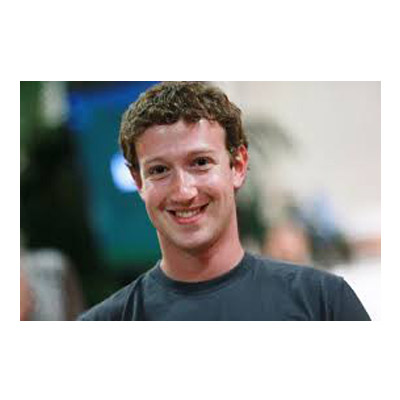
    MUMBAI: Stressing on the importance of enhancing internet connectivity in India, Facebook  founder and CEO Mark Zuckerberg today said, “Connectivity can’t be restricted to just the rich and powerful. Cost of internet access has to be made affordable.”


    The Facebook CEO is in India on a two-day visit and was speaking at the first summit for Internet.org, an organisation led by Facebook.


    Mark Zuckerberg has said that he would meet PM Narendra Modi on 10 October to discuss connecting Indian villages to the internet, and Facebook’s role in doing so.


    Pitching for free ‘basic net access’, Zuckerberg reckoned that it should be like dialing 911 in the US or 100 here in India. “There needs to be a 911 for the internet. We’ve been working with operators to offer free basic Internet for everyone, to break down the social barriers. With this model, we’ve already helped people connect 3 million people.”


    “Connectivity is a human right. We want to build an internet that works for all,” he added.


    The 30-year old also announced that Facebook will fund apps and services in local Indian languages for women, students and farmers.


    He pointed out that only about a third of people in the world had access to the Internet – 243 million in India and a recent survey showed that 69 percent of people in India said they didn’t know why it would be useful for them.


    The biggest barrier, he said, was that “lots of people who have never experienced the internet don’t know why they need it.”


    He also added that lack of relevant local language content is why most Indians don’t use internet and Facebook is working extensively in rural India to enhance connectivity.


    “Facebook is focusing on content in local languages. It is crucial to internet penetration in Asia, especially India,” said the 30-year-old billionaire. “80 per cent of content on the internet is just in 10 languages, while there are 22 official languages in India; 65 per cent of people use Facebook in a language other than English, including 10 Indian languages.”


    Zuckerberg stated that the next generation has the opportunity to bring the world to India and India to the world. The whole world being robbed of creativity and ideas because so many people in India are not online yet, he further said.


    He further revealed that Facebook has launched a new contest to develop local apps for farmers and social services in local languages with a $1 million fund dedicated for it.


    “We’re also going to extend a program called FB Start,” he added, “which provides $40,000 (Rs 25 lakh approximately) to developers who build and develop apps in these categories,” he added.


    Praising India, Zuckerberg credited it for ‘making leaps in revolutions that changed the world’. “Inventions have changed the world throughout history. ’Mangalyaan’ is a huge achievement for India,” he said.


    The CEO is of the opinion that lowering data costs by operators is not a sustainable solution. “Mobile operators invest a lot of money, lowering costs is not easy,” he said. “Infrastructure is the biggest barrier to internet, then technical issues. Language barriers are huge impediments to the internet,” he added.


    “Connected people have better access to technology, education and jobs. When people are connected, accomplishments are easy,” Zuckerberg said.


    Internet.org aims to make internet access affordable for people acrossthe globe. Focused on enabling the next five billion people without internet access to come online, the founding members of the project include Facebook, Ericsson, MediaTek, Nokia, Opera, Qualcomm and Samsung.


    The partners are collaborating on developing lower-cost, higher-quality smartphones and deploying internet access in under-served communities.


    Zuckerberg’s visit comes three months after Sheryl Sandberg, COO of the social networking giant, visited India which is Facebook’s second biggest market. She also met Modi, who has effectively used social networking during his election campaign and later even in governance.


    Zuckerberg is the third high profile CEO of a US-based corporation, after Amazon’s Jeff Bezos and Microsoft’s Satya Nadella, to visit India in last few days.

  • Rajiv Mishra joins Samsung as VP- media

    Rajiv Mishra joins Samsung as VP- media

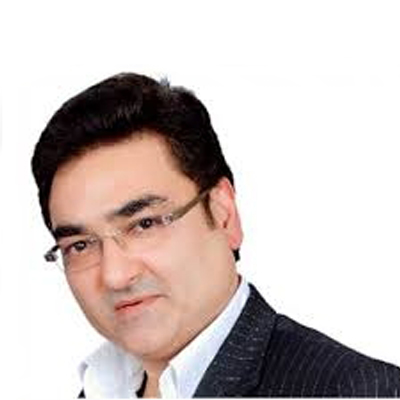
    NEW DELHI: Senior journalist Rajiv Mishra, who held the post of chief executive officer of Lok Sabha for about three years until he left some months ago, has been appointed as vice president (media) of Samsung’s south west Asia office in Gurgaon.


    Mishra began his 21 year long career from Hindustan Times and later switching over to electronic media.


    He began as manager – programming in Star, then joined Zee TV as senior manager – corporate, Reliance Infocomm as general manager – corporate affairs, News 24 (BAG Films and Media) as COO and director and India News as COO. He launched Times Now of the Times of India group in USA as India Now while working for CineMaya Media of USA.


    Mishra was with Lok Sabha TV as CEO in an official rank and status of additional secretary.


    He is also the founder and first president of Association of Radio Operators for India (AROI). AROI is the industry representative body of all FM Radio Broadcasters/Stations of India. He also founded Association of Regional Television Broadcasters of India.

  • Tribune Digital Ventures buys out What’s-ON

    Tribune Digital Ventures buys out What’s-ON

    MUMBAI: Atul Phadnis’ What’s-ON, a television search and electronic programme guide (EPG) data provider for India and the Middle East, has been acquired by Tribune Digital Ventures, a technology and innovation arm of Tribune Company.


    The move expands Tribune’s TV listings and video metadata footprint to more than 50 countries in 30 plus languages, reaching more than 600 million pay TV subscribers.


    What’s-ON provides EPG data and TV search products for 16 countries, including India, United Arab Emirates, Saudi Arabia, Jordan, Egypt, Qatar, Bahrain, Indonesia, Kenya and Sri Lanka.  Today, What’s-ON delivers data for more than 1,600 TV channels and helps power more than 50 million set-top boxes through the region’s top cable and IPTV services.  What’s-ON customers include some of the biggest TV networks, service providers and consumer electronics manufacturers, such as Star TV, Discovery Networks, Hathway Cable, Qatar Telecom, Samsung and Sony.


    Earlier this year, Tribune had acquired music and video technology and metadata leader Gracenote.  The company’s sizable presence in EPG data in Europe, combined with Tribune Media Services’ (TMS) presence in North America, immediately positioned Tribune as a leading provider of TV data, as well as music, around the globe.  The addition of What’s-ON further extends this reach and strengthens Tribune’s position internationally.


    “The acquisition of What’s-ON fits with our broad strategy of diversifying revenue and scaling our metadata business to meet increasing client demand,” said Tribune Company CEO Peter Liguori. 


    “The strategic investments we made over the last year expand Tribune’s presence internationally and enable us to offer a trusted solution to cable, Internet and consumer electronics clients globally.  I’m pleased that with What’s-ON we will have a new presence in markets with significant opportunity and What’s-ON’s founder and CEO Atul Phadnis and his team will work together with Rich Cusick and Tribune’s existing TV metadata team to grow this area of our business,” he added.


    India is the world’s third largest TV market, after the US and China, with an estimated 175 million homes and a growing base of digital cable subscribers, according to ABI Research.  The expansion of digital TV in Asia, featuring popular shows and movies, will enable Tribune to develop new technologies and services on top of its entertainment data that fuel discovery and recommendations on cable, satellite and over-the-top services.


    “We felt it was important to find a company that shares our vision for the business and understands the growth potential for TV data and services in Asia. And we believe we have found that with the Tribune team. Tribune’s portfolio of entertainment technology and metadata will provide us a solid foundation to grow the business and expand our services throughout the region,” said Phadnis.


    “Electronic program guides remain the primary vehicle for the discovery of TV shows and movies around the world,” said Rich Cusick, who oversees the TV metadata business for Tribune.  “While data remains the foundation of what we do, our evolution will be centered on data-driven services and features to help define new TV platforms and experiences for viewers around the world,” he added.


    What’s-ON will continue to operate out of its headquarters in Mumbai.  Its leadership team, including Atul Phadnis, will remain with the company.  Tribune’s Asian subsidiaries, including Tribune Digital Ventures Singapore, are purchasing all of the shares of What’s-ON for $27 million subject to standard adjustments.


    Edelweiss Capital served as the Investment Bank for What’s-ON.

  • Brands need to get inspired, innovate & then transform: Kendrick Reid

    Brands need to get inspired, innovate & then transform: Kendrick Reid

    MUMBAI: “How often have you asked yourself, who you want to be?” asked BET Networks’ Kendrick Reid to creative minds present at the Mumbai edition of promoaxbda. Reid went ahead to mention that just like human minds need a good dosage of inspiration to innovate and thereby transform, brands too need to take the same route.


    The first thing that brands need to keep in mind while rejuvenating its communication strategies is to hit on emotional chords. Only an emotional connect brands can help consumers to be with it at various stages of its transformation. Reid mentioned about how Steve Madden for 12 years didn’t believe in mainstream advertising. When they actually rolled an ad film it fell flat. After much introspection Steve Madden weaved perfect style in its communication. Steve Madden splashed communication messages at strategic locations recently. Interestingly it worked well for the brand in the retail space where the brand needs to captivate its audiences well.


    While digital evolution has stormed the television business across the world content consumption has drastically changed. Reid explained how Comdey Central revolutionised its brand identity. Comedy Central wanted to cater to multi screens and revised its marketing outlook. The channel not only changed its look and feel but garnered much more attention of viewers. Another channel that refreshed its creative outlook was VML, a commercial channel in Belgium.


    VML involves its target audience in its various communication packages. As the channel targets families at various occasions it is creating strong impressions with every communication that it makes personalised. Reid emphasised on the fact that for marketers the challenge that they have ahead in front of them is to deal with the millennials. Brands need to break free with traditional thought processes if they are targeting the millennials. Reid gave the example Fuse TV which took a risk and started communicating in the lingo that its audiences speak. Along with this the channel also has started integrating content across different platform where the channel has presence. This was welcomed with open arms by the viewers of Fuse TV.


    Reid is of the opinion that brands need to be wise even if the collaboration is to target mass audience or a niche set of audience. According to him what Samsung did with the popular music artist JayZ was impressive and one of its kind of music releases in modern culture. Creativity is just about the right time. While brands should keep the TG at the core in its communication strategies, it is necessary that these brands also should think about the cultural influence that it will as in the long run. 


    When a brand is ready to reform itself then there is no looking back for it. It will set an example for others in the space irrespective of way it gets inspired, innovate & transforms itself.

  • Vivaki’s Mona Jain joins Zee Entertainment

    Vivaki’s Mona Jain joins Zee Entertainment

    MUMBAI: In December last year, Vivaki Exchange Mona Jain had put in her papers. The move came in after Lodestar UM and Cheil won the Samsung account from Starcom MediaVest Group.


    Jain, who has more than two decades of experience in marketing communications, was tight-lipped about her next move. Her joining Zee comes as a pleasant surprise to many.


    In-line with its plans to strengthen the senior sales team, Zee Entertainment Enterprises Limited (Zeel) today announced the appointment of Jain as EVP-cluster head and Rahul Sharma as sr. VP-national sales head.


    Speaking on both the appointments, Zeel chief sales officer Ashish Sehgal said, “We are extremely happy to have two media stalwarts join us from the industry. Mona brings with her an immense experience and understanding of the industry. She has been instrumental in key media launches and her knowledge will be really valuable in reinforcing our relationship with agencies & clients. Mona will play a key role in developing brand solutions, setting up a business model for geo-targeting & agency relationship management. She will also head the North region leading the Business Development team, new initiatives and niche channels.”


    “Rahul comes with a digital background, which will add a new dimension in selling traditional media. His proven skills in establishing start-up operations and successful launch of channel brands will play an integral role in helping the Company achieve its business objectives”; Sehgal further added.


    Commenting on her joining, Jain stated, “I am extremely pleased to be stepping into this position. ZEE looks poised for huge growth and it will be very exciting to be a part of this journey.”


    With over 20 years of experience in media and FMCG, Sharma said, “I have been a part of Television and it’s home coming to me. I am excited to join ZEE and be a part of the biggest Television Network.”


    Both the appointments are with effect from 5th March, 2014.

  • GroupM crowned ‘The Dream Company to Work For’

    GroupM crowned ‘The Dream Company to Work For’

    MUMBAI: GroupM India, the country’s largest media investment conglomerate, was honored with the ‘The Dream CompanyTo Work’Award for in the Media and Entertainment sector. GroupM is also in the overall list of ‘Dream Employer of the Year’in India. The awards have been conferred by the World HRD Congress 2014 in Mumbai.

    The ‘Dream Companies To Work’ is an annual event organized by the World HRD Congress to reward and recognize People and Talent initiatives of organizations across various sectors. Over 100 companies participate at the World HRD Congress 2014event including Accenture, Angel Broking, Citibank, HDFC, Infosys, Samsung, SBI, Cavin Care,Reliance, Novartis,TCS and many more.This was the first time that GroupM participated at the ‘Dream Companies to Work For’ Awards.

    CVL Srinivas, CEO, GroupM South Asia said, “GroupM is extremely proud to receive the awards from the World HRD Congress. The awards reaffirm that investing in our people is the best way to ensure cutting edge product quality and superlative customer delight. Talent management remains a critical focus area for us at GroupM South Asia.”

    Added Gaurav Hirey, Chief Talent Officer, GroupMSouth Asia, “GroupMand its agencies have pioneered some of the best Talent practices in the South Asia markets. We are investors in people and in the last year, we have aggressively pursued a people transformation agenda. We have worked on various capability-building initiatives like the Youth Executive Committee (YCo), The New ME Initiative for digital orientation and looked at getting in fresh ideas and talent through an engaging Campus Connect effort. This allows us to provide huge value to all our stakeholders, especially our clients and our employees.”

    Over the last 11 plus years, GroupMIndia has cemented its position as an innovator and thought leader in the media industry. GroupM also has a distinction of having invested in a full fledged talent management team the only one in the media and entertainment industry. Over the last year, GroupM has made a paradigm shift in the way it operates in South Asia, keeping in mind the ever changing media landscape. With digital at the heart of their processes and planning, it has resulted in the conglomerate winning over 82 new businesses across its agencies and specialist units.


  • PepsiCo India’s Shivakumar says collaboration will be the key to growth

    PepsiCo India’s Shivakumar says collaboration will be the key to growth

    MUMBAI:  “One needs to look at brands which will help each other grow as well as benefit the industry…”


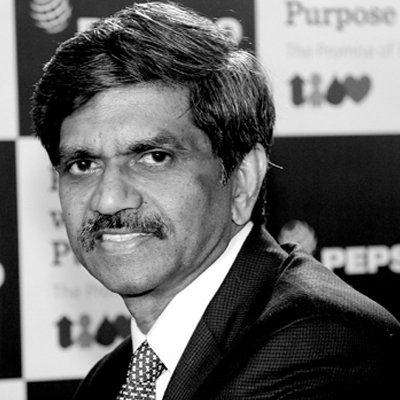
    This was the message conveyed by PepsiCo India chairman and CEO D Shivakumar to a large gathering of who’s who of the industry on Wednesday, as he took them through the highs and lows of marketing, media and advertising in 2013 and indulged in crystal gazing to see what holds for the communication fraternity in 2014.


    In the coming years, Shivakumar sees a conflict between independent growth and dependent growth among agencies as well as brands.


    Giving the example of telecom, Shivakumar said, “Telecom would not have been what it is today if Airtel would not have collaborated with Nokia or Vodafone with Samsung. “


    Apart from all this, the industry is all about innovation wherein size doesn’t matter but all depends on how fast a company is in responding to consumers.


    As the industry waited for the leader with ‘fighter’s instinct’ to share his views at the IAA organised event called ‘Retrospect and Prospects’, Shivakumar stepped on to the stage and made it clear it is more about paying tribute to the city (Mumbai) which has taught him a lot and that he will wrap up within 60 minutes.


    He started with how the city and the people he met here have helped him grow in his career and went on to touch upon various aspects which affect the industry starting with how last year saw the emerging markets slowing down and how it devalued the currency.  


    Not indulging much in the negatives, he highlighted how 2013 was the defining year for the digital space. “The smart phone which gives the power of internet in every person’s hand has opened up the whole world of opportunities for them. It has empowered women and youth,” he said while pointing out how a billion phones were sold last year and this year will see many more being sold.


    People using internet through mobile phone is much higher than through fixed internet, globally, hence, he urged marketers to shift their media strategies.  With that note, he estimated that the year 2014 will see the world media industry spending $505 billion.


    The general elections in India will play a major role in deciding which way the country and the various sectors will head. Shivakumar said in the coming months India will see about Rs 1,000 crore being spent on advertising by political parties, 2.5 times higher than what was spent in 2009.


    The year will also see a shift in the manner the money will be spent. The shift will be in favour of the digital medium wherein 10 to 15 per cent will be spent on the platform as the first time voters (160 million) are on social media.


    Shiv believes that regional markets play an important role as regional languages are driving growth in the number of TV channels. The same stands true for print as well. “We are a hyper fighting market and can never be satisfied with just a couple of choices. But with so much proliferation, it is time to collaborate?” he questioned the audience.


    He then added how TV has been a major contributor in unearthing talent in the country. With too many dance, singing, etc reality shows gracing our television sets only shows the potential this wonder has, he said.


    Maybe that is the reason behind the company (PepsiCo) launching its channel with MTV to help budding talent get a platform to showcase talent.


    For brands which depend on celebrities, one needs to understand how social media has changed the equation and how brands as well as celebs need to help each other reach high numbers (likes and followers) on social media platforms.

  • Samsung is India’s Most Trusted Brand; Sony ranks 2nd, Tata is 3rd

    Samsung is India’s Most Trusted Brand; Sony ranks 2nd, Tata is 3rd

    MUMBAI: India’s much anticipated and most rigorous brand evaluation, The Brand Trust Report, India Study, a comparison of the trust held in brands, has been released for 2014. Samsung has emerged as India’s Most Trusted brand this year. Sony ranks as India’s 2nd Most Trusted Brand followed by Tata which has ranked 3rd this year. In 2013, the three brands had ranked second, third and fifth respectively. LG, ranks 4th in this year’s list, followed by the three year leader, Nokia, at 5th place. Hewlett Packard move up fourteen ranks over last year to become India’s 6th Most Trusted Brand and Hero leaps seventy-nine ranks to become India’s 7th Most Trusted. Honda is at rank 8th, followed by Reliance at 9th. Mahindra betters its last year rank by sixty-nine places to get ranked as India’s 10th Most Trusted brand.

    The Brand Trust Report, the fourth in its series, is the result of a comprehensive primary research conducted on the proprietary 61-Attribute Trust Matrix of TRA (formerly known as Trust Research Advisory). This year’s study involved 15000 hours of fieldwork covering 2500 consumer-influencers across 16 cities in India and generated 5 million datapoints and 20000 unique brands from which the top 1200 brands have been listed in this year’s report. These brands have been classified into 284 different categories as against 213 categories in 2013. The 244-page report is available for Rs. 14000/-.

    N. Chandramouli, CEO, TRA, said on the occasion of the report’s launch, “Samsung has grown steadily in trust ranks over the last four years – 5th in 2011, 4th in 2012, 2nd in 2013 and has reached India’s Most Trusted rank this year. When a brand focuses on its trust with intensity, apart from trust the brand gains in market-share, product premium and acceptance of new products as an automatic by-product. Samsung’s strategy of focusing on the core intangibles of its brand is evident from its climb to leadership in BTR 2014.”

    An analysis of the 100 Most Trusted Brands in 2014 revealed that most brands were represented from Diversified with 11, Consumer Electronics with 10, Bath/Beauty with 9, Mobiles with 8, 4-Wheelers, Telephony, and 2-Wheelers with 4 each, and Personal Technology, Sportswear and Aerated Drinks with 3 brands each.

     “Among the top 100 Most Trusted brands, 75 were net gainers while 25 took a fall. The gainers gained an average of 86.23 ranks, while those that fell took a dip of 27.16 ranks on average, showing that the average gain among the top hundred beats the average loss in ranks by 317%. A connected surmise


    could be drawn that in the year that was slow for many, brands took the opportunity to focus more on their trust intangibles, scoring points in the process. For long term sustainability and success, it is important that brands have a long term investment in trust”, Chandramouli added.