Tag: Samsung

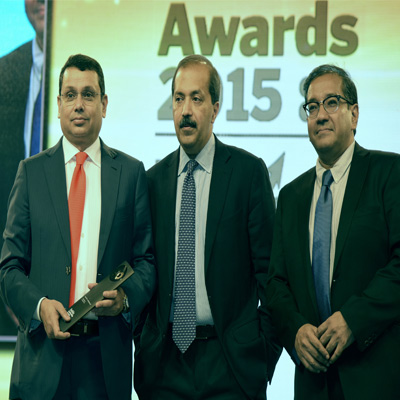
  • Uday Shankar named Best CEO at Forbes India Leadership Award 2015

    Uday Shankar named Best CEO at Forbes India Leadership Award 2015

    MUMBAI: Leading one of India’s biggest broadcast company from the front – Star India CEO Uday Shankar – has time and again challenged the status quo and taken multiple risks, which have in turn reaped multiple rewards.


    One of the most powerful man in the Indian media and entertainment industry, Shankar has been named as the Best CEO of a Multi-National Company (MNC) at the Forbes India Leadership Awards (FILA) 2015, which were held at the Grand Hyatt, Mumbai.


    The award marks a break from convention at FILA, with Shankar becoming the first MNC head of a media and entertainment company to receive the honour.


    Shankar was selected from amongst a shortlist of nominees that included leaders from top-notch companies like Hindustan Unilever, Samsung, ABB India and Maruti Suzuki India Ltd.


    The jury for the Forbes India Leadership Award 2015 comprised the likes Marico India chairman Harish Mariwala, HSBC India chairman Naina Lal Kidwai, McKinsey India managing director Noshir Kaka and Kohlberg Kravis Roberts & Co India country head Sanjay Nayar.


    Accepting the award, Shankar said, “I feel enormously humbled to be receiving this honour on behalf of Star India. We are a multinational company albeit with an Indian heart. Our endeavour has been to harness the transformational power of media to foster social change and thereby inspire a billion imaginations.’”


    “I would not be here receiving this award, if I was not a journalist – that introduced me to the value of being socially relevant and to see the nuances that the untrained eye could easily miss. It also showed me that the value in life comes from doing big things – the headlines. And finally, it taught me to do the right thing, not be intimidated by competition because everybody makes as many mistakes,” he added.


    From shaping the content and marketing strategy for Star India’s multiple channels across genres, charting out the company’s digital strategy with Hotstar, heading the Indian Broadcasting Federation (IBF) – the apex organisation representing television broadcasters, to being a part of power-packed policy meetings with Prime Minister Narendra Modi and 21st Century Fox CEO James Murdoch, Shankar juggles multiple responsibilities with élan. In fact, he was the only Indian CEO to be present at PM Modi’s roundtable meeting on media, technology and communications in the US recently alongside News Corp and 21st Century Fox executive chairman Rupert Murdoch and a host of other CEOs from various American organisations.


    Shankar took on as CEO of Star India in 2006 and will be completing a decade in the role next year.

  • Indian brands eye 25% increase in mobile marketing spends

    Indian brands eye 25% increase in mobile marketing spends

    MUMBAI: In this ever changing and developing world, which is led by technological advancements, brands need to constantly re-examine their strategies and explore the full extent of the tools at their disposal. In a scenario like this, the key to the mobile marketing industry’s success is for brands to take a focused and consumer-centric approach.


    What’s more, according to a research called “State of the industry – mobile marketing in India” conducted by WARC in conjunction with Mobile Marketing Association (MMA), around 75 per cent of Indian marketers are looking to raise their mobile marketing spends to 25 per cent from this year from 10 per cent or less from the previous years. What’s more, the number might even hit 50 per cent in the next five years.


    According to WARC Asia Pacific MD Edward Pank, the study indicated that Hindustan Unilever was the most innovative mobile brand in the country followed closely by Flipkart, Samsung, Amazon and Paytm while Telecom and Retail ead the way in terms of innovation and location based marketing.


    The annual MMA Forum India 2015, which was held in Gurgaon recently, was themed ‘Acquiring, Reaching and Engaging the Right Consumers through Mobile.’ The forum saw speakers from brands, agencies and technology companies, dissecting successful and innovative brand campaigns over the previous year to highlight the importance and effectiveness of mobile within the marketing mix.


    “Capability-building and innovation are key to the success of the mobile marketing industry. In light of the rapid evolution of technology, it’s important for brands to take a focused and consumer-centric approach to mobile,” said MMA Asia Pacific managing director Rohit Dadwal.


    The MMA Forum India 2015 kicked off with a keynote session by Unilever regional vice president – media Rahul Weld, who discussed Unilever’s innovative approach to marketing and its success in reaching out to the targeted customer through effective strategies.


    Talking about the importance of “seizing the moment” when reaching out to the consumer, Google India industry director – e-commerce, retail, online classifieds and technology Nitin Bawankule said, “The most effective way to reach out to the consumer is to target them in time of their need. Every consumer looks for solutions on their mobile devices and strategic advertising are key to catching the consumer at this moment.”


    Media specialist and writer Vanita Kohli-Khandekar and Vserv co-founder & CEO Dippak Khurana brought to light the various aspects of mobile commerce, advertising and data that can help shrink the intent-purchase gap. 


    Talking about the need to share data to leverage its power to reach, engage and acquire the consumer, Khurana said that publishers with significant “consumer attention” will try to move to commerce and that while consumers in India have regularly demonstrated their appetite to pay through mobile, marketers have been shy of sharing data that could help them buy through mobile platforms, significantly limiting their success.


    Madhouse Inc founder & CEO Joshua Maa discussed the similarities and the difference between different Asian markets with a focus on India and China during his session – “No two markets are the same yet they are not different.” He covered aspects and opportunities where India could learn from China and vice versa.


    Group M CEO CVL Srinivas moderated a panel discussion with Pepsico India vice president – beverages category Vipul Prakash, ZEEL chief business officer Sunil Buch and OLX India CEO Amarjit Singh Batra, where they shared insights on becoming “mobile capable” and how media owners, brands and agencies can come together to build mobile insight and capability to achieve the desired level of maturity.


    Yahoo Asia Pacific senior director marketing Nitin Mathur unveiled the various aspects of Flurry, the mobile-analytics company acquired by Yahoo, and discussed its potential to influence the consumer by tracking their behaviour on apps and building personalised and relevant communication thereby highlighting the need for more such tools in the space.


    Opera Mediaworks Asia managing director Vikas Gulati illustrated the effectiveness of mobile devices in connecting brands and consumers by discussing the success of AskMeBazaar.com’s campaign with Askme India group CMO Manav Sethi and Findit Malaysia that was executed by Opera MediaWorks. Gulati discussed at length, the power that mobile empowers brands with, to control consumer behaviour as they are most intimate and used media device.


    As part of the MMA forum 2015, Madhouse – South Asia COO Milind Pathak introduced the winners of Madlabs, a platform introduced by Madhouse to showcase the innovative mobile communications and solutions in the startup ecosystem and espoused the effective use of mobile to reach out the targeted consumer.


    The MMA Forum was followed by the MMA’s mobile excellence awards program – SMARTIES India 2015 where the winners from 15 categories and five Industry awards were announced.


    Over 330 delegates and 34 industry leaders representing the mobile marketing ecosystem in the country came together for the day-long event to discuss and deliberate over the future of the industry.

  • Samsung plans multi-media campaign for new mass market phone Galaxy J2

    Samsung plans multi-media campaign for new mass market phone Galaxy J2

    BENGALURU: Samsung India Electronics has launched the Samsung Galaxy J2, a 4G LTE smartphone for the mass market in India. The phone will be available starting 21 September, 2015 in the country. Apart from being a 4G enabled phone, the J2 is tailor made to meet consumer needs.


    The company is in the process of chalking out a multi-media campaign with creative agency Cheil and media buying agency Lodestar.


    Speaking to Indiantelevision.com, Samsung India vice president of marketing, IT & mobile Asim Warsi said that BTL activities have commenced and the retail visibility leg of the campaign has already started. “Over the next few weeks, the campaign will roll out across various mediums, including television,” he said.


    The J2 is Samsung’s 17th LTE 4G device launch so far, a slate that includes high end Samsung smartphones in the price range of Rs 65,000+ to tablets to the lower end smartphones. The J2 is priced at Rs 8490 with the intent to take on players such as Xiaomi, Micromax, etc. that offer low cost smartphones in the country.


    The company’s research also reveals that of the 70 crore active mobile connections in India, about 25 crore have internet access capability, and of these about 17 crore are smartphones. Based on this insight, Samsung India sees a huge opportunity to bridge the gap between the total number of mobile connections and smartphones in India.


    Further, the company says that key features of the phone have been developed in Samsung’s Indian R&D facilities strengthening the company’s commitment to ‘Make in India.’ The phone has features ranging from the India centric user interface to the Ultra Data Saving mode.

  • Launches and deals announced at CommunicAsia, EnterpriseIT & BroadcastAsia 2015

    Launches and deals announced at CommunicAsia, EnterpriseIT & BroadcastAsia 2015

    MUMBAI: Over the past four days, Marina Bay Sands has been abuzz with activity as CommunicAsia2015, EnterpriseIT2015 and BroadcastAsia2015 brought the movers and shakers of the infocomm technology (ICT) and broadcasting industry together under one roof.


    Dell, Panasonic, Samsung and Sony, household names renowned for their consumer electronics chose CommunicAsia, EnterpriseIT and BroadcastAsia to announce major launches in their B2B segments. 


    Panasonic, an exhibitor at both CommunicAsia and BroadcastAsia, announced seven new business technology products and solutions for the Asia Pacific markets. These include the Toughpad FX-X1, a fully-rugged 5-inch tablet, the new AG-DVX200, the world’s first 4K integrated zoom lens camcorder and the world’s lightest 4K+ 3-Chip DLPTM Laser Projector alongside the latest in mobile surveillance technology, blu-ray data storage, and professional broadcast video equipment.


    “Asia Pacific is a fast-growing dynamic marketplace, and presents huge opportunities for Panasonic across all our B2B business segments from integrated solutions to audio visual products,” said Hiro Sakamoto, Managing Director of Panasonic System Solutions Asia Pacific. “Our commitment to delivering total end-to-end solutions in the region is an integral part of our growth strategy. CommunicAsia2015 and BroadcastAsia2015 was an ideal platform for us to launch new products and solutions for the Asia Pacific markets as part of our commitment to strengthen our B2B business.”


    At CommunicAsia, Dell launched its new Internet of Things Gateway, while at BroadcastAsia, Samsung unveiled the world’s first low temperature video wall, and Sony – their new HXR-NX100 professional camcorder.


    Handset makers Huawei, PHICOMM and RugGear also launched their flagships P8, P660 and GranTour Series – RG730 respectively at CommunicAsia.


    “CommunicAsia, EnterpriseIT and BroadcastAsia are cornerstone events in the Asia Pacific ICT and broadcasting industries. With experts and decision-makers from a wide range of fields, the events provide an important Asian platform for companies and industry leaders alike to announce new, best-of-breed launches, and deliver key announcements that not only signal a pivotal shift in how enterprises are embracing technology in the way business is conducted, it also demonstrates clearly how technology has become indispensable in the new generation of business growth strategies. We continuously aspire to deliver great, if not better, quality events as countries and regions make further inroads in their smart cities journey towards a hyper-connected digital world,” said Lindy Wee, Chief Executive of event organiser, Singapore Exhibition Services.


    “I had no idea how big CommunicAsia was. There are so many high profile companies and people here. It has been great to meet these people in person and develop new friendships and business relationships that are going to help my own business grow,” said CommunicAsia2015 Summit speaker and CEO of MWI, Joshua Steimle.


    Smart Technologies to realise Singapore’s Smart Nation initiative


    Dr. Yaacob Ibrahim, Minister for Communications and Information announced at the opening ceremony of CommunicAsia, EnterpriseIT and BroadcastAsia that Singapore has entered the “build” phase of its Smart Nation initiative.


    In support of Singapore’s Smart Nation vision, local company ST Electronics launched the Intelligent Aggregation Gateway (iAG) Box – a key enabler to ubiquitous connectivity for smart cities. Facilitating sensor communication infrastructure on a single secure platform, the iAG box can be deployed in an urban environment to help with the management of a city’s key infrastructure for public safety, healthcare, transport, environment and utilities.


    Alongside major conglomerates, also playing a significant role in paving the way for Singapore becoming a ‘Smart Nation’ are start-ups like CtrlWorks, Neeuro and Zap!. At CommunicAsia, CtrlWorks showcased Axon, an intelligent robot powered by cloud robotics technology, easing manpower needs for areas such as logistics and hospitals. Neeuro pioneered an innovative EEG brainwave headgear that, when paired with Memorie – a mobile app with entertaining games suited for people of all ages, can train different aspects of the brain’s cognitive functions through completion of specific tasks, and enable them to apply the attained skills to daily activities.Another exciting product launch is Zap!, an ‘Uber’ courier service that offers less than two-hour deliveries from as low as S$5.


    Australian firms announced major deal at CommunicAsia2015


    On the international front at CommunicAsia, ICT companies from Australia marked a decade of participation. The 49-strong delegation from the Victoria region of Australia announced a range of new partnerships, expansions, licensing deals and international joint ventures centred on ICT health and medical technology industries. UnityHealth licensed its award winning eLearning platform, iTherapeutices, to Singapore based MIMS. Proximiti announced the expansion of company operations through two new regional hubs in Singapore and India. flexAnswer Solutions signed a five-year renewal contract with Changi Airport Group, and new contracts with seven Singapore government agencies.


    “Victoria has a strategy to help our ICT, health and medical technology companies to become part of global supply chains in knowledge creation, research, product development and commercialisation. The Andrews Labor Government is proud to be showcasing our state’s world class ICT capabilities at CommunicAsia2015, the most important ICT expo in South East Asia,” said Australian Minister of Training and Skills, Steve Herbert.


    Shifts in broadcasting economics addressed at BroadcastAsia2015


    With consumers increasingly taking control of where and when they want to access content, BroadcastAsia2015 responded by bringing together the latest in OTT and 4K technology, media asset management (MAM) and video analytics.


    ARRIS, a global innovator in IP, video and broadband technology gave BroadcastAsia attendees an exclusive first look of its 2015 Consumer Entertainment Index. It is one of the only global studies of its kind undertaken annually that looks at the evolution of entertainment through the lens of consumer engagement with content, connected devices, and each other.


    “This week at BroadcastAsia2015, we shared a first look of the findings of our ARRIS Consumer Entertainment Index. This event provided the perfect platform for us to talk about the evolving trends of consumers from across APAC. This year’s study revealed that while consumers’ consumption habits are changing, there are many frustrations, such as challenges with streaming and Wi-Fi connectivity, and experiencing quality mobile TV content through cellular and mobile Wi-Fi streaming services,” said Tim Gropp, Senior Vice President, Sales, Asia Pacific, ARRIS. “Understanding their concerns present significant opportunities for service providers. Beyond addressing these issues, businesses can look at developing new and differentiated offerings that would be most relevant to viewers.”


    “BroadcastAsia is THE meeting place for broadcasters in the region. The wide spectrum of products and variety of exhibitors allow me to choose the ideal digital solutions for our company’s ICT strategy,” said BroadcastAsia2015 visitor Alain Roger Poirier, Chief Operating Officer, Bloomberg TV Malaysia.


    Best Practices and Growth Potential – The Focus of Industry Discussions


    More than 1,000 industry leaders and professionals gathered at CommunicAsia2015 Summit, BroacastAsia2015 International Conference and the Creative Content Production Conference to discuss latest ICT trends, fundamental shifts in broadcasting economics, and digital media challenges.


    “BroadcastAsia2015 International Conference was a good combination of both technical and commercial aspects of cloud and virtualisation, as it applies to all video applications. Attendees were a good balance between IT, enterprises and those with broadcast experience,” said Ian Trow, BroadcastAsia2015 International Conference speaker and Senior Director of Emerging Technology and Strategy at Harmonic.


    “The social TV and second screen track was absolutely outstanding this year. 2014 and 2015 has seen some of the biggest changes in OTT, social media and the second screen and our panelists and speakers represented all different parts of the business. From gamification to analytics and video this year’s BroadcastAsia was truly enlightening when it came to understand the future of TV,” said BroadcastAsia2015 delegate and Senior Vice President of the Shorty Awards & Muck Rack, Natan Edelsburg.


    “The session was especially enlightening in terms of service providers’ business plans to leverage convergence to deliver cross platform services that are engaging to customers,” said Yuvarami T, Director, Media Development Authority, a CommunicAsia2015 Summit delegate.


    More than 48,000 attendees from 101 countries and regions, including visitors, exhibiting staff, conference speakers and delegates, and members of media, got to witness at CommunicAsia, EnterpriseIT and BroadcastAsia how technology could be harnessed to better connect cities, governments, enterprises and consumers.


    The event will return to Marina Bay Sands on 31 May – 3 June 2016.
  • Airtel launches 4G trials in Mumbai; partners Flipkart, Samsung

    Airtel launches 4G trials in Mumbai; partners Flipkart, Samsung

    MUMBAI: The 4G wave is picking up pace in the country with telcos scrambling to roll out its services and offers to gain subscriber traction. Global telecommunications company Bharti Airtel has now launched 4G trials exclusively for its existing customers in Mumbai.


    As part of this, Airtel customers across the city can now avail a complimentary upgrade to Airtel 4G at 3G prices and be the first to experience blazing Airtel 4G speeds. The company will use this trial phase as an opportunity to gather customer feedback around the quality of its 4G services and assimilate these market insights into Airtel’s wider agenda of building a world-class 4G network infrastructure for the city.


    Additionally, Airtel has also inked go-to-market partnerships with Samsung and Flipkart to proliferate 4G devices and transition more and more customers to experience the fastest browsing experience.


    Bharti Airtel Mumbai, Maharashtra, Goa and Gujarat hub CEO Ashok Ganapathy said, “As an increasing number of Indians show a preference for consuming data and content over their mobile devices, we at Airtel are excited to bring the power of 4G to our customers in Mumbai. While launching Platinum 3G, we significantly augmented our network and now have made further investments in building a robust 4G network here. For us, delivering a compelling service experience to our customers is our utmost priority. We want our existing customers to be the first ones to enjoy the Airtel 4G experience and are offering them a free upgrade to Airtel 4G at the same price as 3G. We look forward to our customers’ valuable feedback towards delivering a truly world-class 4G experience in Mumbai.”


    To avail this offer, existing Airtel customers with 4G ready mobile devices can walk into any of Airtel’s retail touch points across Mumbai and upgrade to a 4G SIM and experience high mobile internet speeds.


    As part of the deal with Samsung India, the two companies have decided to promote each other’s 4G offerings at their respective outlets. Samsung India’s retail stores will now facilitate easy Airtel 4G SIM swap for customers buying 4G smart phones. In the weeks to come, Samsung will also offer bundled Airtel 4G SIMs along with Samsung 4G handsets available in the Indian market. Airtel 4G double data offers are now available for Samsung’s Galaxy S6, Galaxy S6 Edge, Galaxy A7 and Galaxy A5 mobile devices. Samsung will also be looking at launching its all new Core Prime 4G mobile smartphone in Airtel 4G markets.


    Flipkart, on the other hand, will be offering Airtel 4G with double the data benefits for customers buying select 4G handsets. Flipkart-exclusive 4G devices (including brands like Xiaomi, Motorola, Lenovo, Asus and Huawei) that will soon come bundled with an Airtel 4G SIM. While existing Airtel customers will be able to follow a quick SMS registration process to activate 4G, non-Airtel customers buying their 4G device from Flipkart will be guided through a simple process to smoothly transition to the Airtel 4G network.


    Airtel’s 4G services are now available across India including Mumbai, Kolkata, Chennai, Bengaluru, Pune, Chandigarh and Amritsar.

  • Events & activation industry to touch Rs 5,779 crore by 2016-17

    Events & activation industry to touch Rs 5,779 crore by 2016-17

    MUMBAI: The events and activation industry is clearly on a roll in the country. According to the EY-EEMA (Event and Entertainment Management Association) report, the sector is expected to grow to Rs 5,779 crore by 2016-17.


    This growth will be on the back of marketers increasing their below the line (including digital) spends to 21 per cent of their total marketing spends. The growth will also be led by personal events, MICE (meetings, incentives, conferences and exhibitions), activations and sports.


    According to the report titled ‘Making experiences in India: The events and activations industry,’ the events and activations industry has seen a growth of 15 per cent annually from Rs 2,800 crore in 2011-12 to Rs 4,258 crore in 2014-15.


    The report states that while managed events remain the largest service offering, IP (Intellectual Property) and digital events are growing at a faster rate than managed events. The key strength of the industry remains its ability to get things done and the ideation and efficiency with which it operates. “That said there is a need for the industry to work on acquiring the right talent, managing costs, demonstrating ROI to marketers and increasing transparency in operations,” states the report.


    Non-metro markets are expected to increase in importance as marketers look to tier II and tier III cities for incremental growth, states the report. Digital events and activation is also expected to grow significantly on the back of smart phone penetration, internet availability and the cost efficiency of such campaigns for marketers.


    While the industry has reported very few M&A transactions over the last few years, there exists scope for consolidation. Valuations are driven by IPs owned, advertising agencies’ interest in activations, and digital events and sports leagues. On the taxation front, double taxation, taxation across multiple states, and varying and inconsistent application of different taxes are some of the challenges faced by the industry. Also, the introduction of Goods and Services tax (GST) could have a significant impact on the industry in terms of rates and implementation across multi-state activities.


    The report also states that the introduction of the new Companies Act, 2013, will result in some key changes in internal financial controls, compliance with more than 60 acts and regulations, and implementing a vigil mechanism to identify undesirable activities.


    EY also conducted a workshop with CEOs of the industry that resulted in Vision20:20 for the industry’s future success. It felt that the industry needs to work towards the following initiatives:


    Internal aspects: Improve the quality of talent through skill definition for various jobs, skill development, job security, compensation benchmarking and implementation of health and safety standards. The industry must build robust policies, processes and information systems to manage business efficiently and safely, and implement technology and automation.


    External aspects: The industry needs to work on its positioning to marketers, build an account focus and demonstrate returns more effectively. There is a need to improve the supply chain by developing quality vendors, implementing a system of vendor accreditation and improving overall risk management. The regulatory ecosystem needs to be made more conducive by simplifying taxation, permissions and copyright issues.


    Strategic aspects: The industry must build more IPs focused on defined communities of interest to marketers, and embrace the opportunity provided by marketers’ increasing spends on digital media.


    The report is based on the findings of a survey conducted via extensive discussion with over 60 respondents including the heads of events and activation companies across the country, along with inputs from advertisers and sponsors.


    EY India partner and media and entertainment advisory leader Ashish Pherwani said, “The events and activations industry holds great potential and this is evident from the considerable growth that the industry witnessed over the last few years.”


    Event and Entertainment Management Association president Sabbas Joseph added, “With a new government at the helm, there is a growing interest in the culture and people. The events and activations industry is best poised to capitalize on this opportunity and there is a crying need for a new world order – one in which event companies work along with government to create an events calendar that drives tourism and related industries.

  • Lionsgate launches ‘insurgent’ virtual reality experience with Samsung

    Lionsgate launches ‘insurgent’ virtual reality experience with Samsung

    MUMBAI: Lionsgate and Samsung Electronics America, Inc have teamed up to create the exclusive virtual reality (VR) experience – “Insurgent – Shatter Reality.”


    The four-minute visual work of art is a fully-immersive, 360-degree narrative experience set in the world of the upcoming feature film The Divergent Series: Insurgent and features stars from the film including Kate Winslet, Miles Teller and Mekhi Phifer.


    Beginning 27 February, fans can experience the VR content for themselves exclusively through Samsung Gear VR powered by the Galaxy Note 4 as “Insurgent – Shatter Reality” goes on tour in New York, Chicago, Los Angeles, Austin and San Francisco prior to going live across all platforms and app stores.


    The experience will also be available exclusively on Samsung’s Milk VR service from 1 March. Fans outside the tour markets will have an opportunity to view the experience on Samsung Gear VR over the weekend of 7-8 March at select Best Buy stores across the US.


    “Virtual reality elevates the world of Divergent to a whole new level by creating a uniquely exciting and immersive experience for our fans. The ‘Insurgent – Shatter Reality’ experience reflects our commitment to partner with leading technology companies like Samsung to remain at the cutting edge of VR and other innovations that expand the worlds of our franchises and extend our storytelling in exciting new directions,” said Lionsgate chief marketing officer Tim Palen.


    “As we push new boundaries in the world of technology and virtual reality, we are excited to continue our relationship with Lionsgate and bring Divergent fans a one-of-a-kind experience through Gear VR and Milk VR. This partnership will bring fans closer than ever to the action in this blockbuster series,” added Samsung Electronics America vice president and general manager – Immersive Products & Virtual Reality Nick DiCarlo.


    By putting on the Gear VR headset, consumers are immersed in the role of “Divergent” members of society who have been captured by Jeanine Matthews (Kate Winslet) and her Erudite faction and are subjected to a series of mental “simulations” in order to determine the full extent of their divergence. As the VR technology simulates Jeanine and her faction cohorts testing them with experimental serums, they experience two distinct, intensely gripping and realistic fearscapes, transporting them from the frightening heights of a crumbling Chicago skyscraper to the intimidating challenge of a massive, fast-approaching locomotive.


    Created by virtual reality innovators Kite & Lightning with assistance from the film’s VFX team, the experience was built using stereoscopic 4K video of the actors, with effects and environment built in Unreal Engine 4 and then rendered into an immersive 3D/360-degree experience. It was scored by The Divergent Series: Insurgent composer Joe Trapanese.


    The Divergent Series: Insurgent, the second installment of the Divergent franchise, will be released in theaters worldwide on 20 March. The first Divergent film grossed nearly $300 million at the global box office, and the Divergent trilogy has sold more than 30 million books around the world.

  • Samsung TV’s voice function threatens to intrude customers’ privacy

    Samsung TV’s voice function threatens to intrude customers’ privacy

    MUMBAI: SmartTV, Samsung’s recent innovation has a new voice-command feature, through which the internet-connected device can record everything one speaks and transmit it to a third party. 


    The company’s voice recognition software allows viewers to communicate with their television by talking to it. It is enabled when a microphone symbol appears. Instead of using a traditional remote control to change the channel, people can simply ask their Samsung TV to change it for them by uttering a few words.


    This feature is worrying people, because of guidelines in their privacy policy. The Daily Beast first spotted this sentence, which reads, “If spoken words include personal or other sensitive information, that information will be among the data captured and transmitted to a third party.”


    The Daily Beast makes the point that if peoples’ living room conversations are being recorded and passed on, privacy is being undermined. Homes are supposed to be places in which families and friends can talk about anything and everything.


    “Don’t talk about tax evasion, drug use,” Beast warned.


    Sensitive information, such as ‘device identifiers’ could potentially be passed to law enforcement, advertisers and other groups, according to Samsung. “If the transmission is not encrypted, a SmartHacker could conceivably turn your TV into an eavesdropping device,” the website adds.


    It is important to note that the function operates in this way only when the voice recognition is turned on. But that feature is probably one of the main draws to the new technology. 


    Responding to the criticism, the company said, “Samsung takes consumer privacy very seriously. In all of our Smart TVs we employ industry-standard security safeguards and practices, including data encryption, to secure consumers’ personal information and prevent unauthorised collection or use. Voice recognition, which allows the user to control the TV using voice commands, is a Samsung Smart TV feature, which can be activated or deactivated by the user. The TV owner can also disconnect the TV from the Wi-Fi network.”


    Similar concerns were also raised about Siri in the US. The service also transmits information to a third party.


    The privacy policy for the company’s Smart TV sets – which are on sale – advises users of the voice recognition feature that their spoken words will be “among the data captured and transmitted.”


    Privacy campaigners have branded the policy “outrageous” and made comparisons to George Orwell’s description of telescreens, which spied on citizens in his novel, 1984.


    Privacy campaign group Big Brother Watch director Emma Car said, “Samsung needs to understand that not everyone wants to be spied on by their TV. Few people would expect a TV to intrude on our privacy, yet this is increasingly becoming the case.”


    Samsung has insisted it takes customer privacy “very seriously” and any gathering of users’ information is carried out with the “utmost transparency.”

  • Festive season propels Indian smartphone market

    Festive season propels Indian smartphone market

    KOLKATA: The festive season has pushed the Indian smartphone market with a quarter-on-quarter growth of 27 per cent in Q3 of the current calendar year 2014 to propel it as the largest growing smartphone market in the APAC region.


    The overall mobile market stood at 72.5 million units in Q3 2014, registering a 15 per cent quarter-on-quarter growth and a 9 per cent year-on-year growth, according to the International Data Corporation (IDC).


    “With 44 million units shipped in CY 2013 and the current market scenario hinting at 80 million plus shipments in CY 2014, we have a big chunk of end-user market which is awaiting refresh. To add to this, new initiatives on the 4G front are expected to be rolled out, which should spark up demand in the smartphone market in CY 2015,” said IDC India senior market analyst Karan Thakkar.


    However, phablets are hitting a stagnancy which has been one of the key reasons for consumers opting for smartphones, the IDC said.


    “With 6 per cent of the overall smartphone market, phablets are observed to be hitting a plateau. Smartphones are seen as the sweet spot for consumer preference. However, consumers need larger screen sizes to enjoy media content and with the 4G rollout expected in CY 2015, we expect the phablets segment to pick up again,” said IDC India research manager, client devices Kiran Kumar.


    Interestingly, Micromax is fast crawling up to challenge Samsung, the market leader. Market share for Micromax stood at 20 per cent in Q3, up by two per cent from the previous quarter while Samsung’s market share is 24 per cent.


    The Q3 results reveal the second consecutive quarter of over 80 per cent year-on-year shipment growth for smartphones, reflecting robust end-user demand for the category in the devices market in India.


    The share of smartphones in the overall mobile phone market stood at 32 per cent in Q3 2014, which is a considerable increase over 19 per cent in the same period a year ago.


    According to the Asia-Pacific (excluding Japan) Quarterly Mobile Phone Tracker, vendors shipped a total of 23.3 million smartphones in Q3 2014 compared to 12.8 million units in the same period of CY 2013.

  • Interactive Television: Throwing light at cinema advertising

    Interactive Television: Throwing light at cinema advertising

    MUMBAI: In the country where cricket and movies are more than a pastime, for Ajay Mehta films meant more than just a family business.

    Brought up in a household of film distributors, Mehta decided to do much more than that for the same industry. “I wanted to do something related but not join the family business and working with advertisers sounded exciting and fun,” he recalls.

    Founded in 1996 in New Delhi, Interactive Television, was set up as a marketing agency which provides cinema advertising and marketing services in multiplexes, malls, and shopping chains.

    However, the journey wasn’t a smooth one even though he belonged to the film fraternity. “The biggest challenge was to convince people of the medium without any data and in fact the cinema industry still does not offer enough data to advertisers,” says Mehta while adding that in the digital age that is simply unacceptable.

    Even though everyone knows that cinema is like a religion in India but without viewership data and demographics, advertisers are investing in the dark, highlights Mehta. To counter this, Cinema Audit Monitoring (CAM) was launched, which according to him was the first step in making the medium transparent and accountable.

    Today, working across 9000 screens in India, the company is country’s only integrated entertainment and retail marketing company, releasing CAM report each month, which gives comparative analysis of cinema advertising and movie marketing throughout the country.

    Satisfied with the journey so far, Mehta feels that the process of establishing a medium which was not in any major advertisers plans to one which is included in every major plan has been tremendous. “High point have been many, every conversion of a client is a high point especially the non believers, every innovation is a high point as it feels special to create an idea which has not been thought off before, advertising for Indian clients in international markets like the USA, UK and the UAE has been a high point as Indian movies now have a global reach and can offer a platform for clients trying to reach out to the Indian diaspora.”

    Seeing the potential, WPP had acquired the company, but it remains an independent company. “They have been fantastic shareholders and we have learnt a lot from them, apart from access to clients, we have learnt a lot on systems, processes, accountability   to clients.  The business has benefited from the insights which they have brought and we have managed to scale up the business post them coming on board,” informs Mehta.

    Started with just three people, the company now employees more than 70 in six cities which helps it to create exclusive packages for its clients. “Our people are our biggest strength and come from diverse backgrounds like cinema chains, media agencies, logistic companies, research agencies and ad sale houses. This is unmatched in the industry and gives us deep understanding of what clients want from their media investments and also gives us insights into how the cinema channel thinks. This ability to understand the entire landscape of cinema advertising is our biggest advantage.” The  company  has  been  responsible  for  immense  value  adds  to  promotions  for corporates like Samsung, HLL, ITC Foods, Reckitt Benckiser, Vodafone, Star Network, and many more.

    On the current market trend, Mehta believes that single screens have a lot of potential for advertisers trying to reach out to the mass market and categories such as FMCG, telecom, BFSI etc can leverage the reach and impact offered by the largest screen in the world i.e. the movie screen. “Digital cinema is an enabler for it and today new content reaches smaller cities on the same day as the Delhis and Mumbais of the world, this means piracy is controlled and newer audiences are embracing cinema. Till today, advertisers found advertising on single screens in small cities logistically difficult but this has changed completely with digital cinema. We think digital cinema will be the growth driver for the whole cinema advertising industry and we at Interactive want to lead this transition,” he pinpoints.

    As for the future plans, the agency wants to lead the process of making this medium more transparent and accountable through newer tools and Big Data. “We also think cinema is more than just the screen and is the only medium where one can have a live engagement with the audiences, off screen advertising is still pretty much a virgin territory and we want to ensure that gets its value,” concludes Mehta.